
What happened to Spelunking? The Lost Caverns at Ixalan uncommon had players losing their minds once initially spoiled. When the Amulet Titan gods descended to take a look at their new resident, it was judged to be good enough for the Modern deck thanks to the technicality that Spelunking could still allow lands to trigger
Amulet of Vigor
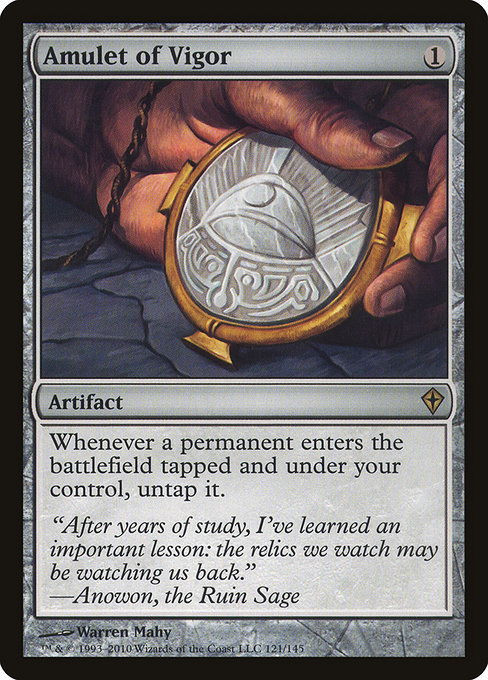 Amulet of Vigor
Whenever a permanent you control enters tapped, untap it.
if the player wanted them to.
Amulet of Vigor
Whenever a permanent you control enters tapped, untap it.
if the player wanted them to.
Spelunking, in its spoiler season, was so much more than that, though. Players quickly assembled a terrifying Pioneer combo that, theoretically, only needed a Spelunking and a
Beseech the Mirror
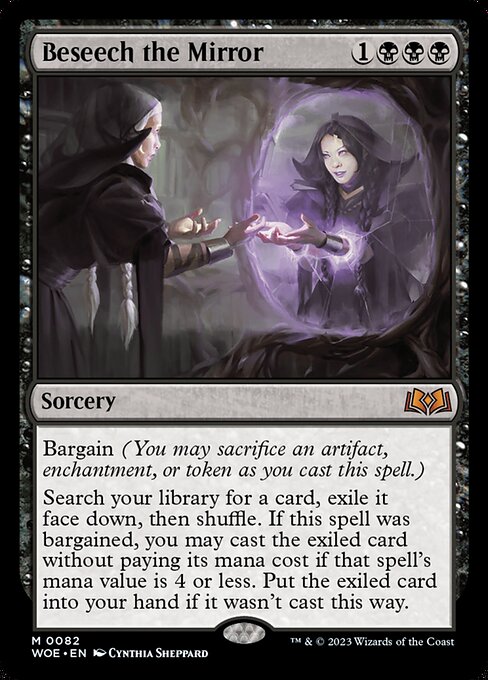 Beseech the Mirror
Bargain (You may sacrifice an artifact, enchantment, or token as you cast this spell.)
Beseech the Mirror
Bargain (You may sacrifice an artifact, enchantment, or token as you cast this spell.)
Search your library for a card, exile it face down, then shuffle. If this spell was bargained, you may cast the exiled card without paying its mana cost if that spell's mana value is 4 or less. Put the exiled card into your hand if it wasn't cast this way.
to win the game. With the assistance of
Arboreal Grazer
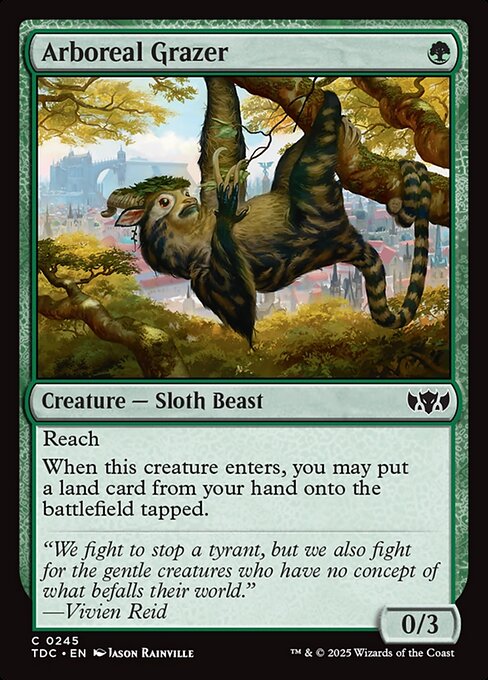 Arboreal Grazer
Reach
Arboreal Grazer
Reach
When this creature enters, you may put a land card from your hand onto the battlefield tapped.
, the deck could win as early as turn 3!
Despite this, it took quite some time for the Scapeshift deck to start appearing in competitive formats. The deck was rather complex and had its share of pitfalls. That said, after nearly an entire season of Pioneer, Jund Scapeshift is beginning to put up top eight finishes.
The Combo
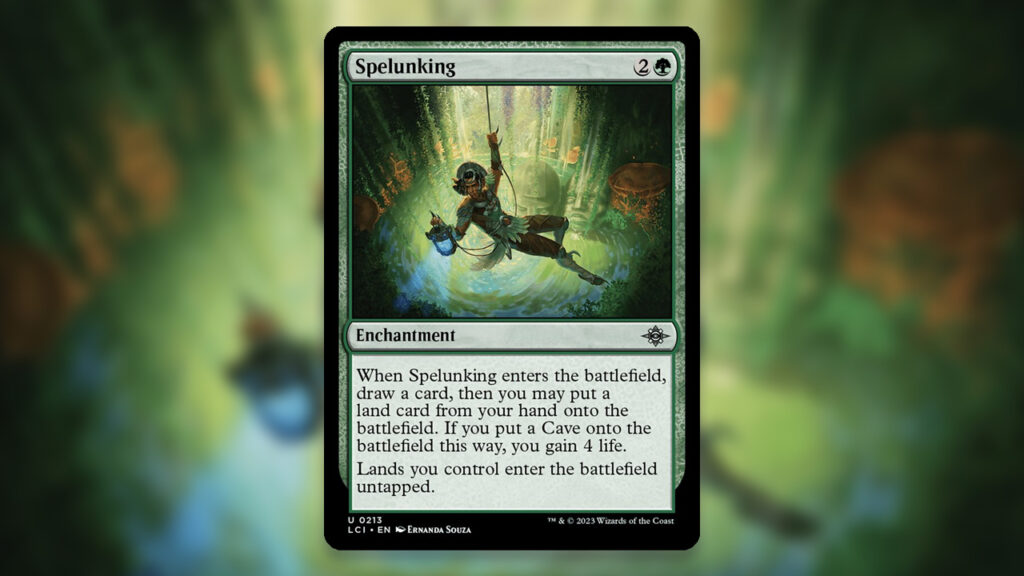
The idea is to get Spelunking on the battlefield and resolve a Bargained Beseech the Mirror. Five lands is ideally the amount you want when resolving Scapeshift (which you find with Beseech) to ensure that you’ll win the game. Ideally, you want to find Scapeshift with Beseech the Mirror so you can recur Beseech with your Scapeshift combo and find the other piece, Splendid Reclamation, to win the game.
The combo works like such:
- Resolve Beseech the Mirror with Spelunking and five lands in play. Find Scapeshift and cast it with Beseech’s Bargain cost.
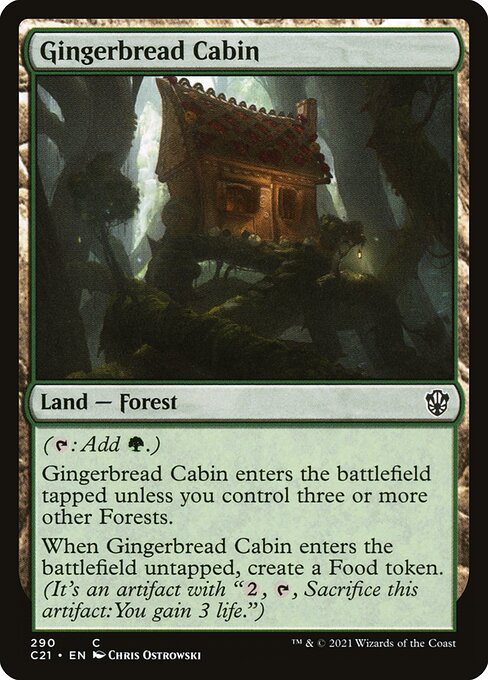
- Find and play
Gingerbread Cabin
 Gingerbread Cabin
({T}: Add {G}.)
Gingerbread Cabin
({T}: Add {G}.)
This land enters tapped unless you control three or more other Forests.
When this land enters untapped, create a Food token. (It's an artifact with "{2}, {T}, Sacrifice this token: You gain 3 life.") , Mystic Sanctuary
Mystic Sanctuary
({T}: Add {U}.)
This land enters tapped unless you control three or more other Islands.
When this land enters untapped, you may put target instant or sorcery card from your graveyard on top of your library. , two Lotus Field
Lotus Field
Hexproof
This land enters tapped.
When this land enters, sacrifice two lands.
{T}: Add three mana of any one color. and Hidden Necropolis untapped. - Float your mana before sacrificing the two Lotus Fields, Gingerbread Cabin and Mystic Sanctuary to the Lotus Field triggers. Put Beseech the Mirror back on top of your deck with Mystic Sanctuary.
- Use Hidden Necropolis’s Discover 4 ability to cast Beseech the Mirror, sacrificing the Food from Gingerbread Cabin
- Find Splended Reclamation with Beseech the Mirror and cast it, getting all of your lands back.
- Rinse and repeat, gaining mana from each rotation. Eventually, use Beseech the Mirror to find Mastermind’s Acquisition
- Cast Acquisition finding Banefire in your sideboard. Use your accumulated mana to kill your opponent with Banefire. This technically is not the most efficient kill option, but it speeds the combo up a lot on digital clients.


Despite mentioning Arboreal Grazer earlier, you’ll notice that the featured deck above, with two Pioneer top eight Challenge finishes from the same MTGO player, does not have the card. This particular iteration of Jund Scapeshift plays more like a Midrange deck with a combo finish. With eight discard spells in the 75, board wipes and lots of card advantage available, Jund Scapeshift wants to interrupt the opponent’s gameplan until the deck can go for a win.
Read More: $150 Secret Lair MTG Deck Wows With Insane Reprint Value
A Slower Approach
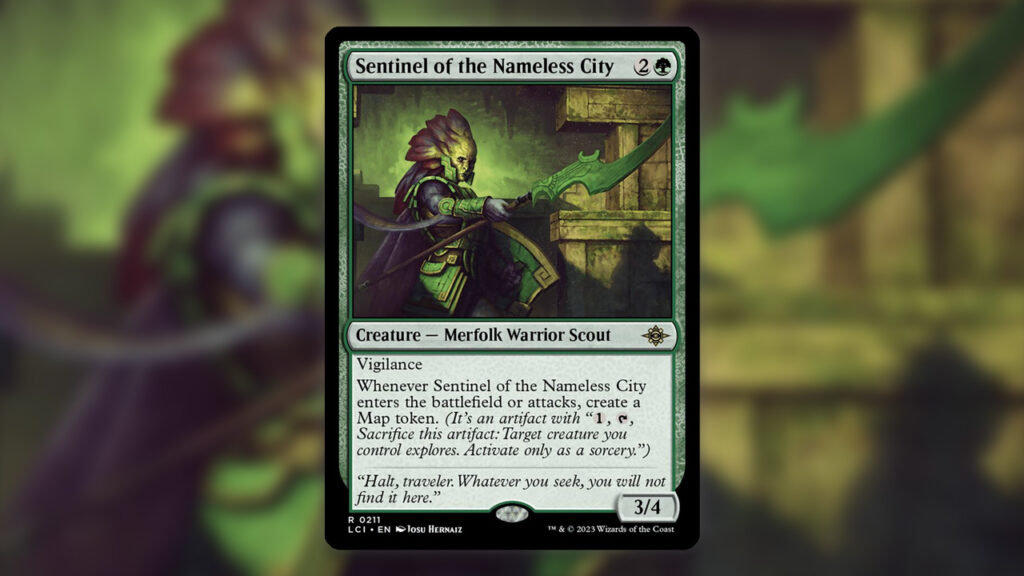
One particular oddity that sticks out with this version of Jund Scapeshift is Sentinel of the Nameless City. This three mana creature does a lot more for the deck than it may seem. While using Beseech the Mirror for its Bargain cost becomes trivial mid-combo, immediately casting it for its Bargain cost is a little bit difficult. The deck has four
Reckoner Bankbuster
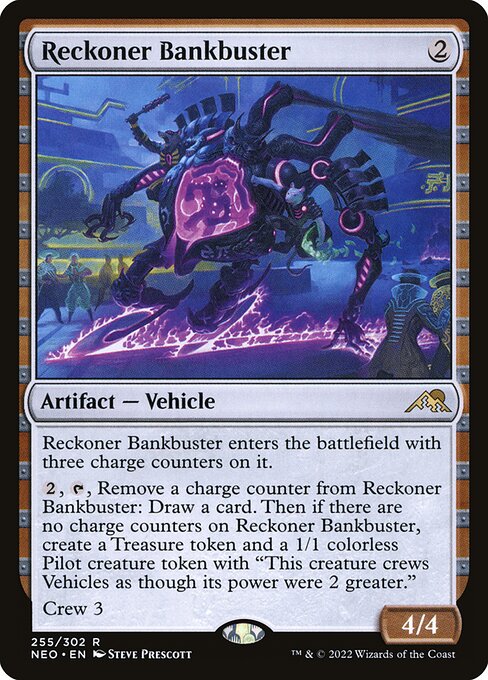 Reckoner Bankbuster
This Vehicle enters with three charge counters on it.
Reckoner Bankbuster
This Vehicle enters with three charge counters on it.
{2}, {T}, Remove a charge counter from this Vehicle: Draw a card. Then if there are no charge counters on this Vehicle, create a Treasure token and a 1/1 colorless Pilot creature token with "This token crews Vehicles as though its power were 2 greater."
Crew 3
which doubles as card advantage and a Bargain outlet, but other than the Bankbusters, there’s only The Meathook Massacre and extra copies of Spelunking to sacrifice for the Bargain cost of Beseech the Mirror.
Sentinel of the Nameless City not only offers a strong body and a consistent source of card advantage, but it also offers an endless number of artifact tokens for Beseech the Mirror to sacrifice. Since the Sentinel creates Map Tokens for the player to use, it becomes much easier to Bargain Beseech the Mirror and get the combo started. Otherwise, Map Tokens can be used for card selection and advantage.
Otherwise, this iteration of Scapeshift comes with tools to deal with all kinds of different problems. Abrupt Decay is a rather novel option that can remove both problematic creatures and hate pieces. The Meathook Massacre doubles as both a board wipe and a Bargain enabler. It also does a particularly good job of slowing down Cat Oven combos, which means a lot considering that
Mayhem Devil
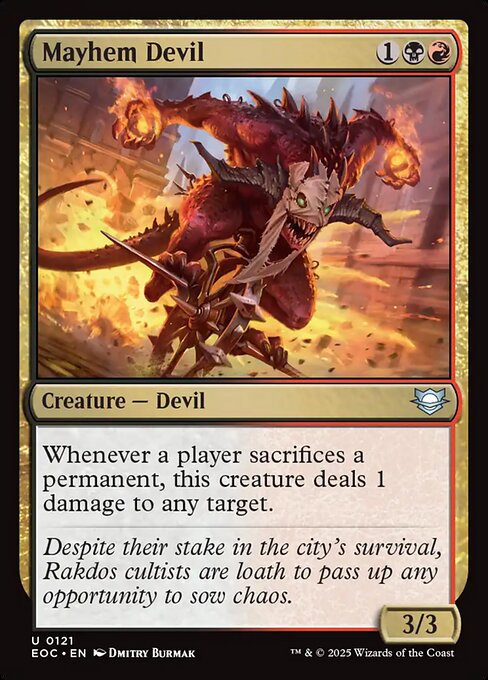 Mayhem Devil
Whenever a player sacrifices a permanent, this creature deals 1 damage to any target.
is a huge problem for your combo.
Mayhem Devil
Whenever a player sacrifices a permanent, this creature deals 1 damage to any target.
is a huge problem for your combo.
Read More: Murders at Karlov Manor is the Most Blatant MTG Example of Power Creep
Why Play Scapeshift?
Scapeshift appears to have a powerful midrange matchup. Being able to play a similar early game, but having access to an instant win button means that your topdeck situations in those matchups are going to be way better than the opponent. Other combo matchups seem palatable thanks to a ton of discard and a combo that can still go off as early as turn four.
This sideboard also looks prepped to take down Amalia Combo players. A suite of removal options combined with sideboard hate like Grafdigger’s Cage that shuts down Chord of Calling effects and
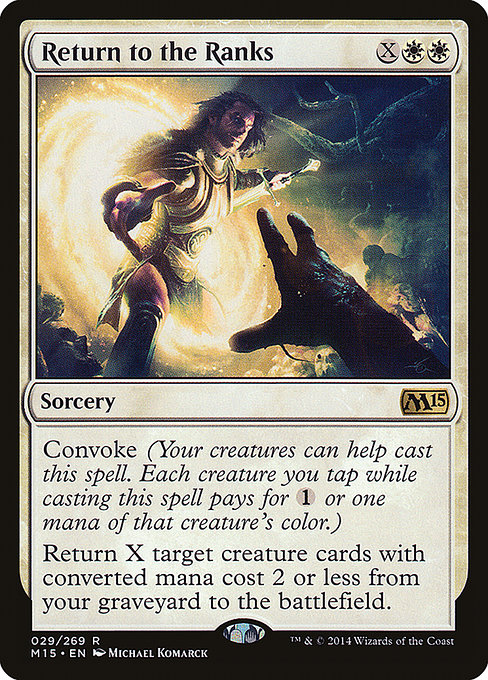
Return to the Ranks
 Return to the Ranks
Convoke (Your creatures can help cast this spell. Each creature you tap while casting this spell pays for {1} or one mana of that creature's color.)
Return to the Ranks
Convoke (Your creatures can help cast this spell. Each creature you tap while casting this spell pays for {1} or one mana of that creature's color.)
Return X target creature cards with mana value 2 or less from your graveyard to the battlefield.
allows you to disrupt their gameplan intensely while constructing yours.
Many MTG players may not be totally familar with how this deck functions yet, either, allowing you to net some free games off of players who are unfamiliar with what you are up to.
Weaknesses
Having played some of this Scapeshift archetype myself, there are a lot of different ways to stop this deck in its tracks. Going with a Midrange approach that can disrupt opponent’s plans while drawing deeper into your deck seems like the right way to go since this deck’s combo is surprisingly fragile. Here is a staggering list of things that can go wrong:
- Get Lost loves getting rid of your Spelunking, ruining your Beseech the Mirror without even countering it.
- Graveyard hate stops the combo in its tracks. You cannot Splendid Reclamation your lands back into play if they don’t hit the graveyard. Izzet Phoenix’s popularity in the format means that graveyard hate will be everywhere.
- Luckily, Rakdos Sacrifice is declining in popularity. Mayhem Devil will trigger off all of your sacrificing lands, and can easily kill you before you can kill the opponent.
- Discard can help, but all of your win conditions fall prey to counterspells.
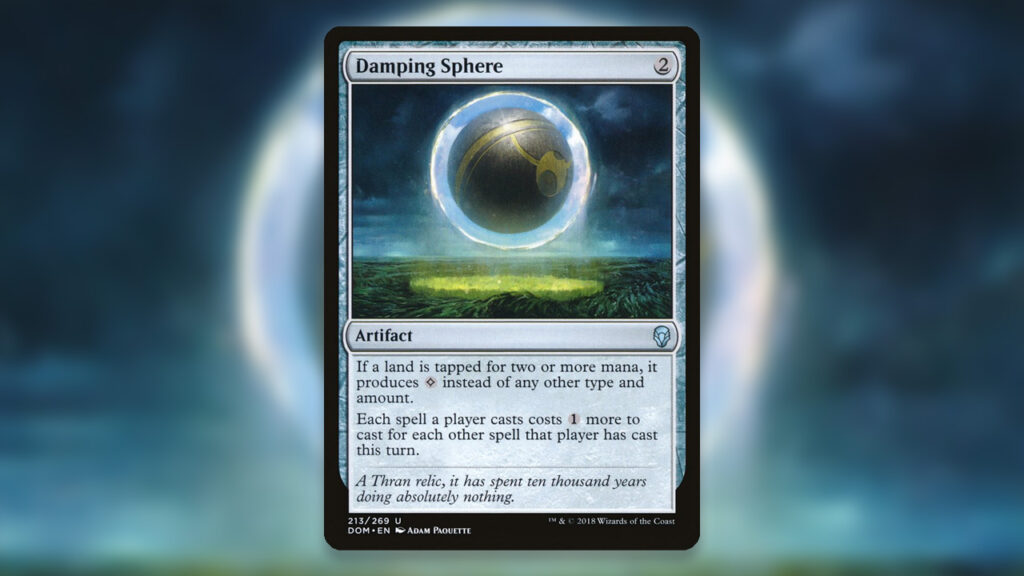
- Damping Sphere,
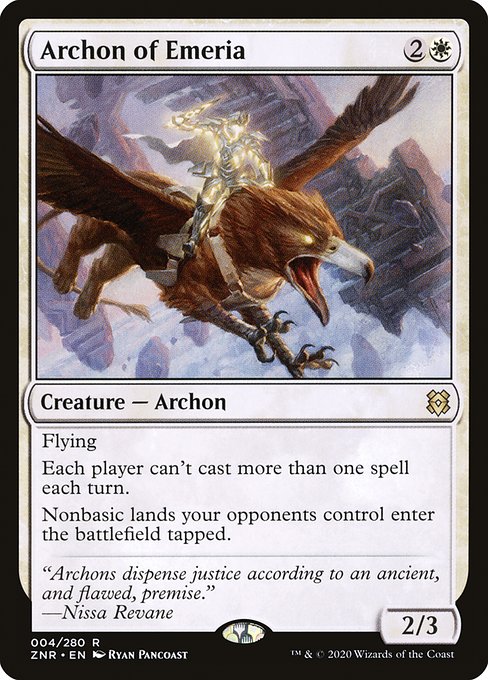
Archon of Emeria
Archon of Emeria
Flying
Each player can't cast more than one spell each turn.
Nonbasic lands your opponents control enter tapped. and some other hate pieces meant for Hidden Strings
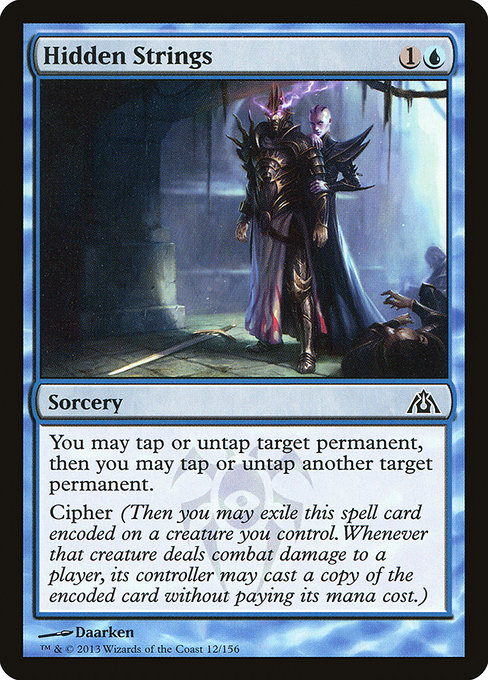
Hidden Strings
You may tap or untap target permanent, then you may tap or untap another target permanent.
Cipher (Then you may exile this spell card encoded on a creature you control. Whenever that creature deals combat damage to a player, its controller may cast a copy of the encoded card without paying its mana cost.) stops your combo as well.
Scapeshift combo also has an issue drawing the wrong lands. If you draw your Mystic Sanctuary, for example, you won’t be able to recur your Beseech the Mirror immediately, and will likely need an alternative plan to get yourself back into the loop.
Otherwise, Jund Scapeshift may have a tough time competing with faster combo decks. Hidden Strings is a rather popular deck in the format, and the best hate piece for that matchup, Damping Sphere, is not something you can play because it messes up your combo as well. Discard is very good against the deck, but with some decks beginning to play Leyline of Sanctity in the sideboard, this matchup could be nightmarishly difficult. Throw in that the upcoming Archdruid’s Charm breaks the deck, and this bad matchup may not be one that Scapeshift can afford.
All in all, the MTGO player who has spent time exploring this archetype has managed two top eight finishes, and a few top 16 finishes with it, which means that this archetype, to some extent, is the real deal. It’s difficult to tell at this point just how good the Scapeshift strategy is, but it is a deck you should keep in mind as players continue to explore the Pioneer and Explorer formats.
Read More: Insane MTG Mole God Threatens to Demolish Opposing Battlefields!