
We’ve crossed the month mark from the release of Murders at Karlov Manor, and the results are a bit different than expectations. While there was speculation that a broad number of cards could see a reasonable amount of play in top cEDH decks, it turns out Murders is closer to one or maybe two cards deep, and both are white. All in all, this set did not add much to the cEDH format, but there are some new appearances.
All Around Top Include
It’s not even close.
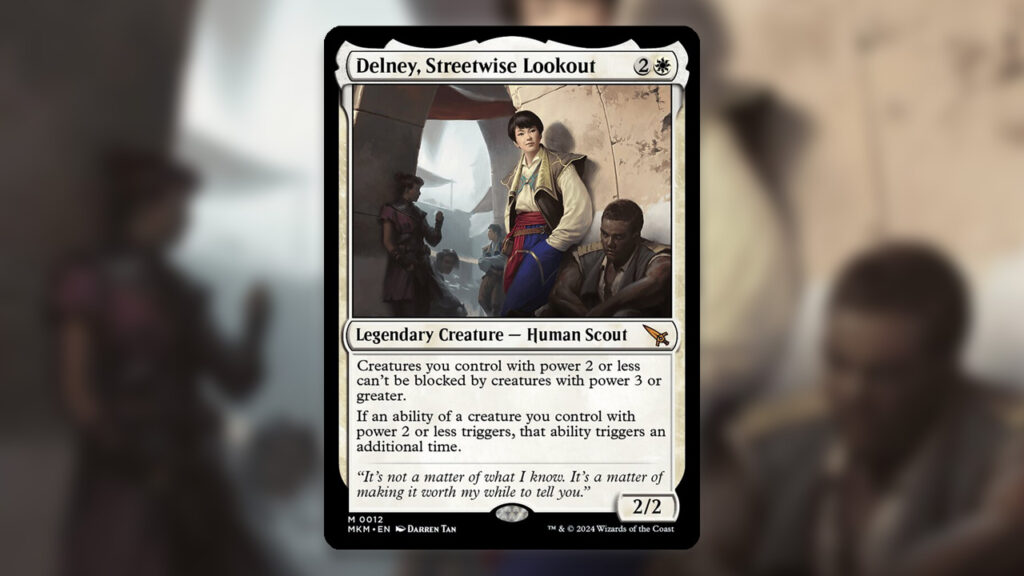
Delney, Streetwise Lookout
 Delney, Streetwise Lookout
Creatures you control with power 2 or less can't be blocked by creatures with power 3 or greater.
Delney, Streetwise Lookout
Creatures you control with power 2 or less can't be blocked by creatures with power 3 or greater.
If a triggered ability of a creature you control with power 2 or less triggers, that ability triggers an additional time.
is the singular standout card from Murders, and it’s relatively easy to see why. Commonly played creatures with two or less power that have game altering triggers include:
Dockside Extortionist
 Dockside Extortionist
When this creature enters, create X Treasure tokens, where X is the number of artifacts and enchantments your opponents control. (Treasure tokens are artifacts with "{T}, Sacrifice this token: Add one mana of any color.")
,
Orcish Bowmasters
Dockside Extortionist
When this creature enters, create X Treasure tokens, where X is the number of artifacts and enchantments your opponents control. (Treasure tokens are artifacts with "{T}, Sacrifice this token: Add one mana of any color.")
,
Orcish Bowmasters
 Orcish Bowmasters
Flash
Orcish Bowmasters
Flash
When this creature enters and whenever an opponent draws a card except the first one they draw in each of their draw steps, this creature deals 1 damage to any target. Then amass Orcs 1.
,
Ragavan, Nimble Pilferer
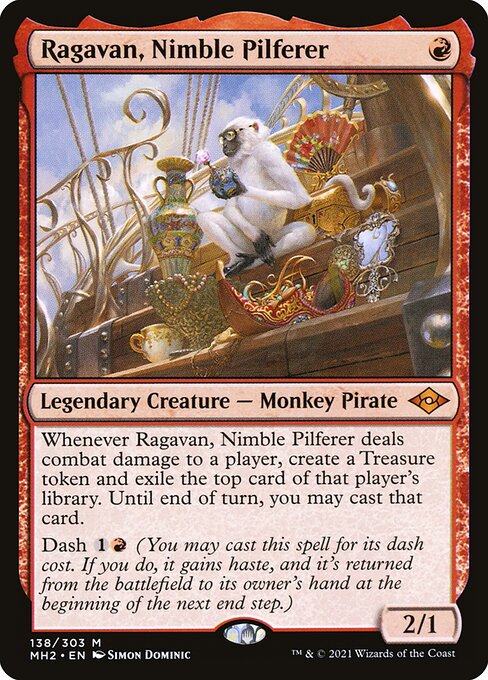 Ragavan, Nimble Pilferer
Whenever Ragavan deals combat damage to a player, create a Treasure token and exile the top card of that player's library. Until end of turn, you may cast that card.
Ragavan, Nimble Pilferer
Whenever Ragavan deals combat damage to a player, create a Treasure token and exile the top card of that player's library. Until end of turn, you may cast that card.
Dash {1}{R} (You may cast this spell for its dash cost. If you do, it gains haste, and it's returned from the battlefield to its owner's hand at the beginning of the next end step.)
and even
Thassa’s Oracle
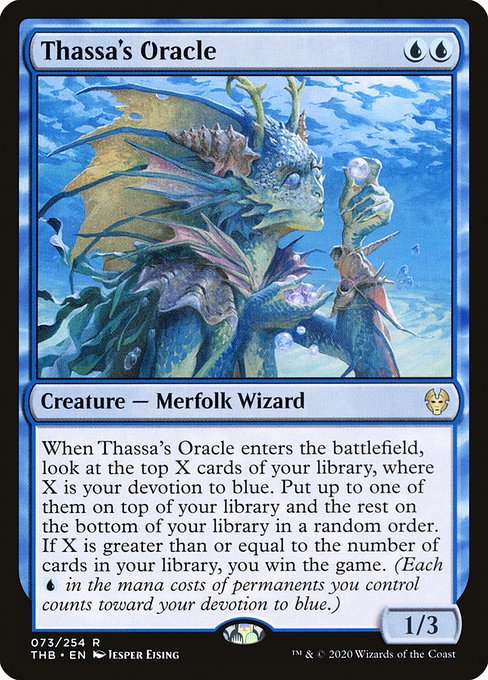 Thassa’s Oracle
When this creature enters, look at the top X cards of your library, where X is your devotion to blue. Put up to one of them on top of your library and the rest on the bottom of your library in a random order. If X is greater than or equal to the number of cards in your library, you win the game. (Each {U} in the mana costs of permanents you control counts toward your devotion to blue.)
.
Thassa’s Oracle
When this creature enters, look at the top X cards of your library, where X is your devotion to blue. Put up to one of them on top of your library and the rest on the bottom of your library in a random order. If X is greater than or equal to the number of cards in your library, you win the game. (Each {U} in the mana costs of permanents you control counts toward your devotion to blue.)
.
In the face of counterplay like a
Stifle
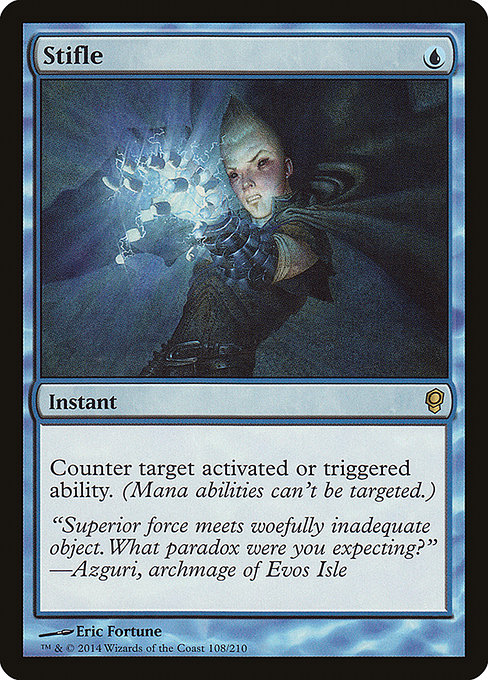 Stifle
Counter target activated or triggered ability. (Mana abilities can't be targeted.)
or
Tishana’s Tidebinder
Stifle
Counter target activated or triggered ability. (Mana abilities can't be targeted.)
or
Tishana’s Tidebinder
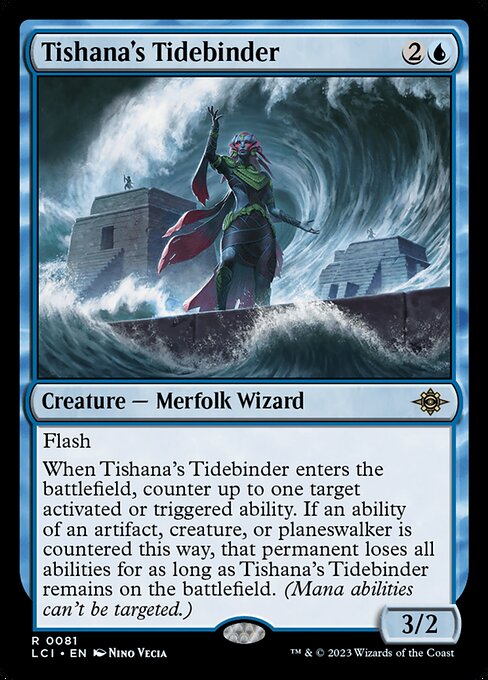 Tishana’s Tidebinder
Flash
Tishana’s Tidebinder
Flash
When this creature enters, counter up to one target activated or triggered ability. If an ability of an artifact, creature, or planeswalker is countered this way, that permanent loses all abilities for as long as this creature remains on the battlefield. (Mana abilities can't be targeted.)
, you can still win with an extra trigger ready to resolve. Shoring up a win through specific countermagic is just part of Delney’s goodness. Additionally, there are other commonly played creatures like Lotho, Corrupt Shirrif,
Esper Sentinel
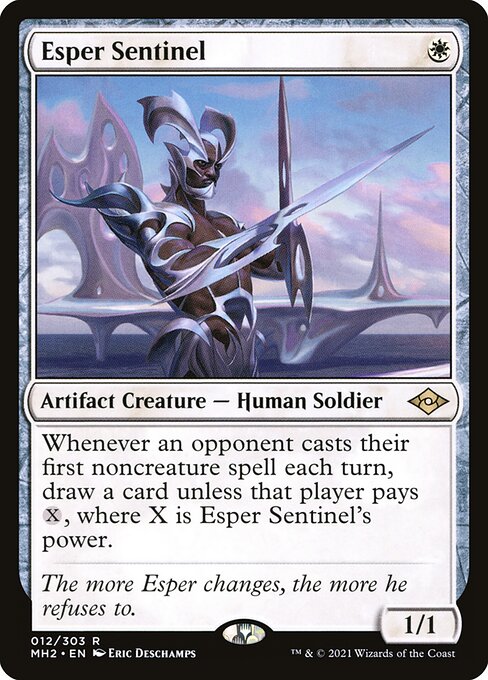 Esper Sentinel
Whenever an opponent casts their first noncreature spell each turn, draw a card unless that player pays {X}, where X is this creature's power.
and
Faerie Mastermind
Esper Sentinel
Whenever an opponent casts their first noncreature spell each turn, draw a card unless that player pays {X}, where X is this creature's power.
and
Faerie Mastermind
 Faerie Mastermind
Flash
Faerie Mastermind
Flash
Flying
Whenever an opponent draws their second card each turn, you draw a card.
{3}{U}: Each player draws a card.
that give you plenty more value if not immediately winning.
On top of all of this, some of the best decks play all of these creatures with
Tymna the Weaver
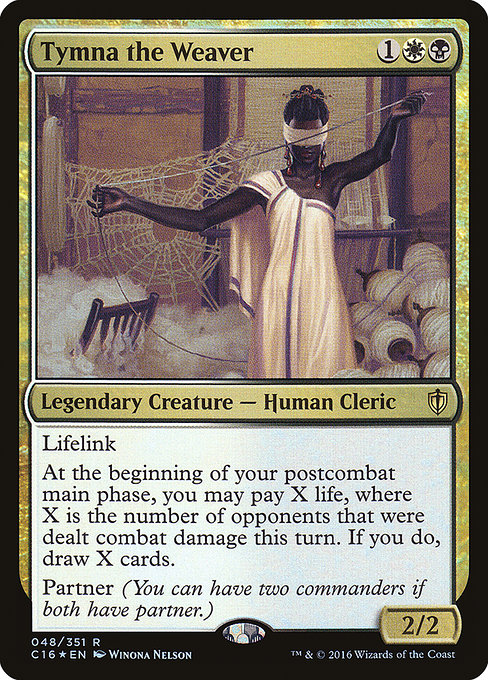 Tymna the Weaver
Lifelink
Tymna the Weaver
Lifelink
At the beginning of each of your postcombat main phases, you may pay X life, where X is the number of opponents that were dealt combat damage this turn. If you do, draw X cards.
Partner (You can have two commanders if both have partner.)
as a Commander. Tymna, of course, also benefits from the Delney double trigger. Yes, the “best deck” gets better with this include. Results speak for themselves. At the same time, though, many other tournament winning decks don’t bother. But, all in all, enough cEDH decks are continuing to include Delney and posting wins, so it has cemented itself a prized slot. What about the rest of Murders?
Second with a Bullet
This card is in so many decks! How is this second place? That’s where really taking a deep look into the data from mtgtop8 pays off.
A lot of the success for
Trouble in Pairs
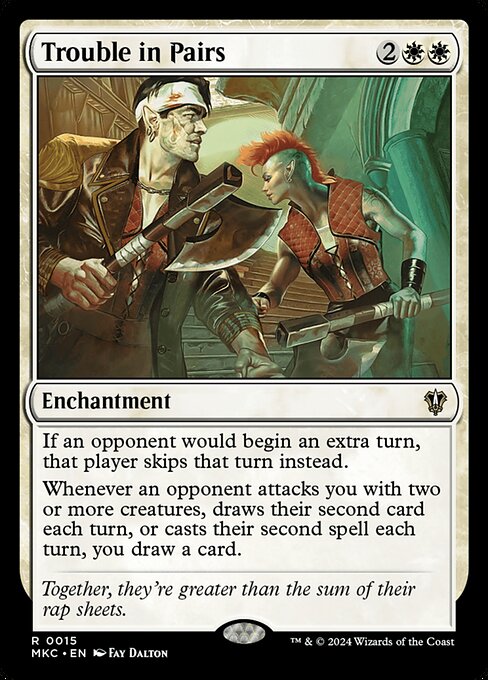 Trouble in Pairs
If an opponent would begin an extra turn, that player skips that turn instead.
Trouble in Pairs
If an opponent would begin an extra turn, that player skips that turn instead.
Whenever an opponent attacks you with two or more creatures, draws their second card each turn, or casts their second spell each turn, you draw a card.
comes from a couple of specific players and events. Look at the first and second place
Tivit, Seller of Secrets
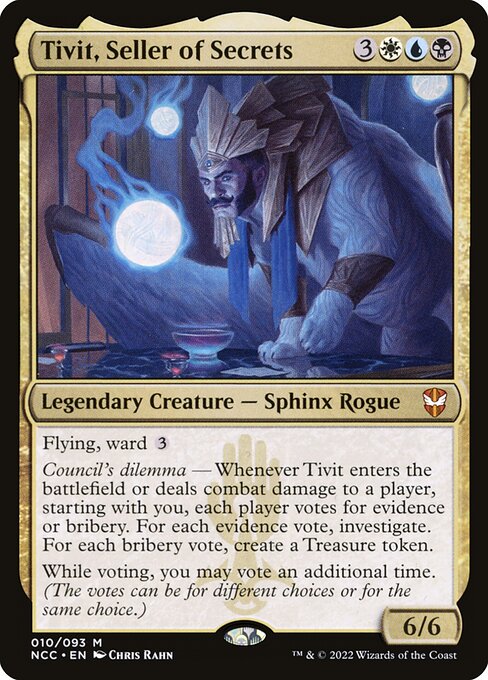 Tivit, Seller of Secrets
Flying, ward {3}
Tivit, Seller of Secrets
Flying, ward {3}
Council's dilemma — Whenever Tivit enters or deals combat damage to a player, starting with you, each player votes for evidence or bribery. For each evidence vote, investigate. For each bribery vote, create a Treasure token.
While voting, you may vote an additional time. (The votes can be for different choices or for the same choice.)
decks at the Commander Invitational Qualifier in Chapel Hill, NC. But then keep looking. Tivit is very overly represented, and you have a top eight Tivit deck without Trouble in Pairs, while another top 32 Tivit has it. It looks like Tivit was a good meta choice for that event overall, which makes it hard to gauge just how much of its success is down to one particular include.
Now compare to a first place finish by a
Tameshi, Reality Architect
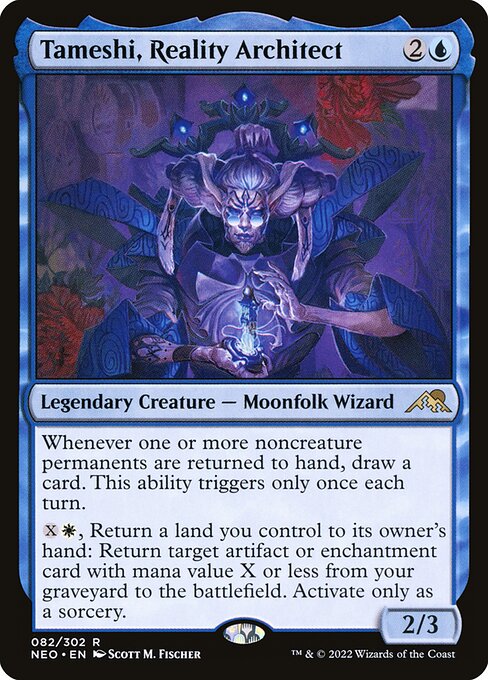 Tameshi, Reality Architect
Whenever one or more noncreature permanents are returned to hand, draw a card. This ability triggers only once each turn.
Tameshi, Reality Architect
Whenever one or more noncreature permanents are returned to hand, draw a card. This ability triggers only once each turn.
{X}{W}, Return a land you control to its owner's hand: Return target artifact or enchantment card with mana value X or less from your graveyard to the battlefield. Activate only as a sorcery.
deck featuring Trouble where there were no other Tameshi’s. On top of that, the very powerful and popular pairing of Tymna+Kraum got incredibly shut out. Only one of six Tymna+Kraum cracked the top 16 at this event, although five placed within the top 32 of the 72 player event. Lots of anti-Tymna and Kraum tech like Trouble in Pairs certainly helped in this event.
It’s always smart to have includes based on a local meta. However, you don’t always know what deck is showing up where. For that reason, Delney makes significantly more sense, as you know what your deck includes. Trouble can be extremely efficient provided your opponents show up with what fuels it. Otherwise it’s a four mana spell that could provide a lot less value than you would hope for. Still, when the card is good, it’s cEDH good, so it’s a relatively proven include for certain decks.
Distant Third
Outside of a first place finish in a small event with
Ellivere of the Wild Court
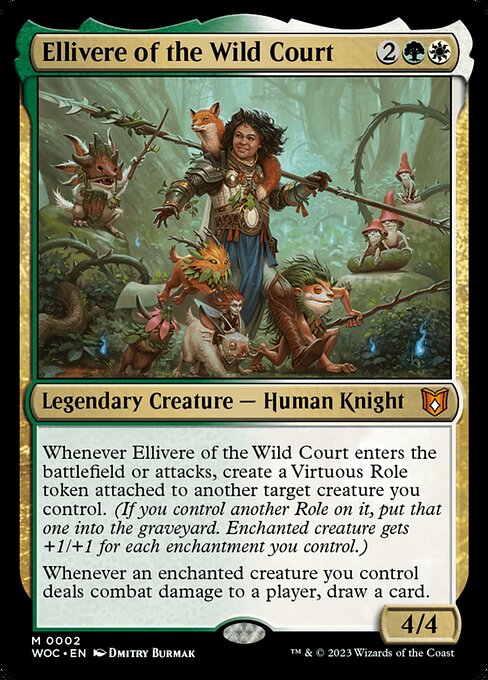 Ellivere of the Wild Court
Whenever Ellivere enters or attacks, create a Virtuous Role token attached to another target creature you control. (If you control another Role on it, put that one into the graveyard. Enchanted creature gets +1/+1 for each enchantment you control.)
Ellivere of the Wild Court
Whenever Ellivere enters or attacks, create a Virtuous Role token attached to another target creature you control. (If you control another Role on it, put that one into the graveyard. Enchanted creature gets +1/+1 for each enchantment you control.)
Whenever an enchanted creature you control deals combat damage to a player, draw a card.
as the Commander,
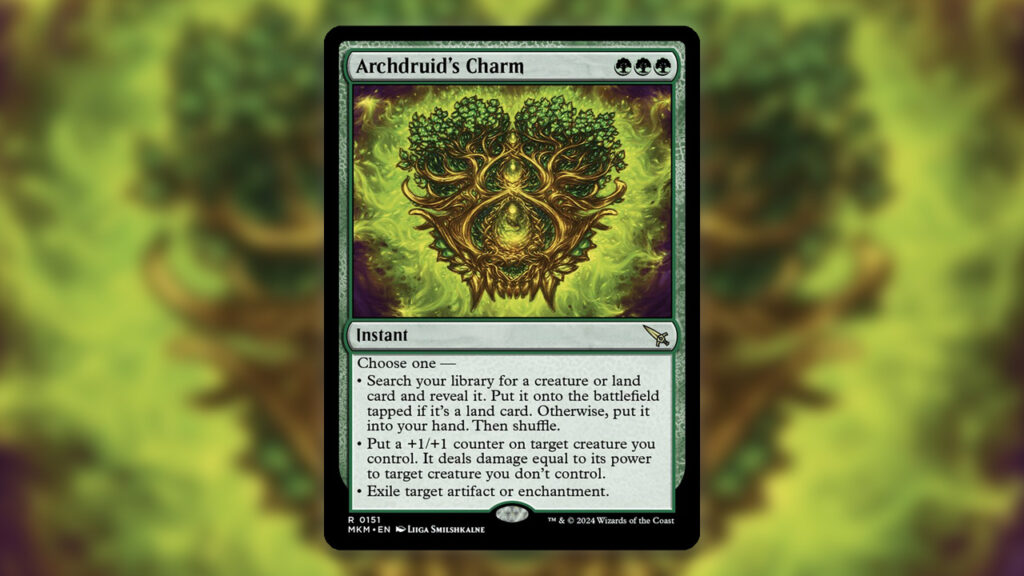
Archdruid’s Charm
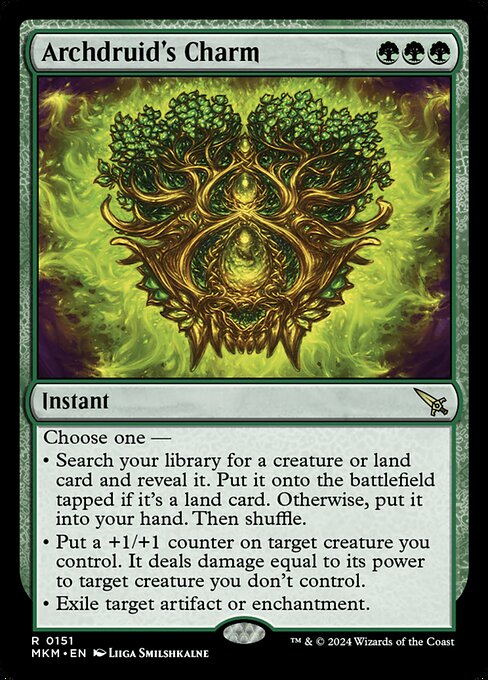 Archdruid’s Charm
Choose one —
Archdruid’s Charm
Choose one —
• Search your library for a creature or land card and reveal it. Put it onto the battlefield tapped if it's a land card. Otherwise, put it into your hand. Then shuffle.
• Put a +1/+1 counter on target creature you control. It deals damage equal to its power to target creature you don't control.
• Exile target artifact or enchantment.
has achieved multiple top five finishes and a third place result in an
Etali, Primal Conqueror
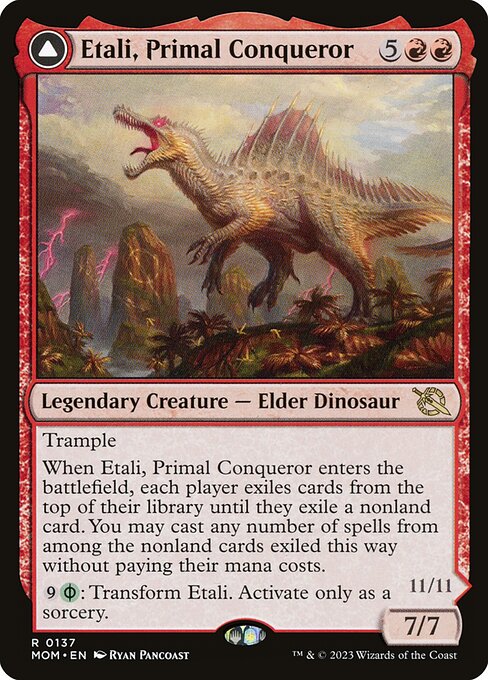 Etali, Primal Conqueror
Trample
Etali, Primal Conqueror
Trample
When Etali enters, each player exiles cards from the top of their library until they exile a nonland card. You may cast any number of spells from among the nonland cards exiled this way without paying their mana costs.
{9}{G/P}: Transform Etali. Activate only as a sorcery.
deck. The card has performed well at multiple medium sized events and appears to be building some momentum, but a triple green casting cost is a tough selling point for the current top decks. Still, out of all the other Murders cards, this one is seeing the next most play while getting good results.
But What About…Surveil Lands?
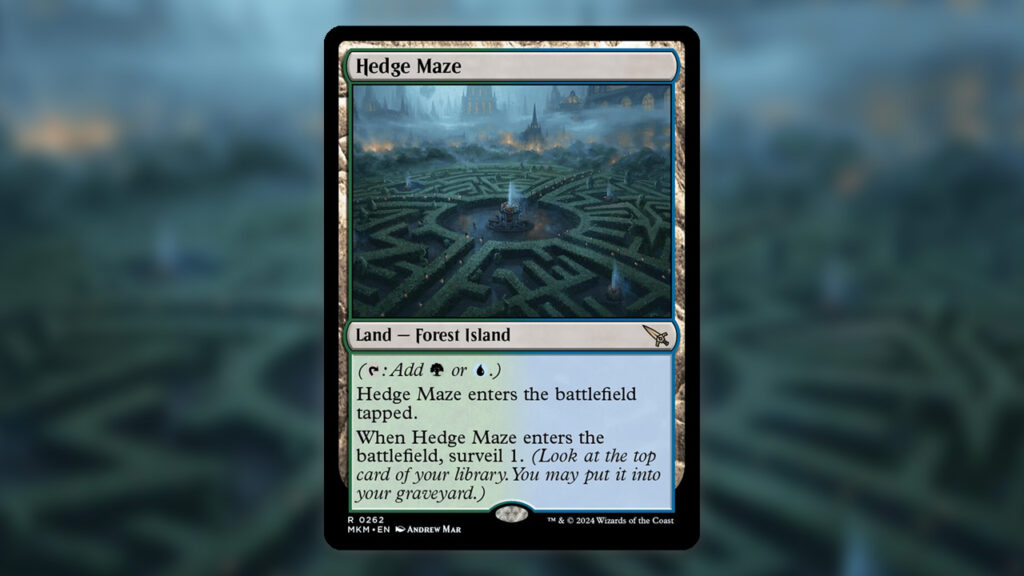
It took time to find brave Magic players, but find them I did! There are enough top ten worthy cEDH decks packing a Surveil land or two to mention. If you are playing a two-color deck, the cost of playing a tapped land goes down quite a bit. Thus,
Winota, Joiner of Forces
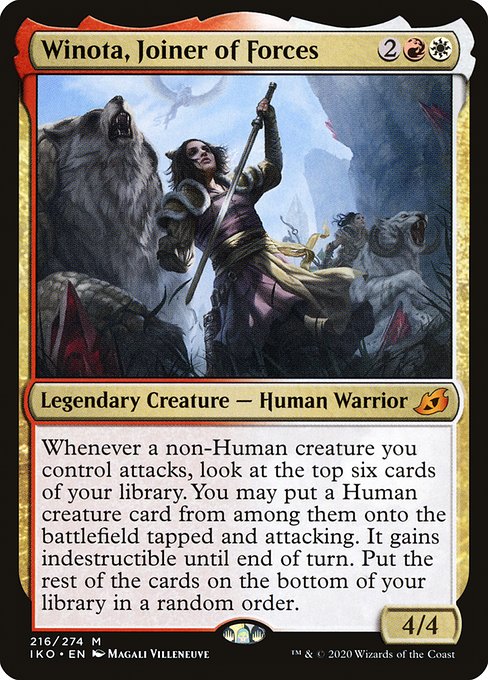 Winota, Joiner of Forces
Whenever a non-Human creature you control attacks, look at the top six cards of your library. You may put a Human creature card from among them onto the battlefield tapped and attacking. It gains indestructible until end of turn. Put the rest of the cards on the bottom of your library in a random order.
can get away with having an
Elegant Parlor
Winota, Joiner of Forces
Whenever a non-Human creature you control attacks, look at the top six cards of your library. You may put a Human creature card from among them onto the battlefield tapped and attacking. It gains indestructible until end of turn. Put the rest of the cards on the bottom of your library in a random order.
can get away with having an
Elegant Parlor
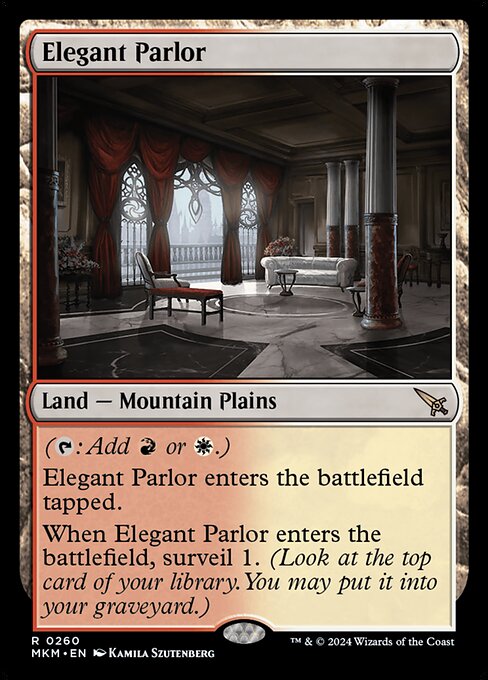 Elegant Parlor
({T}: Add {R} or {W}.)
Elegant Parlor
({T}: Add {R} or {W}.)
This land enters tapped.
When this land enters, surveil 1. (Look at the top card of your library. You may put it into your graveyard.)
and still place in the top half of a small event.
Unimpressive you say? What about
Kinnan, Bonder Prodigy
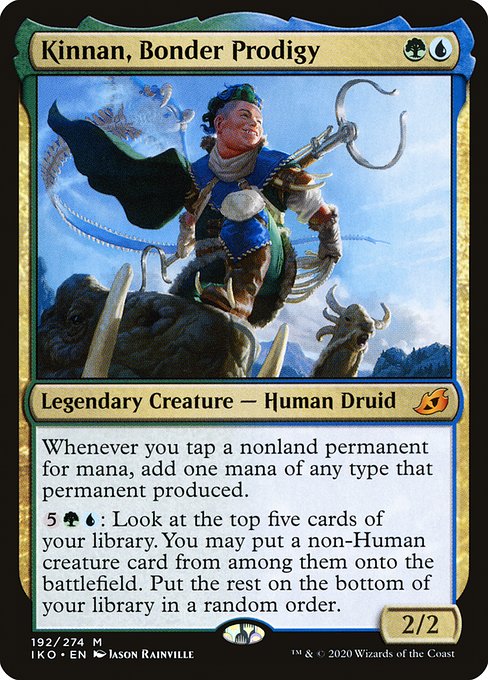 Kinnan, Bonder Prodigy
Whenever you tap a nonland permanent for mana, add one mana of any type that permanent produced.
Kinnan, Bonder Prodigy
Whenever you tap a nonland permanent for mana, add one mana of any type that permanent produced.
{5}{G}{U}: Look at the top five cards of your library. You may put a non-Human creature card from among them onto the battlefield. Put the rest on the bottom of your library in a random order.
with a
Hedge Maze
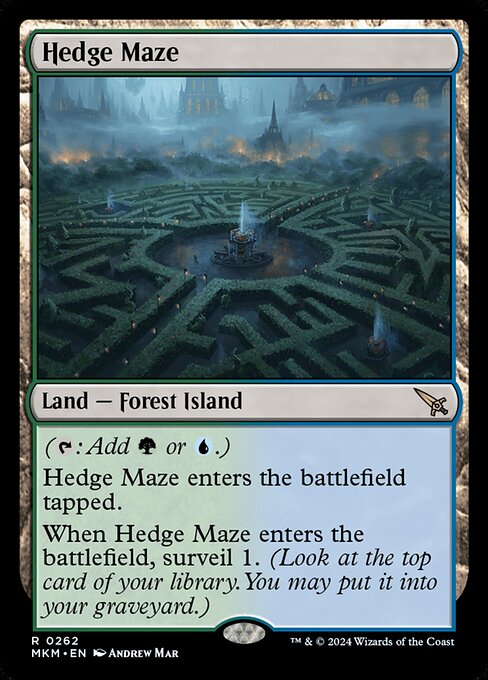 Hedge Maze
({T}: Add {G} or {U}.)
Hedge Maze
({T}: Add {G} or {U}.)
This land enters tapped.
When this land enters, surveil 1. (Look at the top card of your library. You may put it into your graveyard.)
in the top 32 of a 136 person event? Not good enough, you say. Well, a very brave
Niv-Mizzet, Parun
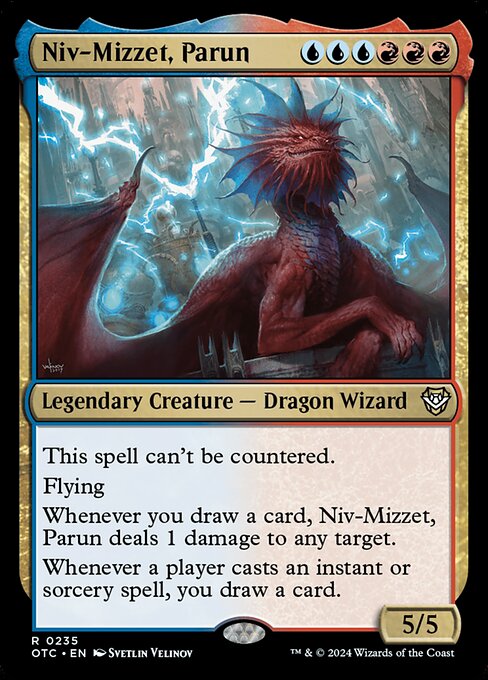 Niv-Mizzet, Parun
This spell can't be countered.
Niv-Mizzet, Parun
This spell can't be countered.
Flying
Whenever you draw a card, Niv-Mizzet deals 1 damage to any target.
Whenever a player casts an instant or sorcery spell, you draw a card.
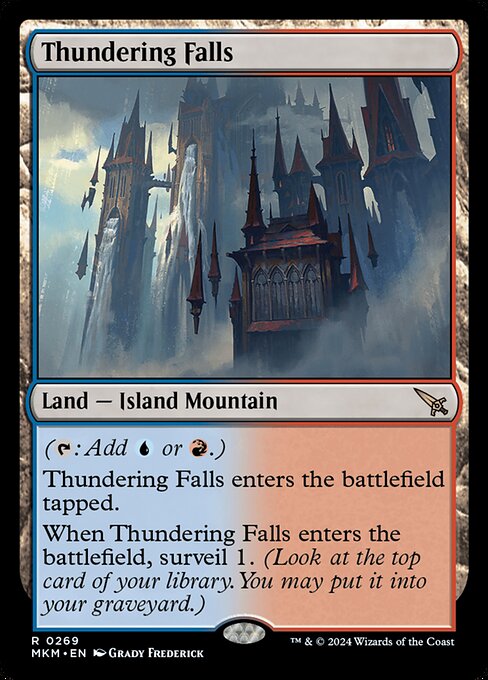
won a 40 person event in Thailand with the help of
Thundering Falls
 Thundering Falls
({T}: Add {U} or {R}.)
Thundering Falls
({T}: Add {U} or {R}.)
This land enters tapped.
When this land enters, surveil 1. (Look at the top card of your library. You may put it into your graveyard.)
.
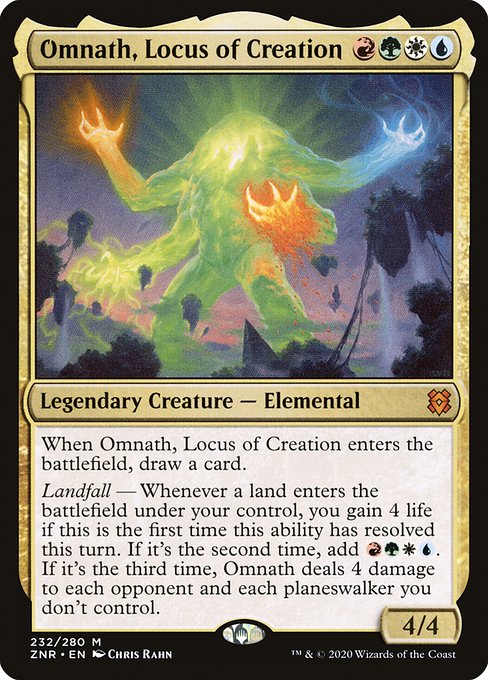
The bravest of all? An
Omnath, Locus of Creation
 Omnath, Locus of Creation
When Omnath enters, draw a card.
Omnath, Locus of Creation
When Omnath enters, draw a card.
Landfall — Whenever a land you control enters, you gain 4 life if this is the first time this ability has resolved this turn. If it's the second time, add {R}{G}{W}{U}. If it's the third time, Omnath deals 4 damage to each opponent and each planeswalker you don't control.
player achieving a top eight with not one but two surveil lands in their 28 land manabase. Two tapped lands, top 8, in cEDH.
These are results from just over one month of play. It’s obvious that, just like in Standard and Modern, these Surveil lands are perfectly capable of generating free value in combination with fetch lands. It looks like two-color Commanders probably have the most to gain, or the least to lose, from their inclusion. It also looks like landfall decks and even spell slinger archetypes might be thinking of including this new technology. Fears that you will be forced to mulligan because you could start with a tapped land are likely overblown.
From a quality standpoint, most of the decks that included surveil lands placed very well. Quantity wise? Very few people were willing to try them. In the future, I would expect many more people will include these lands, particularly anyone playing exactly two color decks.
Missed Potential?
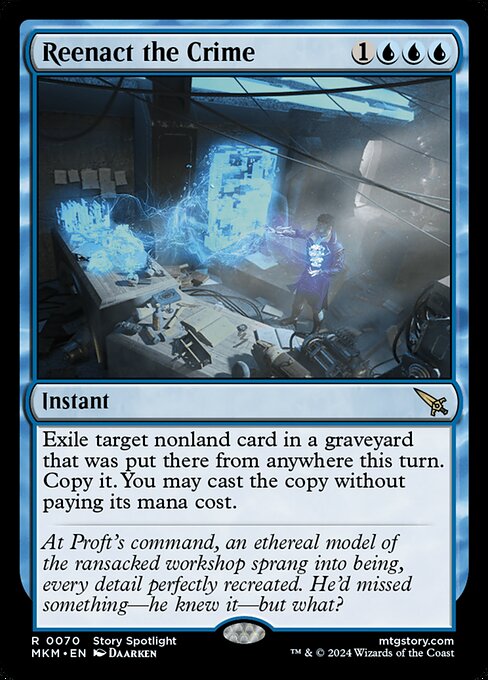
It’s not low mana at four, but
Reenact the Crime
 Reenact the Crime
Exile target nonland card in a graveyard that was put there from anywhere this turn. Copy it. You may cast the copy without paying its mana cost.
lets you play any nonland card from any graveyard. Many decks use
Brain Freeze
Reenact the Crime
Exile target nonland card in a graveyard that was put there from anywhere this turn. Copy it. You may cast the copy without paying its mana cost.
lets you play any nonland card from any graveyard. Many decks use
Brain Freeze
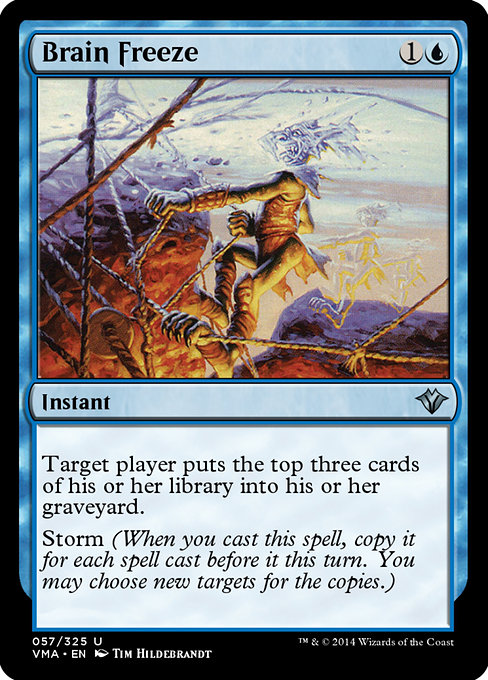 Brain Freeze
Target player mills three cards.
Brain Freeze
Target player mills three cards.
Storm (When you cast this spell, copy it for each spell cast before it this turn. You may choose new targets for the copies.)
in combination with
Underworld Breach
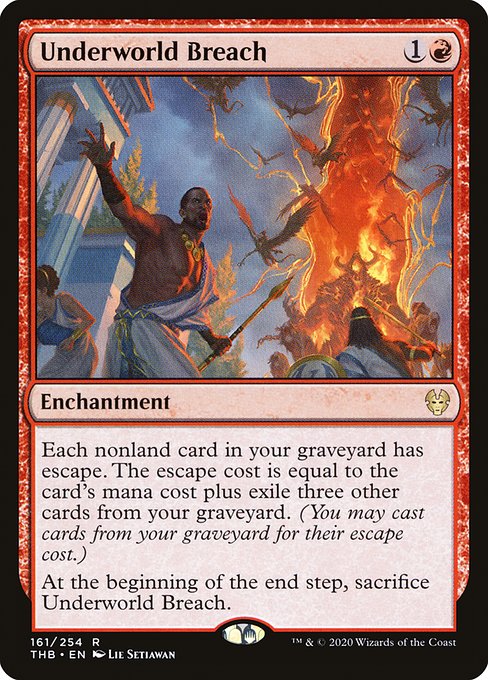 Underworld Breach
Each nonland card in your graveyard has escape. The escape cost is equal to the card's mana cost plus exile three other cards from your graveyard. (You may cast cards from your graveyard for their escape cost.)
Underworld Breach
Each nonland card in your graveyard has escape. The escape cost is equal to the card's mana cost plus exile three other cards from your graveyard. (You may cast cards from your graveyard for their escape cost.)
At the beginning of the end step, sacrifice this enchantment.
as a way to win. So, the logic here is that you probably have Brain Freeze. This means if you needed to you could mill your opponent. Why would you do that? In case you need an answer that your deck does not have or a win condition that you no longer have. For example, let’s say someone hit you with
Praetor’s Grasp
 Praetor’s Grasp
Search target opponent's library for a card and exile it face down. Then that player shuffles. You may play that card for as long as it remains exiled.
and exiled a card. You crack a fetch land and confirm they hit your
Thassa’s Oracle
Thassa’s Oracle
When this creature enters, look at the top X cards of your library, where X is your devotion to blue. Put up to one of them on top of your library and the rest on the bottom of your library in a random order. If X is greater than or equal to the number of cards in your library, you win the game. (Each {U} in the mana costs of permanents you control counts toward your devotion to blue.)
. Your Breach and Brain Freeze line is still good because you could mill someone else and use Reenact the Crime to cast their Thoracle instead.
Praetor’s Grasp
Search target opponent's library for a card and exile it face down. Then that player shuffles. You may play that card for as long as it remains exiled.
and exiled a card. You crack a fetch land and confirm they hit your
Thassa’s Oracle
Thassa’s Oracle
When this creature enters, look at the top X cards of your library, where X is your devotion to blue. Put up to one of them on top of your library and the rest on the bottom of your library in a random order. If X is greater than or equal to the number of cards in your library, you win the game. (Each {U} in the mana costs of permanents you control counts toward your devotion to blue.)
. Your Breach and Brain Freeze line is still good because you could mill someone else and use Reenact the Crime to cast their Thoracle instead.
That being said, the reverse is also true. Reenact is another potential counter to your opponent’s Breach/Brain Freeze line. You can Reenact a key card in response to them, say, trying to recast a
Lotus Petal
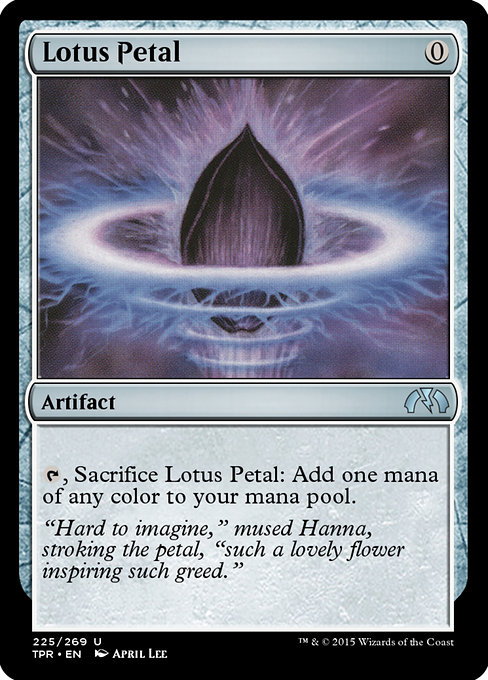 Lotus Petal
{T}, Sacrifice this artifact: Add one mana of any color.
or
Lion’s Eye Diamond
Lotus Petal
{T}, Sacrifice this artifact: Add one mana of any color.
or
Lion’s Eye Diamond
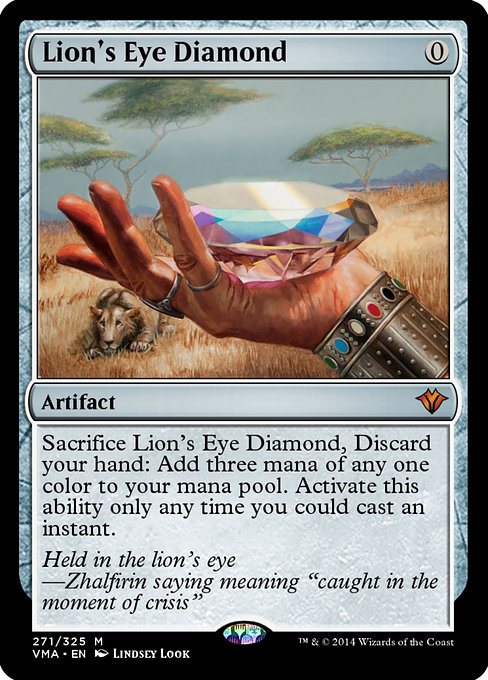 Lion’s Eye Diamond
Discard your hand, Sacrifice this artifact: Add three mana of any one color. Activate only as an instant.
for mana and interrupt their sequence.
Lion’s Eye Diamond
Discard your hand, Sacrifice this artifact: Add three mana of any one color. Activate only as an instant.
for mana and interrupt their sequence.
The number of times you might need to use someone else’s card to win should be relatively low. That ultimately makes Reenact a usually worse
Mnemonic Betrayal
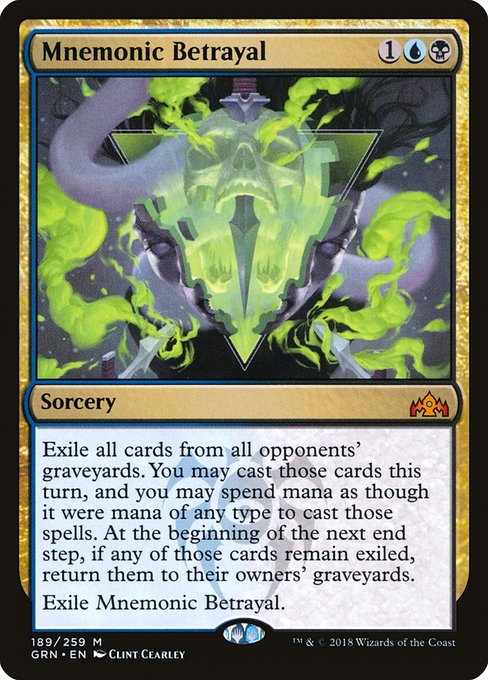 Mnemonic Betrayal
Exile all opponents' graveyards. You may cast spells from among those cards this turn, and mana of any type can be spent to cast them. At the beginning of the next end step, if any of those cards remain exiled, return them to their owners' graveyards.
Mnemonic Betrayal
Exile all opponents' graveyards. You may cast spells from among those cards this turn, and mana of any type can be spent to cast them. At the beginning of the next end step, if any of those cards remain exiled, return them to their owners' graveyards.
Exile Mnemonic Betrayal.
. That said, Betrayal is two colors and sorcery speed. If you lack black, it may be worth considering and merely the idea of a mono-blue, instant speed, reanimation spell that can hit any graveyard should be enough to entice some brave players.
Manor too Medium
Ultimately cEDH has some of the strictest requirements for deck construction. The format includes virtually every Magic card ever printed, so competition is fierce. While Lord of the Rings, Lost Caverns of Ixalan and Wilds of Eldraine all featured format defining staples, Murders is less represented in quantity and quality. Is this a deliberate effort by Wizards to slow down the warp speed of the format, or merely the Clue mechanics not finding a competitive home?
Sometimes, however, new technology can be developed if you give a set a little bit of time. Even tapped lands can see play, and win, at the most competitive levels. Be on the lookout for the new Fallout set. As the tournament reports come in we’ll cover what is seeing cEDH play – and winning!
Read More: