



As a whole, while there’s a decent range of competitive decks to choose from in the Modern metagame, there hasn’t been a ton of room to innovate recently. It’s unusual to see a unique strategy put up a great result in a format constricted by Boros Energy and various combo decks.
Yet, thanks to the creative mind of one of Magic’s best brewers, Aspiringspike, a really cool archetype made it all the way to the top four of a Magic Online Modern Challenge. This multicolor Zoo midrange hybrid archetype abuses a lot of sweet inclusions, none more interesting than a particular Bloomburrow Frog.
Crafting Around Helga
Like most four-color control decks in Modern, this deck utilizes cards like Omnath, Locus of Creation to gain an advantage on cards, mana, and life. The goal is to grind the opponent into dust, while maximizing “free” spells like Solitude and Subtlety to stave off early pressure.
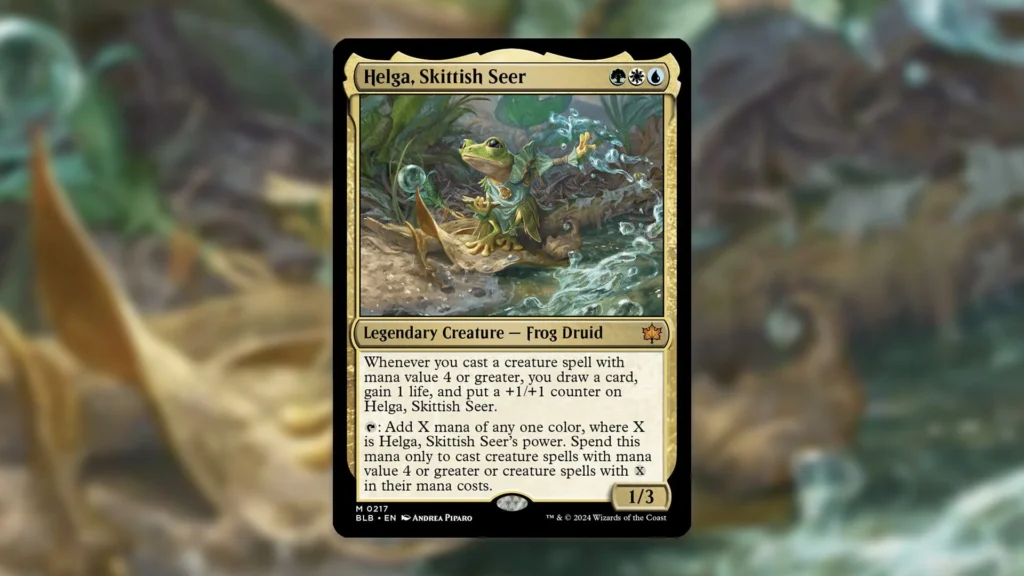
Where this deck starts to differentiate itself from other four-color piles is with the inclusion of Helga, Skittish Seer. Helga isn’t just a piece of filler in this shell. Instead, it’s one of your best ways to pull ahead on resources.
Anytime you cast a Creature spell with mana value four or greater, you get to draw a card, gain one life, and grow Helga even further. Assuming you get to untap with Helga, you now have a mana engine at the ready that helps you hard cast your pitch Elementals.
The pitch Elementals pair perfectly with Helga because they allow you to trigger Helga without investing any mana. Versus Boros Energy, it’s common to cast Helga, follow up with Solitude or Subtlety on their next play, and grow Helga out of range of Phlage, Titan of Fire’s Fury.
From there, casting any big Creature like Omnath will pull you further and further ahead. You even have access to the Leyline of the Guildpact+Scion of Draco package, which can be devastating in its own right. Drawing Leyline later in the game isn’t a concern when you can pitch it to your free spells, and Scion is a perfectly reasonable card that triggers Helga in the event you don’t have Leyline rolled up.
Enabling Keruga
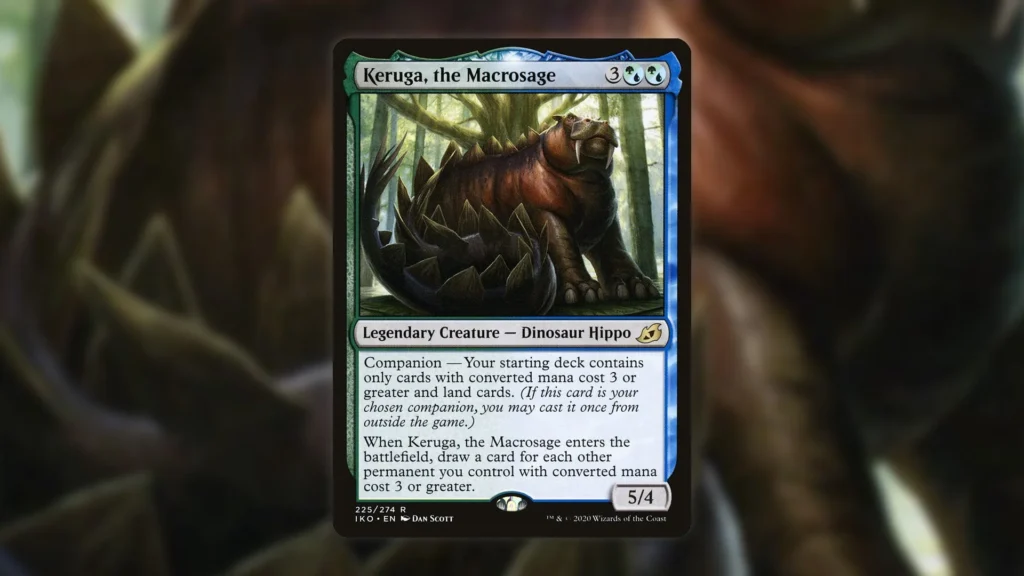
With the extra mana you gain from Helga and Omnath in conjunction with Fetchlands, there are a few ways you can take advantage. First and foremost, this deck uses Keruga, the Macrosage as a Companion. Keruga is a tough Companion to use, as it forces you to ditch any cards with mana value two or less.
Thankfully, you have plenty of ways to interact in the early turns despite this restriction. We already discussed Solitude and Subtlety.
On top of that, Force of Negation acts as a free way to disrupt opposing combo decks. Fire//Ice lets you clean up Creatures like Ocelot Pride that can otherwise spiral out of control. Thanks to Leyline of the Guildpact and Zagoth Triome, it’s not difficult to reduce the cost of Leyline Binding to one mana, either.
Once you reach the stage of the game where you’re looking to cement your advantage, you’ll always have access to a burly card drawing engine in the form of Keruga. Between your various other threats and Leyline Binding, there’s a good chance you’ll draw a handful of cards when Keruga enters. If necessary, you can always pitch Keruga to Subtlety or Force of Negation, too.
Finally, we’d be remiss if we didn’t mention Lorien Revealed. Lorien Revealed is a late game draw spell that comes at very little cost to play. It smooths out your mana while simultaneously providing extra cards to pitch to Subtlety and Force of Negation. The synergies in this deck are everywhere!
A Powerful Plan
Overall, this deck doesn’t feel like just a flash in the pan. You have a solid gameplan against many of the top decks in the format. Even as a Keruga deck, you have tons of early removal for the Energy and Prowess matchup. Omnath helps prevent you from getting burnt out, and your late game engine is extremely strong.
Meanwhile, Force of Negation gives you a real shot at beating otherwise problematic combo decks. You don’t do the best job applying pressure early outside of Scion, but you have lots of ways to interact.
In the sideboard, Force of Vigor is a nice tool versus various Mox Opal decks, and Endurance shines against Living End and other graveyard strategies.
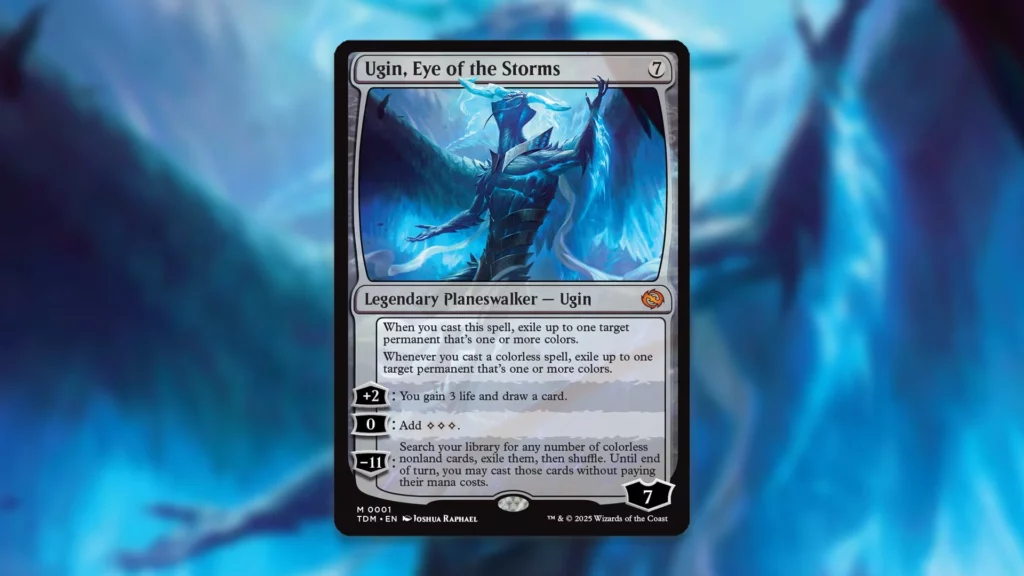
One area where playing Keruga can be a bit of a liability is in the Eldrazi ramp matchup. Your disruption doesn’t stop opposing cast triggers from bombs such as Ugin, Eye of the Storms. Consign to Memory would be a perfect sideboard option, but alas, you’d have to give up Keruga. Instead, you’ll find Whirlwind Denial, which can accomplish a similar task in some situations. However, it’s much clunkier.
As such, this strategy isn’t fool proof. It checks a lot of boxes in a variety of matchups, though, and ultimately seems like a solid choice in Modern. Expect to see similar decklists pop up more in the coming weeks.
Stick with us here at dev.mtgrocks.com: the best site for Magic: The Gathering coverage!