
With the addition of 100 card Historic Brawl to Magic Arena permanently, more people will be getting into the format. With the card pool of Historic being as vast as it is, and with the impending influx of new cards with Jumpstart: Historic Horizons, it can be pretty daunting to put together a really solid Brawl deck. Not to mention the difference between 60 cards and 100 cards is well, 40 cards, but it’s a pretty sizable difference. Here’s our tips to help you construct a Historic Brawl deck, and some very common pitfalls to avoid in the process.
Choosing Your Commander
The first step in building your Historic Brawl Deck is choosing your commander. With over 500 commanders in the game, there’s a lot to pick from. The quality of the commanders can vary widely, so how do you know which commander to pick? A good place to start is choosing a theme, whether it is graveyards, tokens, lands or something else. Picking a theme can give you a cleaner sense of direction when building, and will narrow down the commander pool quite a bit.
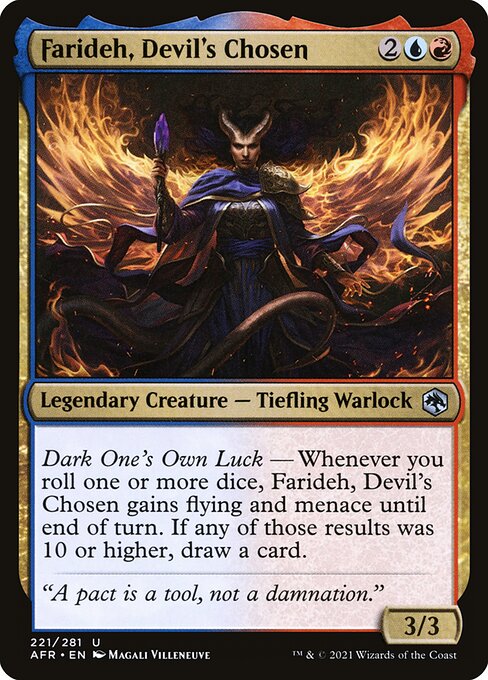
If you’re not sure about a theme and are looking for one, one pitfall that is common is picking a commander that has too narrow of a theme or mechanic, or rather you want to pick a Commander that has a broad enough theme to build around. An example of this is
Farideh, Devil’s Chosen
 Farideh, Devil’s Chosen
Dark One's Own Luck — Whenever you roll one or more dice, Farideh gains flying and menace until end of turn. If any of those results was 10 or higher, draw a card.
. While there might have been a fair bit of dice rolling cards in Adventures in the Forgotten Realms, there isn’t enough to reliably take advantage of the effect across 100 cards. While you can try to add a bunch of cards to try and find your pieces, you’ll most likely fall over and lose before you get going.
Farideh, Devil’s Chosen
Dark One's Own Luck — Whenever you roll one or more dice, Farideh gains flying and menace until end of turn. If any of those results was 10 or higher, draw a card.
. While there might have been a fair bit of dice rolling cards in Adventures in the Forgotten Realms, there isn’t enough to reliably take advantage of the effect across 100 cards. While you can try to add a bunch of cards to try and find your pieces, you’ll most likely fall over and lose before you get going.
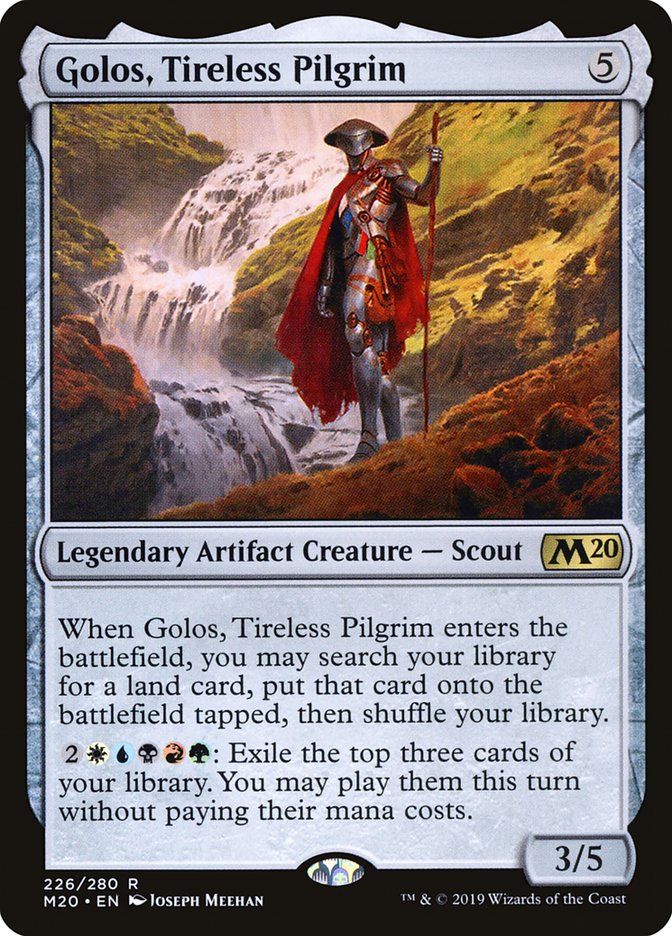
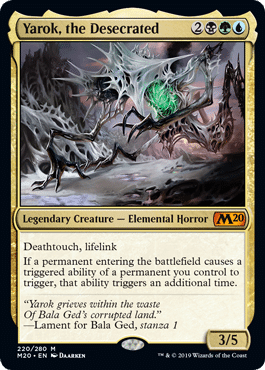
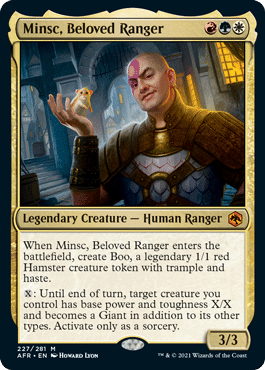
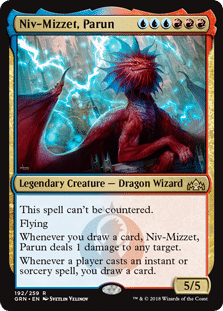
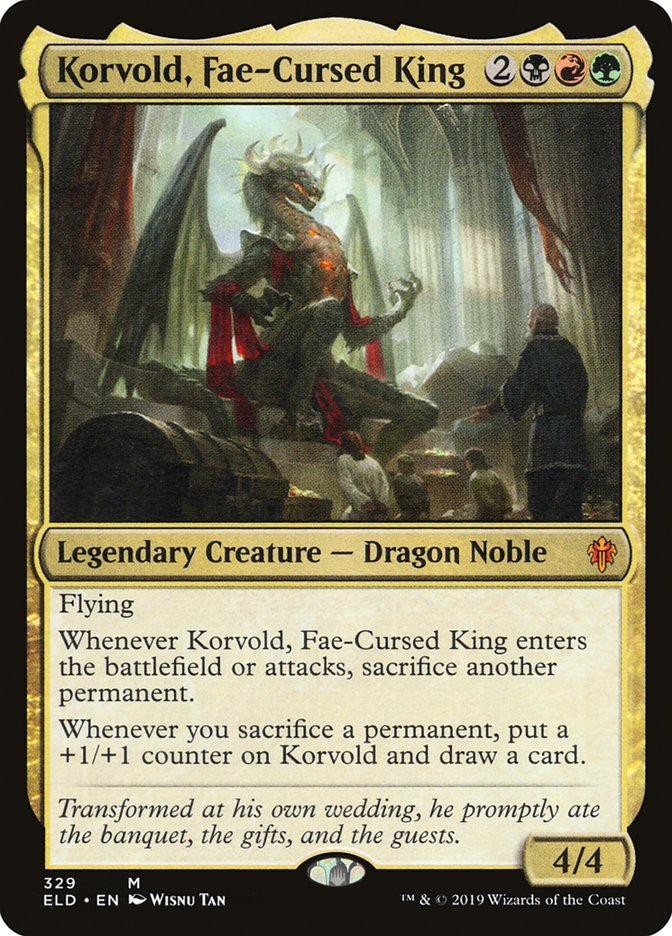
If you’re looking for some really good commanders to build around just as a starting point, here’s a few that we’d recommend. Each of these commanders have a broad enough theme and supporting cards available in the game to build a good deck. Here are some deck lists that you can try out as well.
Don’t Skip on These Staples
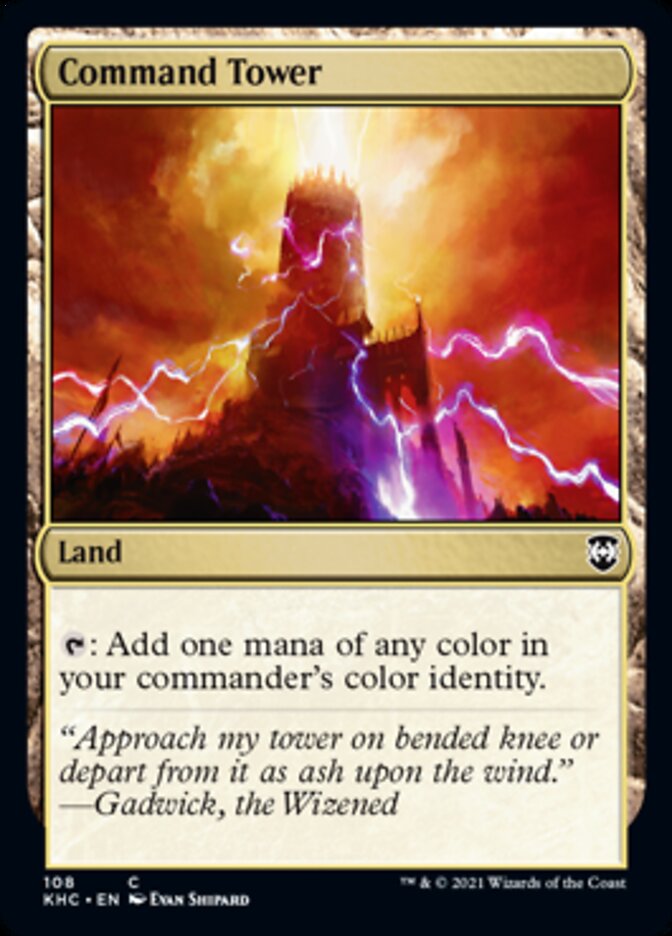
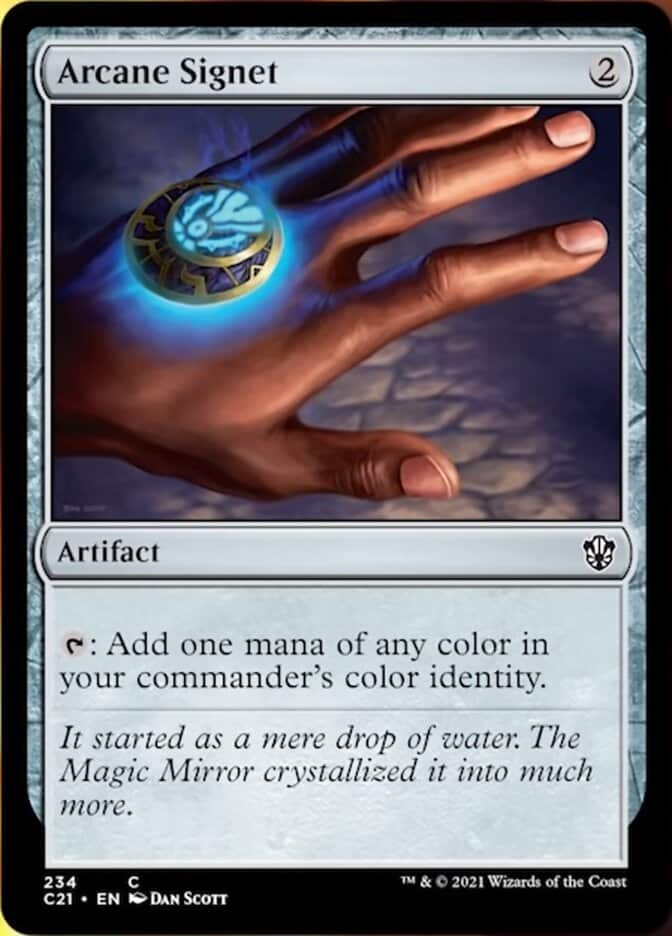
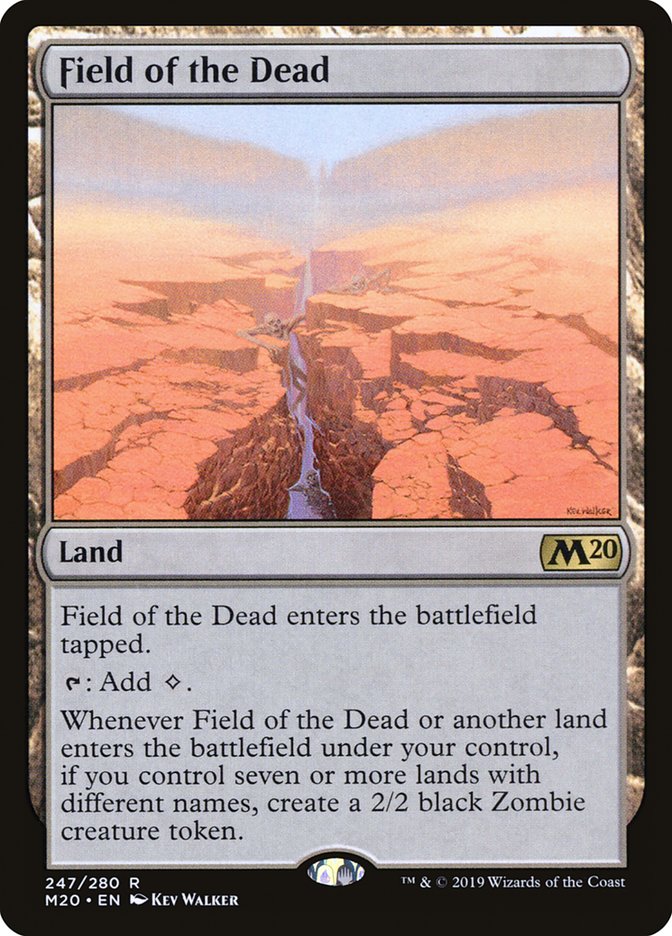
These 3 cards are definitely staple cards to include if you’re playing 2 or more colors. If you play commander, you’ll know the power of
Command Tower
 Command Tower
{T}: Add one mana of any color in your commander's color identity.
and
Arcane Signet
Command Tower
{T}: Add one mana of any color in your commander's color identity.
and
Arcane Signet
 Arcane Signet
{T}: Add one mana of any color in your commander's color identity.
. These two cards provide some great fixing for your deck. The inclusion of
Field of the Dead
Arcane Signet
{T}: Add one mana of any color in your commander's color identity.
. These two cards provide some great fixing for your deck. The inclusion of
Field of the Dead
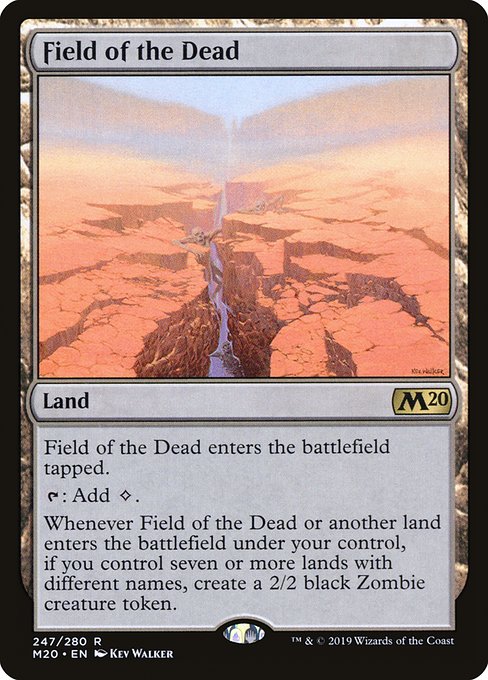 Field of the Dead
This land enters tapped.
Field of the Dead
This land enters tapped.
{T}: Add {C}.
Whenever this land or another land you control enters, if you control seven or more lands with different names, create a 2/2 black Zombie creature token.
is one that might be a bit surprising, but I think is crucial. There’s enough non-basic lands in the game that playing any 2+ color deck can be running, that you’re leaving value on the table by not including Field of the Dead. This land turns land draws in the late game into 2/2 zombies and if you’re able to play field on curve, you’re going to gain incremental board advantage over your opponents over time.
READ MORE: How to Get Your Three Free Premier Historic Drafts on MTG Arena!
Do NOT Play Less Than 38 Lands
When you start putting cards into your deck on Arena, the game automatically puts 34 lands in the deck. That’s definitely not enough lands. Depending on your complexity of colors, and your mana curve, you’re going to want to play at least 38 lands, and often times more. Magic Arena doesn’t have quite the land development tech available that we see in Commander, so definitely want to make sure that we hit our land drops as well as our colors as well.
READ MORE: Free Drafts In MTG Arena Should Stick Around Forever
Invest In Your Mana Base
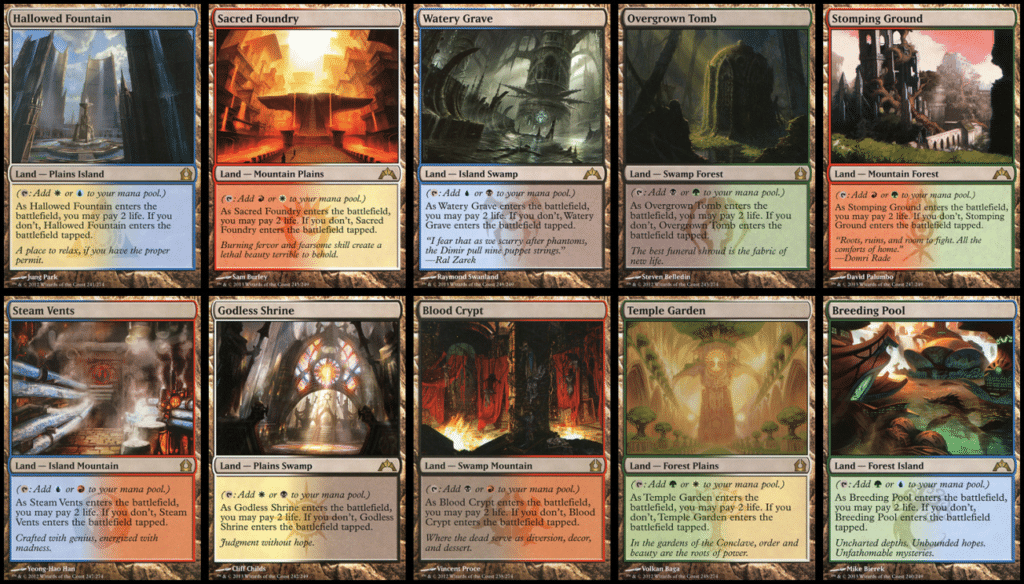
The last tip that we recommend here is to really invest in your mana base. There’s a healthy amount of dual lands available in the game for multicolored decks. Even though many of the good ones cost rare wild cards, the fixing and flexibility of these lands really will help smooth out the experience of playing any deck that’s more than 2 colors. Since we don’t have good fetch lands in the game outside of
Fabled Passage
 Fabled Passage
{T}, Sacrifice this land: Search your library for a basic land card, put it onto the battlefield tapped, then shuffle. Then if you control four or more lands, untap that land.
, so our ability to fix our mana at will is a bit hampered, so having the fluidity of colors with these lands becomes even more important. Here’s a priority crafting list for the dual lands that you’ll want to craft.
Fabled Passage
{T}, Sacrifice this land: Search your library for a basic land card, put it onto the battlefield tapped, then shuffle. Then if you control four or more lands, untap that land.
, so our ability to fix our mana at will is a bit hampered, so having the fluidity of colors with these lands becomes even more important. Here’s a priority crafting list for the dual lands that you’ll want to craft.
- Shock Lands
- Triomes
- Pathways
- Temples
- Buddy Lands
- Fast Lands
- Snarls (in 2 color decks only)
- Tapped Snow Duals
—
Additionally, There are some very important utility lands that you’ll want to craft as well. Here’s the ones that we’d recommend to craft.
-
Bojuka Bog
 Bojuka Bog
This land enters tapped.
Bojuka Bog
This land enters tapped.
When this land enters, exile target player's graveyard.
{T}: Add {B}. -
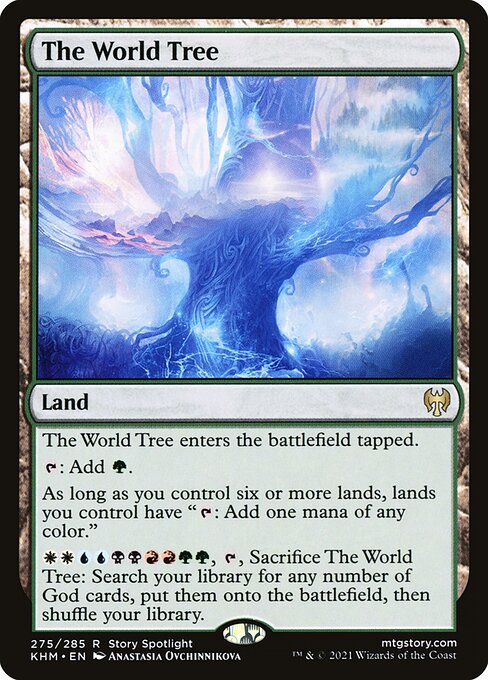
The World Tree
The World Tree
This land enters tapped.
{T}: Add {G}.
As long as you control six or more lands, lands you control have "{T}: Add one mana of any color."
{W}{W}{U}{U}{B}{B}{R}{R}{G}{G}, {T}, Sacrifice this land: Search your library for any number of God cards, put them onto the battlefield, then shuffle. -
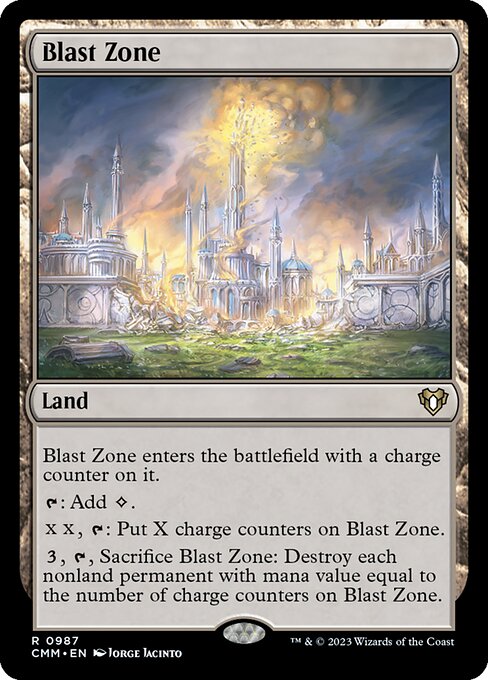
Blast Zone
Blast Zone
This land enters with a charge counter on it.
{T}: Add {C}.
{X}{X}, {T}: Put X charge counters on this land.
{3}, {T}, Sacrifice this land: Destroy each nonland permanent with mana value equal to the number of charge counters on this land. -
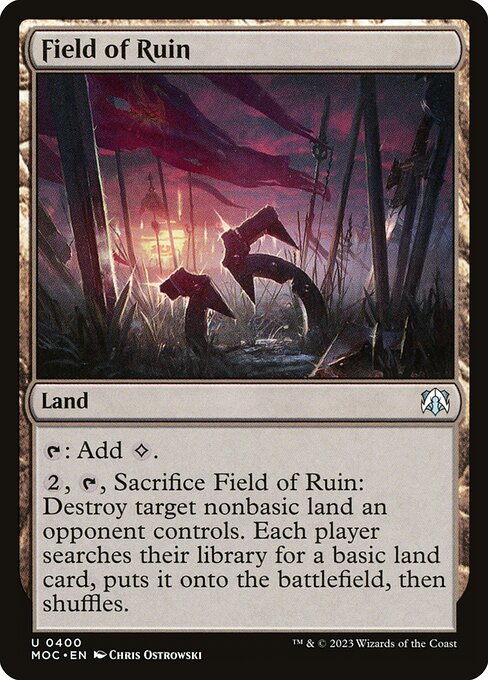
Field of Ruin
Field of Ruin
{T}: Add {C}.
{2}, {T}, Sacrifice this land: Destroy target nonbasic land an opponent controls. Each player searches their library for a basic land card, puts it onto the battlefield, then shuffles. -
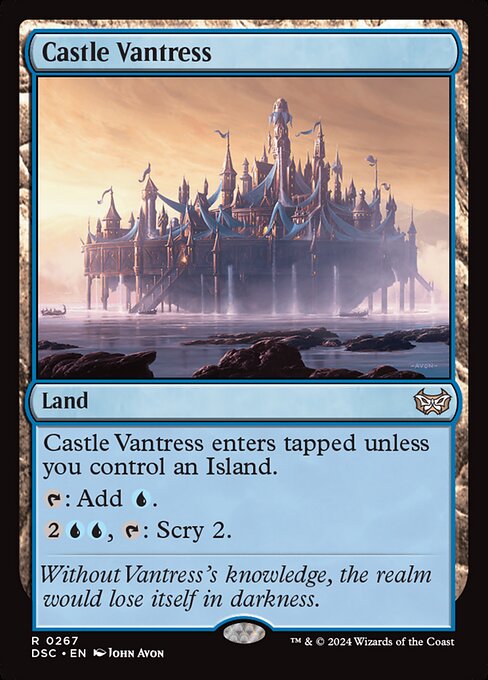
Castle Vantress
Castle Vantress
This land enters tapped unless you control an Island.
{T}: Add {U}.
{2}{U}{U}, {T}: Scry 2. -
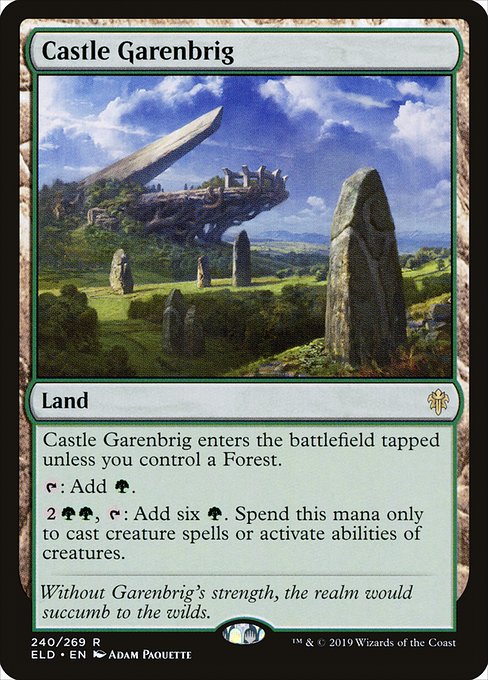
Castle Garenbrig
Castle Garenbrig
This land enters tapped unless you control a Forest.
{T}: Add {G}.
{2}{G}{G}, {T}: Add six {G}. Spend this mana only to cast creature spells or activate abilities of creatures. - Arch of Orozca
-
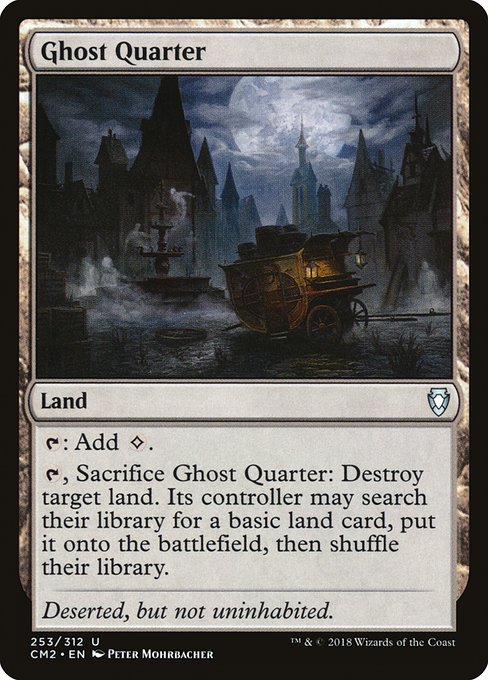
Ghost Quarter
Ghost Quarter
{T}: Add {C}.
{T}, Sacrifice this land: Destroy target land. Its controller may search their library for a basic land card, put it onto the battlefield, then shuffle. -
Reliquary Tower
Reliquary Tower
You have no maximum hand size.
{T}: Add {C}.


—
READ MORE: MTG Cards We’d Like to See in Innistrad: Midnight Hunt
These tips should get you off to a great start with putting together a solid Historic Brawl deck. These tips are pretty important and should help you avoid some of the most common pitfalls with building these complex decks.