
With Retro Artifacts, Universes Beyond Transformers MTG cards, and an epic story, it’s safe to say that The Brothers’ War had a lot going for it. Any of these factors are typically enough to make a set successful. However, The Brothers’ War had more work to do. More so than being a collector’s dream or Commander players’ paradise, The Brothers’ War had to save Standard. Following its neglect in recent years, it’s safe to say Standard hasn’t been in the best shape recently. Not only are players leaving in droves for other formats, but Standard itself has become frightening stale. After the release of Dominaria United, it seemed that only one color was actually worth playing with; black. Even after a hasty ban, black’s dominance didn’t go away. Thankfully, however, there was hope on the horizon.
With powerful new cards and compelling new mechanics, The Brothers’ War promised to inject new life into the format. The return of Monestary Swiftspear at least threatened to seriously shake up the format, at least. Subsequently, many players, especially those on MTG Arena, were excited about The Brothers’ War. Now that it has launched, however, it appears players’ hopes may have been somewhat misplaced. Standard hasn’t really been saved. It’s more just under new management.
The Rise of Red
As expected,
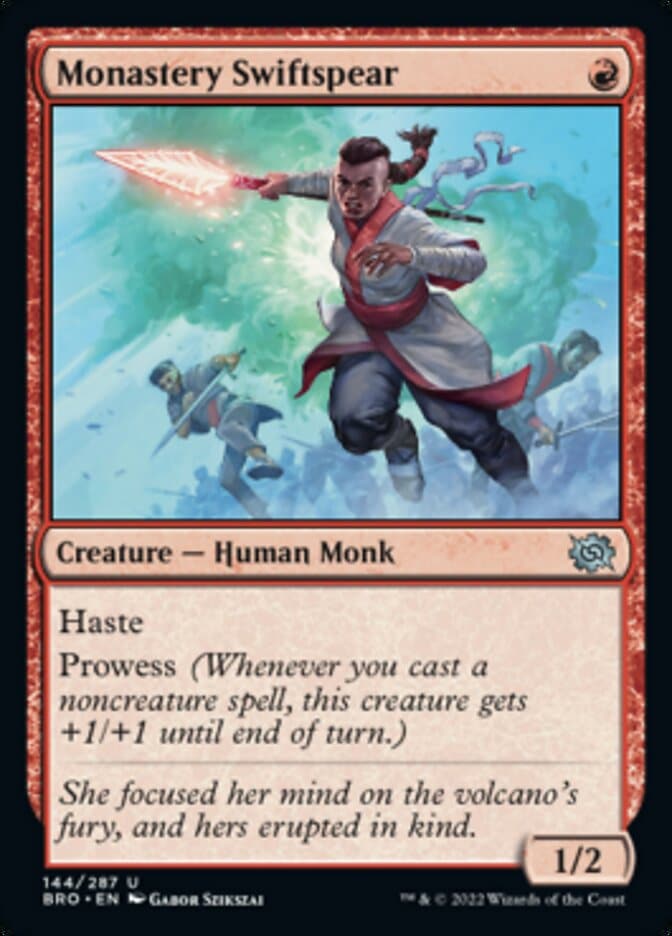
Monastery Swiftspear
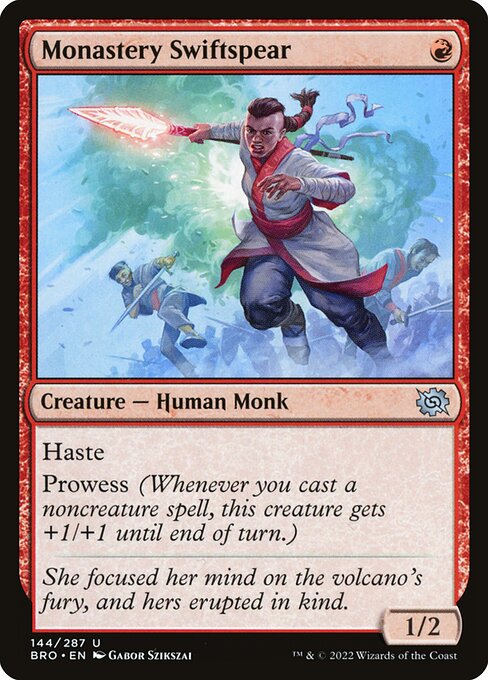 Monastery Swiftspear
Haste
Monastery Swiftspear
Haste
Prowess (Whenever you cast a noncreature spell, this creature gets +1/+1 until end of turn.)
has been making waves in Standard, giving red decks a new lease of life. Admittedly, while welcome, this is hardly surprising considering the prevalence of Monastery Swiftspear in Standard during Khans block. To put it simply, Monastery Swiftspear’s combination of Haste and Prowess is simply unrivaled for its mana cost. Considering that red decks are typically recklessly attacking and clearing the path with spells, Monastery Swiftspear is a natural fit. Subsequently, it should be no surprise to learn that Monastery Swiftspear isn’t just played in Standard, but Modern, Pioneer, Pauper, and even Legacy too!
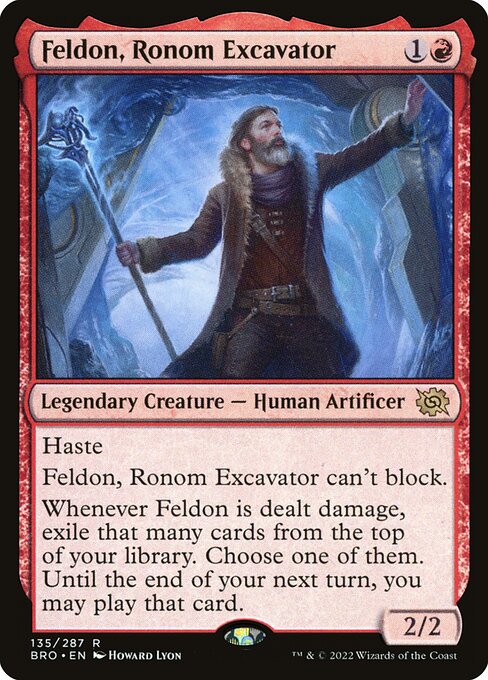
While Monastery Swiftspear is unquestionably powerful, it’s not the only new MTG card for red decks in The Brothers’ War. Stepping on the gas in every sense of the word is the new legendary artificer
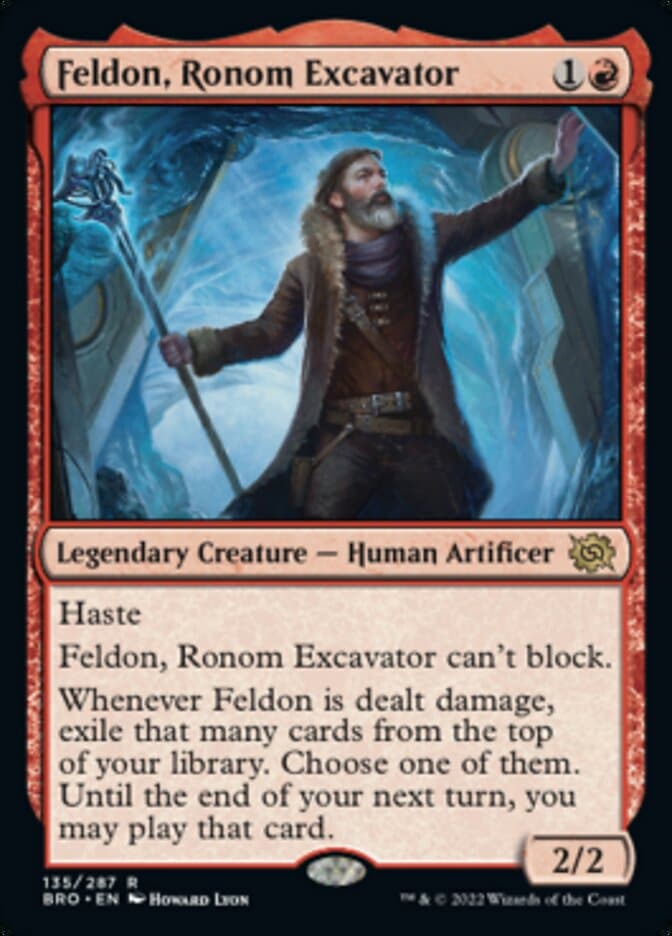
Feldon, Ronom Excavator
 Feldon, Ronom Excavator
Haste
Feldon, Ronom Excavator
Haste
Feldon can't block.
Whenever Feldon is dealt damage, exile that many cards from the top of your library. Choose one of them. Until the end of your next turn, you may play that card.
. With Haste and no ability to block, Feldon, Ronom Excavator practically plays themselves, which I can always get behind. Perhaps even better than chipping in for two damage each turn, Feldon, Ronom Excavator gives you gas when it dies. Exiling a card for you to play each time it gets damaged, Feldon, Ronom Excavator allows red players to keep the pressure up in their pursuit of victory.
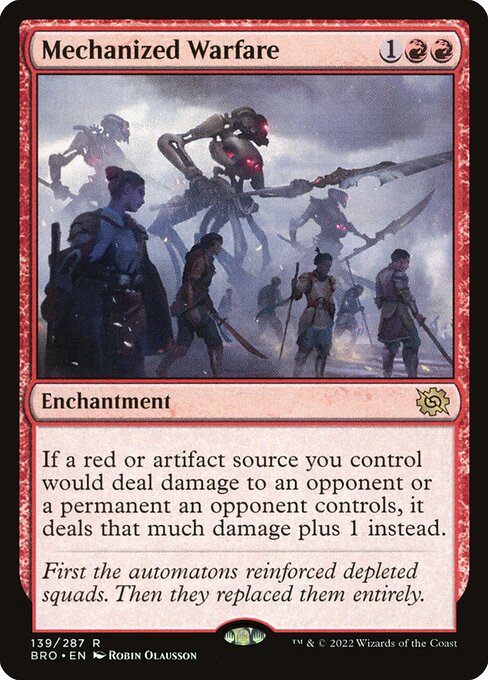
Alongside these aggressive powerhouses, The Brothers’ War also introduced
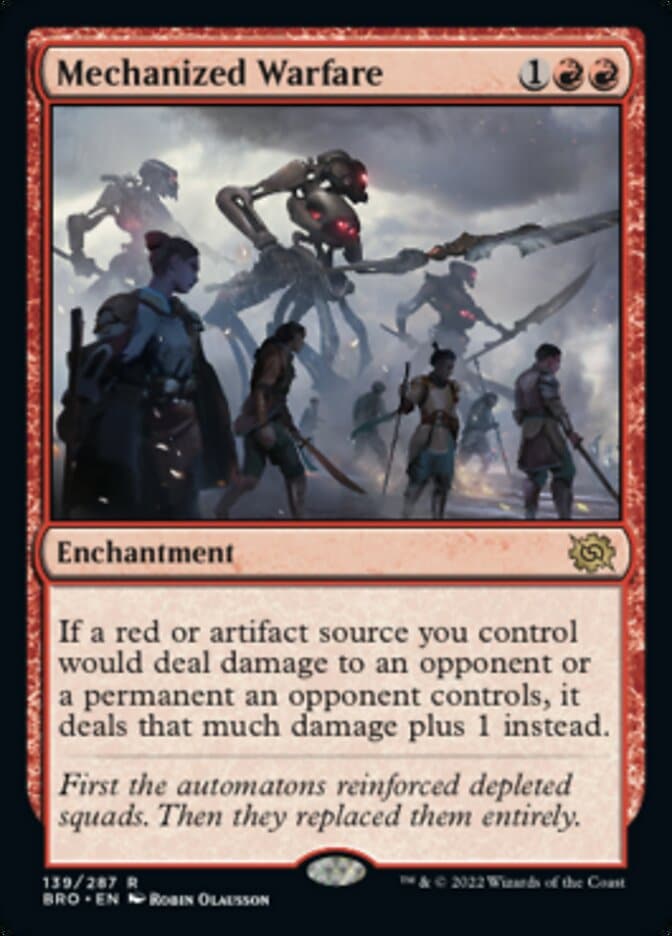
Mechanized Warfare
 Mechanized Warfare
If a red or artifact source you control would deal damage to an opponent or a permanent an opponent controls, it deals that much damage plus 1 instead.
. Similarly to
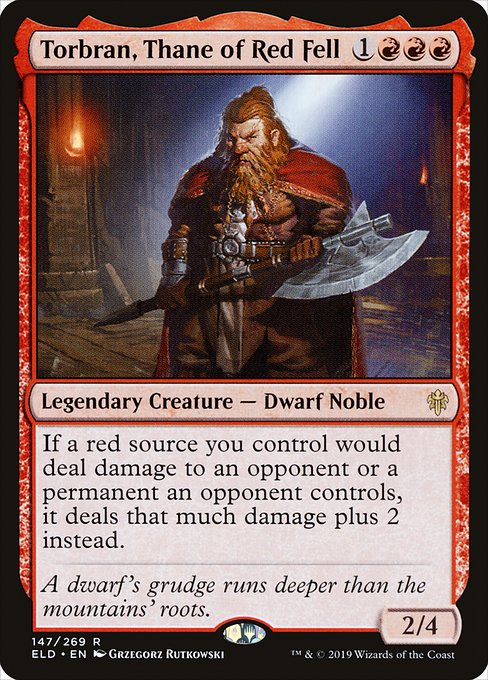
Torbran, Thane of Red Fell
Mechanized Warfare
If a red or artifact source you control would deal damage to an opponent or a permanent an opponent controls, it deals that much damage plus 1 instead.
. Similarly to
Torbran, Thane of Red Fell
 Torbran, Thane of Red Fell
If a red source you control would deal damage to an opponent or a permanent an opponent controls, it deals that much damage plus 2 instead.
from Throne of Eldraine, Mechanized Warfare makes red decks a lot more frightening. Increasing the damage of all red sources, when played on curve, Mechanized Warfare can be absolutely devastating. To be even more oppressive, red players can play additional Mechanized Warfare copies, since, unlike Torbran, they’re not legendary.
Torbran, Thane of Red Fell
If a red source you control would deal damage to an opponent or a permanent an opponent controls, it deals that much damage plus 2 instead.
from Throne of Eldraine, Mechanized Warfare makes red decks a lot more frightening. Increasing the damage of all red sources, when played on curve, Mechanized Warfare can be absolutely devastating. To be even more oppressive, red players can play additional Mechanized Warfare copies, since, unlike Torbran, they’re not legendary.
A New Power
While ultra-aggressive red decks have had a consistent place in the Standard meta recently, white decks haven’t been so fortunate. Before rotation, white weenie decks were a force to be reckoned with, however, recently, they’ve been left lacking. Even following the ban of
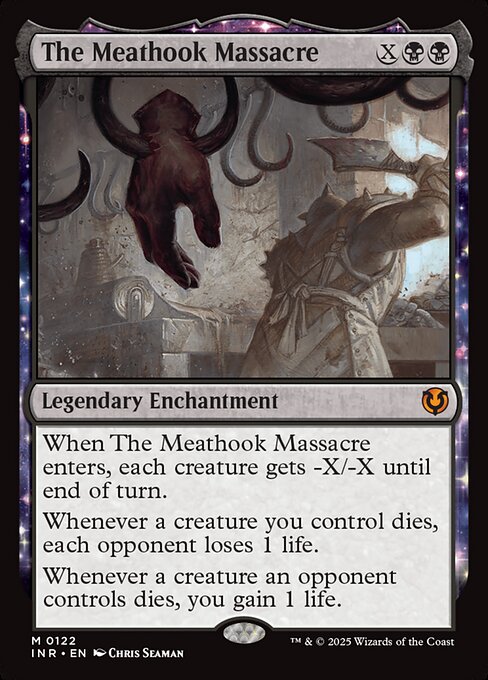
The Meathook Massacre
 The Meathook Massacre
When The Meathook Massacre enters, each creature gets -X/-X until end of turn.
The Meathook Massacre
When The Meathook Massacre enters, each creature gets -X/-X until end of turn.
Whenever a creature you control dies, each opponent loses 1 life.
Whenever a creature an opponent controls dies, you gain 1 life.
, white decks struggled to find their feet. Thankfully, in The Brothers’ War, white decks are relevant once again due to the prevalence of soldiers.
Following Standard rotation, one card that white decks were sorely missing was
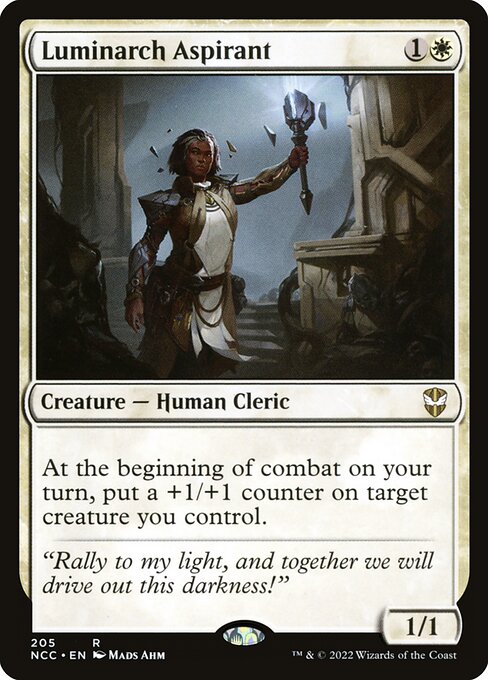
Luminarch Aspirant
 Luminarch Aspirant
At the beginning of combat on your turn, put a +1/+1 counter on target creature you control.
. Providing targeted buffs to your creatures, Luminarch Aspirant could steadily make a threat out of even a 1/1 token. Synergizing with
Hopeful Initiate
Luminarch Aspirant
At the beginning of combat on your turn, put a +1/+1 counter on target creature you control.
. Providing targeted buffs to your creatures, Luminarch Aspirant could steadily make a threat out of even a 1/1 token. Synergizing with
Hopeful Initiate
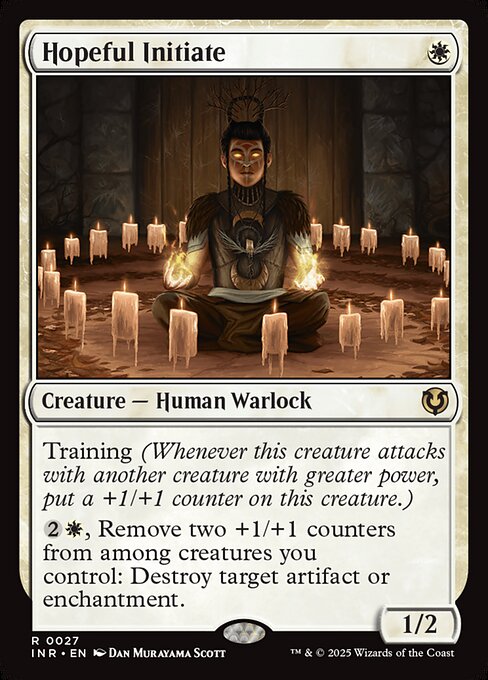 Hopeful Initiate
Training (Whenever this creature attacks with another creature with greater power, put a +1/+1 counter on this creature.)
Hopeful Initiate
Training (Whenever this creature attacks with another creature with greater power, put a +1/+1 counter on this creature.)
{2}{W}, Remove two +1/+1 counters from among creatures you control: Destroy target artifact or enchantment.
was a welcome benefit too. While Luminarch Aspirant has been sorely missed, thankfully, The Brothers’ War has introduced
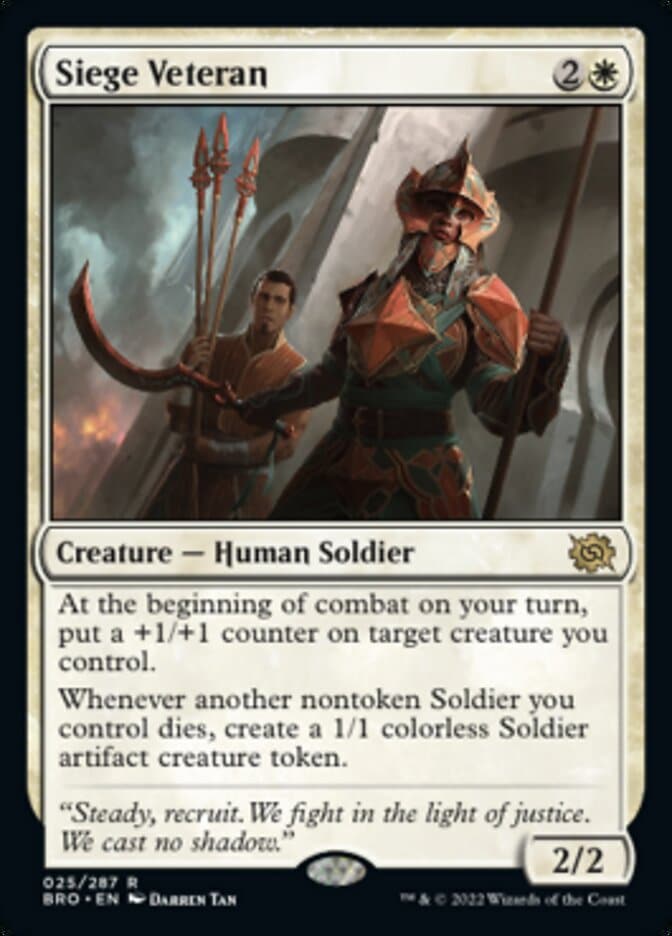
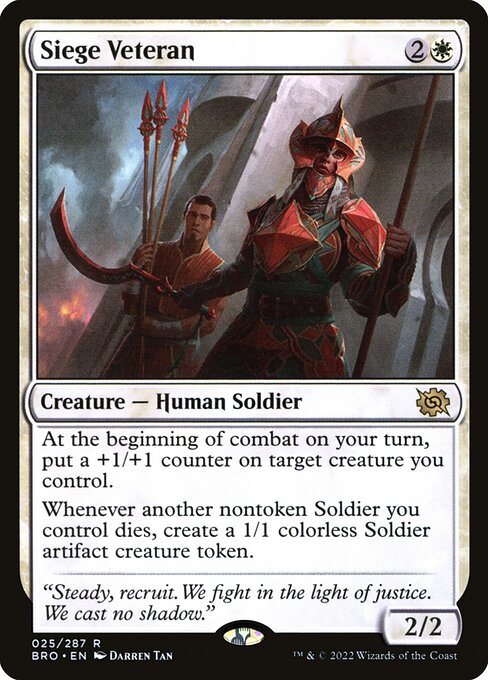
Siege Veteran
 Siege Veteran
At the beginning of combat on your turn, put a +1/+1 counter on target creature you control.
Siege Veteran
At the beginning of combat on your turn, put a +1/+1 counter on target creature you control.
Whenever another nontoken Soldier you control dies, create a 1/1 colorless Soldier artifact creature token.
to replace its role. Not only does Siege Veteran provide repeated +1/+1 counters, but they also generate soldier tokens whenever a nontoken soldier dies in order to keep the pressure up.
Thankfully, it’s not just on Siege Veteran to dish out the buffs, as
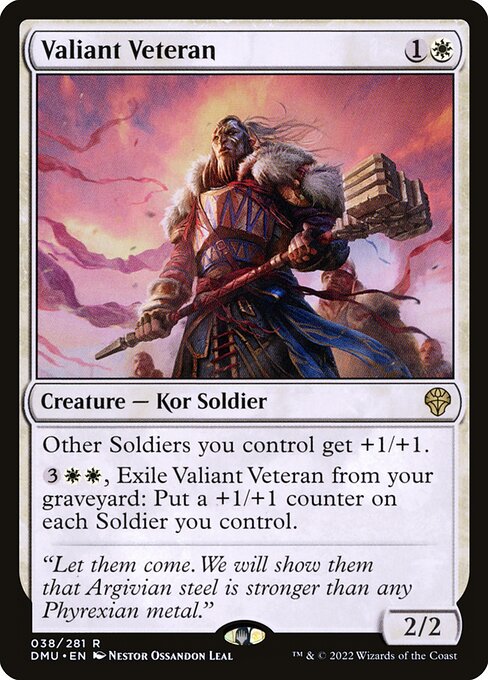
Valiant Veteran
 Valiant Veteran
Other Soldiers you control get +1/+1.
Valiant Veteran
Other Soldiers you control get +1/+1.
{3}{W}{W}, Exile this card from your graveyard: Put a +1/+1 counter on each Soldier you control.
is still around. Additionally, the new Azorius addition of
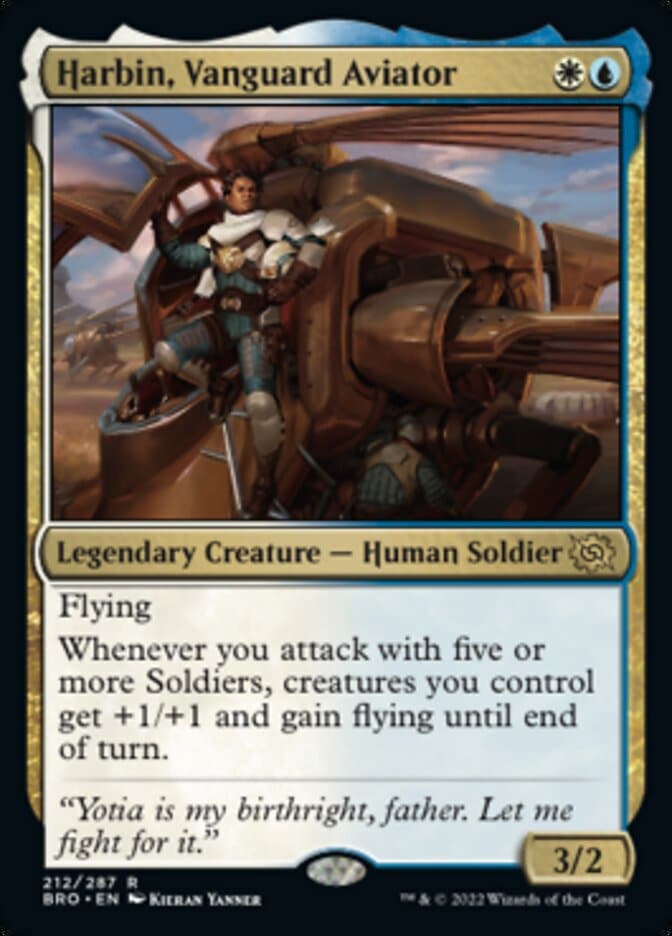
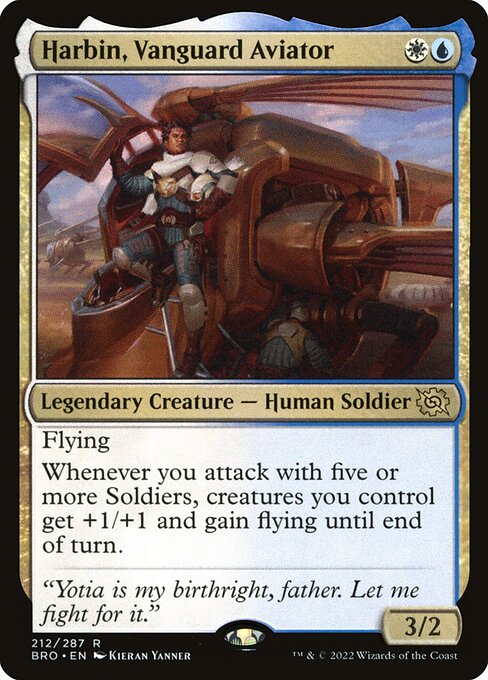
Harbin, Vanguard Aviator
 Harbin, Vanguard Aviator
Flying
Harbin, Vanguard Aviator
Flying
Whenever you attack with five or more Soldiers, creatures you control get +1/+1 and gain flying until end of turn.
does some serious work. On their own, Harbin, Vanguard Aviator is a non-insignificant threat, however, they can turn into a game-ending one with support. With five Soldiers attacking, Harbin, Vanguard Aviator, really gets to work, giving each soldier +1/+1 and Flying until the end of the turn, potentially ending the game right then and there.
As if that wasn’t enough, the new Azorius soldiers deck is surprisingly efficient at drawing cards. Thanks to
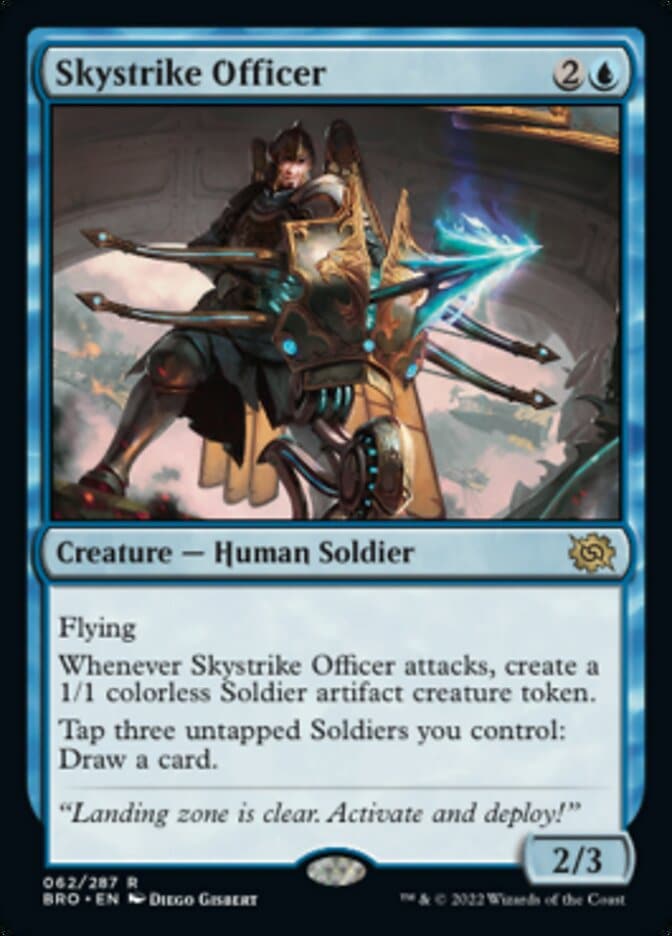
Skystrike Officer
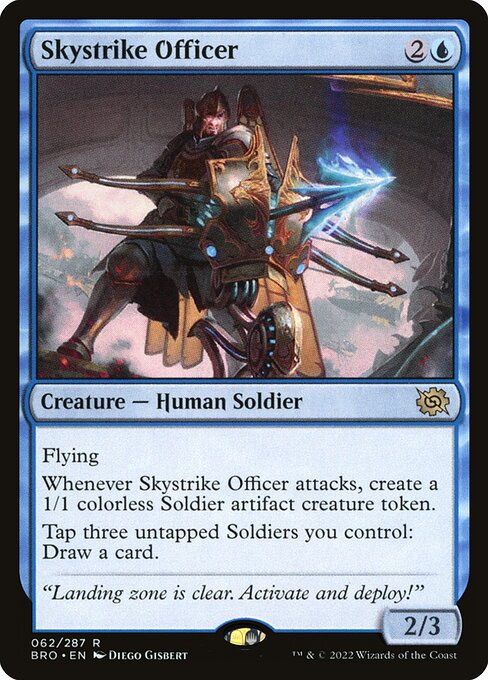 Skystrike Officer
Flying
Skystrike Officer
Flying
Whenever this creature attacks, create a 1/1 colorless Soldier artifact creature token.
Tap three untapped Soldiers you control: Draw a card.
and their ability to tap soldiers to draw cards, one of white’s biggest problems has been effectively mitigated. Skystrike Officer even generates soldier tokens to tap too!
A Familiar Foe
Unfortunately, while Azorius soldiers and red deck wins are rising in power and popularity, there’s still no beating black. Topping the charts for Standard’s current metagame share is the black-dominated Grixis Midrange at 10.40% (according to MTGDecks). Close behind that is Esper Midrange at 9.43%, with mono black decks a touch further behind, holding just 8.68% of the meta share. While Azorius soldiers holds a respectable 9.86% of the meta share, and red deck wins a 4.61% share, there’s no question that black is still dominant in Standard.
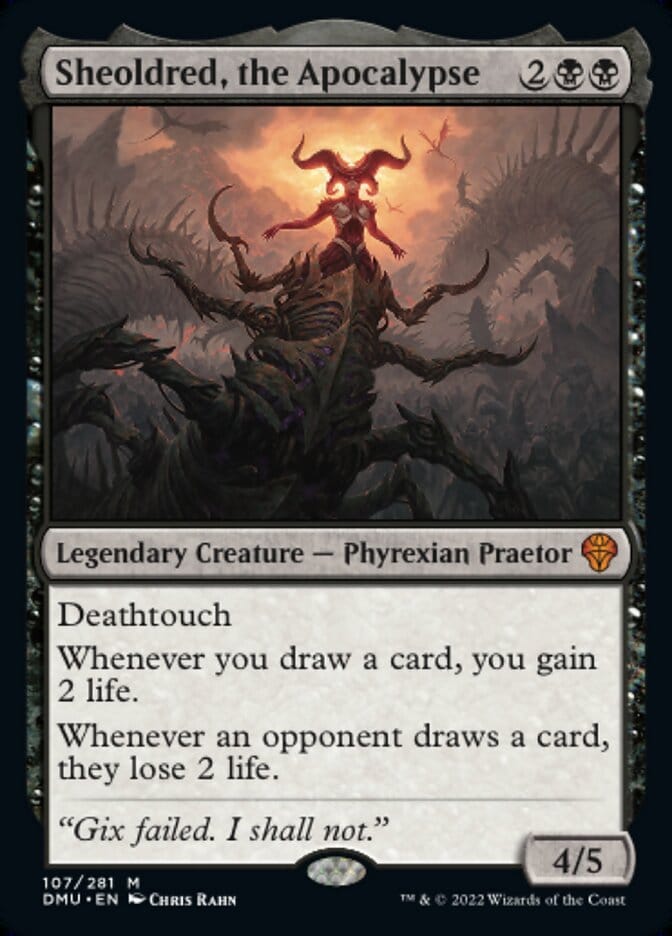
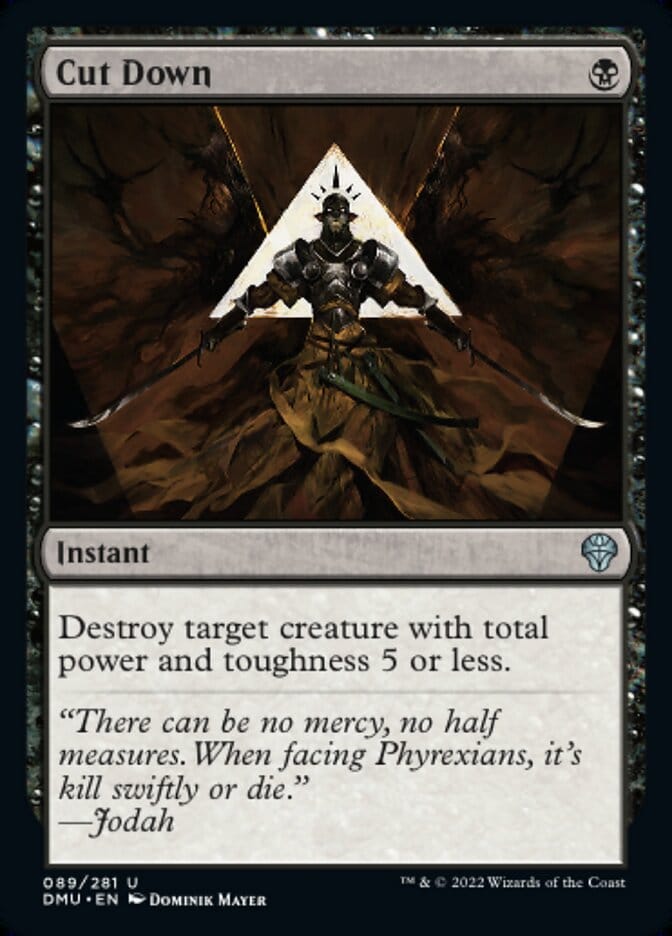
According to MTGGoldfish’s stats on the Standard metagame, the overwhelmingly powerful Sheoldred, the Apocalpyse is played in 53% of all decks. Alongside Sheoldred,
Cut Down
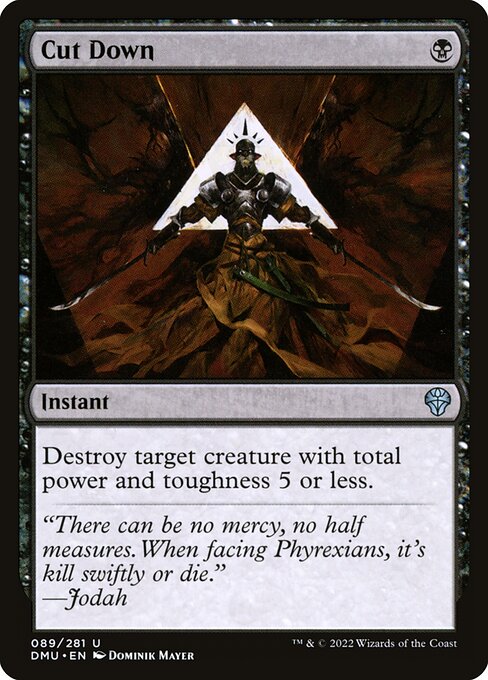 Cut Down
Destroy target creature with total power and toughness 5 or less.
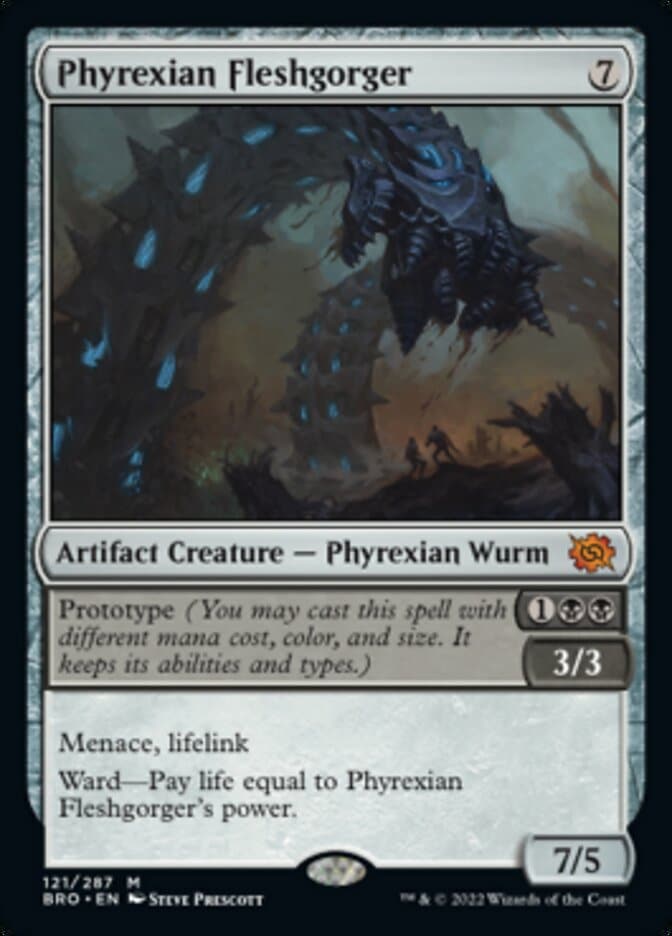
continues to be ruthlessly efficient in 57% of all Standard decks. While nowhere near as prevalent, joining the MTG party from The Brothers’ War is
Phyrexian Fleshgorger
Cut Down
Destroy target creature with total power and toughness 5 or less.
continues to be ruthlessly efficient in 57% of all Standard decks. While nowhere near as prevalent, joining the MTG party from The Brothers’ War is
Phyrexian Fleshgorger
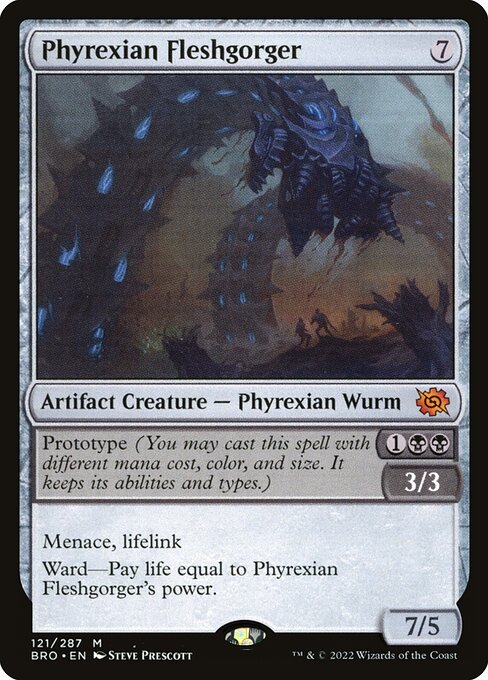 Phyrexian Fleshgorger
Prototype {1}{B}{B} — 3/3 (You may cast this spell with different mana cost, color, and size. It keeps its abilities and types.)
Phyrexian Fleshgorger
Prototype {1}{B}{B} — 3/3 (You may cast this spell with different mana cost, color, and size. It keeps its abilities and types.)
Menace, lifelink
Ward—Pay life equal to this creature's power.
. As we’ve covered time and time again, this card is an absolute menace that’s not easy to get rid of.
Surprisingly, Phyrexian Fleshgorger isn’t played as much as you might expect. Instead of being everywhere, Phyrexian Fleshgorger is primarily only found in mono-black decks alongside
Gix, Yawgmoth Praetor
 Gix, Yawgmoth Praetor
Whenever a creature deals combat damage to one of your opponents, its controller may pay 1 life. If they do, they draw a card.
Gix, Yawgmoth Praetor
Whenever a creature deals combat damage to one of your opponents, its controller may pay 1 life. If they do, they draw a card.
{4}{B}{B}{B}, Discard X cards: Exile the top X cards of target opponent's library. You may play lands and cast spells from among cards exiled this way without paying their mana costs.
. While strong, these cards aren’t needed in Esper and Grixis lists, since they have no end of options. Esper and Grixis lists also have no trouble being competitive since there’s an abundance of mana fixing, such as
Raffine’s Tower
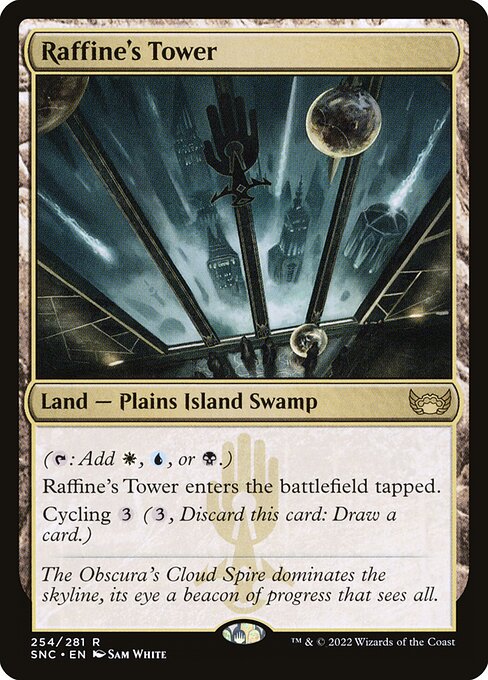 Raffine’s Tower
({T}: Add {W}, {U}, or {B}.)
Raffine’s Tower
({T}: Add {W}, {U}, or {B}.)
This land enters tapped.
Cycling {3} ({3}, Discard this card: Draw a card.)
currently in Standard.
Has It Done Enough?
Unsurprisingly, the rise of two new archetypes in the format won’t be enough to save Standard. As we discussed recently, the problems with the format go much deeper than how much variety there is. After being prompted by MTG’s Vice President of Design, Aaron Forsythe, players were quick to bemoan how Standard has effectively been abandoned by Wizards. Thanks to COVID-19, in-person tournaments virtually disappeared for a few years, and they’ve not really returned since. As MTG Hall of Famer Brian Kibler points out, “there have not been big live events that felt like they mattered in years.” Further dissuading players away from Standard has been the rising costs of the format. Previously a competitive Standard deck typically wouldn’t cost more than $100–200. However, current Tier 1 decks can easily set you back $400–500. Even four copies of
Sheoldred, the Apocalypse
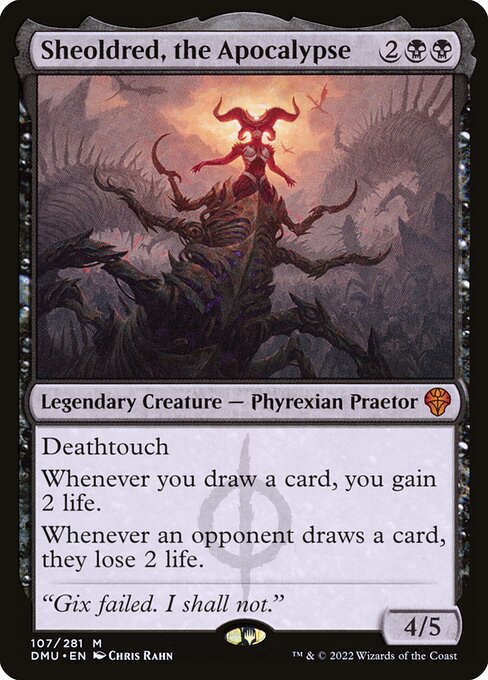 Sheoldred, the Apocalypse
Deathtouch
Sheoldred, the Apocalypse
Deathtouch
Whenever you draw a card, you gain 2 life.
Whenever an opponent draws a card, they lose 2 life.
alone will cost you around $250+!
With these factors in mind, it’s no wonder that MTG players have been moving towards non-rotating formats like Pioneer, Modern, and Commander. Unfortunately for Standard, this migration of players has also changed the competitive scene, which now more regularly supports these formats. Subsequently, outside of MTG Arena, Standard is becoming less and less relevant, to the point that most players don’t care about it anymore. Thankfully, there is a glimmer of hope on the horizon for players who care about Standard as it’s the format for the next round of Regional Championships. This may inject some life back into the format, however, it’s unclear how long that may last. Ultimately, Standard can still be a lot of fun, however, due to the disinterest on paper, the future of Standard is becoming less and less clear.
Read More: Ancient MTG Format Creates 1000% Spikes to Commander Cards!