
One of the biggest attractions to Magic: the Gathering for many of its players is how customizable of an experience the game offers. There are tens of thousands of cards to choose from and a handful of different formats depending on how you want to play. Commander is, by far, the most popular among these since it offers an extremely diverse card pool and allows you to play with a group of friends. Alternatively, you could play with the newest cards that MTG offers in the Standard format or play with cards from older days in the Legacy or Vintage format.
Either way, there are a lot of ways to play MTG, but not all of those ways are created by Wizards of the Coast themselves. Commander, for example, was originally a format created by players and not the game’s designers. The same goes for a new format that has been officially recognized by Wizards of the Coast as of yesterday. Welcome, Oathbreaker!
Welcome, Oathbreaker!
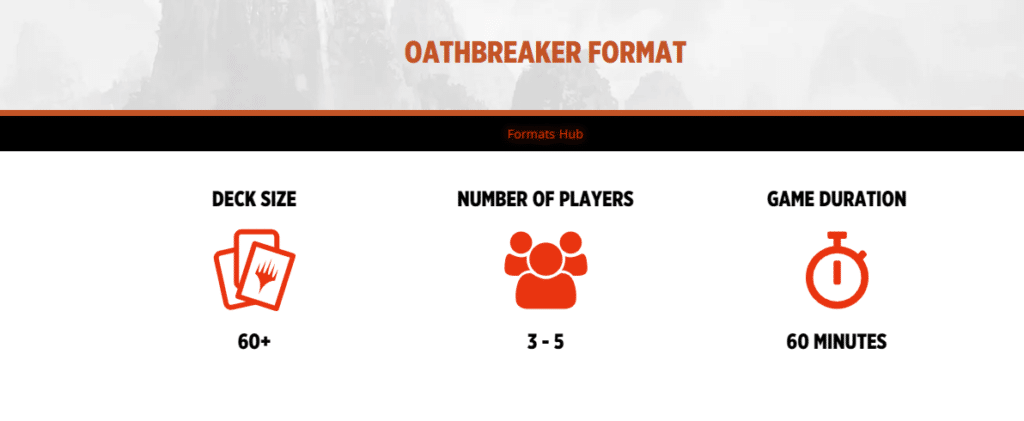
For those curious, Oathbreaker isn’t an entirely new format, but it was not official until recently. This format shares many similarities with Commander in the way it is constructed and plays, but there are some stark differences.
Like Commander, you have a sort of Commander card. However, this card can be any Planeswalker outside of the format’s ban list. This is a stark difference from Commander since you, instead, use Legendary Creatures in that format. For a Planeswalker to be your Commander, it generally needs a line of text at the bottom that states explicitly that it can be your Commander. Daretti, Scrap Savant is an example of this. Any Planeswalker off the ban list can be your Commander or Oathbreaker in the Oathbreaker format.
Secondly, alongside your Planeswalker is a Signature Spell. Like Commander, all of your cards need to match the color identity of your Oathbreaker, including your Signature Spell. This is a spell that can be cast as a Commander would as long as you have your Oathbreaker in play. Like Commander, you are able to return your Oathbreaker and Signature Spell to the Command Zone after they go to the graveyard and recast them for their original cost plus two mana.
Unlike Commander, you actually start with 20 life in the Oathbreaker format, which can lead to much quicker games. The card pool for this format is also the same as Commander, allowing any cards that would be Vintage legal (ban list in Vintage does not affect Oathbreaker, at least to my knowledge)
Deckbuilding
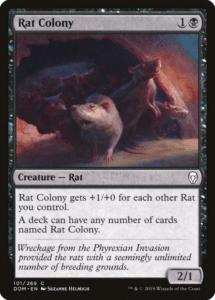
Like Commander, Oathbreaker is a multiplayer Singleton format. This means that you cannot have more than one copy of a unique card in your deck. The only exception to this rule is Basic Land cards and cards that specifically state that you can run any number of the card in your deck, like Rat Colony. That said, you also cannot have cards on the ban list in your deck.
Unlike Commander, Oathbreaker is a 60-card format. This means that the total number of cards in your starting deck will be 58 since your Oathbreaker and your Signature Spell count towards your total. Also, remember that even though this is a 60-card format, it is still intended to be a multiplayer experience.
Read More: The Rarest MTG Card May Be Too Rare For Its Own Good
Sol Ring Banned!?
As mentioned previously, even though Oathbreaker has only been officially recognized by Wizards of the Coast recently, the format has actually existed since 2017. As such, for those who play the format, there is already a ban list in place to eliminate problematic strategies that had too heavy of a stranglehold on the format.
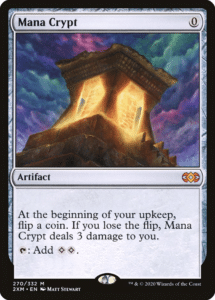
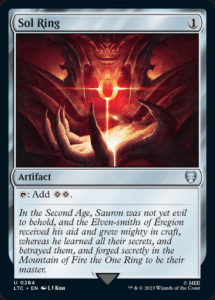
One stark difference you’ll notice between Oathbreaker and Commander is that Mana Crypt and Sol Ring, two massive controversial super staples in the Commander format, are banned in Oathbreaker. Those who wrote up the ban list have left a bunch of criteria as to why cards ended up banned, and a specific column has been written in regards to why fast mana is problematic in Oathbreaker:
“Extreme early mana acceleration. This is typically permanent mana sources that produce more mana than they cost to cast. Limiting fast mana early in games is necessary given players have access to multiple spells in the command zone and decks are only 58 cards. Fast mana has the tendency to end games too quickly. Ban examples: Sol Ring , Mana Crypt and original Moxen.“
Besides this banned category, “Instant and Sorcery Cards that win the game with minimal work,” “Planeswalkers that interact too well as an Oathbreaker,” and “Cards that lead to unreactive game states or unmemorable games” are the main categories to consider when banning cards in Oathbreaker. You can read more about that here.
Read More: Infamous EDH Staple is Shadow Banned On MTG’s Biggest Show!
Official Oathbreaker Ban List
This is the full recommended ban list for Oathbreaker right now:
- Cards with the “Conspiracy” card type. Click here to see those.
- Cards that reference “playing with ante”. Click here to see those.
- Silver-bordered cards
- Ad Nauseam
- Ancestral Recall
-
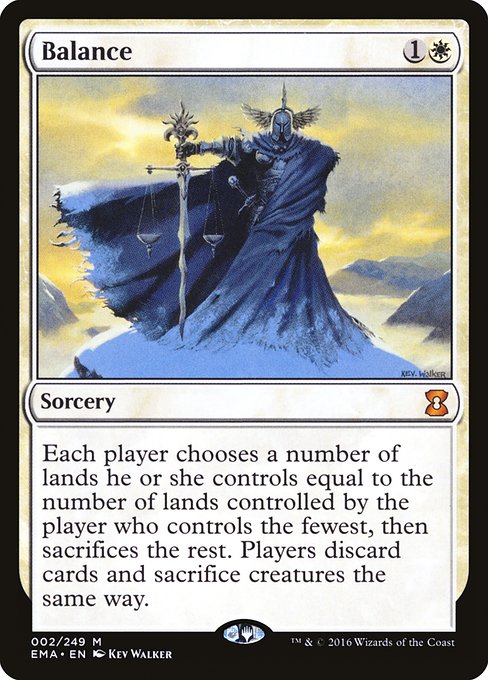
Balance
 Balance
Each player chooses a number of lands they control equal to the number of lands controlled by the player who controls the fewest, then sacrifices the rest. Players discard cards and sacrifice creatures the same way.
Balance
Each player chooses a number of lands they control equal to the number of lands controlled by the player who controls the fewest, then sacrifices the rest. Players discard cards and sacrifice creatures the same way.
- Biorhythm
-
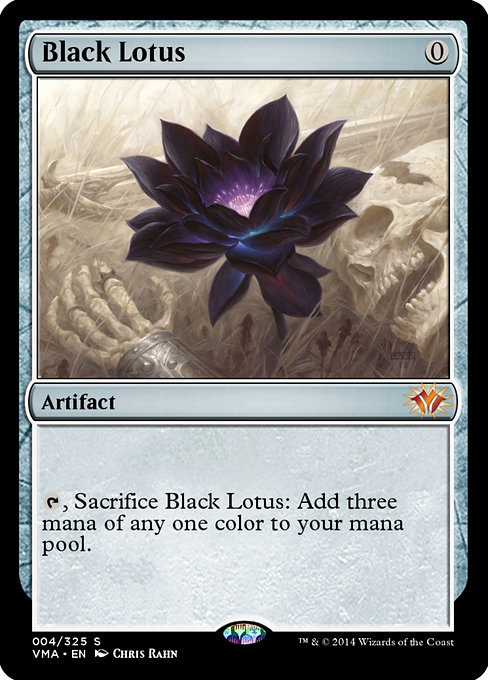
Black Lotus
Black Lotus
{T}, Sacrifice this artifact: Add three mana of any one color.
-
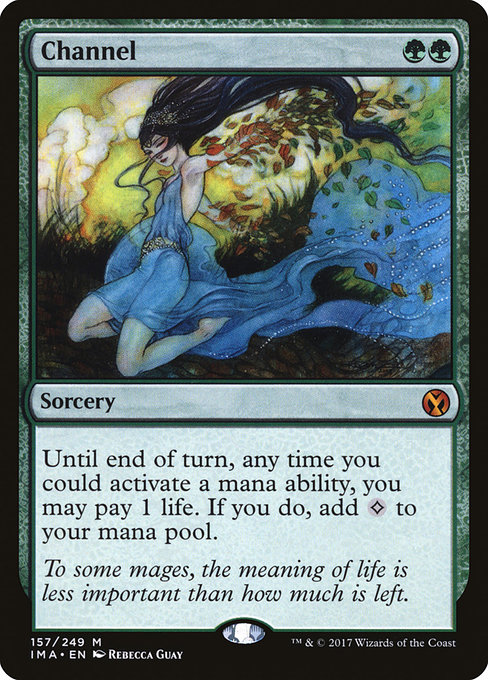
Channel
Channel
Until end of turn, any time you could activate a mana ability, you may pay 1 life. If you do, add {C}.
- Chaos Orb
- Cleanse
- Crusade
- Dark Ritual
- Doomsday
- Emrakul, the Aeons Torn
- Expropriate
- Falling Star
- Fastbond
- Gifts Ungiven
-
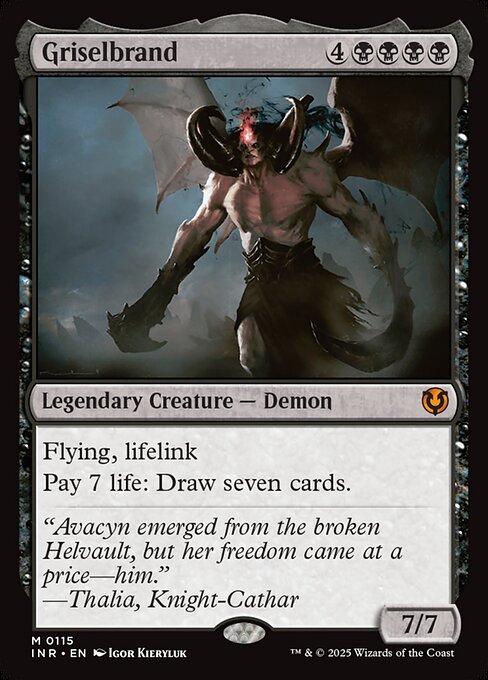
Griselbrand
Griselbrand
Flying, lifelink
Pay 7 life: Draw seven cards. - High Tide
- Imprison
- Invoke Prejudice
- Jihad
-
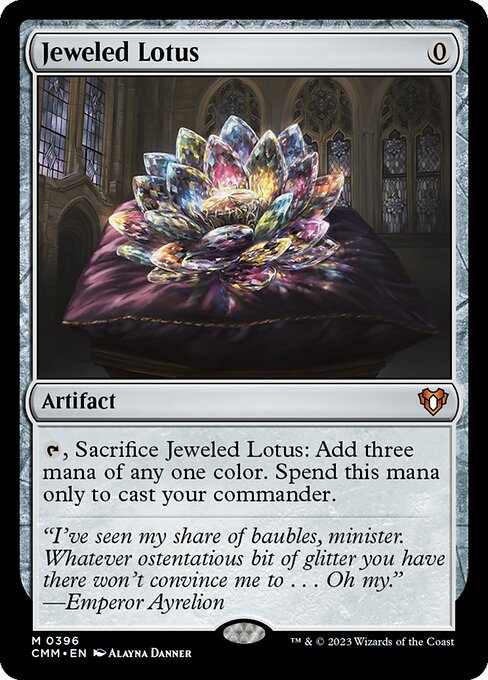
Jeweled Lotus
Jeweled Lotus
{T}, Sacrifice this artifact: Add three mana of any one color. Spend this mana only to cast your commander.
- Library of Alexandria
- Limited Resources
-
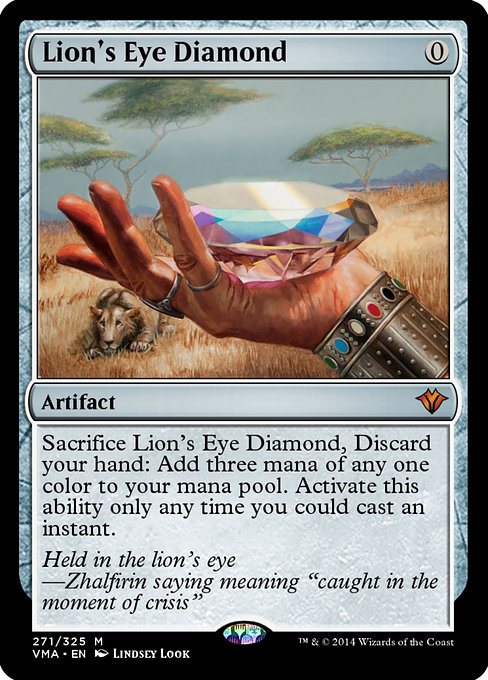
Lion’s Eye Diamond
Lion’s Eye Diamond
Discard your hand, Sacrifice this artifact: Add three mana of any one color. Activate only as an instant.
-
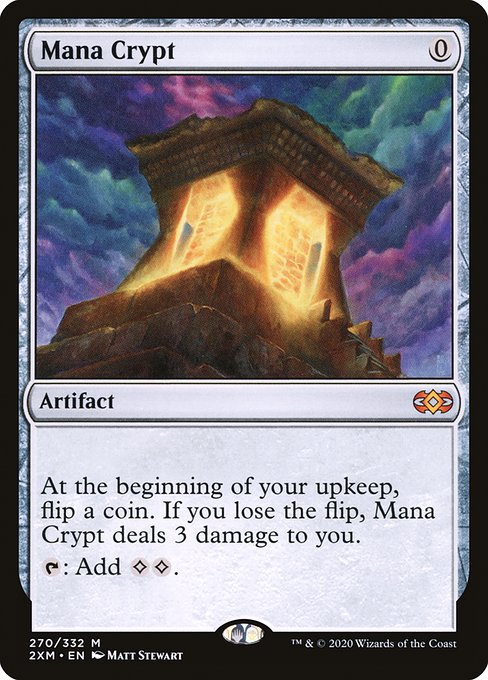
Mana Crypt
Mana Crypt
At the beginning of your upkeep, flip a coin. If you lose the flip, this artifact deals 3 damage to you.
{T}: Add {C}{C}. - Mana Geyser
- Mana Vault
- Mox Emerald
- Mox Jet
- Mox Pearl
-
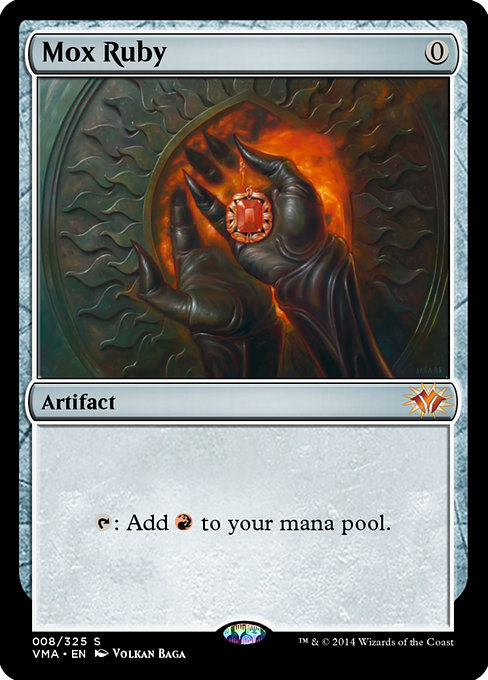
Mox Ruby
Mox Ruby
{T}: Add {R}.
- Mox Sapphire
- Natural Order
- Painter’s Servant
- Pradesh Gypsies
-
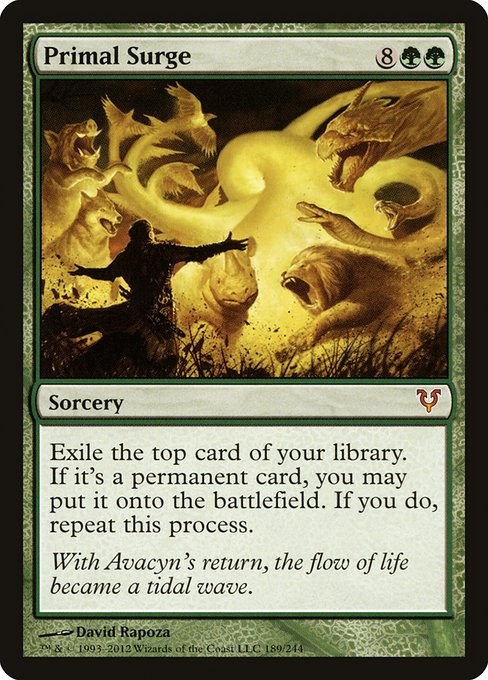
Primal Surge
Primal Surge
Exile the top card of your library. If it's a permanent card, you may put it onto the battlefield. If you do, repeat this process.
- Saheeli, the Gifted
-
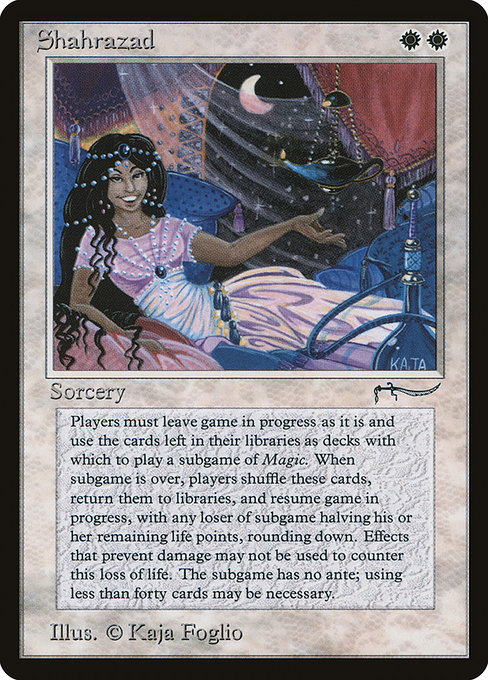
Shahrazad
Shahrazad
Players play a Magic subgame, using their libraries as their decks. Each player who doesn't win the subgame loses half their life, rounded up.
-
Sol Ring
Sol Ring
{T}: Add {C}{C}.
- Stone-Throwing Devils
-
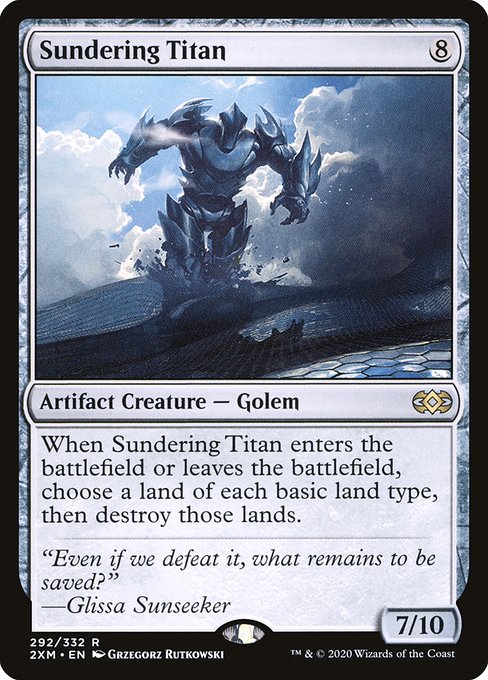
Sundering Titan
Sundering Titan
When this creature enters or leaves the battlefield, choose a land of each basic land type, then destroy those lands.
-
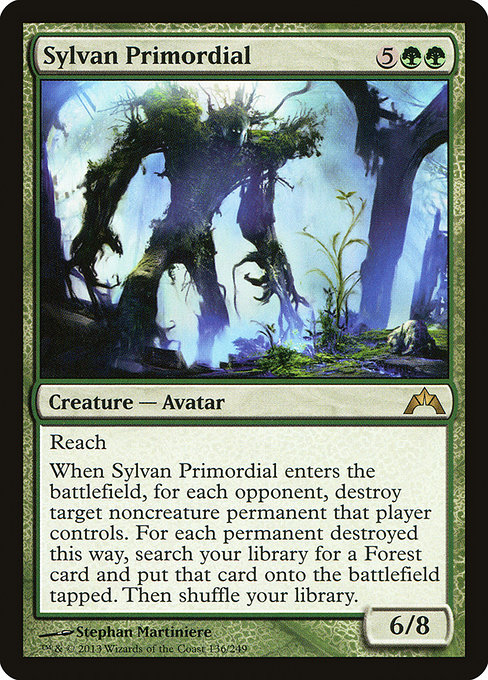
Sylvan Primordial
Sylvan Primordial
Reach
When this creature enters, for each opponent, destroy target noncreature permanent that player controls. Search your library for up to X Forest cards, where X is the number of permanents destroyed this way, put those cards onto the battlefield tapped, then shuffle. -
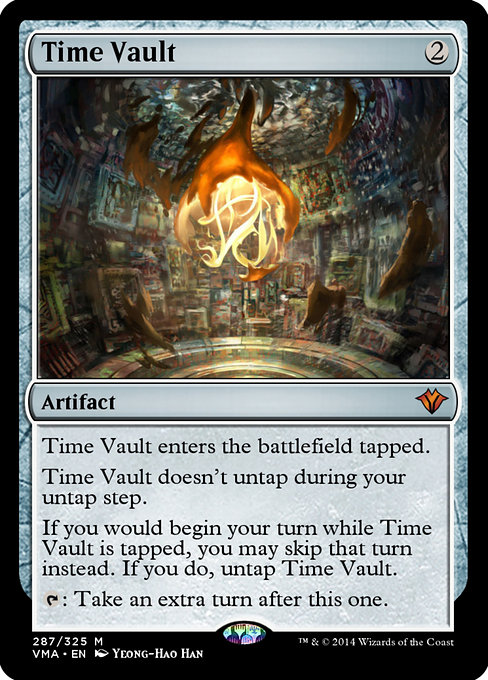
Time Vault
Time Vault
This artifact enters tapped.
This artifact doesn't untap during your untap step.
If you would begin your turn while this artifact is tapped, you may skip that turn instead. If you do, untap this artifact.
{T}: Take an extra turn after this one. - Time Walk
- Tinker
-
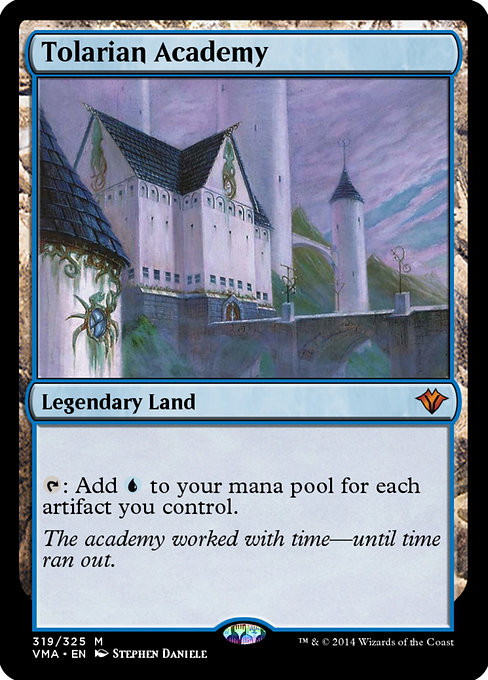
Tolarian Academy
Tolarian Academy
{T}: Add {U} for each artifact you control.
-
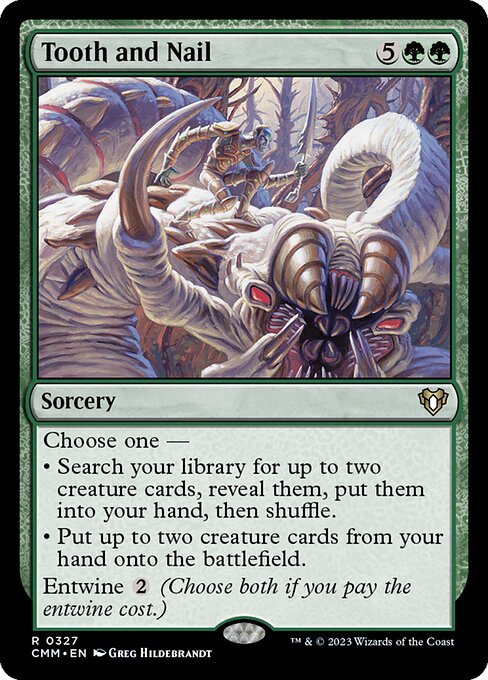
Tooth and Nail
Tooth and Nail
Choose one —
• Search your library for up to two creature cards, reveal them, put them into your hand, then shuffle.
• Put up to two creature cards from your hand onto the battlefield.
Entwine {2} (Choose both if you pay the entwine cost.) - Trade Secrets
-
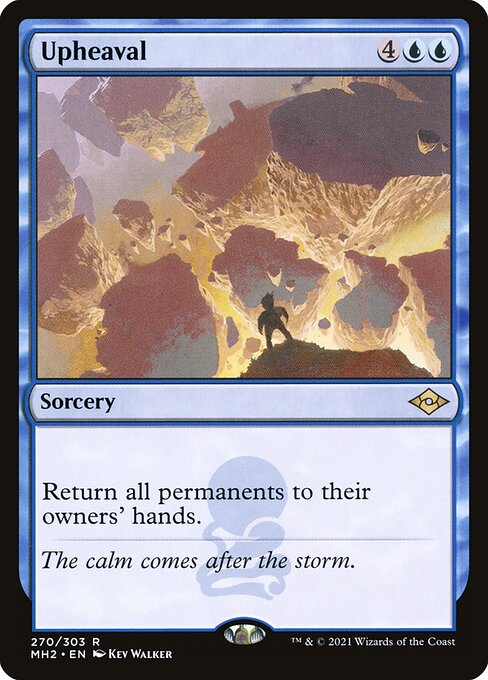
Upheaval
Upheaval
Return all permanents to their owners' hands.
-
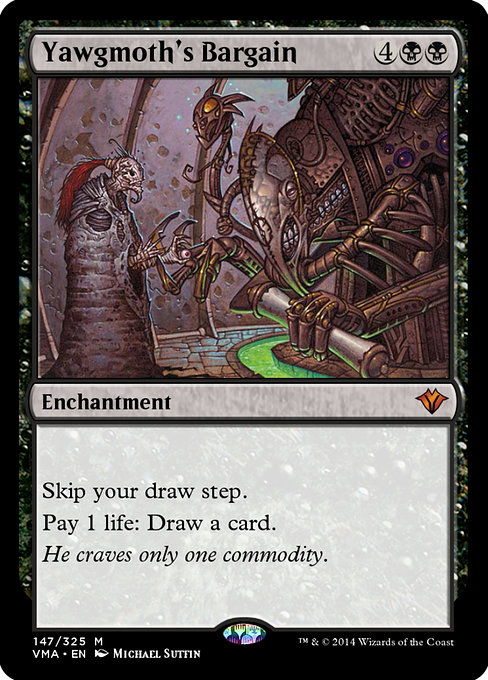
Yawgmoth’s Bargain
Yawgmoth’s Bargain
Skip your draw step.
Pay 1 life: Draw a card.

Common Questions
For any who may want to try the Oathbreaker format for themselves, here are a few extra things regarding the format that may help clear things up:
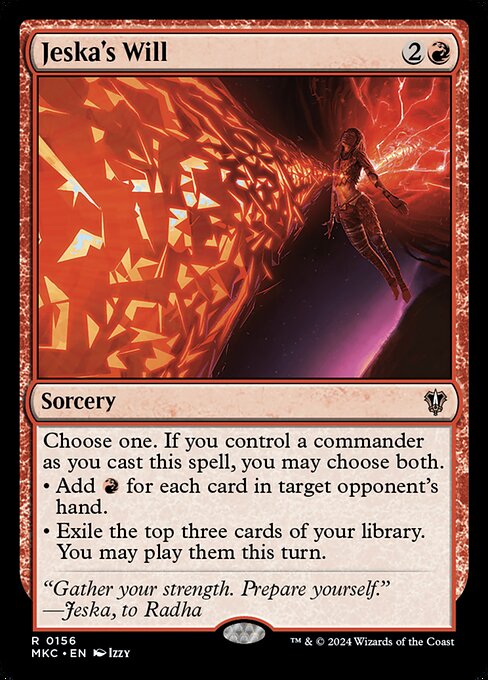
- Any MTG card that refers to your Commander instead refers to your Oathbreaker in this format. Yes, that means
Jeska’s Will
Jeska’s Will
Choose one. If you control a commander as you cast this spell, you may choose both instead.
• Add {R} for each card in target opponent's hand.
• Exile the top three cards of your library. You may play them this turn. works - Like Commander, cards that care about things ‘outside the game’ do not work in Oathbreaker
- Two Oathbreakers may be used alongside the Partner mechanic
- Oathbreakers are subject to the Legend Rule
If you want to learn more about Oathbreaker, you can find the official site here. Hopefully, you will find a chance to try out MTG’s newest official format!
Read More: Lord of the Rings Cards Cause Old MTG Card to Shoot Past $50!