
Introduction
One of the most exciting aspects of March of the Machine is the new Multiverse Legends bonus sheet. This sheet adds variety to drafts by sprinkling iconic legendary creatures into the experience. Many of these legendary cards open up exciting new deck possibilities and invite you to build around novel strategies not necessarily represented by the 10 draft archetypes of the set.
This is not a list of the five strongest Multiverse Legend cards in the set. Instead, this list is meant to show the five Legendary creatures that provide the most interesting deckbuilding possibilities. If you see a
Ragavan, Nimble Pilferer
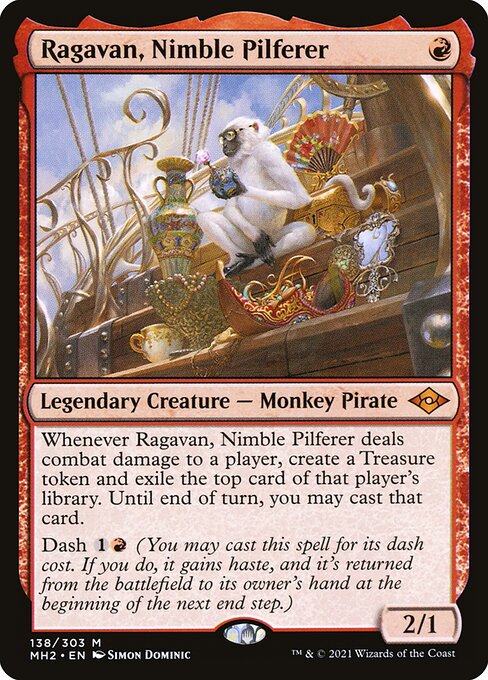 Ragavan, Nimble Pilferer
Whenever Ragavan deals combat damage to a player, create a Treasure token and exile the top card of that player's library. Until end of turn, you may cast that card.
Ragavan, Nimble Pilferer
Whenever Ragavan deals combat damage to a player, create a Treasure token and exile the top card of that player's library. Until end of turn, you may cast that card.
Dash {1}{R} (You may cast this spell for its dash cost. If you do, it gains haste, and it's returned from the battlefield to its owner's hand at the beginning of the next end step.)
you should absolutely take it, it is an immensely powerful card, but it doesn’t offer a fun new strategy for you to build around. These five cards do…
5. Valduk, Keeper of the Flame
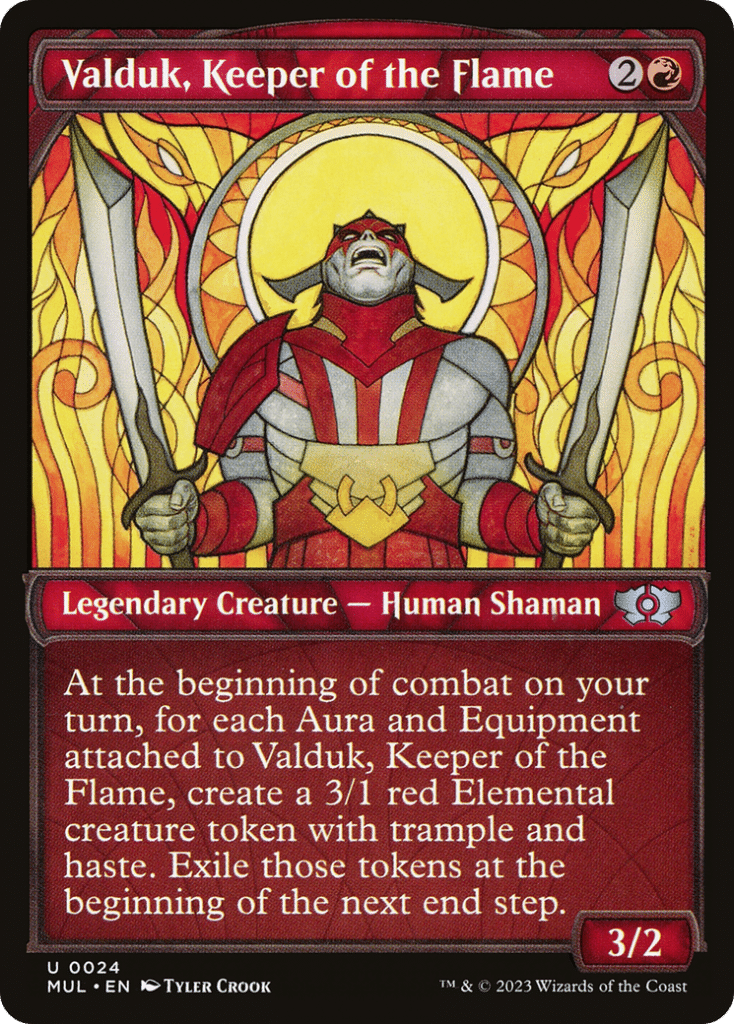
Valduk, Keeper of the Flame
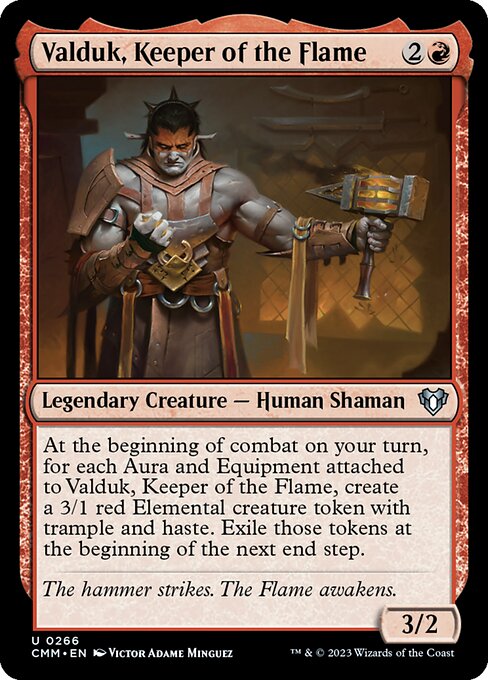 Valduk, Keeper of the Flame
At the beginning of combat on your turn, for each Aura and Equipment attached to Valduk, create a 3/1 red Elemental creature token with trample and haste. Exile those tokens at the beginning of the next end step.
is a popular Voltron Commander that also works as a Limited build around. This Keldon Shaman is a three mana 3/2. Whenever Valduk attacks he generates a number of 3/1 Elemental tokens with trample that attacks alongside him. One elemental is created for each aura and equipment card attached to him. These tokens gets exiled at the end of the turn.
Valduk, Keeper of the Flame
At the beginning of combat on your turn, for each Aura and Equipment attached to Valduk, create a 3/1 red Elemental creature token with trample and haste. Exile those tokens at the beginning of the next end step.
is a popular Voltron Commander that also works as a Limited build around. This Keldon Shaman is a three mana 3/2. Whenever Valduk attacks he generates a number of 3/1 Elemental tokens with trample that attacks alongside him. One elemental is created for each aura and equipment card attached to him. These tokens gets exiled at the end of the turn.
While there aren’t many auras for Valduuk in March of the Machine (
Astral Wingspan
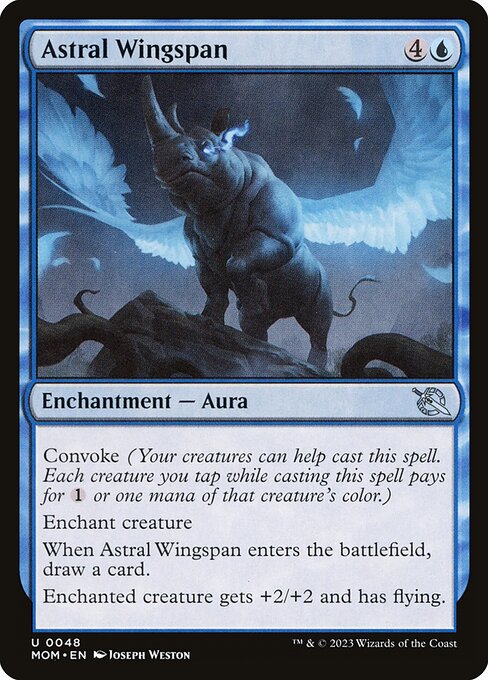 Astral Wingspan
Convoke (Your creatures can help cast this spell. Each creature you tap while casting this spell pays for {1} or one mana of that creature's color.)
Astral Wingspan
Convoke (Your creatures can help cast this spell. Each creature you tap while casting this spell pays for {1} or one mana of that creature's color.)
Enchant creature
When this Aura enters, draw a card.
Enchanted creature gets +2/+2 and has flying.
and
Crystal Carapace
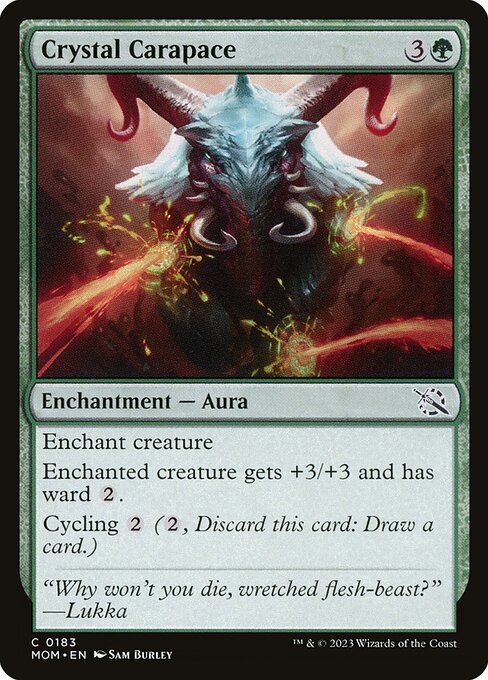 Crystal Carapace
Enchant creature
Crystal Carapace
Enchant creature
Enchanted creature gets +3/+3 and has ward {2}.
Cycling {2} ({2}, Discard this card: Draw a card.)
are the only ones you would want to put on him and neither of the two are in his colors) there are eight pieces of equipment to slide into Valduk’s hands to help him generate Elemental tokens.
You can give Valduk flying with a
Kitesail
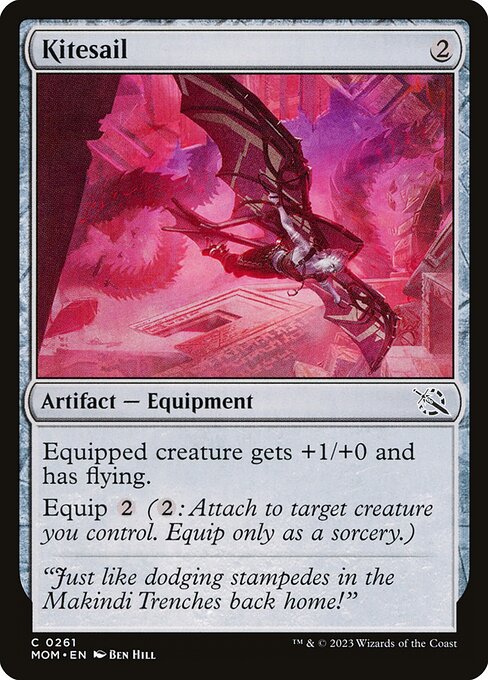 Kitesail
Equipped creature gets +1/+0 and has flying.
Kitesail
Equipped creature gets +1/+0 and has flying.
Equip {2} ({2}: Attach to target creature you control. Equip only as a sorcery.)
to keep him safe from blockers, on the ground or use a
Bladed Battle-Fan
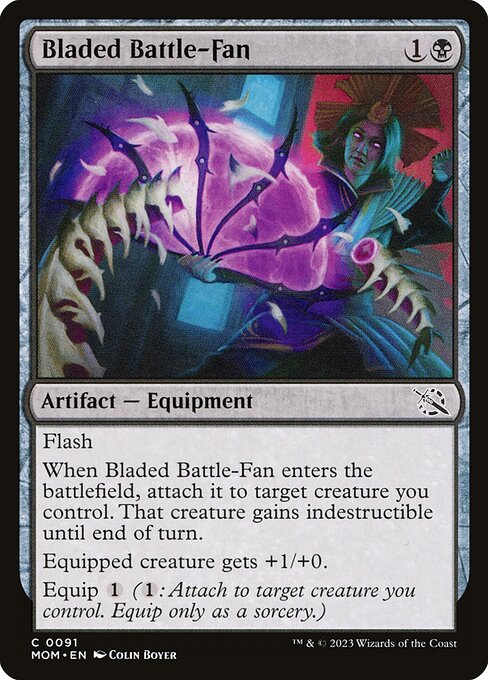 Bladed Battle-Fan
Flash
Bladed Battle-Fan
Flash
When this Equipment enters, attach it to target creature you control. That creature gains indestructible until end of turn.
Equipped creature gets +1/+0.
Equip {1} ({1}: Attach to target creature you control. Equip only as a sorcery.)
to keep him safe from removal. If you’re really lucky you might even be able to arm your Valduk with the
Sword of Once and Future
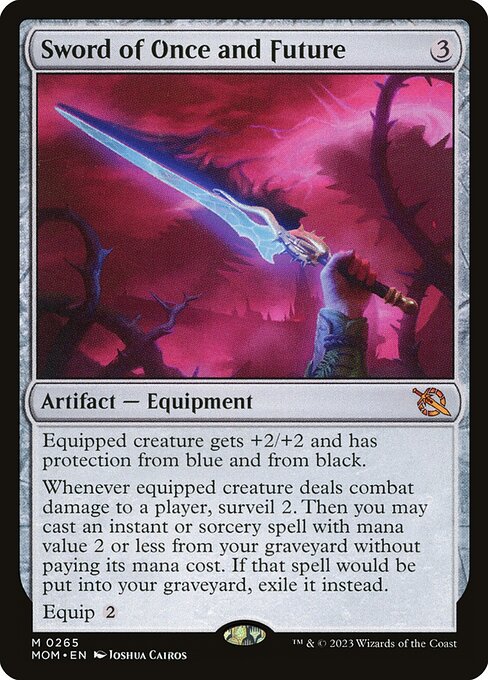 Sword of Once and Future
Equipped creature gets +2/+2 and has protection from blue and from black.
Sword of Once and Future
Equipped creature gets +2/+2 and has protection from blue and from black.
Whenever equipped creature deals combat damage to a player, surveil 2. Then you may cast an instant or sorcery spell with mana value 2 or less from your graveyard without paying its mana cost. If that spell would be put into your graveyard, exile it instead.
Equip {2}
.
4. Fynn, the Fangbearer
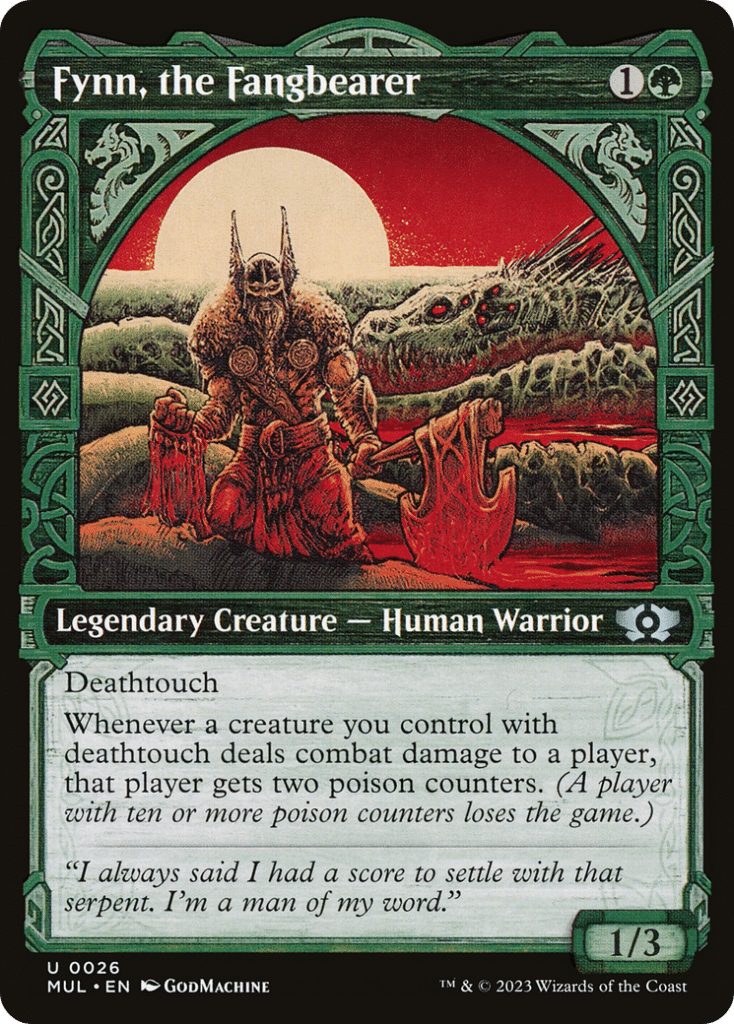
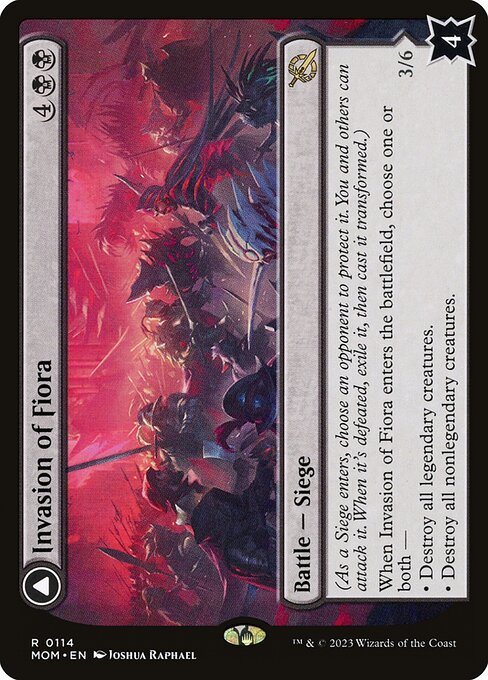
There are eight creatures with deathtouch in March of the Machine (although one of them,
Marchesa, Resolute Monarch
 Marchesa, Resolute Monarch
(As a Siege enters, choose an opponent to protect it. You and others can attack it. When it's defeated, exile it, then cast it transformed.)
Marchesa, Resolute Monarch
(As a Siege enters, choose an opponent to protect it. You and others can attack it. When it's defeated, exile it, then cast it transformed.)
When this Siege enters, choose one or both —
• Destroy all legendary creatures.
• Destroy all nonlegendary creatures.
, is the reverse side of a Battle).
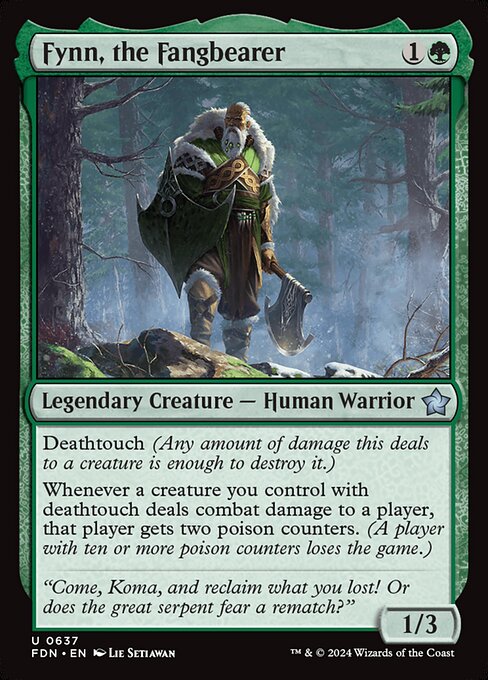
Fynn, the Fangbearer
 Fynn, the Fangbearer
Deathtouch (Any amount of damage this deals to a creature is enough to destroy it.)
Fynn, the Fangbearer
Deathtouch (Any amount of damage this deals to a creature is enough to destroy it.)
Whenever a creature you control with deathtouch deals combat damage to a player, that player gets two poison counters. (A player with ten or more poison counters loses the game.)
turns all of these deathtouch creatures into a win condition. This venomous viking causes all deathtouch creatures, including itself, to distribute two poison counters whenever they damage an opponent, killing them when they have 10.
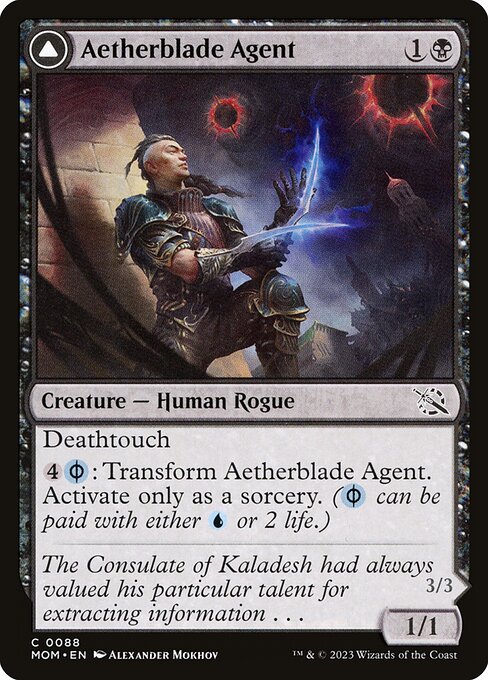
While typically a 1/1 deathtoucher like
Aetherblade Agent
 Aetherblade Agent
Deathtouch
Aetherblade Agent
Deathtouch
{4}{U/P}: Transform this creature. Activate only as a sorcery. ({U/P} can be paid with either {U} or 2 life.)
works best as a defensive card, hanging back and threatening to block and destroy your opponent’s bigger threats when they attack. With Fynn, the Fangbearer in play, Aetherblade Agent gets turned into an offensive force. Opponents are forced to make a tough call, do they allow Aetherblde Agent through and head 20% of the way toward a game loss, or do they block the card and likely end up trading down?
3. Imoti, Celebrant of Bounty
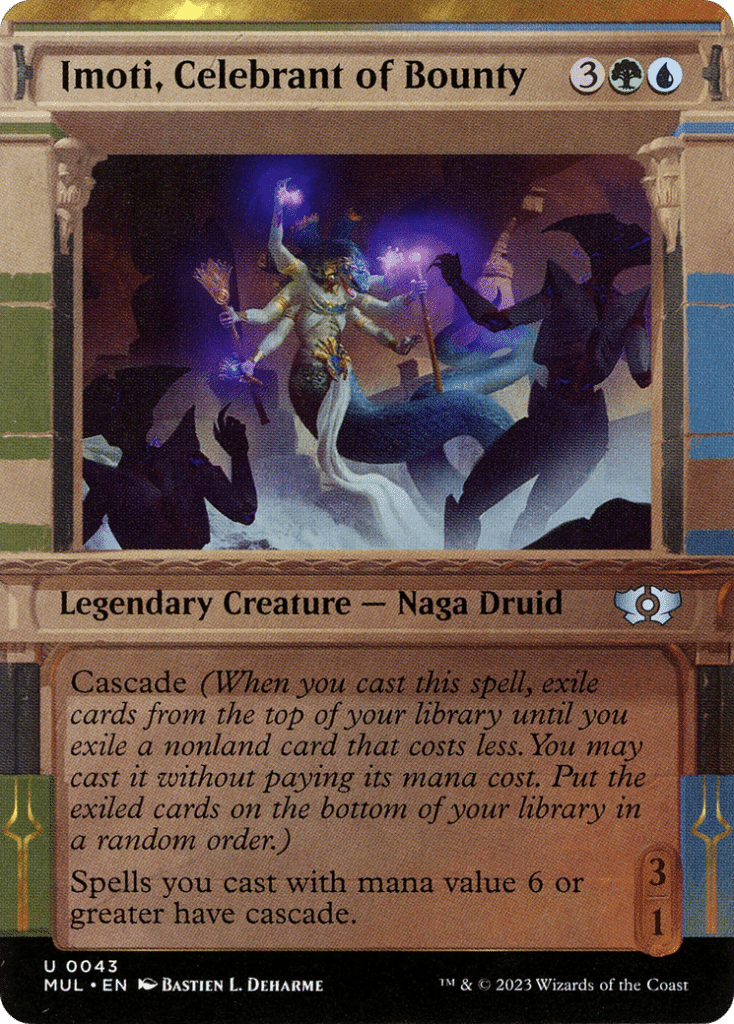
Cascade is an extremely powerful mechanic from Alara block. Whenever a card with Cascade enters play, it digs through cards from the top of its controller’s deck until it reaches a nonland card with a lower mana value than itself, that card then gets cast for free.
Imoti, Celebrant of Bounty
 Imoti, Celebrant of Bounty
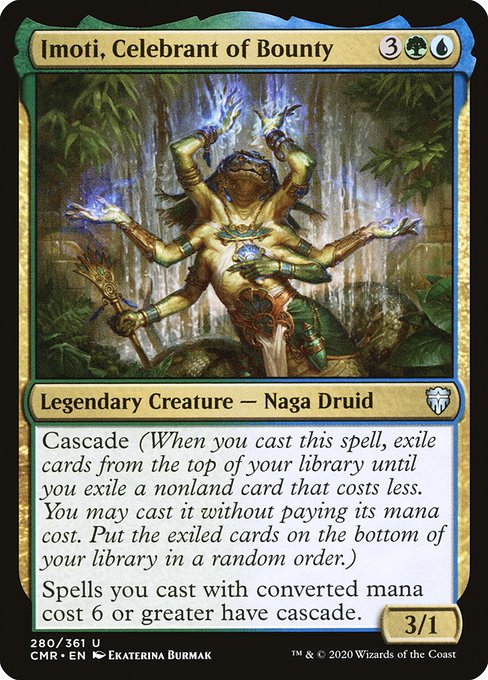
Cascade (When you cast this spell, exile cards from the top of your library until you exile a nonland card that costs less. You may cast it without paying its mana cost. Put the exiled cards on the bottom in a random order.)
Imoti, Celebrant of Bounty
Cascade (When you cast this spell, exile cards from the top of your library until you exile a nonland card that costs less. You may cast it without paying its mana cost. Put the exiled cards on the bottom in a random order.)
Spells you cast with mana value 6 or greater have cascade.
not only has cascade but also grants the mechanic to every single creature in its controller’s deck that costs six or more.
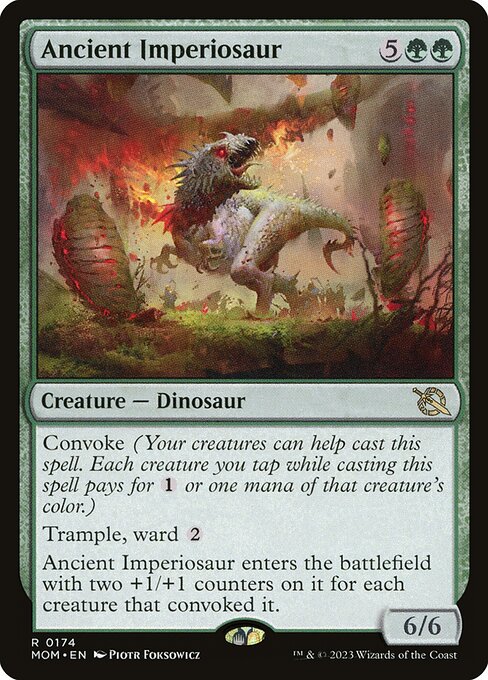
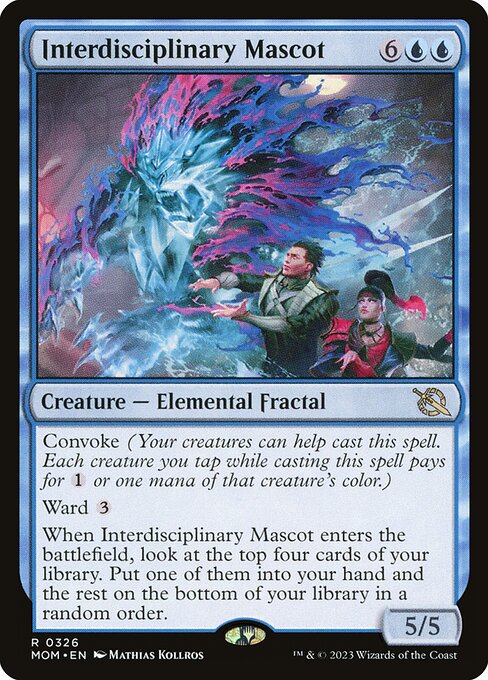
In some formats this card just wouldn’t work, Phyrexia: All Will Be One was infamously fast-paced, so the game would probably not have long left by the time Imoti, or any of the high mana value cards she encourages players to build around, entered play. Fortunately, at least as far as early impressions go, March of the Machine seems to have a fairly slow-paced Limited format. There are lots of high-value bombs that Imoti can grant Cascade to from
Ancient Imperiosaur
 Ancient Imperiosaur
Convoke (Your creatures can help cast this spell. Each creature you tap while casting this spell pays for {1} or one mana of that creature's color.)
Ancient Imperiosaur
Convoke (Your creatures can help cast this spell. Each creature you tap while casting this spell pays for {1} or one mana of that creature's color.)
Trample, ward {2}
This creature enters with two +1/+1 counters on it for each creature that convoked it.
to
Interdisciplinary Mascot
 Interdisciplinary Mascot
Convoke (Your creatures can help cast this spell. Each creature you tap while casting this spell pays for {1} or one mana of that creature's color.)
Interdisciplinary Mascot
Convoke (Your creatures can help cast this spell. Each creature you tap while casting this spell pays for {1} or one mana of that creature's color.)
Ward {3}
When this creature enters, look at the top four cards of your library. Put one of them into your hand and the rest on the bottom of your library in a random order.
.
If you like making big plays, and slamming down powerful creatures, then putting Imoti in your draft deck could be a recipe for fun.
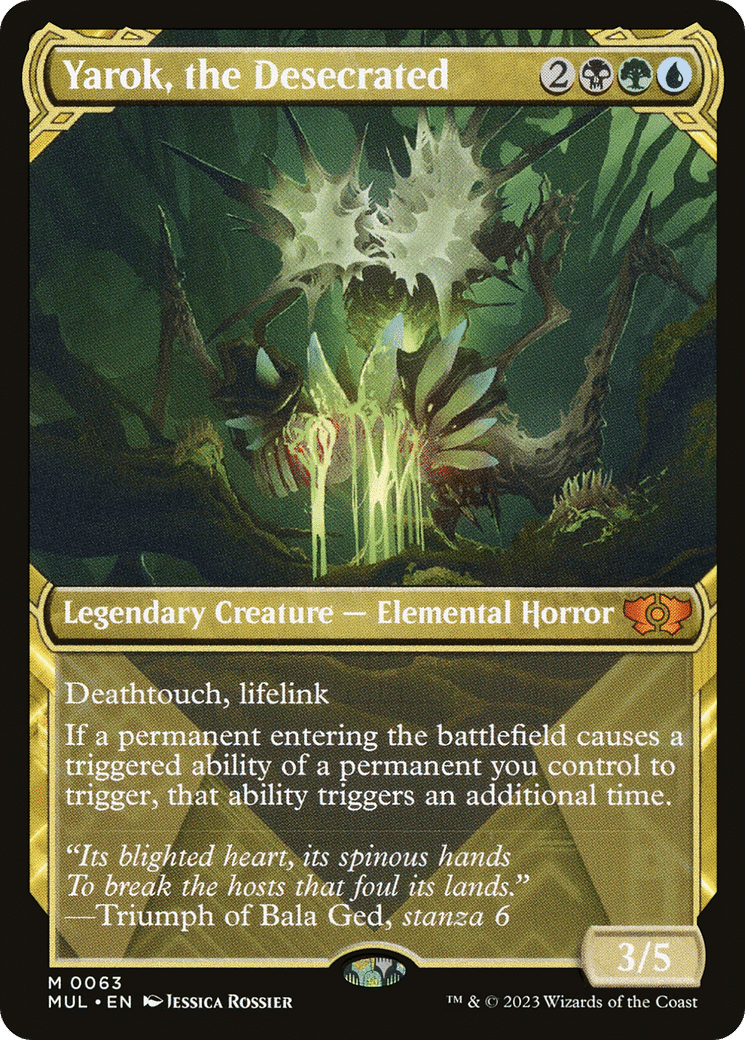
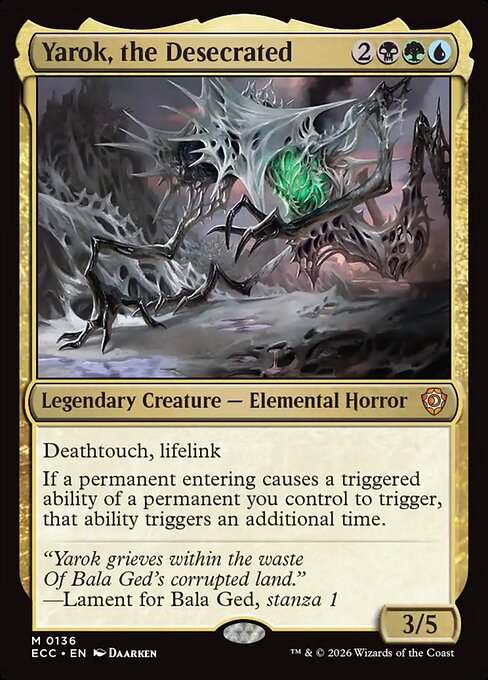
2. Yarok, the Desecrated
Yarok, the Desecrated
 Yarok, the Desecrated
Deathtouch, lifelink
Yarok, the Desecrated
Deathtouch, lifelink
If a permanent entering causes a triggered ability of a permanent you control to trigger, that ability triggers an additional time.
is a. For five mana, three of which are in the Sultai colors, Yarok is a 3/5 Elemental Horror with deathtouch and lifelink. Yarok’s claim to fame is that it allows triggered abilities that happen as a result of a permeant entering play to activate an additional time. In other words, this card doubles enter the battlefield effects, and effects that care about cards entering play.
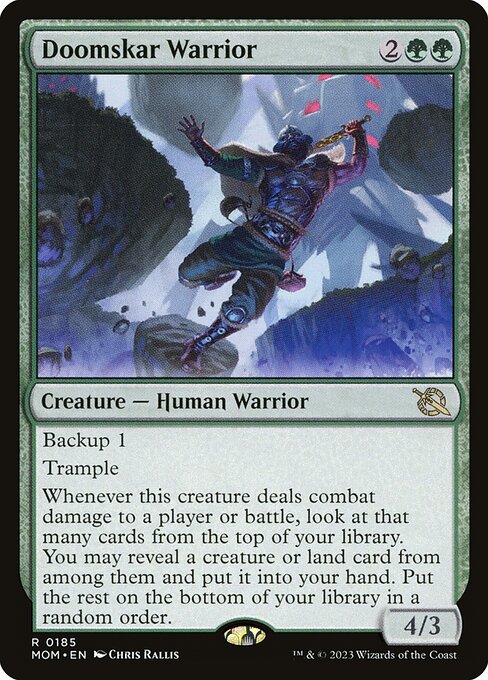
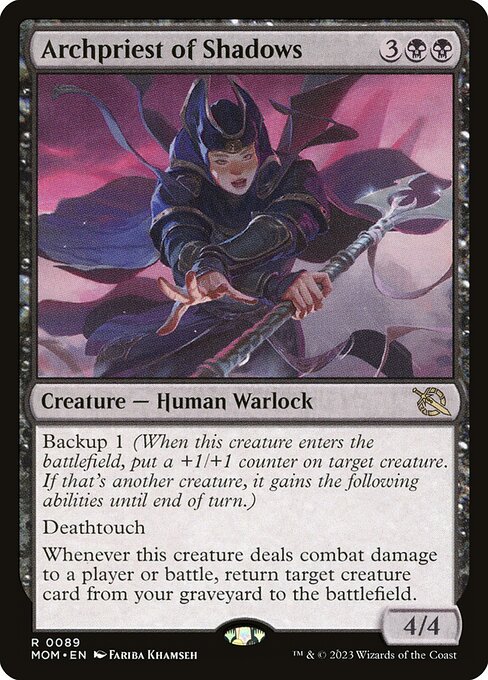
March of the Machine has two mechanics that trigger upon entering the battlefield: backup and battles. Backup cards like
Doomskar Warrior
 Doomskar Warrior
Backup 1
Doomskar Warrior
Backup 1
Trample
Whenever this creature deals combat damage to a player or battle, look at that many cards from the top of your library. You may reveal a creature or land card from among them and put it into your hand. Put the rest on the bottom of your library in a random order.
and
Archpriest of Shadows
 Archpriest of Shadows
Backup 1 (When this creature enters, put a +1/+1 counter on target creature. If that's another creature, it gains the following abilities until end of turn.)
Archpriest of Shadows
Backup 1 (When this creature enters, put a +1/+1 counter on target creature. If that's another creature, it gains the following abilities until end of turn.)
Deathtouch
Whenever this creature deals combat damage to a player or battle, return target creature card from your graveyard to the battlefield.
are already pretty fantastic, doubling the amount of +1/+1 counters they provide, and allowing them to spread their effect to another creature makes them even better.
Doubling the effects of battles is also very powerful. With Yarok in play,
Invasion of Innistrad
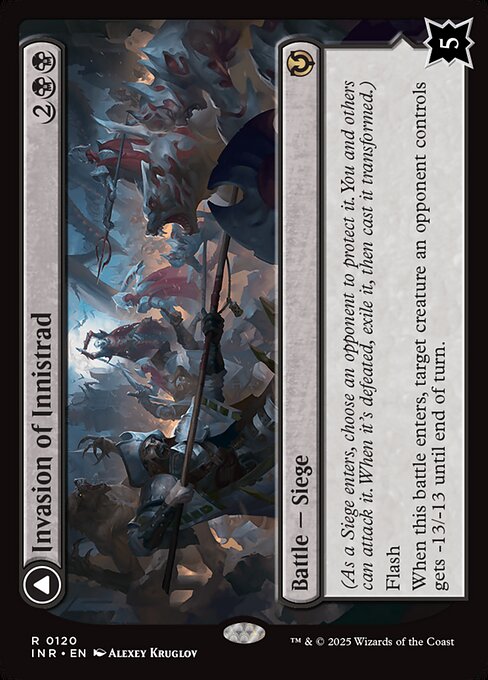 Invasion of Innistrad
(As a Siege enters, choose an opponent to protect it. You and others can attack it. When it's defeated, exile it, then cast it transformed.)
Invasion of Innistrad
(As a Siege enters, choose an opponent to protect it. You and others can attack it. When it's defeated, exile it, then cast it transformed.)
Flash
When this Siege enters, target creature an opponent controls gets -13/-13 until end of turn.
removes two creatures and
Invasion of Ixalan
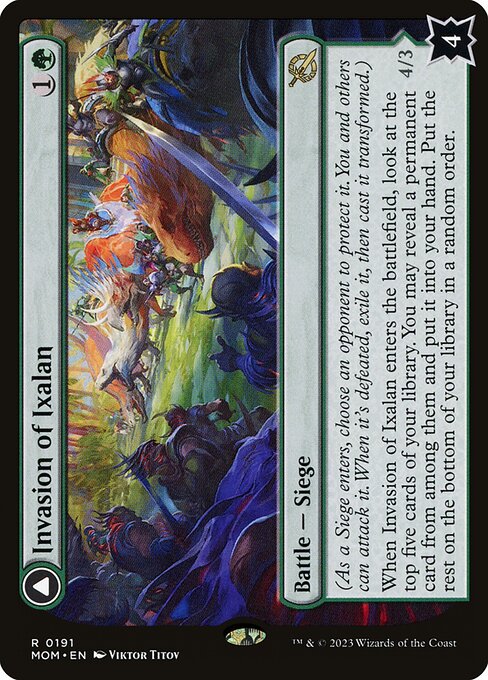 Invasion of Ixalan
(As a Siege enters, choose an opponent to protect it. You and others can attack it. When it's defeated, exile it, then cast it transformed.)
Invasion of Ixalan
(As a Siege enters, choose an opponent to protect it. You and others can attack it. When it's defeated, exile it, then cast it transformed.)
When this Siege enters, look at the top five cards of your library. You may reveal a permanent card from among them and put it into your hand. Put the rest on the bottom of your library in a random order.
searches pretty deeply into your deck for two good cards. Even less flashy and exciting battles become pretty amazing, forcing your opponent to discard four cards with
Invasion of Eldraine
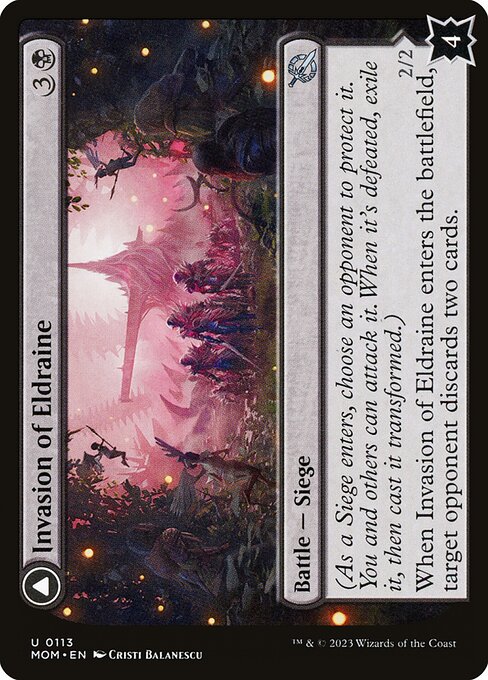 Invasion of Eldraine
(As a Siege enters, choose an opponent to protect it. You and others can attack it. When it's defeated, exile it, then cast it transformed.)
Invasion of Eldraine
(As a Siege enters, choose an opponent to protect it. You and others can attack it. When it's defeated, exile it, then cast it transformed.)
When this Siege enters, target opponent discards two cards.
is a potentially devastating setback.
1. Lurrus of the Dream-Den
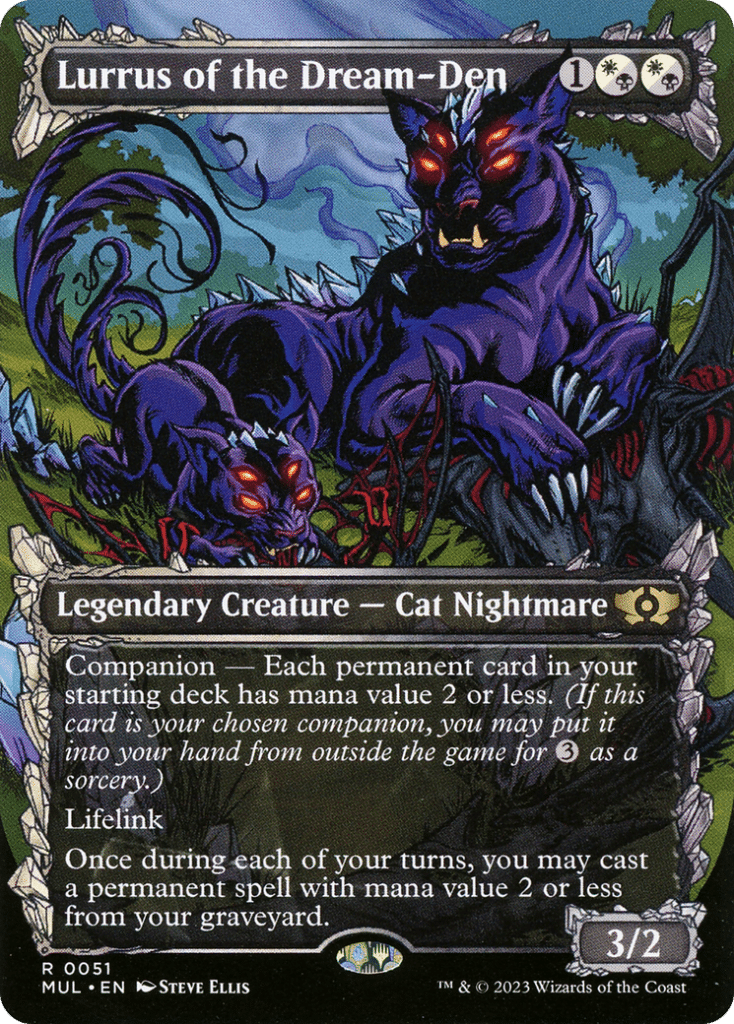
While Lurrus may be the number one card on this list, really this slot just represents the 10 Companions as a whole. These contentious cards debuted in Ikoria and were so powerful they all had to be nerfed retroactively. The Companions can be added to their controller’s hand from outside of the game, in return they impose deckbuilding limitations on the player wanting to use them. Some of the restrictions Companions place on players are very significant.
Zirda, the Dawnwaker
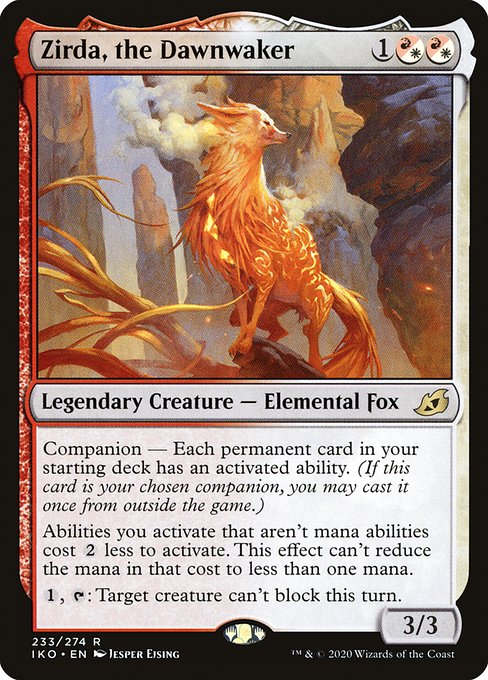 Zirda, the Dawnwaker
Companion — Each permanent card in your starting deck has an activated ability. (If this card is your chosen companion, you may put it into your hand from outside the game for {3} as a sorcery.)
Zirda, the Dawnwaker
Companion — Each permanent card in your starting deck has an activated ability. (If this card is your chosen companion, you may put it into your hand from outside the game for {3} as a sorcery.)
Abilities you activate that aren't mana abilities cost {2} less to activate. This effect can't reduce the mana in that cost to less than one mana.
{1}, {T}: Target creature can't block this turn.
cannot be used unless every permanent in its controller’s deck has an activated ability, something which is basically impossible to achieve in Limited. Other Companions are more lenient, such as
Lutri, the Spellchaser
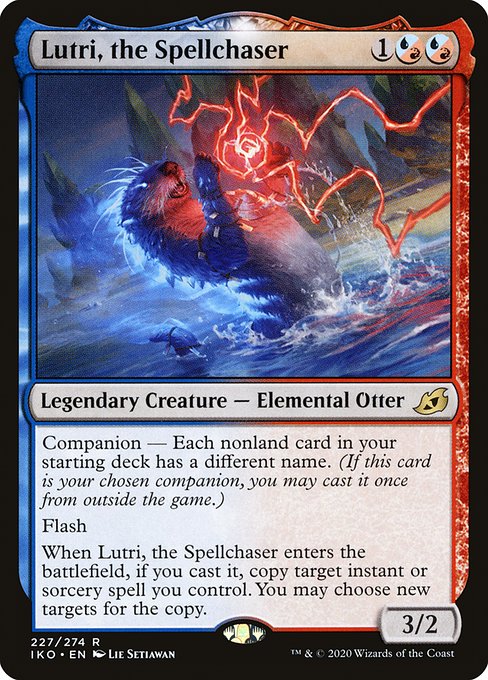 Lutri, the Spellchaser
Companion — Each nonland card in your starting deck has a different name. (If this card is your chosen companion, you may put it into your hand from outside the game for {3} as a sorcery.)
Lutri, the Spellchaser
Companion — Each nonland card in your starting deck has a different name. (If this card is your chosen companion, you may put it into your hand from outside the game for {3} as a sorcery.)
Flash
When Lutri enters, if you cast it, copy target instant or sorcery spell you control. You may choose new targets for the copy.
which only requires its controller to be running a singleton deck.
Lurrus, of the Dream-Den
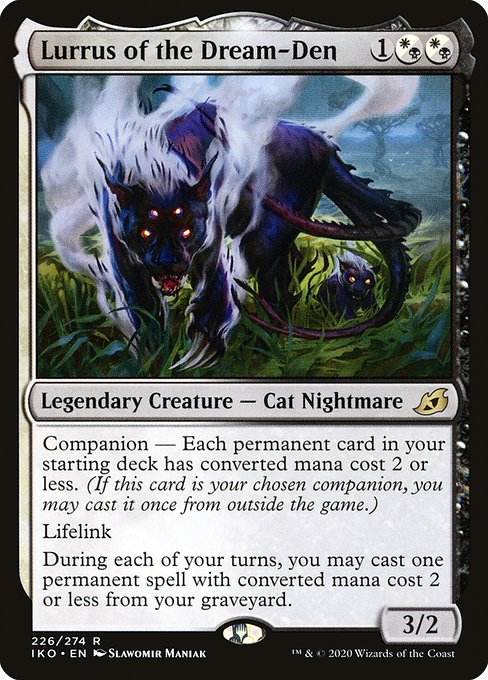 Lurrus, of the Dream-Den
Companion — Each permanent card in your starting deck has mana value 2 or less. (If this card is your chosen companion, you may put it into your hand from outside the game for {3} as a sorcery.)
Lurrus, of the Dream-Den
Companion — Each permanent card in your starting deck has mana value 2 or less. (If this card is your chosen companion, you may put it into your hand from outside the game for {3} as a sorcery.)
Lifelink
Once during each of your turns, you may cast a permanent spell with mana value 2 or less from your graveyard.
has been chosen to represent Companions here because it’s probably the most powerful of them. This three mana 3/2 lifelinker allows its controller to cast a card with mana value two or lower from their graveyard once per turn. This ability is hugely valuable, a fact demonstrated by Lurrus being banned in Pioneer, Modern, and Legacy. In a creature combat focussed format like Limited, the ability to continue perpetually playing all of your two drops from the graveyard means your momentum can never run out as long as Lurrus remains alive.
Just remember that you can include Companions in your deck as regular cards, even if you don’t want to follow their restrictions. Maybe you want Lurrus’s ability to recur low-cost cards, but you don’t want to cut the
Boon-Bringer Valkyrie
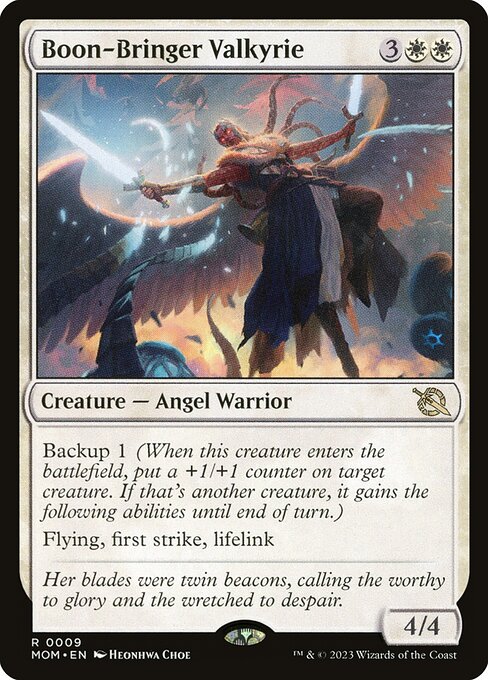 Boon-Bringer Valkyrie
Backup 1 (When this creature enters, put a +1/+1 counter on target creature. If that's another creature, it gains the following abilities until end of turn.)
Boon-Bringer Valkyrie
Backup 1 (When this creature enters, put a +1/+1 counter on target creature. If that's another creature, it gains the following abilities until end of turn.)
Flying, first strike, lifelink
you cracked in pack two from your deck. This is totally fine, just slot Lurrus into your 40 cards, rather than using it as your companion.
Conclusion
There we have five fun build around legends. Legendary cards make great pack one picks in March of the Machine, as they can open up unique paths that you may never have explored otherwise. Maybe not all of these cards will be the center of amazingly powerful decks that will secure an undefeated win streak, but they will all guarantee you a good time and a creative deckbuilding experience.
Read more: Top 10 Most Expensive MTG Multiverse Legends Cards!