
Introduction
The debut of Battle cards in March of the Machine brought a brand new card type into Magic: the Gathering. Battles joined Lands, Creatures, Instants, Sorceries, Artifacts, Enchantments, and Planeswalkers in the pantheon of MTG card types. There is, however, one more card type that has been left to the wayside and forgotten by history, “Tribal”. By Tribal cards, we aren’t referring to cards that support decks that run a lot of creatures of the same type. Wizards of the Coast are not going to stop printing cards like
Vanquisher’s Banner
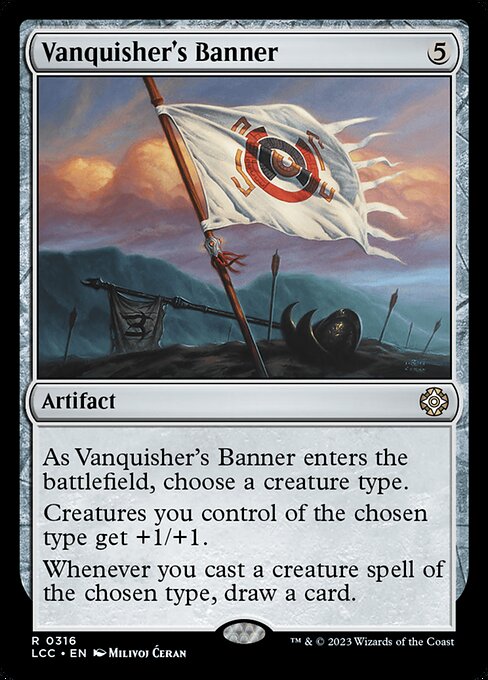 Vanquisher’s Banner
As this artifact enters, choose a creature type.
Vanquisher’s Banner
As this artifact enters, choose a creature type.
Creatures you control of the chosen type get +1/+1.
Whenever you cast a creature spell of the chosen type, draw a card.
or
Rally the Ranks
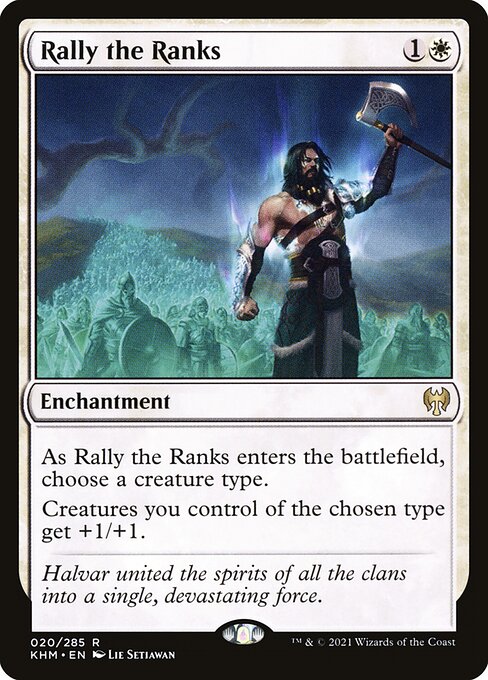 Rally the Ranks
As this enchantment enters, choose a creature type.
Rally the Ranks
As this enchantment enters, choose a creature type.
Creatures you control of the chosen type get +1/+1.
any time soon. Instead, these are cards that have the “Tribal” card type.
Tribal is a card type that can go on Instants, Sorceries, Enchantments, or Artifacts. It enables them to have a Creature subtype, despite not being a Creature. For example, the card
Eldrazi Conscription
 Eldrazi Conscription
Enchant creature
Eldrazi Conscription
Enchant creature
Enchanted creature gets +10/+10 and has trample and annihilator 2. (Whenever it attacks, defending player sacrifices two permanents of their choice.)
is a Tribal Aura, with the Eldrazi subtype. This means that effects that care about it having the Eldrazi subtype like
Eye of Ugin
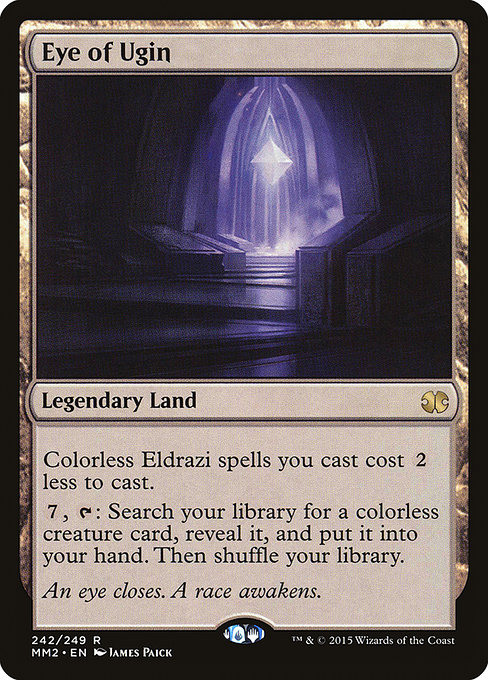 Eye of Ugin
Colorless Eldrazi spells you cast cost {2} less to cast.
Eye of Ugin
Colorless Eldrazi spells you cast cost {2} less to cast.
{7}, {T}: Search your library for a colorless creature card, reveal it, put it into your hand, then shuffle.
apply to it, even though it is not a creature. Let’s look at the brief rise and fall of Tribal cards, and why they were brought into the game and then quickly taken out of it.
The Rise of Tribal Cards
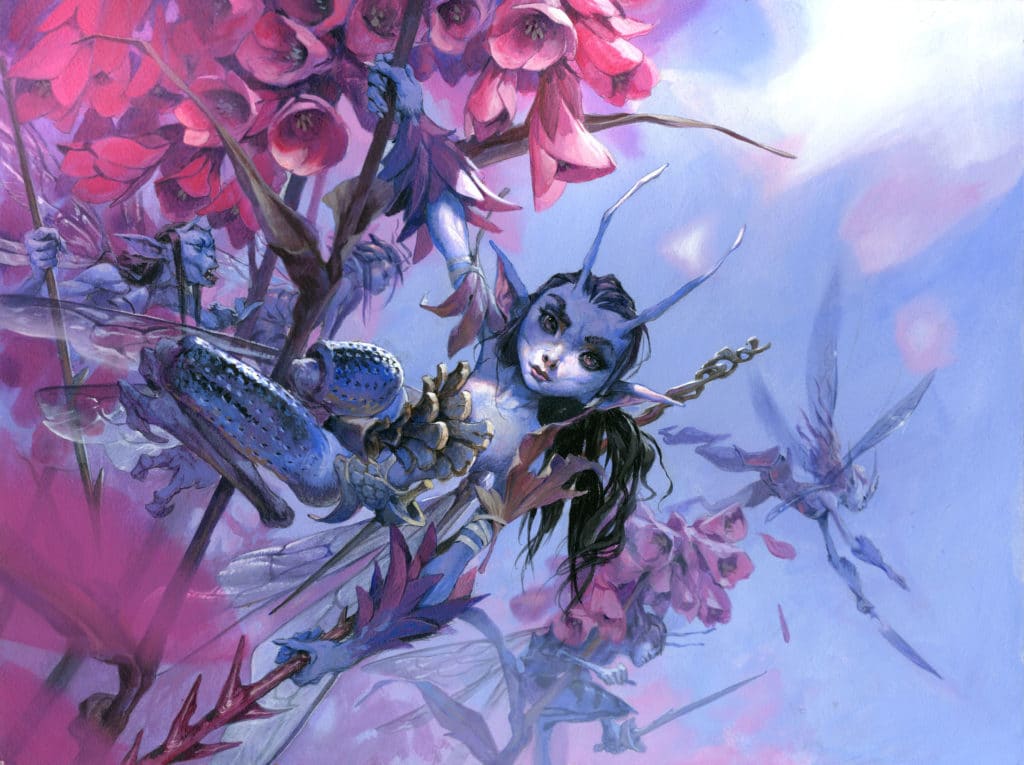
Tribal cards debuted in Future Sight with the card,
Bound in Silence
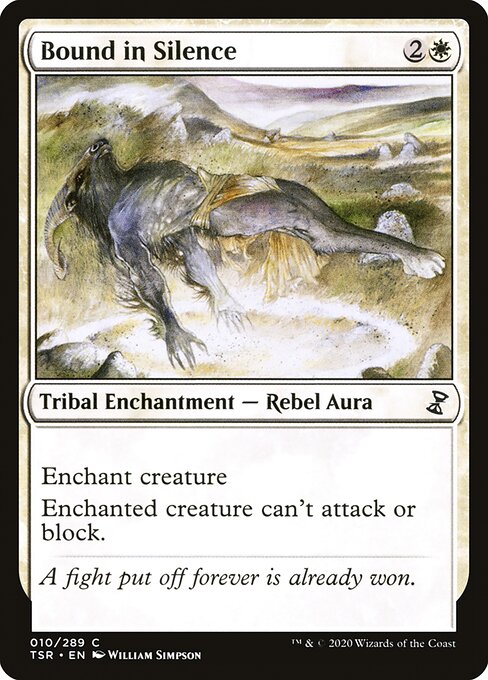 Bound in Silence
Enchant creature
Bound in Silence
Enchant creature
Enchanted creature can't attack or block.
. Bound In Silence is a Tribal Enchantment which functions as a
Pacifism
 Pacifism
Enchant creature
Pacifism
Enchant creature
Enchanted creature can't attack or block.
effect and has the Rebel subtype. This gives it synergies with cards like
Lin Sivvi, Defiant Hero
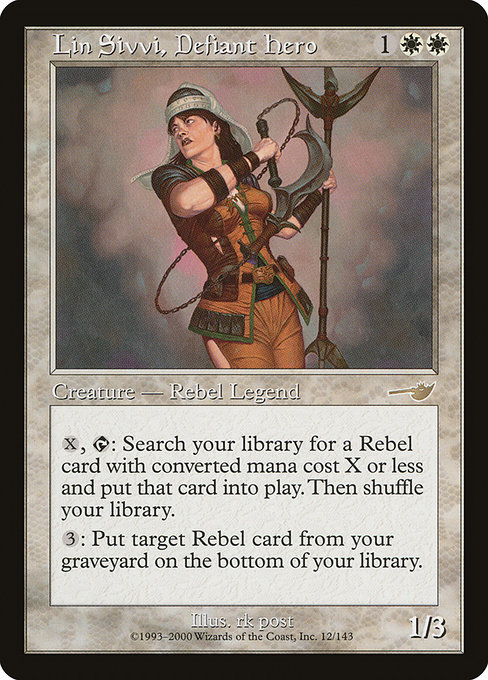 Lin Sivvi, Defiant Hero
{X}, {T}: Search your library for a Rebel permanent card with mana value X or less, put it onto the battlefield, then shuffle.
Lin Sivvi, Defiant Hero
{X}, {T}: Search your library for a Rebel permanent card with mana value X or less, put it onto the battlefield, then shuffle.
{3}: Put target Rebel card from your graveyard on the bottom of your library.
, and
Amrou Scout
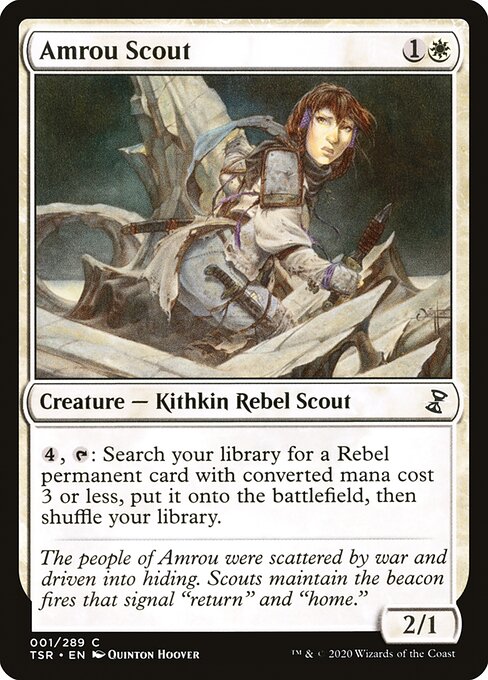 Amrou Scout
{4}, {T}: Search your library for a Rebel permanent card with mana value 3 or less, put it onto the battlefield, then shuffle.
who can bring Rebels from the library straight into play. It makes these cards a bit stronger, as now they can seek out not only Creatures, but also a removal effect.
Amrou Scout
{4}, {T}: Search your library for a Rebel permanent card with mana value 3 or less, put it onto the battlefield, then shuffle.
who can bring Rebels from the library straight into play. It makes these cards a bit stronger, as now they can seek out not only Creatures, but also a removal effect.
Bound In Silence was designed as one of Future Sight’s “Futureshifted” cards, a card which would show off a new mechanic not yet fully implemented into the game. Players did not have to wait long for the Tribal card type to make its debut, as a large number of Tribal cards showed up only five months later in Lorwyn.
Lorwyn was mechanically themed around making Creature types matter, so it made perfect sense that the set would make use of this new tech, to allow players to construct decks where their
Boggart Harbinger
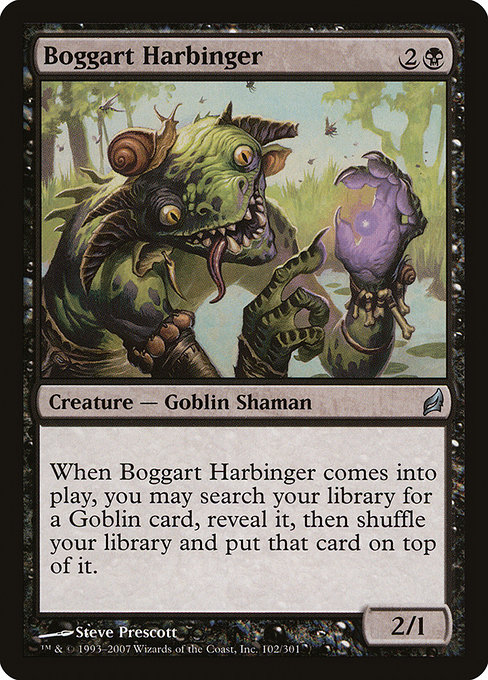 Boggart Harbinger
When this creature enters, you may search your library for a Goblin card, reveal it, then shuffle and put that card on top.
could be used both to search out Goblins Creatures, but also Goblin Instants and Sorceries like
Tarfire
Boggart Harbinger
When this creature enters, you may search your library for a Goblin card, reveal it, then shuffle and put that card on top.
could be used both to search out Goblins Creatures, but also Goblin Instants and Sorceries like
Tarfire
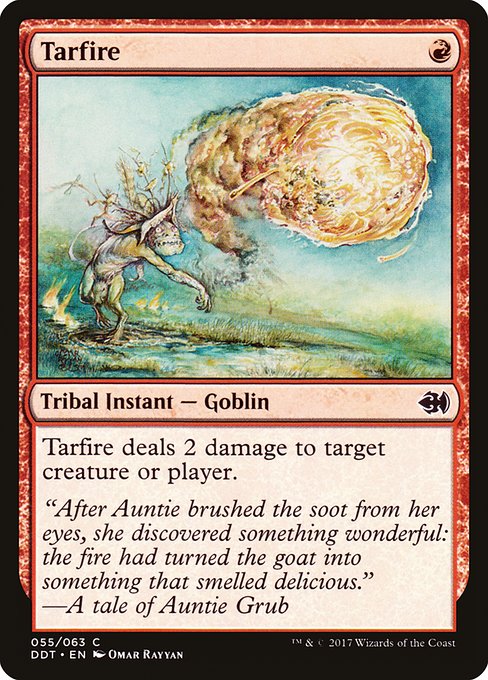 Tarfire
 deals 2 damage to any target.
or
Boggart Birth Rite
Tarfire
Tarfire deals 2 damage to any target.
or
Boggart Birth Rite
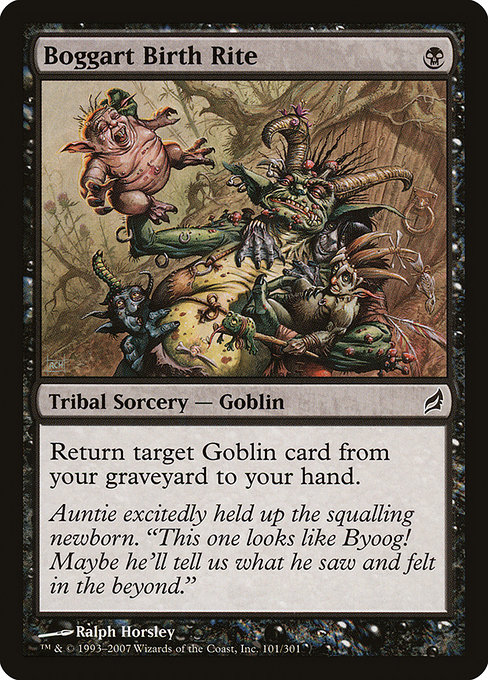 Boggart Birth Rite
Return target Goblin card from your graveyard to your hand.
.
Boggart Birth Rite
Return target Goblin card from your graveyard to your hand.
.
Bitterblossom
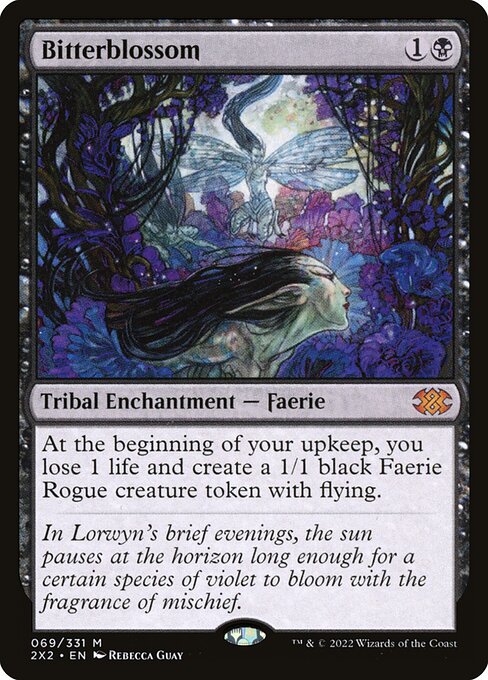 Bitterblossom
At the beginning of your upkeep, you lose 1 life and create a 1/1 black Faerie Rogue creature token with flying.
is probably the most iconic of these Tribal cards, as the card was hugely powerful, especially for its time, and the centerpiece of many Dimir Fairy decks.
Bitterblossom
At the beginning of your upkeep, you lose 1 life and create a 1/1 black Faerie Rogue creature token with flying.
is probably the most iconic of these Tribal cards, as the card was hugely powerful, especially for its time, and the centerpiece of many Dimir Fairy decks.
After Lorwyn block, Tribal cards appeared again on a few cards in the Set Rise of the Eldrazi like
All Is Dust
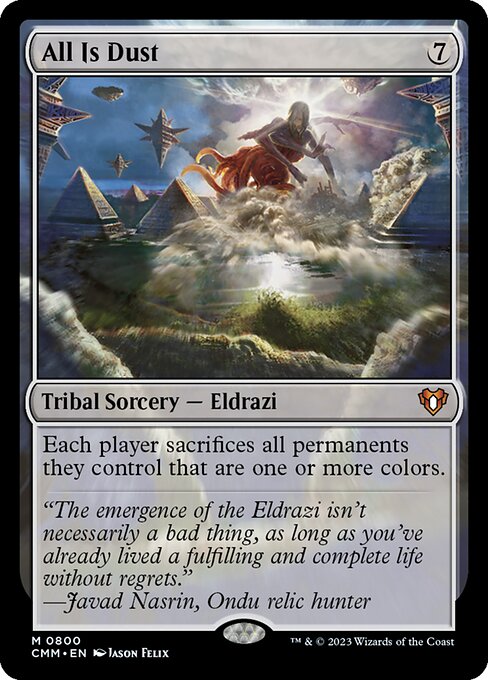 All Is Dust
Each player sacrifices all permanents they control that are one or more colors.
and
Not of This World
All Is Dust
Each player sacrifices all permanents they control that are one or more colors.
and
Not of This World
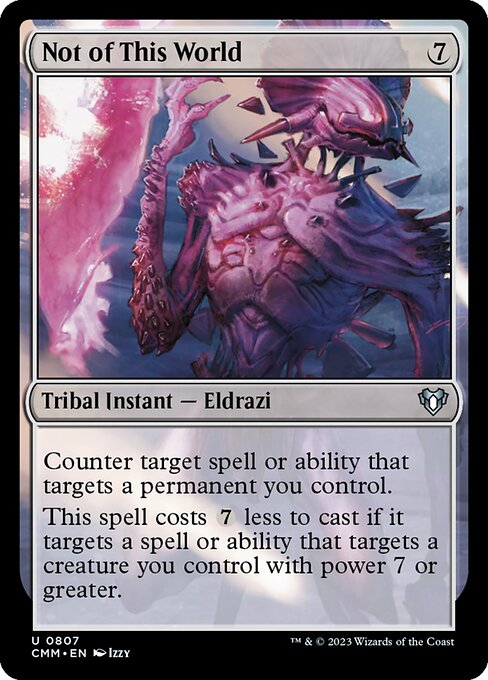 Not of This World
Counter target spell or ability that targets a permanent you control.
Not of This World
Counter target spell or ability that targets a permanent you control.
This spell costs {7} less to cast if it targets a spell or ability that targets a creature you control with power 7 or greater.
before vanishing from the game almost entirely.
The Fall of Tribal Cards
Magic’s chief designer, Mark Rosewater, has stated that Tribal cards stopped being printed because they created inconsistencies and often did not matter mechanically.
He wrote in a blog post: “if we only labeled some things [as tribal], it was horribly inconsistent and if we labeled everything, it added a lot of words that mattered a tiny percentage of the time.”
This is a fair point, what makes a card like
Elvish Promenade
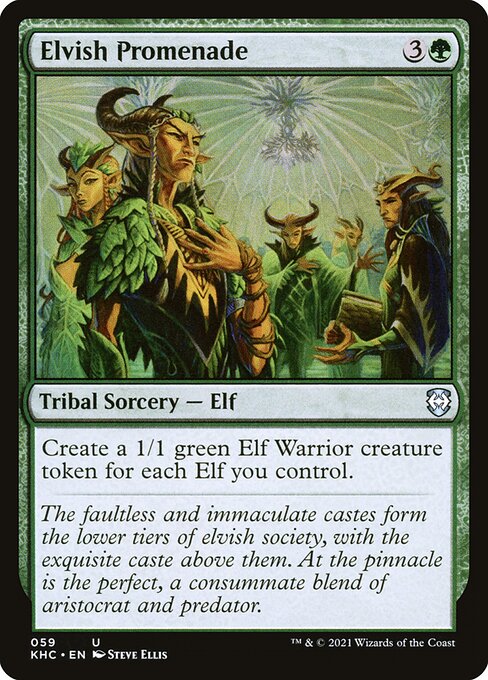 Elvish Promenade
Create a 1/1 green Elf Warrior creature token for each Elf you control.
worthy of being a Tribal card, but not a card like
Elven Ambush
Elvish Promenade
Create a 1/1 green Elf Warrior creature token for each Elf you control.
worthy of being a Tribal card, but not a card like
Elven Ambush
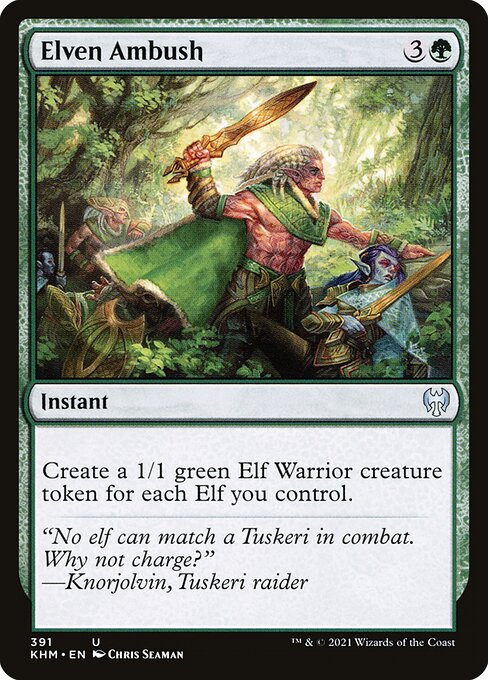 Elven Ambush
Create a 1/1 green Elf Warrior creature token for each Elf you control.
which is otherwise completely identical?
Elven Ambush
Create a 1/1 green Elf Warrior creature token for each Elf you control.
which is otherwise completely identical?
The Tribal card type did make a single surprising return in Modern Horizons 2 in 2021 thanks to the card,
Altar of the Goyf
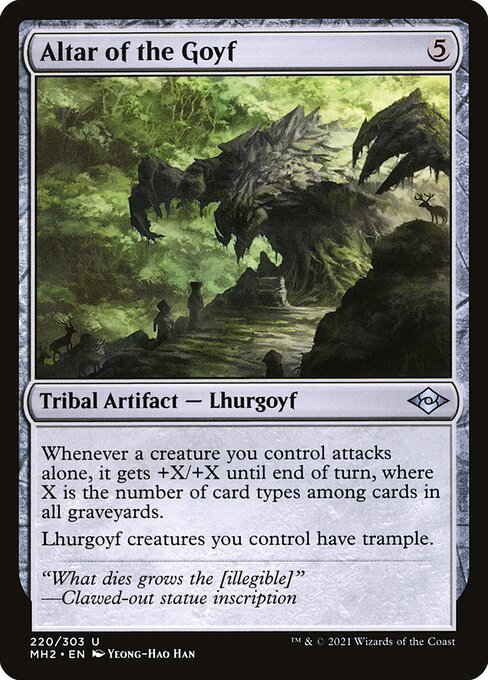 Altar of the Goyf
Whenever a creature you control attacks alone, it gets +X/+X until end of turn, where X is the number of card types among cards in all graveyards.
Altar of the Goyf
Whenever a creature you control attacks alone, it gets +X/+X until end of turn, where X is the number of card types among cards in all graveyards.
Lhurgoyf creatures you control have trample.
. This card is designed to support the card Tarmogyf which cares about gathering lots of different card types together in the Graveyard, so bringing back a previously retired card type here makes sense. Rosewater has stated that this card does not indicate that Wizards of the Coast have any plans to print more Tribal cards in the future.
Conclusion
So that is the tale of Tribal cards, a forgotten Magic card type. Whether they should never have been printed in the first place, or they are deserved better is a matter for the community to debate. Battles, the game’s newest card type, seem unlikely to suffer the same fate. They don’t carry any of the baggage that Tribal cards did, as they don’t create any inconsistencies about what should and should not be labeled a Battle. The fact that all of the Battles which currently exist have the “Siege” subtype also seems to imply that there is a lot of untapped design space with the mechanic which we are yet to see fully explored.
Read more: MTG Players Baffled as Major Character Turns Into a Boat?!