
This past weekend featured the MTG Regional Championships, and with it came some really cool deckbuilding decisions. From Rakdos Goblins to Azorius Lotus Field, these tournaments displayed lots of innovation and showcased just how much of Pioneer was underexplored. No deck showcased this better than the one combining
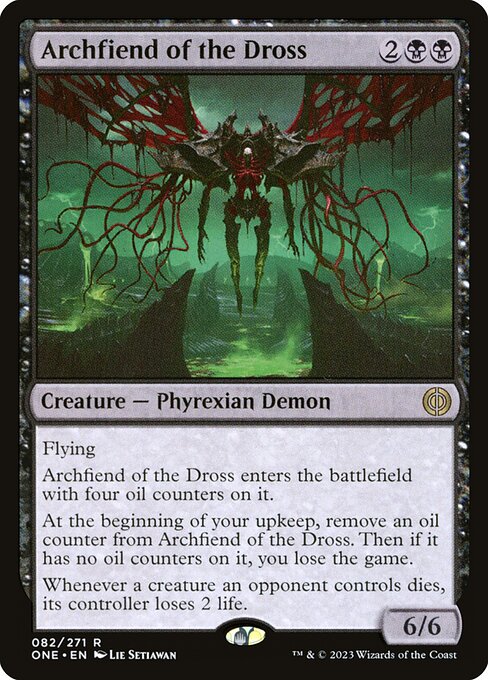
Archfiend of the Dross
 Archfiend of the Dross
Flying
Archfiend of the Dross
Flying
This creature enters with four oil counters on it.
At the beginning of your upkeep, remove an oil counter from this creature. Then if it has no oil counters on it, you lose the game.
Whenever a creature an opponent controls dies, its controller loses 2 life.
and
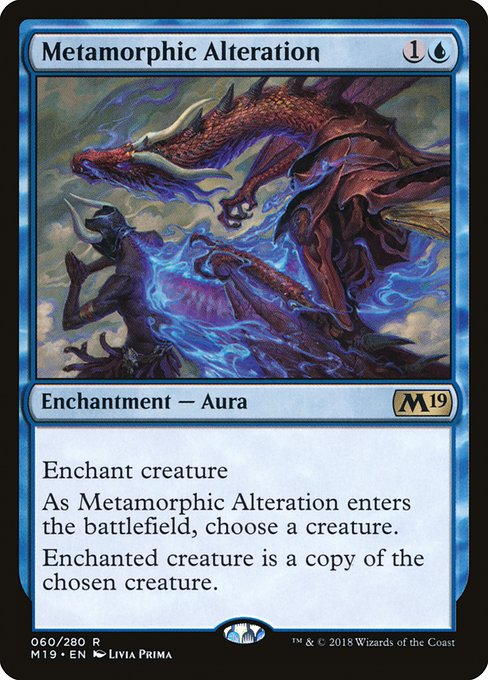
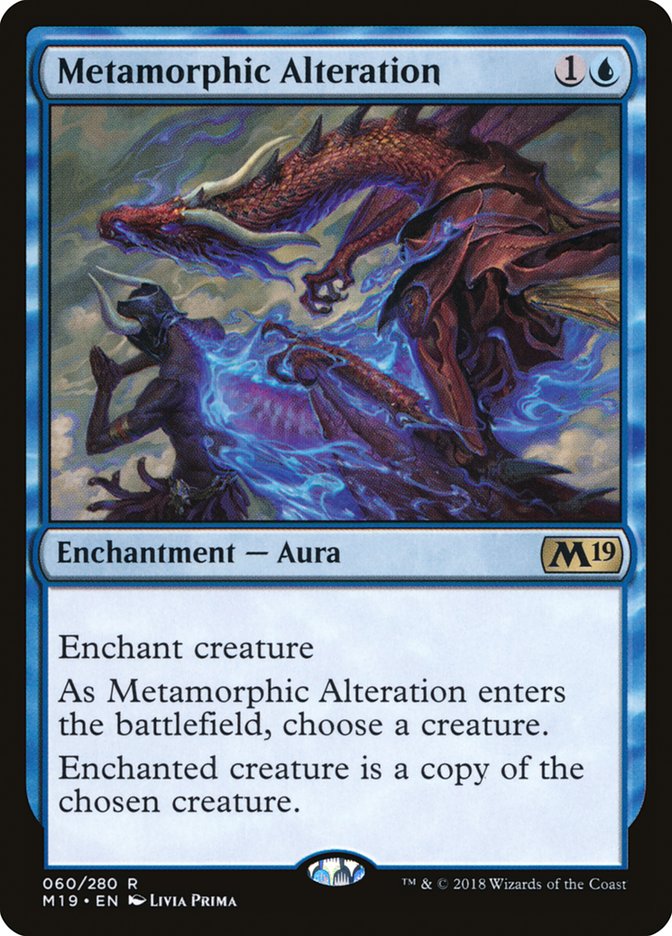
Metamorphic Alteration
 Metamorphic Alteration
Enchant creature
Metamorphic Alteration
Enchant creature
As this Aura enters, choose a creature.
Enchanted creature is a copy of the chosen creature.
.
Archfiend had been getting more and more hype leading up to the Regional Championships, with some people going as far as to replace some copies of Sheoldred, the Apocolypse in Rakdos Midrange with the powerful Demon.
While there was undoubtedly controversy over the Sheoldred/Archfiend debate, others decided to try to tech for Archfiend by playing
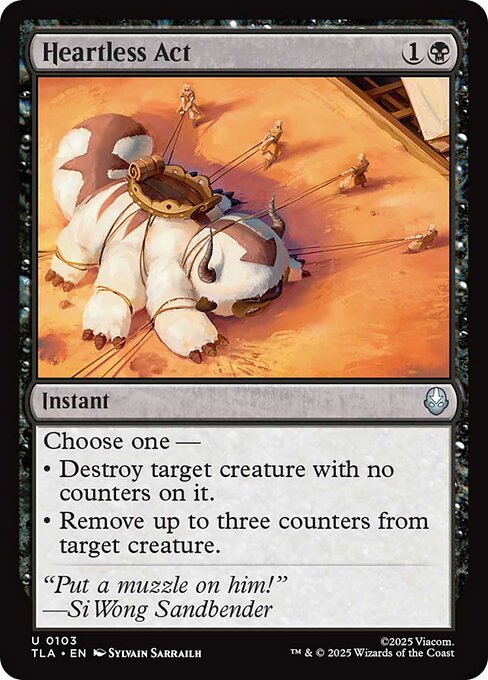
Heartless Act
 Heartless Act
Choose one —
Heartless Act
Choose one —
• Destroy target creature with no counters on it.
• Remove up to three counters from target creature.
as their two-mana removal spell of choice. While decent on its own, Heartless Act’s ability to remove three counters from a Creature combined with Archfiend’s four oil counters ticking down meant that you could force your opponent to lose the game to their own Archfiend on their upkeep. This was definitely a cool idea in theory, but almost no one expected people to take the Archfiend of the Dross oil counter interaction a step further.
The Combo
Archfiend of the Dross is a powerful four-mana six-power flyer capable of ending the game in short order. Reminiscent of cards like
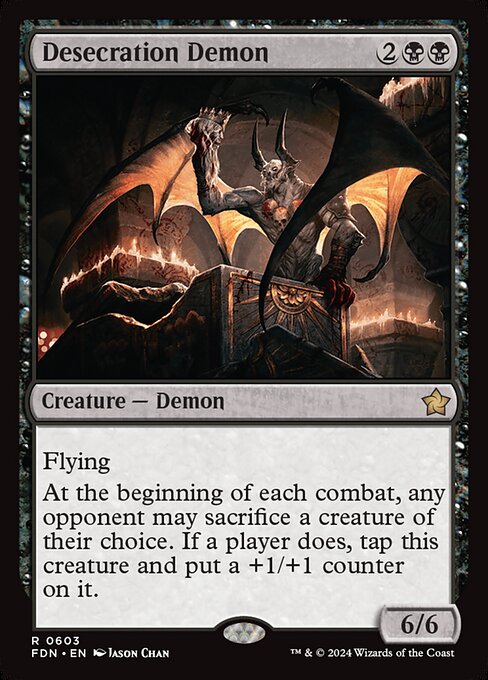
Desecration Demon
 Desecration Demon
Flying
Desecration Demon
Flying
At the beginning of each combat, any opponent may sacrifice a creature of their choice. If a player does, tap this creature and put a +1/+1 counter on it.
, this does not come without a downside, though. The downside is that it enters with four oil counters, and every turn cycle, it loses one of those counters. If there are no counters remaining, you lose the game.
Archfiend’s large stats means it can often win the game on its own before the counters get removed, but what if the card started with zero oil counters instead of four? Then Archfiend would be a complete liability, and you’d be forced to remove your own or simply die to the trigger on your upkeep. This is the basis for the Metamorphic Alteration combo.
Archfiend of the Dross only gains the four oil counters when it enters the battlefield. By using Metamorphic Alteration to turn an opponent’s Creature into a copy of your Archfiend, your opponent will be forced to remove their now Archfiend-copy or they will lose on their upkeep. This combo is fully capable of killing your opponents out of nowhere, especially if they don’t see it coming. Sometimes though, your opponent won’t oblige. Maybe they kill your Archfiend. Maybe they don’t play a Creature, rendering Metamorphic Alteration mostly useless. What is your gameplan then?
Read More: New MTG LOTR Card Creates Two-Card Infinite Combo!
Why the Deck Works
While there are dedicated combo decks in Pioneer, such as Lotus Field Combo, this deck functions much more like a Midrange deck with a potential combo finish. In fact, a lot of the deck overlaps with the powerful Rakdos Midrange shell. Both make use of two elite pieces of one mana interaction in
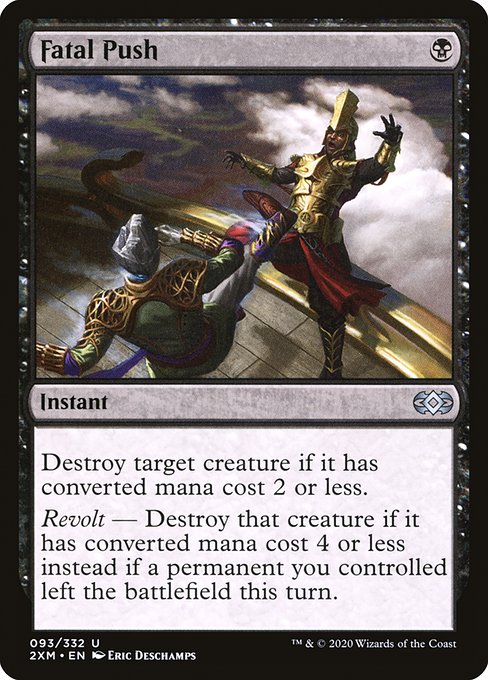
Fatal Push
 Fatal Push
Destroy target creature if it has mana value 2 or less.
Fatal Push
Destroy target creature if it has mana value 2 or less.
Revolt — Destroy that creature if it has mana value 4 or less instead if a permanent left the battlefield under your control this turn.
and
Thoughtseize
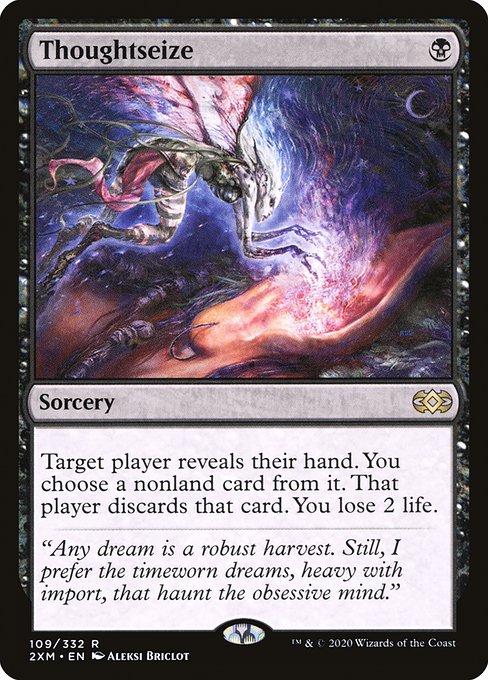 Thoughtseize
Target player reveals their hand. You choose a nonland card from it. That player discards that card. You lose 2 life.
alongside the seemingly omnipotent
Fable of the Mirror-Breaker
Thoughtseize
Target player reveals their hand. You choose a nonland card from it. That player discards that card. You lose 2 life.
alongside the seemingly omnipotent
Fable of the Mirror-Breaker
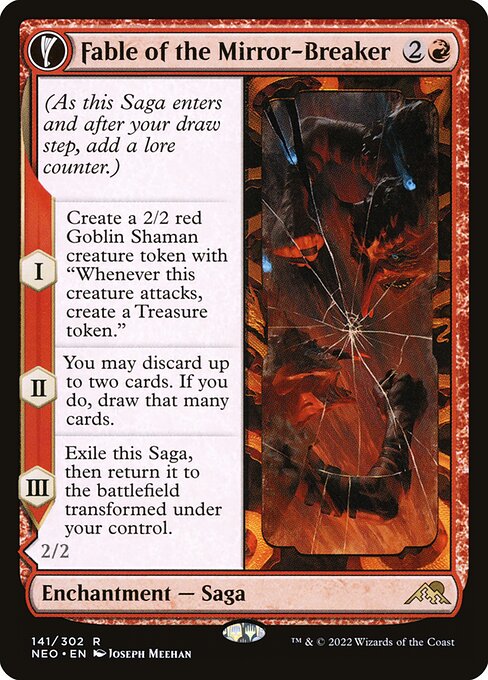 Fable of the Mirror-Breaker
(As this Saga enters and after your draw step, add a lore counter.)
Fable of the Mirror-Breaker
(As this Saga enters and after your draw step, add a lore counter.)
I — Create a 2/2 red Goblin Shaman creature token with "Whenever this token attacks, create a Treasure token."
II — You may discard up to two cards. If you do, draw that many cards.
III — Exile this Saga, then return it to the battlefield transformed under your control.
.
While this deck does miss out on Sheoldred, it gains Archfiend, which still can dominate a game of magic all the same. In this way, the deck does not need to assemble the combo in order to win the game. This plan B is what truly makes the deck a powerful choice in Pioneer. That being said, having access to the combo does two important things that traditional Rakdos Midrange decks can struggle with.
Benefits to Combo Access
The first thing the combo does is help you win faster or win otherwise unwinnable games against decks with Creatures and limited interaction. Take a matchup like Mono-Green Devotion, for example. Traditional Midrange decks sometimes struggled fighting through a sea of
Cavalier of Thorns
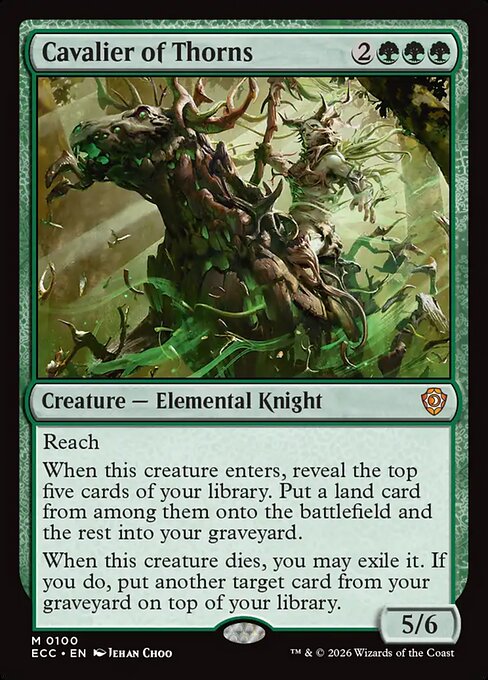 Cavalier of Thorns
Reach
Cavalier of Thorns
Reach
When this creature enters, reveal the top five cards of your library. Put a land card from among them onto the battlefield and the rest into your graveyard.
When this creature dies, you may exile it. If you do, put another target card from your graveyard on top of your library.
and
Storm the Festival
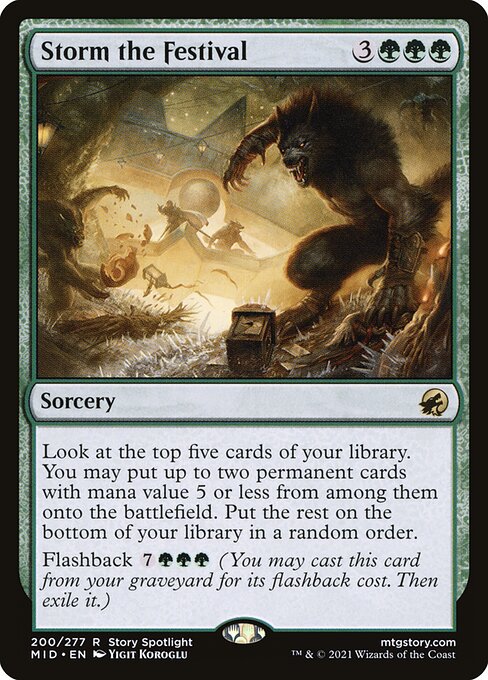 Storm the Festival
Look at the top five cards of your library. You may put up to two permanent cards with mana value 5 or less from among them onto the battlefield. Put the rest on the bottom of your library in a random order.
Storm the Festival
Look at the top five cards of your library. You may put up to two permanent cards with mana value 5 or less from among them onto the battlefield. Put the rest on the bottom of your library in a random order.
Flashback {7}{G}{G}{G} (You may cast this card from your graveyard for its flashback cost. Then exile it.)
, and they usually don’t have access to consistent early pressure to get out ahead of these powerful finishers. This combo solves that problem. Even if you are unable to use Archfiend to win combat, there is very little the opponent can do to break up the combo.
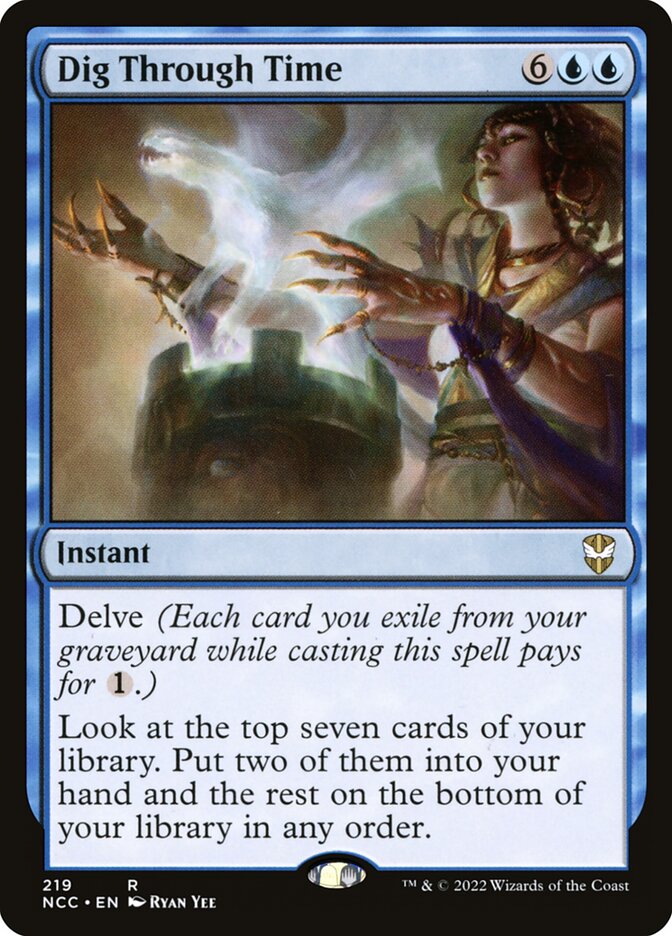
The second thing the combo does is make the opponent play scared. The opponent has to fear the combo at all times, which only heightens the advantage gained from your other Midrange cards. This deck also gets to make use of four copies of Dig Through Time, which are not only excellent at finding your combo pieces but also help further your attrition-based gameplan against decks where the combo is less reliable. The more your opponent plays scared, the more time you have to maximize Dig Through Time, which puts your opponent in a bind.
Read More: MTG EDH Players Are Losing Their Minds Over LOTR Common!
Inverter Similarities
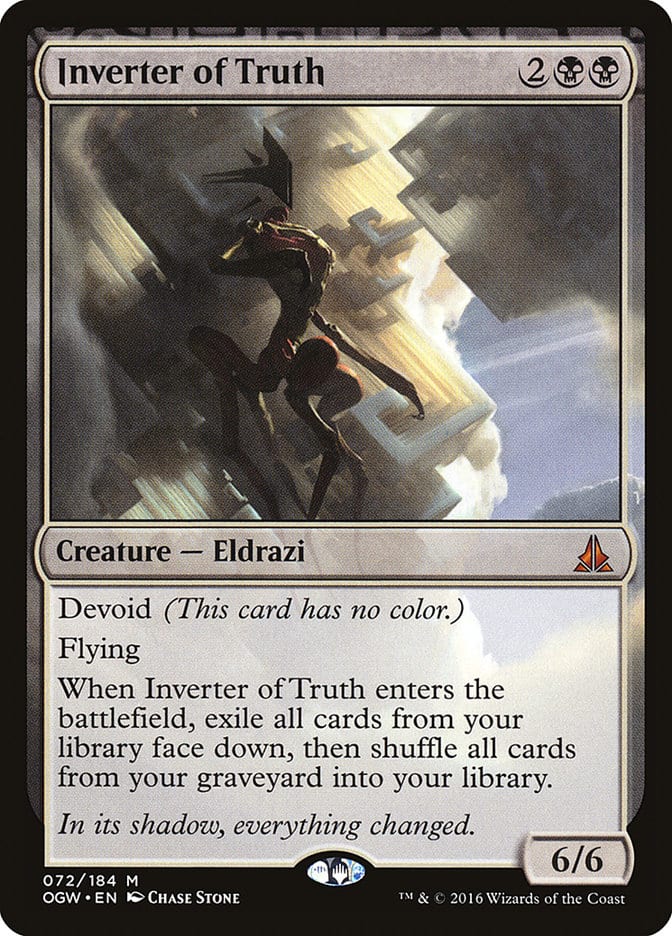
It is pretty clear that Octopedes_Rex is comparing Inverter of Truth with
Thassa’s Oracle
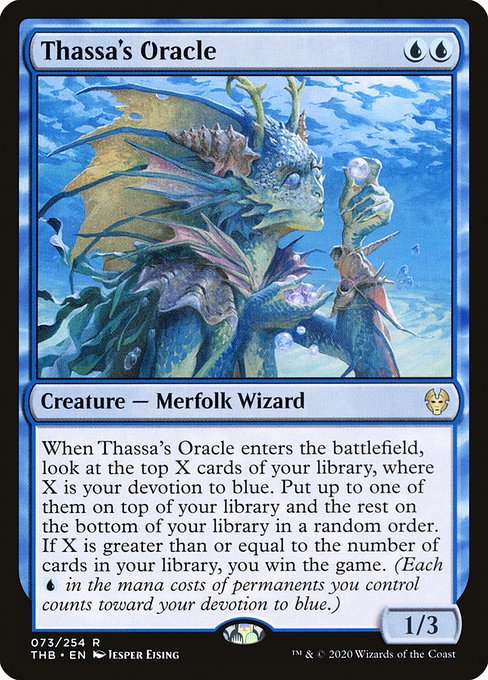 Thassa’s Oracle
When this creature enters, look at the top X cards of your library, where X is your devotion to blue. Put up to one of them on top of your library and the rest on the bottom of your library in a random order. If X is greater than or equal to the number of cards in your library, you win the game. (Each {U} in the mana costs of permanents you control counts toward your devotion to blue.)
to Archfiend with Alteration. While almost certainly hyperbole, there are some key similarities that showcase why the Archfiend deck was successful this weekend. At the 410-player $10k Regional Championship Qualifier at Regional Championship Dallas, Nicole Dubin finished the Swiss rounds undefeated with Archfiend Alteration combo, and their list has a lot of overlap with pre-ban Inverter decklists.
Thassa’s Oracle
When this creature enters, look at the top X cards of your library, where X is your devotion to blue. Put up to one of them on top of your library and the rest on the bottom of your library in a random order. If X is greater than or equal to the number of cards in your library, you win the game. (Each {U} in the mana costs of permanents you control counts toward your devotion to blue.)
to Archfiend with Alteration. While almost certainly hyperbole, there are some key similarities that showcase why the Archfiend deck was successful this weekend. At the 410-player $10k Regional Championship Qualifier at Regional Championship Dallas, Nicole Dubin finished the Swiss rounds undefeated with Archfiend Alteration combo, and their list has a lot of overlap with pre-ban Inverter decklists.
In addition to the similarly costed combo pieces, Nicole utilized Fatal Push, Thoughtseize, and Dig Through Time, just like old Inverter decks. From there, most of the rest of the deck, besides other Midrange threats like Fable, is filled with additional interaction in the form of removal and Counterspells. This showcases how playing a midrange/controlling gameplan with a combo finish can be quite an effective strategy, regardless of the combo itself.
It is worth mentioning, though, that while these decks do have similarities, the Inverter of Truths combo was a lot more robust. Unlike Alteration, Thassa’s Oracle could win the game through instant-speed removal and was, therefore, a lot harder for the opponent to break up. I expect as more people learn about the Alteration combo, more people will be better prepared to protect themselves from the combo.
Still, there are decks that can’t do much about the combo, whether they know about it or not. Combine that with the deck’s effective plan B as a solid Midrange deck with Archfiend as a finisher, and this deck can still be quite effective in the coming months. If you are eager to play Pioneer moving forward, definitely keep this combo on your radar.
Read More: MTG LOTR Spoiler Kickoff Unveils Multiple Incredible EDH Additions!