
The results of Pro Tour Lord of the Rings are in, and it appears that Modern Horizons Two and Lord of the Rings cards completely dominated.
The One Ring
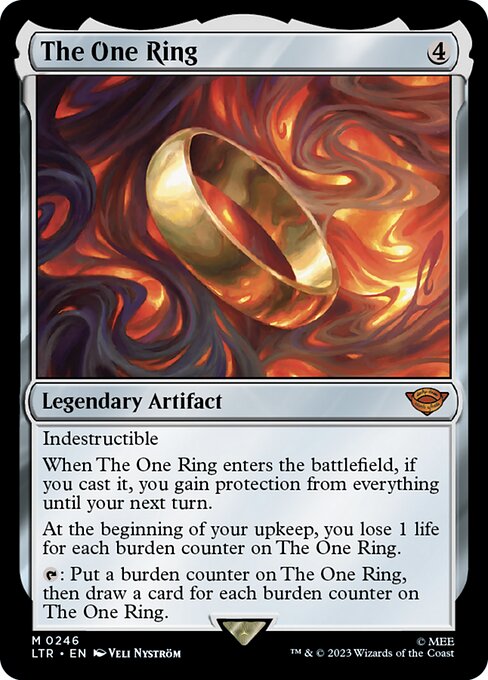 The One Ring
Indestructible
The One Ring
Indestructible
When The One Ring enters, if you cast it, you gain protection from everything until your next turn.
At the beginning of your upkeep, you lose 1 life for each burden counter on The One Ring.
{T}: Put a burden counter on The One Ring, then draw a card for each burden counter on The One Ring.
was everywhere, and Rakdos Scam featuring
Grief
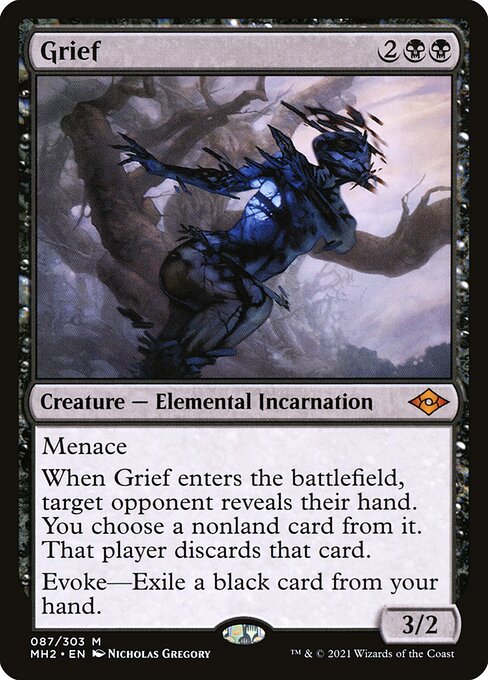 Grief
Menace
Grief
Menace
When this creature enters, target opponent reveals their hand. You choose a nonland card from it. That player discards that card.
Evoke—Exile a black card from your hand.
and
Fury
 Fury
Double strike
Fury
Double strike
When this creature enters, it deals 4 damage divided as you choose among any number of target creatures and/or planeswalkers.
Evoke—Exile a red card from your hand.
put up numbers reminiscent of
Hogaak, Arisen Necropolis
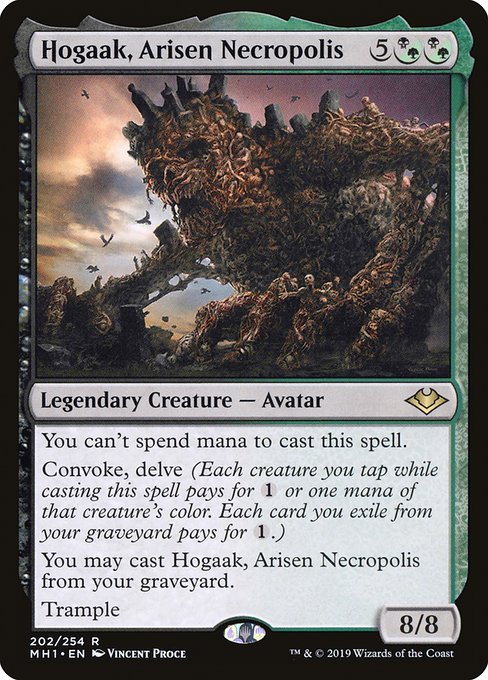 Hogaak, Arisen Necropolis
You can't spend mana to cast this spell.
Hogaak, Arisen Necropolis
You can't spend mana to cast this spell.
Convoke, delve (Each creature you tap while casting this spell pays for {1} or one mana of that creature's color. Each card you exile from your graveyard pays for {1}.)
You may cast this card from your graveyard.
Trample
at Pro Tour Modern Horizons. Many players took the route of playing these fantastic MTG cards, but others decided to try to adapt to the expected metagame in front of them.
This was also true of events over the weekend besides the Pro Tour itself. Magic Online actually featured a Super Qualifier on Sunday that saw some extremely innovative decklists in the top eight. With the metagame breakdown of the Pro Tour already out, it was clear that decks like Rakdos Scam were going to be omnipresent throughout the Super Qualifier. One player that made top eight of the Super Qualifier played a super unique deck designed to prey on some of the top decks in the format. This deck was none other than Selesnya Life Gain combo!
This deck has been around for a long time, but had largely fallen out of the metagame since the release of Modern Horizons Two. What made this deck such a good choice in the current metagame? To answer this, it’s important to first look at what the deck is trying to accomplish.
The Combos
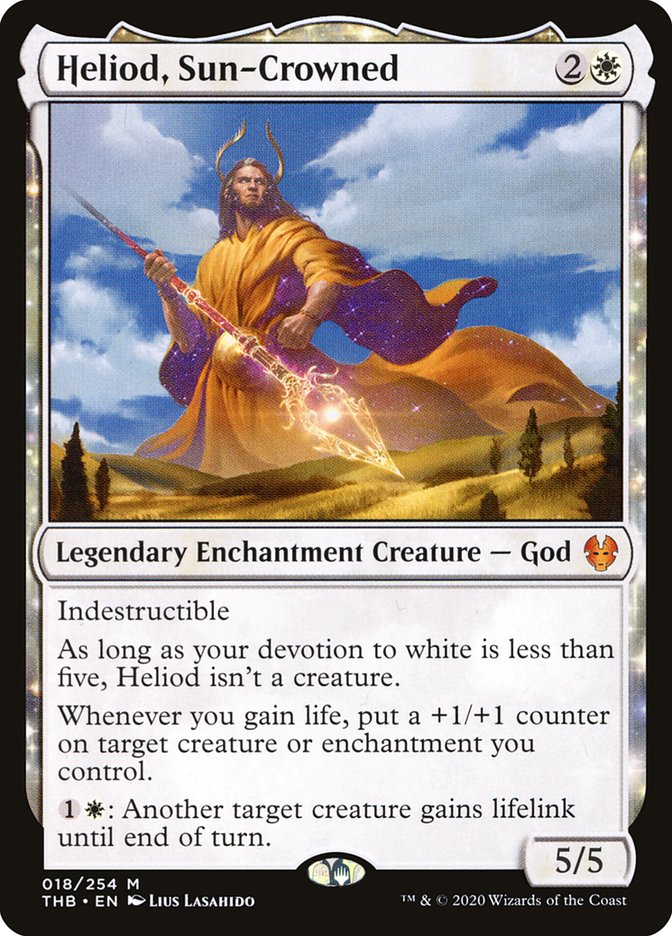
At the forefront of the Selesnya Life Gain deck are multiple infinite combos that allow the deck to close out games much faster than it otherwise could. The centerpiece of each of these combos is Heliod, Sun-Crowned. Heliod, despite being a Creature for the sake of cards like Collected Company, only acts as a Creature on the battlefield if your Devotion to white is five or greater. That, combined with the fact that Heliod has Indestructible, makes the card very difficult to remove once in play.
Heliod states that whenever you gain life, you can put a plus-one plus-one counter on a Creature you control. When combining this with Spike Feeder, which enters with two counters and gives you the option to remove one to gain two life, you can gain infinite life! Removing a counter from Spike Feeder to gain two life will cause Heliod to trigger, letting you put a counter back on Spike Feeder, and you can repeat the process.
If you also control a copy of Conclave Mentor, you can grow your Creatures exponentially large. This is because Spike Feeder will get two counters every time Heliod triggers instead of one. This causes Spike Feeder to grow infinitely large. Then, you can remove counters from Spike Feeder and have Heliod put counters on your other Creatures to grow them infinitely large as well.
With a two-power
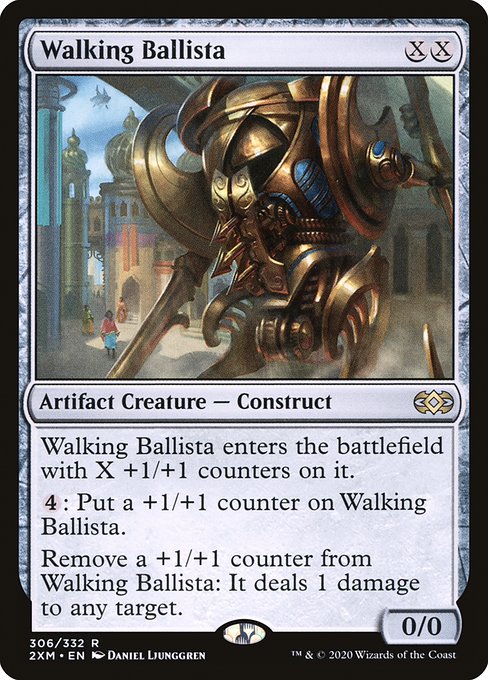
Walking Ballista
 Walking Ballista
This creature enters with X +1/+1 counters on it.
Walking Ballista
This creature enters with X +1/+1 counters on it.
{4}: Put a +1/+1 counter on this creature.
Remove a +1/+1 counter from this creature: It deals 1 damage to any target.
alongside Heliod, you can use Heliod to give Ballista Lifelink, use Ballista to ping the opponent and gain a life, trigger Heliod and put the counter back on Ballista, and deal infinite damage to your opponent. Arwen, Mortal Queen makes this easier, as you can simply cast Ballista for x equals one, use Arwen to move a Lifelink and plus-one plus-one counter to Ballista, and utilize the same process.
Read More: MTG Pro Tour Showcases Troubling Power Creep Problem
Building Towards the Combos
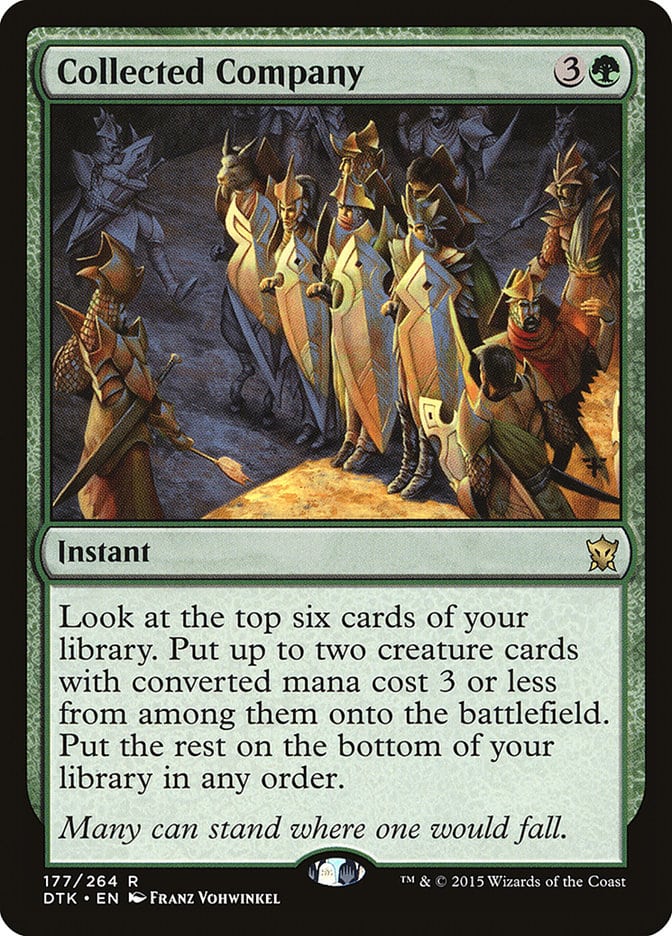
The deck clearly has multiple important combos, but they all revolve around Heliod. In order to help dig for Heliod, this deck plays a playset of Collected Company as well as two copies of Kayla’s Reconstruction. Both cards look at a lot of cards to try to find Heliod and Spike Feeder. To help find Ballista to end the game gauranteed, this deck also plays four copies of Ranger Captain of Eos. Not only can Ranger-Captian find Ballista, but it can also be sacrificed to make sure Ballista and the combo resolves by preventing your opponent from being able to cast interactive spells on Ballista in response.
To help accelerate these combos and race opposing combo decks, this deck utilizes the combination of Arbor Elf and Utopia Sprawl. Both these cards help accelerate you from one to three mana. Given how much the deck is centered around three-drops, this is extremely important. Sometimes, if you have Arbor Elf and Utopia Sprawl, you can even cast Collected Company turn two by playing a second land with an Arbor Elf out, putting Utopia Sprawl on it, floating two mana, then untapping it with Arbor Elf. Given the prevalence of decks like Tron at the Pro Tour, it’s important to be able to race the opponent. Of course, comboing can be difficult if the opponent interacts a lot. Luckily, this deck has a decent backup plan, especially against Rakdos Scam.
Read More: Updated Infamous Archaic MTG Deck Dominates Pro Tour!
Plan B
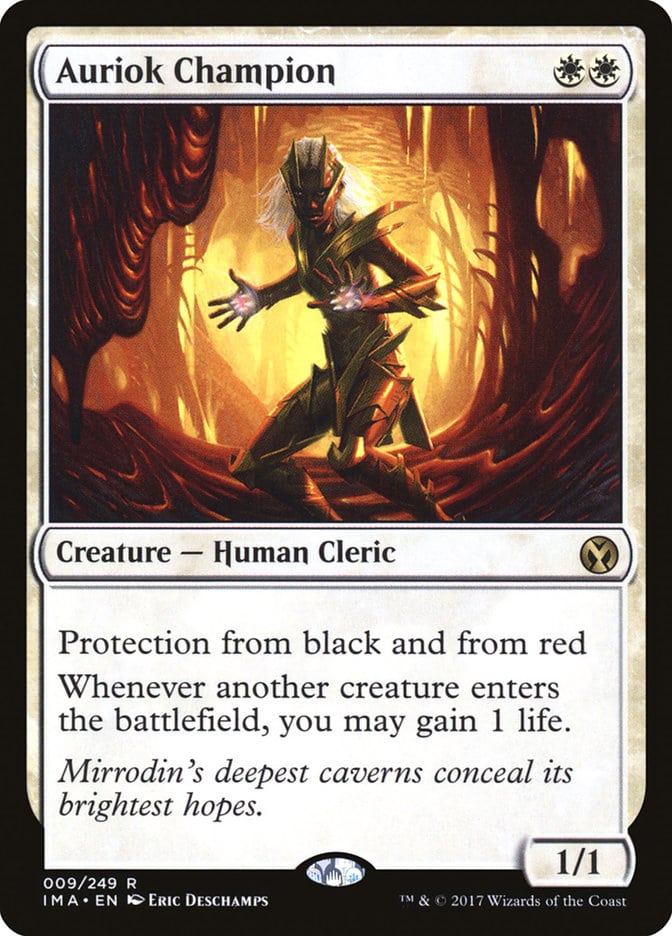
One of the biggest strengths of this deck is its ability to play a grindier game. The incidental life gain from the deck makes it extremely strong against opposing aggro decks and especially Burn, which has picked up in popularity thanks to the prevalence of the One Ring. Heliod is obviously a great card when comboing, but it’s also just a great value engine when you can gain life. One of the best cards in the deck for this reason is Auriok Champion. With Protection from Red and Black, the card is difficult to kill and a nightmare for Rakdos Scam. Not only that, but every time another Creature enters the battlefield on either side of the board, you gain a life.
Pair that with Heliod, and it’s very easy to watch Champion grow a bunch and end the game in short order. Much like Sancitifer en-Vec, the card can block an opposing
Fury
Fury
Double strike
When this creature enters, it deals 4 damage divided as you choose among any number of target creatures and/or planeswalkers.
Evoke—Exile a red card from your hand.
forever. This deck gets to dig for it with Collected Company, and its ability to grow with Heliod means it can stop the Rakdos Creatures from attacking and eventually swiftly shut the door on the opponent. In this sense, the deck provides a decent counter to Rakdos Scam and Burn. How does it fair in the other matchups?
Read More: Atrocious MTG Bulk Card Now Decks Players Out at Instant Speed!
Strengths and Weaknesses
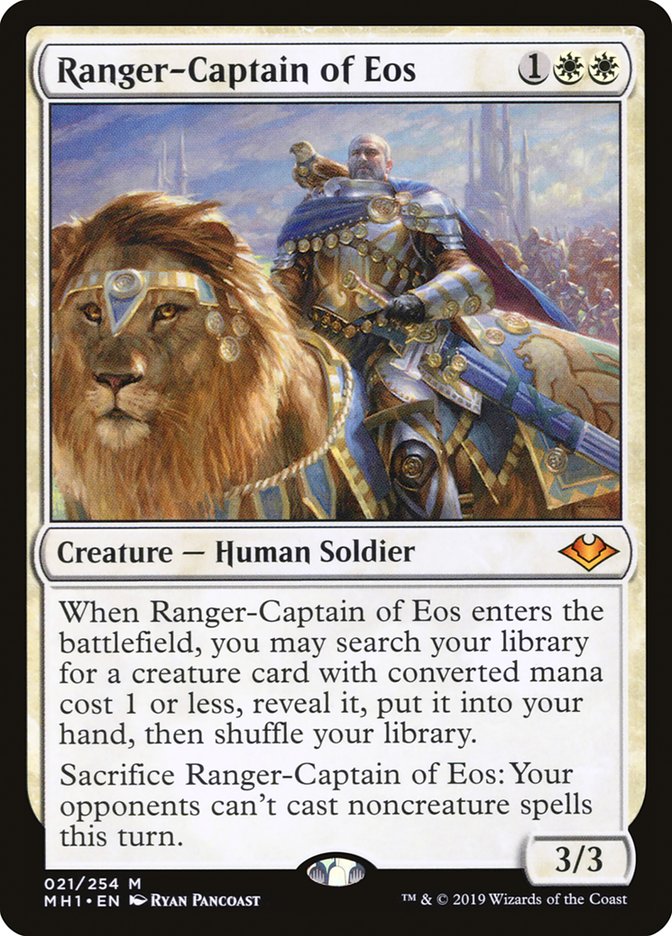
Beyond just the ability to combo quickly or stall the game against Rakdos and Burn, this deck has a few more tricks up its sleeve. Against
Living End
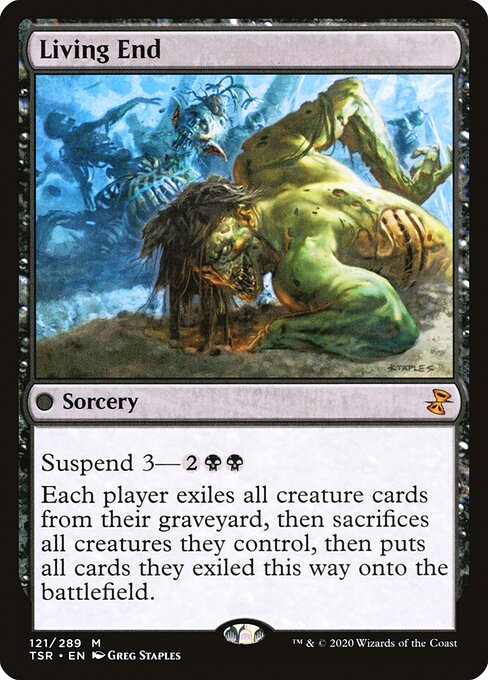 Living End
Suspend 3—{2}{B}{B}
Living End
Suspend 3—{2}{B}{B}
Each player exiles all creature cards from their graveyard, then sacrifices all creatures they control, then puts all cards they exiled this way onto the battlefield.
, Ranger-Captain’s ability to be sacrificed and prevent the opponent from casting another non-Creature spell can be backbreaking. If your opponent goes to try to Cascade into Living End, you can simply respond to the Cascade trigger, sacrifice Ranger-Captain, and ruin your opponent’s chance to resolve Living End. The same thing is true for
Crashing Footfalls
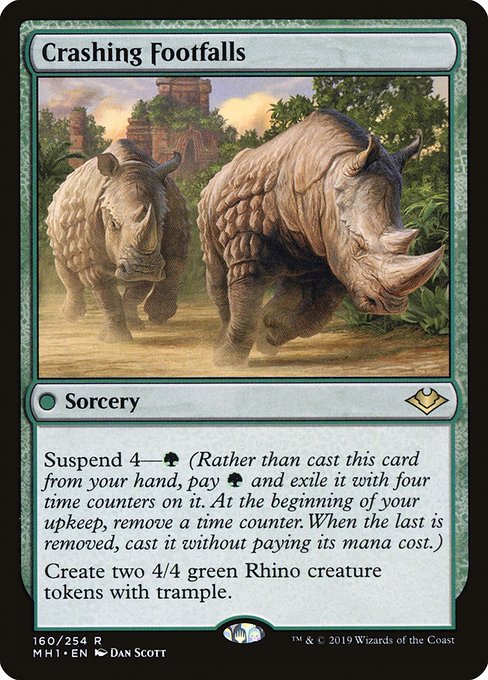 Crashing Footfalls
Suspend 4—{G} (Rather than cast this card from your hand, pay {G} and exile it with four time counters on it. At the beginning of your upkeep, remove a time counter. When the last is removed, you may cast it without paying its mana cost.)
Crashing Footfalls
Suspend 4—{G} (Rather than cast this card from your hand, pay {G} and exile it with four time counters on it. At the beginning of your upkeep, remove a time counter. When the last is removed, you may cast it without paying its mana cost.)
Create two 4/4 green Rhino creature tokens with trample.
decks. In this sense, this deck is a fairly decent metacall, and it’s easy to see why it performed so well.
Still, the deck doesn’t have great matchups across the board. One of the more difficult matchups is four-color control. Four-color control utilizes multiple cards that are strong against this strategy. First, the deck plays reliable interaction for Heliod itself.
Leyline Binding
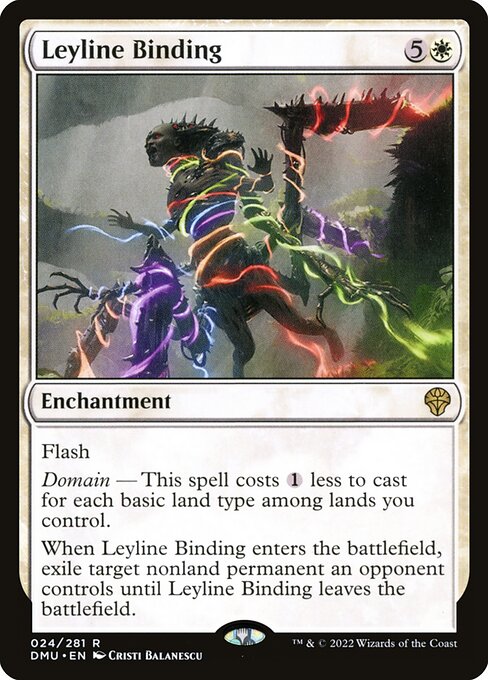 Leyline Binding
Flash
Leyline Binding
Flash
Domain — This spell costs {1} less to cast for each basic land type among lands you control.
When this enchantment enters, exile target nonland permanent an opponent controls until this enchantment leaves the battlefield.
, [toolltips]Prismatic Ending[/tooltips], and
Teferi, Time Raveler
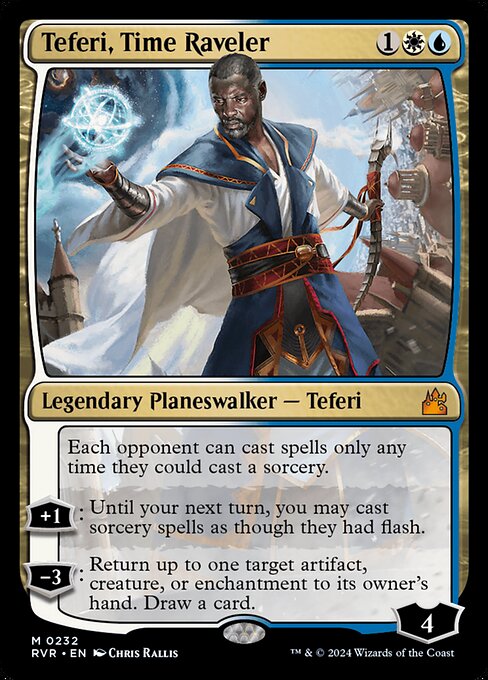 Teferi, Time Raveler
Each opponent can cast spells only any time they could cast a sorcery.
Teferi, Time Raveler
Each opponent can cast spells only any time they could cast a sorcery.
+1: Until your next turn, you may cast sorcery spells as though they had flash.
−3: Return up to one target artifact, creature, or enchantment to its owner's hand. Draw a card.
can make it difficult to stick a Heliod, and
Solitude
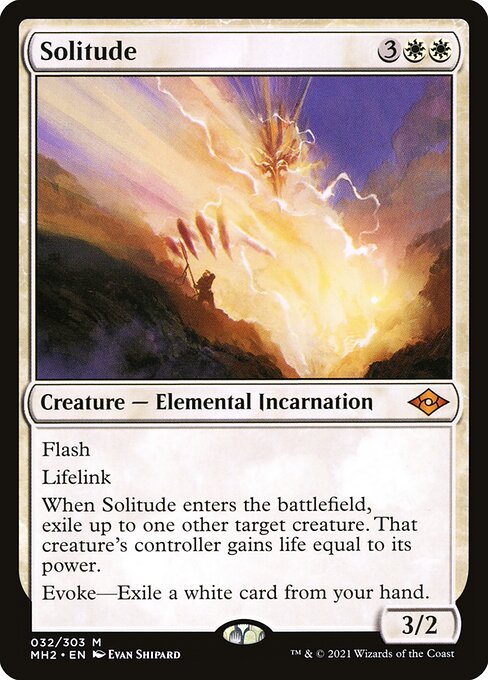 Solitude
Flash
Solitude
Flash
Lifelink
When this creature enters, exile up to one other target creature. That creature's controller gains life equal to its power.
Evoke—Exile a white card from your hand.
can help clean up the remains.
While this deck can grind in some matchups thanks to Heliod, Auriok Champion, and Collected Company, this deck has very little card advantage, which can make it very difficult to grind with the power of the One Ring as long as Heliod is kept in check. Of course, Collected Company is capable of single-handedly winning games out of nowhere, making it difficult to ever tap out for the One Ring. This deck can do some powerful things, and if you want to play a deck to punish a handful of the top performing archetypes, including Rakdos Scam, Selesnya life gain is definitely a reasonable choice.
Read More: Iconic MTG Squirrel Takes Down Massive Event with New Deck!