
Ever since
Preordain
 Preordain
Scry 2, then draw a card. (To scry 2, look at the top two cards of your library, then put any number of them on the bottom and the rest on top in any order.)
was unbanned in the Modern format, some new ideas have been coming and going as a result of it. Izzet Murktide was the biggest archetype to benefit from this card, making a bit of a comeback from its previous unpopularity before the ban of Fury. While this is definitely the biggest development Preordain’s unbanning has brought to the Modern metagame, there are some other… more niche archetypes that are showing up at the edges of visibility.
Preordain
Scry 2, then draw a card. (To scry 2, look at the top two cards of your library, then put any number of them on the bottom and the rest on top in any order.)
was unbanned in the Modern format, some new ideas have been coming and going as a result of it. Izzet Murktide was the biggest archetype to benefit from this card, making a bit of a comeback from its previous unpopularity before the ban of Fury. While this is definitely the biggest development Preordain’s unbanning has brought to the Modern metagame, there are some other… more niche archetypes that are showing up at the edges of visibility.
If glass cannon combo decks that end the game on turns 3-4 rather consistently are your style, and you don’t want to play Amulet Titan for whatever reason, you may want to consider Twiddlestorm. It’s not the best deck in Modern, far from it, but it is continuing to pop up with occasional top eight finishes in a lot of bigger events. You get to draw your entire deck on turn three, or play 20 power on turn two. What’s not to love?
Lotus Twiddlestorm
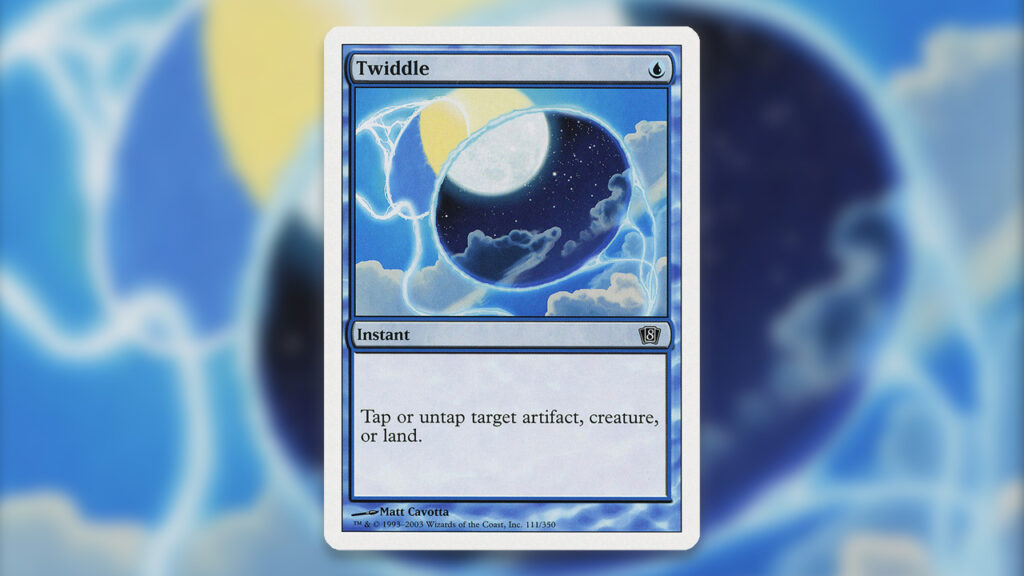
Twiddlestorm has been around as an idea in the Modern format for a long time. Create a source of mana that taps for more than one mana, and use effects like Twiddle and Dream’s Grip to untap it and generate even more mana. Since the printing of Lotus Field, that has become the de-facto way for this deck to function.
As a note, this featured decklist that top eighted a recent Modern Challenge on Magic Online plays a few more Twiddle effects than what is traditionally played in the archetype. Most decklists use four Dream’s Grip, four Hidden Strings and a single Twiddle. The extra copies of Twiddle are replaced with more generic cards like Lightning Bolt that don’t necessarily help you combo, but can remove problematic permanents.
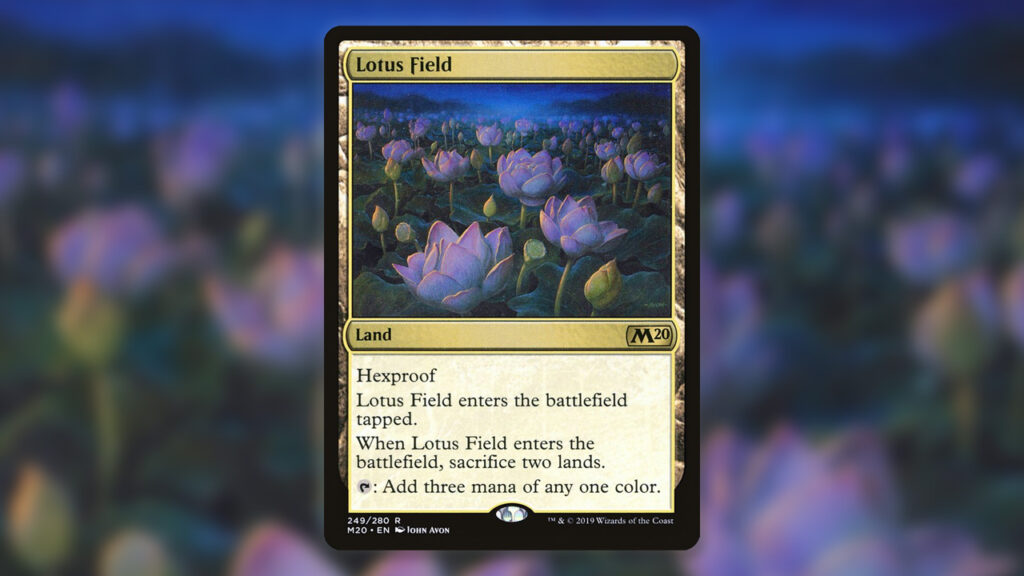
Lotus Field, in exchange for tapping for three mana, forces you to sacrifice two lands. Any Pioneer players are likely rather familiar with the land since it’s part of two different decks that are near the center of the metagame. One is similar to Twiddlestorm, utilizing effects to untap Lotus Field and cast a game-ending spell. The other also wants to untap Lotus Field, but plays a much more controlling game.
The similarity between both of those Pioneer decks is that you typically need two Lotus Fields in play to function at full force. This is accomplished by using Thespian’s Stage or untap dorks like Voyaging Satyr to give cards like Hidden Strings and Teferi, Hero of Dominaria two three-mana generating targets to untap. If you’ve played Modern, you know that this is too slow.
As a result, this particular iteration of Twiddlestorm aims to consistently offer kill opportunities on turns 3-4. Like many other decks in the format, Twiddlestorm also has access to
The One Ring
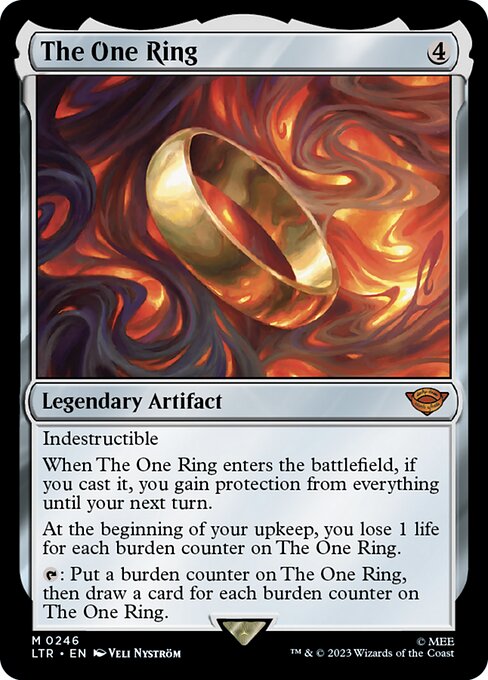 The One Ring
Indestructible
The One Ring
Indestructible
When The One Ring enters, if you cast it, you gain protection from everything until your next turn.
At the beginning of your upkeep, you lose 1 life for each burden counter on The One Ring.
{T}: Put a burden counter on The One Ring, then draw a card for each burden counter on The One Ring.
as a backup plan, which can both draw your entire deck and stall for time.
The Untappers
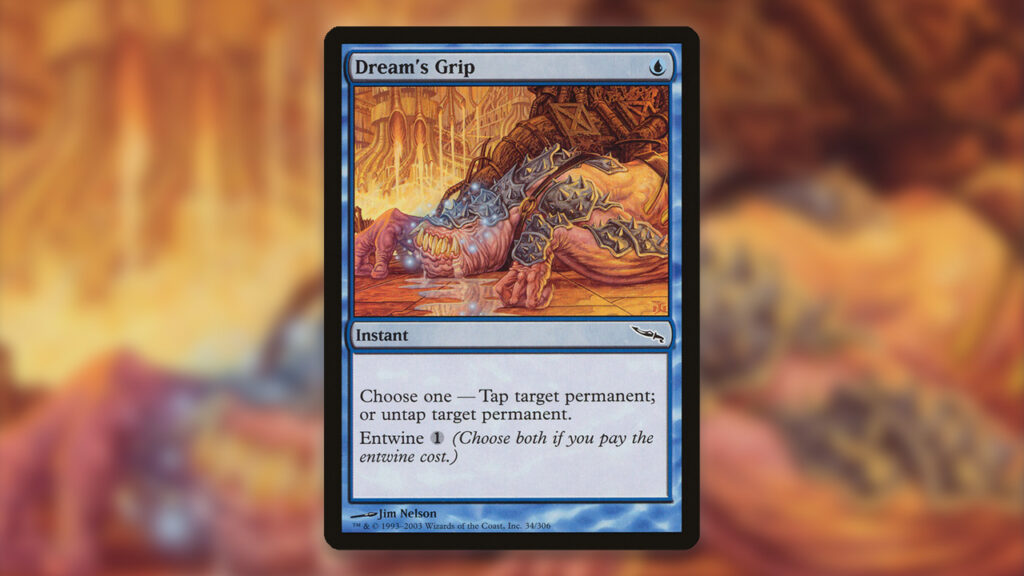
The iteration of Twiddlestorm we’ll be looking at has four main untap cards that can be used to generate mana alongside Lotus Field. Twiddle and Dream’s Grip essentially function the exact same, untapping your Lotus Field at instant speed for one mana. Since Lotus Field taps for three mana, these cards are essentially generating you two mana.
Twiddle and Dream’s Grip can also be used to tap your opponent’s permanents in a pinch, which makes this deck a bit more difficult to pilot than it appears. Should you keep your Twiddle to help win on your turn? Should you tap an opponent’s land to stop a big three mana play like
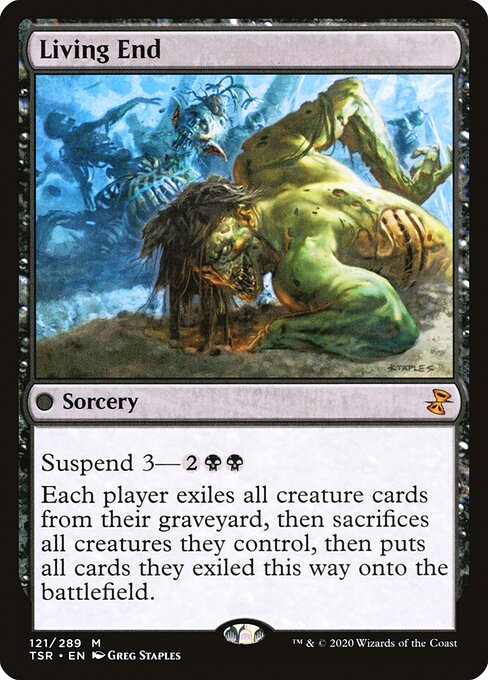
Living End
 Living End
Suspend 3—{2}{B}{B}
Living End
Suspend 3—{2}{B}{B}
Each player exiles all creature cards from their graveyard, then sacrifices all creatures they control, then puts all cards they exiled this way onto the battlefield.
or make it more difficult for them to counter your spells? Will using your Twiddle mean you cannot win the next turn, or will holding it mean you don’t get a next turn?
Read More: The Funniest Alternate Win Conditions In MTG
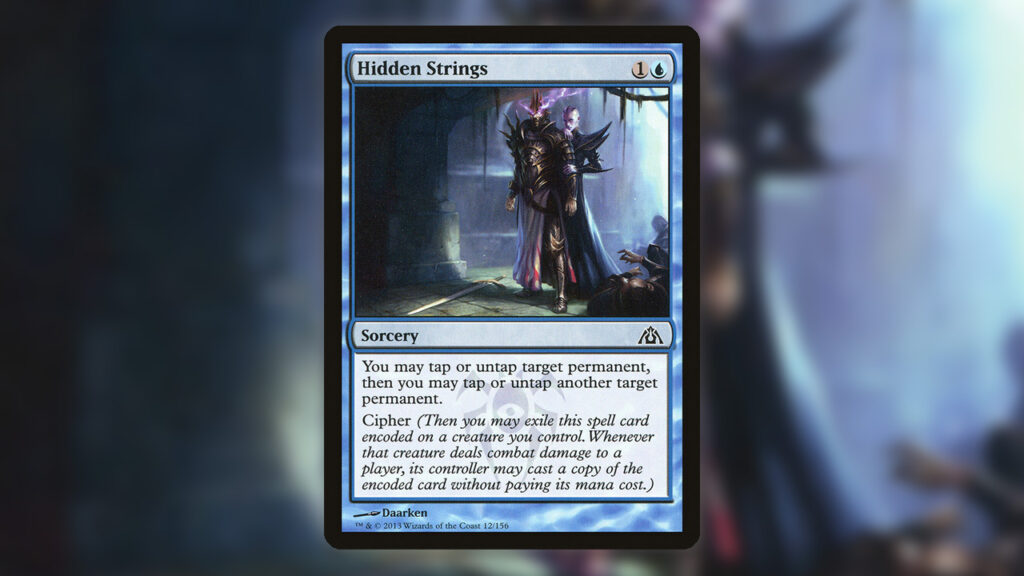
Your untap effects can also be used to untap The One Ring and draw more cards. Its not uncommon for this to chain into more untap effects, allowing you to draw your deck. Hidden Strings is best used once you have both Lotus Field and The One Ring in play, untapping both permanents to both generate mana and draw more cards. Since The One Ring only damages you on your upkeep, you don’t really need to worry about the Burden Counters damaging you unless you mess up, or brick.
The downside of Hidden Strings is twofold: it’s not an instant, so you can’t tap opponent’s permanents on their turn, and the card is a lot more ineffective if you’re trying to win on turn three without The One Ring. Hidden Strings will only generate one mana in these instances, which can still help, but may not be enough.
The last untapper effect you have access to is Vizier of Tumbling Sands. This creature is rarely played as one in this particular deck. You instead want to Cycle this card to untap one of your permanents and cantrip, finding more gas to end the game.
The deck is otherwise filled with lands, ways to find your Lotus Field like Sylvan Scrying, win conditions which consist of The One Ring, Wish and
Underworld Breach
 Underworld Breach
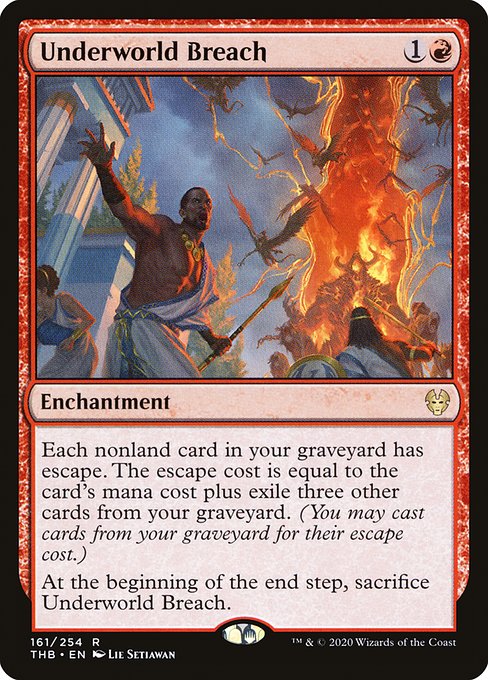
Each nonland card in your graveyard has escape. The escape cost is equal to the card's mana cost plus exile three other cards from your graveyard. (You may cast cards from your graveyard for their escape cost.)
Underworld Breach
Each nonland card in your graveyard has escape. The escape cost is equal to the card's mana cost plus exile three other cards from your graveyard. (You may cast cards from your graveyard for their escape cost.)
At the beginning of the end step, sacrifice this enchantment.
, a few flexible cards like Lightning Bolt, and a bunch of cantrips that help find all the pieces you need. Here, we come full-circle from our introduction since Preordain makes this deck much more consistent than it was previously.
Read More: Unexpected Wizards Synergy Revives Super Iconic MTG Staple!
How to Wish
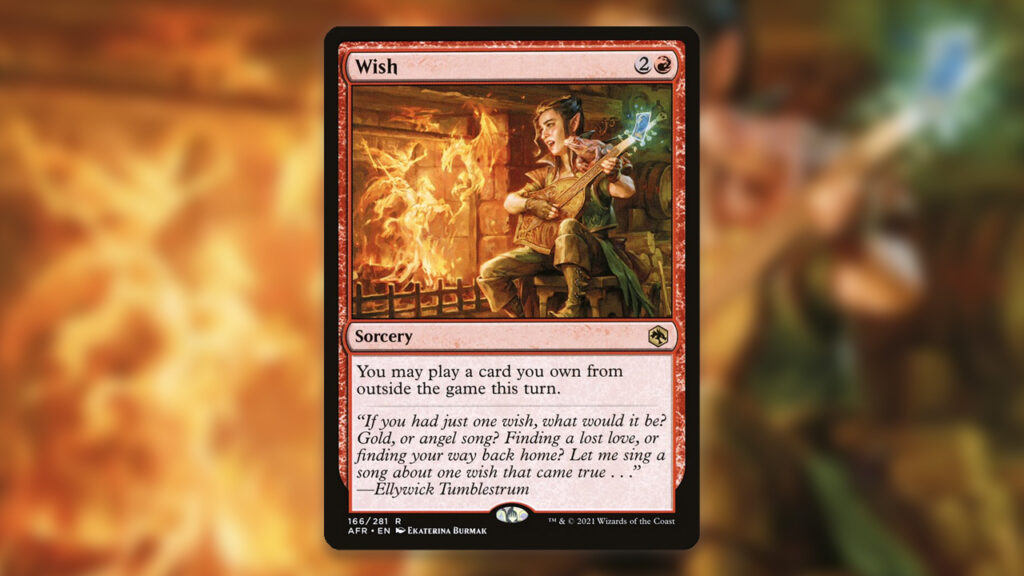
Wish contains a fairly simple effect: allowing you to play a card directly from your sideboard. This is the primary reason why you don’t need a win condition in your mainboard; you can win the game by Wishing for a
Thassa’s Oracle
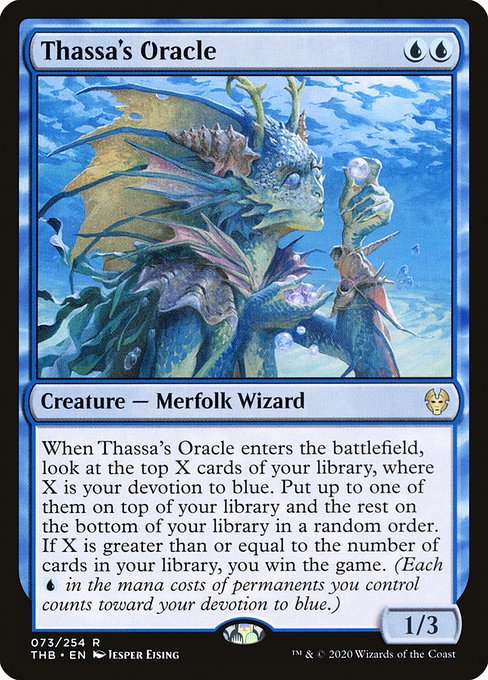 Thassa’s Oracle
When this creature enters, look at the top X cards of your library, where X is your devotion to blue. Put up to one of them on top of your library and the rest on the bottom of your library in a random order. If X is greater than or equal to the number of cards in your library, you win the game. (Each {U} in the mana costs of permanents you control counts toward your devotion to blue.)
a majority of the time. You also have access to Storm win conditions depending on your build, and can side these in if you’re worried about cards like Extirpate. Despite this, as the Twiddlestorm archetype has evolved, players have started playing Thassa’s Oracle as a win condition in the main deck in addition to using Wish.
Thassa’s Oracle
When this creature enters, look at the top X cards of your library, where X is your devotion to blue. Put up to one of them on top of your library and the rest on the bottom of your library in a random order. If X is greater than or equal to the number of cards in your library, you win the game. (Each {U} in the mana costs of permanents you control counts toward your devotion to blue.)
a majority of the time. You also have access to Storm win conditions depending on your build, and can side these in if you’re worried about cards like Extirpate. Despite this, as the Twiddlestorm archetype has evolved, players have started playing Thassa’s Oracle as a win condition in the main deck in addition to using Wish.
The big attractive factor to using Wish is, with a bit of setup, Wish can also function as a direct win condition. The setup is a bit confusing at first, but its not too difficult to make this work. Here is a step-by-step guide to how the combo works.
In order to do this, you need a Lotus Field in play, access to a card that generates two mana (if this is Twiddle or Dream’s Grip, you should be able to win on turn 3. If it’s Hidden Strings, you may need to wait until you have two targets to do this safely, but you can try since you’ll mill more cards) and Wish. You also need enough mana to resolve an Underworld Breach (whether you Wish it or not), and cast Wish with enough blue mana to Tome Scour and untap afterwards.
The number of mana you need to generate varies on the number of cards you have in your graveyard. Ultimately, you need to get to a stage where you’re casting Wish with an
Underworld Breach
Underworld Breach
Each nonland card in your graveyard has escape. The escape cost is equal to the card's mana cost plus exile three other cards from your graveyard. (You may cast cards from your graveyard for their escape cost.)
At the beginning of the end step, sacrifice this enchantment.
on board, have an untapper available to cast after milling five cards, and five or six mana depending on whether your untapper is Twiddle or Hidden Strings.
- Generate your six+ mana with various untap effects, creating at least two red mana. Wish while leaving one red mana and some number of blue mana left over.
- Cast Underworld Breach from your sideboard. Have at least one blue mana left over after this resolves. In the case that you are using Hidden Strings to do this, you’ll need two mana left over.
- Re-cast your untapper spell with Underworld Breach to untap Lotus Field. You want to generate five/six mana depending on your untapper.
- Wish again, leaving 2-3 blue mana in your pool depending on your untapper spell. Use Wish to cast Tome Scour targeting yourself and milling five cards.
- Use your leftover mana to Escape your untapper spell and generate mana.
- Escape Tome Scour twice, milling yourself for ten. Repeat this and the step above until your library is empty.
- Generate enough mana to Wish and cast Thassa’s Oracle from the Wish. This needs at least five mana, but you can generate more if you want to play around something like Subtlety.
The One Ring
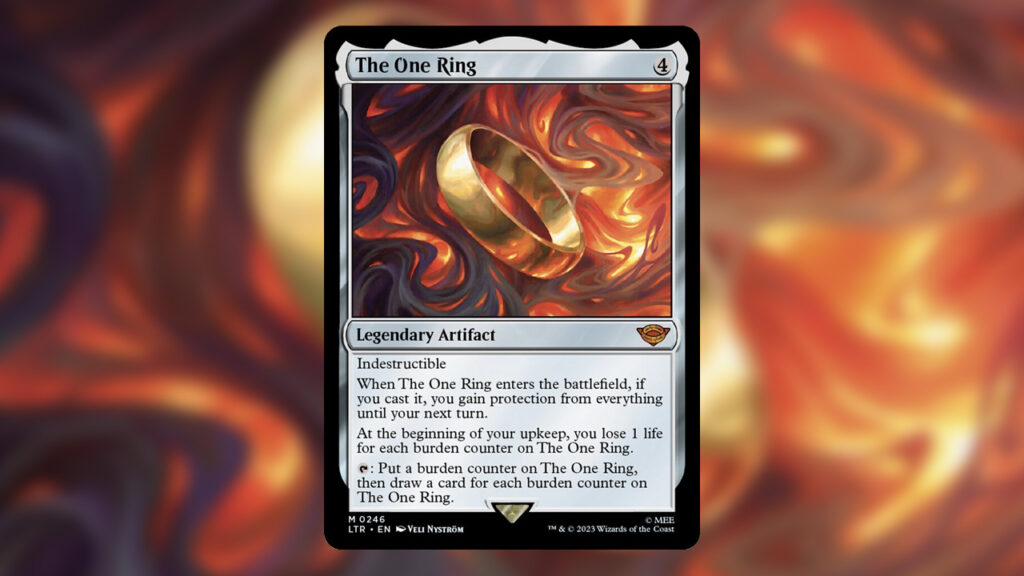
Not every Twiddlestorm deck chooses to use The One Ring, but after playing the archetype quite a bit, I believe that this variation of the deck is the best one. Not only can The One Ring buy a lot of time, but you can win in almost any situation where your opponent allows you to untap with The One Ring (and use it without it being Pithing Needled). Most importantly, The One Ring gives you a win condition that doesn’t depend on your graveyard. This allows you to have two powerful winning sequences that don’t get shut down by the same hate pieces.
When trying to win with The One Ring, things are a lot more straightforward. You simply tap your Ring to draw cards and use your untap effects to untap The One Ring. Tap it again to draw more cards, and use more untap effects to untap either Lotus Field or The One Ring to draw cards and generate mana. Do remember to keep a tab on your library, as it’s not hard to deck out by accident. Otherwise, you can cast Underworld Breach at some point to make your decision-making rather trivial.
One small interaction to watch out for is that you cannot Tome Scour yourself on the turn The One Ring is giving you protection. This is a common mistake to make, so do remember that you won’t always be able to pivot between combos.
Rare Turn Two Lines
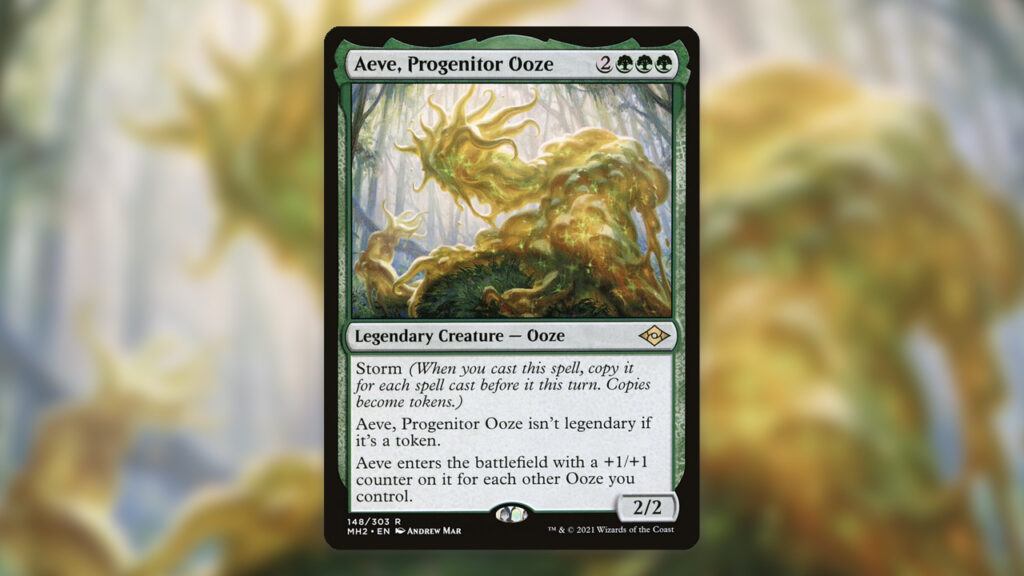
One very niche line that occurs once in a blue moon involves Wish, one land and a bunch of Twiddle effects in your opening hand. As long as you can generate eight mana on turn two, you can play your Lotus Field and Twiddle a bunch in response to your Lotus Field trigger. You need to do it in response since, once the trigger resolves, you will lose all your lands.
Once you have your eight mana, at least one of it needs to be red and three green. You can then Wish to cast an Aeve, Progenitor Ooze. With four Twiddle effects, this will create 20 power on turn two. With Yawgmoth Combo occasionally using
Fulminator Mage
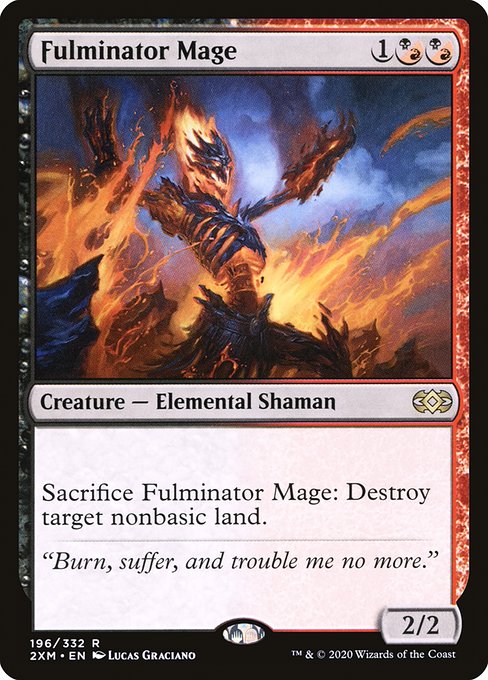 Fulminator Mage
Sacrifice this creature: Destroy target nonbasic land.
to blow up lands, you can get stuck stranded on one land, unable to play your Lotus Field and have it stick around. This is becoming a bit more relevant as a result
Fulminator Mage
Sacrifice this creature: Destroy target nonbasic land.
to blow up lands, you can get stuck stranded on one land, unable to play your Lotus Field and have it stick around. This is becoming a bit more relevant as a result
Read More: Baldur’s Gate 3 Causes MTG Card to See Massive Spike!
Playing Around Hate
Hate is the biggest reason why, even though this deck at peak performance is quite powerful, Twiddlestorm is not a popular deck in Modern.
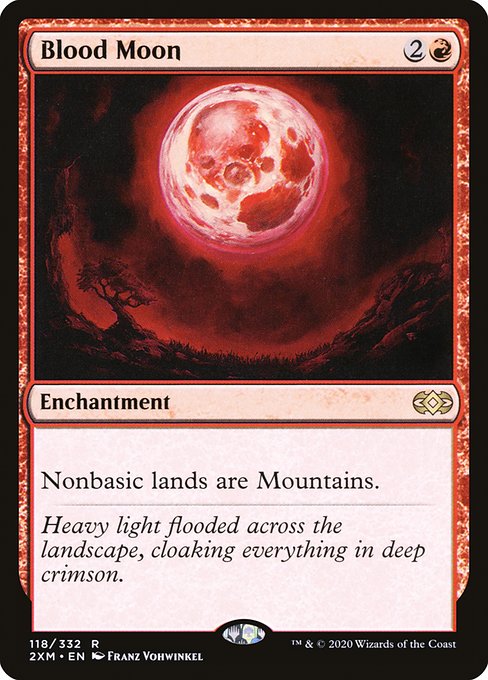
Blood Moon
 Blood Moon
Nonbasic lands are Mountains.
,
Damping Sphere
Blood Moon
Nonbasic lands are Mountains.
,
Damping Sphere
 Damping Sphere
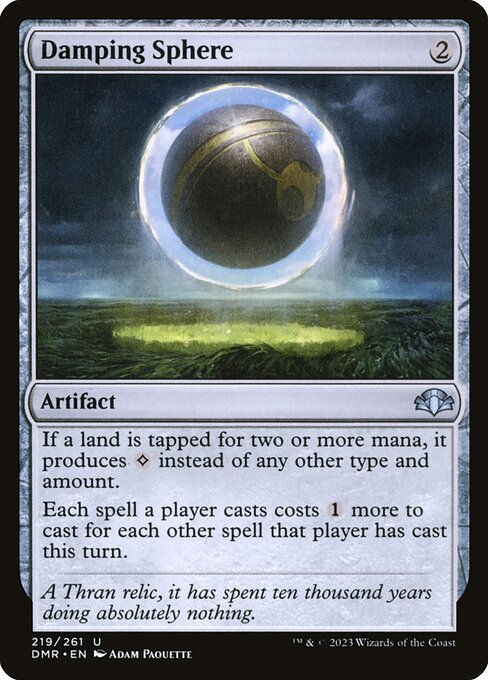
If a land is tapped for two or more mana, it produces {C} instead of any other type and amount.
Damping Sphere
If a land is tapped for two or more mana, it produces {C} instead of any other type and amount.
Each spell a player casts costs {1} more to cast for each other spell that player has cast this turn.
,
Relic of Progenitus
 Relic of Progenitus
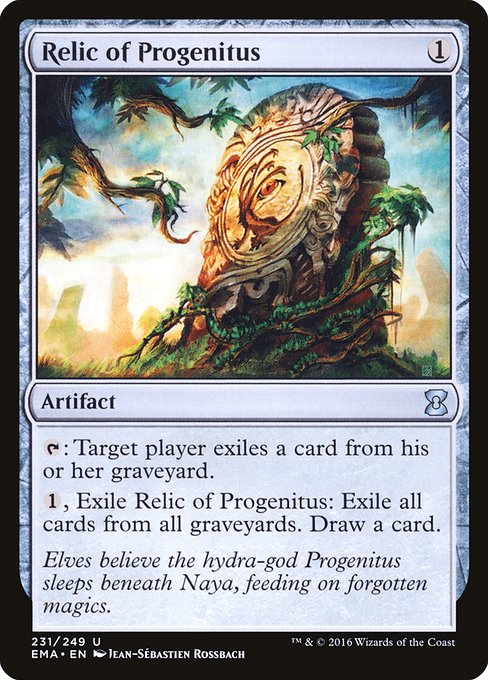
{T}: Target player exiles a card from their graveyard.
Relic of Progenitus
{T}: Target player exiles a card from their graveyard.
{1}, Exile this artifact: Exile all graveyards. Draw a card.
, Leyline of the Void, and a Ragavan backed with a slew of counterspells can all prove problematic to your gameplan. The deck does come equipped with ways to battle through everything like
Boseiju, Who Endures
 Boseiju, Who Endures
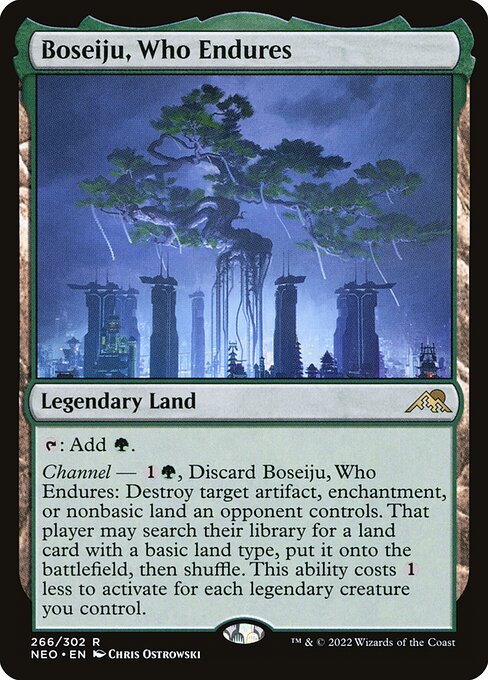
{T}: Add {G}.
Boseiju, Who Endures
{T}: Add {G}.
Channel — {1}{G}, Discard this card: Destroy target artifact, enchantment, or nonbasic land an opponent controls. That player may search their library for a land card with a basic land type, put it onto the battlefield, then shuffle. This ability costs {1} less to activate for each legendary creature you control.
and Void Snare, but the metagame is incredibly hostile, making this deck require a knowledgeable pilot to play around a multitude of problematic cards.
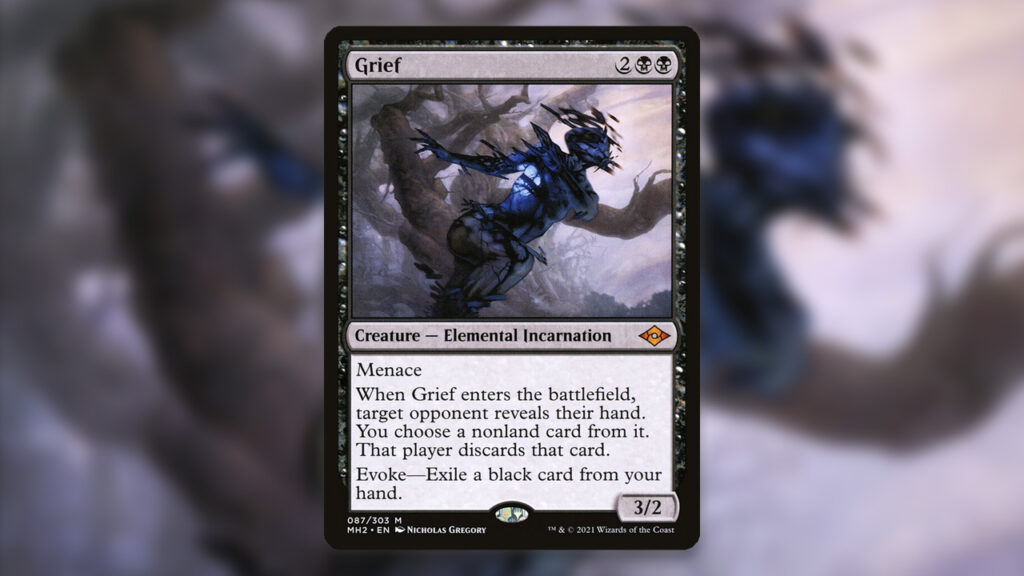
Despite Fury’s recent ban in Modern, Rakdos Scam remains a popular strategy in the format. It used to be acknowledged as the best deck in the Modern format, and remains a deck that you will need to be prepared for.
Scamming Grief in the early game can pick apart your hand and make it dysfunctional. Your best gameplan here it to go first and hope you can dodge the Scam with two Lightning Bolt-like options. Otherwise, having Lotus Field as a land in your opening hand is a huge help as you will definitely lose any tutors if your opponent understands what you’re up to.
In my experience, winning through a Scammed Grief isn’t too unreasonable. The problem is that it’s very rare for your Rakdos Scam opponent to simply Scam a Grief and leave you alone afterwards. A Scammed Grief with a follow-up
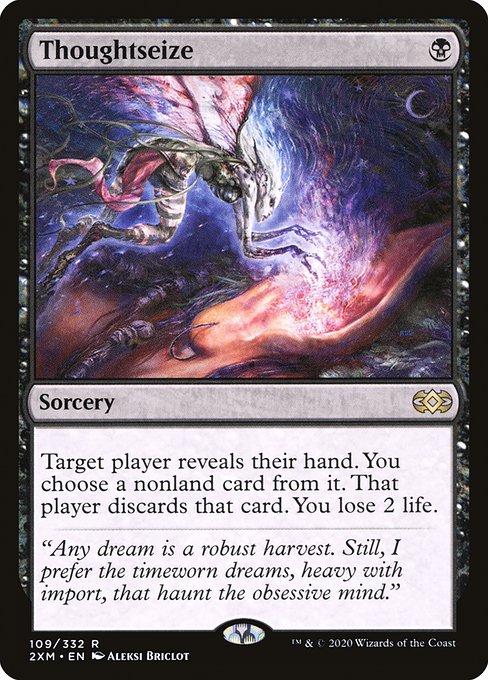
Thoughtseize
 Thoughtseize
Target player reveals their hand. You choose a nonland card from it. That player discards that card. You lose 2 life.
can be crushing. Two Scammed Griefs is a nightmare.
Thoughtseize
Target player reveals their hand. You choose a nonland card from it. That player discards that card. You lose 2 life.
can be crushing. Two Scammed Griefs is a nightmare.
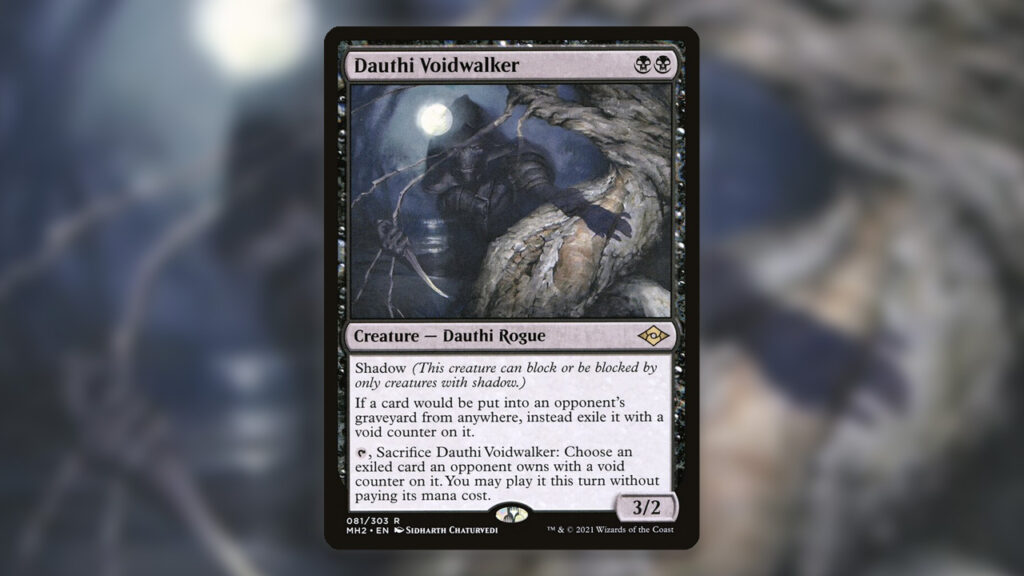
Dauthi Voidwalker turns off your Underworld Breach win condition. Since cards that hit your graveyard get exiled, you won’t be able to Escape anything. Fortunately, you can still use The One Ring to win the game through this card, but another nuisance can make that game plan difficult as well.
Do remember that you can Wish for cards like Void Snare to bounce the Voidwalker and win the game. Treat this scenario similarly to other graveyard hate pieces. Just win with The One Ring instead – or carefully claw your way back with removal and set up a Breach win.
Read More: Top 10 Most Expensive MTG Cards on The List for Wilds of Eldraine
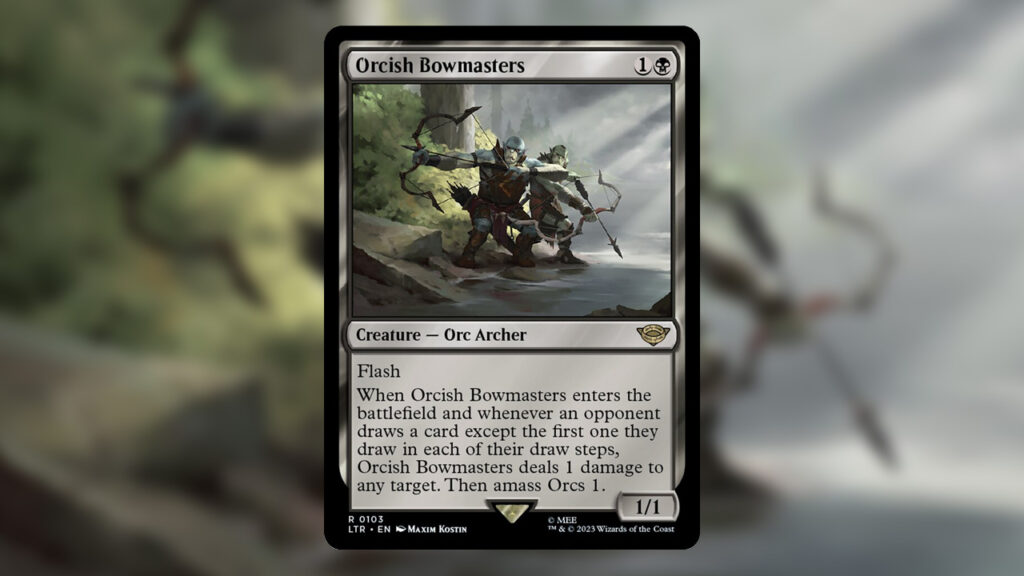
Orcish Bowmasters can limit the amount of cards you can draw with The One Ring, killing you before you empty your library. The best ways to get around this is either to cast The One Ring and go for the win in the same turn since Orcish Bowmasters will be unable to target you, or pack an answer to the Bowmasters.
Lightning Bolt
 Lightning Bolt
 deals 3 damage to any target.
, Veil of Summer and Dress Down are all cards that can take care of this menace.
Lightning Bolt
Lightning Bolt deals 3 damage to any target.
, Veil of Summer and Dress Down are all cards that can take care of this menace.
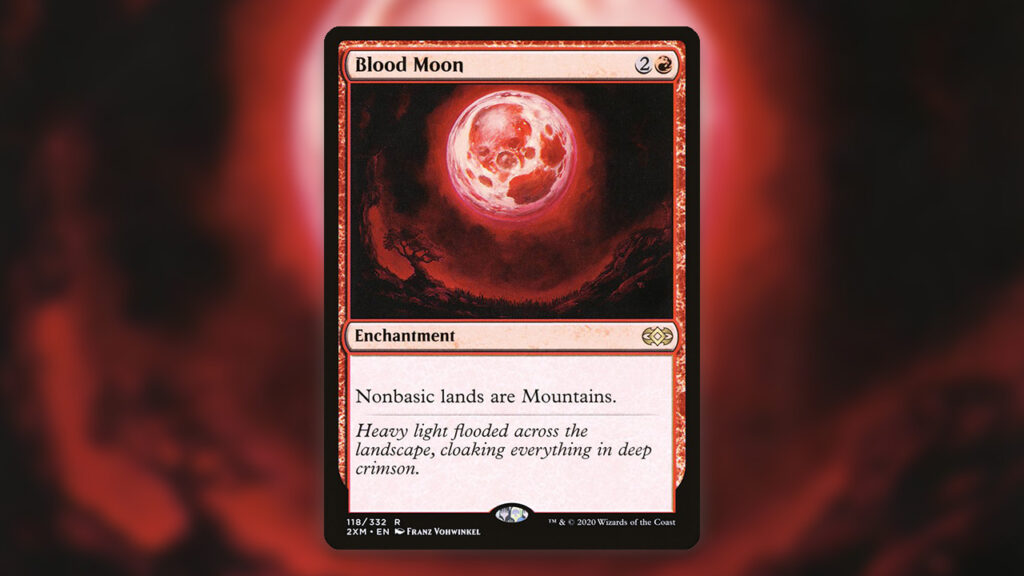
Blood Moon is a blessing and a curse at the same time. The card will shut down your Lotus Field, turning it into a Mountain, so your untap effects will not generate mana. On the other hand, your Lotus Field is a Mountain, meaning that you do not have to sacrifice lands when it enters play. You can use this to get Lotus Field on the ground and find an answer with Wish or Channel lands. Try not to tap the Lotus Field when answering Blood Moon since it can turn back on and win the game that turn.
If you’re expecting to play against Blood Moon, you really need to go out of your way to Fetch your Basic Island and Forest (some decks play a basic Forest and others don’t). Getting Blood Mooned with no basics in play generally means you can scoop it up.
If you’re expecting an opponent to attack you via the Blood Moon angle, delay playing your Lotus Field for as long as you can. If your opponent slowrolls their Blood Moon, trying to get you to sacrifice your basics, your best bet is to try and win the turn you deploy your Lotus Field.
One thing to watch out for against Blood Moon and Alpine Moon is that the Hexproof on your Lotus Field gets turned off. This opens a window for your opponent to use effects like Boseiju, Who Endures to blow up your Lotus Field.
Blood Moon and Alpine Moon are some of the only pieces of interaction that shut down both your win conditions. It’s very difficult to generate any mana when your Lotus Field only taps for one red mana. That said, it’s still not the worst card you can run into.
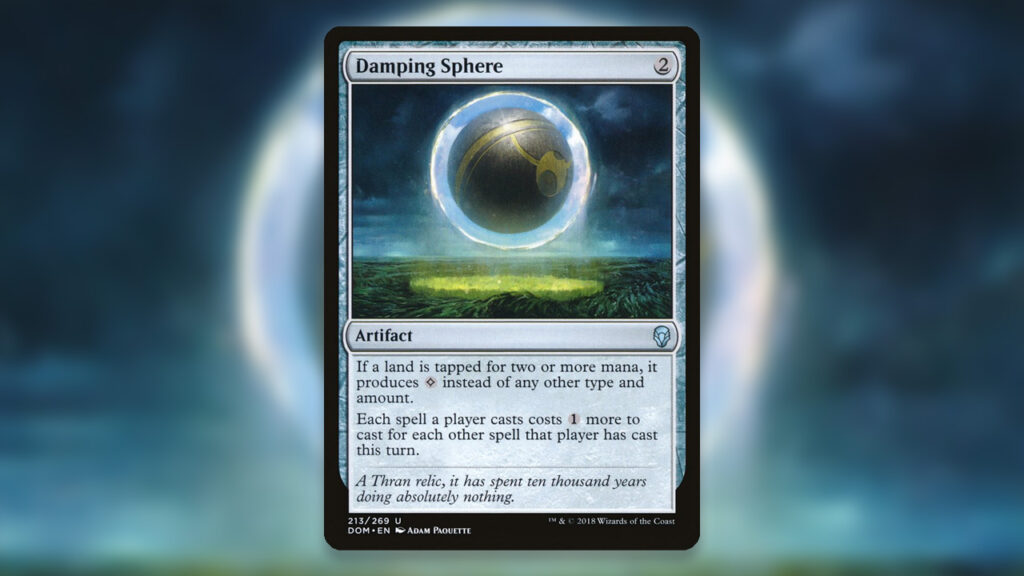
Damping Sphere is the worst card to play against for this deck. There’s no real way to play around it, and it makes removing it via Wish lines very difficult since it will tax consecutive plays. Unfortunately, Damping Sphere has risen in popularity in Hardened Scales sideboards, granting the deck multiple methods of attacking your plan. This card is intended to beat up on Tron decks, but bleeds over. Make sure you bring in answers to Damping Sphere if you’re facing down the Scam killer.
Despite Damping Sphere’s presence, I still think Hardened Scales is a 50/50 matchup at worst. Your general gameplan lines up against them rather well. Hardened Scales can occasionally set up a turn two kill, out speeding you, but that is rather rare.
Read More: Final MTG Spoilers Reveal Incredibly Blatant Power Creep
The Unsung Hero
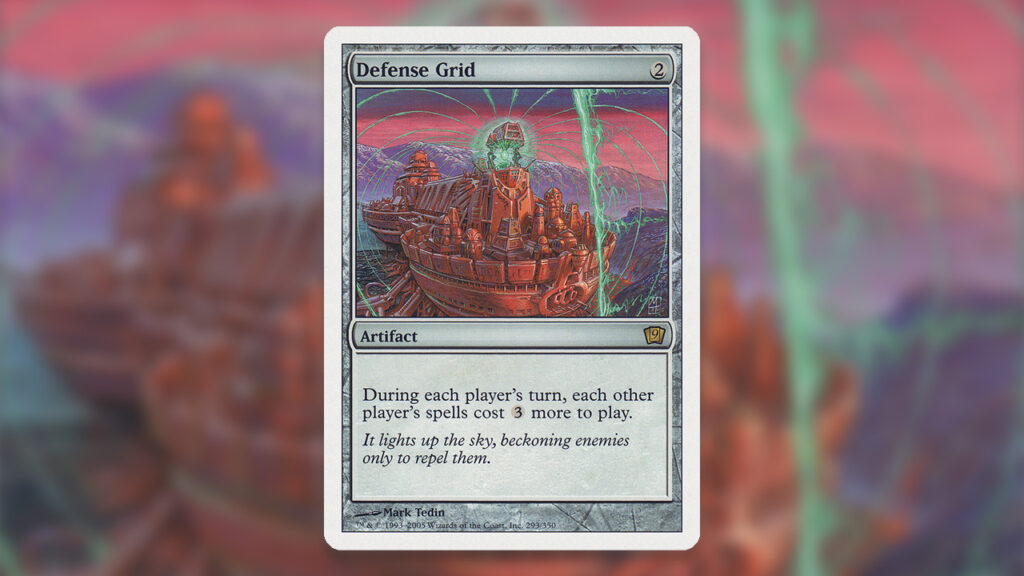
Defense Grid is an unreasonably powerful card in the current Modern metagame. Amulet Titan has also begun running this card in its sideboard, and it’s not difficult to understand why.
Defense Grid is a fantastic way to beat out a lot of interaction in the Modern format. Izzet Murktide, Temur Rhinos, and other controlling strategies struggle to answer a Defense Grid, especially if you attempt to win the turn you successfully resolve it. Making opposing spells cost three more makes countermagic difficult to pull off, but more importantly, free spells that ruin your day like Endurance and Force of Negation are no longer free.
Defense Grid gives Twiddlestorm some favorable matchups among the strongest decks in the Modern metagame. If you’re expecting a lot of Crashing Footfalls decks to show up at an event, Twiddlestorm, as long as you know how to pilot it, can pay you big dividends.
Why Play Twiddlestorm?
Besides the deck having a questionable (but not necessarily terrible) Rakdos Scam matchup, all your other matchups are rather favorable. Amulet Titan is quite a strong matchup since you’re able to combo at competitive speeds with them, have a decent amount of interaction to deal with
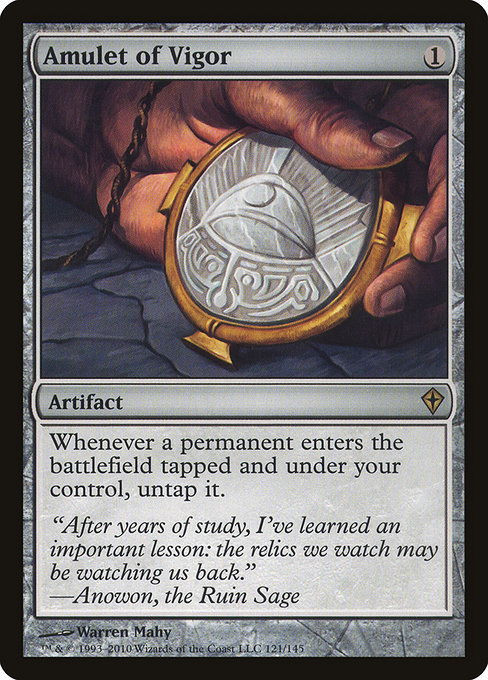
Amulet of Vigor
 Amulet of Vigor
Whenever a permanent you control enters tapped, untap it.
and can Twiddle their
Primeval Titan
Amulet of Vigor
Whenever a permanent you control enters tapped, untap it.
and can Twiddle their
Primeval Titan
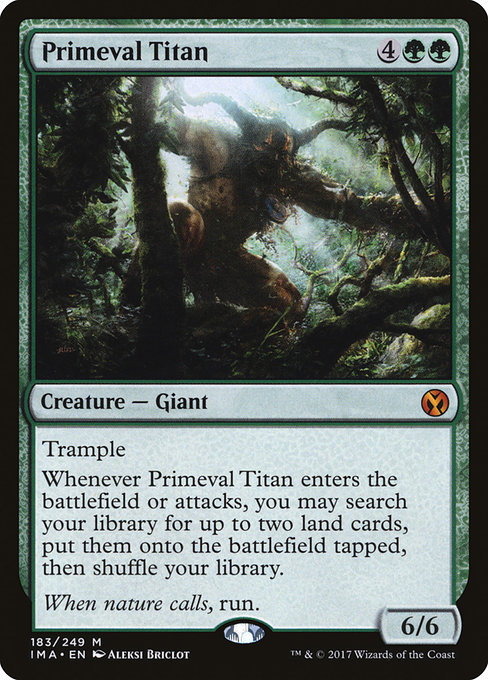 Primeval Titan
Trample
Primeval Titan
Trample
Whenever this creature enters or attacks, you may search your library for up to two land cards, put them onto the battlefield tapped, then shuffle.
to prevent it from attacking you. They also have absolutely no way to deal with The One Ring’s protection, so using that as a delay tactic is very powerful. This also shuts down Endurance, which is one of the only things they have that interacts with you effectively. I used to believe that this matchup was a bye, but after facing some players that were more versed in the archetype, I believe that this remains favored, but not a free win.
Burn is also a very good matchup, as long as you’re playing a variant of the deck that employs Sylvan Scrying. Ironically, the deck is too slow to keep up with a majority of your hands and cannot interact with you effectively.
Eidolon of the Great Revel
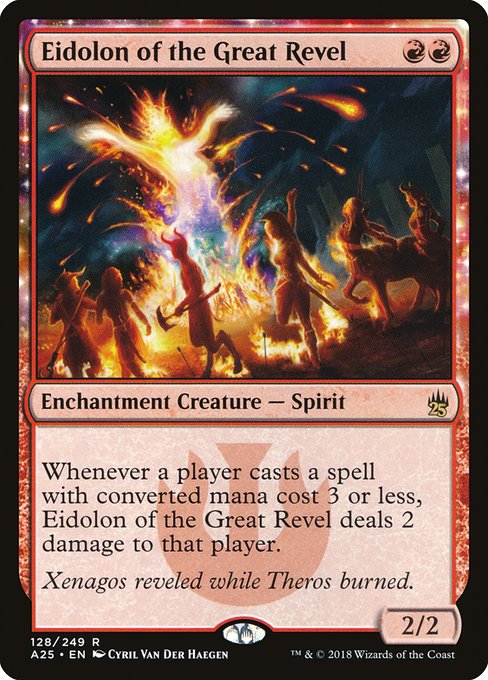 Eidolon of the Great Revel
Whenever a player casts a spell with mana value 3 or less, this creature deals 2 damage to that player.
is the best card this archetype has against you, and most Burn players aren’t running it right now because its not great in the Modern metagame.
Eidolon of the Great Revel
Whenever a player casts a spell with mana value 3 or less, this creature deals 2 damage to that player.
is the best card this archetype has against you, and most Burn players aren’t running it right now because its not great in the Modern metagame.
Hammertime feels favored. They can sometimes just kill you before you kill them, but they have rather limited interaction, and you can Twiddle their Hammered creatures. Do watch out for Drannith Magistrate, however, as it shuts down your Underworld Breach win condition and turns off Wish as long as you’re not finding a land. Hardened Scales feels much the same; a race with Damping Sphere as a problematic card to fight.
Yawgmoth, once again, feels somewhat similar. I don’t have a ton of experience in this matchup, and need to play it more, but the difficulty of this one, in my experience, depends on the pilot.
Cascade decks like Living End and Temur Rhinos are also decent matchups. They do have interaction in the form of cards like
Force of Negation
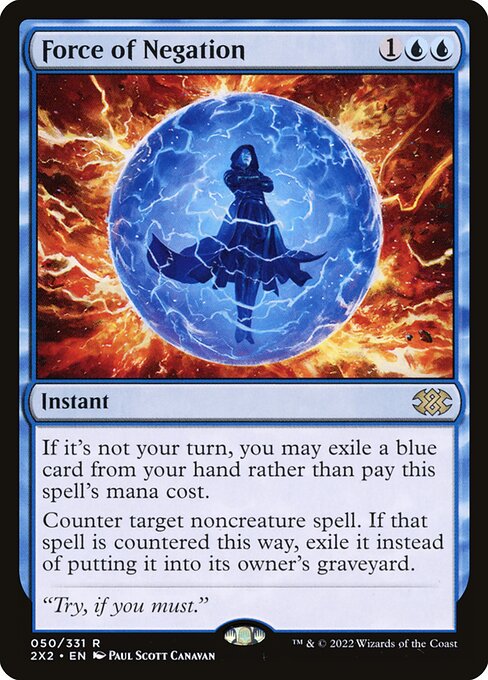 Force of Negation
If it's not your turn, you may exile a blue card from your hand rather than pay this spell's mana cost.
Force of Negation
If it's not your turn, you may exile a blue card from your hand rather than pay this spell's mana cost.
Counter target noncreature spell. If that spell is countered this way, exile it instead of putting it into its owner's graveyard.
, but you use Twiddle to delay their Cascade spells and utilize Defense Grid to turn off a lot of interaction, though I am not sure if I would bring in Defense Grid against Living End. If you really want to beat up on Cascade decks, you can use
Chalice of the Void
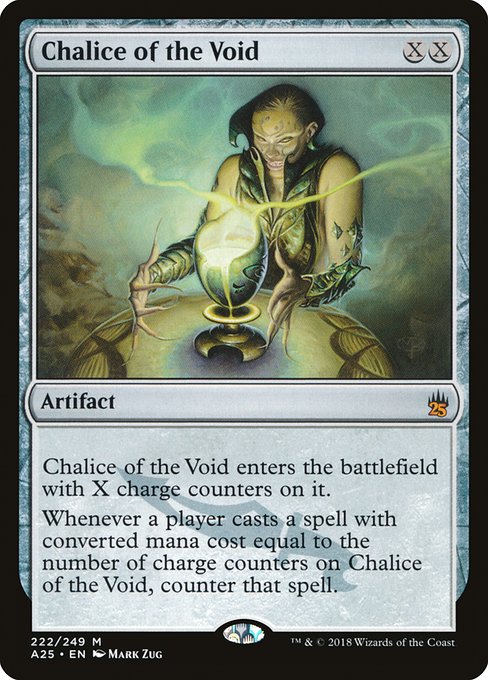 Chalice of the Void
This artifact enters with X charge counters on it.
Chalice of the Void
This artifact enters with X charge counters on it.
Whenever a player casts a spell with mana value equal to the number of charge counters on this artifact, counter that spell.
in your sideboard as a silver bullet for Wish.
Tron has some problematic interaction pieces, but you combo way too fast for them to keep up in most situations.
Karn, the Great Creator
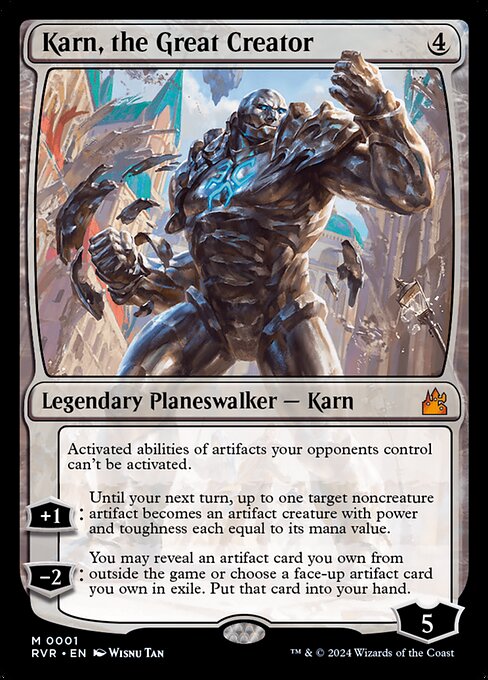 Karn, the Great Creator
Activated abilities of artifacts your opponents control can't be activated.
Karn, the Great Creator
Activated abilities of artifacts your opponents control can't be activated.
+1: Until your next turn, up to one target noncreature artifact becomes an artifact creature with power and toughness each equal to its mana value.
−2: You may reveal an artifact card you own from outside the game or choose a face-up artifact card you own in exile. Put that card into your hand.
plus a graveyard hate piece can be rather problematic though, shutting off both win conditions. An early Relic of Progenitus can slow you down enough to allow Tron to catch up.
Izzet Murktide can be somewhat challenging, as they have a clock, countermagic and Blood Moon to slow you down. Allowing a Ragavan to run away with the early game can spell lights out, but I’ve found that beating this deck is not as difficult as it is in theory. Defense Grid does a lot of work postboard, shutting down a lot of the interaction that Murktide has.
Ultimately, you get a lot of leverage out of opponents not having a ton of experience playing against Twiddlestorm. Opponents who know where and how to break up your combo are going to make this deck look worse, but in my experience, you can get away with a lot.
At the end of the day, I had fun, and continue to have fun, tapping The One Ring eight or more times in one turn to draw my entire deck. I wouldn’t recommend this deck to players trying to win as much as possible, but if you’re impossibly stubborn like me and only play combos like this, get your fill in – just in case The One Ring does get banned.
Read More: MTG Doctor Who Release Date, Leaks, Spoilers, More