
Wilds of Eldraine spoilers have finally finished being revealed, and there are some noticeably powerful cards for players to explore. While
Beseech the Mirror
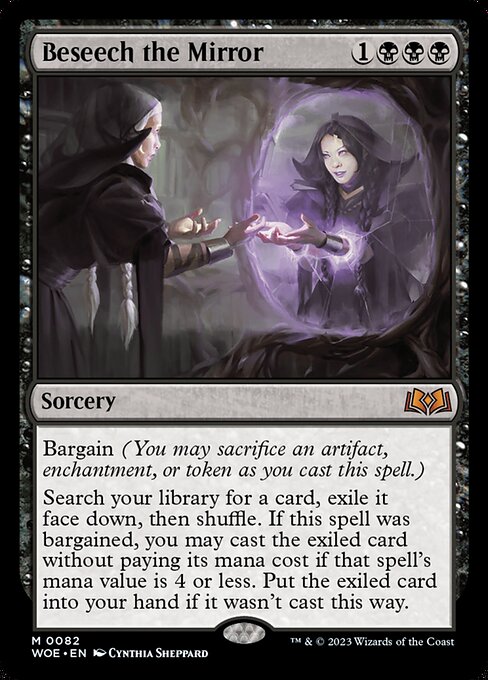 Beseech the Mirror
Bargain (You may sacrifice an artifact, enchantment, or token as you cast this spell.)
Beseech the Mirror
Bargain (You may sacrifice an artifact, enchantment, or token as you cast this spell.)
Search your library for a card, exile it face down, then shuffle. If this spell was bargained, you may cast the exiled card without paying its mana cost if that spell's mana value is 4 or less. Put the exiled card into your hand if it wasn't cast this way.
may steal a lot of the spotlight, it’s certainly not the only card worth talking about. In fact, one of the cards receiving a decent amount of hype for multiple formats is an uncommon that’s capable of drawing you a big chunk of cards. It may seem strange for an uncommon to receive more hype than a lot of the flashy rares or mythics from the set, but in some cases, it’s well-deserved.
Think back to Aether Revolt spoiler season, for example. Sure, players were excited to play with interesting mythics like
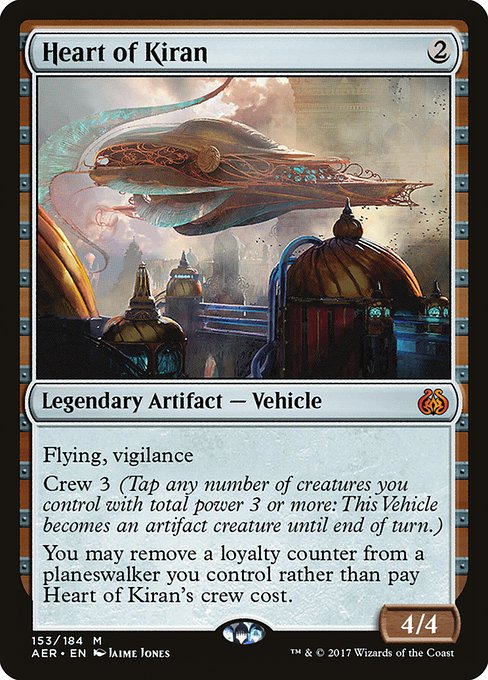
Heart of Kiran
 Heart of Kiran
Flying, vigilance
Heart of Kiran
Flying, vigilance
Crew 3 (Tap any number of creatures you control with total power 3 or more: This Vehicle becomes an artifact creature until end of turn.)
You may remove a loyalty counter from a planeswalker you control rather than pay Heart of Kiran's crew cost.
, but the card that arguably had the most people talking was
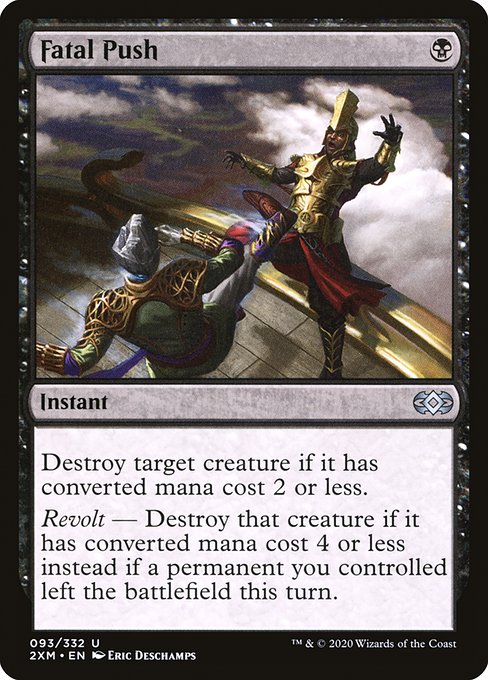
Fatal Push
 Fatal Push
Destroy target creature if it has mana value 2 or less.
Fatal Push
Destroy target creature if it has mana value 2 or less.
Revolt — Destroy that creature if it has mana value 4 or less instead if a permanent left the battlefield under your control this turn.
. Fast forward to today, and Fatal Push is one of the best removal spells in Pioneer and Modern alike. Well, one Wilds of Eldraine uncommon with a lot of potential is none other than
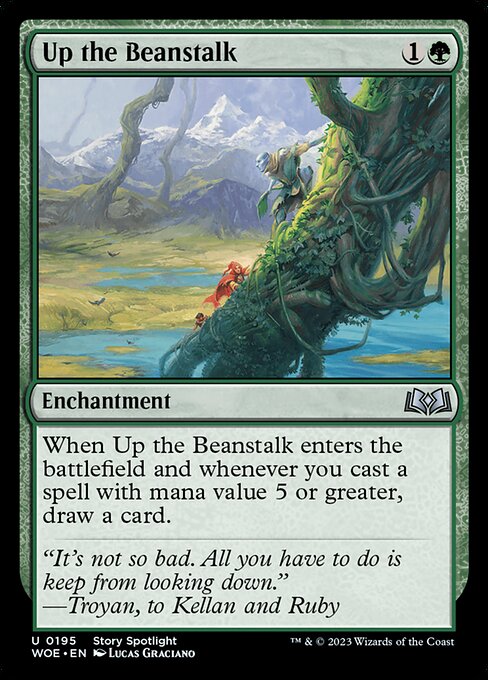
Up the Beanstalk
 Up the Beanstalk
When this enchantment enters and whenever you cast a spell with mana value 5 or greater, draw a card.
.
Up the Beanstalk
When this enchantment enters and whenever you cast a spell with mana value 5 or greater, draw a card.
.
At minimum, Up the Beanstalk replaces itself for two mana. Obviously, this alone is not strong enough for the card to see play. However, Up the Beanstalk also lets you draw cards whenever you play spells with mana value five or greater. Even though paying two mana and not directly impacting the board is a big price to pay, if you can consistently draw multiple cards off of the Enchantment, its inclusion is certainly worth consideration. The question is, what decks can reliably cast multiple cards that cost five or more mana?
A Natural Fit
In Pioneer, there aren’t a ton of decks in the market for the effect that Up the Beanstalk provides. However, there is one deck where the card seems like a slam dunk inclusion, and that deck is none other than five-color Engimatic Incarnation. On its base, Up the Beanstalk is an Enchantment that draws a card and can later be converted into a three-drop Creature thanks to Enigmatic Incarnation. Considering that this deck already plays
Bitter Reunion
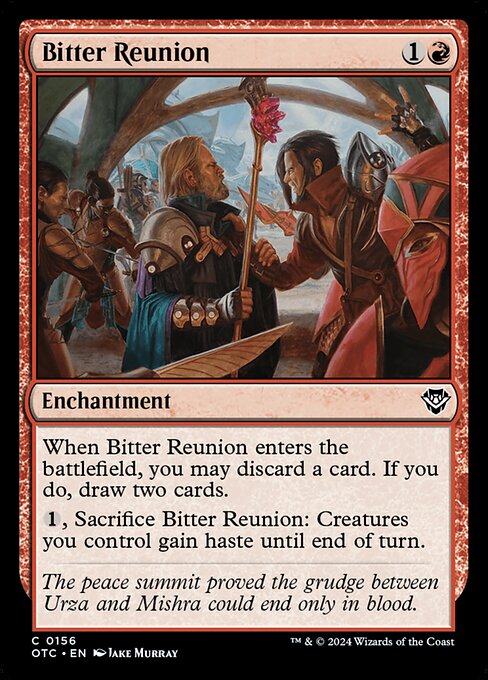 Bitter Reunion
When this enchantment enters, you may discard a card. If you do, draw two cards.
Bitter Reunion
When this enchantment enters, you may discard a card. If you do, draw two cards.
{1}, Sacrifice this enchantment: Creatures you control gain haste until end of turn.
and
Omen of the Sea
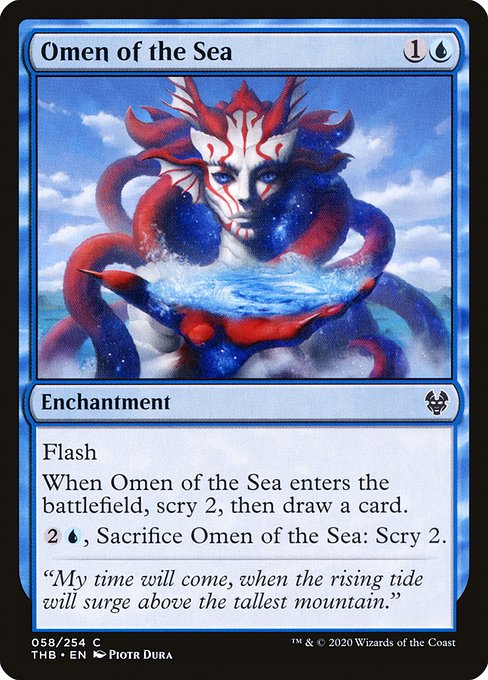 Omen of the Sea
Flash (You may cast this spell any time you could cast an instant.)
Omen of the Sea
Flash (You may cast this spell any time you could cast an instant.)
When this enchantment enters, scry 2, then draw a card.
{2}{U}, Sacrifice this enchantment: Scry 2. (Look at the top two cards of your library, then put any number of them on the bottom and the rest on top in any order.)
, it’s clear that this strategy is in the market for cheap Enchantments that dig for Incarnation and
Fires of Invention
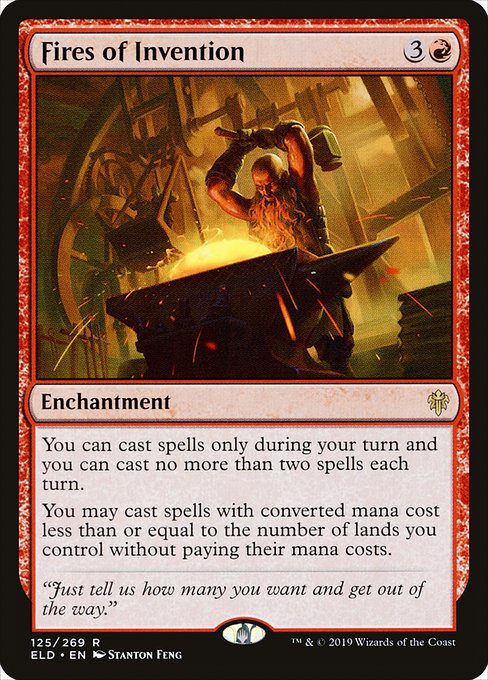 Fires of Invention
You can cast spells only during your turn and you can cast no more than two spells each turn.
Fires of Invention
You can cast spells only during your turn and you can cast no more than two spells each turn.
You may cast spells with mana value less than or equal to the number of lands you control without paying their mana costs.
.
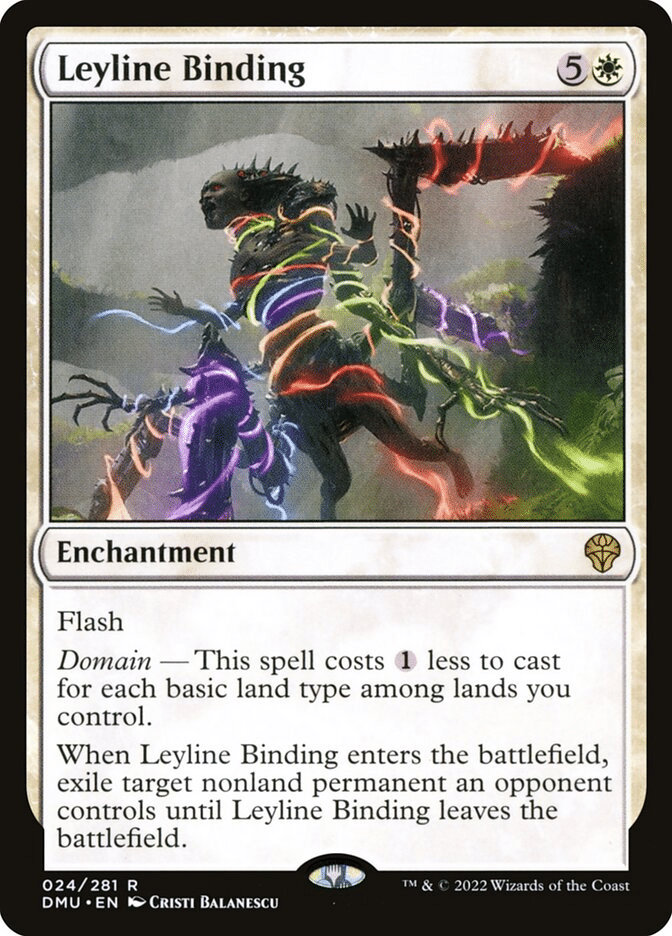
However, Up the Beanstalk has significantly higher upside than Bitter Reunion or Omen of the Sea. This deck already plays four copies of
Leyline Binding
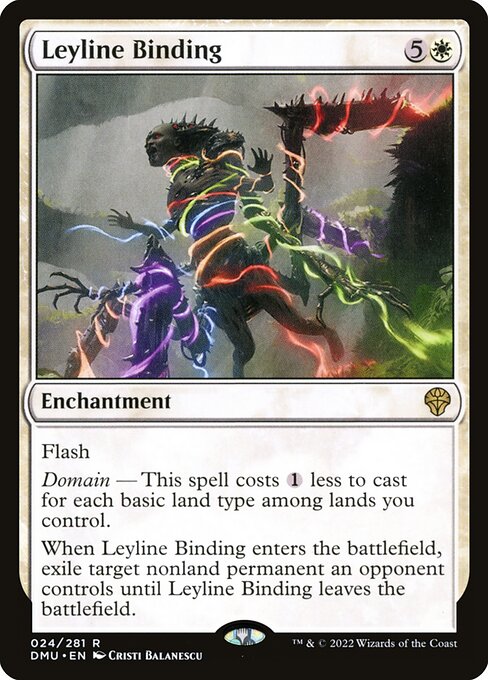 Leyline Binding
Flash
Leyline Binding
Flash
Domain — This spell costs {1} less to cast for each basic land type among lands you control.
When this enchantment enters, exile target nonland permanent an opponent controls until this enchantment leaves the battlefield.
which, despite often costing only one or two mana, will still trigger Up the Beanstalk. Up the Beanstalk also works quite well with
Yorion, Sky Nomad
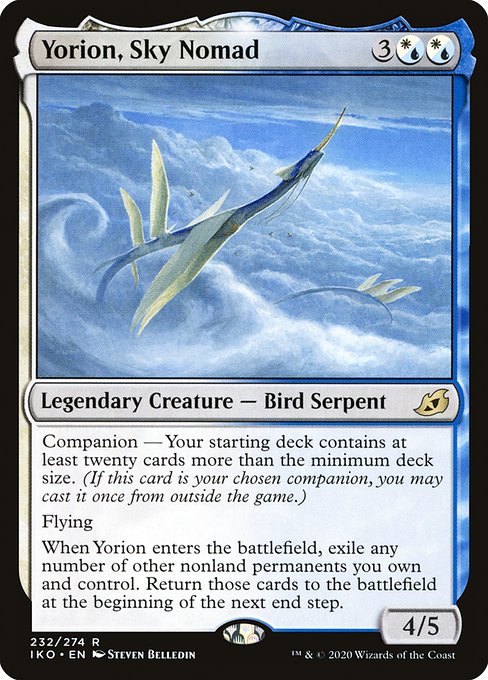 Yorion, Sky Nomad
Companion — Your starting deck contains at least twenty cards more than the minimum deck size. (If this card is your chosen companion, you may put it into your hand from outside the game for {3} as a sorcery.)
Yorion, Sky Nomad
Companion — Your starting deck contains at least twenty cards more than the minimum deck size. (If this card is your chosen companion, you may put it into your hand from outside the game for {3} as a sorcery.)
Flying
When Yorion enters, exile any number of other nonland permanents you own and control. Return those cards to the battlefield at the beginning of the next end step.
, allowing you to draw a card both when casting Yorion and when Yorion blinks Up the Beanstalk. This deck is also fully capable of casting some of the top-end Incarnation targets, such as
Elesh Norn, Mother of Machines
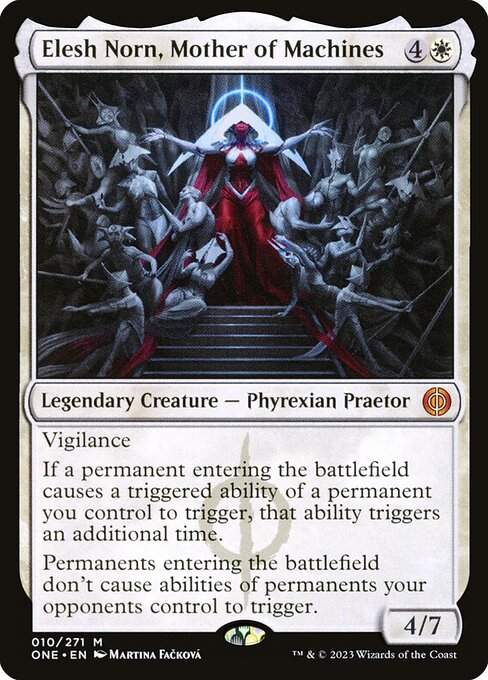 Elesh Norn, Mother of Machines
Vigilance
Elesh Norn, Mother of Machines
Vigilance
If a permanent entering causes a triggered ability of a permanent you control to trigger, that ability triggers an additional time.
Permanents entering don't cause abilities of permanents your opponents control to trigger.
, which will trigger Up the Beanstalk too.
What makes Up the Beanstalk so strong in this deck is that it already has a very high floor as an Enchantment that cantrips and sticks around for Incarnation, but it has the upside of providing a flow of card advantage throughout the game. All you have to do is draw a single extra card from the Enchantment and it will already have pulled its weight in comparison to Bitter Reunion. Thanks to Leyline Binding, this is quite easy to set up.
Read More: Final MTG Spoilers Reveal Incredibly Blatant Power Creep
Mana Value Vs. Mana Spent
In the context of Modern, you definitely need a bit more bang for your buck. The card advantage available in the format is top-notch, especially since the addition of
The One Ring
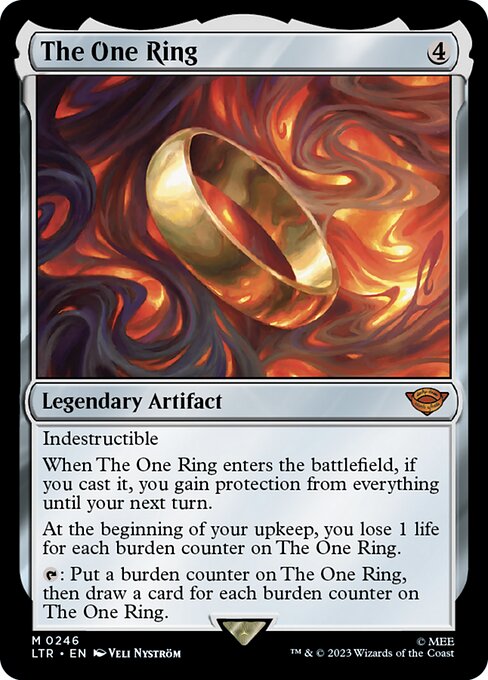 The One Ring
Indestructible
The One Ring
Indestructible
When The One Ring enters, if you cast it, you gain protection from everything until your next turn.
At the beginning of your upkeep, you lose 1 life for each burden counter on The One Ring.
{T}: Put a burden counter on The One Ring, then draw a card for each burden counter on The One Ring.
. Even with Leyline Binding, it’ll take something special for Up the Beanstalk to provide a consistent flow of cards and be worth the two-mana investment. Luckily, both
Solitude
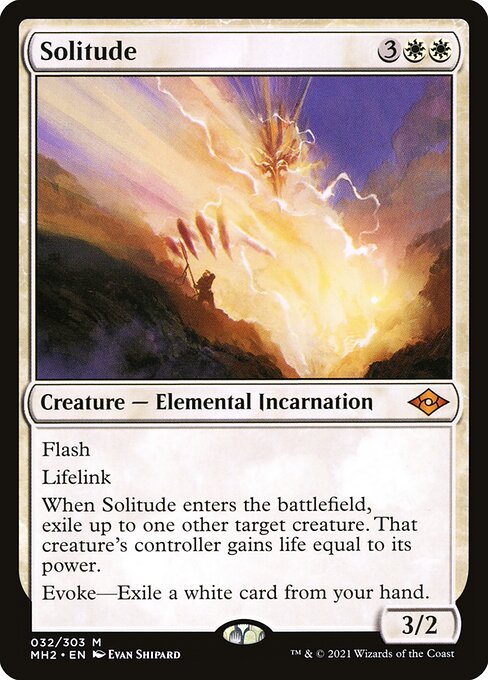 Solitude
Flash
Solitude
Flash
Lifelink
When this creature enters, exile up to one other target creature. That creature's controller gains life equal to its power.
Evoke—Exile a white card from your hand.
and
Fury
 Fury
Double strike
Fury
Double strike
When this creature enters, it deals 4 damage divided as you choose among any number of target creatures and/or planeswalkers.
Evoke—Exile a red card from your hand.
help a lot in this department.
As strong as Solitude and Fury are, they are naturally card disadvantage when cast for zero mana. This is part of the reason that four-color
Omnath, Locus of Creation
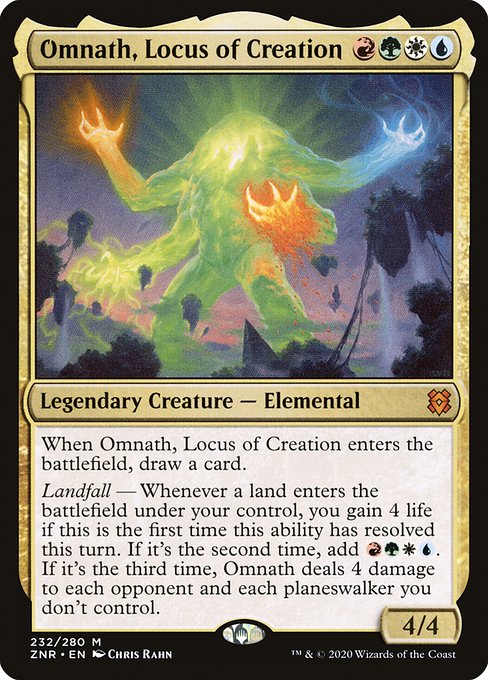 Omnath, Locus of Creation
When Omnath enters, draw a card.
Omnath, Locus of Creation
When Omnath enters, draw a card.
Landfall — Whenever a land you control enters, you gain 4 life if this is the first time this ability has resolved this turn. If it's the second time, add {R}{G}{W}{U}. If it's the third time, Omnath deals 4 damage to each opponent and each planeswalker you don't control.
decks often don’t play more than four or five of the Evoke Elementals in the maindeck. Well, Up the Beanstalk helps solve this problem. Every time you cast Fury or Solitude, even for free, you get to draw a card. Up the Beanstalk also stacks, meaning if you have multiple copies of the Enchantment in play, you can draw multiple cards.
Obviously, there’s a lot of competition for slots in this archetype. Cards like
Wrenn and Six
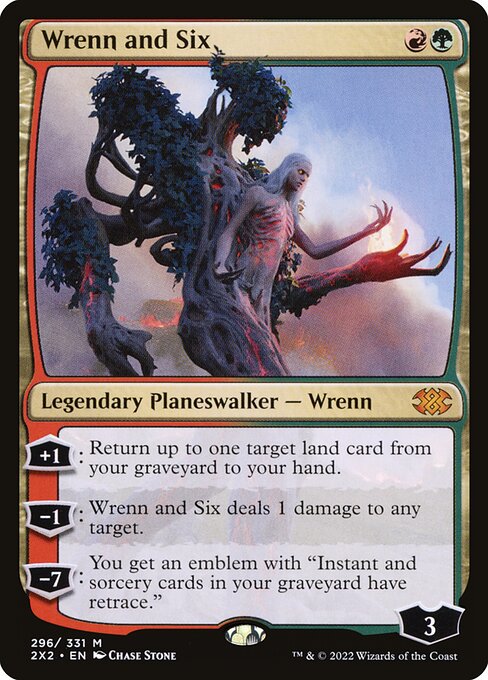 Wrenn and Six
+1: Return up to one target land card from your graveyard to your hand.
Wrenn and Six
+1: Return up to one target land card from your graveyard to your hand.
−1: Wrenn and Six deals 1 damage to any target.
−7: You get an emblem with "Instant and sorcery cards in your graveyard have retrace." (You may cast instant and sorcery cards from your graveyard by discarding a land card in addition to paying their other costs.)
and
Teferi, Time Raveler
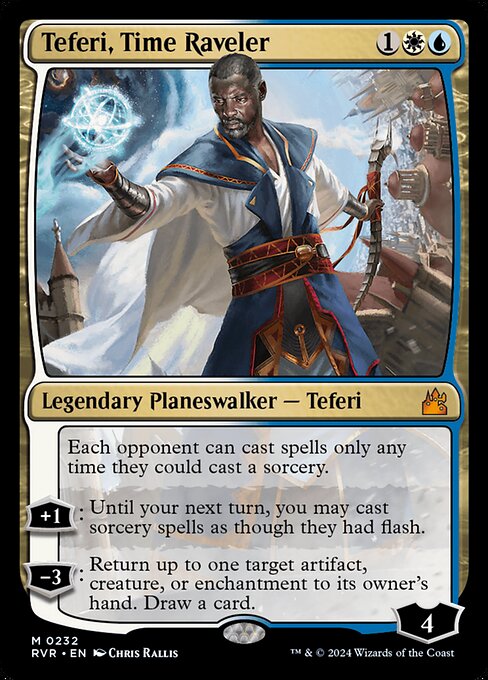 Teferi, Time Raveler
Each opponent can cast spells only any time they could cast a sorcery.
Teferi, Time Raveler
Each opponent can cast spells only any time they could cast a sorcery.
+1: Until your next turn, you may cast sorcery spells as though they had flash.
−3: Return up to one target artifact, creature, or enchantment to its owner's hand. Draw a card.
are very strong, but there’s a good chance players try to find room for the powerful Enchantment. If Up the Beanstalk does begin to take off, it’s possible some players lean even more into the Elemental package and add
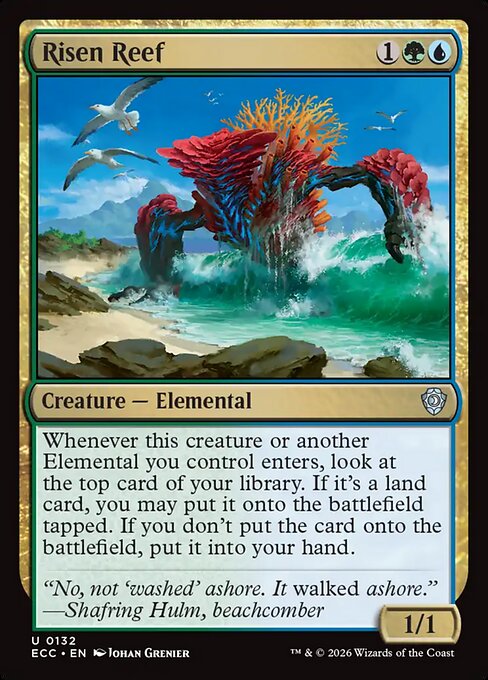
Risen Reef
 Risen Reef
Whenever this creature or another Elemental you control enters, look at the top card of your library. If it's a land card, you may put it onto the battlefield tapped. If you don't put the card onto the battlefield, put it into your hand.
and
Elesh Norn, Mother of Machines
Elesh Norn, Mother of Machines
Vigilance
Risen Reef
Whenever this creature or another Elemental you control enters, look at the top card of your library. If it's a land card, you may put it onto the battlefield tapped. If you don't put the card onto the battlefield, put it into your hand.
and
Elesh Norn, Mother of Machines
Elesh Norn, Mother of Machines
Vigilance
If a permanent entering causes a triggered ability of a permanent you control to trigger, that ability triggers an additional time.
Permanents entering don't cause abilities of permanents your opponents control to trigger.
into the mix. It’s unclear exactly what direction players will take, but what is clear is that Up the Beanstalk’s synergy with Solitude, Fury, and Leyline Binding is undeniable.
Read More: Unexpected Wizards Synergy Revives Super Iconic MTG Staple!
Potential in Other Formats
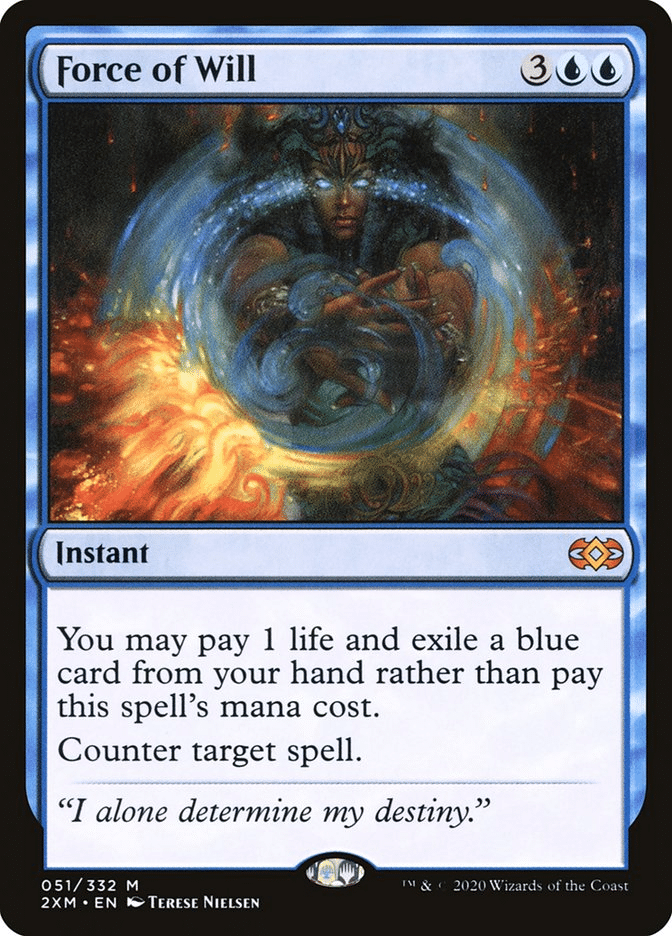
In a similar sense, Up the Beanstalk also works quite well alongside Force of Will, helping to negate the card disadvantage that comes with the powerful Counterspell. Still, the bar that a card needs to clear to see Legacy play is quite high. If any deck is going to play this card, it would likely be the Simic-based
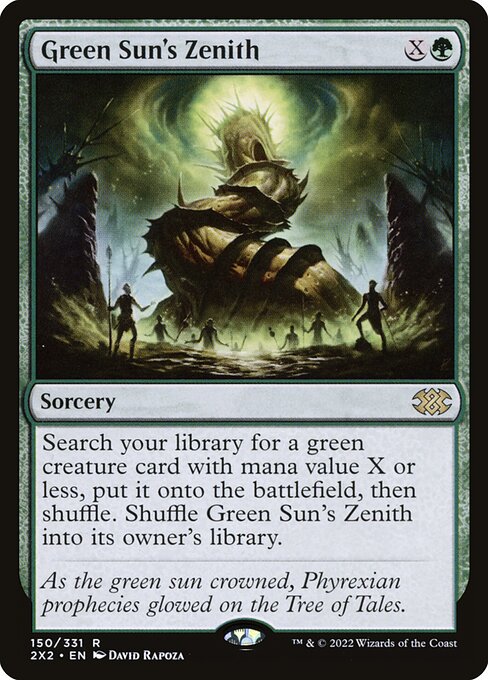
Green Sun’s Zenith
 Green Sun’s Zenith
Search your library for a green creature card with mana value X or less, put it onto the battlefield, then shuffle. Shuffle Green Sun's Zenith into its owner's library.
deck that utilizes Yorion or some value-centric form of the archetype. Still, I’m a lot more skeptical here than in Pioneer or Modern.
Green Sun’s Zenith
Search your library for a green creature card with mana value X or less, put it onto the battlefield, then shuffle. Shuffle Green Sun's Zenith into its owner's library.
deck that utilizes Yorion or some value-centric form of the archetype. Still, I’m a lot more skeptical here than in Pioneer or Modern.
The last format to talk about is none other than Standard, and there is another decent home for the card here. One of the stronger archetypes in the format is four-color ramp, which makes use of
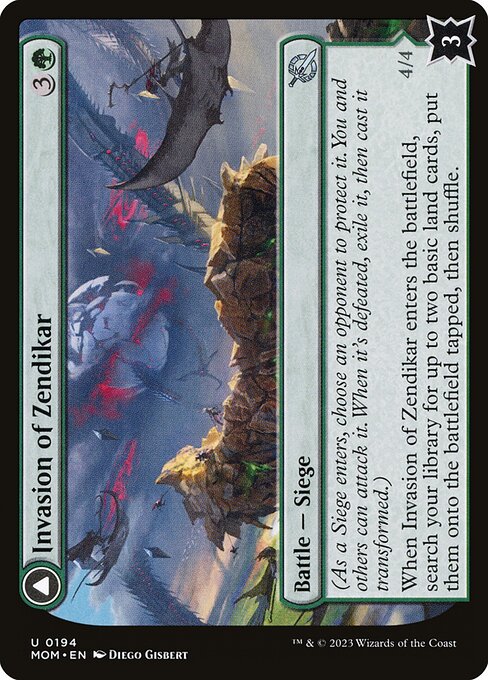
Invasion of Zendikar
 Invasion of Zendikar
(As a Siege enters, choose an opponent to protect it. You and others can attack it. When it's defeated, exile it, then cast it transformed.)
Invasion of Zendikar
(As a Siege enters, choose an opponent to protect it. You and others can attack it. When it's defeated, exile it, then cast it transformed.)
When this Siege enters, search your library for up to two basic land cards, put them onto the battlefield tapped, then shuffle.
and
Topiary Stomper
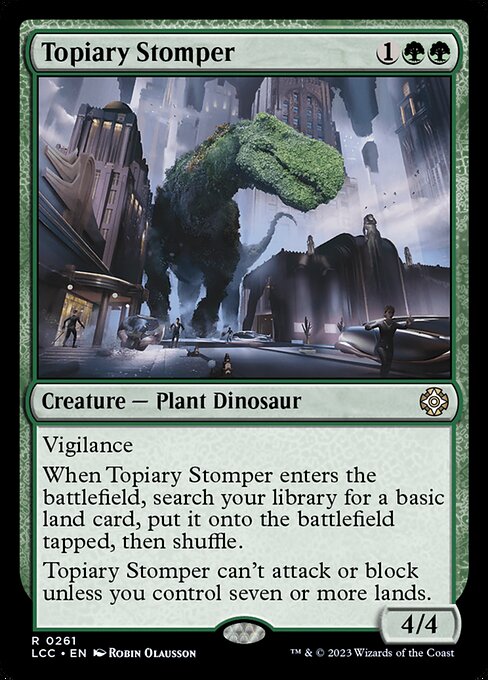 Topiary Stomper
Vigilance (Attacking doesn't cause this creature to tap.)
Topiary Stomper
Vigilance (Attacking doesn't cause this creature to tap.)
When this creature enters, search your library for a basic land card, put it onto the battlefield tapped, then shuffle.
This creature can't attack or block unless you control seven or more lands.
to help set up its mana and cast powerful top-end spells, such as
Atraxa, Grand Unifier
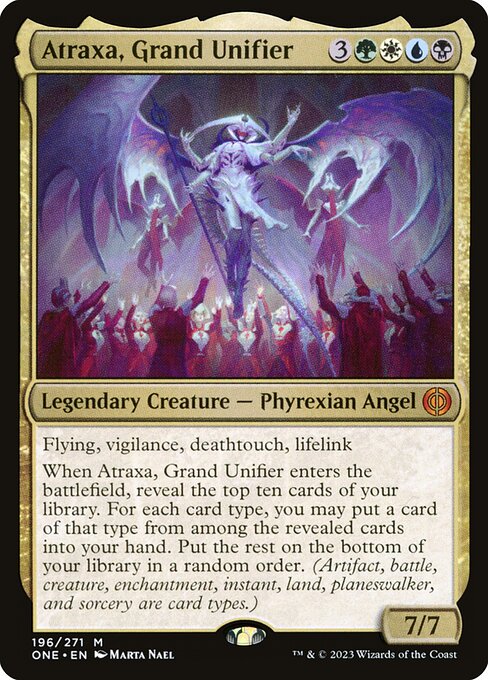 Atraxa, Grand Unifier
Flying, vigilance, deathtouch, lifelink
Atraxa, Grand Unifier
Flying, vigilance, deathtouch, lifelink
When Atraxa enters, reveal the top ten cards of your library. For each card type, you may put a card of that type from among the revealed cards into your hand. Put the rest on the bottom of your library in a random order. (Artifact, battle, creature, enchantment, instant, land, planeswalker, and sorcery are card types.)
or
Herd Migration
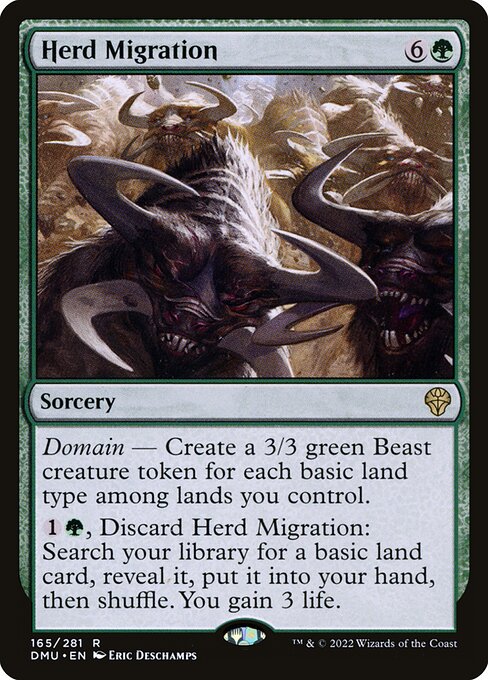 Herd Migration
Domain — Create a 3/3 green Beast creature token for each basic land type among lands you control.
Herd Migration
Domain — Create a 3/3 green Beast creature token for each basic land type among lands you control.
{1}{G}, Discard this card: Search your library for a basic land card, reveal it, put it into your hand, then shuffle. You gain 3 life.
. In order to stave off the opponent’s offensive, this deck also plays Leyline Binding and
Sunfall
 Sunfall
Exile all creatures. Incubate X, where X is the number of creatures exiled this way. (Create an Incubator token with X +1/+1 counters on it and "{2}: Transform this token." It transforms into a 0/0 Phyrexian artifact creature.)
.
Sunfall
Exile all creatures. Incubate X, where X is the number of creatures exiled this way. (Create an Incubator token with X +1/+1 counters on it and "{2}: Transform this token." It transforms into a 0/0 Phyrexian artifact creature.)
.
Not only are these cards great for the archetype, but they along with the deck’s top-end spells all trigger Up the Beanstalk. Of course, there are some matchups like mono-red aggro where it may be a bit difficult to take the time to deploy the Enchantment. However, the consistent flow of card advantage Up the Beanstalk can provide against any Midrange deck is impressive.
Up the Beanstalk definitely needs the right shell to show off its potential, and Pioneer Enigmatic Incarnation is likely the best place to start. Still, the card has a reasonable floor and a very high ceiling in the right deck, and I wouldn’t be surprised if it’s one of the breakout cards of the set.
Read More: MTG Wilds of Eldraine Common Will See Tons of Competitive Play!