
Wilds of Eldraine has arrived to constructed MTG formats everywhere, we are beginning to see just how impactful these cards truly are. From Standard down to Eternal formats, plenty of cards are quickly making their presence felt. Perhaps no format needed a shake-up more than Standard, and thanks to the range of powerful options in Wilds of Eldraine, it appears Standard is changing in a big way.
Just recently, a big tournament with over 120 players was held on Arena. There were a lot of cool and innovative decklists that performed well, but one in particular we felt deserves recognition. The winning deck was none other than a Naya tokens strategy. This deck utilizes a powerful Boros core built around
Pia Nalaar, Consul of Revival
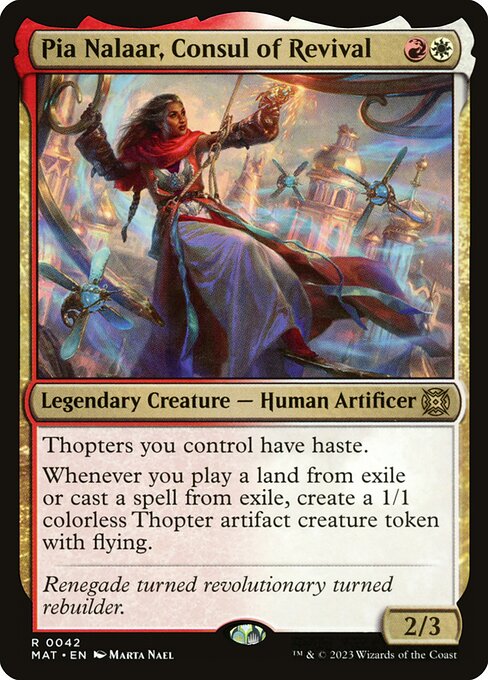 Pia Nalaar, Consul of Revival
Thopters you control have haste.
Pia Nalaar, Consul of Revival
Thopters you control have haste.
Whenever you play a land from exile or cast a spell from exile, create a 1/1 colorless Thopter artifact creature token with flying.
that has seen plenty of Pioneer play. By adding a couple strong Wilds of Eldraine cards into the mix that play really well with Pia Nalaar, this strategy not only rose to the top, but the pilot did not lose a single match! To understand why this deck performed so well, it’s important to start by looking at the centerpiece of the deck, Pia Nalaar, and its improved supporting cast.
Maximizing Pia Nalaar
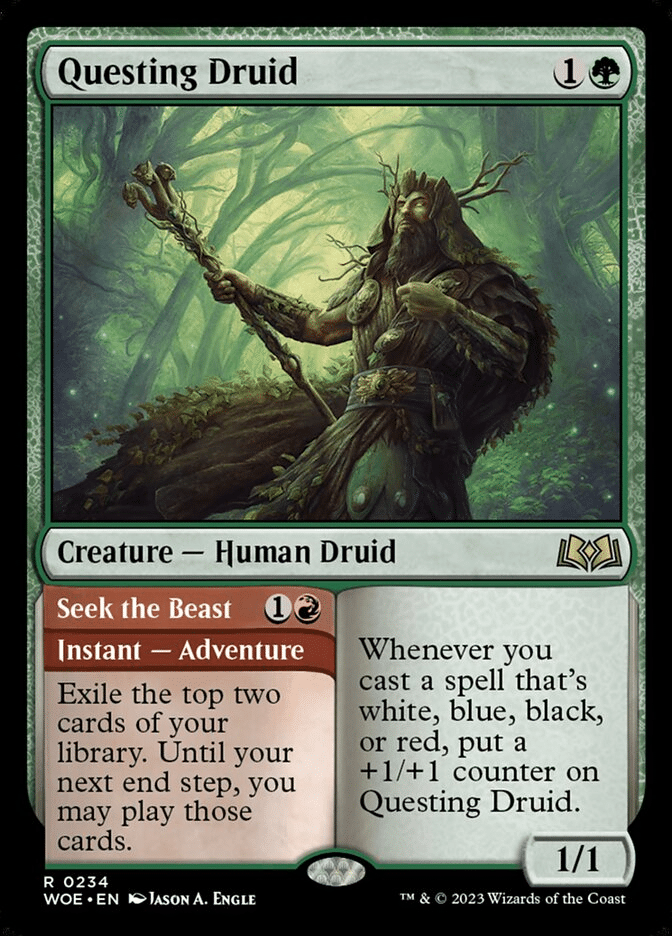
Much like the Boros Prowess deck in Pioneer, this Naya tokens deck in Standard combines Pia Nalaar with effects that exile multiple cards and let you play them until the end of your next turn. Both
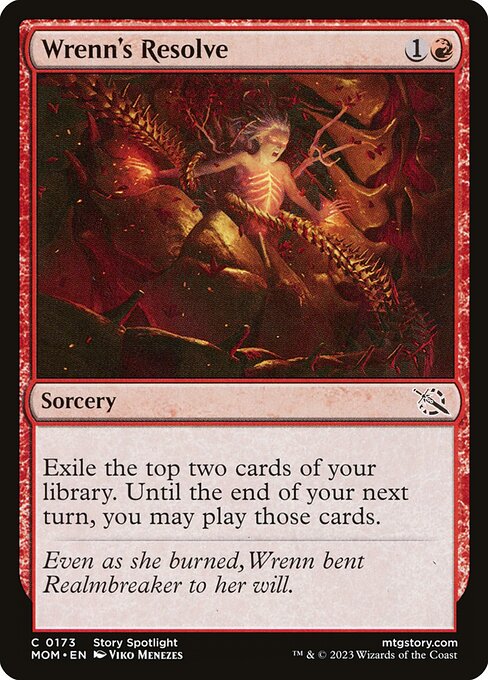
Wrenn’s Resolve
 Wrenn’s Resolve
Exile the top two cards of your library. Until the end of your next turn, you may play those cards.
and
Reckless Impulse
Wrenn’s Resolve
Exile the top two cards of your library. Until the end of your next turn, you may play those cards.
and
Reckless Impulse
 Reckless Impulse
Exile the top two cards of your library. Until the end of your next turn, you may play those cards.
provide you with card advantage, so long as you can play each card that gets exiled. Notably, both cards allow you to play Lands from exile as well. It’s pretty common to cast one of these cards, then assuming you exile a Land, play Pia Nalaar and follow it up with a Land drop from exile. This allows you to get immediate value from Pia Nalaar before an opponent can remove it.
Reckless Impulse
Exile the top two cards of your library. Until the end of your next turn, you may play those cards.
provide you with card advantage, so long as you can play each card that gets exiled. Notably, both cards allow you to play Lands from exile as well. It’s pretty common to cast one of these cards, then assuming you exile a Land, play Pia Nalaar and follow it up with a Land drop from exile. This allows you to get immediate value from Pia Nalaar before an opponent can remove it.
Of course, if the opponent can’t remove it in short order, it’s easy to chain these effects together and bury the opponent with a bunch of Hasty Thopter tokens. While Pioneer Boros Prowess does have access to
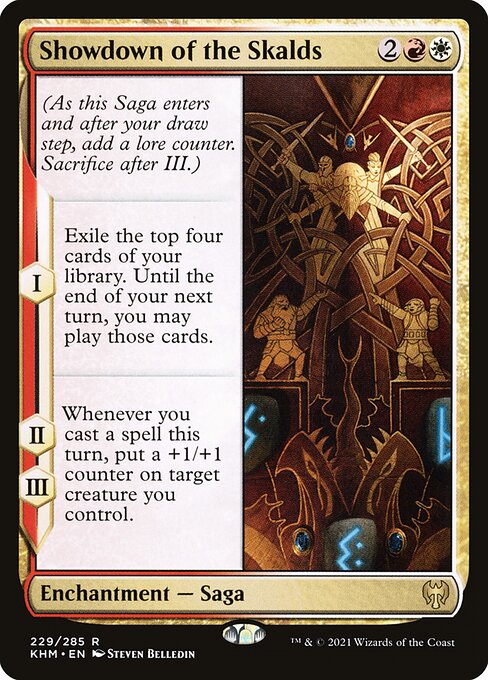
Showdown of the Skalds
 Showdown of the Skalds
(As this Saga enters and after your draw step, add a lore counter. Sacrifice after III.)
Showdown of the Skalds
(As this Saga enters and after your draw step, add a lore counter. Sacrifice after III.)
I — Exile the top four cards of your library. Until the end of your next turn, you may play those cards.
II, III — Whenever you cast a spell this turn, put a +1/+1 counter on target creature you control.
as another big source of card advantage, the addition of
Questing Druid
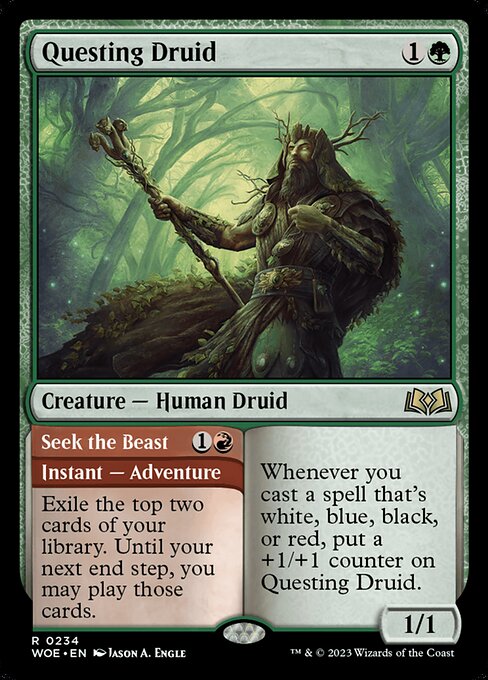 Questing Druid
Whenever you cast a spell that's white, blue, black, or red, put a +1/+1 counter on this creature.
helps fill this gap in Standard quite nicely. As an Adventure, the card is quite similar to Reckless Impulse. You do only get until your next end step to play the cards, making it a worse play to cast on your own turn. Luckily, it’s an Instant, so you can simply cast it on your opponent’s end step and play the cards during your turn.
Questing Druid
Whenever you cast a spell that's white, blue, black, or red, put a +1/+1 counter on this creature.
helps fill this gap in Standard quite nicely. As an Adventure, the card is quite similar to Reckless Impulse. You do only get until your next end step to play the cards, making it a worse play to cast on your own turn. Luckily, it’s an Instant, so you can simply cast it on your opponent’s end step and play the cards during your turn.
Unlike Reckless Impulse, however, the Adventure comes stapled to a strong threat that can grow rather large. At only two mana, Questing Druid is a one-power Creature that gets bigger every time you cast a spell with a color other than green in its mana cost. Considering this deck is primarily Boros-based, growing this card is trivial. Without either
Soul-Scar Mage
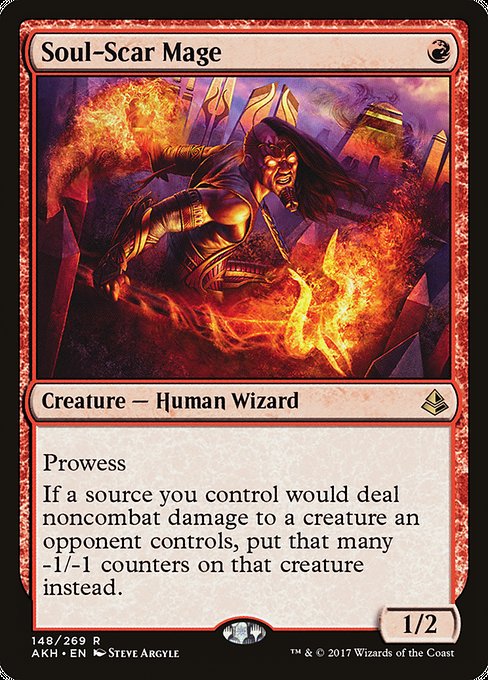 Soul-Scar Mage
Prowess
Soul-Scar Mage
Prowess
If a source you control would deal noncombat damage to a creature an opponent controls, put that many -1/-1 counters on that creature instead.
or
Bonecrusher Giant
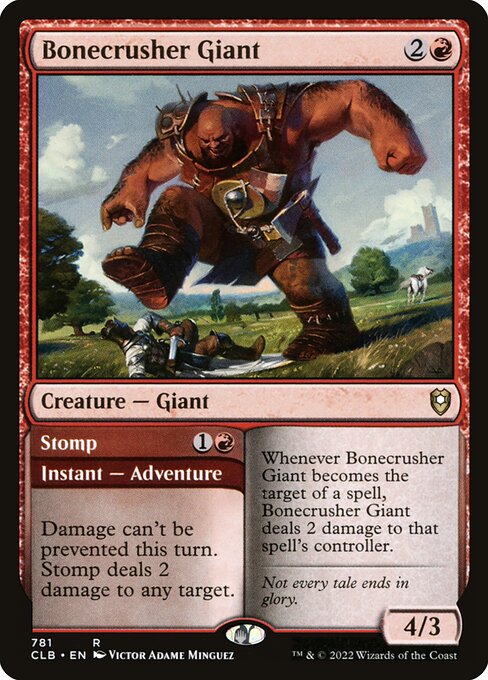 Bonecrusher Giant
Whenever this creature becomes the target of a spell, this creature deals 2 damage to that spell's controller.
, this deck needs some extra threats, and Questing Druid fills this role too. You can even play Questing Druid from exile after casting the Adventure portion to trigger Pia Nalaar for some extra synergy! Questing Druid seems strong enough that even the Pioneer iteration of the deck may want it!
Bonecrusher Giant
Whenever this creature becomes the target of a spell, this creature deals 2 damage to that spell's controller.
, this deck needs some extra threats, and Questing Druid fills this role too. You can even play Questing Druid from exile after casting the Adventure portion to trigger Pia Nalaar for some extra synergy! Questing Druid seems strong enough that even the Pioneer iteration of the deck may want it!
Read More: New Tutoring Saga Hints at Breakout Performance in Multiple Formats!
Going Wide

While this deck can put a lot of pressure on the opponent rather quickly thanks to the likes of Pia Nalaar, Questing Druid, and
Monastery Swiftspear
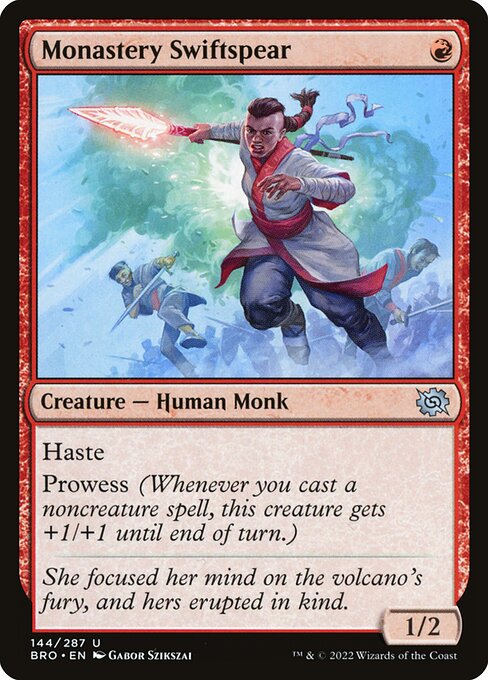 Monastery Swiftspear
Haste
Monastery Swiftspear
Haste
Prowess (Whenever you cast a noncreature spell, this creature gets +1/+1 until end of turn.)
, the real strength in this deck is its ability to go wide and play a grindy game. Obviously, the combination of Pia Nalaar and the card advantage spells that work well with it are great at letting you play a longer game, but the fun doesn’t stop there.
This deck makes great use of one of the best cards against opposing Midrange decks in the format:
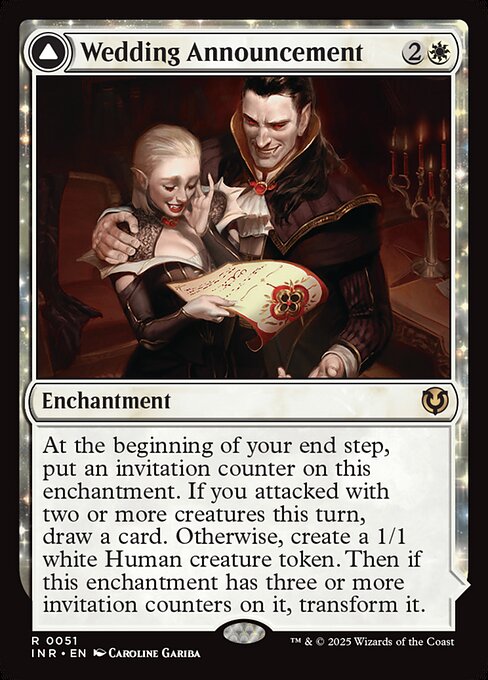
Wedding Announcement
 Wedding Announcement
At the beginning of your end step, put an invitation counter on this enchantment. If you attacked with two or more creatures this turn, draw a card. Otherwise, create a 1/1 white Human creature token. Then if this enchantment has three or more invitation counters on it, transform it.
. Wedding Announcement can provide you with either card advantage or extra tokens, depending on how aggressive you are in combat. Soon enough, Wedding Announcement transforms into a card reminiscent of
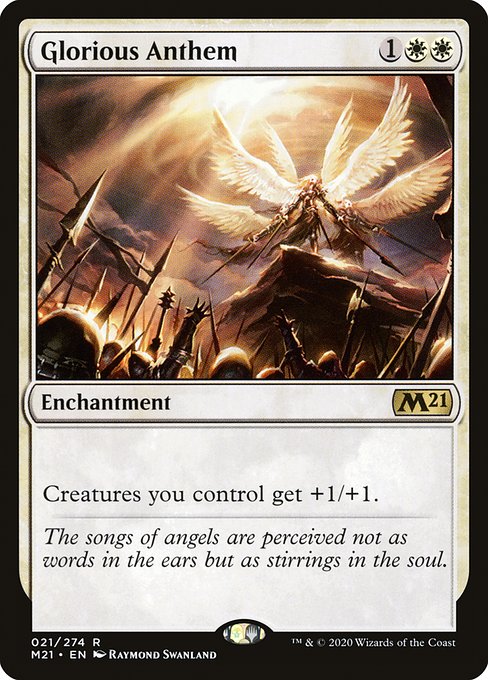
Glorious Anthem
Wedding Announcement
At the beginning of your end step, put an invitation counter on this enchantment. If you attacked with two or more creatures this turn, draw a card. Otherwise, create a 1/1 white Human creature token. Then if this enchantment has three or more invitation counters on it, transform it.
. Wedding Announcement can provide you with either card advantage or extra tokens, depending on how aggressive you are in combat. Soon enough, Wedding Announcement transforms into a card reminiscent of
Glorious Anthem
 Glorious Anthem
Creatures you control get +1/+1.
, pumping your whole squad. As an army in a can that also buffs your Thopter tokens, Wedding Announcement does a lot for this deck.
Glorious Anthem
Creatures you control get +1/+1.
, pumping your whole squad. As an army in a can that also buffs your Thopter tokens, Wedding Announcement does a lot for this deck.
Wedding Announcement isn’t the only way this deck has to buff your tokens, though. Another excellent addition to this strategy is
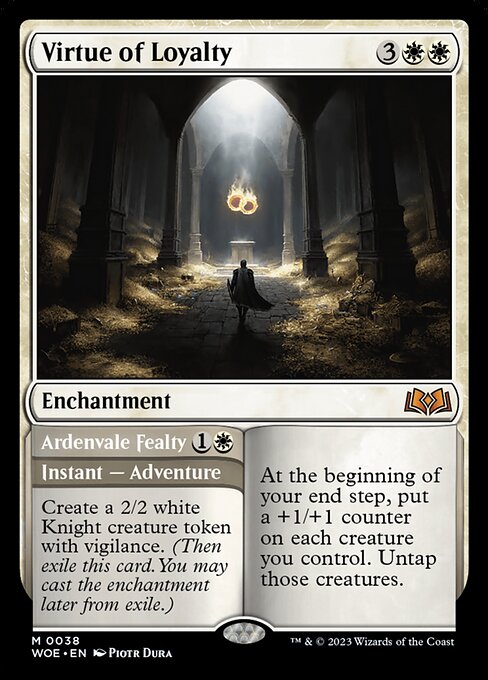
Virtue of Loyalty
 Virtue of Loyalty
At the beginning of your end step, put a +1/+1 counter on each creature you control. Untap those creatures.
. Virtue of Loyalty can be cast as an Adventure to simply generate a two-power token with Vigilance for two mana. This is certainly nothing exciting, but it’s a nice option to have. The real power in the card, though, is in the Enchantment itself. Every end step, you get to both buff your whole team and untap all of your Creatures, which helps a lot in racing situations. Having the two mana Adventure attached makes it less likely to get stranded off a Reckless Impulse, and the Enchantment can make all of your tokens into immense threats. Every card in this deck works well with each other, which is a big strength that this deck has.
Virtue of Loyalty
At the beginning of your end step, put a +1/+1 counter on each creature you control. Untap those creatures.
. Virtue of Loyalty can be cast as an Adventure to simply generate a two-power token with Vigilance for two mana. This is certainly nothing exciting, but it’s a nice option to have. The real power in the card, though, is in the Enchantment itself. Every end step, you get to both buff your whole team and untap all of your Creatures, which helps a lot in racing situations. Having the two mana Adventure attached makes it less likely to get stranded off a Reckless Impulse, and the Enchantment can make all of your tokens into immense threats. Every card in this deck works well with each other, which is a big strength that this deck has.
Read More: The Top 10 Most Expensive MTG Cards in Standard
Strengths and Weaknesses
This deck clearly has a lot going for it. It can close the game quickly with Monastery Swiftspear, but also play a longer game with Wedding Announcement and tons of sources of card advantage. Cards like Virtue of Loyalty help win games with board stalls by repeatedly growing your team. When Pia Nalaar goes unanswered, it’s easy to make a bunch of Thopters and take over the game.
Part of the reason this deck likely had good success early on is that it has a good shot at beating opposing midrange decks. A go-wide strategy with built-in card advantage is a great place to start. With answers to
Sheoldred, the Apocalypse
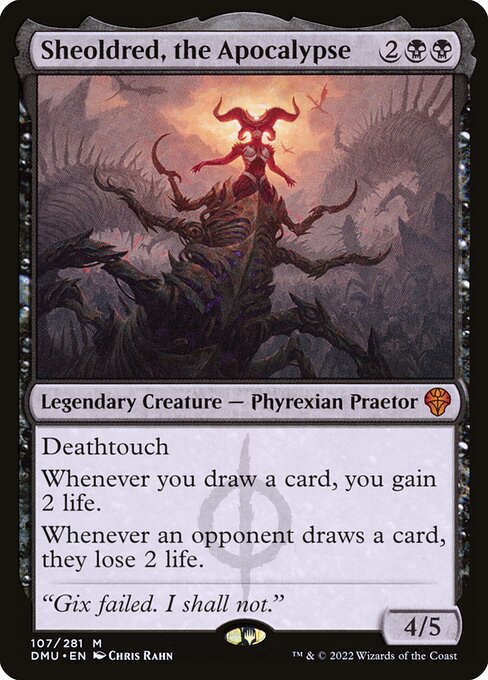 Sheoldred, the Apocalypse
Deathtouch
Sheoldred, the Apocalypse
Deathtouch
Whenever you draw a card, you gain 2 life.
Whenever an opponent draws a card, they lose 2 life.
such as
Destroy Evil
 Destroy Evil
Choose one —
Destroy Evil
Choose one —
• Destroy target creature with toughness 4 or greater.
• Destroy target enchantment.
available, this deck can out-grind black-based midrange decks pretty well.
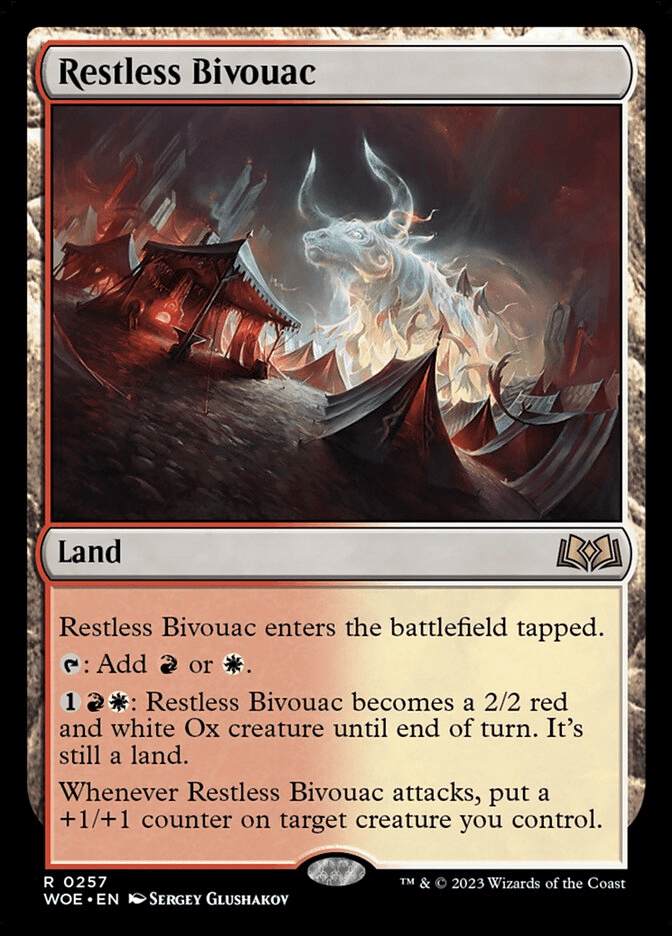
While this deck has a solid matchup against other midrange decks, it likely has a much harder time against decks like four-color ramp. Without Monastery Swiftspear, this deck can have somewhat clunky draws that don’t end the game super fast. Combine this with a somewhat rough three-color manabase with some tapped Lands such as Restless Bivouac and consistently racing
Atraxa, Grand Unifier
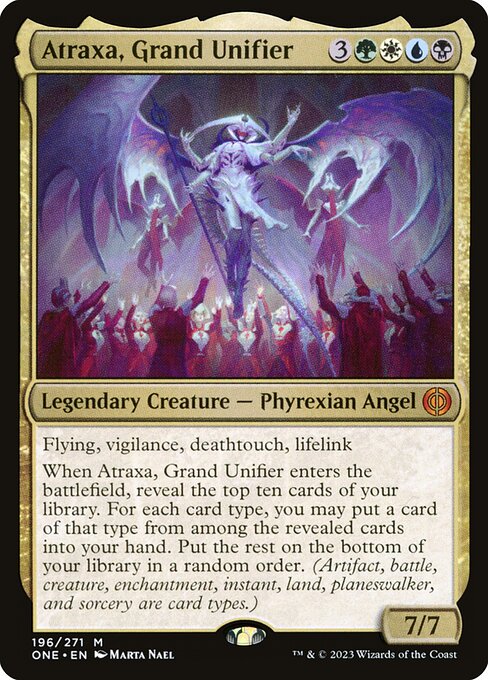 Atraxa, Grand Unifier
Flying, vigilance, deathtouch, lifelink
Atraxa, Grand Unifier
Flying, vigilance, deathtouch, lifelink
When Atraxa enters, reveal the top ten cards of your library. For each card type, you may put a card of that type from among the revealed cards into your hand. Put the rest on the bottom of your library in a random order. (Artifact, battle, creature, enchantment, instant, land, planeswalker, and sorcery are card types.)
can be tough. Monastery Swiftspear and Destroy Evil do help in this department, though, and Restless Bivouac is a strong Creature Land against board wipes. It’s very early on in Wilds of Eldraine Standard, so it will be cool to see how the format continues to unfold.
Read More: Wilds of Eldraine Cards Create Tons of Unique Infinite Combos!