


With the longest rulebook in the world, Magic: The Gathering is an incredibly complicated game to learn. Commander is doubly so, with how many different things can happen at the same time.
To make things as simple as possible for a new player, picking a straightforward MTG Commander that’s simple but strong can help you pick up EDH quicker. Unfortunately, picking the right Commander is harder than it sounds.
With over 3,900 possible Commanders by the current count, getting into the format right now is a daunting task. To help remedy this tricky situation, I’ve put together a list of the very best MTG Commanders for new players, in my humble opinion.
These legends all have few things in common: they’re simple to pick up, support a popular strategy, and are powerful enough to win games in most pods. If you’re just starting your Commander journey, you could do far worse than take your first steps alongside one of these classics.
Sythis, Harvest’s Hand
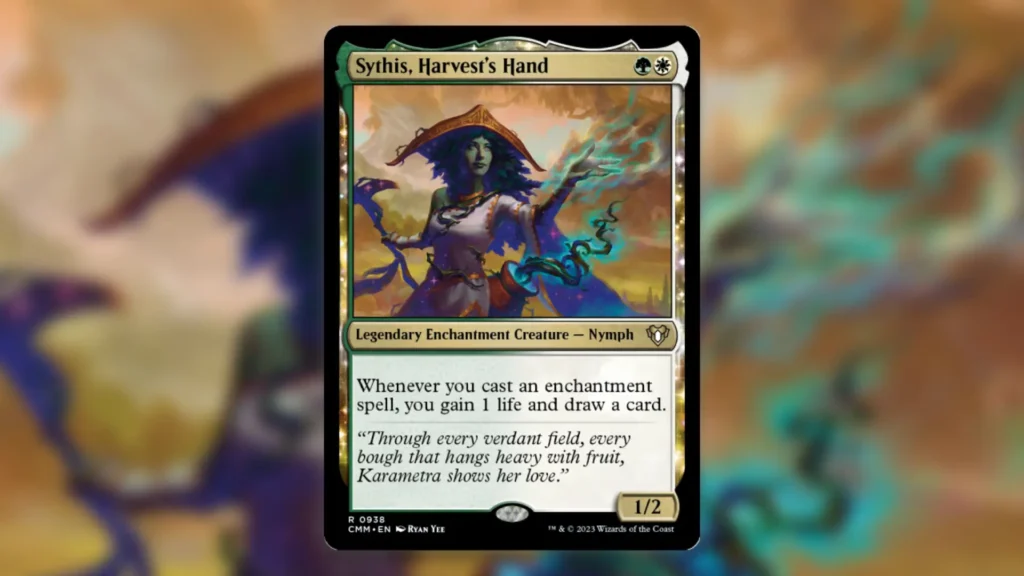
Enchantress is a long-running archetype in Magic, taking its name from 1998’s Argothian Enchantress. Essentially, these decks revolve around generating advantage by playing a lot of enchantments, and Sythis, Harvest Hand supports this play style beautifully.
Sythis comes down early for just two mana, and then serves as a constant source of card draw as you play your other enchantments. Whether you’re ramping with Utopia Sprawl, or removing threats with Grasp of Fate Grasp of FateWhen this enchantment enters, for each opponent, exile up to one target nonland permanent that player controls until this enchantment leaves the battlefield. (Those permanents return under their owners' control.), Sythis ensures your cards keep flowing.
Sythis’s card draw effect is especially good for running ramp enchantments that don’t do much later in the game. Even if you draw a Wild Growth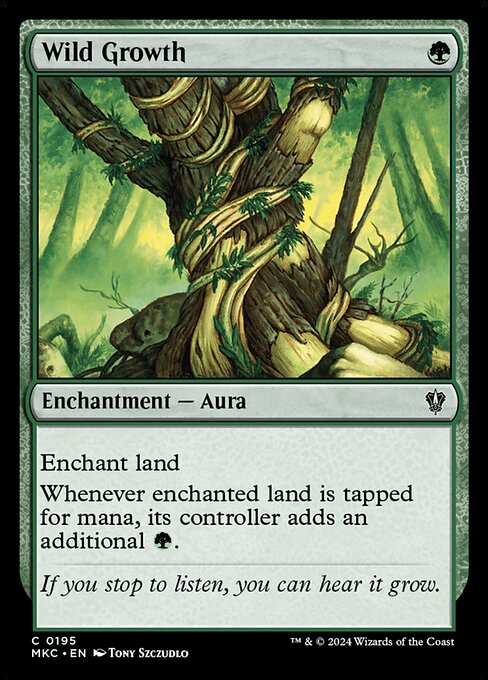 Wild GrowthEnchant land
Whenever enchanted land is tapped for mana, its controller adds an additional {G}. later, Sythis can still give you an extra draw.
On top of this draw, Sythis gains you life for each enchantment you cast, which is great for padding your life at aggressive tables. This also lets you tap into lifegain synergies, with unusual cards like Comforting Counsel Comforting CounselWhenever you gain life, put a growth counter on this enchantment.
As long as there are five or more growth counters on this enchantment, creatures you control get +3/+3. and Dawn of Hope Dawn of HopeWhenever you gain life, you may pay {2}. If you do, draw a card.
{3}{W}: Create a 1/1 white Soldier creature token with lifelink..
Notably, Sythis is also an enchantment, so it enables your synergies as well as serving as a payoff. If you wait to cast Sythis, or it gets removed, playing it again later will get you value from cards like Mesa Enchantress Mesa EnchantressWhenever you cast an enchantment spell, you may draw a card., and it boosts staple cards like Sanctum Weaver.
All in all, Sythis is a clean, simple Enchantress Commander, and an ideal starting point for new players. At just $2.49 a copy, it’s a great budget option, too.
Trostani, Selesnya’s Voice
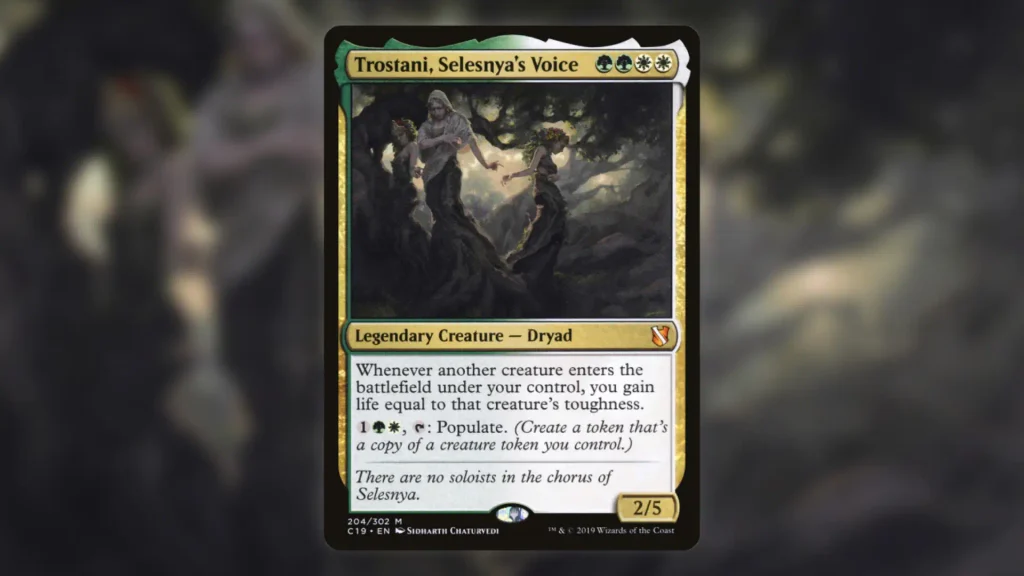
Trostani, Selesnya’s Voice is probably the best Commander for new players interested in Lifegain. It gives you a Soul Sisters effect in the command zone, which is absolutely crucial for creature-focused lifegain decks.
Better yet, Trostani’s lifegain scales with big creatures, giving you different approaches for this strategy. You can play tons of small creatures to get lots of instances of life, or you can play a chunky creature like Soul of Eternity and double your life in one go.
Regardless of which way you go, stocking up on creatures that do things when you gain life is important. Haliya, Guided by Light and Crested Sunmare are two examples of strong payoffs that Trostani can trigger a ton of times.
You don’t need to worry about running out of creatures to cast with Trostani, either, since it can create its own army through its activated Populate ability. As long as you have at least one token out to copy, this is essentially a free creature in hand each turn. While it’s fine with most tokens, big ones from the likes of Armada Wurm and Voice of Resurgence will work best here.
What’s great about Trostani is that it’s a fantastic deck at a base level, but it also has a ton of room to power up. If your bracket and budget allow, you can easily spice it up by adding token doublers like Elspeth, Storm Slayer and Doubling Season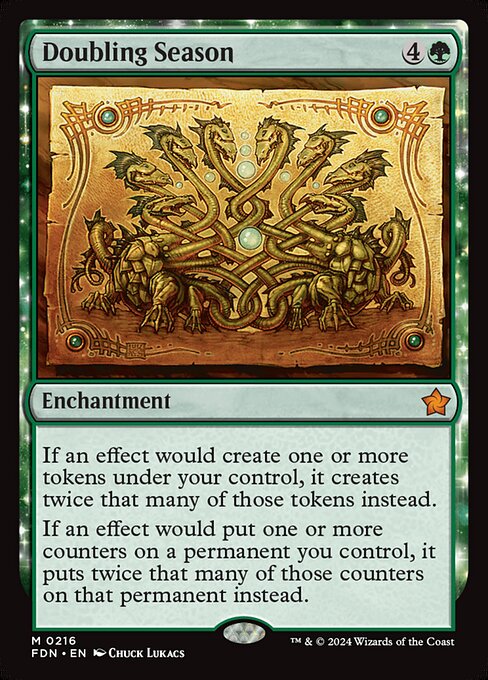 Doubling SeasonIf an effect would create one or more tokens under your control, it creates twice that many of those tokens instead.
If an effect would put one or more counters on a permanent you control, it puts twice that many of those counters on that permanent instead.. High-end lifegain payoffs, like Archangel of Thune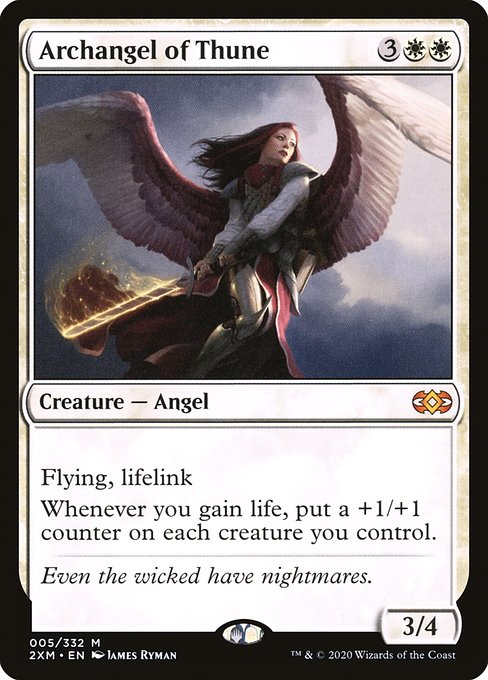 Archangel of ThuneFlying
Lifelink (Damage dealt by this creature also causes you to gain that much life.)
Whenever you gain life, put a +1/+1 counter on each creature you control. and Serra Ascendant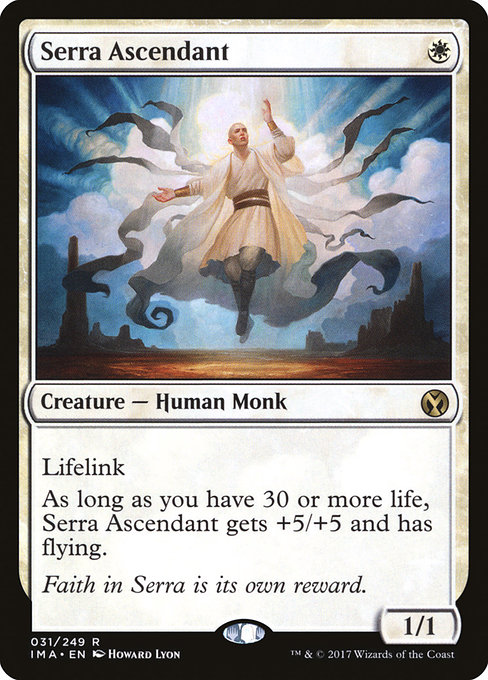 Serra AscendantLifelink (Damage dealt by this creature also causes you to gain that much life.)
As long as you have 30 or more life, this creature gets +5/+5 and has flying., will work wonders here also.
Mendicant Core, Guidelight
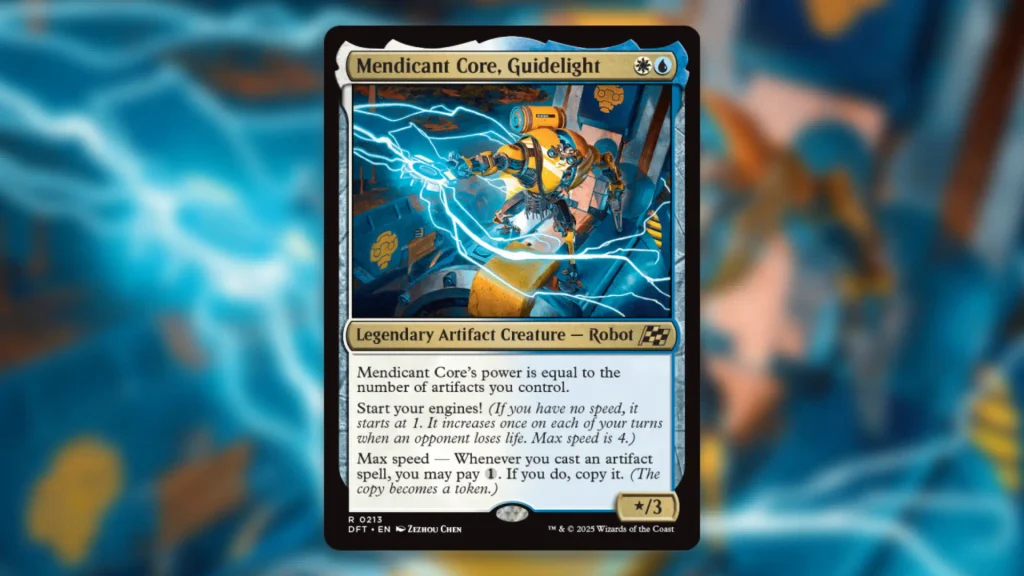
If you’re drawn more to the mechanical side of MTG and all its whirring, buzzing artifacts, Mendicant Core, Guidelight is probably your best starting point. This is one of the strongest Artifact Commanders in Magic overall, and it’s also an incredibly fun deck to build and pilot.
For starters, Mendicant Core itself scales its power with the artifacts you have in play, which makes it a pretty scary threat on its own. If you can reliably get it through for damage, using Equipment like Whispersilk Cloak Whispersilk CloakEquipped creature can't be blocked and has shroud. (It can't be the target of spells or abilities.)
Equip {2}, then just playing artifacts consistently can make Commander damage wins possible.
There are plenty of good options in this category, from artifacts that replace themselves with cards like Cryogen Relic, and artifact lands like Seat of the Synod. Artifact tokens count here as well, so cards such as the new Antagonist Incorporator are great for rapidly boosting your Commander’s power.
The more exciting part of Mendicant Core comes when you hit Max Speed, however. This is an odd, and slightly confusing, mechanic, but essentially all you need to do is cast Core, then deal damage to your opponents for three of your turns. This is easily doable with evasive artifact creatures like Fugitive Droid, or direct damage effects like Lonely Arroyo Lonely ArroyoThis land enters tapped.
When this land enters, it deals 1 damage to target opponent.
{T}: Add {W} or {U}..
Once your speed is at max, Mendicant Core can copy any artifact you cast for just a single mana. This is a hugely powerful ability, whether you’re getting extra ramp with a Sol Ring Sol Ring{T}: Add {C}{C}. or bonus threats with Wurmcoil Engine.
This ability scales incredibly well with your budget, too, so as you grow your collection, heavy hitters like Portal to Phyrexia can join your copy lineup.
Baylen, the Haymaker
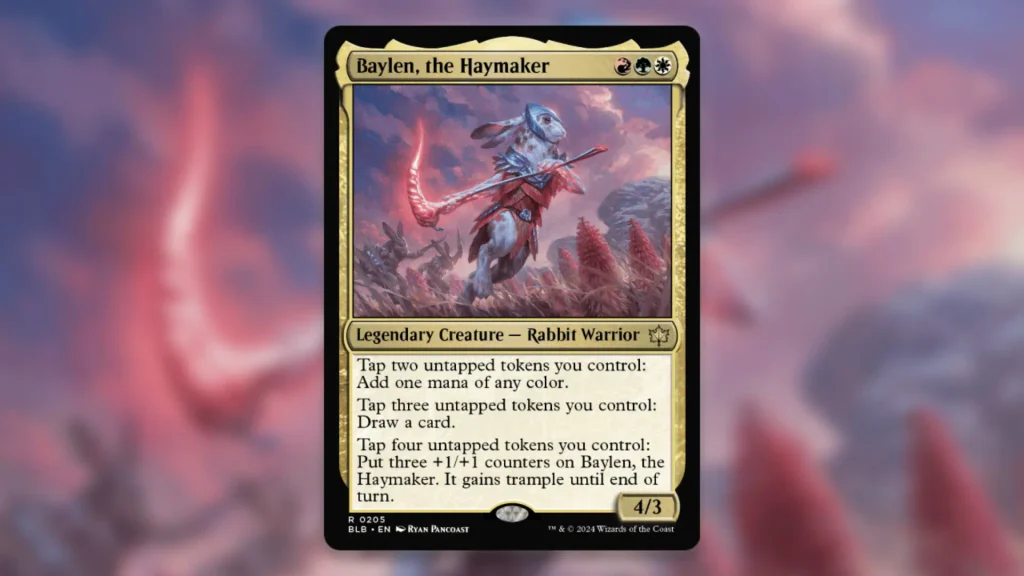
If you like the idea of building and managing a huge board of resources, a Token deck is a great first pick. There are plenty of good Commanders in this category, but for my money Baylen, the Haymaker leaves them all in the dust.
As a cautionary note, this Commander’s boards can get extremely large and can become difficult to manage. Baylen will give you a ton of decisions to make at this point, but as you learn the Commander, you should know what to do more quickly.
Baylen has three activated abilities, all of which require you to tap down a different number of tokens. You can tap two to make one mana, tap three to draw a card, and tap four to permanently buff Baylen up and grant it temporary Trample. Importantly, these aren’t tap abilities in the usual sense, meaning Baylen can use them right away and can tap tokens with summoning sickness for them as well.
More often than not, you’ll mainly be using a combination of the first two abilities, using your tokens for mana and drawing cards to cast with your tokens. Because of this, Baylen focuses on making as many tokens as possible, whether they’re massive creatures or just Food and Clues.
There are countless options for this nowadays, but scaling token producers like Farmer Cotton and Wildfire Awakener work best. Notably, Baylen can tap any tokens, not just creatures, so cards that make Food, Treasure, and other artifacts will work just as well.
Baylen is incredibly powerful when built well, and it gives you a ton of options, too, since its abilities work at instant speed. As a three-color legend, it’s also a great tutorial for building more complex mana bases. This is certainly the most complex Commander here, but if you’re up for the challenge, the rewards are huge.
Tatyova, Benthic Druid
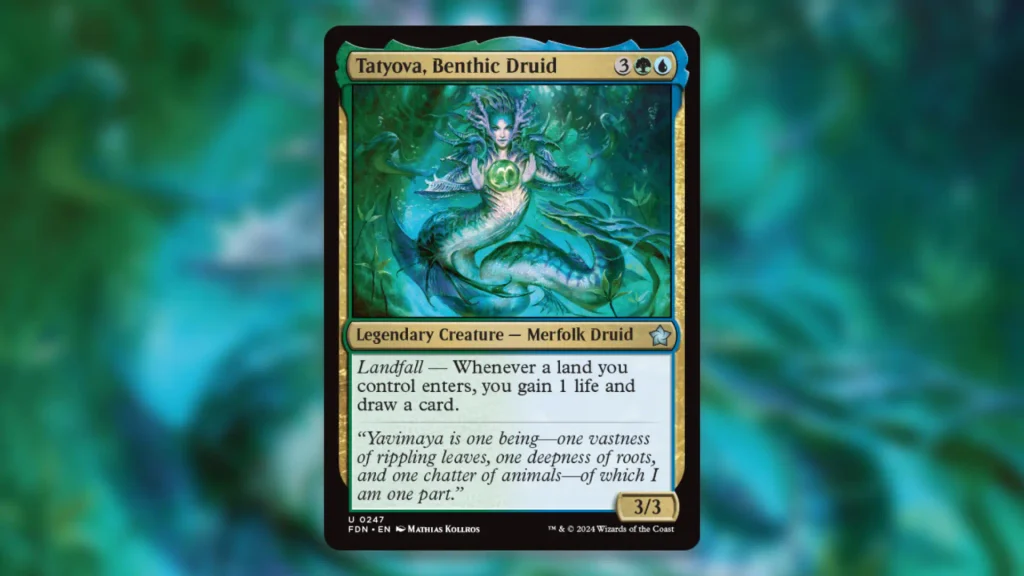
Magic’s land system is one of its most controversial features, but it’s also the basis for an entire category of deck, which does its best work in Commander. If you want to give a Landfall deck like this a spin, then Tatyova, Benthic Druid is undeniably the best starting point.
This card is incredibly simple, rewarding you with a free draw and 1 life every time one of your lands enters. Played normally, this is a solid card-advantage engine, and it gets even better when you can double up with lands like Evolving Wilds Evolving Wilds{T}, Sacrifice this land: Search your library for a basic land card, put it onto the battlefield tapped, then shuffle. that grab others from your deck.
To take things to the next level, you can include cards that let you play additional lands each turn, like Exploration Broodship and Oracle of Mul Daya. These give you even more draw, which nets you more lands and creates a huge snowball of value.
Once you’ve got this engine going, the sky really is the limit for Tatyova. Playing so many extra lands will give you a ton of mana to work with, making huge threats like Verdant Kraken trivial to cast. You’ll also have Landfall triggers aplenty, so other payoffs such as Rampaging Baloths can easily take over the game for you.
Sephiroth, Fabled SOLDIER
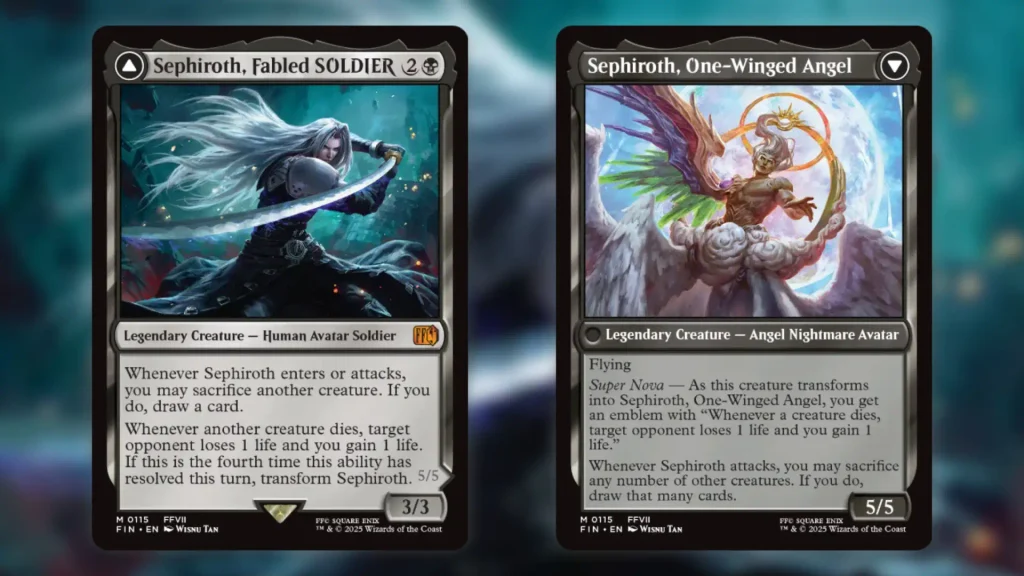
For those who prefer a more ruthless approach to card games, Magic’s Aristocrats archetype is the ideal starting point. This deck is all about sacrificing your own creatures for value, and no better Commander leads it than Final Fantasy VII’s big bad, Sephiroth.
Though it costs only three mana, Sephiroth gives you literally everything you need for a functional Aristocrats deck. It can sacrifice creatures on both entry and attack, which lets you ditch fodder like Greedy Freebooter for value. You even get some nice bonus draw for doing so, ensuring you don’t run out of resources, which is a common problem for the archetype.
On top of that, Sephiroth is also quite literally a Blood Artist, one of the archetype’s foundational payoffs that slowly whittles down your opponents’ life as you cash in creatures. If you can stack up four triggers in a turn, which is trivial using cards like Accursed Marauder, then you even get the effect permanently on an emblem as Sephiroth transforms.
This is a pretty big deal, as Emblems are impossible to remove in MTG, and can even stack if you flip Sephiroth multiple times. Sephiroth also becomes a 5/5 Flier that can trade in any number of creatures for cards when attacking, which can fuel your future plays and even serve as a finisher with a big enough board.
The main fly in the ointment with Sephiroth as a starter Commander is that hefty $26 price tag. While that is a big investment for a new player, Mono-Black saves you a lot of money on dual lands for your mana base. For that reason, despite its initial appearance, Sephiroth can be a great budget deck once you really get into it.
Muldrotha, the Gravetide
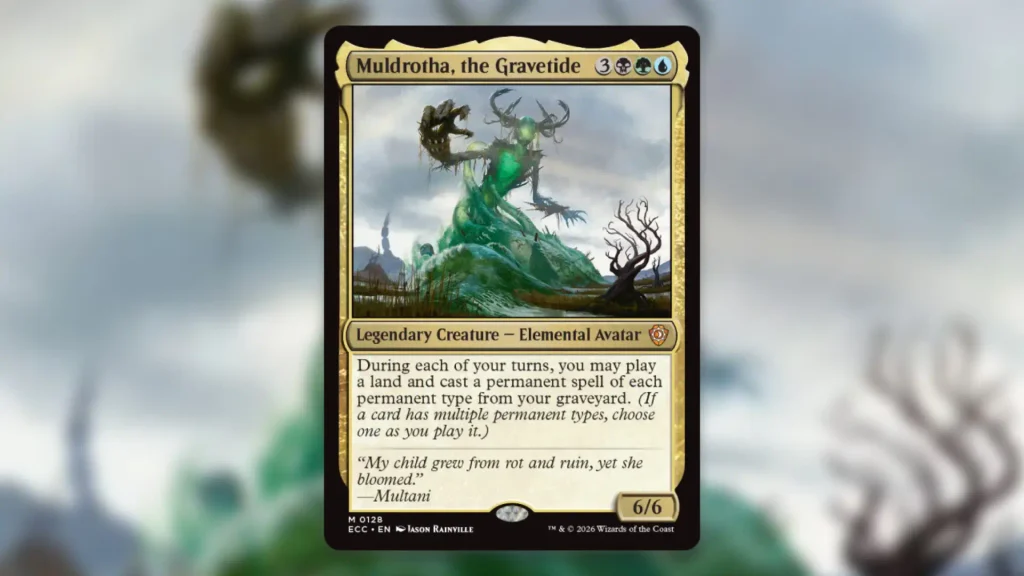
One of the oldest, most time-honored ways to play MTG is Reanimator, where you dump big creatures into your graveyard then use cheap spells to bring them back. For those just starting out, and indeed players in general, Muldrotha, the Gravetide is an absolute classic in this category.
Muldrotha’s ability is fairly simple, letting you play one permanent of each type from your graveyard each turn. With the right card types, this can let you replay a ton of cards from your graveyard, dropping a sacrificed Evolving WildsEvolving Wilds{T}, Sacrifice this land: Search your library for a basic land card, put it onto the battlefield tapped, then shuffle., a creature, and even something like Mishra’s Bauble.
Notably, Muldrotha can’t recast instants and sorceries, so be careful how many you include.
If you can put your own cards into your graveyard, through self-mill like Stitcher’s Supplier Stitcher’s SupplierWhen this creature enters or dies, mill three cards. (Put the top three cards of your library into your graveyard.), then you’re essentially drawing them with Muldrotha in play. This also lets you get your big creatures like Archon of Cruelty
 Archon of CrueltyFlying
Whenever this creature enters or attacks, target opponent sacrifices a creature or planeswalker of their choice, discards a card, and loses 3 life. You draw a card and gain 3 life. into the graveyard so you can bring them back with reanimation pieces like Animate Dead.
What’s great about Muldrotha is that it’s incredibly flexible, which means you can really put your own spin on things as you build it out. Whether you want to follow the Reanimator plan detailed here or try something funkier with different card types, this is a great Commander to try first.
Krenko, Mob Boss
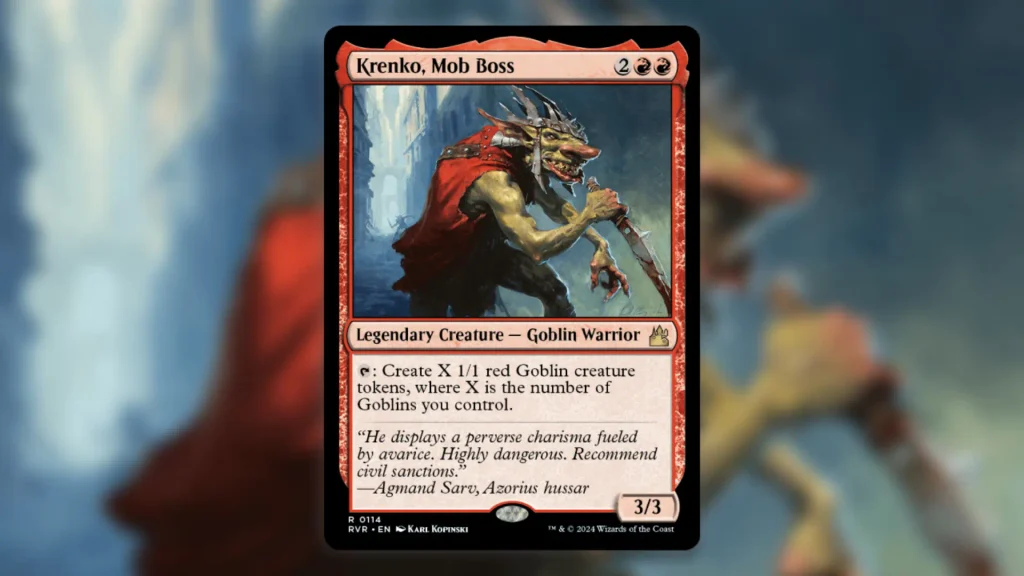
When it comes to simple yet powerful MTG Commanders, it really doesn’t get better than Krenko, Mob Boss. This is one of the most popular Commanders in the game according to EDHREC data, and it’s not hard at all to see why.
By tapping Krenko, you can make a 1/1 Goblin token for each Goblin you have in play, essentially doubling your army. Since Goblins are usually cheap, and often make tokens of their own, this can make a huge number of tokens very quickly indeed, and it grows exponentially stronger with each passing turn.
Krenko’s 1/1 tokens should be enough to win a lot of games just by attacking, especially combined with mass buff effects like Goblin Chieftain. You can also add in cards like Impact Tremors, which deal damage when your tokens enter, to speed up that process.
Overall, Krenko is probably the best Commander for a new MTG player because it’s clean, simple, and powerful. It’s easy to build on a budget by scraping together a bunch of random Goblins, but there’s also plenty of room to refine it, and even introduce combos if you’d like. Add in its low price and Mono-Red color identity, and there’s no better gateway to Magic’s most popular format than this guy.
Stick with us here at dev.mtgrocks.com: the best site for Magic: The Gathering coverage. Be sure to check out our deckbuilder for your next big brew, and our brand new MTG Rocks Podcast! MTGRocks’ editorial and corrections policy lets us create content you can trust.