
Dominaria Remastered is a new set compiling iconic cards from Magic: the Gathering’s history. Although its release has been troubled by delays, if you can get your hands on some packs, it’s an excellent limited experience. The set is a highlight reel of the best Magic’s original plane has to offer.
Since many of the cards here are from far back in the game’s history, the power level for the commons and Uncommons is a bit lower than in contemporary sets. This is a format of
Savannah Lions
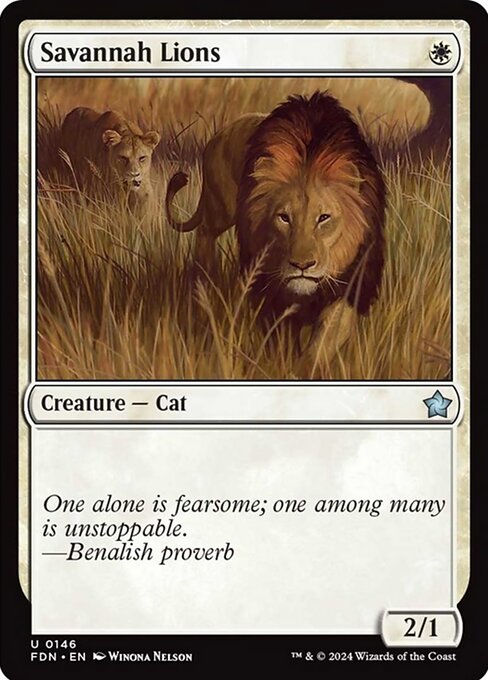 Savannah Lions
rather than one of Ushers of the Fallen.
Savannah Lions
rather than one of Ushers of the Fallen.
Nevertheless, there are plenty of valuable and powerful Rares to keep things interesting. You can get your hands on
Yawgmoth, Thran Physician
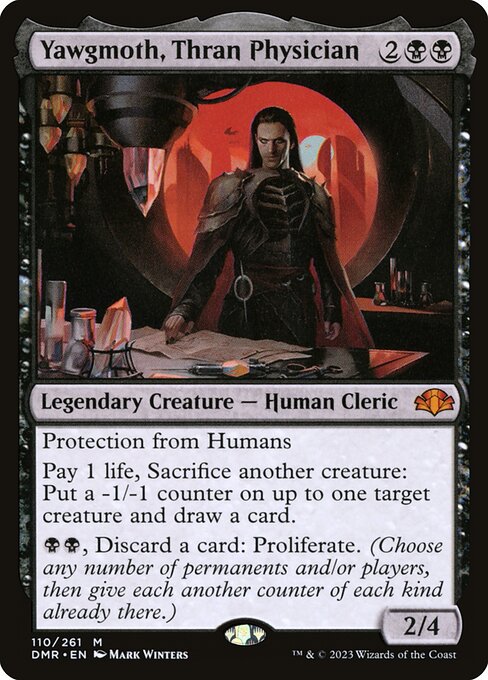 Yawgmoth, Thran Physician
Protection from Humans
Yawgmoth, Thran Physician
Protection from Humans
Pay 1 life, Sacrifice another creature: Put a -1/-1 counter on up to one target creature and draw a card.
{B}{B}, Discard a card: Proliferate. (Choose any number of permanents and/or players, then give each another counter of each kind already there.)
,
Sylvan Library
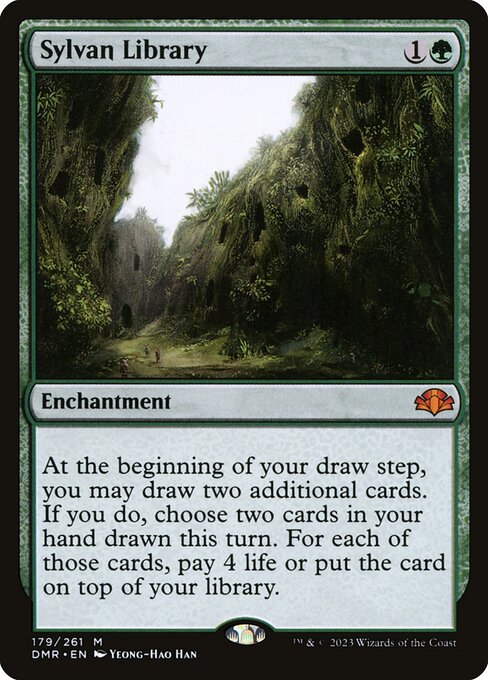 Sylvan Library
At the beginning of your draw step, you may draw two additional cards. If you do, choose two cards in your hand drawn this turn. For each of those cards, pay 4 life or put the card on top of your library.
, and even
Force of Will
Sylvan Library
At the beginning of your draw step, you may draw two additional cards. If you do, choose two cards in your hand drawn this turn. For each of those cards, pay 4 life or put the card on top of your library.
, and even
Force of Will
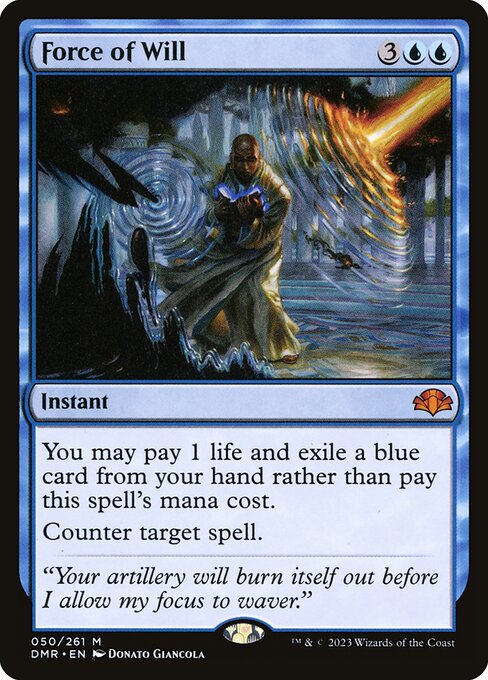 Force of Will
You may pay 1 life and exile a blue card from your hand rather than pay this spell's mana cost.
Force of Will
You may pay 1 life and exile a blue card from your hand rather than pay this spell's mana cost.
Counter target spell.
in these packs.
Let’s go over the Limited archetypes of the set and discuss how to build your deck when drafting.
White/Blue: Blink
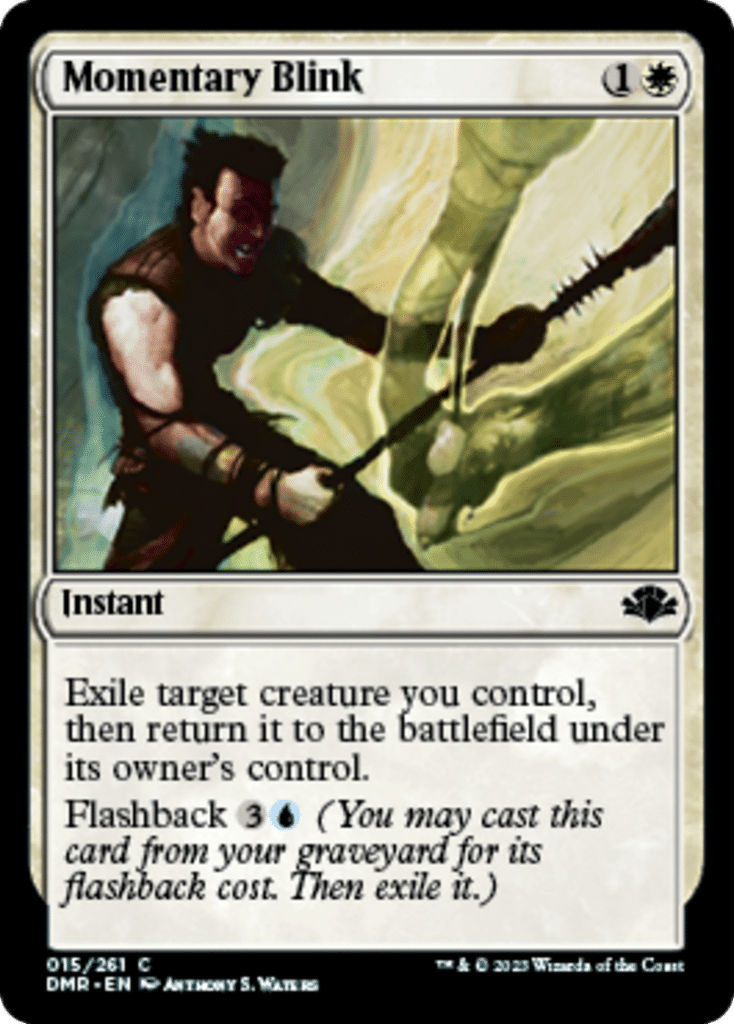
Blink is a classic limited archetype. Fill your deck with creatures with powerful enter the battlefield abilities and recur those effects by bringing them into and out of play or ‘Blinking’ them.
Sawtooth Loon
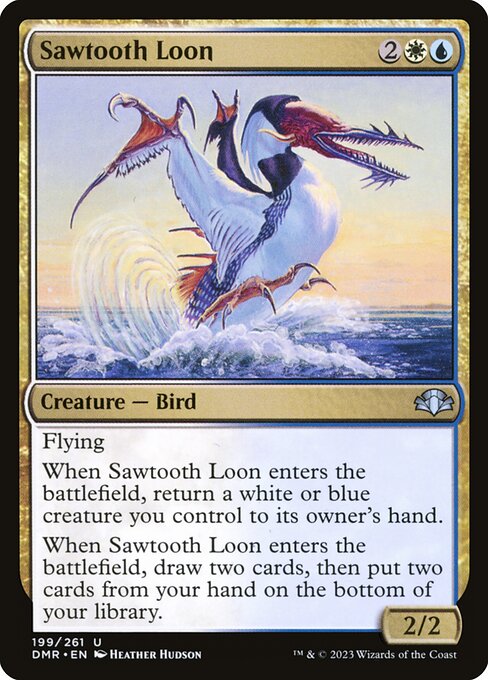 Sawtooth Loon
Flying
Sawtooth Loon
Flying
When this creature enters, return a white or blue creature you control to its owner's hand.
When this creature enters, draw two cards, then put two cards from your hand on the bottom of your library.
and
Momentary Blink
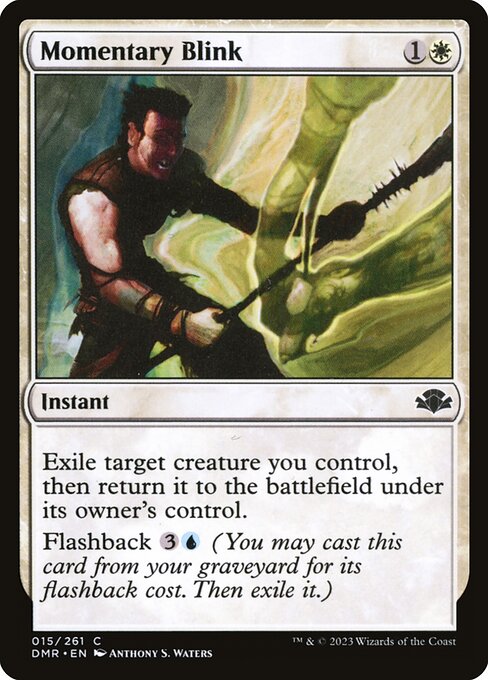 Momentary Blink
Exile target creature you control, then return it to the battlefield under its owner's control.
Momentary Blink
Exile target creature you control, then return it to the battlefield under its owner's control.
Flashback {3}{U} (You may cast this card from your graveyard for its flashback cost. Then exile it.)
are the signpost cards of this archetype.
Blink your Peregrine Drakes to increase the amount of mana available to you. Flash your Floodgates in and out of existence for a repeatable board wipe effect and use Man-o’-War both to recur your own effects and to bounce your opponent’s threats.
Blue/Black: Control
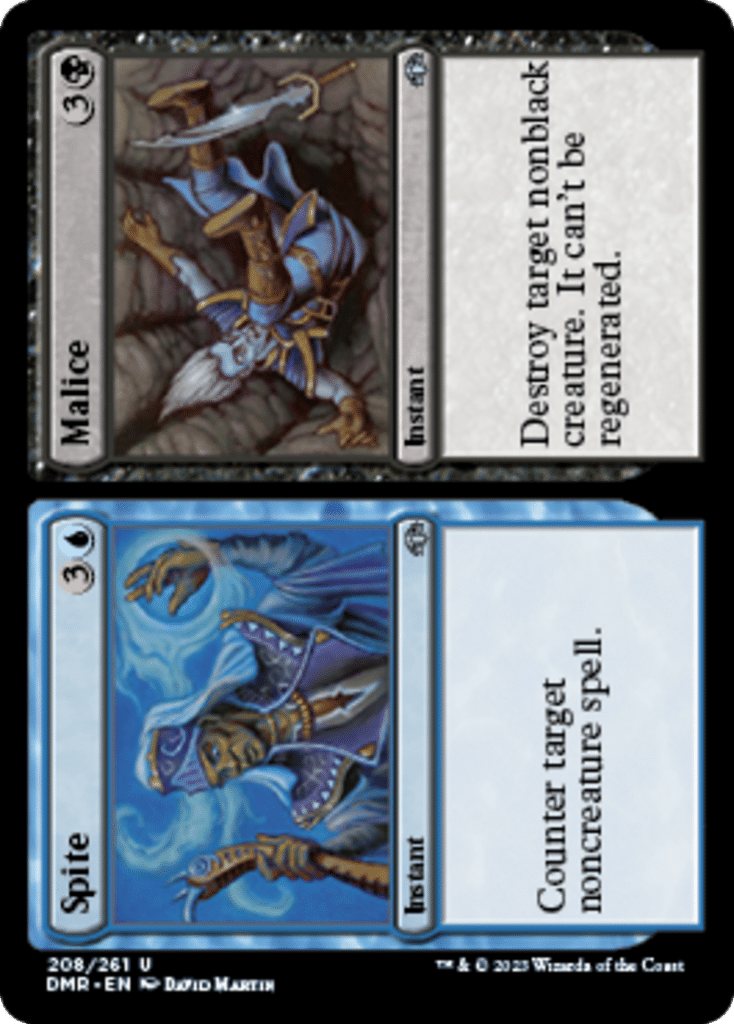
Dominaria Remastered contains the original
Counterspell
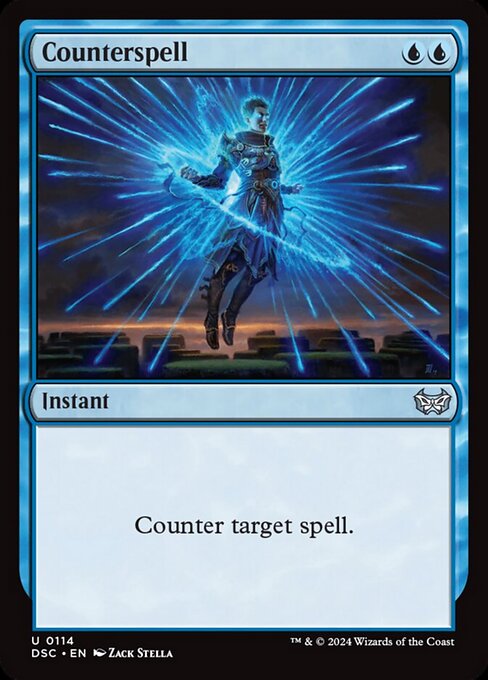 Counterspell
Counter target spell.
, which is still one of the best cards of its type after all these years. It also features a fantastic suite of black removal spells such as: Terror and Chainer’s Edict.
Counterspell
Counter target spell.
, which is still one of the best cards of its type after all these years. It also features a fantastic suite of black removal spells such as: Terror and Chainer’s Edict.
Combine Blue’s counterspells and bounce effects, with Black’s powerful removal options in order to ensure that your opponents will never be able to keep any of their creatures in play.
Black/Red: Goblin, Zombie, Sacrifice
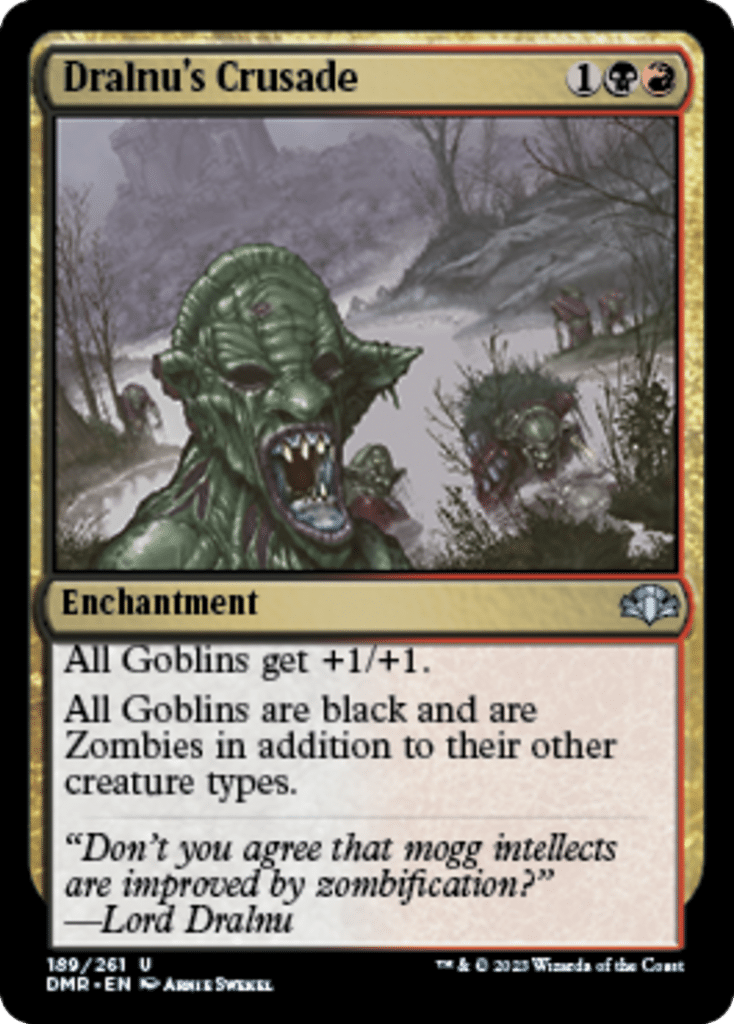
Possibly the weirdest archetype in the set. This strategy brings together two of the game’s most iconic creature types and encourages you to sacrifice them for value.
Red encourages you to flood the board with goblins and then kill them for little bonuses. Cards like Pashalik Mons and
Skirk Prospector
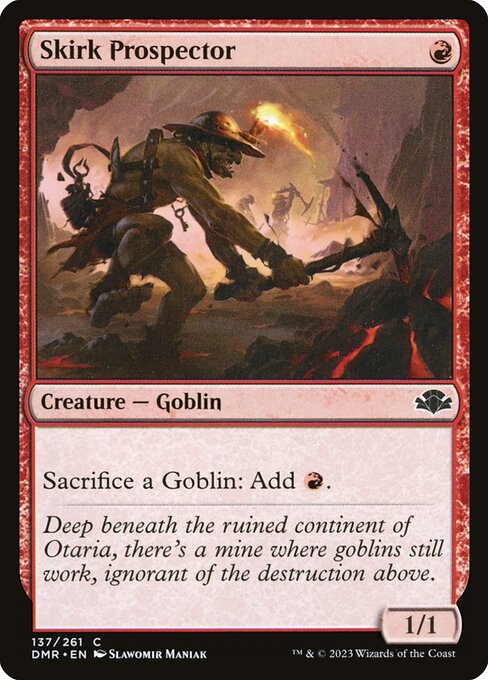 Skirk Prospector
Sacrifice a Goblin: Add {R}.
enable you to sacrifice your Goblins. Siege Gang Commander is particularly notable, as it both provides you with several Goblins and is a sacrifice outlet.
Skirk Prospector
Sacrifice a Goblin: Add {R}.
enable you to sacrifice your Goblins. Siege Gang Commander is particularly notable, as it both provides you with several Goblins and is a sacrifice outlet.
Black gives you several other options for sacrificing your cards and some zombies with useful support effects. Nightscape Familiar makes all of your goblins cheaper, and Phyrexian Ghoul gobbles them up in order to grow stronger. Black even offers some goblins of its own: like Goblin Turncoat and Festering Goblin the latter of which has the advantage of being both a Zombie and a Goblin.
This archetype is brought together by the card Dralnu’s Crusade, which turns all of your Goblins into Zombies and gives them a +1/+1 buff. If you can combine Dralnu’s Crusade with Deadapult, a card which allows you to pay a red mana in order to sacrifice a Zombie and deal two damage to any target, then you can close out the game quickly.
Red/Green: Cycling
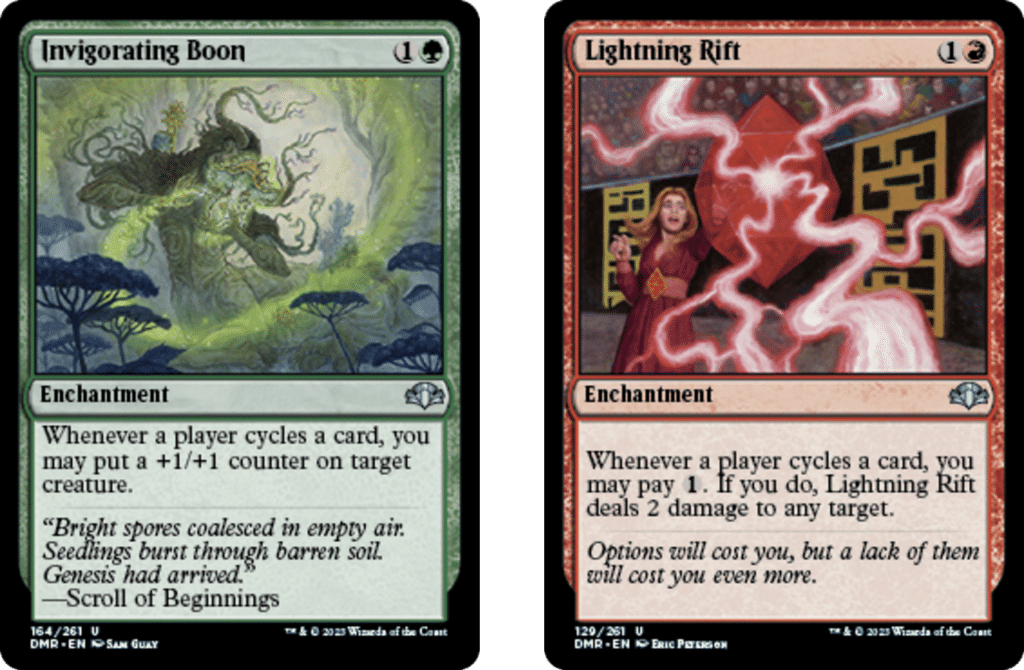
Cycling is an ability that has been featured in many, many sets from the 1990s to today. Cards with cycling can be discarded from your hand, for a small cost, and then replaced by drawing another card. Although cycling cards are present across all five colors in the set, they are most concentrated in Red and Green.
Red and Green also have pay-off cards which reward you for cycling. Lightning Rift deals two damage to any target if you pay one extra mana when a card is cycled. Invigorating Boon lets you put a +1/+1 counter on a creature when something gets cycled. Notably, these cards provide their benefit whenever any player cycles a card, so they punish your opponent for making use of the plethora of cycling cards in the set.
White/Green: Threshold
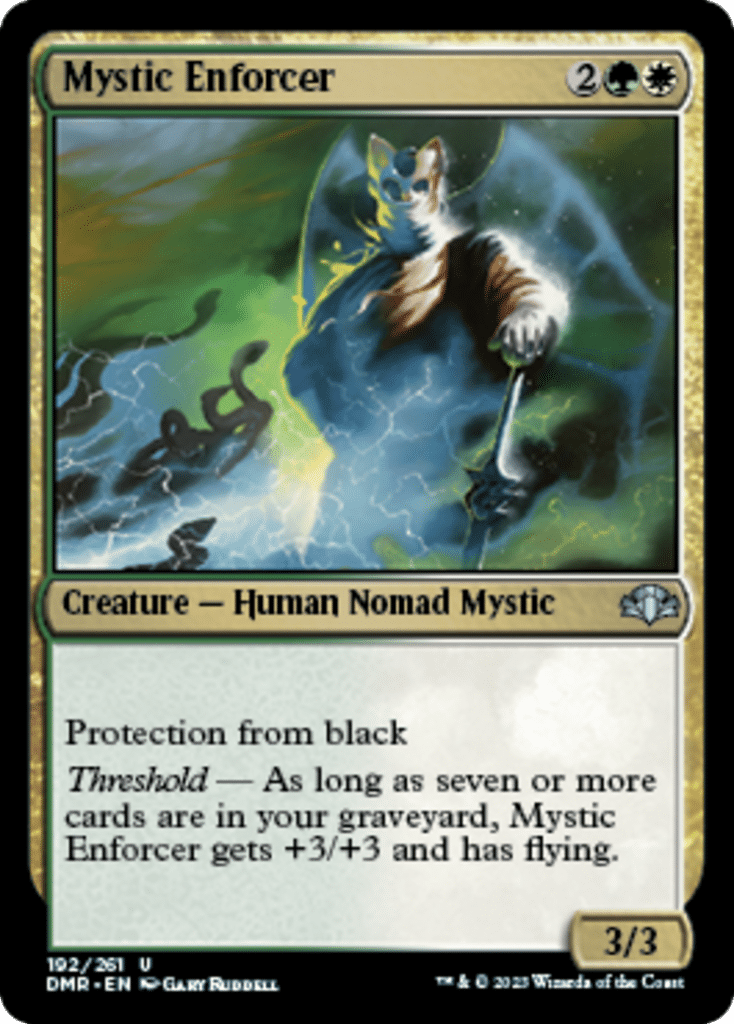
Threshold is a keyword that rewards you for having seven or more cards in your graveyard. In Dominaria Remastered, White and Green have a large number of cards with this ability. Mystic Enforcer is the signpost card for this strategy. Although a 3/3 for four mana is unappealing, the enforcer becomes a 6/6 with flying if you’ve crossed the threshold. Its protection from black also keeps it safe from a large number of removal effects.
As well as rewarding you for crossing the threshold, White and Green also have several cards to help you get there.
Crop Rotation
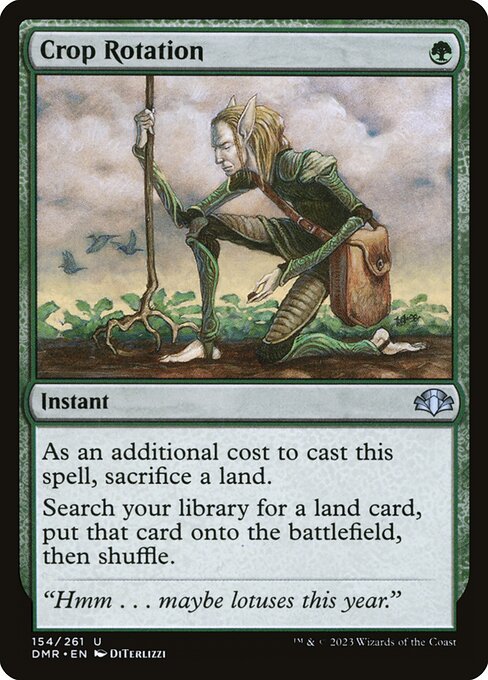 Crop Rotation
As an additional cost to cast this spell, sacrifice a land.
Crop Rotation
As an additional cost to cast this spell, sacrifice a land.
Search your library for a land card, put that card onto the battlefield, then shuffle.
puts two cards into your graveyard for only a single green mana and helps you with fixing. When Gamekeeper dies, it digs through your deck, searching for a creature card, chucking everything else along the way into the graveyard.
Savannah Lions
Savannah Lions
is a powerful early game attacker in this format. It also helps out in the mid and late game by contributing to your threshold total once it has died.
Use cards with cycling and artifacts like Jalum Tome to ensure you fill your graveyard as fast as possible.
White/Black: Life Management
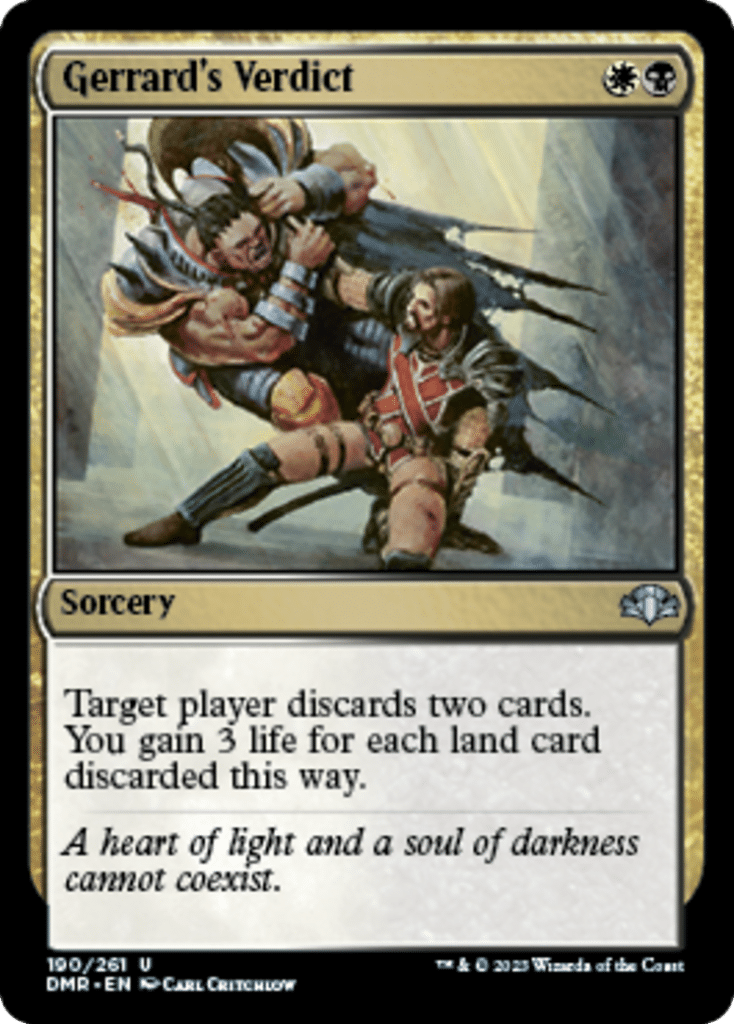
White has a lot of cards which heal you, black has a lot of powerful cards which damage you. Mash these two seemingly separate, strands together, and you mitigate the self-destructive nature of Black using White’s life restoration effects.
In terms of white life gain, it’s better to have cards which impact the board state and provide incidental healing, than cards which exclusively increase your life. Prioritize taking cards like Cleric of the Forward Order and Kjeldoran Gargoyle over cards like Congregate and
Spirit Link
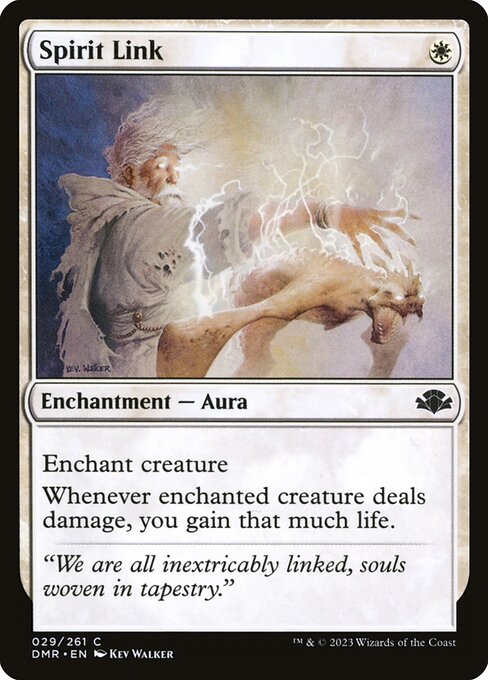 Spirit Link
Enchant creature (Target a creature as you cast this. This card enters attached to that creature.)
Spirit Link
Enchant creature (Target a creature as you cast this. This card enters attached to that creature.)
Whenever enchanted creature deals damage, you gain that much life.
.
In terms of black self damage, cards like Flesh Reaver and Phyrexian Scute provide excellent stats for their cost, especially with your white cards nullifying their downside.
Blue/Red: Storm
The namesake mechanic of the Storm Scale, a system that show how likely a mechanic is to return in a Standard-legal set. Storm will, according to its namesake scale, never return to Standard. It’s infamously powerful and a favorite of cube designers everywhere. It’s always a blast to draft.
Cards with Storm copy themselves for every card which has been cast prior to them in a turn. Dominaria Remastered features many Blue cards which untap the lands used to cast them, like
Frantic Search
 Frantic Search
Draw two cards, then discard two cards. Untap up to three lands.
,
Cloud of Faeries
Frantic Search
Draw two cards, then discard two cards. Untap up to three lands.
,
Cloud of Faeries
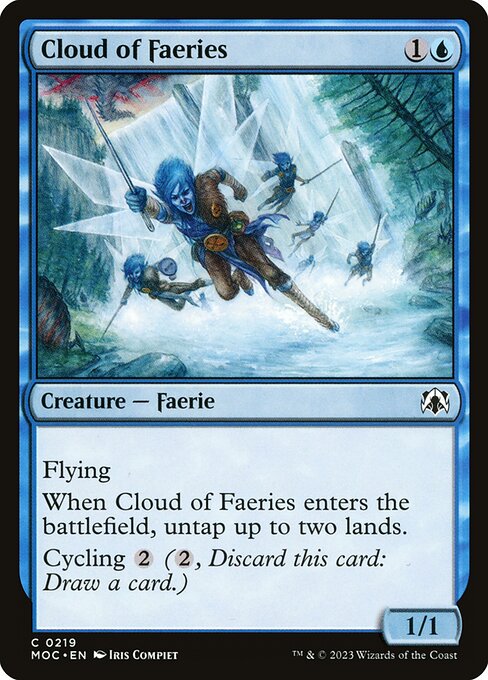 Cloud of Faeries
Flying
Cloud of Faeries
Flying
When this creature enters, untap up to two lands.
Cycling {2} ({2}, Discard this card: Draw a card.)
, and Snap. In one big turn, you’ll cast as many of these cards as possible. Once that’s done, use either
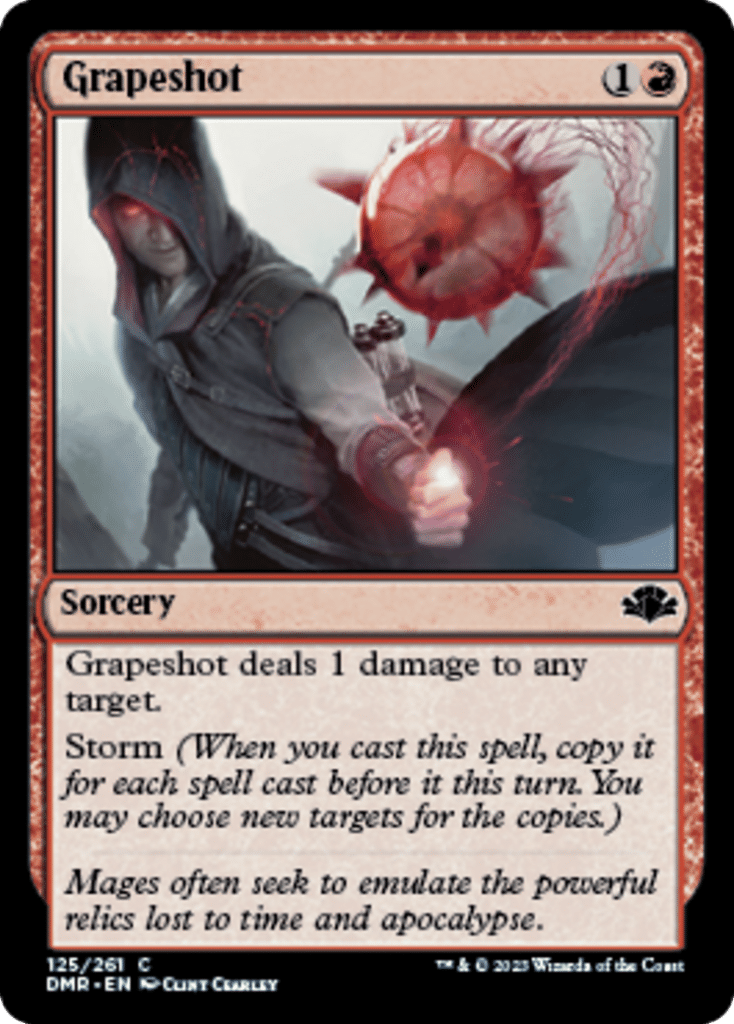
Grapeshot
 Grapeshot
 deals 1 damage to any target.
Grapeshot
Grapeshot deals 1 damage to any target.
Storm (When you cast this spell, copy it for each spell cast before it this turn. You may choose new targets for the copies.)
for a game winning blast or Empty the Warrens to fill the board with so many goblins that your opponent will be doomed unless they’ve got a board wipe tucked away.
Black/Green: Midrange
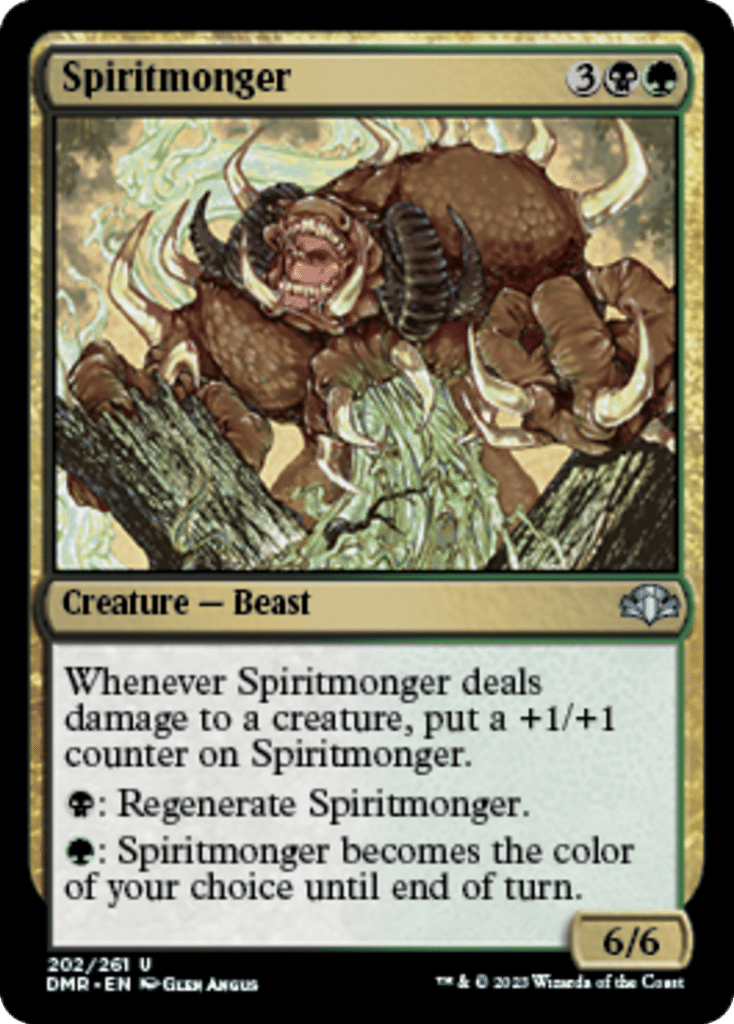
There’s something fundamentally fun about playing giant Green creatures. Even more so when an arsenal of powerful Black removal effects supports those creatures.
Spiritmonger is the signpost card for this archetype. A 6/6 for five mana with an upside was absolutely astonishing when this card was first printed in Apocalypse in 2001. Whilst in the current era of
Questing Beast
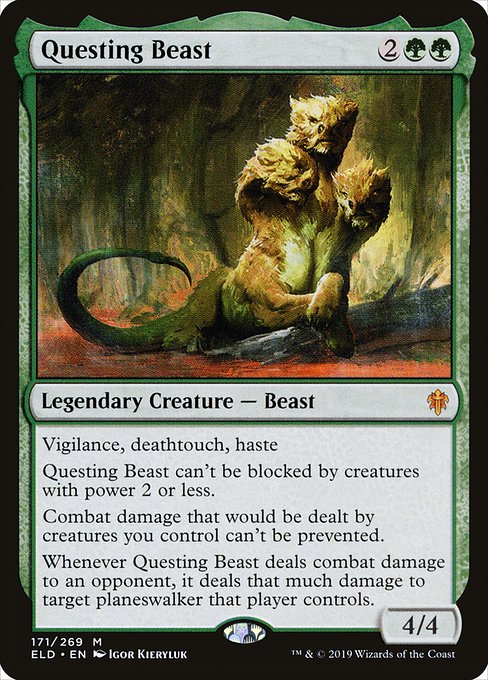 Questing Beast
Vigilance, deathtouch, haste
Questing Beast
Vigilance, deathtouch, haste
Questing Beast can't be blocked by creatures with power 2 or less.
Combat damage that would be dealt by creatures you control can't be prevented.
Whenever Questing Beast deals combat damage to an opponent, it deals that much damage to target planeswalker that player controls.
and
Sheoldred, the Apocalypse
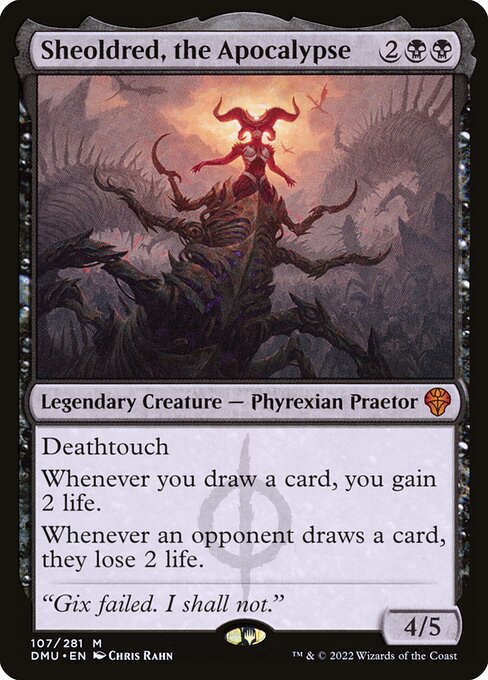 Sheoldred, the Apocalypse
Deathtouch
Sheoldred, the Apocalypse
Deathtouch
Whenever you draw a card, you gain 2 life.
Whenever an opponent draws a card, they lose 2 life.
, Spiritmonger no longer has the same impact it once did, it’s still a powerful threat that will help Black and Green midrange decks dominate the board.
Red/White: Auras
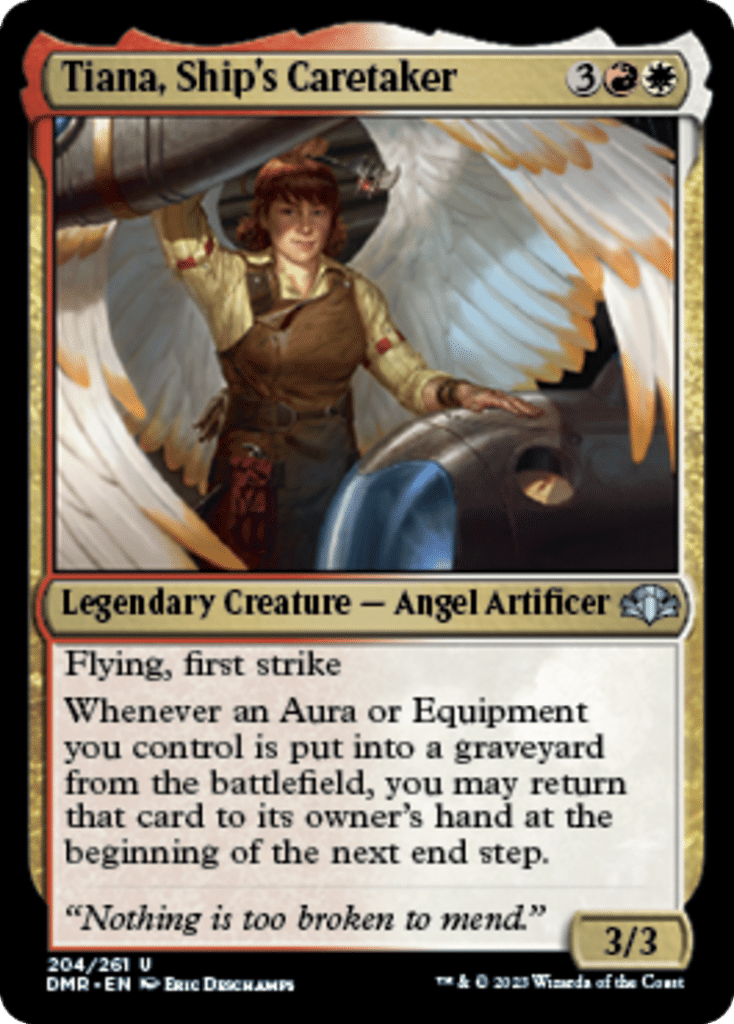
Red and White want you to play creatures, and them buff them with a selection of enchantments.
This strategy can be risky, as when a creature equipped with an aura is destroyed by an opponent’s removal spell, they are destroying two of your cards at the cost of only one of their own. Fortunately, Dominaria Remastered has several cards that circumvent this downside. Tiana, Ship’s Caretaker, returns your auras to your hand when the creature equipped with them dies. Messa Enchantress lets you draw cards whenever you play an enchantment, whether it’s an aura or not, preventing you from losing card advantage.
Valduk, Keeper of the Flame is one of the most important cards for this strategy. His ability to generate 3/1 elemental tokens for each aura attached to him is incredibly potent. He can deal a lot of damage very fast if your opponent is unable to deal with him.
Blue/Green: Ramp
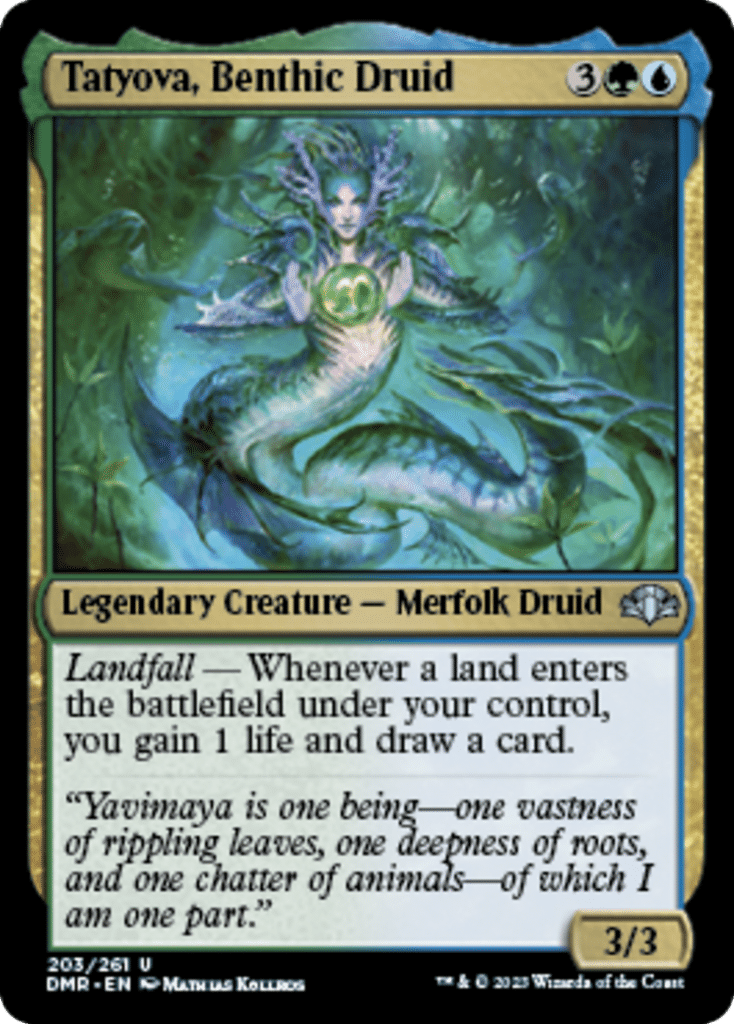
Get as many lands as possible into play as quickly as possible, and then use them to cast big spells. This is probably the most common Blue/Green limited archetype, and Dominaria Remastered doesn’t rock the boat too much here.
In the early game, use
Nature’s Lore
 Nature’s Lore
Search your library for a Forest card, put that card onto the battlefield, then shuffle.
to fetch forests, and mana dorks like
Birds of Paradise
Nature’s Lore
Search your library for a Forest card, put that card onto the battlefield, then shuffle.
to fetch forests, and mana dorks like
Birds of Paradise
 Birds of Paradise
Flying
Birds of Paradise
Flying
{T}: Add one mana of any color.
and Werebear to keep the mana flowing.
In the late game, smash your opponent’s with flying threats like Aven Fateshaper or overrun them on the ground using Kamahl, Fist of Krosa.
Three Colour Strategies
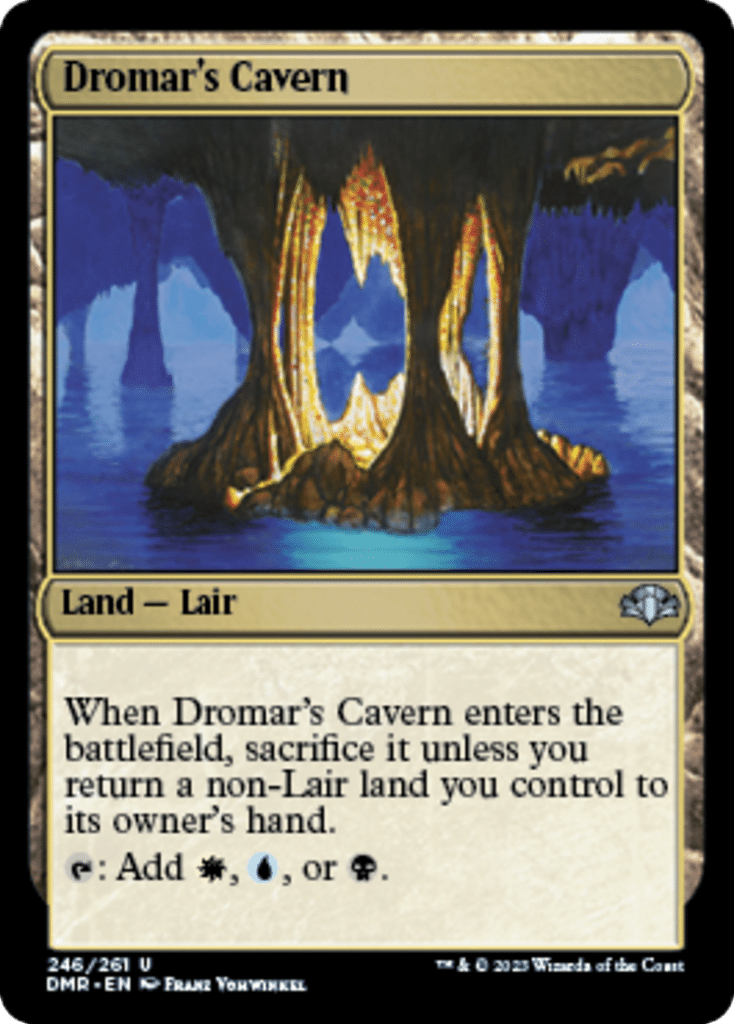
Three color strategies are absolutely possible in Dominaria Remastered. The cycle of three color ‘lair’ lands helps you get the required mana fixing. There are also a handful of Legendary tricolor cards such as Rith, the Awakener, and
Zur the Enchanter
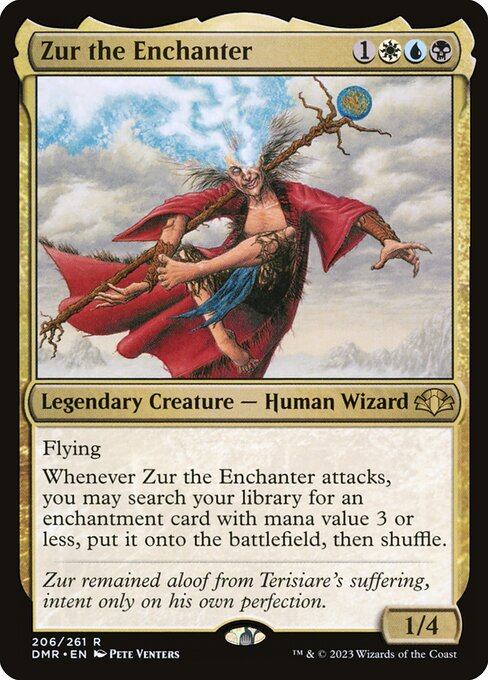 Zur the Enchanter
Flying
Zur the Enchanter
Flying
Whenever Zur attacks, you may search your library for an enchantment card with mana value 3 or less, put it onto the battlefield, then shuffle.
to try out.
When building a three-color deck, it’s best to combine themes which share a color and are inherently synergistic. For example, Red/Green cycling can fill your graveyard up to support White/Green Threshold strategies. Blue/Green ramp can get your mana base ready before you combo off and win using your Blue/Red storm cards. Splashing that third color is always a gamble, but the rewards are there if you’re willing to pursue them.
Conclusion
Although this format is still in its early days, here are five helpful takeaways that may assist you as the community figures the set out.
- Given the low power level of most of the creatures in the format, don’t worry if you feel your deck is a bit weak. Everyone else may be thinking the same thing.
- Storm is always a very popular archetype. Make sure you don’t get cut if lots of players are all trying to build it in your pod.
- Red/White auras are likely to be one of the weaker archetypes. Without the key pieces, you may find yourself on the backfoot if your opponent removes your enchanted creatures.
- White/Black life management may also not turn out to be very strong. Cards which exclusively gain you life are never very appealing and many of the pay off creatures lack evasive abilities to push damage through.
- Keep your options open. Don’t be afraid to change your plans if you open a powerful rare in your second pack.