
From the perspective of newer players, one of the most expensive and underrated parts of Magic is your mana base. While making sure you have all of the optimal spells is generally the thing most players will focus on, you also need to be able to cast them. Unfortunately, this means that whatever lands perform the best in any given format will be under heavy demand. Instead of competing with a few other strategies that may be interested in the same spells as you, any decks in the colors you care about will also want those lands. MTG Fetch lands run into this issue.
Of all the land cards in MTG, Fetch Lands are some of the most powerful. These only tend to see play in higher-power formats because they’re banned everywhere else. For that reason, it’s perfectly normal for new MTG players not to understand what this means. You won’t typically find Fetch Lands in preconstructed products and will not run into them on MTG Arena. That said, Fetch Lands appear to be coming to MTG Arena soon and will be something that EDH players will eventually run into. If you want to get into some older formats like Modern or Legacy, knowing how to use Fetch Lands can determine whether you win or lose the game.
What are MTG Fetch Lands?
Fetch lands are a cycle of lands that were first released in Onslaught. The allied cycle of Fetch Lands released there, and the enemy Fetch Lands were later released in Zendikar.
These have since seen a series of reprints. Allied Fetch Lands saw a reprint in Khans of Tarkir, and enemy Fetch Lands have seen multiple reprints across different sets. Modern Horizons Two is the most recent one.
These lands sacrifice themselves to allow for its owner to search for a land with one of two basic land types. In this sense, they are a little like
Evolving Wilds
 Evolving Wilds
{T}, Sacrifice this land: Search your library for a basic land card, put it onto the battlefield tapped, then shuffle.
or
Terramorphic Expanse
Evolving Wilds
{T}, Sacrifice this land: Search your library for a basic land card, put it onto the battlefield tapped, then shuffle.
or
Terramorphic Expanse
 Terramorphic Expanse
{T}, Sacrifice this land: Search your library for a basic land card, put it onto the battlefield tapped, then shuffle.
. That said, there are some drastic differences from this example.
Terramorphic Expanse
{T}, Sacrifice this land: Search your library for a basic land card, put it onto the battlefield tapped, then shuffle.
. That said, there are some drastic differences from this example.
First, Evolving Wilds makes lands enter the battlefield tapped. Fetch Lands do not do this. You can immediately use whatever mana you search for, provided that the land you search for does not enter the battlefield tapped.
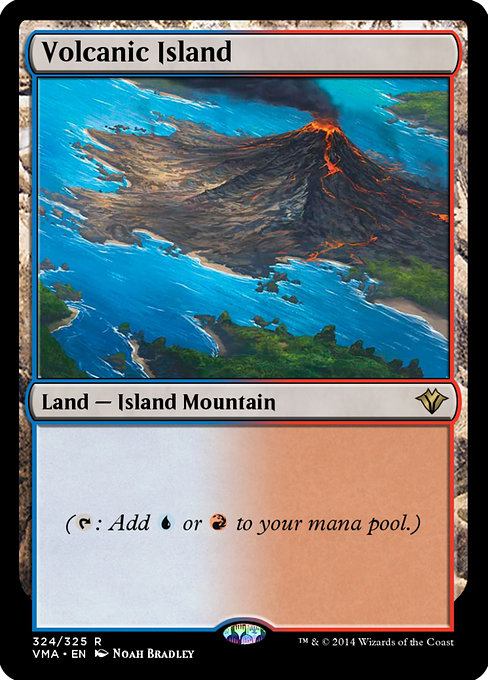
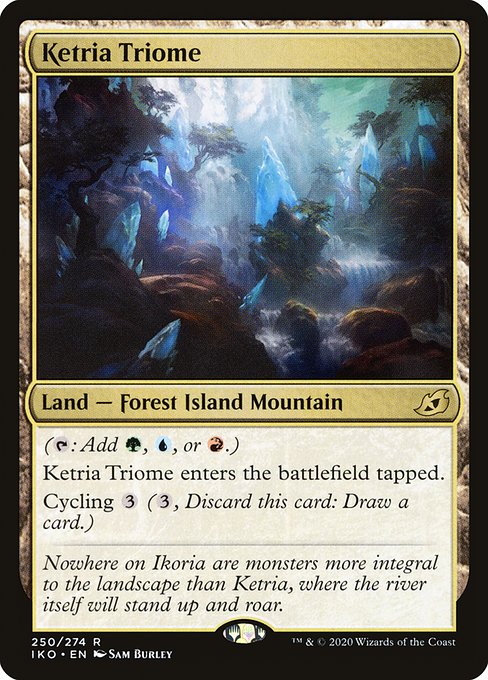
Second, Evolving Wilds and Terramorphic Expanse restrict the player to searching for Basic Lands only. That said, they can be of any type. While Fetch Lands can only search for two different basic land types, the lands themselves do not need to be basic lands. They just need to have the basic land type on their land. This allows Fetch Lands to search for Shock Lands like
Blood Crypt
 Blood Crypt
({T}: Add {B} or {R}.)
Blood Crypt
({T}: Add {B} or {R}.)
As this land enters, you may pay 2 life. If you don't, it enters tapped.
, Dual Lands like
Volcanic Island
 Volcanic Island
({T}: Add {U} or {R}.)
, and Triome Lands like
Ketria Triome
Volcanic Island
({T}: Add {U} or {R}.)
, and Triome Lands like
Ketria Triome
 Ketria Triome
({T}: Add {G}, {U}, or {R}.)
Ketria Triome
({T}: Add {G}, {U}, or {R}.)
This land enters tapped.
Cycling {3} ({3}, Discard this card: Draw a card.)
.
Fetch Lands may appear somewhat limited in their applications, but they can search for any color you like. While the lands do need to produce one of the types that your Fetch Land cares about, you can generally find whatever combination of colors you like thanks to the existence of Triomes, making Fetch Lands the best fixing tools you can possibly gain access to.
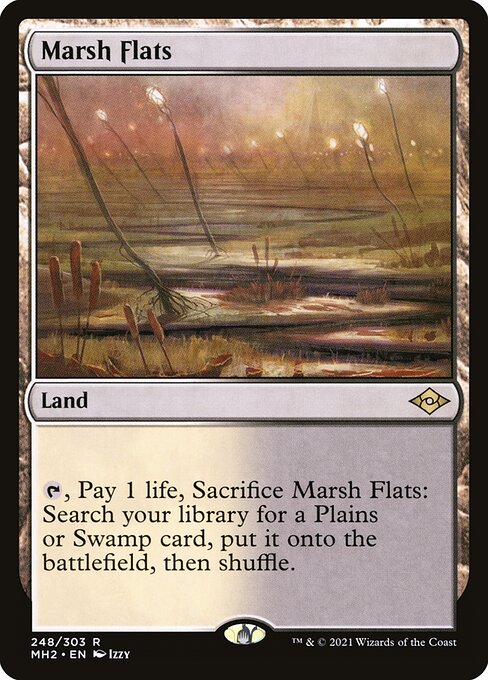
The minor downsides to Fetch Lands are such: you do need to pay one life to use them, which does matter, especially in two-player formats. Otherwise, Fetch Lands are rather expensive. To showcase just how expensive Fetch Lands are, here are the cheapest current TCGplayer market average of each Fetch Land, as well as what color combination they care about:
Marsh Flats
 Marsh Flats
{T}, Pay 1 life, Sacrifice this land: Search your library for a Plains or Swamp card, put it onto the battlefield, then shuffle.
, Orzhov, Enemy, $10.41
Marsh Flats
{T}, Pay 1 life, Sacrifice this land: Search your library for a Plains or Swamp card, put it onto the battlefield, then shuffle.
, Orzhov, Enemy, $10.41
Arid Mesa
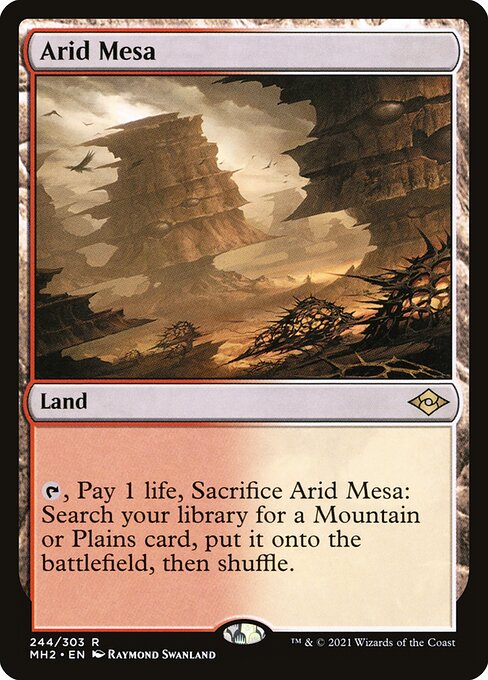 Arid Mesa
{T}, Pay 1 life, Sacrifice this land: Search your library for a Mountain or Plains card, put it onto the battlefield, then shuffle.
, Boros, Enemy, $11.63
Arid Mesa
{T}, Pay 1 life, Sacrifice this land: Search your library for a Mountain or Plains card, put it onto the battlefield, then shuffle.
, Boros, Enemy, $11.63
Verdant Catacombs
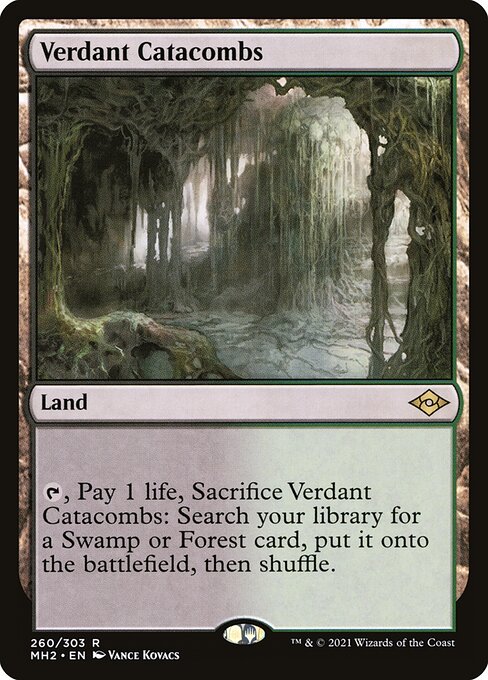 Verdant Catacombs
{T}, Pay 1 life, Sacrifice this land: Search your library for a Swamp or Forest card, put it onto the battlefield, then shuffle.
, Golgari, Enemy, $13.87
Verdant Catacombs
{T}, Pay 1 life, Sacrifice this land: Search your library for a Swamp or Forest card, put it onto the battlefield, then shuffle.
, Golgari, Enemy, $13.87
Misty Rainforest
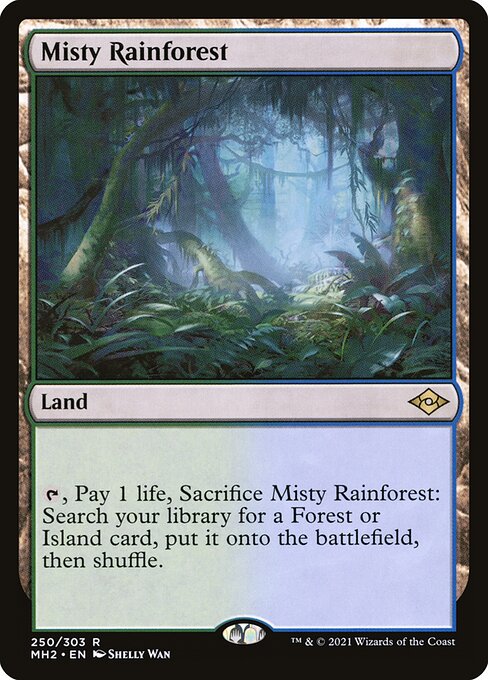 Misty Rainforest
{T}, Pay 1 life, Sacrifice this land: Search your library for a Forest or Island card, put it onto the battlefield, then shuffle.
, Simic, Enemy, $15.92
Misty Rainforest
{T}, Pay 1 life, Sacrifice this land: Search your library for a Forest or Island card, put it onto the battlefield, then shuffle.
, Simic, Enemy, $15.92
Scalding Tarn
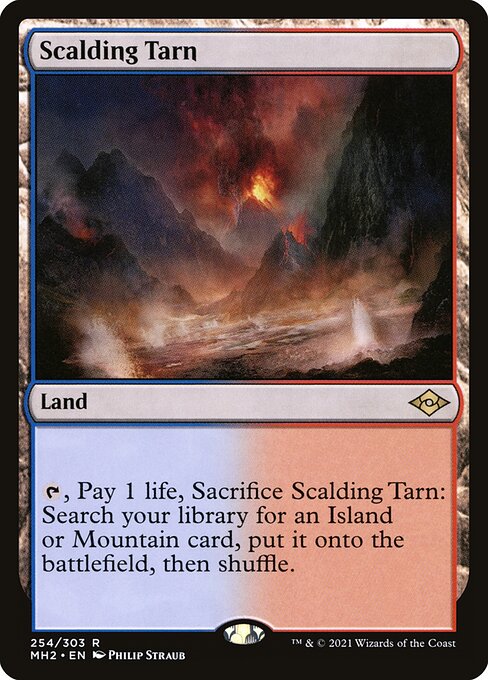 Scalding Tarn
{T}, Pay 1 life, Sacrifice this land: Search your library for an Island or Mountain card, put it onto the battlefield, then shuffle.
, Izzet, Enemy, $17.68
Scalding Tarn
{T}, Pay 1 life, Sacrifice this land: Search your library for an Island or Mountain card, put it onto the battlefield, then shuffle.
, Izzet, Enemy, $17.68
Windswept Heath
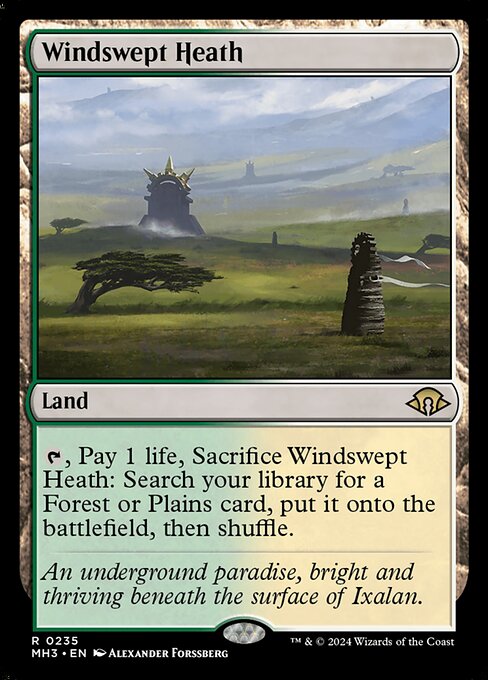 Windswept Heath
{T}, Pay 1 life, Sacrifice this land: Search your library for a Forest or Plains card, put it onto the battlefield, then shuffle.
, Selesnya, Ally, $21.15
Windswept Heath
{T}, Pay 1 life, Sacrifice this land: Search your library for a Forest or Plains card, put it onto the battlefield, then shuffle.
, Selesnya, Ally, $21.15
Flooded Strand
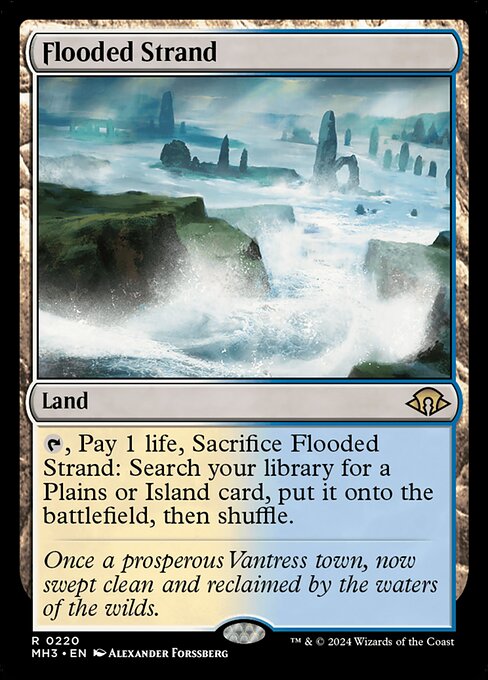 Flooded Strand
{T}, Pay 1 life, Sacrifice this land: Search your library for a Plains or Island card, put it onto the battlefield, then shuffle.
, Azorius, Ally, $28.71
Flooded Strand
{T}, Pay 1 life, Sacrifice this land: Search your library for a Plains or Island card, put it onto the battlefield, then shuffle.
, Azorius, Ally, $28.71
Bloodstained Mire
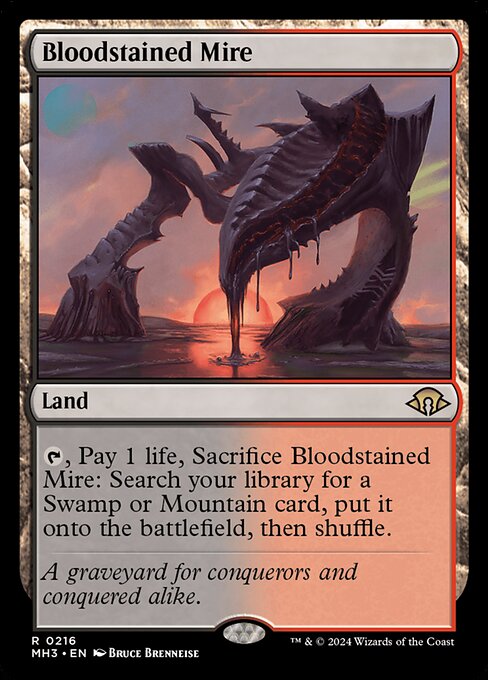 Bloodstained Mire
{T}, Pay 1 life, Sacrifice this land: Search your library for a Swamp or Mountain card, put it onto the battlefield, then shuffle.
, Rakdos, Ally, $29.52
Bloodstained Mire
{T}, Pay 1 life, Sacrifice this land: Search your library for a Swamp or Mountain card, put it onto the battlefield, then shuffle.
, Rakdos, Ally, $29.52
Wooded Foothills
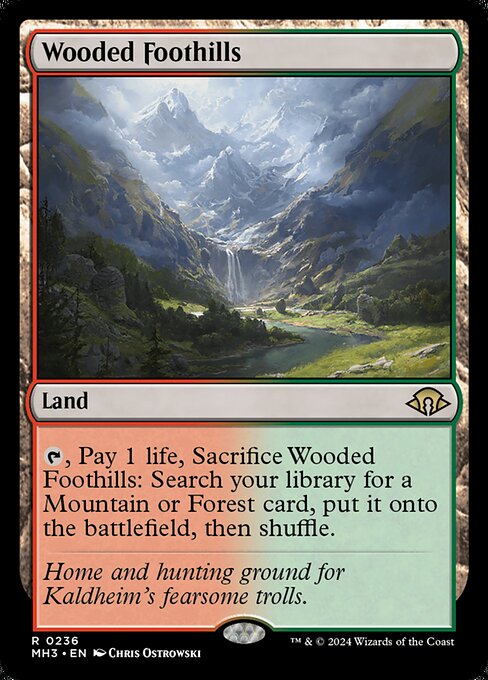 Wooded Foothills
{T}, Pay 1 life, Sacrifice this land: Search your library for a Mountain or Forest card, put it onto the battlefield, then shuffle.
, Gruul, Ally, $29.57
Wooded Foothills
{T}, Pay 1 life, Sacrifice this land: Search your library for a Mountain or Forest card, put it onto the battlefield, then shuffle.
, Gruul, Ally, $29.57
Polluted Delta
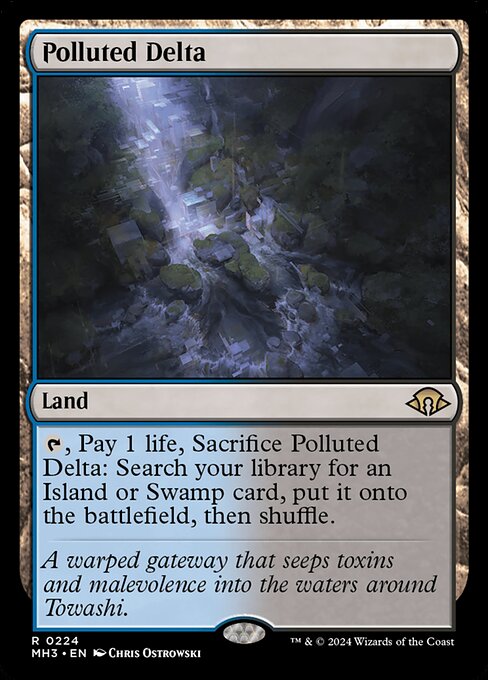 Polluted Delta
{T}, Pay 1 life, Sacrifice this land: Search your library for an Island or Swamp card, put it onto the battlefield, then shuffle.
, Dimir, Ally, $37.04
Polluted Delta
{T}, Pay 1 life, Sacrifice this land: Search your library for an Island or Swamp card, put it onto the battlefield, then shuffle.
, Dimir, Ally, $37.04
Read More: What is Annihilator in MTG?
Tapped Fetch Lands
While the term Fetch Lands typically refers to the cycle of ten cards above, there are other cheaper alternatives that essentially accomplish the same thing. The downside is that these Fetch Lands enter tapped, which delays their use for a turn. That said, you do not lose a life for Fetching.
If you’re running a five-color deck in Commander and need budget options, as long as you have good cards to find, these tapped Fetch Lands could do the trick. Only the allied cycle exist for these. Here are their names:
Flood Plain
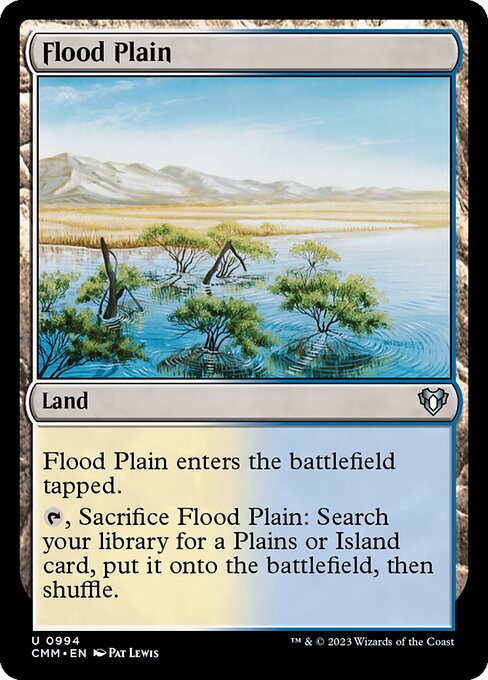 Flood Plain
This land enters tapped.
Flood Plain
This land enters tapped.
{T}, Sacrifice this land: Search your library for a Plains or Island card, put it onto the battlefield, then shuffle.
, Azorius
Bad River
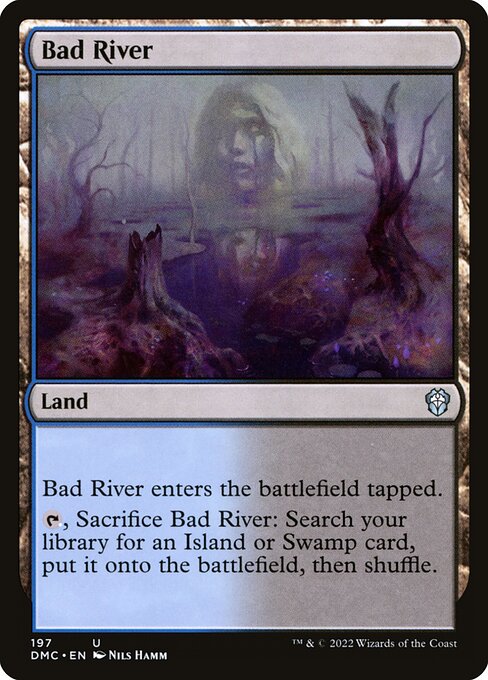 Bad River
This land enters tapped.
Bad River
This land enters tapped.
{T}, Sacrifice this land: Search your library for an Island or Swamp card, put it onto the battlefield, then shuffle.
, Dimir
Rocky Tar Pit
 Rocky Tar Pit
This land enters tapped.
Rocky Tar Pit
This land enters tapped.
{T}, Sacrifice this land: Search your library for a Swamp or Mountain card, put it onto the battlefield, then shuffle.
, Rakdos
Mountain Valley
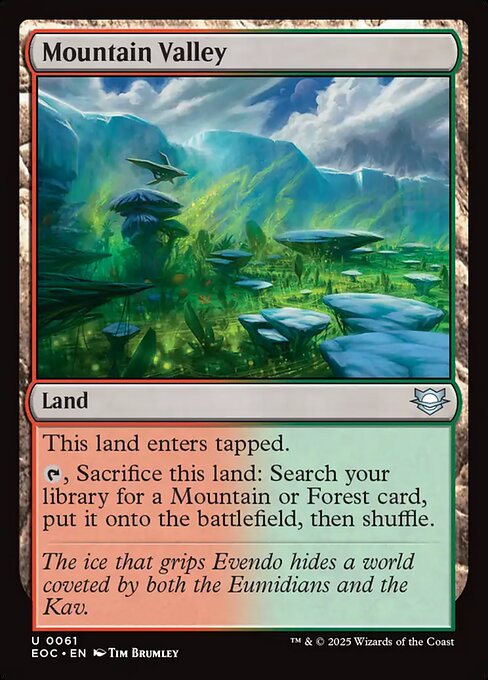 Mountain Valley
This land enters tapped.
Mountain Valley
This land enters tapped.
{T}, Sacrifice this land: Search your library for a Mountain or Forest card, put it onto the battlefield, then shuffle.
, Gruul
Grasslands
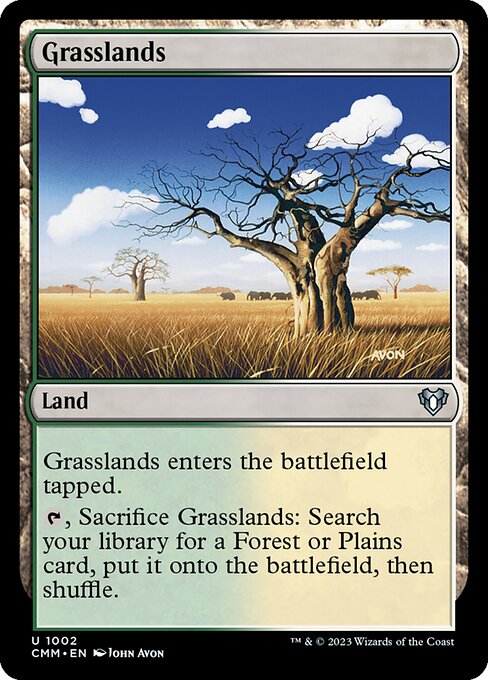 Grasslands
This land enters tapped.
Grasslands
This land enters tapped.
{T}, Sacrifice this land: Search your library for a Forest or Plains card, put it onto the battlefield, then shuffle.
, Selesnya
There’s a Lot More to Fetch Lands Than Just This
These are what Fetch Lands are and how they work, but piloting them properly, especially in two-player formats, is more difficult than expected.
Since you need to employ both the Fetch Lands and lands to search for with them, making Fetch Lands work is very expensive, and requires precisely building your mana base. This is on the smaller side of issues, however.
Blood Moon
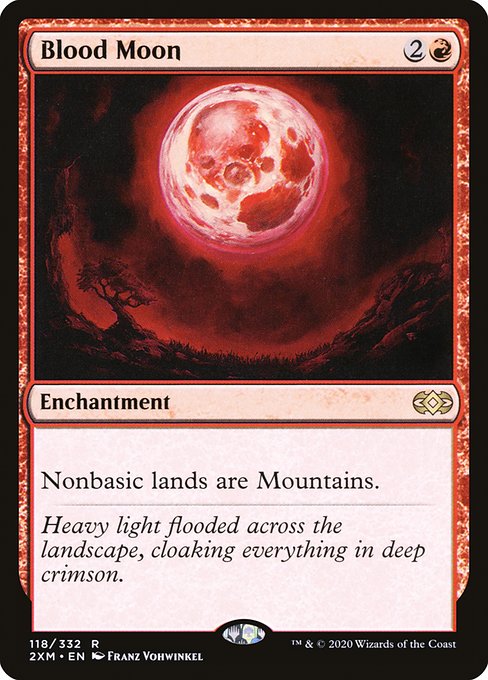 Blood Moon
Nonbasic lands are Mountains.
is a very common effect in formats where Fetch Lands are legal, and not playing around it by finding Basic Lands with your Fetch Lands can end the game on the spot. Otherwise, the ability to shuffle your library with Fetch Lands is incredibly valuable, but there’s a right and wrong time to do this. This makes some cards like
Brainstorm
Blood Moon
Nonbasic lands are Mountains.
is a very common effect in formats where Fetch Lands are legal, and not playing around it by finding Basic Lands with your Fetch Lands can end the game on the spot. Otherwise, the ability to shuffle your library with Fetch Lands is incredibly valuable, but there’s a right and wrong time to do this. This makes some cards like
Brainstorm
 Brainstorm
Draw three cards, then put two cards from your hand on top of your library in any order.
much more powerful, but also adds a level of complexity to playing them properly.
Brainstorm
Draw three cards, then put two cards from your hand on top of your library in any order.
much more powerful, but also adds a level of complexity to playing them properly.
Otherwise, you need to watch out for
Pithing Needle
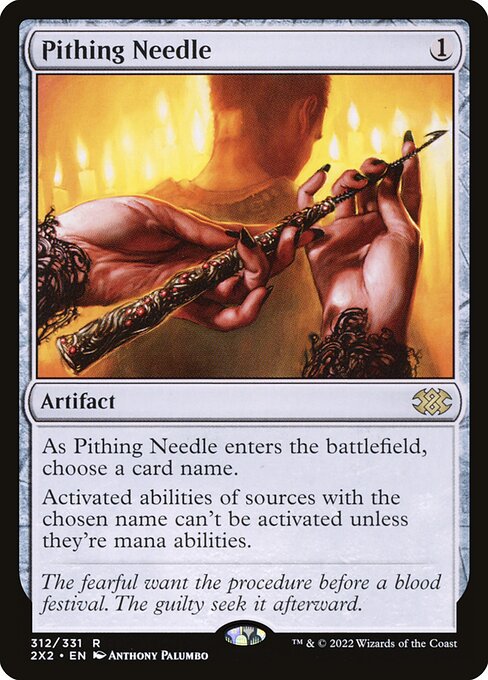 Pithing Needle
As this artifact enters, choose a card name.
Pithing Needle
As this artifact enters, choose a card name.
Activated abilities of sources with the chosen name can't be activated unless they're mana abilities.
effects that can name your Fetch Lands. Unlike most lands, these lands do not offer effects that make mana, so they can get shut off. If you include too many of the same Fetch Land in your deck and your opponent decides to Pithing Needle it, you could be in for a rough game. Alternatively, make sure to consider cracking your fetches in response to an
Urza’s Saga
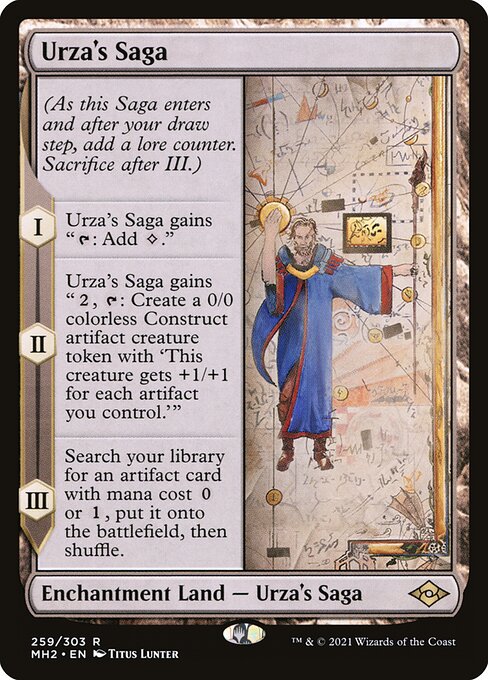 Urza’s Saga
(As this Saga enters and after your draw step, add a lore counter. Sacrifice after III.)
Urza’s Saga
(As this Saga enters and after your draw step, add a lore counter. Sacrifice after III.)
I — This Saga gains "{T}: Add {C}."
II — This Saga gains "{2}, {T}: Create a 0/0 colorless Construct artifact creature token with 'This token gets +1/+1 for each artifact you control.'"
III — Search your library for an artifact card with mana cost {0} or {1}, put it onto the battlefield, then shuffle.
search trigger or a Pithing Needle cast in case your land gets named.
Either way, this should give a quick introduction into what Fetch Lands are, so you’ll know what players are talking about when they throw this term around.
Read More: MTG Ravnica Remastered: Release Date, Details, Spoilers, More