



Though Magic: The Gathering has undoubtedly seen a ton of power creep over its 33-year lifespan, some of its most powerful cards came right at the start. Way back in 1993’s Alpha, the Power Nine dominated the game’s primitive competitive scene, and they remain the most broken, and expensive, cards in Magic today.
While the Reserved List prevents a full return for these iconic MTG bangers, you can enjoy two of them in the command zone with the help of Loot, the Pathfinder.
Loot, the Pathfinder MTG
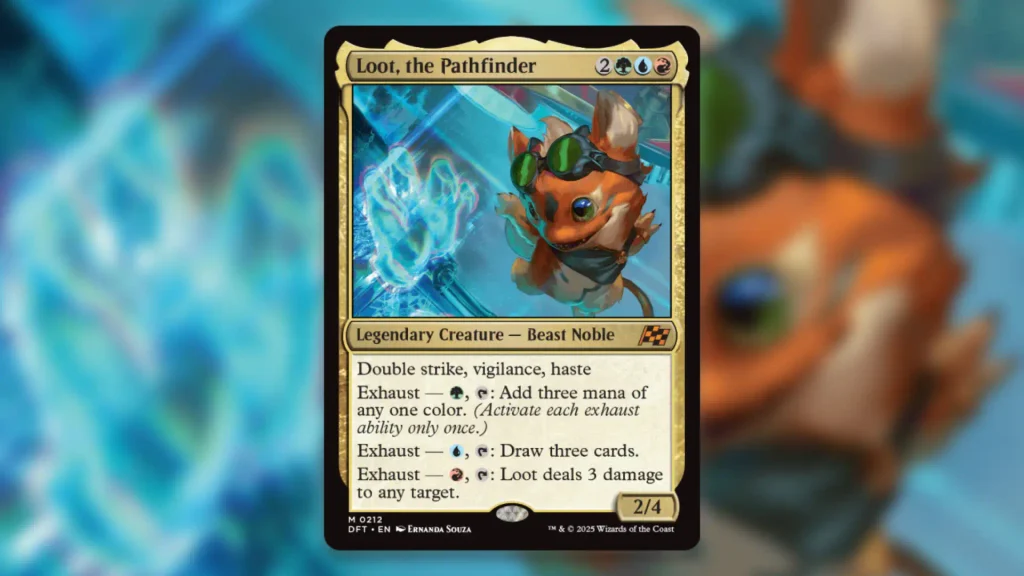
While it’s a little pricey at five mana, Loot more than earns its keep once it hits play. Like an early draft of the Prepared mechanic, it essentially comes with three attached spells you can cast: Black Lotus, Ancestral Recall, and Lightning Bolt Lightning BoltLightning Bolt deals 3 damage to any target.. Together, these give you a ton of power and flexibility, letting you respond to board threats or power out your own.
Though you can only use each of Loot’s abilities once by default, there are plenty of ways to get around that restriction. Blinking Loot with cards like Displacer Kitten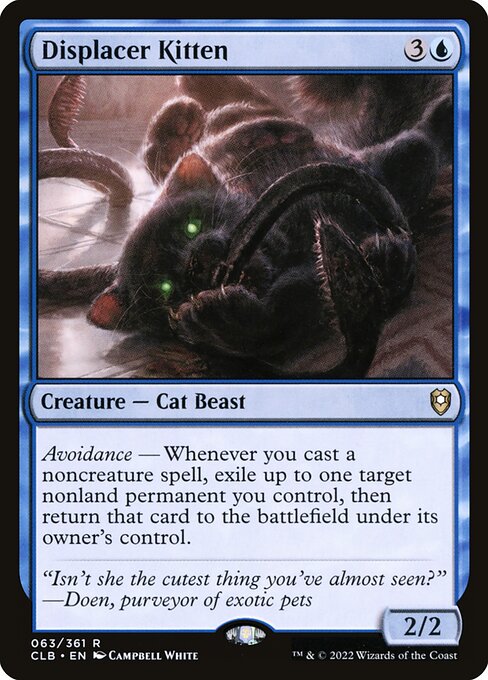 Displacer KittenAvoidance — Whenever you cast a noncreature spell, exile up to one target nonland permanent you control, then return that card to the battlefield under its owner's control. and Conjurer’s Closet is probably the best option, as it resets all three abilities each time. You can also bring in Marvin, Murderous Mimic or Elvish Refueler for extra redundancy, and Illusionist’s Bracers to double down on your activations.
Once you’ve got a solid support base for Loot’s abilities, you can win the game pretty much however you see fit. A particularly strong option is to lean harder into the Blink side of things, since you’ll want to be doing that for Loot’s abilities anyway. Running creatures that net value on entry, like Eternal Witness and Peregrine Drake, will give you more options if Loot is removed. You’ll also want to include more blink engines, like Thassa, Deep-Dwelling and Lilysplash Mentor, to better facilitate all of these shenanigans.
Alternatively, you can run a more traditional Midrange plan, using Loot as a flexible value piece rather than a focus. You can essentially treat Loot as a “Temur Good Stuff” deck when built this way, competing on board in the mid game before bridging into a big bomb like Etali, Primal Conqueror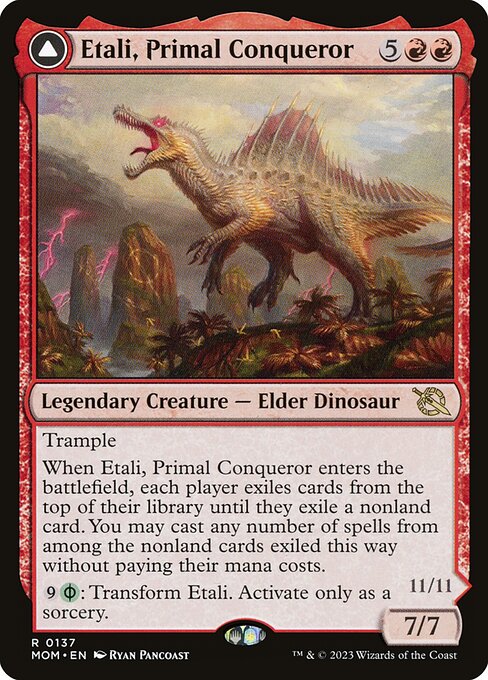 Etali, Primal ConquerorTrample
When Etali enters, each player exiles cards from the top of their library until they exile a nonland card. You may cast any number of spells from among the nonland cards exiled this way without paying their mana costs.
{9}{G/P}: Transform Etali. Activate only as a sorcery. or Hullbreaker Horror to close things out.
With all the fancy abilities flying around, it’s easy to overlook that Loot also has a solid suite of keywords. Double Strike, Vigilance, and Haste make a hell of a combo on a five-drop, so you can easily pursue a Voltron win. With Excalibur, Sword of Eden alone, Loot can wipe players out via Commander damage in a single swing. You can even use its Lightning BoltLightning BoltLightning Bolt deals 3 damage to any target. ability to clear out blockers.
Navigating the Endgame
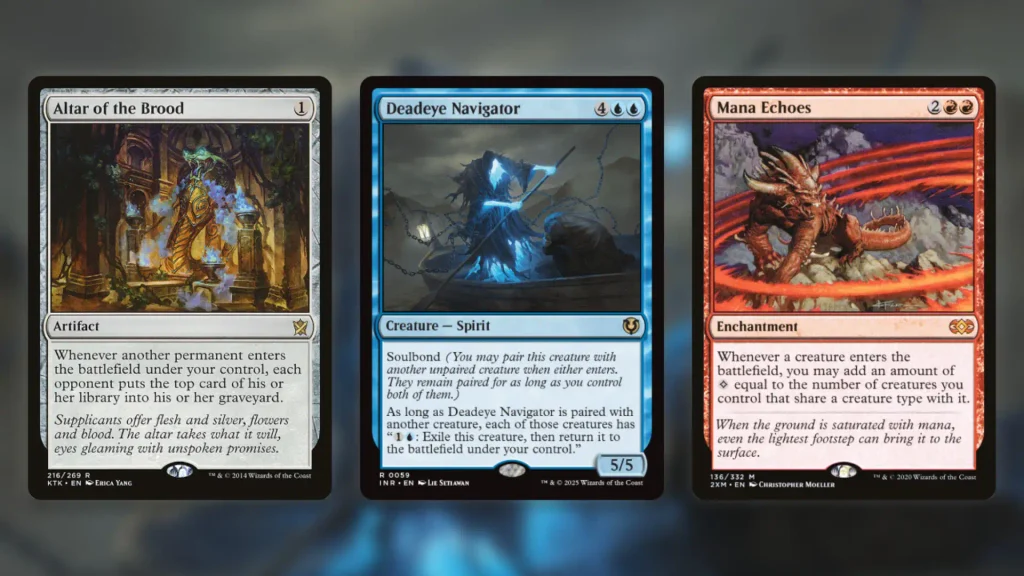
If you want to take Loot to the next level, an easy infinite combo with Deadeye Navigator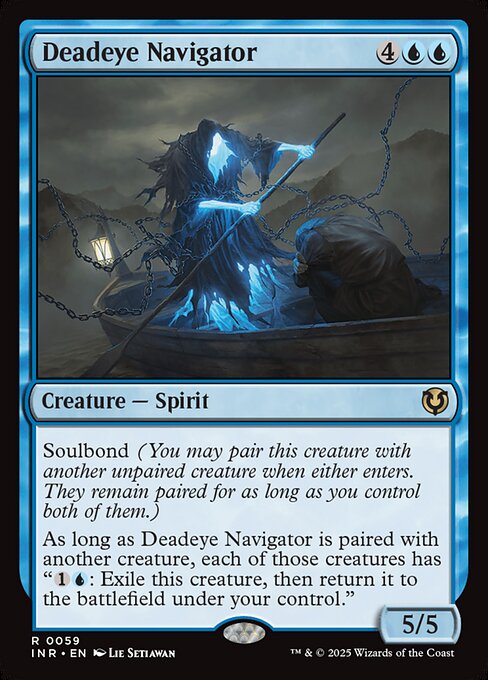 Deadeye NavigatorSoulbond (You may pair this creature with another unpaired creature when either enters. They remain paired for as long as you control both of them.)
As long as Deadeye Navigator is paired with another creature, each of those creatures has "{1}{U}: Exile this creature, then return it to the battlefield under your control." will help you do just that. With both creatures in play, and Loot paired with Navigator, you can pay 1U to blink Loot, then re-pair it. This will reset its abilities, letting you spend G to make UUU and continue the loop, alternating between producing GGG and UUU each time, provided you had access to UG initially.
By itself, this combo nets you infinite enters-and-leaves triggers, but it won’t actually win you the game. Add in a card like Altar of the Brood or Impact Tremors, however, and you’ll win on the spot. Alternatively, you can add Mana Echoes to generate infinite colorless mana, opening up wins with cards like Walking Ballista or Comet Storm.
A Being of Pure Potential

Loot’s biggest strength as a Commander is definitely its versatility. On its own, it’s a solid threat that gives you a handful of powerful spells to cast, letting you pursue any game plan you’d like.
Despite this nigh-endless potential, Loot, the Pathfinder isn’t as widely played in MTG Commander as you’d expect. According to EDHREC data, in fact, just 6,370 players run it in the command zone, which feels low given the card’s power level. Bizarrely, it sees even less play in the 99, appearing in only 5,800 decks despite being one of the best generic threats the Temur color combination has to offer.
Loot’s lack of popularity could be down to any number of factors, and may even have something to do with the poor reputation of the character itself outside of this card. Whatever the reason, Loot’s lack of play also means that it’s a very affordable card to pick up, which is great for those on a budget.
On TCGplayer right now you can nab near-mint base copies of Loot for just $0.31, which feels like an absolute steal. If you’re feeling fancier, the First-Place Foil and Japan Showcase versions are available for just $5 and $15, respectively, which is very low given their rarity. At these prices, Loot is an easy card to pick up, and a great Commander build-around that balances freedom and power better than most.
Stick with us here at dev.mtgrocks.com: the best site for Magic: The Gathering coverage. Be sure to check out our deckbuilder for your next big brew, and our brand new MTG Rocks Podcast!