


MTG Star Trek Prerelease is just a few days away, giving players their first chance to play with the set’s new cards. With prizes on the line, some MTG players will be studying up to gain an edge over their opponents.
Luckily for you, we’re here to help you do just that.
Thanks to Wizards of the Coast, I was invited to the Star Trek Early Access Event on MTG Arena, where I got to play Star Trek Sealed and Draft early. After getting a bunch of games in, here are some tips and tricks to win your MTG Star Trek prerelease.
Some Strange New Worlds
Universes Beyond Limited formats have an extremely negative reputation for being unbalanced. Spider-Man and The Hobbit were two of the worst Limited formats in MTG history, and TMNT, while better, wasn’t fantastic, either.
Thankfully, MTG Star Trek felt pretty good in Early Access, with multiple strategies showing promise. Orzhov Borg, for example, is a good route to take in Limited if you want to build an aggressive deck.
I will say, however, that Star Trek’s Strange New Worlds payoffs do feel better than everything else in the set so far. Thanks to the number of dual lands in the set, reducing the cost of your Strange New Worlds payoffs, especially in three-color decks, is generally easier than you might think.
This means that Sealed Star Trek, in particular, feels similar to Reality Fracture. Aggressive decks need a lot of specific cards to work, and Strange New Worlds essentially rewards you for going into five-color soup.
In other words, you’re playing for the long haul in Star Trek Sealed, but Draft does seem to have some buildable aggressive decks. These were few and far between, however, with most of the stronger decks being Strange New Worlds builds.
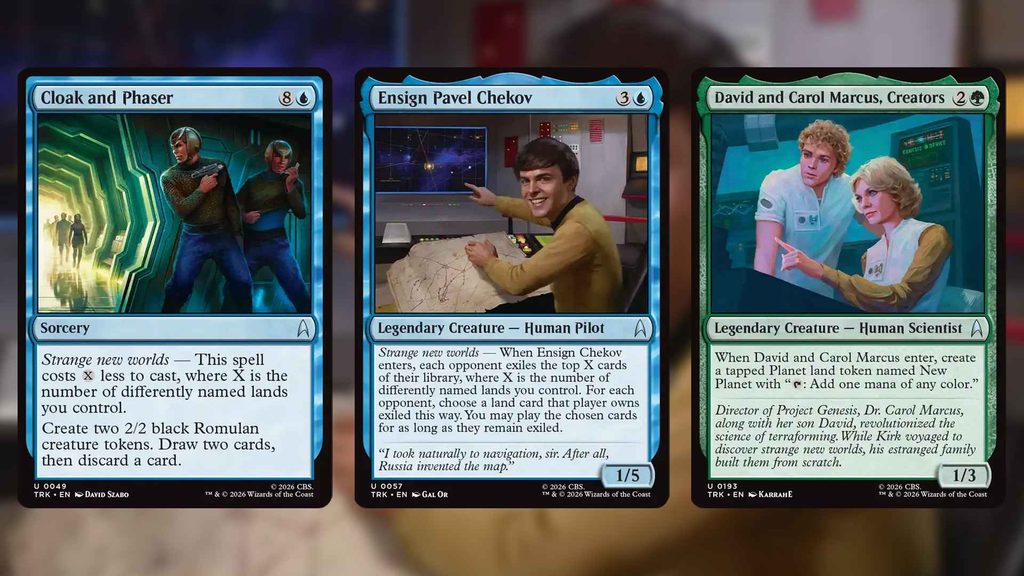
With that in mind, cards like Cloak and Phaser or Suus Mahna Practitioner felt stronger in Star Trek Sealed than they looked. Even Astute Terraformer was a two-mana 4/4 in most mid to late games, making it a decent two-drop if you can enable it.
Ensign Pavel Chekov, however, was an absolute gamebreaker in the games I played. Later on, it’s not impossible for this card to mill your opponent for 6-10 cards, making decking out a real possibility. Since Chekov’s ability is an enters effect, you can beam him up with cards like Open Communications in the late game, often milling your opponent out.
This means you’ll also want to go out of your way to run cards like David and Carol Marcus, Creators or Genesis Effect that can diversify your lands further. Really, anything that can efficiently make a New Planet is worth playing, fixing your mana and developing your Strange New Worlds count.
If you’re running a fair few Strange New Worlds cards, I’d play as many dual lands in your pool as possible. Even if one color is missing from your deck, these games go late enough that tap lands typically will not punish you. Of course, if you do face an aggressive deck, you could hold on to a few basic lands for the sideboard.
Pay Attention to Dilemmas
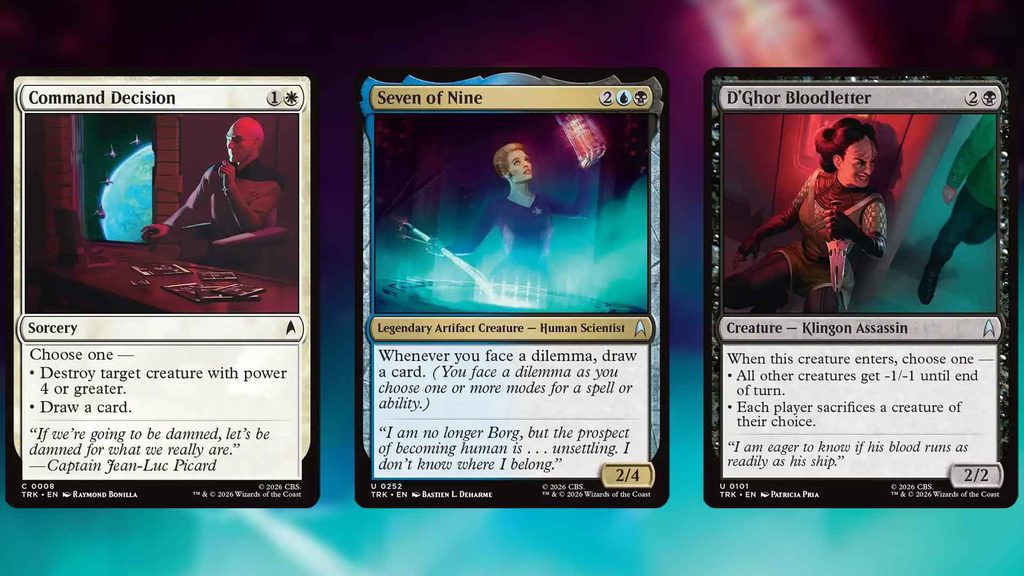
If you have the support, the MTG Dilemma payoffs in Star Trek are pretty strong. Really, any of the nine Dilemma payoffs is worth running if you have the cards to trigger them, but Obsidian Order Operative is definitely a step behind the rest.
This is mostly because a lot of the Star Trek cards that trigger Dilemma are quite strong, often being stuff you’d want to play anyway. Command Decision, Resistance Is Futile, and D’Ghor Bloodletter are cards that you’d want to run no matter what, even if you don’t have Dilemma payoffs.
A fair few other Dilemma cards, like Rogue Artificial Intelligence, Constable Odo, and Set Phasers to . . . are decent inclusions that just get better with Dilemma payoffs. While these don’t seem quite as good as Strange New Worlds, they’re a close second.
I’d Try the Big Bombs
Unless I faced down an aggressive Mythic like Captain James T. Kirk Captain James T. KirkWhenever Captain Kirk enters or attacks, choose one. If you have no cards in hand, choose one or more instead.
• Discard a card, then draw a card.
• Create a 1/1 red Officer creature token.
• Creatures you control get +1/+0 until end of turn., all the MTG Star Trek sealed games I played went really late. Because of that, as long as you have the resources to go late, I’d play the big bombs you open in your Sealed kits.
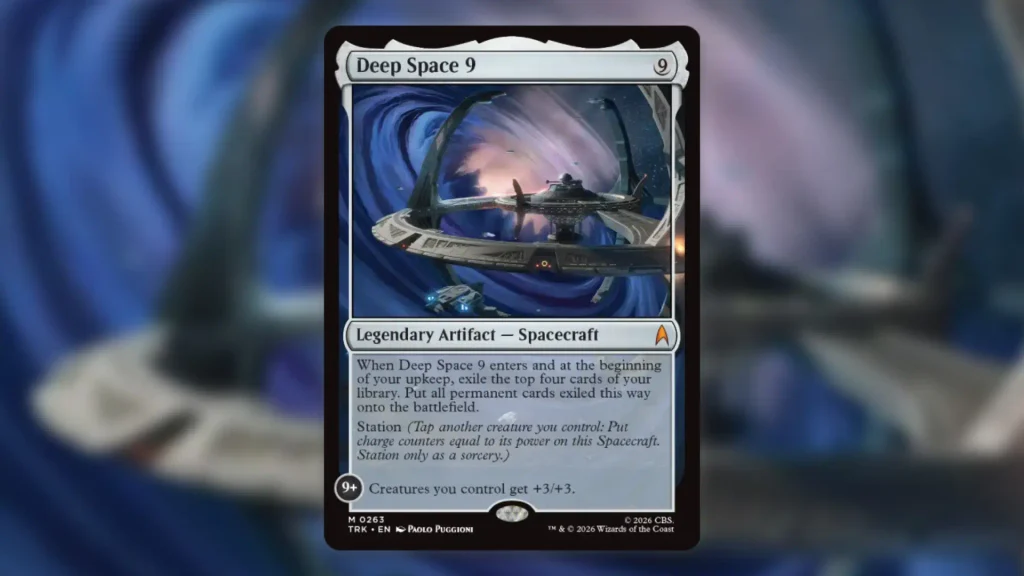
Deep Space 9 Deep Space 9When Deep Space 9 enters and at the beginning of your upkeep, exile the top four cards of your library. Put all permanent cards exiled this way onto the battlefield.
Station (Tap another creature you control: Put charge counters equal to its power on this Spacecraft. Station only as a sorcery.)
9+ | Creatures you control get +3/+3. is an example of a card that’s so expensive that playing it becomes kind of dubious, but if you get it out, you probably win. Deep Space 9 entered play multiple times during my games, and otherwise got hit by hand disruption.
So, if you open Star Trek’s biggest mana value cards, like Deep Space 9Deep Space 9When Deep Space 9 enters and at the beginning of your upkeep, exile the top four cards of your library. Put all permanent cards exiled this way onto the battlefield.
Station (Tap another creature you control: Put charge counters equal to its power on this Spacecraft. Station only as a sorcery.)
9+ | Creatures you control get +3/+3., Branching Timeline, or Crystalline Entity Crystalline EntityFlying
When this creature enters, if you cast it, destroy all nonartifact creatures., I would run them. That said, Live Long and Prosper is one I’m unsure about, since you generally won’t have a huge hand when casting it.
Think About Flying and Artifacts
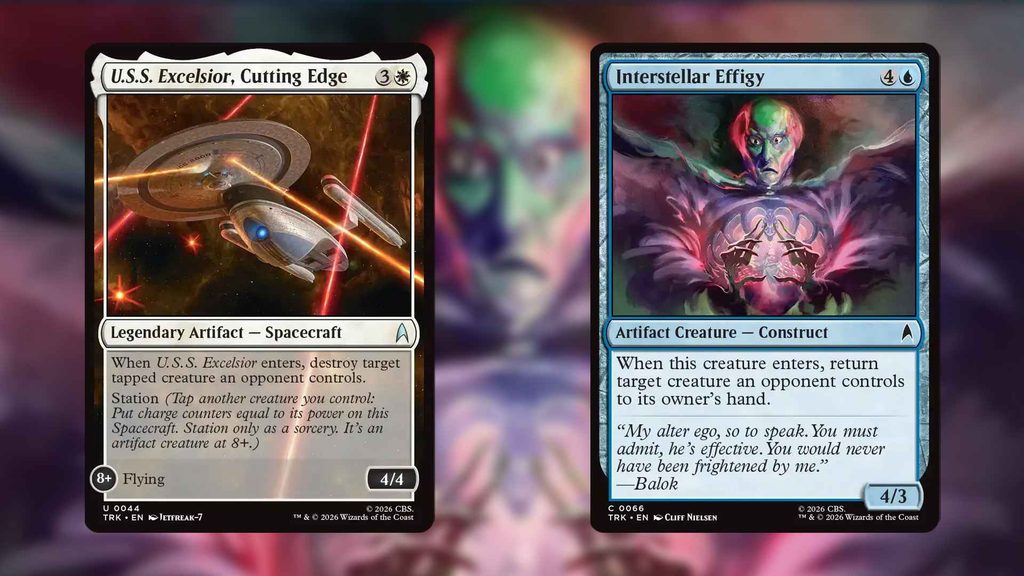
There are a lot of Spacecraft in this set, which means that Flying is going to be quite prevalent in MTG Star Trek. The format seems slow enough that Stationing Spacecraft is a consistent strategy, so they perform a bit better than you might think at first glance.
With this in mind, Reach creatures likely perform a bit better than average in MTG Star Trek Sealed. Mugato and The Traveler, in particular, always seemed to perform well when they entered play.
Similarly, artifacts are all over the place in MTG Star Trek. Between Spacecraft being artifacts and there being an entire archetype dedicated to artifact creatures, artifact removal also performs better than it looks.
While I wouldn’t play specific colors for these cards, this makes cards like Perils of the Past and Kirk, Commanding Officer stronger than they look at first glance. Eject the Warp Core felt fantastic throughout, too, considering that you’ll generally have an extra artifact lying around. Even Dathon and Picard at El-Adrel could be ok depending on the matchup, but I’m a bit less excited about this card.
Limited Actually Feels Pretty Good
It may not be what Star Trek haters want to hear, but this Limited format actually feels like it might be an all-timer. I do worry that Strange New Worlds cards may be an issue, but slower, five-color formats like this one tend to go over well with the player base.
So, if you’re going to Star Trek Prerelease this weekend, be prepared to play your games quickly. A Strange New Worlds mirror may end up taking you to time otherwise, which isn’t fun for anyone.
If you’re in a slower deck, you’ll notably want to splash for removal. 7-8 removal spells were the recommended number for Reality Fracture when you had them, and if Star Trek is as slow as I expect, your goal will likely be the same.
That said, do remember to look for synergies before just going for a five-color plan. Getting the right Borg or 8-power mechanic cards could get you an explosive aggro deck to rush people down, after all.
It may not be everyone’s cup of tea, but MTG Star Trek Limited feels good. This should be quite a fun format to watch for the MTG World Championships coming up soon.
Stick with us here at dev.mtgrocks.com: the best site for Magic: The Gathering coverage. Be sure to check out our deckbuilder for your next big brew, and our brand new MTG Rocks Podcast!