
Since the recent banning of
Fury
 Fury
Double strike
Fury
Double strike
When this creature enters, it deals 4 damage divided as you choose among any number of target creatures and/or planeswalkers.
Evoke—Exile a red card from your hand.
and
Up the Beanstalk
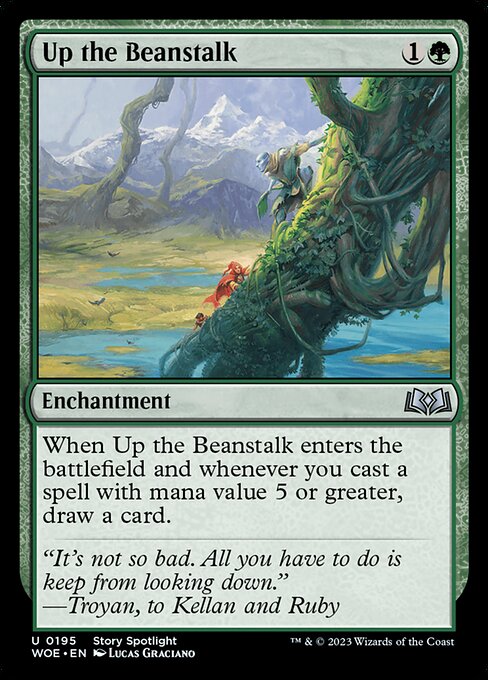 Up the Beanstalk
When this enchantment enters and whenever you cast a spell with mana value 5 or greater, draw a card.
in Modern, the expectation was that the metagame would see a reasonable shift from where it was. After all, Rakdos Scam was such a huge portion of the metagame. With Fury banned, it would make sense for other decks, including some Creature-based decks that were kept in check by the powerful Elemental, to rise up once more. In reality, though, this hasn’t really been the case.
Up the Beanstalk
When this enchantment enters and whenever you cast a spell with mana value 5 or greater, draw a card.
in Modern, the expectation was that the metagame would see a reasonable shift from where it was. After all, Rakdos Scam was such a huge portion of the metagame. With Fury banned, it would make sense for other decks, including some Creature-based decks that were kept in check by the powerful Elemental, to rise up once more. In reality, though, this hasn’t really been the case.
While Fury is now banned, that hasn’t stopped Rakdos Scam players from adapting. In fact, Rakdos Scam won a recent 702-player event, showcasing the power of
Grief
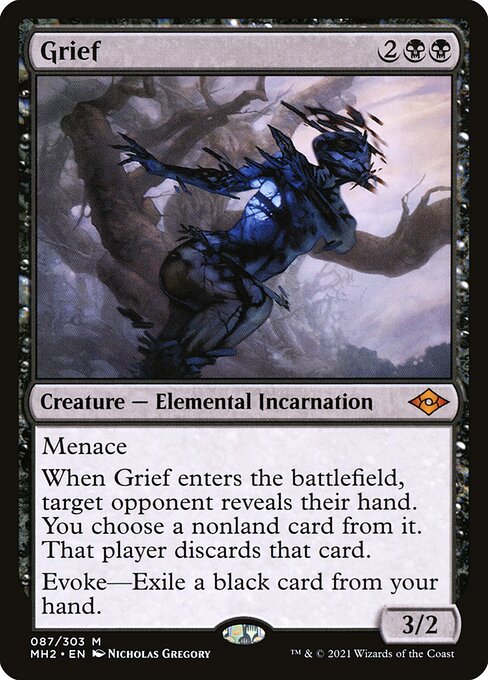 Grief
Menace
Grief
Menace
When this creature enters, target opponent reveals their hand. You choose a nonland card from it. That player discards that card.
Evoke—Exile a black card from your hand.
alongside
Not Dead After All
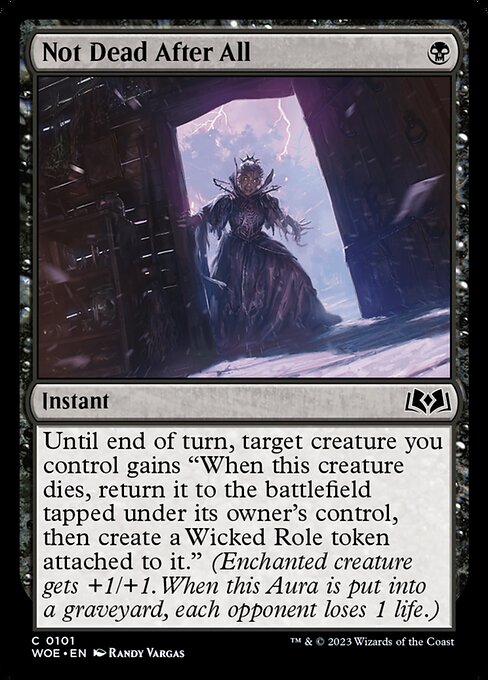 Not Dead After All
Until end of turn, target creature you control gains "When this creature dies, return it to the battlefield tapped under its owner's control, then create a Wicked Role token attached to it." (Enchanted creature gets +1/+1. When this token is put into a graveyard, each opponent loses 1 life.)
that still exists in the format. Despite the banning of Up the Beanstalk, multi-color
Leyline Binding
Not Dead After All
Until end of turn, target creature you control gains "When this creature dies, return it to the battlefield tapped under its owner's control, then create a Wicked Role token attached to it." (Enchanted creature gets +1/+1. When this token is put into a graveyard, each opponent loses 1 life.)
that still exists in the format. Despite the banning of Up the Beanstalk, multi-color
Leyline Binding
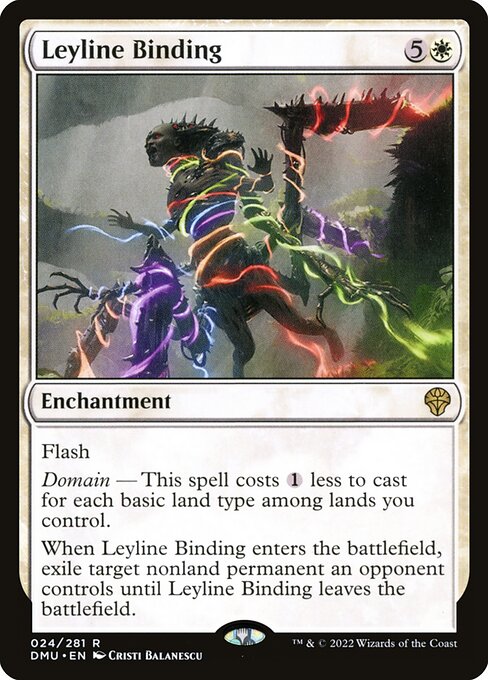 Leyline Binding
Flash
Leyline Binding
Flash
Domain — This spell costs {1} less to cast for each basic land type among lands you control.
When this enchantment enters, exile target nonland permanent an opponent controls until this enchantment leaves the battlefield.
decks are still pretty popular.
In most cases, players have simply moved back to the four-color Omnath, Locus of Creation lists utilizing
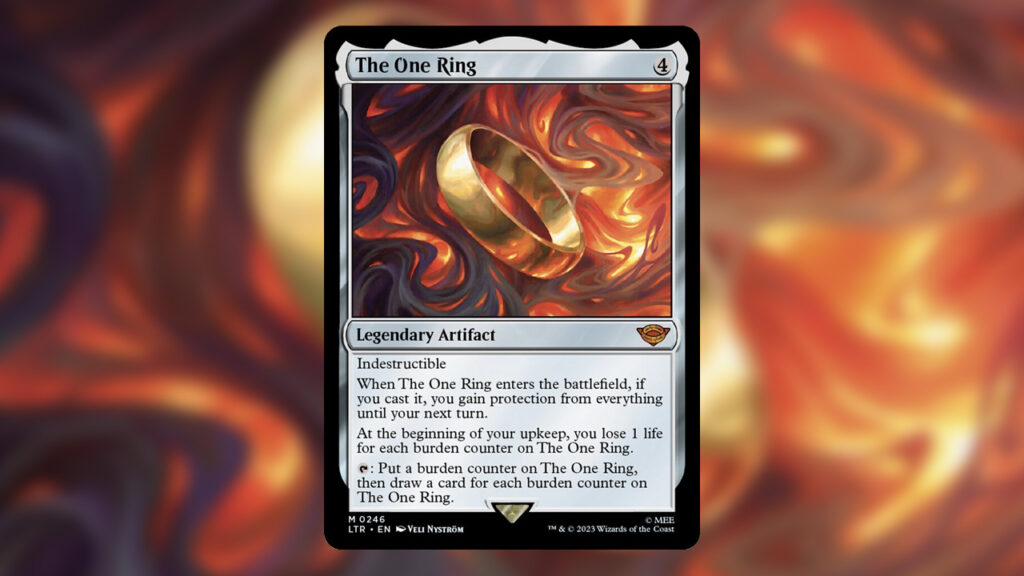
The One Ring
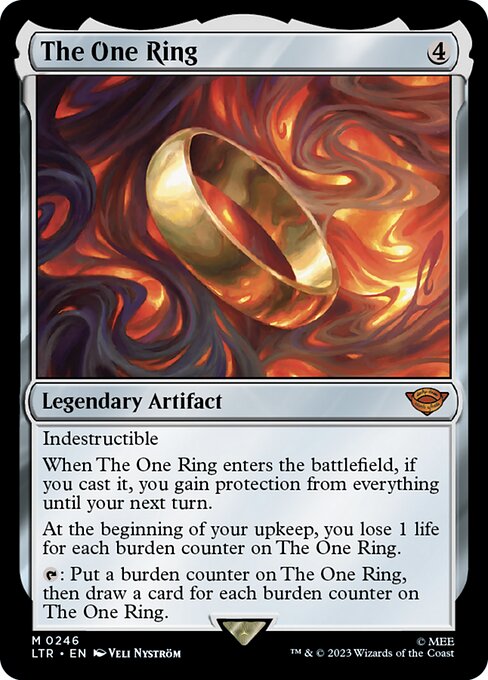 The One Ring
Indestructible
The One Ring
Indestructible
When The One Ring enters, if you cast it, you gain protection from everything until your next turn.
At the beginning of your upkeep, you lose 1 life for each burden counter on The One Ring.
{T}: Put a burden counter on The One Ring, then draw a card for each burden counter on The One Ring.
for card advantage with the goal of winning grindy games. Interestingly, though, a unique four-color variant has popped up that has added the underused
Felidar Guardian
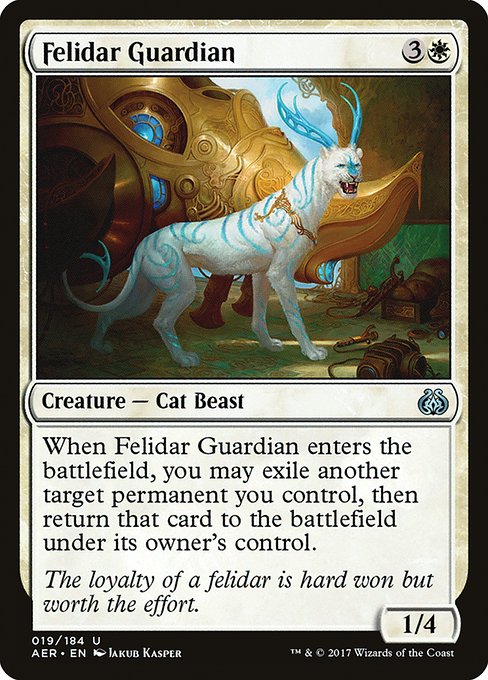 Felidar Guardian
When this creature enters, you may exile another target permanent you control, then return that card to the battlefield under its owner's control.
combo to the mix. Overperforming in a recent Magic Online Modern Challenge and Preliminary event, this is an intriguing spin on a popular archetype that has a lot going for it.
Felidar Guardian
When this creature enters, you may exile another target permanent you control, then return that card to the battlefield under its owner's control.
combo to the mix. Overperforming in a recent Magic Online Modern Challenge and Preliminary event, this is an intriguing spin on a popular archetype that has a lot going for it.
The Combo
Before we get into the archetype’s powerful supporting cast, it’s important to understand how the Felidar Guardian combo works. This combo requires two pieces: Felidar Guardian and Saheeli Rai, and it functions quite similarly to the Deceiver Exarch and
Splinter Twin
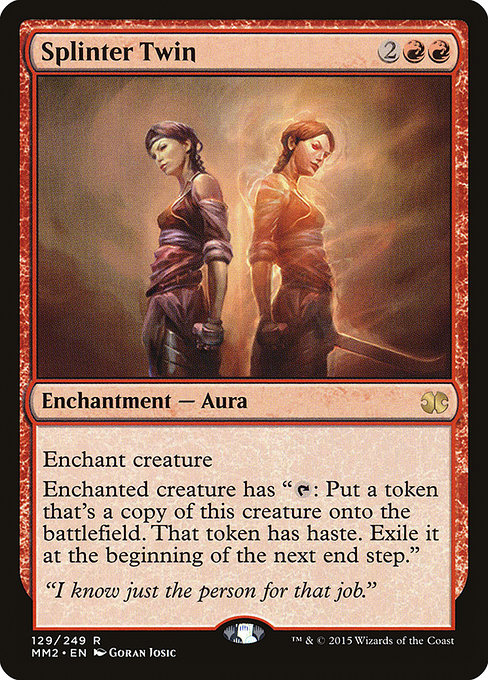 Splinter Twin
Enchant creature
Splinter Twin
Enchant creature
Enchanted creature has "{T}: Create a token that's a copy of this creature, except it has haste. Exile that token at the beginning of the next end step."
combo. The goal is to create infinite Hasty copies of Felidar Guardian.
Once you have both Saheeli and Felidar Guardian in play, the combo is rather trivial. As long as Saheeli has three or more Loyalty counters on it, you can use the -2 ability to create a token copy of Felidar Guardian. When this token enters the battlefield, you can blink Saheeli, resetting its Loyalty counters. Then you just use the -2 ability on Felidar Guardian again, repeating this process until you can attack your opponent for the win.
What’s nice about this combo is that, unlike with the Splinter Twin combo, the Creature in this case can be affected by Summoning Sickness. It’s quite common for this deck to get to six mana and cast both combo pieces in one turn. With access to a playset of
Wrenn and Six
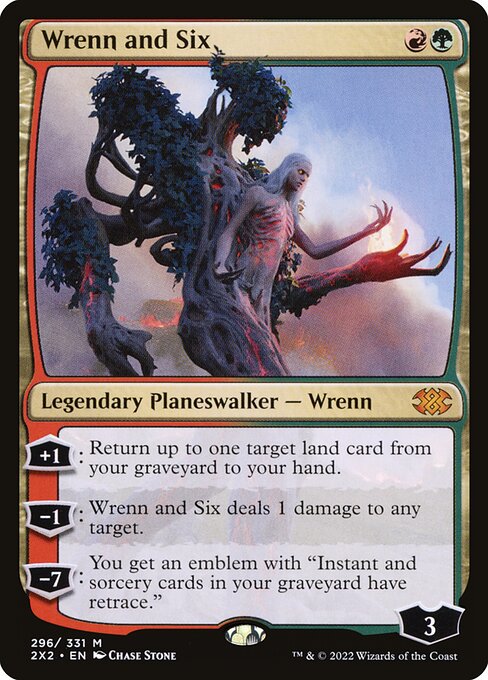 Wrenn and Six
+1: Return up to one target land card from your graveyard to your hand.
Wrenn and Six
+1: Return up to one target land card from your graveyard to your hand.
−1: Wrenn and Six deals 1 damage to any target.
−7: You get an emblem with "Instant and sorcery cards in your graveyard have retrace." (You may cast instant and sorcery cards from your graveyard by discarding a land card in addition to paying their other costs.)
, continuing to hit your Land drops is rarely an issue. Felidar Guardian can blink any permanent, including a Land, which allows you to cast Felidar Guardian and Saheeli off of only six mana.
Read More: Win Using Doctor Typal With This Gallifrey Stands Commander Guide!
Traditional Four-Color Suspects
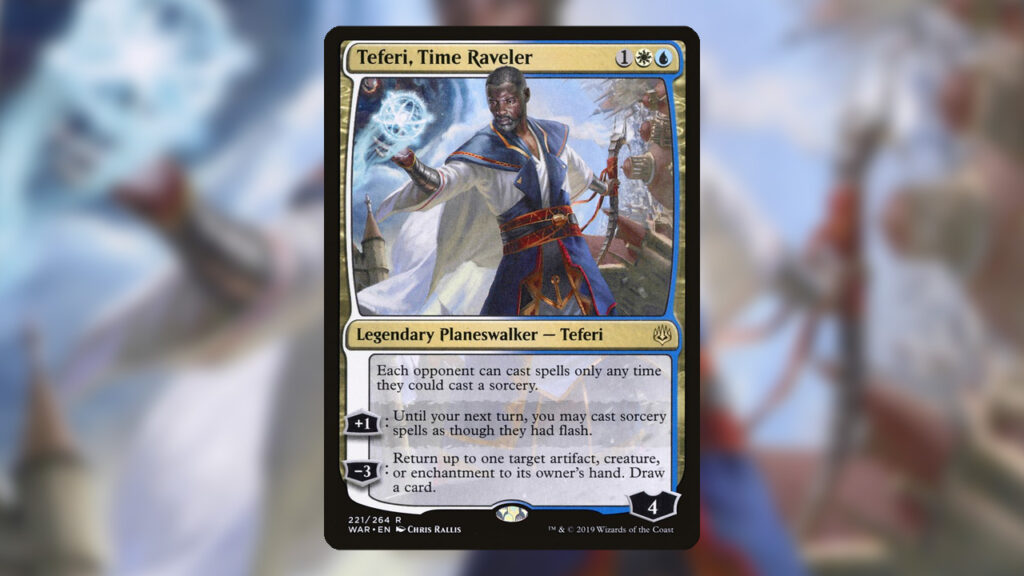
From there, this archetype uses a ton of the typical four-color options.
Delighted Halfling
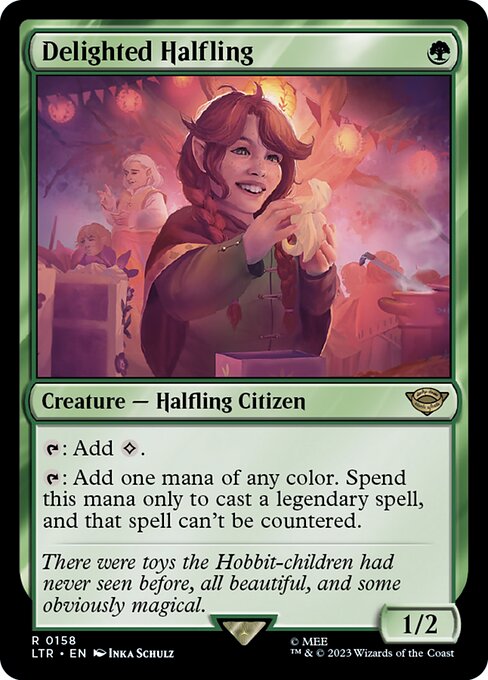 Delighted Halfling
{T}: Add {C}.
Delighted Halfling
{T}: Add {C}.
{T}: Add one mana of any color. Spend this mana only to cast a legendary spell, and that spell can't be countered.
is an extremely powerful one-drop that can make all of your Planeswalkers as well as The One Ring unable to be countered. Getting to curve Delighted Halfling into Teferi, Time Raveler is incredibly strong. Not to mention, Teferi is extra good in this deck, as it helps ensure that your combo cannot be disrupted by Instant-speed removal.
Additionally, Felidar Guardian naturally plays well with Teferi and The One Ring. Felidar Guardian’s ability to reset the Loyalty counters on Planeswalkers you control means that you can use Teferi’s -3 ability aggressively, with the intention of blinking Teferi and using the -3 ability again. In the case of The One Ring, you can afford to draw cards proactively, knowing that you can blink it and it will come back to play with the burden counters removed. Between Felidar Guardian, Teferi, and Omnath, Locus of Creation, the life loss associated with The One Ring is much less concerning. Finally, Leyline Binding and [tooltips]Solitude are great pieces of interaction that can help keep you alive. Solitude can also act as a win condition in its own right. Getting to trigger Solitude multiple times with Felidar Guardian or Saheeli’s -2 ability really helps keep Creature decks in check.
Read More: MTG Manga Series Announces New Reprint Never Before Seen in Foil!
The Bans Opened the Door
As mentioned, the bans didn’t have a massive impact on the shape of the metagame, at least for now. What they did do, however, was encourage players to look for ways to replace the elite missing pieces in well-established archetypes. For instance, with Fury unavailable, some players have looked towards Orzhov Scam to utilize Solitude alongside Grief. Rakdos Scam is still solid, but players have been forced to adjust with one of their best cards missing from the strategy.
Similarly, now that Up the Beanstalk is gone, the door is open for different builds of multi-color Leyline Binding decks. This has incentivized some innovation. Adding the Saheeli+Felidar Guardian combo to this archetype was never really worth considering when Up the Beanstalk and Fury were around. This combo-centric build of the strategy is rather interesting, though, and it certainly has some things going for it.
Read More: MTG Ruling May Cause Problematic Turn Three Combo to Self-Destruct!
Strengths and Weaknesses
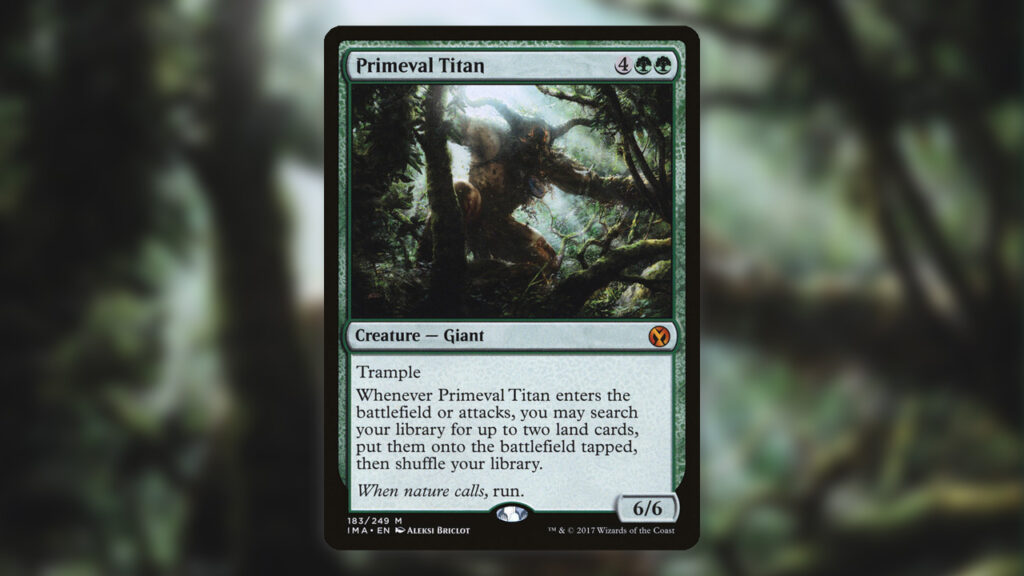
The strengths of this deck lie with its versatility. The addition of the Saheeli+Felidar Guardian combo helps give you a better shot at beating opposing combo decks. Considering how popular
Yawgmoth, Thran Physician
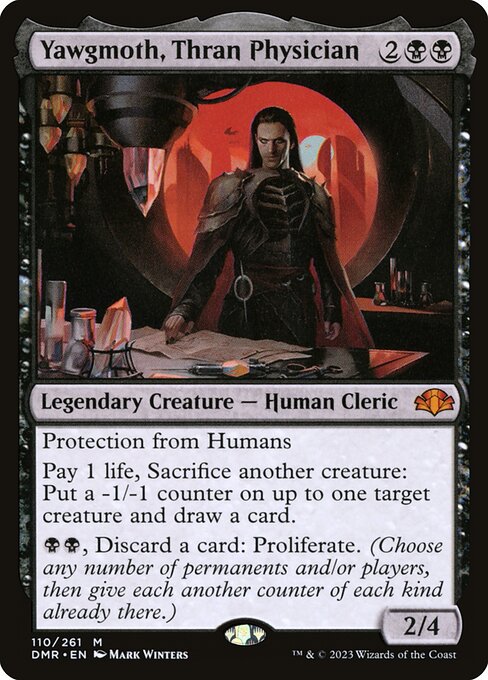 Yawgmoth, Thran Physician
Protection from Humans
Yawgmoth, Thran Physician
Protection from Humans
Pay 1 life, Sacrifice another creature: Put a -1/-1 counter on up to one target creature and draw a card.
{B}{B}, Discard a card: Proliferate. (Choose any number of permanents and/or players, then give each another counter of each kind already there.)
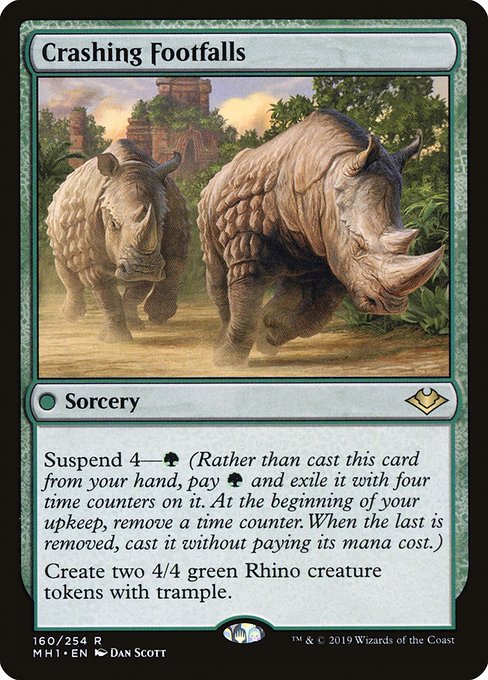
combo, Amulet Titan, and various Cascade combo decks like
Crashing Footfalls
 Crashing Footfalls
Suspend 4—{G} (Rather than cast this card from your hand, pay {G} and exile it with four time counters on it. At the beginning of your upkeep, remove a time counter. When the last is removed, you may cast it without paying its mana cost.)
Crashing Footfalls
Suspend 4—{G} (Rather than cast this card from your hand, pay {G} and exile it with four time counters on it. At the beginning of your upkeep, remove a time counter. When the last is removed, you may cast it without paying its mana cost.)
Create two 4/4 green Rhino creature tokens with trample.
are, adding a quick win condition makes a lot of sense.
This deck can still play a longer, grindier game when necessary, though. With Up the Beanstalk out of the picture, it is once again The One Ring’s time to shine, and this deck makes excellent use of the Artifact. The difference here, however, is that this build has a much easier time closing the game than traditional four-color versions. Teferi becomes even more threatening, as your opponent knows that if they can’t remove it, they risk dying to the combo out of nowhere.
The one area of weakness that this four-color variant has in comparison to the more typical builds is that Saheeli specifically is a fairly weak card without access to Felidar Guardian. By running these cards, you have less room for flex slots like Prismatic Ending and even have to trim down on Omnath, which is amazing in attrition-based matchups.
Additionally, without Teferi in play, executing the combo can be a tall order in the face of opposing interaction. Given that decks like Amulet Titan and mono-green Tron with minimal interaction have grown in popularity some since the bans, though, this isn’t necessarily a big deal. The fact that this deck has the ability to execute a fast combo kill helps a lot in these matchups. Even in grindier games, the threat of killing your opponent out of nowhere can make it quite difficult for them to ever tap out.
Saheeli and Felidar Guardian have largely been obsolete in Modern for a while, so if you’re a fan of this style of combo, now’s your chance to maximize it.
Read More: Recently Banned MTG Card Wins $10,000+ in Eternal Format!