
Released in February 2019, Theros Beyond Death became an impactful MTG expansion set for various reasons. Following in the footsteps of Throne of Eldraine, the Greek-mythology-inspired set produced powerful cards which eventually saw bans in Standard, Pioneer, and Modern.
Despite rotating out in September, the set offers plenty of value for eternal and singleton formats given the power level on offer. It’s unlikely we’ll see another set like Theros Beyond Death given how it damaged the health of the game, so expect these cards to rise in value over time. Not only that, a lot of the cards are bound to the Theros flavoring which will be hard to reprint in future sets.
Underworld Breach
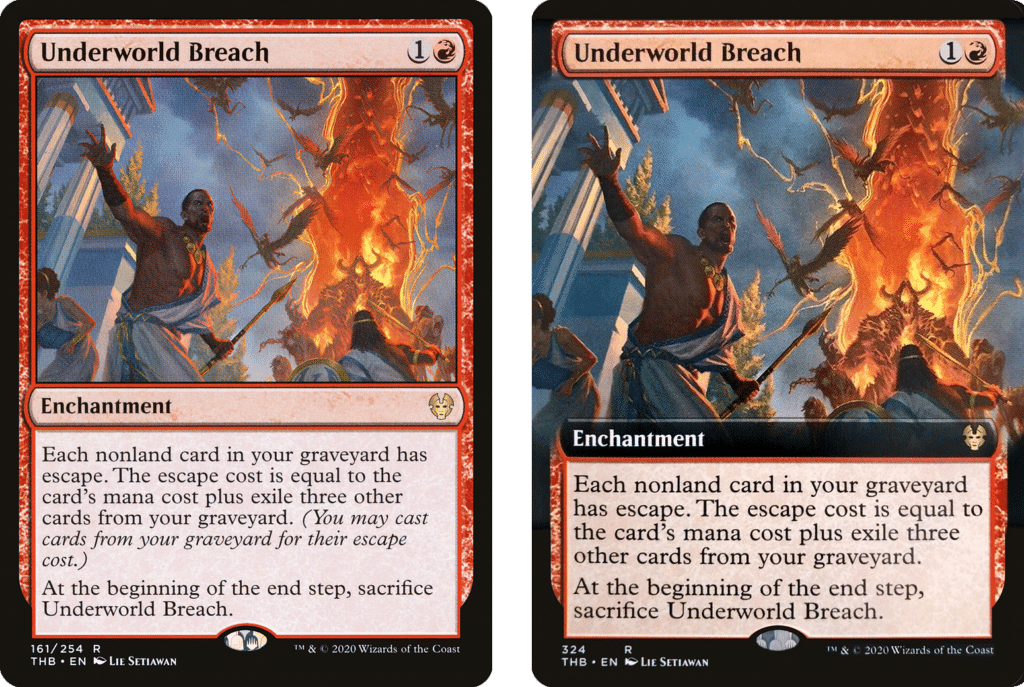
First up, is
Underworld Breach
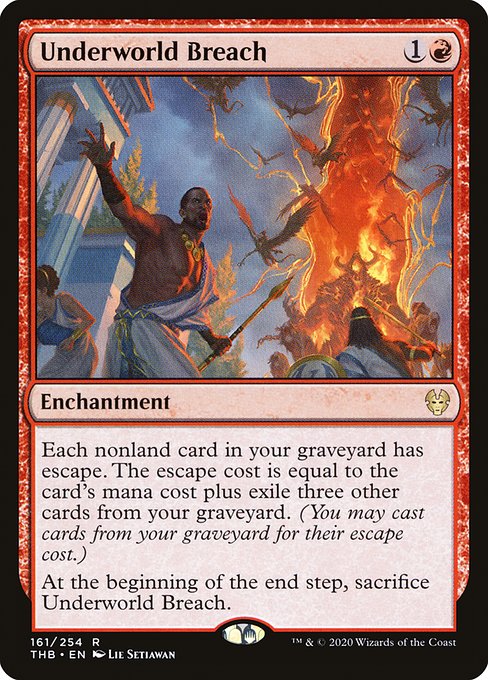 Underworld Breach
Each nonland card in your graveyard has escape. The escape cost is equal to the card's mana cost plus exile three other cards from your graveyard. (You may cast cards from your graveyard for their escape cost.)
Underworld Breach
Each nonland card in your graveyard has escape. The escape cost is equal to the card's mana cost plus exile three other cards from your graveyard. (You may cast cards from your graveyard for their escape cost.)
At the beginning of the end step, sacrifice this enchantment.
which is one of the most powerful enchantments printed in recent times. For two mana, you get the ability to recast spells by paying escape costs instead. In Pioneer,
Underworld Breach
Underworld Breach
Each nonland card in your graveyard has escape. The escape cost is equal to the card's mana cost plus exile three other cards from your graveyard. (You may cast cards from your graveyard for their escape cost.)
At the beginning of the end step, sacrifice this enchantment.
saw heavy play in Lotus Field Combo as it made the strategy unfair and consistent.
You see the Red enchantment in Commander with a similar approach in mind, as you’re looking to do something inherently busted and unfair when resolving the card. Sometimes it crops up in Modern in
Grinding Station
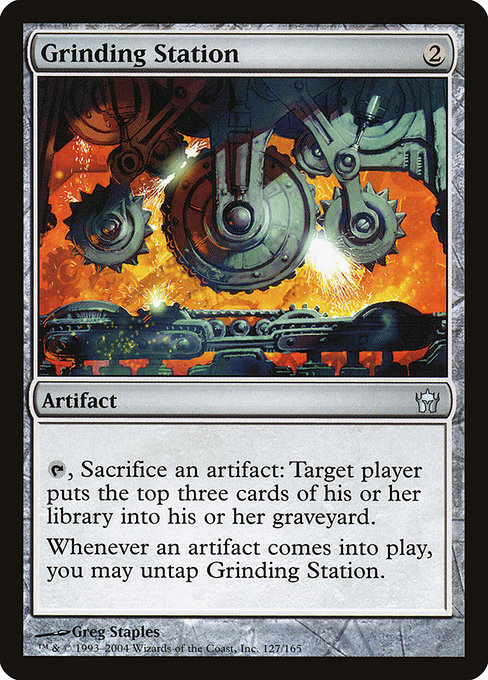 Grinding Station
{T}, Sacrifice an artifact: Target player mills three cards.
Grinding Station
{T}, Sacrifice an artifact: Target player mills three cards.
Whenever an artifact enters, you may untap this artifact.
or Egg-style strategies as the cards are aggressively costed, you can recast them with
Underworld Breach
Underworld Breach
Each nonland card in your graveyard has escape. The escape cost is equal to the card's mana cost plus exile three other cards from your graveyard. (You may cast cards from your graveyard for their escape cost.)
At the beginning of the end step, sacrifice this enchantment.
in play. It’s unlikely to see in Pioneer ever again, but all it takes is one card to break
Underworld Breach
Underworld Breach
Each nonland card in your graveyard has escape. The escape cost is equal to the card's mana cost plus exile three other cards from your graveyard. (You may cast cards from your graveyard for their escape cost.)
At the beginning of the end step, sacrifice this enchantment.
again in Modern or Commander. With the number of cards coming into MTG, it may be sooner than you think.
Read More: The 10 Best Enchantments In Commander
Thassa’s Oracle
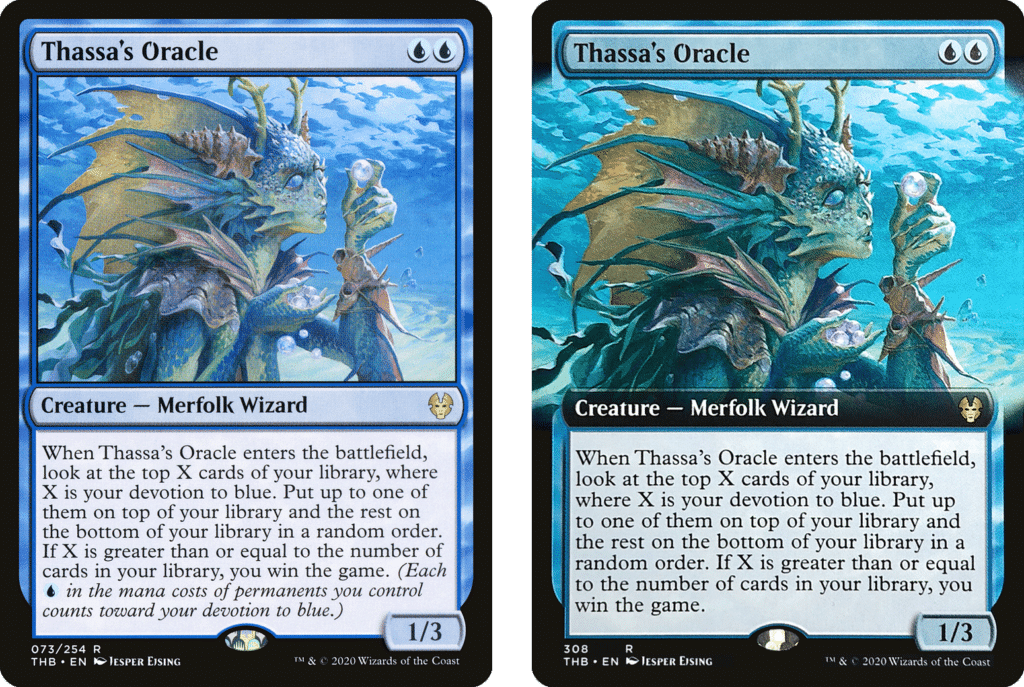
While discussing broken combo potential,
Thassa’s Oracle
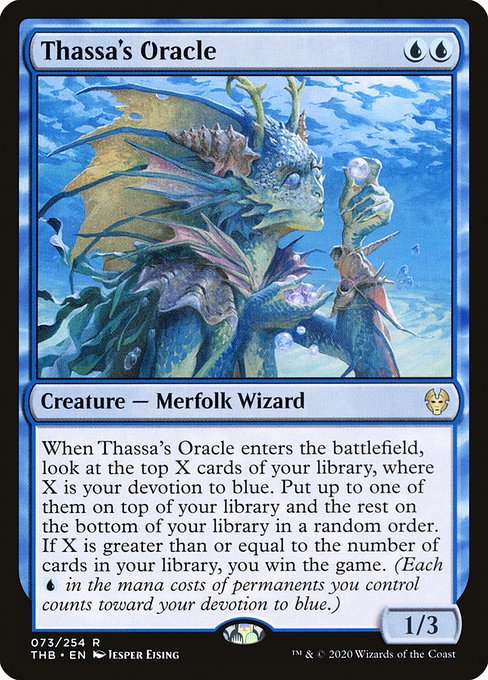 Thassa’s Oracle
When this creature enters, look at the top X cards of your library, where X is your devotion to blue. Put up to one of them on top of your library and the rest on the bottom of your library in a random order. If X is greater than or equal to the number of cards in your library, you win the game. (Each {U} in the mana costs of permanents you control counts toward your devotion to blue.)
offers a similar play pattern. Thanks to Theros Beyond Death, the Merfolk Wizard re-shaped Pioneer alongside
Inverter of Truth
Thassa’s Oracle
When this creature enters, look at the top X cards of your library, where X is your devotion to blue. Put up to one of them on top of your library and the rest on the bottom of your library in a random order. If X is greater than or equal to the number of cards in your library, you win the game. (Each {U} in the mana costs of permanents you control counts toward your devotion to blue.)
offers a similar play pattern. Thanks to Theros Beyond Death, the Merfolk Wizard re-shaped Pioneer alongside
Inverter of Truth
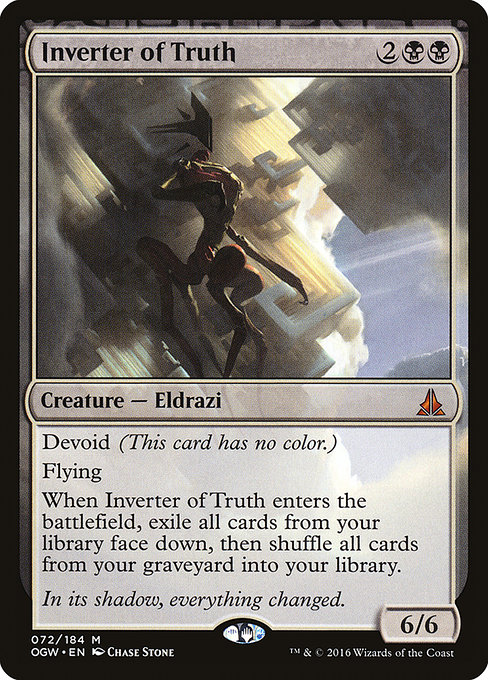 Inverter of Truth
Devoid (This card has no color.)
Inverter of Truth
Devoid (This card has no color.)
Flying
When this creature enters, exile all cards from your library face down, then shuffle all cards from your graveyard into your library.
offering a strong combo-control strategy. Typically you see Labatory Maniac as a win-condition in Commander or Modern but requires effort for the card to pay off. However, with
Thassa’s Oracle
Thassa’s Oracle
When this creature enters, look at the top X cards of your library, where X is your devotion to blue. Put up to one of them on top of your library and the rest on the bottom of your library in a random order. If X is greater than or equal to the number of cards in your library, you win the game. (Each {U} in the mana costs of permanents you control counts toward your devotion to blue.)
, it requires less effort since your devotion to Blue will be higher, therefore more cards to dig through allowing you to win the game.
Thanks to
Thassa’s Oracle
Thassa’s Oracle
When this creature enters, look at the top X cards of your library, where X is your devotion to blue. Put up to one of them on top of your library and the rest on the bottom of your library in a random order. If X is greater than or equal to the number of cards in your library, you win the game. (Each {U} in the mana costs of permanents you control counts toward your devotion to blue.)
influence in Pioneer, it saw the banning of
Inverter of Truth
Inverter of Truth
Devoid (This card has no color.)
Flying
When this creature enters, exile all cards from your library face down, then shuffle all cards from your graveyard into your library.
with
Tainted Pact
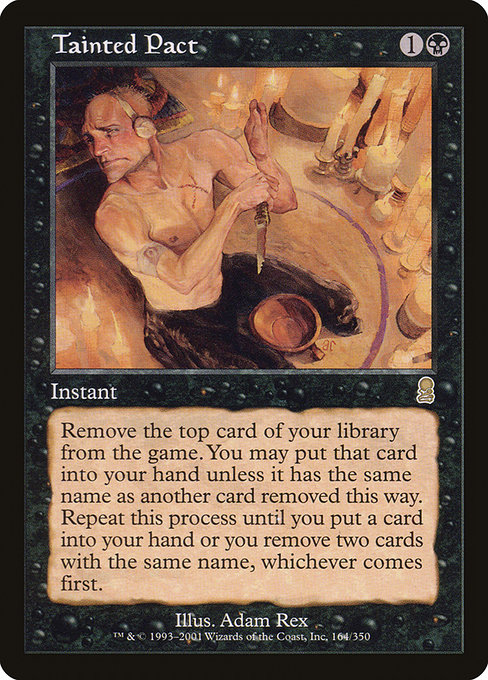 Tainted Pact
Exile the top card of your library. You may put that card into your hand unless it has the same name as another card exiled this way. Repeat this process until you put a card into your hand or you exile two cards with the same name, whichever comes first.
sharing a similar fate in Historic. Somehow, the Merfolk Wizard remains legal in various formats despite being the enable for these broken combo and control strategies. Like
Underworld Breach
Underworld Breach
Each nonland card in your graveyard has escape. The escape cost is equal to the card's mana cost plus exile three other cards from your graveyard. (You may cast cards from your graveyard for their escape cost.)
Tainted Pact
Exile the top card of your library. You may put that card into your hand unless it has the same name as another card exiled this way. Repeat this process until you put a card into your hand or you exile two cards with the same name, whichever comes first.
sharing a similar fate in Historic. Somehow, the Merfolk Wizard remains legal in various formats despite being the enable for these broken combo and control strategies. Like
Underworld Breach
Underworld Breach
Each nonland card in your graveyard has escape. The escape cost is equal to the card's mana cost plus exile three other cards from your graveyard. (You may cast cards from your graveyard for their escape cost.)
At the beginning of the end step, sacrifice this enchantment.
, it’s likely another card will come along and break it all over again. Either way, it’s a solid win condition in Commander which is why the price will gradually increase over time due to demand.
Read More: The 10 Best Mono-Blue Commanders
Klothys, God of Destiny
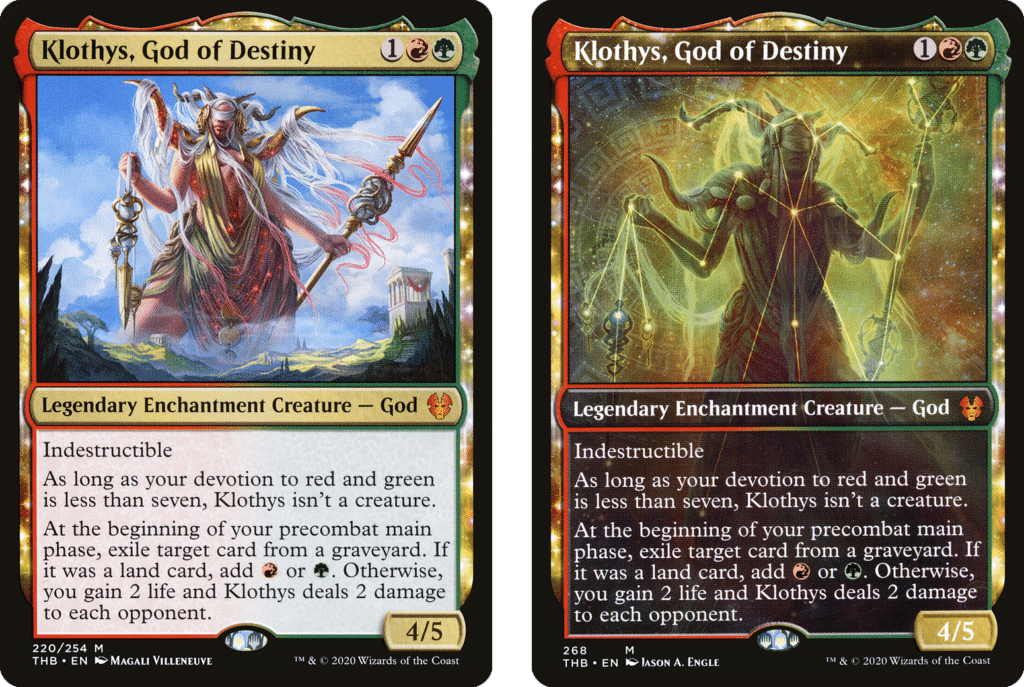
Theros Beyond Death reintroduced the Gods which saw a new addition in
Klothys, God of Destiny
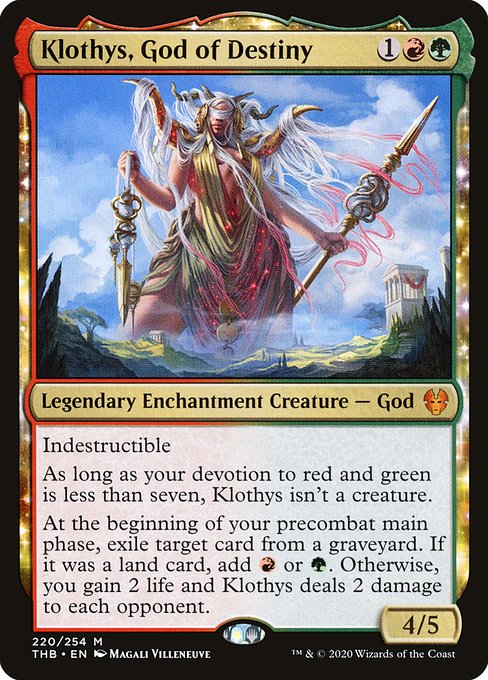 Klothys, God of Destiny
Indestructible
Klothys, God of Destiny
Indestructible
As long as your devotion to red and green is less than seven, Klothys isn't a creature.
At the beginning of your first main phase, exile target card from a graveyard. If it was a land card, add {R} or {G}. Otherwise, you gain 2 life and Klothys deals 2 damage to each opponent.
to replace the now defeated Xenegos, God of Revels. For three mana, you get incidental graveyard hate with the ability to ramp or deal damage depending on what was exiled. If your devotion to Red and/or Green is more than seven, the Legendary God becomes a creature so you can get aggressive if you fancy it.
Considering Klothys offers an ‘each opponent’ damage output, the card sees plenty of play in Gruul-based Commander strategies. As it’s a 4/5, it meets the Ferocious criteria, or any other boon that requires you to have high power on the battlefield. Also as it’s indestructible, it requires some of the most effective removal spells from your opponent which means it can hang around in a Commander pod. In Modern, you see the Legendary God in Gruul Ponza-style lists as it attacks resources since Modern cares about graveyard interaction highly. Klothys may not be the flashiest of Gods on offer, but it does a lot of work to keep the value coming.
Read More: Commander Challenge – Sire Of Insanity
Thassa, Deep-Dwelling
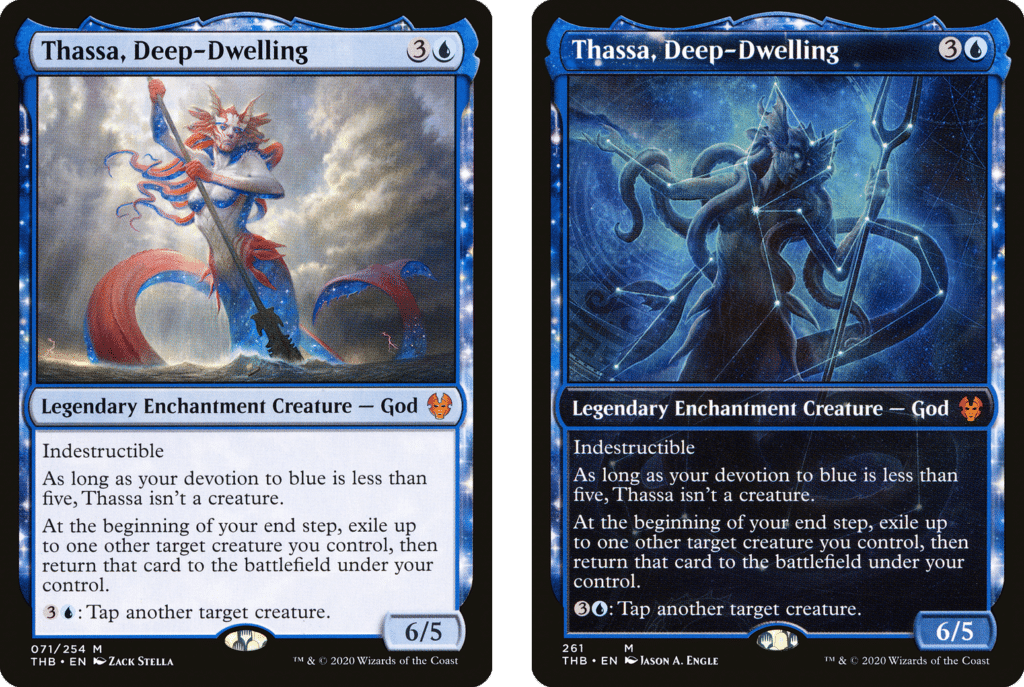
Speaking of Gods,
Thassa, Deep-Dwelling
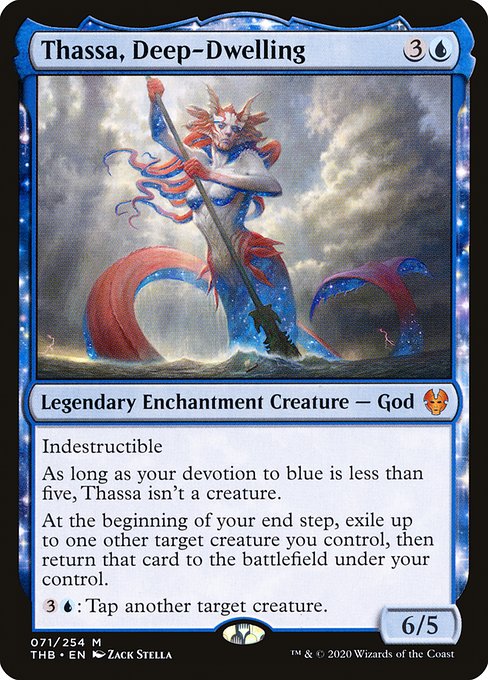 Thassa, Deep-Dwelling
Indestructible
Thassa, Deep-Dwelling
Indestructible
As long as your devotion to blue is less than five, Thassa isn't a creature.
At the beginning of your end step, exile up to one other target creature you control, then return that card to the battlefield under your control.
{3}{U}: Tap another target creature.
is one of the more played Gods in Commander. For four mana, you get a repeatable blink effect allowing you to get extra value out of your creatures. Also, if your devotion to Blue is higher than five, you have access to an indestructible creature that is able to pile on the damage quickly.
Often you see Thassa in Commander or at the helm of a deck, typically leaning towards blinking with cards such as
Deadeye Navigator
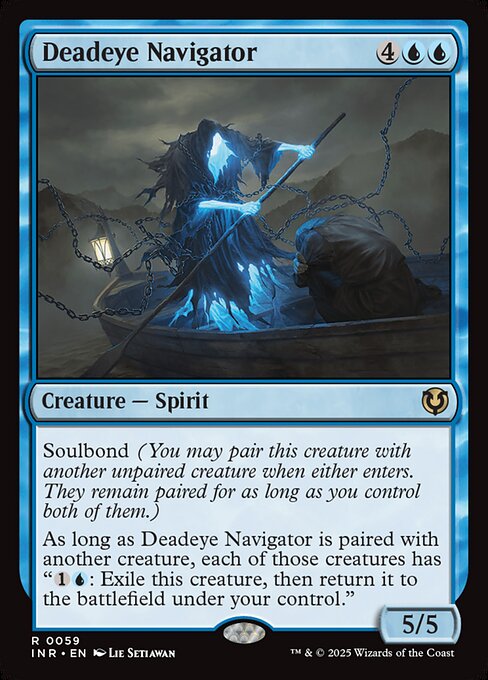 Deadeye Navigator
Soulbond (You may pair this creature with another unpaired creature when either enters. They remain paired for as long as you control both of them.)
Deadeye Navigator
Soulbond (You may pair this creature with another unpaired creature when either enters. They remain paired for as long as you control both of them.)
As long as Deadeye Navigator is paired with another creature, each of those creatures has "{1}{U}: Exile this creature, then return it to the battlefield under your control."
, or maybe with
Thassa’s Oracle
Thassa’s Oracle
When this creature enters, look at the top X cards of your library, where X is your devotion to blue. Put up to one of them on top of your library and the rest on the bottom of your library in a random order. If X is greater than or equal to the number of cards in your library, you win the game. (Each {U} in the mana costs of permanents you control counts toward your devotion to blue.)
as a win condition. Thassa offers plenty of fun synergies and build-around to make a memorable Commander deck without breaking the bank.
Read More: The 10 Best Flicker Cards In MTG
Uro, Titan of Nature’s Wrath
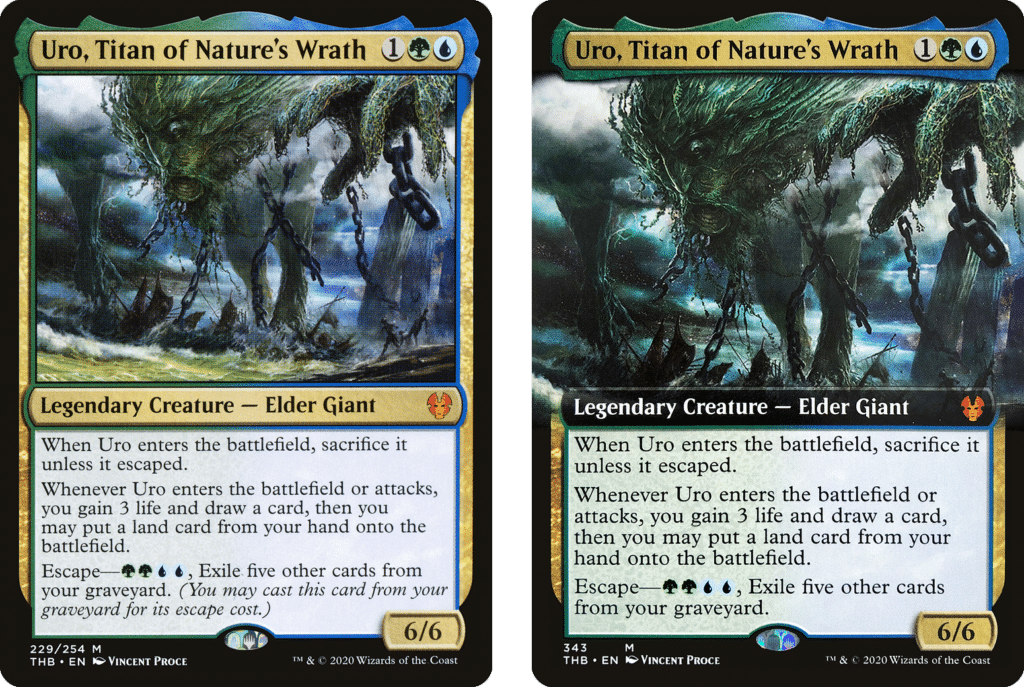
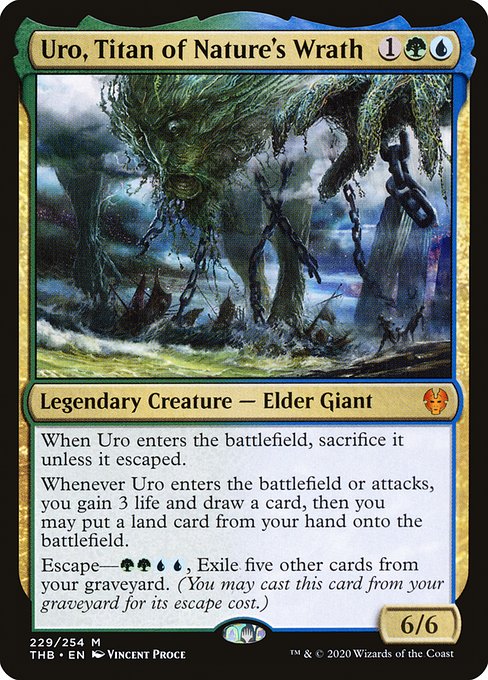
Perhaps one of the most impactful MTG cards in recent times,
Uro, Titan of Nature’s Wrath
 Uro, Titan of Nature’s Wrath
When Uro enters, sacrifice it unless it escaped.
Uro, Titan of Nature’s Wrath
When Uro enters, sacrifice it unless it escaped.
Whenever Uro enters or attacks, you gain 3 life and draw a card, then you may put a land card from your hand onto the battlefield.
Escape—{G}{G}{U}{U}, Exile five other cards from your graveyard. (You may cast this card from your graveyard for its escape cost.)
has seen bans in Standard, Modern, and Pioneer. It’s unfair as it is problematic while encouraging tedious play patterns for those involved. It warped Standard in a negative way, to the point where you had to play the card to at least keep up with everyone else.
Although it’s barely legal in any MTG formats, you do see the Elder Giant feature in Commander and Legacy. In Commander, you see the card as part of the typical Simic ‘good value’ strategies which care about ramping into bigger threats. It remains a valuable card for this reason, and will crop up in powered Cubes for as long as possible. It’s very unlikely the card is going to be unbanned in Modern and Pioneer, so your best bet is to use it in Commander instead.
Read More: 3 Sweet Brews in Innistrad: Midnight Hunt Standard
Dryad of the Ilysian Grove
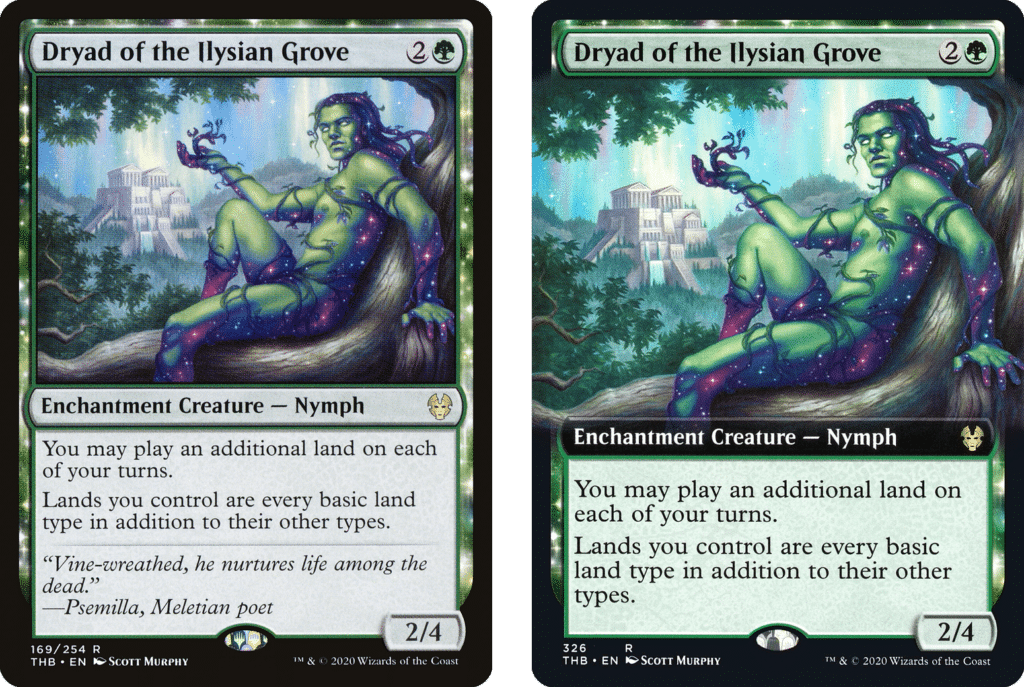
Another card that sees extensive play is
Dryad of the Ilysian Grove
 Dryad of the Ilysian Grove
You may play an additional land on each of your turns.
Dryad of the Ilysian Grove
You may play an additional land on each of your turns.
Lands you control are every basic land type in addition to their other types.
due to its ability to smooth out your mana base. In Commander, you see the Nymph in most Green-heavy lists as it allows you to ramp into bigger threats. Not only that, it offers a frustrating 2/4 stat line that stems any aggression from your opponent.
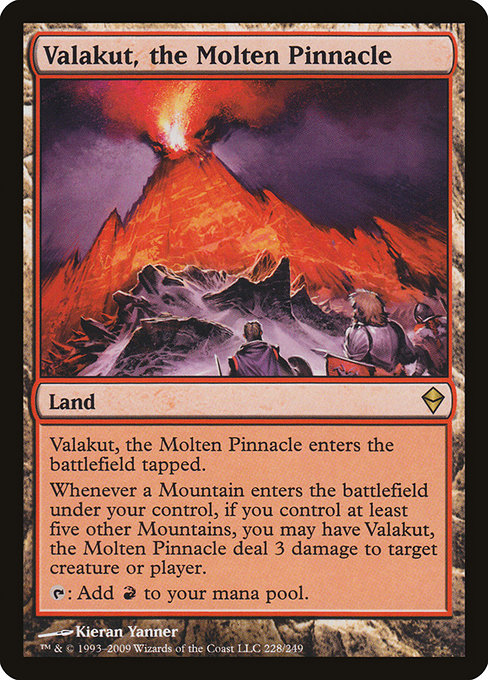
You see the card appear in Modern in Amulet Titan as it works alongside
Valakut, the Molten Pinnacle
 Valakut, the Molten Pinnacle
This land enters tapped.
Valakut, the Molten Pinnacle
This land enters tapped.
Whenever a Mountain you control enters, if you control at least five other Mountains, you may have this land deal 3 damage to any target.
{T}: Add {R}.
since your lands will come in as Mountains. Plus, it offers great fixing considering the number of lands you run in these builds.
Dryad of the Ilysian Grove
Dryad of the Ilysian Grove
You may play an additional land on each of your turns.
Lands you control are every basic land type in addition to their other types.
will remain a heavy feature of MTG for as long mana fixing is required, and this card is one of the best in doing that. With the popularity of Commander growing, cards such as these will begin to creep up in price due to demand.
Read More: The 10 Best Ramp Cards In Commander
Nyxbloom Ancient
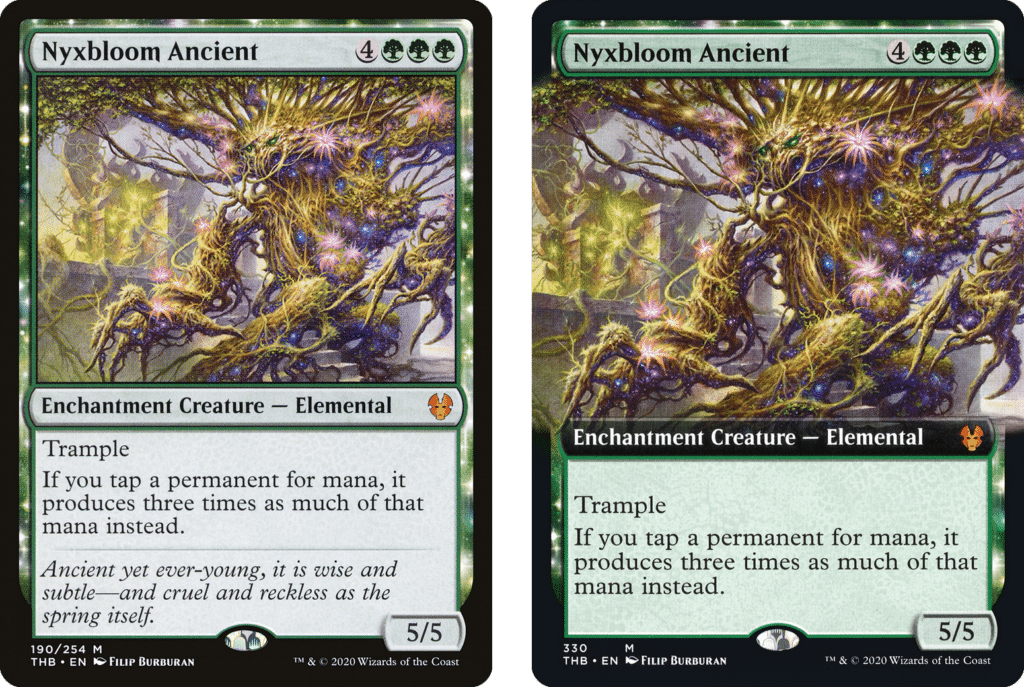
Perhaps one of the forced Commander cards from the set,
Nyxbloom Ancient
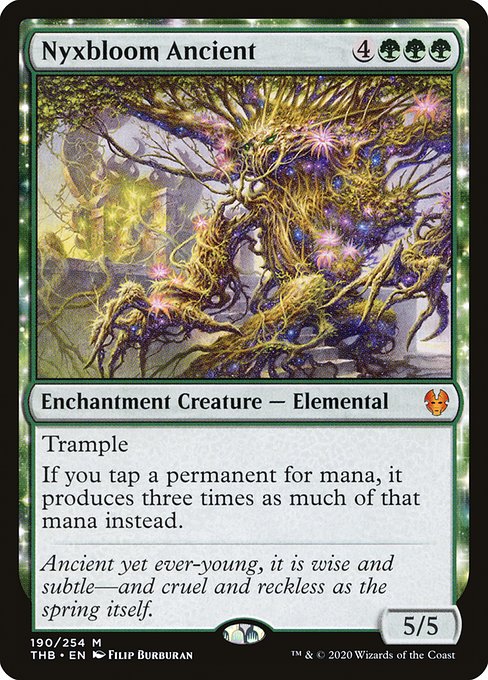 Nyxbloom Ancient
Trample
Nyxbloom Ancient
Trample
If you tap a permanent for mana, it produces three times as much of that mana instead.
is a powerhouse in Commander. The Elemental offers triple the mana production in your lands, mana creatures, and mana rocks which is absurd for the singleton format.
Often when you resolve this card, you are looking to cast some complete nonsense afterward. Seeing this effect on an MTG card is hard to come by, so expect the value to creep up since Green is the best color to play in the format. As such,
Nyxbloom Ancient
Nyxbloom Ancient
Trample
If you tap a permanent for mana, it produces three times as much of that mana instead.
is a staple in any Green-based or multi-color Commander strategy as it allows you to pull ahead from everyone else.
Read More: Best Starter Commanders – Omnath, Locus Of Rage
Shadowspear
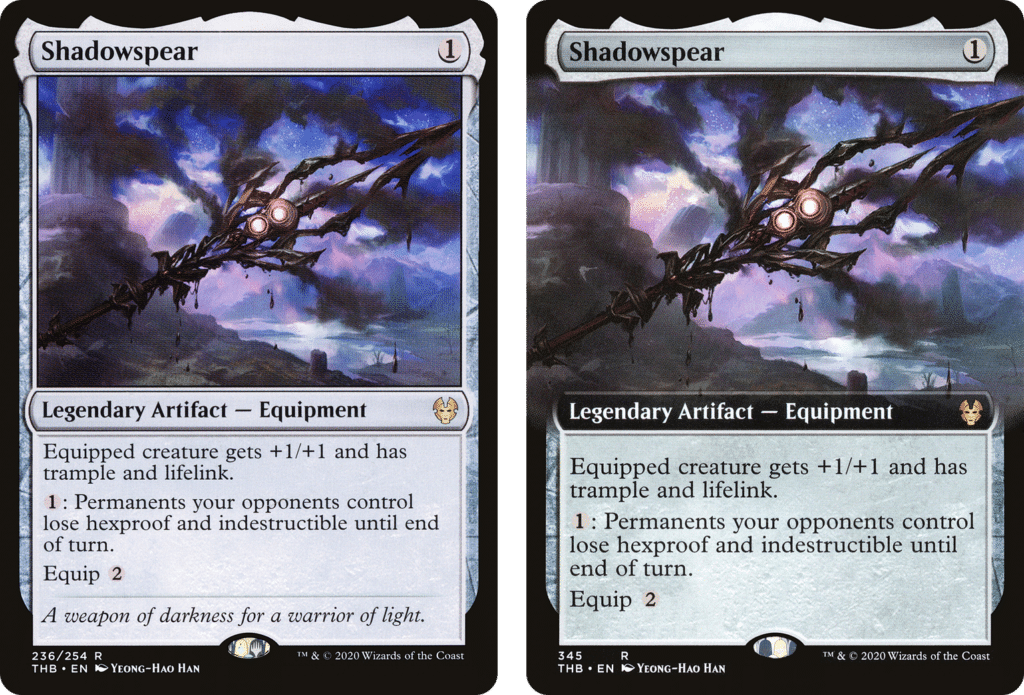
Unexpectedly,
Shadowspear
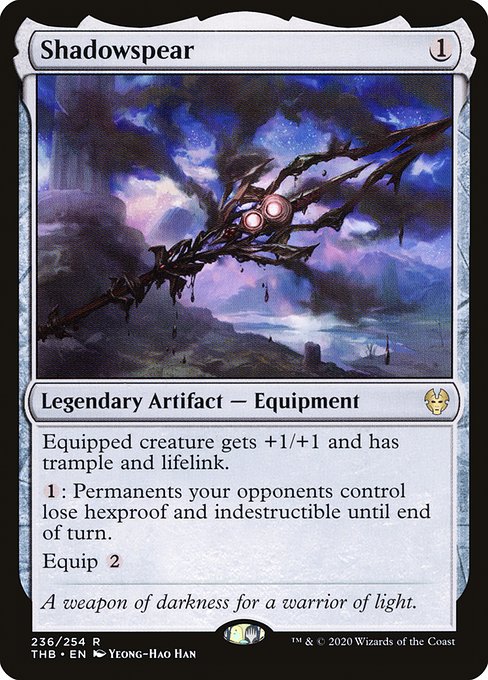 Shadowspear
Equipped creature gets +1/+1 and has trample and lifelink.
Shadowspear
Equipped creature gets +1/+1 and has trample and lifelink.
{1}: Permanents your opponents control lose hexproof and indestructible until end of turn.
Equip {2}
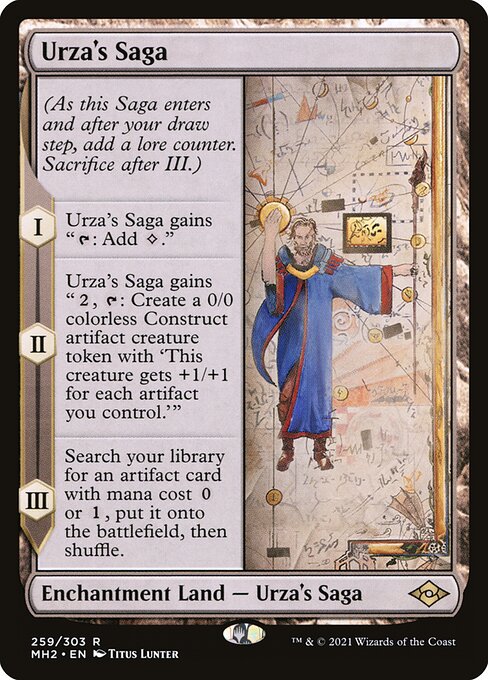
is soaring in value thanks to its activated ability in Commander, and its synergy alongside
Urza’s Saga
 Urza’s Saga
(As this Saga enters and after your draw step, add a lore counter. Sacrifice after III.)
Urza’s Saga
(As this Saga enters and after your draw step, add a lore counter. Sacrifice after III.)
I — This Saga gains "{T}: Add {C}."
II — This Saga gains "{2}, {T}: Create a 0/0 colorless Construct artifact creature token with 'This token gets +1/+1 for each artifact you control.'"
III — Search your library for an artifact card with mana cost {0} or {1}, put it onto the battlefield, then shuffle.
in Modern. The Equipment gives you the ability to remove hexproof and instructible on your opponent’s permanents while offering trample to guarantee damage goes through.
It’s a mainstay in Voltron-style or artifact matter Commander decks as it does so much for one mana, and can be quickly found off an
Urza’s Saga
Urza’s Saga
(As this Saga enters and after your draw step, add a lore counter. Sacrifice after III.)
I — This Saga gains "{T}: Add {C}."
II — This Saga gains "{2}, {T}: Create a 0/0 colorless Construct artifact creature token with 'This token gets +1/+1 for each artifact you control.'"
III — Search your library for an artifact card with mana cost {0} or {1}, put it onto the battlefield, then shuffle.
. You see the latter two cards in Affinity in Modern, as it’s a surefire way to make those Cranial Platings worthwhile. Once again, it’s hard to reprint a card such as this due to its flavor and card name being Theros-themed, so this could be an expensive card in the future.
Read More: The 10 Best Equipment In Commander
Heliod, Sun-Crowned
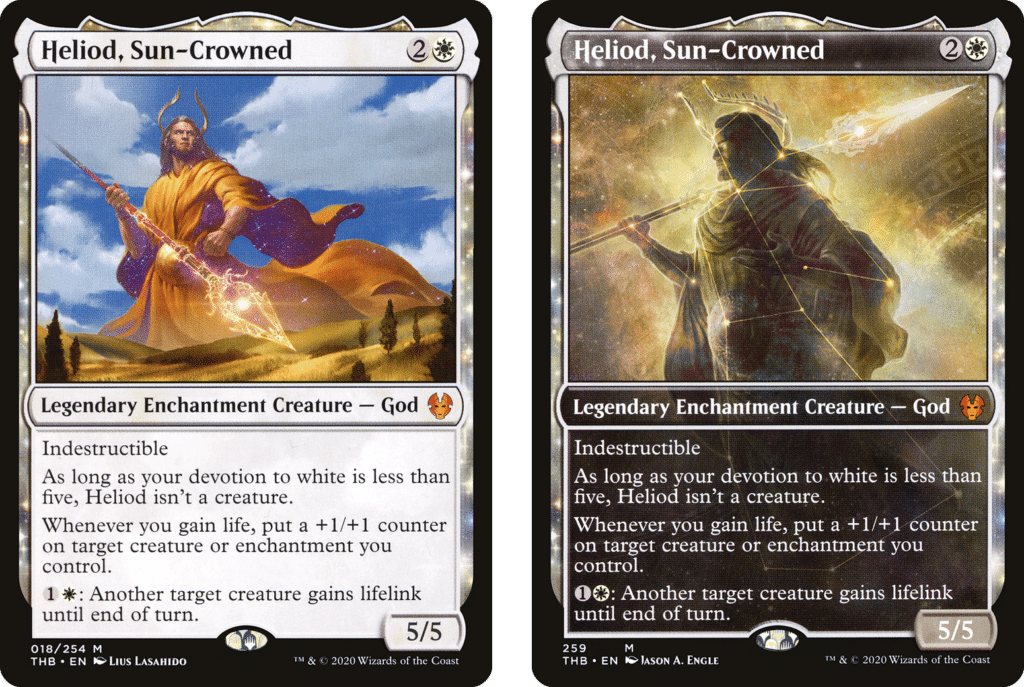
Out of all the Gods from Theros Beyond Death,
Heliod, Sun-Crowned
 Heliod, Sun-Crowned
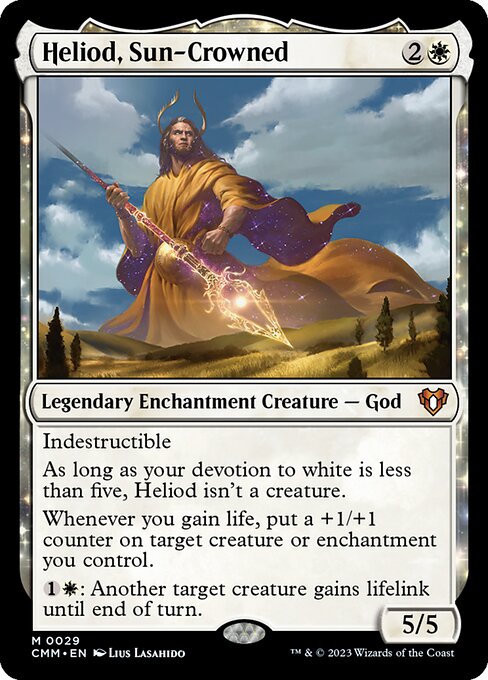
Indestructible
Heliod, Sun-Crowned
Indestructible
As long as your devotion to white is less than five, Heliod isn't a creature.
Whenever you gain life, put a +1/+1 counter on target creature or enchantment you control.
{1}{W}: Another target creature gains lifelink until end of turn.
is the most played. Since its printing, the Legendary God created a Modern archetype with Selesnya Heliod Company, offering an effective combination with
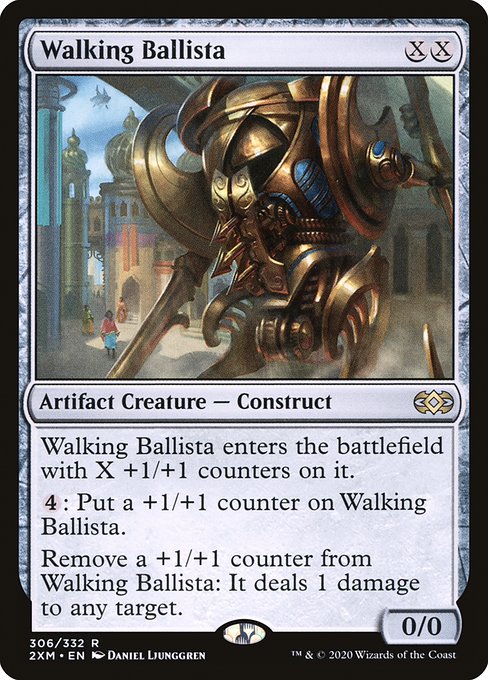
Walking Ballista
 Walking Ballista
This creature enters with X +1/+1 counters on it.
Walking Ballista
This creature enters with X +1/+1 counters on it.
{4}: Put a +1/+1 counter on this creature.
Remove a +1/+1 counter from this creature: It deals 1 damage to any target.
.
Thanks to this combination of cards,
Walking Ballista
Walking Ballista
This creature enters with X +1/+1 counters on it.
{4}: Put a +1/+1 counter on this creature.
Remove a +1/+1 counter from this creature: It deals 1 damage to any target.
saw a ban in Pioneer as it encouraged poor play patterns similar to
Splinter Twin
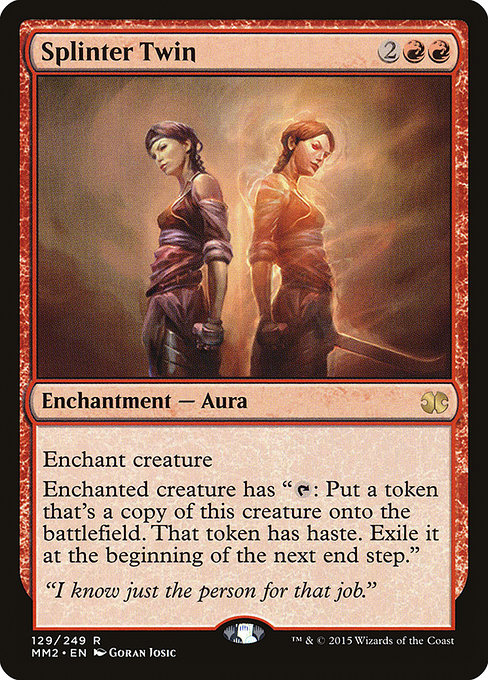 Splinter Twin
Enchant creature
Splinter Twin
Enchant creature
Enchanted creature has "{T}: Create a token that's a copy of this creature, except it has haste. Exile that token at the beginning of the next end step."
in Modern. Heliod is also fantastic at the helm of a Commander deck, as you can play the
Walking Ballista
Walking Ballista
This creature enters with X +1/+1 counters on it.
{4}: Put a +1/+1 counter on this creature.
Remove a +1/+1 counter from this creature: It deals 1 damage to any target.
in there with a bunch of ways to gain life. You’ll want to angle your Heliod Commander deck with lifegain in mind, as you want to grow your board as much as possible – which allows you to be aggressive in combat which is something you don’t often see in the singleton format.
Read More: 10 Amazing White Commander Cards For Under A Dollar
Kroxa, Titan of Death’s Hunger
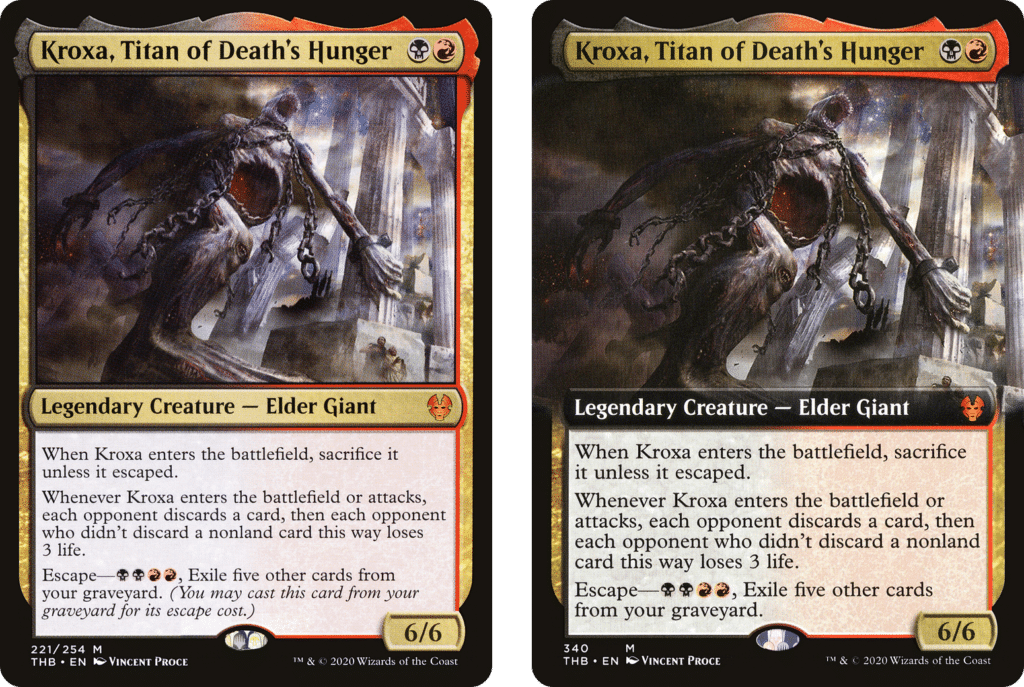
Lastly, the most expensive card in the set is the other Elder Giant,
Kroxa, Titan of Death’s Hunger
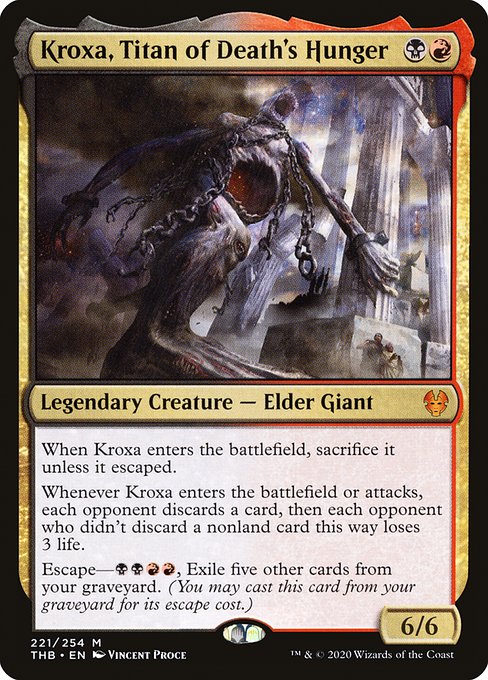 Kroxa, Titan of Death’s Hunger
When Kroxa enters, sacrifice it unless it escaped.
Kroxa, Titan of Death’s Hunger
When Kroxa enters, sacrifice it unless it escaped.
Whenever Kroxa enters or attacks, each opponent discards a card, then each opponent who didn't discard a nonland card this way loses 3 life.
Escape—{B}{B}{R}{R}, Exile five other cards from your graveyard. (You may cast this card from your graveyard for its escape cost.)
. During previews, the card didn’t garner much attention thanks to
Uro, Titan of Nature’s Wrath
Uro, Titan of Nature’s Wrath
When Uro enters, sacrifice it unless it escaped.
Whenever Uro enters or attacks, you gain 3 life and draw a card, then you may put a land card from your hand onto the battlefield.
Escape—{G}{G}{U}{U}, Exile five other cards from your graveyard. (You may cast this card from your graveyard for its escape cost.)
. But since the Simic Legendary was essentially banned in every format, the Rakdos-colored Legendary started to see play in Modern and Pioneer.
Kroxa is capable of leading a gnarly Commander deck with various ways to discard and reanimate creatures. It leans on the more powerful side which can cause some frustration with your opponents, since you have so many ways to recur or recast the creature to keep the discard going. Kroxa also sees play in Modern Jund and Rakdos Midrange to great effect, as you can fill up your graveyard so easily with fetch lands being in the format. Not only that, the 6/6 stat line is an impressive way to seal victory if you are able to pay the Escape costs. It may seem innocuous in comparison to Uro, but Kroxa does a lot for two and four mana, and it’s only going to go up in value.
Read More: Ten Most Expensive MTG Cards in Modern