
While Commander Masters was designed to bring a ton of reprints and some cool new Commander cards to a Limited environment, the set also featured a ton of rarity shifts among reprints. Some cards like
Smothering Tithe
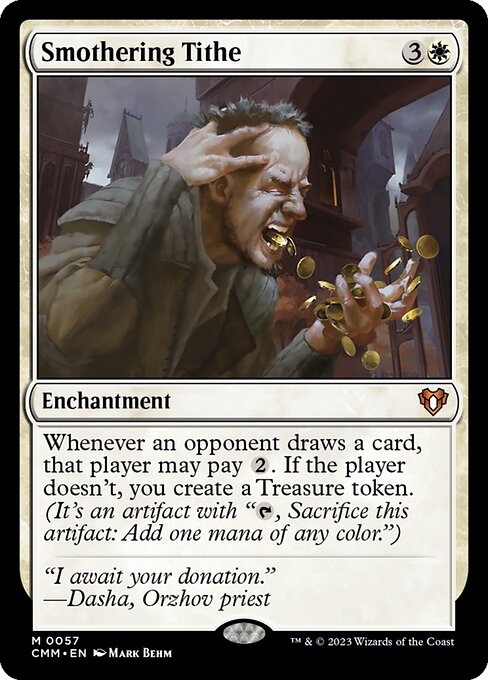 Smothering Tithe
Whenever an opponent draws a card, that player may pay {2}. If the player doesn't, you create a Treasure token. (It's an artifact with "{T}, Sacrifice this token: Add one mana of any color.")
went up in rarity, but most cards went down.
Smothering Tithe
Whenever an opponent draws a card, that player may pay {2}. If the player doesn't, you create a Treasure token. (It's an artifact with "{T}, Sacrifice this token: Add one mana of any color.")
went up in rarity, but most cards went down.
Notably, a ton of cards have gotten their first common appearance, which makes them legal in Pauper. Its been barely a week into these downshifts being legal on Magic Online, and we are already seeing a ton of decks utilizing new additions to the format. While some cards are slotting nicely into existing archetypes, like
All that Glitters
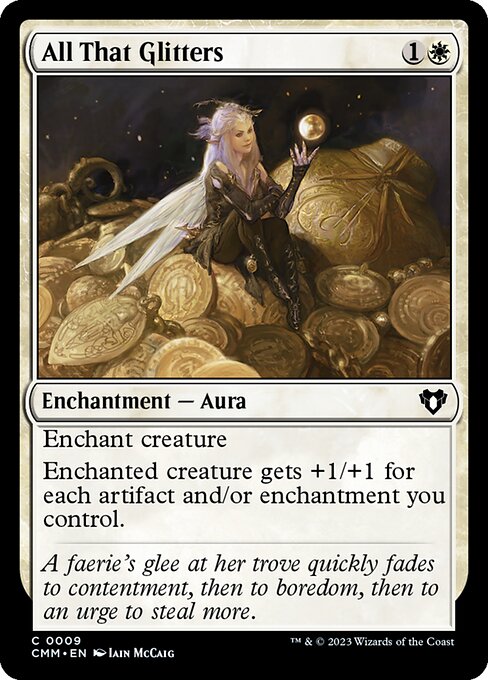 All that Glitters
Enchant creature
All that Glitters
Enchant creature
Enchanted creature gets +1/+1 for each artifact and/or enchantment you control.
and
Cryptic Serpent
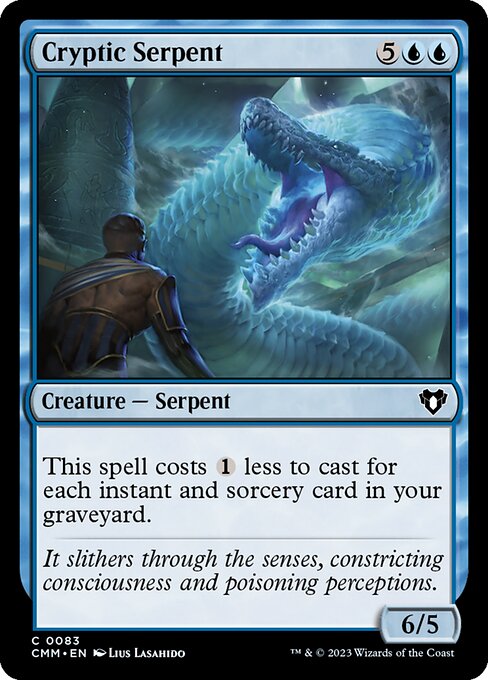 Cryptic Serpent
This spell costs {1} less to cast for each instant and sorcery card in your graveyard.
, there’s a new deck on the rise thanks to the downshift of two key cards:
Lotleth Giant
Cryptic Serpent
This spell costs {1} less to cast for each instant and sorcery card in your graveyard.
, there’s a new deck on the rise thanks to the downshift of two key cards:
Lotleth Giant
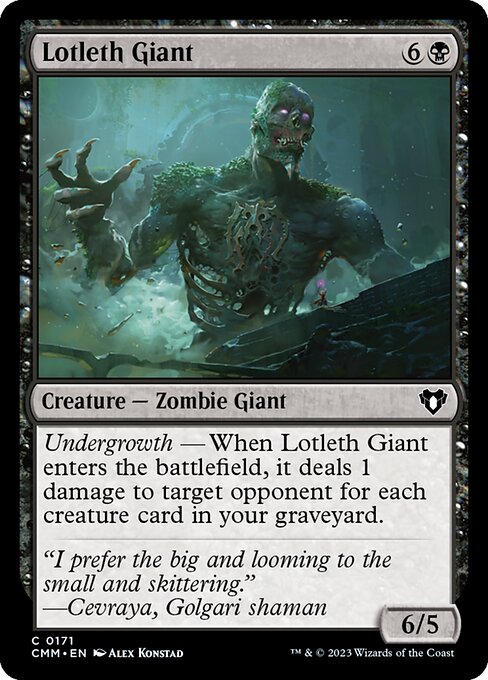 Lotleth Giant
Undergrowth — When this creature enters, it deals 1 damage to target opponent for each creature card in your graveyard.
and
Dread Return
Lotleth Giant
Undergrowth — When this creature enters, it deals 1 damage to target opponent for each creature card in your graveyard.
and
Dread Return
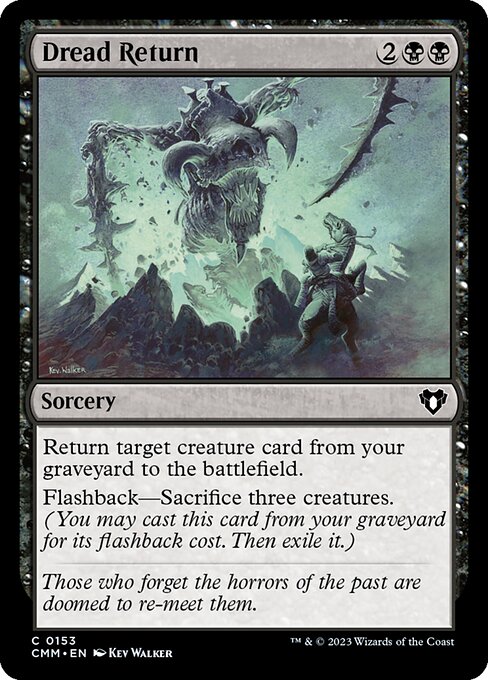 Dread Return
Return target creature card from your graveyard to the battlefield.
Dread Return
Return target creature card from your graveyard to the battlefield.
Flashback—Sacrifice three creatures. (You may cast this card from your graveyard for its flashback cost. Then exile it.)
.
Dread Return is an extremely powerful card. The card is banned in Modern and is utilized in Legacy decks like Oops All Spells to bring back
Thassa’s Oracle
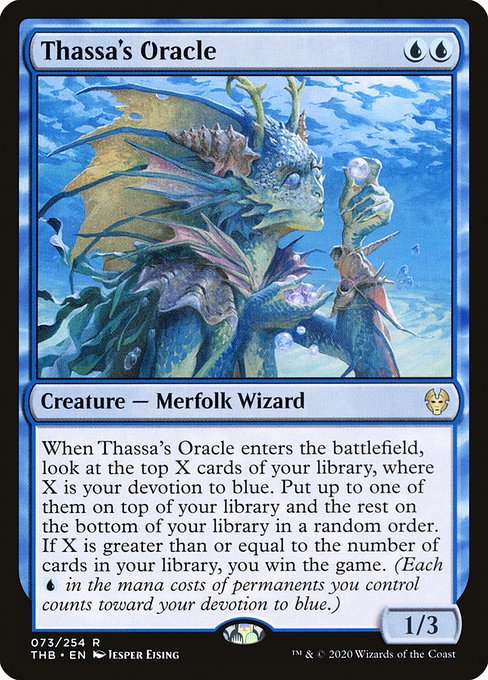 Thassa’s Oracle
When this creature enters, look at the top X cards of your library, where X is your devotion to blue. Put up to one of them on top of your library and the rest on the bottom of your library in a random order. If X is greater than or equal to the number of cards in your library, you win the game. (Each {U} in the mana costs of permanents you control counts toward your devotion to blue.)
after milling your whole deck with
Balustrade Spy
Thassa’s Oracle
When this creature enters, look at the top X cards of your library, where X is your devotion to blue. Put up to one of them on top of your library and the rest on the bottom of your library in a random order. If X is greater than or equal to the number of cards in your library, you win the game. (Each {U} in the mana costs of permanents you control counts toward your devotion to blue.)
after milling your whole deck with
Balustrade Spy
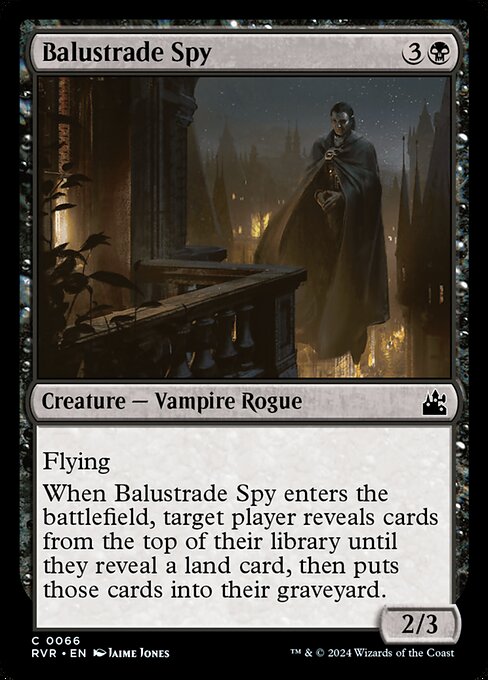 Balustrade Spy
Flying
Balustrade Spy
Flying
When this creature enters, target player reveals cards from the top of their library until they reveal a land card, then puts those cards into their graveyard.
or
Undercity Informer
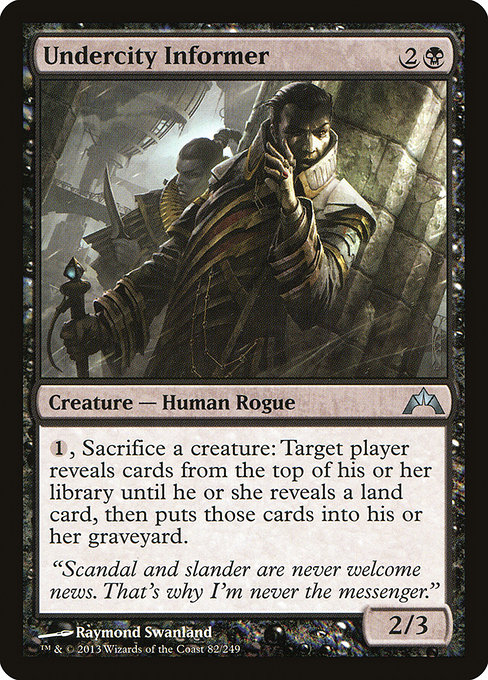 Undercity Informer
{1}, Sacrifice a creature: Target player reveals cards from the top of their library until they reveal a land card, then puts those cards into their graveyard.
. Of course, in a format with elite graveyard hate and
Force of Will
Undercity Informer
{1}, Sacrifice a creature: Target player reveals cards from the top of their library until they reveal a land card, then puts those cards into their graveyard.
. Of course, in a format with elite graveyard hate and
Force of Will
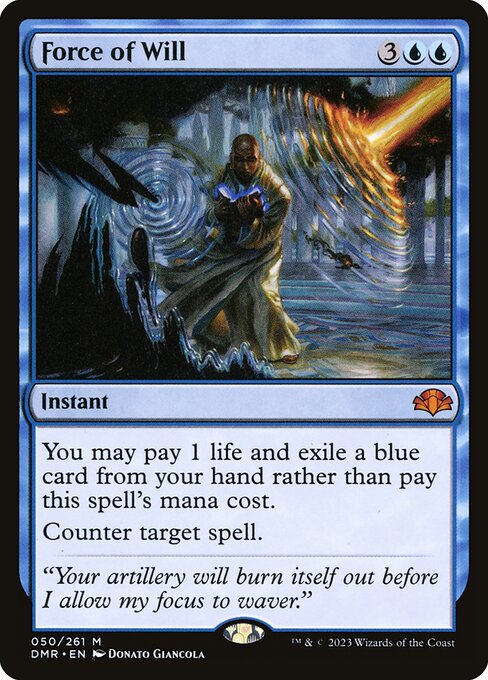 Force of Will
You may pay 1 life and exile a blue card from your hand rather than pay this spell's mana cost.
Force of Will
You may pay 1 life and exile a blue card from your hand rather than pay this spell's mana cost.
Counter target spell.
, it makes sense why Oops All Spells isn’t overly dominant.
Pauper, on the other hand, is a different story. This new deck in Pauper also utilizes Balustrade Spy and is quite capable of winning extremely quickly. Without the likes of Informer, Oracle, modal double-faced cards to act as “Lands”, or
Narcomoeba
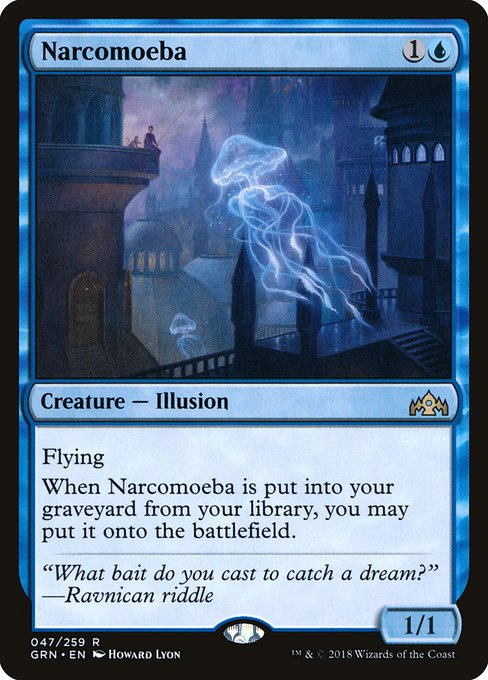 Narcomoeba
Flying
Narcomoeba
Flying
When this card is put into your graveyard from your library, you may put it onto the battlefield.
, the Pauper variant does require some extra work. Still, it is extremely strong, blazingly fast, and the list is still being improved!
Core Strategy
The goal of the Pauper deck is actually quite similar to that of Oops All Spells in Legacy. If you resolve a Balustrade Spy with no Lands in your deck, you can mill your entire library. In Legacy, this would cause multiple Narcomoeba triggers, and you can use Dread Return to sacrifice those Narcomoebas, bring back Oracle, and win. In Pauper, once you have milled over your deck, you utilize the Unearth ability of multiple copies of
Dregscape Zombie
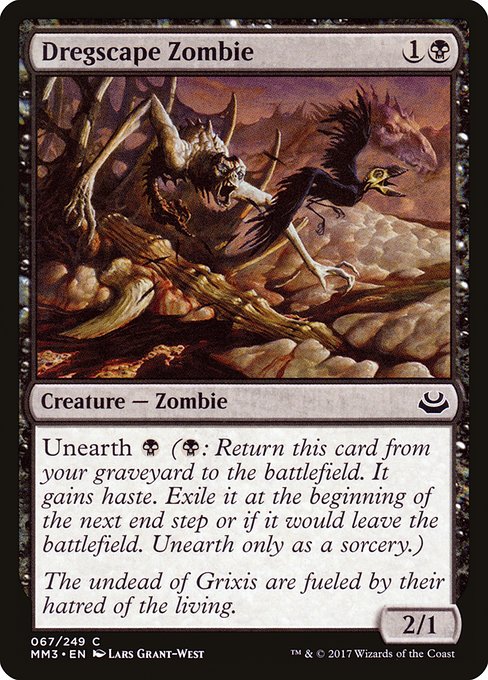 Dregscape Zombie
Unearth {B} ({B}: Return this card from your graveyard to the battlefield. It gains haste. Exile it at the beginning of the next end step or if it would leave the battlefield. Unearth only as a sorcery.)
to get three Creatures on the battlefield, use Dread Return’s Flashback ability to bring back Lotleth Giant, and have Lotleth Giant dome your opponent for a boatload of damage.
Dregscape Zombie
Unearth {B} ({B}: Return this card from your graveyard to the battlefield. It gains haste. Exile it at the beginning of the next end step or if it would leave the battlefield. Unearth only as a sorcery.)
to get three Creatures on the battlefield, use Dread Return’s Flashback ability to bring back Lotleth Giant, and have Lotleth Giant dome your opponent for a boatload of damage.
This deck is very scary. It can win turn two relatively often. Just like the Legacy version, it does require having access to a way to mill your library. In this case, the deck utilizes
Destroy the Evidence
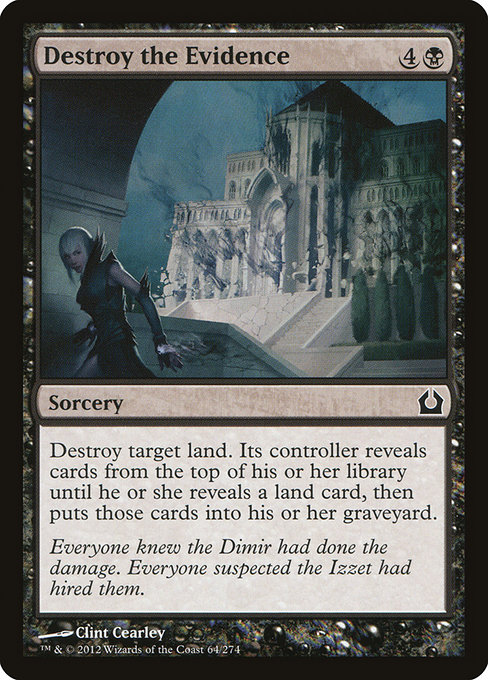 Destroy the Evidence
Destroy target land. Its controller reveals cards from the top of their library until they reveal a land card, then puts those cards into their graveyard.
in addition to Balustrade Spy, providing you with eight primary win conditions. Eight isn’t a ton, so it’s important to mulligan somewhat aggressively with this style of deck. Without having to worry about cards like Force of Will and
Daze
Destroy the Evidence
Destroy target land. Its controller reveals cards from the top of their library until they reveal a land card, then puts those cards into their graveyard.
in addition to Balustrade Spy, providing you with eight primary win conditions. Eight isn’t a ton, so it’s important to mulligan somewhat aggressively with this style of deck. Without having to worry about cards like Force of Will and
Daze
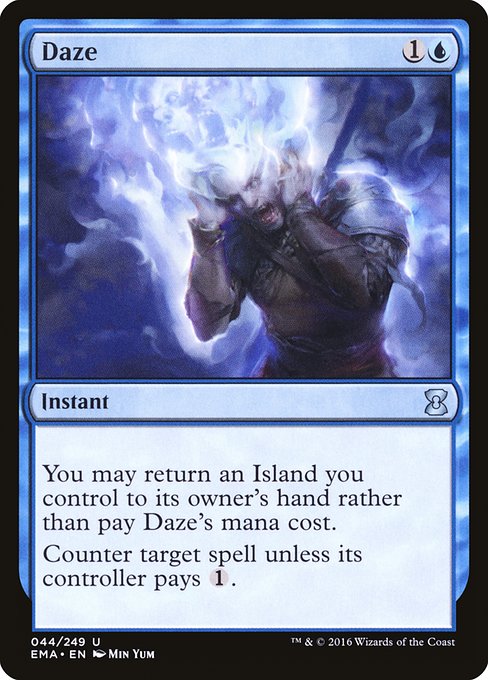 Daze
You may return an Island you control to its owner's hand rather than pay this spell's mana cost.
Daze
You may return an Island you control to its owner's hand rather than pay this spell's mana cost.
Counter target spell unless its controller pays {1}.
, the Pauper variant, while playing weaker cards overall, has way less hate cards to worry about. As we will see later, this deck has come prepared with ways to beat specific hate as well.
Read More: The Most Expensive Commander Masters Reprints
Enabling Your Win Conditions
Without access to the modal double-faced cards to play as “Lands”, this Pauper deck requires some improvisation to obtain the necessary mana to cast Balustrade Spy or Destroy the Evidence. Destroy the Evidence also requires a Land under your control to be able to target. As a result, this deck does play at least one Land. Bryant Cook’s List in particular plays one copy of
Woodland Chasm
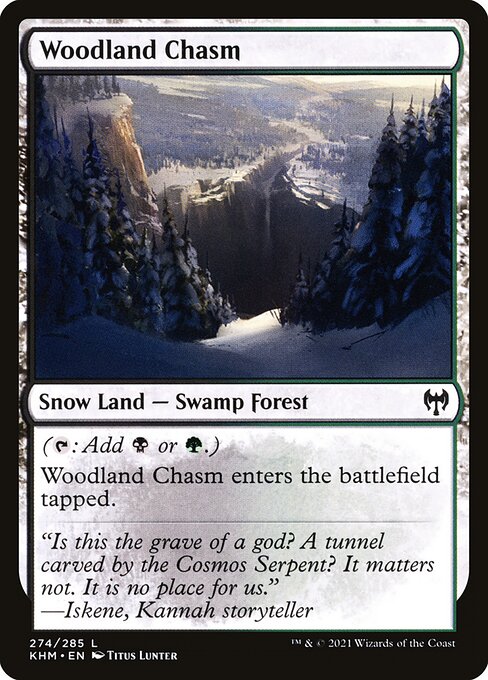 Woodland Chasm
({T}: Add {B} or {G}.)
Woodland Chasm
({T}: Add {B} or {G}.)
This land enters tapped.
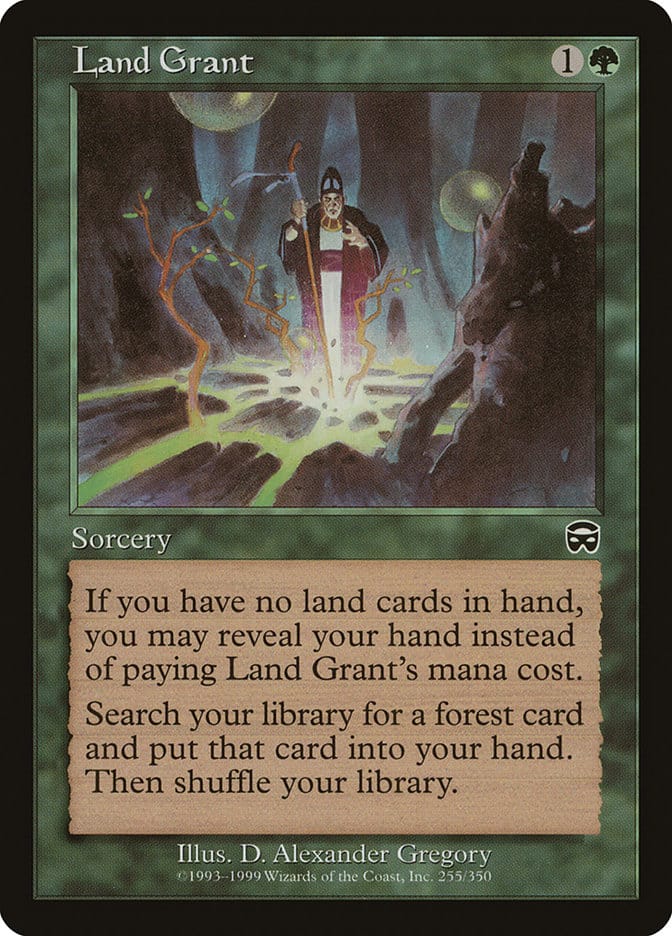
. Importantly though, this deck also needs ways to find this Land in order to guarantee a victory with Balustrade Spy or Destroy the Evidence. One unique way of doing so is by playing Land Grant. Given that your deck only has one Land in it, you either have it in your hand already and are good to go, or you simply cast Land Grant for free revealing your hand with no Lands in it, find the Land, and play it.
In addition to Land Grant, this deck also makes use of both
Troll of Khazad-dum
 Troll of Khazad-dum
This creature can't be blocked except by three or more creatures.
Troll of Khazad-dum
This creature can't be blocked except by three or more creatures.
Swampcycling {1} ({1}, Discard this card: Search your library for a Swamp card, reveal it, put it into your hand, then shuffle.)
and
Generous Ent
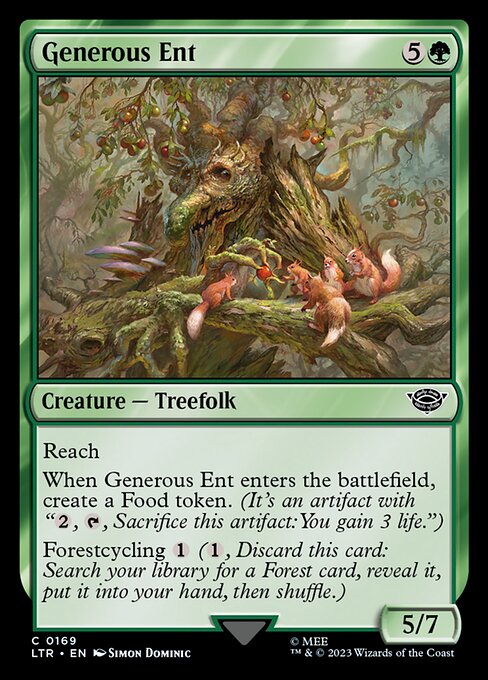 Generous Ent
Reach
Generous Ent
Reach
When this creature enters, create a Food token. (It's an artifact with "{2}, {T}, Sacrifice this token: You gain 3 life.")
Forestcycling {1} ({1}, Discard this card: Search your library for a Forest card, reveal it, put it into your hand, then shuffle.)
as ways to search for Woodland Chasm. Remember, with Lotleth Giant as your actual win condition alongside Dread Return, the Creature count of this deck has to be high enough to close the game, so these Landcyclers fill both roles nicely.
Read More: Wizards of the Coast Suggests Potential for Further MTG Unbannings!
More Mana Generation
Without access to Lands, though, this deck needs to play a lot of other ways to generate mana in the first place. Both Simian Spirit Guide and Lotus Petal provide free sources of mana that can be used for your Landcycling Creatures if necessary. Beyond free sources of mana, this deck also uses Wild Cantor, Tinder Wall,
Dark Ritual
 Dark Ritual
Add {B}{B}{B}.
, Rite of Flame, and Cabal Ritual as extra mana sources that help propel you closer towards casting Spy or Destroy the Evidence.
Dark Ritual
Add {B}{B}{B}.
, Rite of Flame, and Cabal Ritual as extra mana sources that help propel you closer towards casting Spy or Destroy the Evidence.
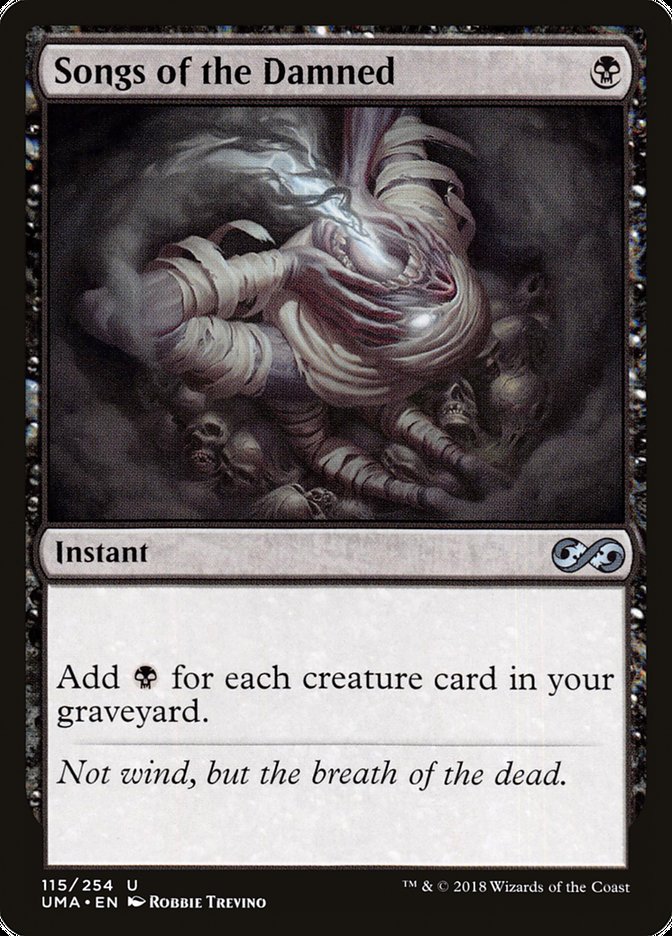
Wild Cantor, Tinder Wall, Street Wraith, and the Landcyclers also help enable Songs of the Damned, which can generate lots of mana at once. Cards like Songs of the Damned and Cabal Ritual that generate lots of black mana also help make sure you can Unearth your Dregscape Zombies after resolving Spy or Destroy the Evidence, enabling Dread Return. Every card in this deck either acts as part of your win condition or helps with mana production to enable your ability to win, so the deck is extremely streamlined. While the deck is fast, this does mean it attacks on one axis, which presents some weaknesses.
Read More: Unbanned MTG Payoff Swiftly Revitalizes Dead Archetype!
Weaknesses and Playing Around Hate
One of the most obvious ways to hate on the deck is to run lots of graveyard hate, like
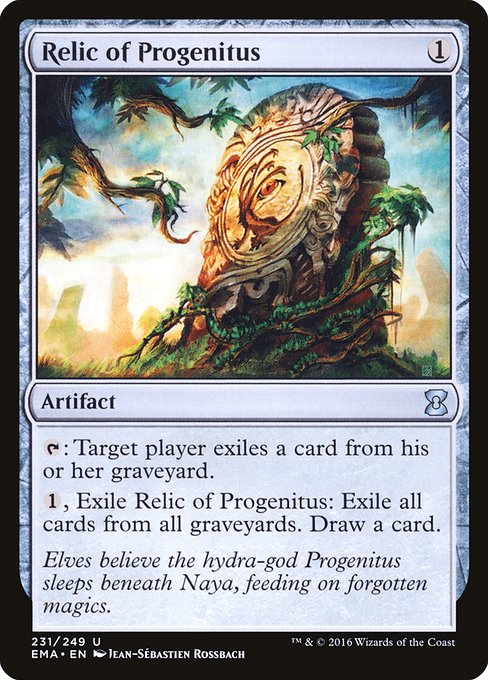
Relic of Progenitus
 Relic of Progenitus
{T}: Target player exiles a card from their graveyard.
Relic of Progenitus
{T}: Target player exiles a card from their graveyard.
{1}, Exile this artifact: Exile all graveyards. Draw a card.
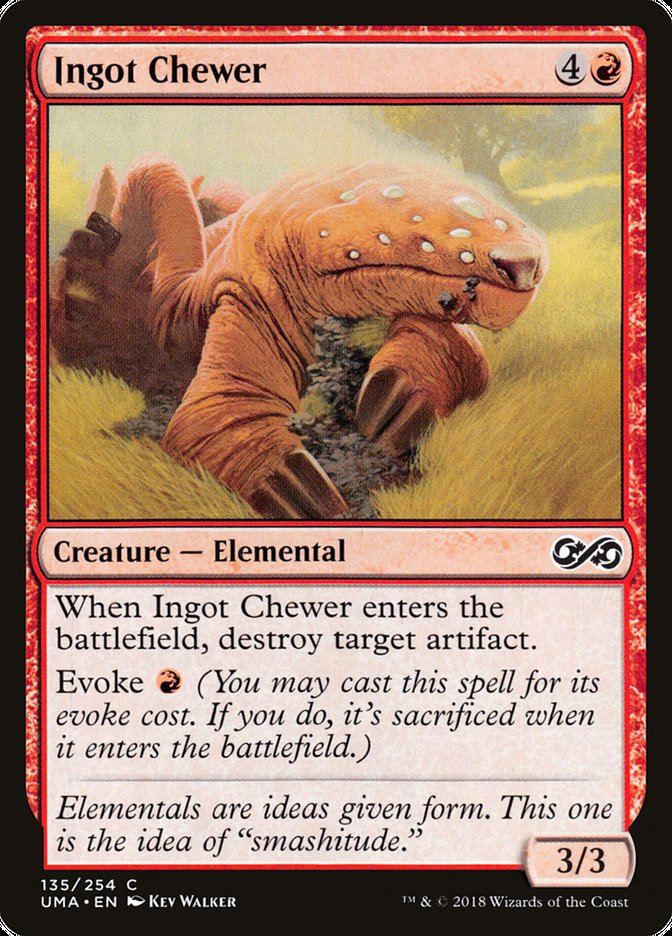
. Relic can exile your whole graveyard after you’ve milled your library, making it impossible to win with Lotleth Giant. Unsurprisingly, though, there’s a couple decent ways to play around this. First and foremost, Bryant’s list plays four copies of Ingot Chewer as ways to remove opposing graveyard hate.
In addition to Ingot Chewer, one really cool way of beating Relic is by using Haunting Misery. Haunting Misery lets you exile any number of Creatures from your graveyard and dome your opponent for that much damage. Normally with Dread Return and Lotleth Giant, once you mill your library, you will have to cast Dread Return, targeting Lotleth Giant. If your opponent has Relic in play, they can respond, exile your graveyard, and blow the whole plan up.
With Haunting Memory and Spy or Destroy the Evidence, however, you can mill your library, then cast Haunting Memory maintaining priority, giving your opponent no window to respond with a Relic activation. Importantly, Haunting Misery doesn’t have Flashback, so you do have to draw it naturally to win, unlike with Dread Return and Lotleth Giant.
Read More: MTG Lifegain Combo Destroys Top Tier Decks in Major Event!
Beyond Graveyard Hate
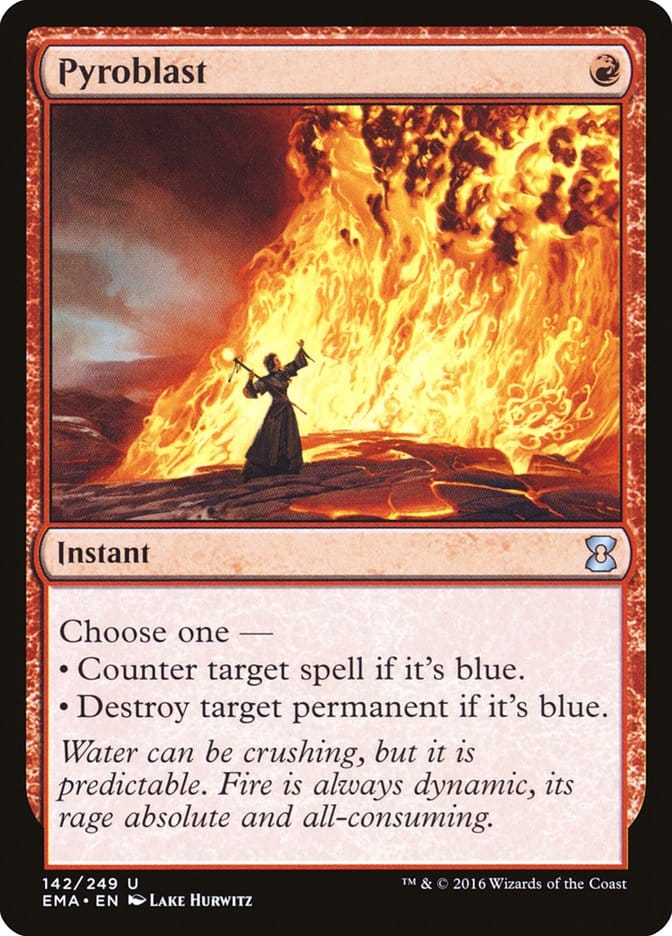
In addition to graveyard hate, this deck is also vulnerable to Counterspells. Countering a Spy or Destroy the Evidence can be backbreaking, especially considering how many resources were used to generate the necessary mana to cast them. To play around Counterspells, this deck has a playset of Pyroblast ready to go out of the sideboard, alongside a copy of Highland Forest, which is a Land to search up with Land Grant or Generous Ent that helps cast Pyroblast.
Even with its weaknesses, this deck is so fast and harder to hate out than it might seem. It will be interesting to see how this deck evolves, and if it will indeed end up being too strong for the Pauper format. Will players be able to adapt, or will there be another ban announcement in short order?
Read More: Updated Infamous Archaic MTG Deck Dominates Pro Tour!