
Over the past month, the Modern metagame has been relatively stable, all things considered. Decks like
Crashing Footfalls
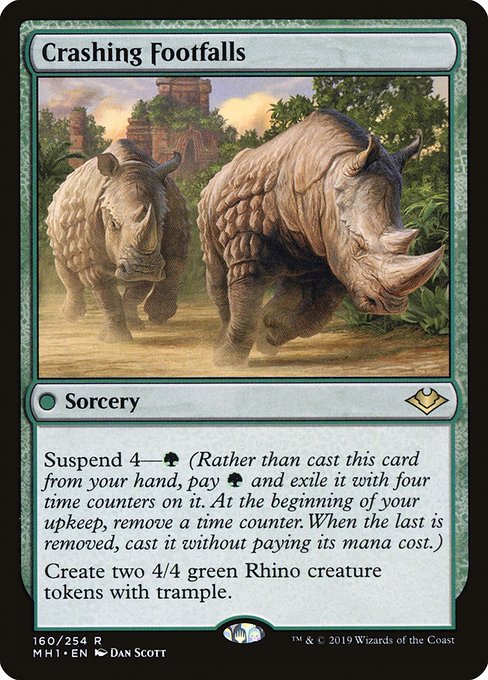 Crashing Footfalls
Suspend 4—{G} (Rather than cast this card from your hand, pay {G} and exile it with four time counters on it. At the beginning of your upkeep, remove a time counter. When the last is removed, you may cast it without paying its mana cost.)
Crashing Footfalls
Suspend 4—{G} (Rather than cast this card from your hand, pay {G} and exile it with four time counters on it. At the beginning of your upkeep, remove a time counter. When the last is removed, you may cast it without paying its mana cost.)
Create two 4/4 green Rhino creature tokens with trample.
Cascade and
Yawgmoth, Thran Physician
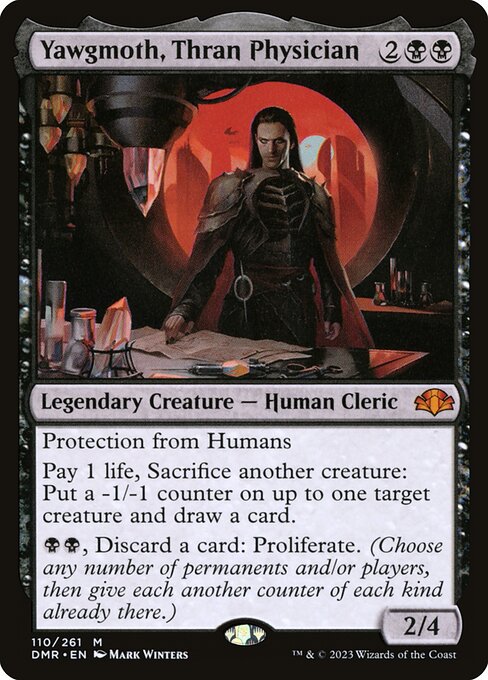 Yawgmoth, Thran Physician
Protection from Humans
Yawgmoth, Thran Physician
Protection from Humans
Pay 1 life, Sacrifice another creature: Put a -1/-1 counter on up to one target creature and draw a card.
{B}{B}, Discard a card: Proliferate. (Choose any number of permanents and/or players, then give each another counter of each kind already there.)
combo have been as popular as ever. Despite the recent bannings of
Up the Beanstalk
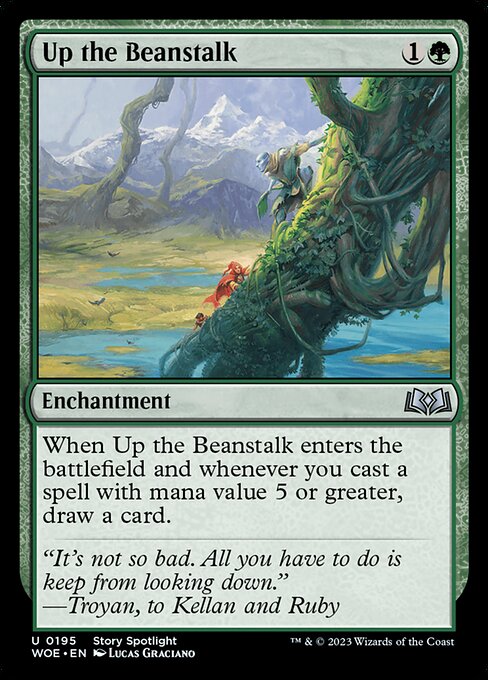 Up the Beanstalk
When this enchantment enters and whenever you cast a spell with mana value 5 or greater, draw a card.
and
Fury
Up the Beanstalk
When this enchantment enters and whenever you cast a spell with mana value 5 or greater, draw a card.
and
Fury
 Fury
Double strike
Fury
Double strike
When this creature enters, it deals 4 damage divided as you choose among any number of target creatures and/or planeswalkers.
Evoke—Exile a red card from your hand.
, Rakdos Scam is still a top-tier archetype. With this in mind, it can be tough to innovate in a field with minimal metagame evolution.
Still, though, there’s room even within tier one archetypes to think outside the box to help fight against other Modern powerhouses. The Magic Online Modern Showcase Challenge that took place yesterday put this notion on full display. From an Ixalan Dinosaur making its way into the winning Amulet Titan decklist to the utilization of an unusual Dredge card within a Yawgmoth combo shell, there were plenty of interesting deckbuilding decisions made for this tournament.
Today, we are going to highlight a few of the more intriguing forms of innovation among some of the top performing decks in the tournament. With just under 350 player, this massive event gave rise to a few unique ideas that are worth taking a closer look at. Let’s start first by talking about the winning decklist and the featuring of an uncommon Ixalan Dinosaur.
Itzquinth as a Tutor Target?
First up, we have a relatively stock Amulet Titan list, at least within the maindeck specifically. The goal of the deck is to maximize the power of
Amulet of Vigor
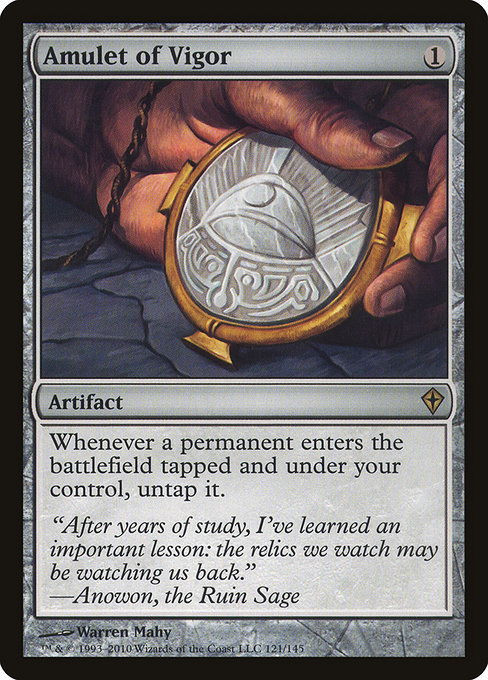 Amulet of Vigor
Whenever a permanent you control enters tapped, untap it.
. By providing the ability to untap Lands that otherwise enter the battlefield tapped, you are able to abuse the strength of bounce Lands like
Simic Growth Chamber
Amulet of Vigor
Whenever a permanent you control enters tapped, untap it.
. By providing the ability to untap Lands that otherwise enter the battlefield tapped, you are able to abuse the strength of bounce Lands like
Simic Growth Chamber
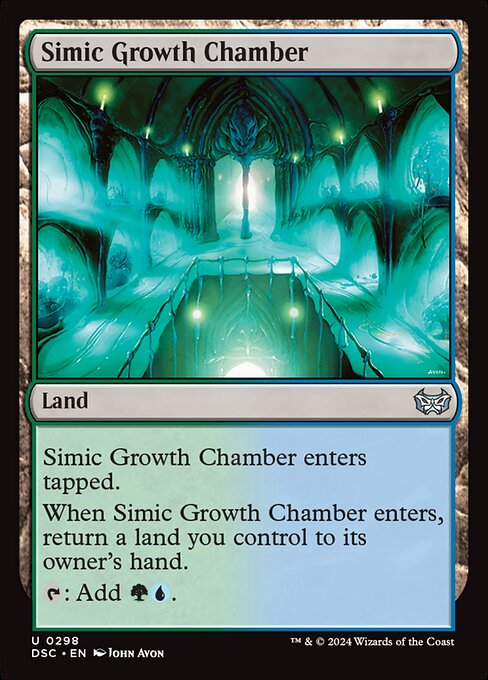 Simic Growth Chamber
This land enters tapped.
Simic Growth Chamber
This land enters tapped.
When this land enters, return a land you control to its owner's hand.
{T}: Add {G}{U}.
by getting multiple mana right away. With multiple copies of Amulet in play, things can get out of hand rather quickly.
From there, you want to get to six mana as quickly as possible to resolve a copy of
Primeval Titan
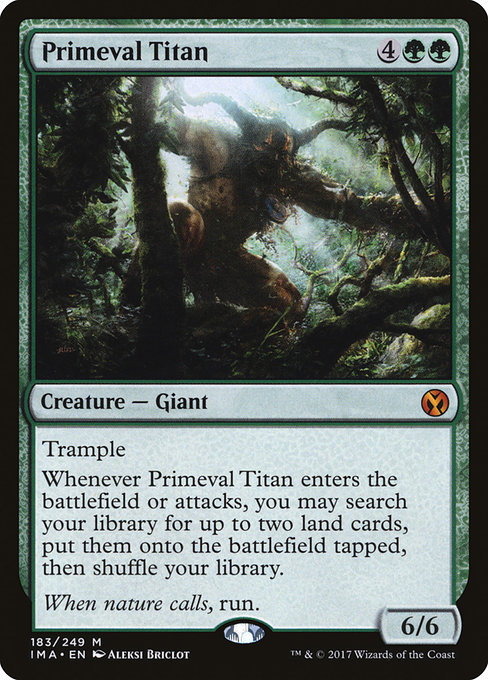 Primeval Titan
Trample
Primeval Titan
Trample
Whenever this creature enters or attacks, you may search your library for up to two land cards, put them onto the battlefield tapped, then shuffle.
. Titan can tutor up a slew of different utility Lands to help make winning the game rather trivial. This archetype is rather consistent and is capable of winning the game very quickly. The main drawback is that it is vulnerable to a handful of specific hate cards.
One of the most effective hate cards out there is
Magus of the Moon
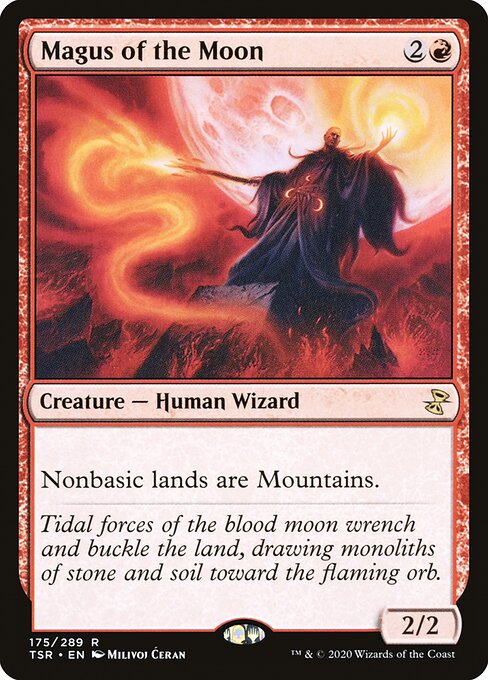 Magus of the Moon
Nonbasic lands are Mountains.
. By turning all non-basic Lands into Mountains, this deck’s wide range of utility Lands become rather ineffective. Additionally, it can be tough to even get a copy of Primeval Titan into play in the first place, as you may not have access to much green mana.
Magus of the Moon
Nonbasic lands are Mountains.
. By turning all non-basic Lands into Mountains, this deck’s wide range of utility Lands become rather ineffective. Additionally, it can be tough to even get a copy of Primeval Titan into play in the first place, as you may not have access to much green mana.
In some matchups,
Blood Moon
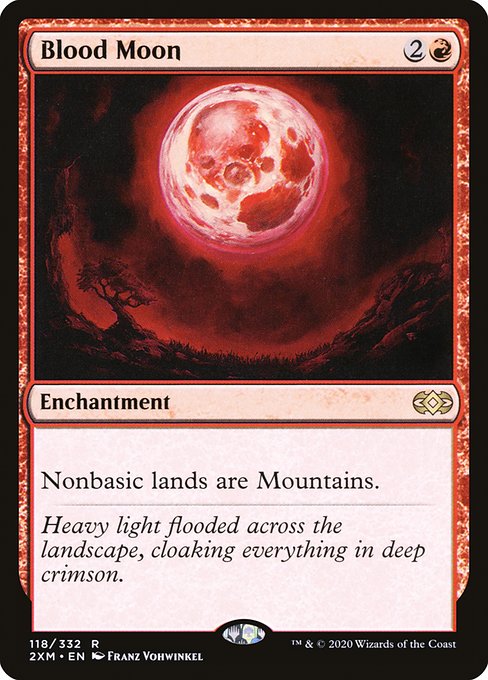 Blood Moon
Nonbasic lands are Mountains.
is a better hate card, as it doesn’t die to Creature removal like
Lightning Bolt
Blood Moon
Nonbasic lands are Mountains.
is a better hate card, as it doesn’t die to Creature removal like
Lightning Bolt
 Lightning Bolt
 deals 3 damage to any target.
. However, Amulet Titan typically plays a bunch of copies of
Boseiju, Who Endures
Lightning Bolt
Lightning Bolt deals 3 damage to any target.
. However, Amulet Titan typically plays a bunch of copies of
Boseiju, Who Endures
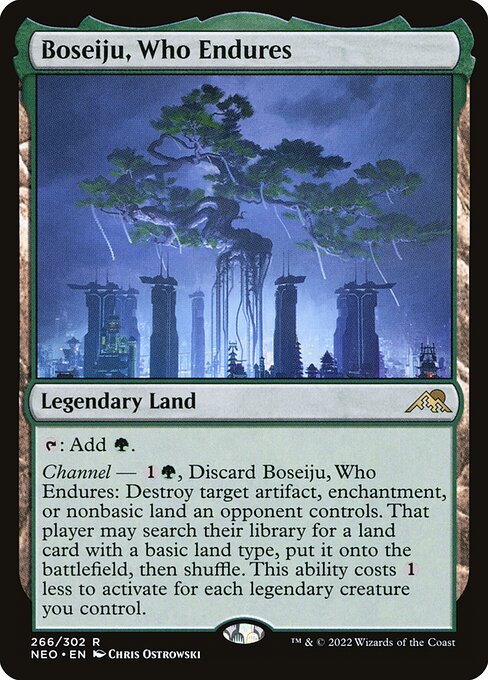 Boseiju, Who Endures
{T}: Add {G}.
Boseiju, Who Endures
{T}: Add {G}.
Channel — {1}{G}, Discard this card: Destroy target artifact, enchantment, or nonbasic land an opponent controls. That player may search their library for a land card with a basic land type, put it onto the battlefield, then shuffle. This ability costs {1} less to activate for each legendary creature you control.
, making it easier to answer Blood Moon in general. Answering Magus can be a bit tougher. This, in theory, is where
Itzquinth, Firstborn of Gishath
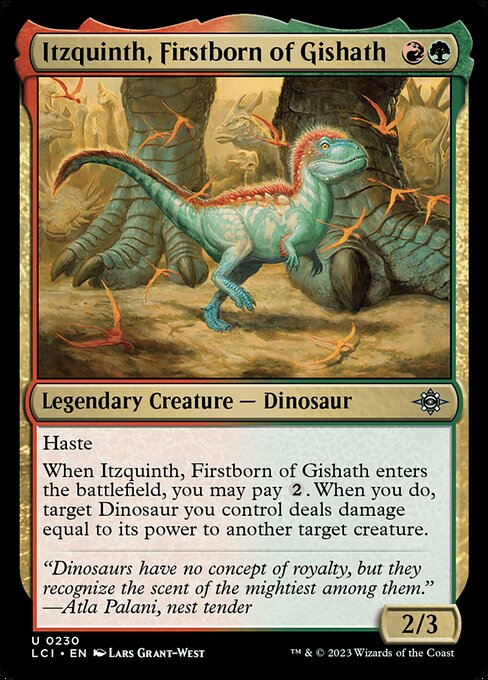 Itzquinth, Firstborn of Gishath
Haste
Itzquinth, Firstborn of Gishath
Haste
When Itzquinth enters, you may pay {2}. When you do, target Dinosaur you control deals damage equal to its power to another target creature.
comes into play.
For four mana, you can use Itzquinth to kill opposing copies of Magus and free up your manabase once more. Given that
Summoner’s Pact
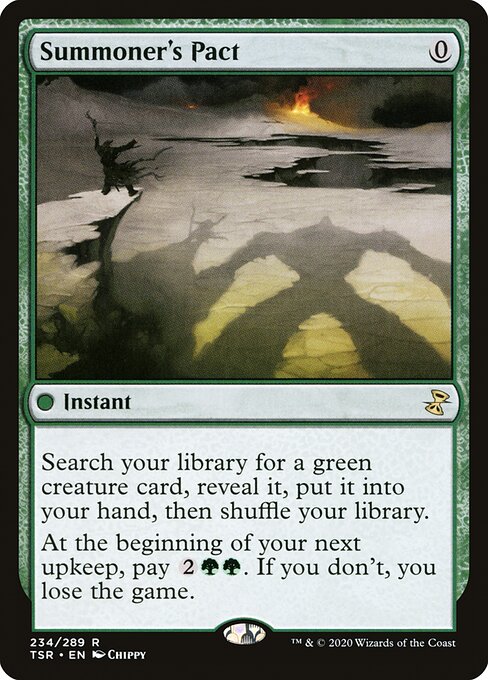 Summoner’s Pact
Search your library for a green creature card, reveal it, put it into your hand, then shuffle.
Summoner’s Pact
Search your library for a green creature card, reveal it, put it into your hand, then shuffle.
At the beginning of your next upkeep, pay {2}{G}{G}. If you don't, you lose the game.
can only tutor for green Creatures, the range of answers to Magus that can be tutored is fairly limited. If you manage to get a single basic Forest into play, Itzquinth can function as that answer, which is a nice tool to have from a one-of out of the sideboard.
Read More: Unique Enchantments Deck Meshes Two Archetypes Together!
Necroplasm as Tech for Rhinos
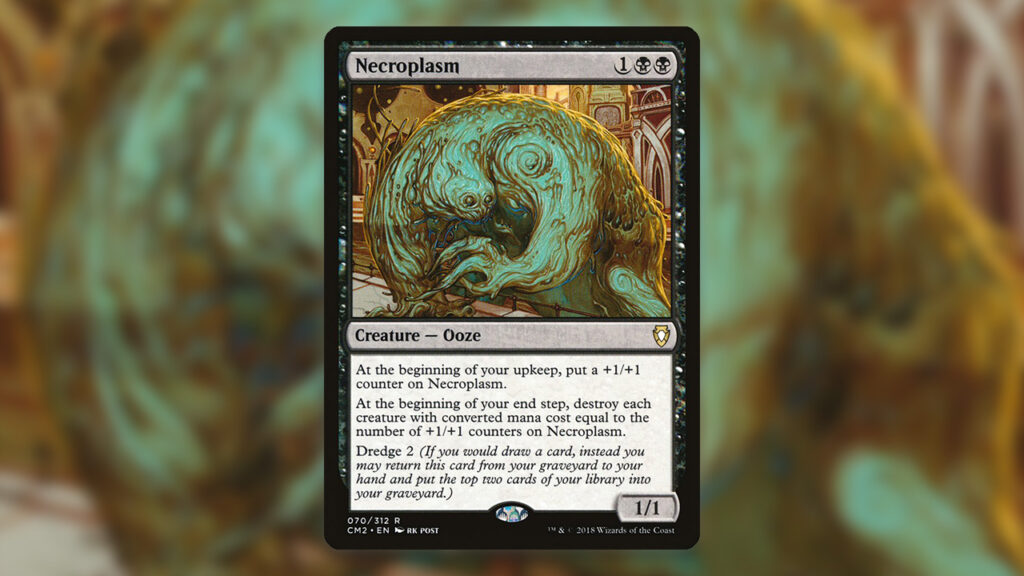
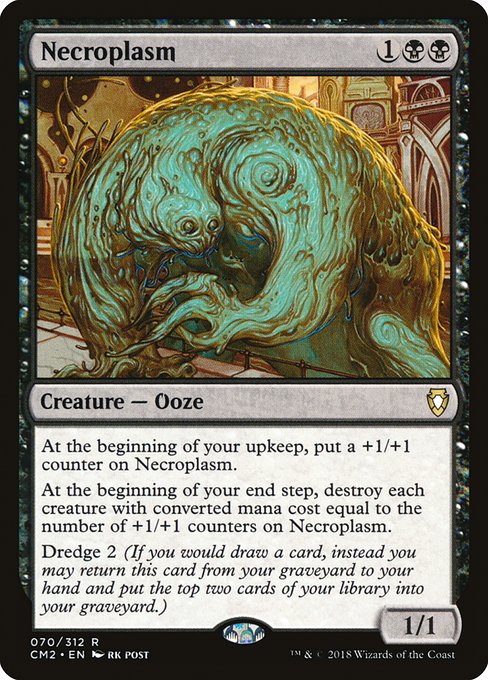
In a similar vein to how the winning Amulet Titan list made use of Itzquinth as a tutor-able answer to an opposing silver bullet, one high performing Yawgmoth player from the tournament used
Necroplasm
 Necroplasm
At the beginning of your upkeep, put a +1/+1 counter on this creature.
Necroplasm
At the beginning of your upkeep, put a +1/+1 counter on this creature.
At the beginning of your end step, destroy each creature with mana value equal to the number of +1/+1 counters on this creature.
Dredge 2 (If you would draw a card, you may mill two cards instead. If you do, return this card from your graveyard to your hand.)
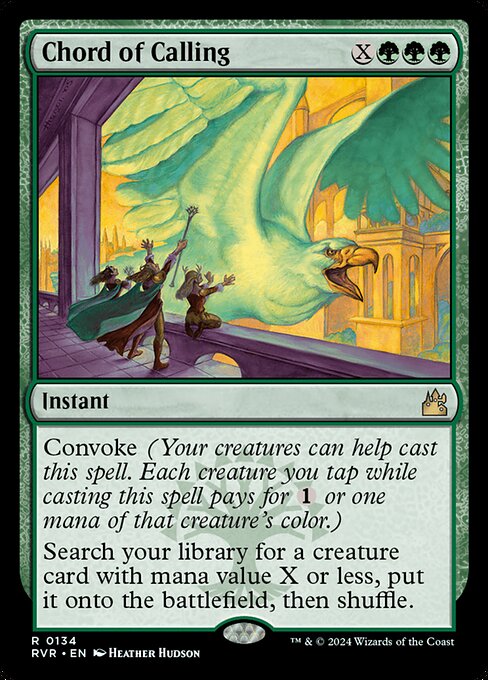
as a strange silver bullet in a couple different matchups. Typically, cards like
Chord of Calling
 Chord of Calling
Convoke (Your creatures can help cast this spell. Each creature you tap while casting this spell pays for {1} or one mana of that creature's color.)
Chord of Calling
Convoke (Your creatures can help cast this spell. Each creature you tap while casting this spell pays for {1} or one mana of that creature's color.)
Search your library for a creature card with mana value X or less, put it onto the battlefield, then shuffle.
or
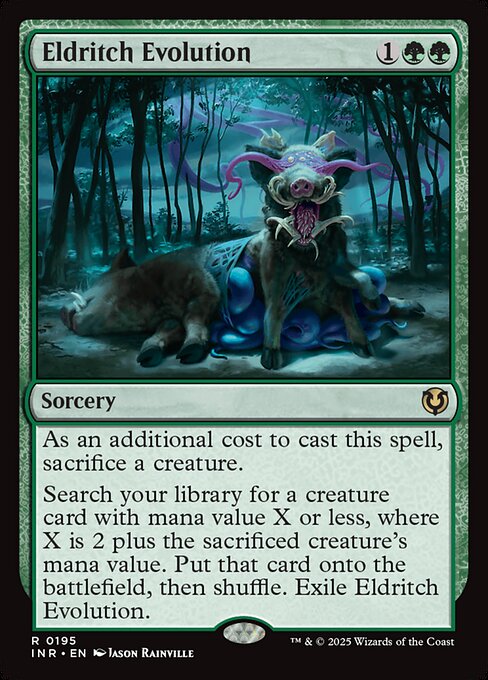
Eldritch Evolution
 Eldritch Evolution
As an additional cost to cast this spell, sacrifice a creature.
Eldritch Evolution
As an additional cost to cast this spell, sacrifice a creature.
Search your library for a creature card with mana value X or less, where X is 2 plus the sacrificed creature's mana value. Put that card onto the battlefield, then shuffle. Exile Eldritch Evolution.
are used by Yawgmoth players to tutor the namesake card. Given the card’s importance to the deck as a whole, Chord and Evolution are mostly there to add redundancy to the archetype.
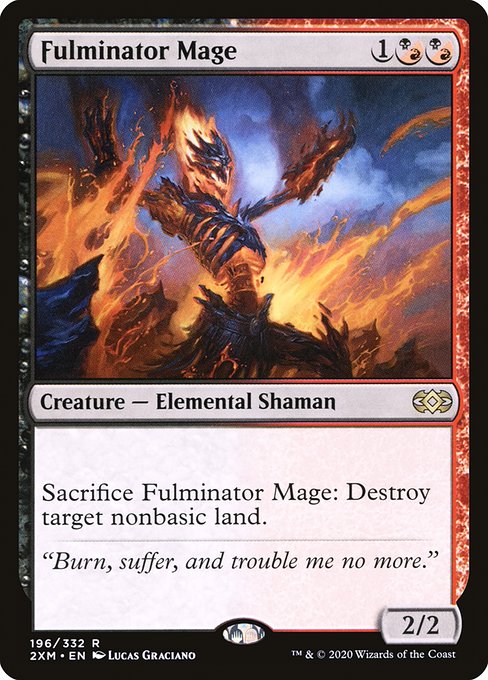
However, they do also offer some flexibility, especially in games two and three, to help fight against certain strategies. For instance,
Fulminator Mage
 Fulminator Mage
Sacrifice this creature: Destroy target nonbasic land.
is a nice option to tutor for against mono-green Tron. With Agatha’s Soul Cauldron in play, it’s easy to blow up a ton of your opponent’s non-basic Lands over the course of the game by sacrificing Fulminator Mage, exiling it from your graveyard with Cauldron, and giving your other Creatures with +1/+1 counters Fulimnator’s ability.
Fulminator Mage
Sacrifice this creature: Destroy target nonbasic land.
is a nice option to tutor for against mono-green Tron. With Agatha’s Soul Cauldron in play, it’s easy to blow up a ton of your opponent’s non-basic Lands over the course of the game by sacrificing Fulminator Mage, exiling it from your graveyard with Cauldron, and giving your other Creatures with +1/+1 counters Fulimnator’s ability.
Well, while Necroplasm doesn’t synergize the same way with Cauldron, it’s still a neat card to be able to find. Necroplasm is a weird card that, on your end step every turn it’s in play, destroys opposing Creatures with mana value equal to the number of +1/+1 counters on itself. It then accrues counters on your upkeep.
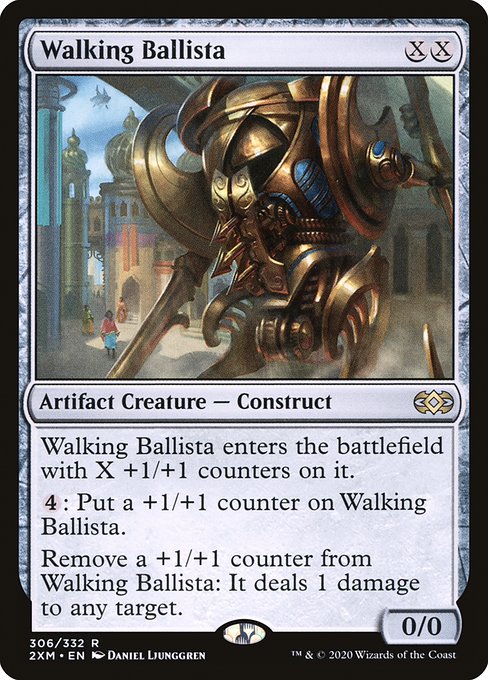
The main use for a card like this is that you can use it to help kill a wide battlefield of Creatures with mana values of zero. This includes Creature tokens, such as from the Crashing Footfalls decks, or even Creatures with X in their mana costs, such as
Walking Ballista
 Walking Ballista
This creature enters with X +1/+1 counters on it.
Walking Ballista
This creature enters with X +1/+1 counters on it.
{4}: Put a +1/+1 counter on this creature.
Remove a +1/+1 counter from this creature: It deals 1 damage to any target.
and
Hangarback Walker
 Hangarback Walker
This creature enters with X +1/+1 counters on it.
Hangarback Walker
This creature enters with X +1/+1 counters on it.
When this creature dies, create a 1/1 colorless Thopter artifact creature token with flying for each +1/+1 counter on this creature.
{1}, {T}: Put a +1/+1 counter on this creature.
out of
Hardened Scales
 Hardened Scales
If one or more +1/+1 counters would be put on a creature you control, that many plus one +1/+1 counters are put on it instead.
decks.
Hardened Scales
If one or more +1/+1 counters would be put on a creature you control, that many plus one +1/+1 counters are put on it instead.
decks.
Even though Necroplasm gains a +1/+1 counter on your upkeep, you can actually use Yawgmoth to put a -1/-1 counter on Necroplasm and keep it around as a constant answer to tokens. Thanks to its Dredge ability, even if Necroplasm dies, you can choose to bring it back to your hand when necessary. It’s unclear if Necroplasm or Itzquinth will indeed become archetype staples, but it’s cool to see these hidden gems prosper, nonetheless.
Read More: Underrated Ixalan Goblin Emerges as Multi-Format All-Star!
Some Archetype Innovation
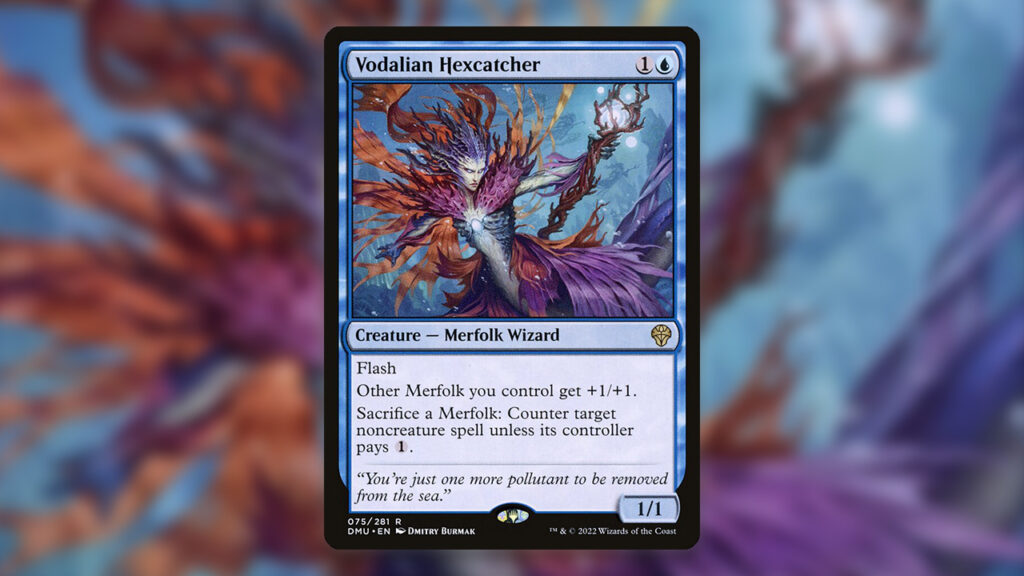
Beyond players making unique deckbuilding decisions within tier one strategies, some players also found success playing some interesting deck choices that got better since the recent ban announcement. First, Merfolk placed third in the tournament, boasting its prowess as a legitimately strong archetype. Part of what held Merfolk back was its vulnerability to Fury, which is no longer a concern.
This deck does a great job of using a mix of disruption and pressure to cross the finish line.
Tide Shaper
 Tide Shaper
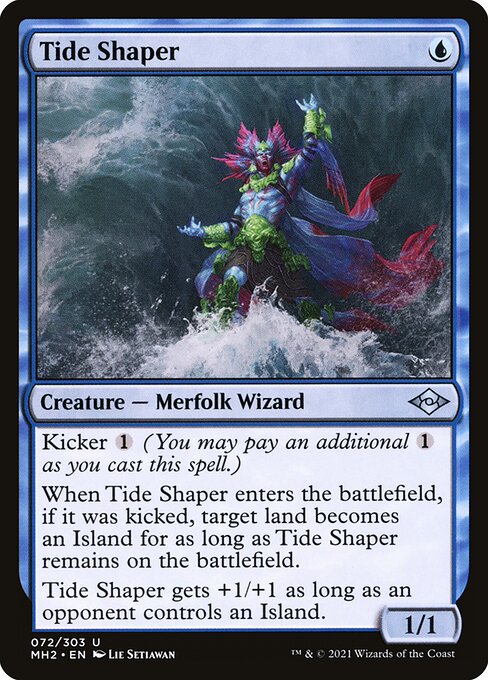
Kicker {1} (You may pay an additional {1} as you cast this spell.)
Tide Shaper
Kicker {1} (You may pay an additional {1} as you cast this spell.)
When this creature enters, if it was kicked, target land becomes an Island for as long as this creature remains on the battlefield.
This creature gets +1/+1 as long as an opponent controls an Island.
is excellent against decks with
Urza’s Saga
 Urza’s Saga
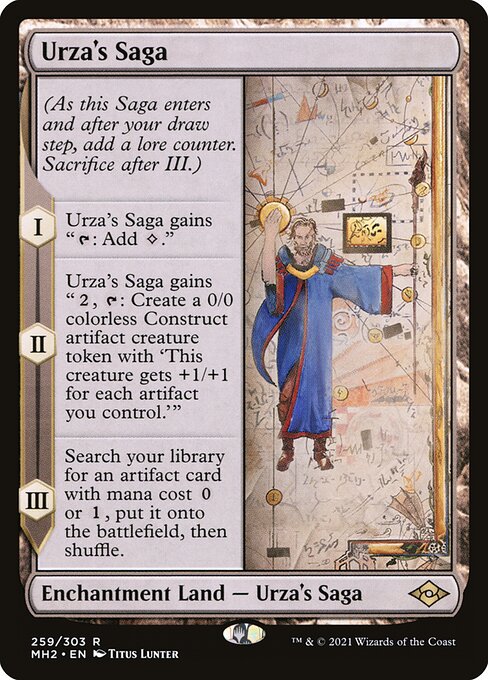
(As this Saga enters and after your draw step, add a lore counter. Sacrifice after III.)
Urza’s Saga
(As this Saga enters and after your draw step, add a lore counter. Sacrifice after III.)
I — This Saga gains "{T}: Add {C}."
II — This Saga gains "{2}, {T}: Create a 0/0 colorless Construct artifact creature token with 'This token gets +1/+1 for each artifact you control.'"
III — Search your library for an artifact card with mana cost {0} or {1}, put it onto the battlefield, then shuffle.
, while
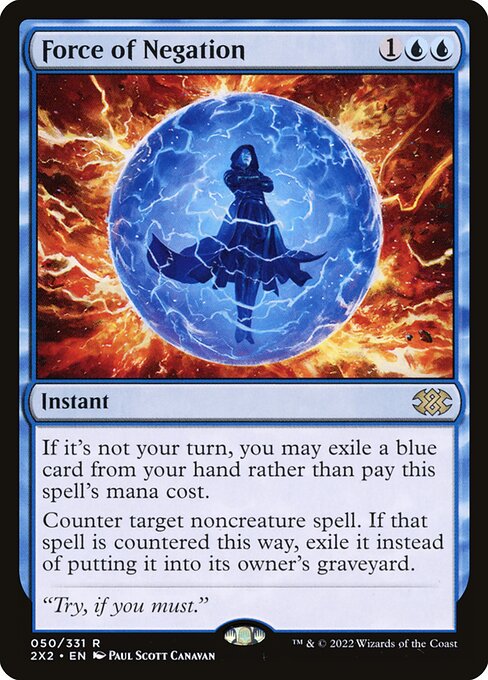
Force of Negation
 Force of Negation
If it's not your turn, you may exile a blue card from your hand rather than pay this spell's mana cost.
Force of Negation
If it's not your turn, you may exile a blue card from your hand rather than pay this spell's mana cost.
Counter target noncreature spell. If that spell is countered this way, exile it instead of putting it into its owner's graveyard.
and Vodalian Hexcatcher work overtime in the Cascade matchups. Merfolk also gets to abuse some elite sideboard cards, such as
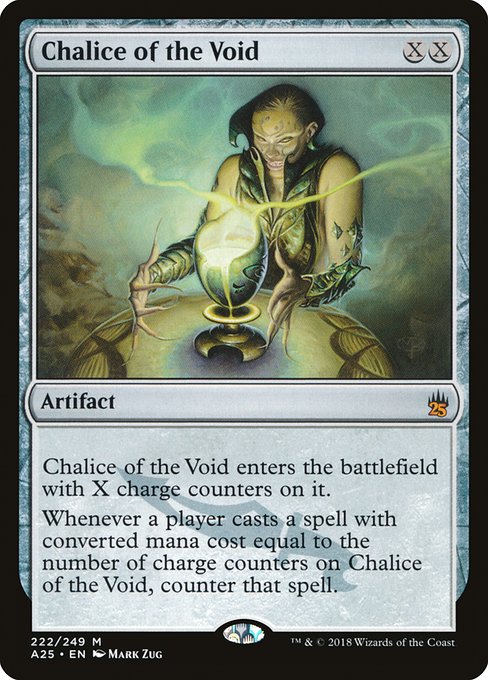
Chalice of the Void
 Chalice of the Void
This artifact enters with X charge counters on it.
Chalice of the Void
This artifact enters with X charge counters on it.
Whenever a player casts a spell with mana value equal to the number of charge counters on this artifact, counter that spell.
and Cursed Totem.
Beyond Merfolk, we also saw a distinct Scam variant make top 32 that may deserve further exploration. With Fury out of the picture, rather than playing red for cards like
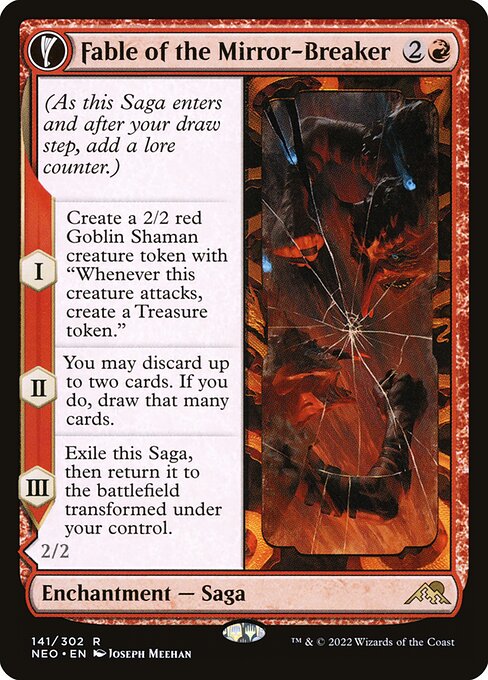
Fable of the Mirror-Breaker
 Fable of the Mirror-Breaker
(As this Saga enters and after your draw step, add a lore counter.)
Fable of the Mirror-Breaker
(As this Saga enters and after your draw step, add a lore counter.)
I — Create a 2/2 red Goblin Shaman creature token with "Whenever this token attacks, create a Treasure token."
II — You may discard up to two cards. If you do, draw that many cards.
III — Exile this Saga, then return it to the battlefield transformed under your control.
, this player decided to stick to a mono-black shell. You still get the absurd starts with
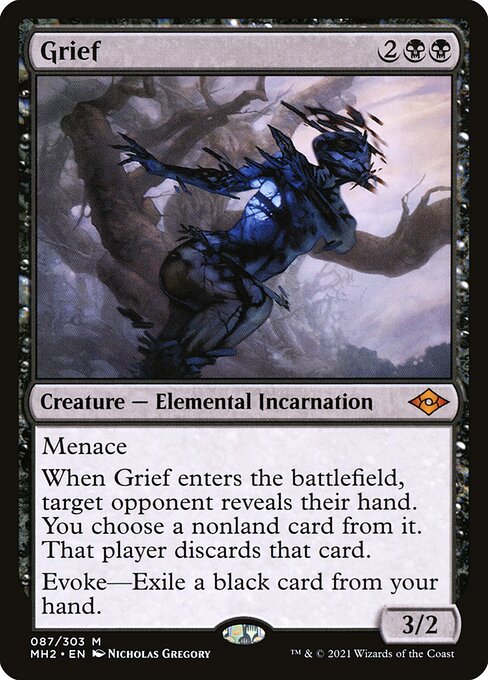
Grief
 Grief
Menace
Grief
Menace
When this creature enters, target opponent reveals their hand. You choose a nonland card from it. That player discards that card.
Evoke—Exile a black card from your hand.
and Undying Evil, but your manabase gets some immense upgrades.
Both Field of Ruin and Demolition Field provide you with great answers to Urza’s Saga and can even execute a good Stone Rain impression if the opponent runs out of basic Lands to search for. To further maximize these interactive Lands, this decklist shows off another Ixalan card in the form of Sunken Citadel, which can let you use Field of Ruin or Demolition Field as early as turn two. Additionally, you get to run a full playset of Castle Locthwain as a great source of card advantage in grindy matchups.
This tournament goes to show that, even if a format looks a bit stale at first glance, there’s always the opportunity to think outside the box. From new Ixalan cards that haven’t necessarily found good homes to old forgotten goodies like Necroplasm, there’s plenty of room to find useful tools that have flown under the radar.
Read More: Draw Your Deck on Turn 3 With this Absurd MTG Combo!