
Modern Horizons 2 is prerelease right around the corner, and with stores opening their doors again for organized play, now is the time to brush up on how to draft this incredible set! We’ll go over each archetype, as talked about by Gavin Verhey, what cards you should be looking for in each, and when to know to go for a certain deck.
Blue-White Artifacts
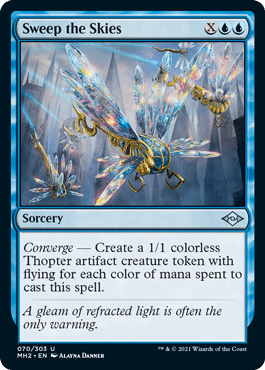
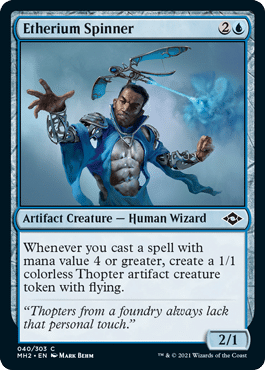
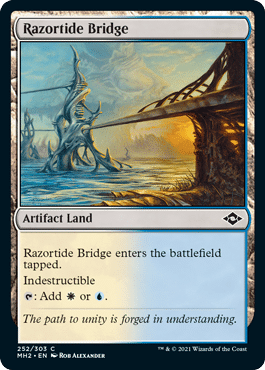
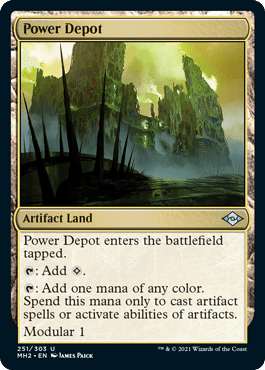
Blue and White’s theme is Artifacts. Affinity for artifacts, and Metalcraft are both mechanics in this set, so you’ll want to find cards that are going to make you artifact tokens, such as Sweep the Skies and Etherium Spinner. Some cards that are good filler creatures in your deck are
Chrome Courier
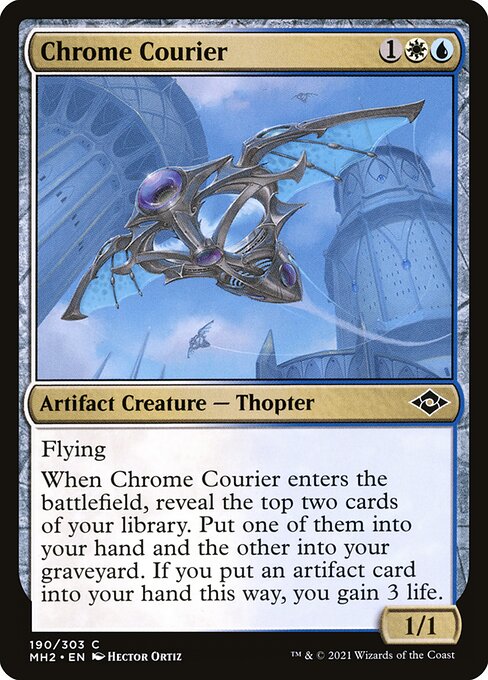 Chrome Courier
Flying
Chrome Courier
Flying
When this creature enters, reveal the top two cards of your library. Put one of them into your hand and the other into your graveyard. If you put an artifact card into your hand this way, you gain 3 life.
, Barbed Spike[tooltips], and even [tooltips]Hard Evidence. Pay offs in this deck will include cards like
Filigree Attendant
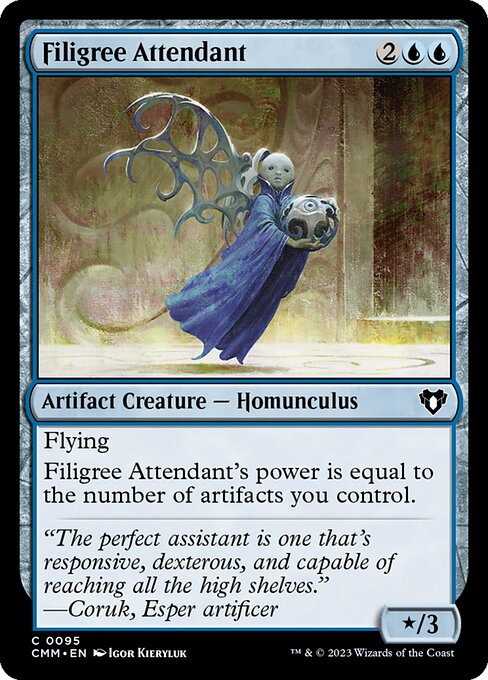 Filigree Attendant
Flying
Filigree Attendant
Flying
Filigree Attendant's power is equal to the number of artifacts you control.
,
Steelfin Whale
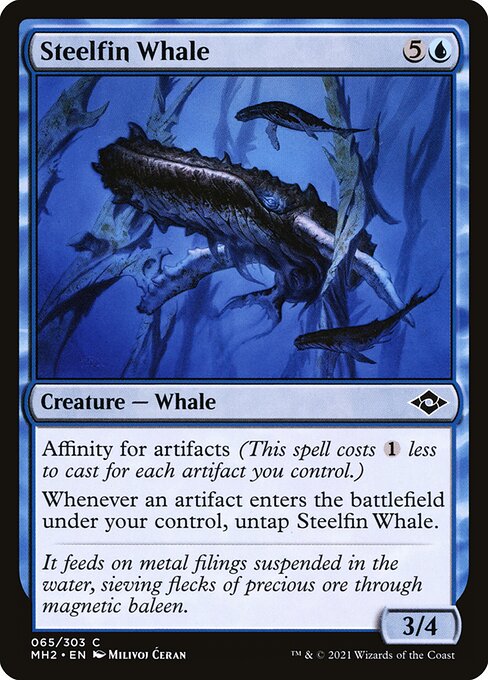 Steelfin Whale
Affinity for artifacts (This spell costs {1} less to cast for each artifact you control.)
Steelfin Whale
Affinity for artifacts (This spell costs {1} less to cast for each artifact you control.)
Whenever an artifact you control enters, untap this creature.
, and
Rise and Shine
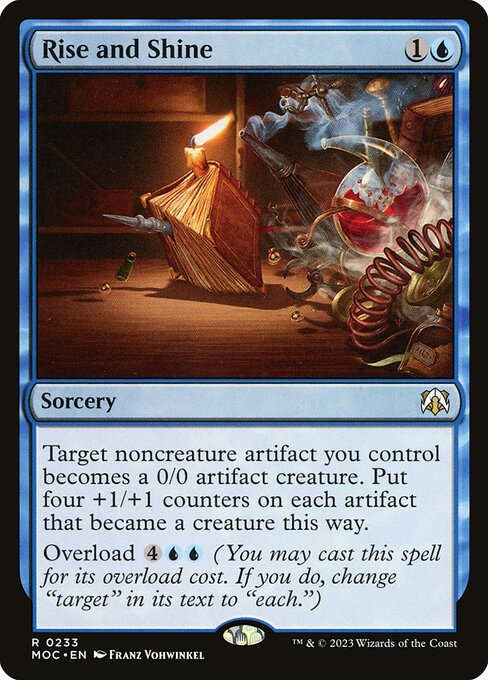 Rise and Shine
Target noncreature artifact you control becomes a 0/0 artifact creature. Put four +1/+1 counters on each artifact that became a creature this way.
Rise and Shine
Target noncreature artifact you control becomes a 0/0 artifact creature. Put four +1/+1 counters on each artifact that became a creature this way.
Overload {4}{U}{U} (You may cast this spell for its overload cost. If you do, change "target" in its text to "each.")
. Of note, you should value Razortide Bridge and Power Depot rather highly, as they’re effectively 2 mana for our affinity pay offs. You should go for this archetype if you hit a pay off and an Etherium Spinner relatively early and can force the strategy.
Blue-Black Discard
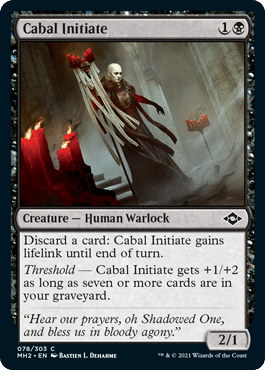
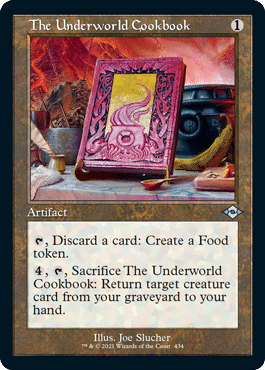
Blue and Black’s theme is discard. When we say discard, we don’t mean discarding your opponents cards, at least not primarily, but rather discarding your own cards to gain some sort of benefit. Generally discarding your own cards is a bit tricky to do, but there are a number of good ways to do this, with cards like Cabal Initiate and The Underworld cookbook. A few other notable cards here are going to be
Hell Mongrel
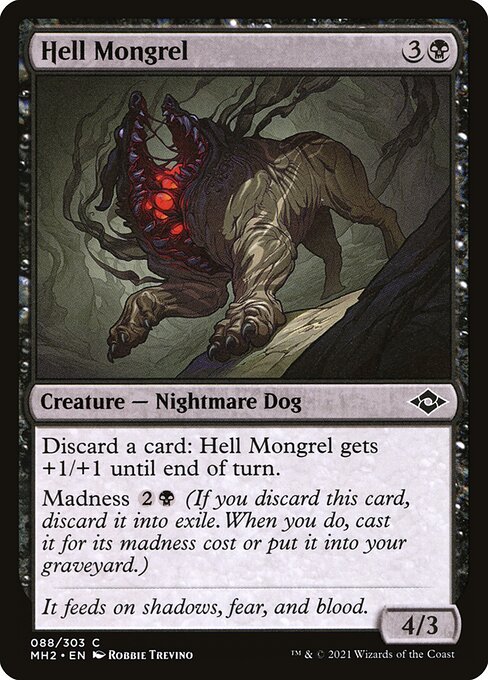 Hell Mongrel
Discard a card: This creature gets +1/+1 until end of turn.
Hell Mongrel
Discard a card: This creature gets +1/+1 until end of turn.
Madness {2}{B} (If you discard this card, discard it into exile. When you do, cast it for its madness cost or put it into your graveyard.)
, Aeromeba and Scuttletide[tooltips]. You can couple black Madness cards like [tooltips]Kitchen Imp as discard fodder, and round out the deck with cards like
Bone Shards
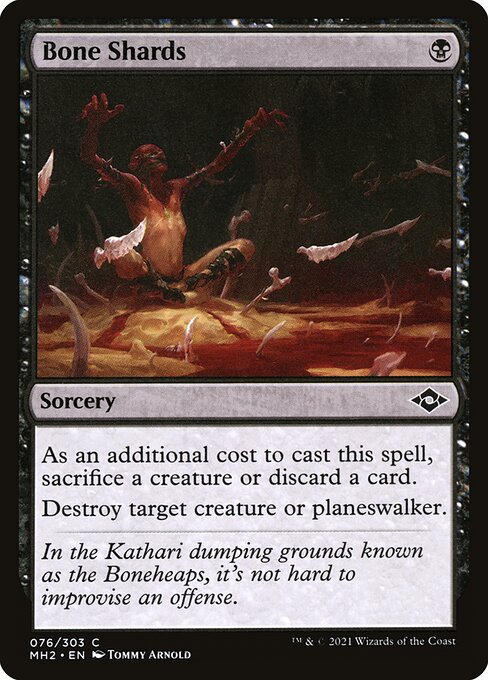 Bone Shards
As an additional cost to cast this spell, sacrifice a creature or discard a card.
Bone Shards
As an additional cost to cast this spell, sacrifice a creature or discard a card.
Destroy target creature or planeswalker.
for removal, and
Gilt-Blade Prowler
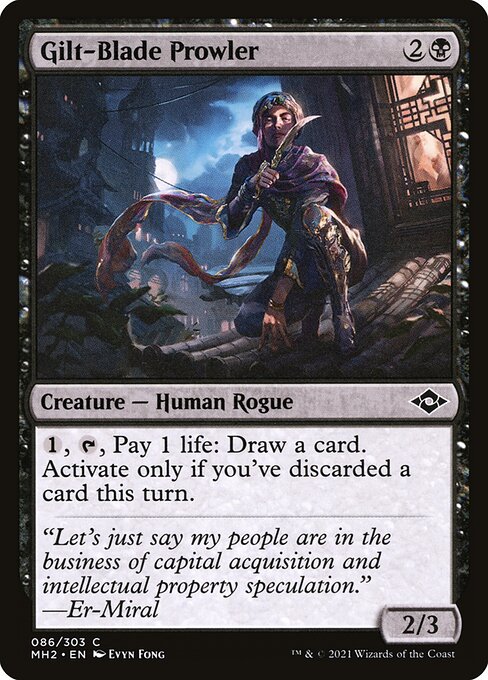 Gilt-Blade Prowler
{1}, {T}, Pay 1 life: Draw a card. Activate only if you've discarded a card this turn.
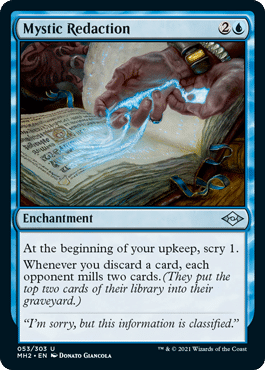
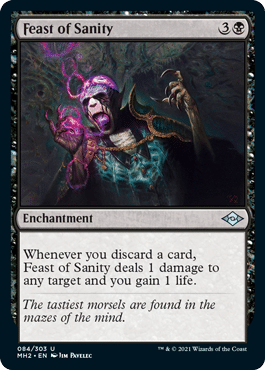
to help refill your hand. Pay offs in this deck will be cards like Mystic Redaction and Feast of Sanity. Of note, depending on what rares you open, or how many Mystic Redcations you pick up, Mill can be a very viable strategy to go for, just make sure that you pick up the engine pieces along the way.
Gilt-Blade Prowler
{1}, {T}, Pay 1 life: Draw a card. Activate only if you've discarded a card this turn.
to help refill your hand. Pay offs in this deck will be cards like Mystic Redaction and Feast of Sanity. Of note, depending on what rares you open, or how many Mystic Redcations you pick up, Mill can be a very viable strategy to go for, just make sure that you pick up the engine pieces along the way.
Black-Red Madness
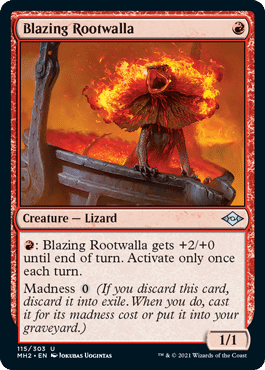
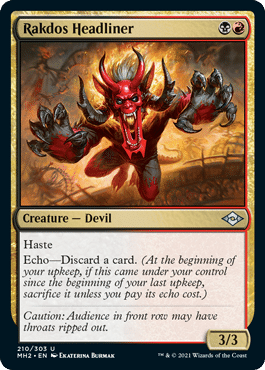
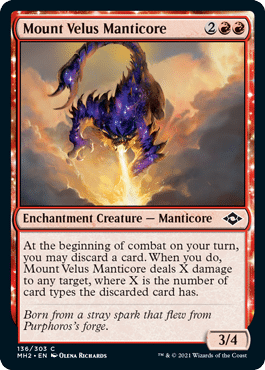
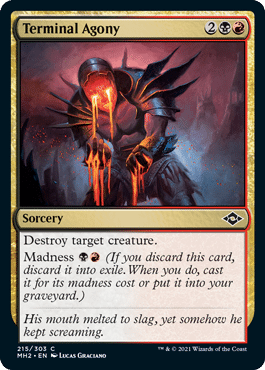
While Blue-Black was seeming the “control” self Discard deck, Black-Red Madness is more akin to the aggro deck. You will want similar sorts of engine cards in Cabal initiate, and Hell Mongrel, you’ll also want more madness creatures like Rakdos Headliner and Blazing Rootwalla. Your payoffs in this deck are going to be essentially utility spells that gain value from discarding cards and can help you clear the way for your creatures to get in damage. These are cards like Mount Velus Manticore, and Terminal Agony. Go for this archetype if you find some of the above spells early in pack 1
Green-Red Storm
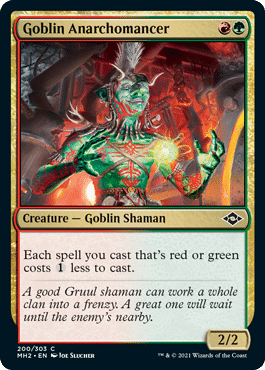
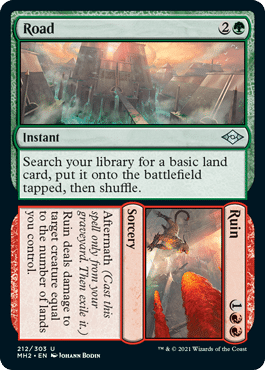
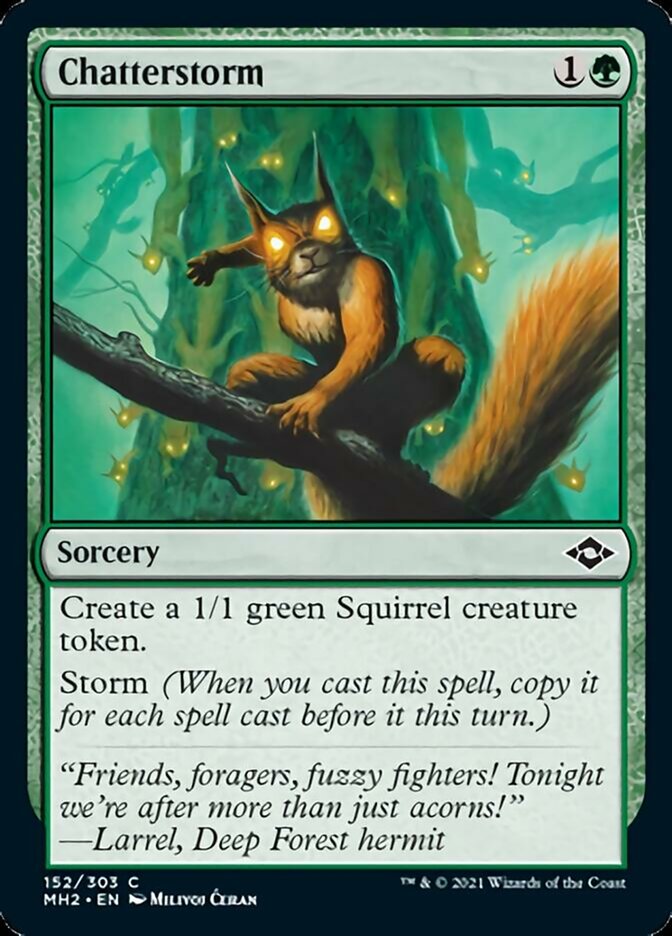
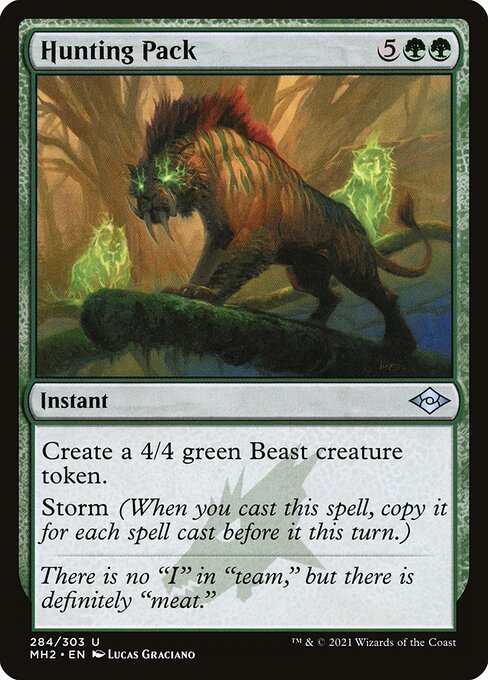
Green and red are the colors of Storm. Storm is generally a difficult deck to build, as it requires a lot of cheap spells and a storm pay off to be able to work. It also requires you to stay alive during the game long enough to get enough to be able to cast enough spells to go off. The crux of this deck is finding enough Goblin Anarchomancers and Road // Ruins to make enough effective mana to be able to cast multiple spells in a turn. Your Storm pay offs in this deck are going to be something like Chatterstorm, or
Hunting Pack
 Hunting Pack
Create a 4/4 green Beast creature token.
Hunting Pack
Create a 4/4 green Beast creature token.
Storm (When you cast this spell, copy it for each spell cast before it this turn.)
at common, but if you happen to find cards like
Aeve, Progenitor Ooze
 Aeve, Progenitor Ooze
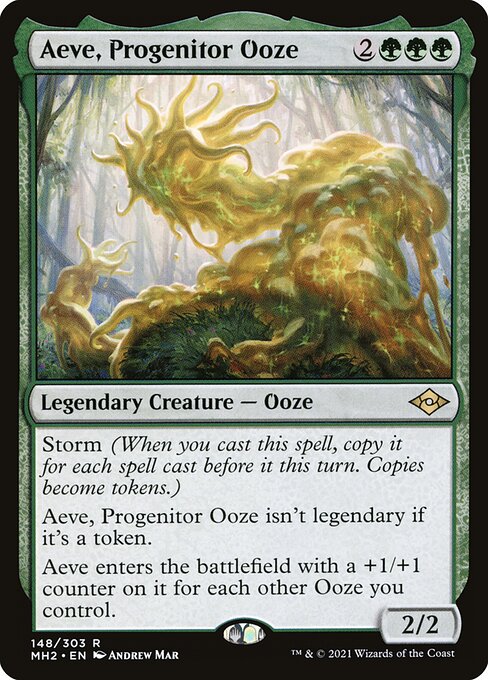
Storm (When you cast this spell, copy it for each spell cast before it this turn. Copies become tokens.)
Aeve, Progenitor Ooze
Storm (When you cast this spell, copy it for each spell cast before it this turn. Copies become tokens.)
Aeve isn't legendary if it's a token.
Aeve enters with a +1/+1 counter on it for each other Ooze you control.
or
Thrasta, Tempest’s Roar
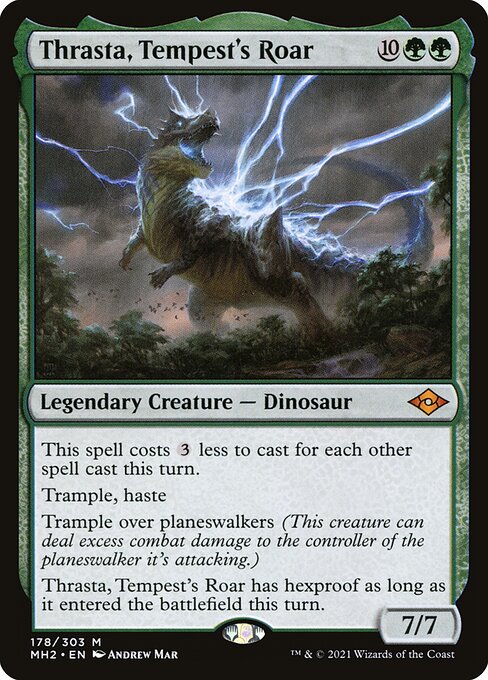 Thrasta, Tempest’s Roar
This spell costs {3} less to cast for each other spell cast this turn.
Thrasta, Tempest’s Roar
This spell costs {3} less to cast for each other spell cast this turn.
Trample, haste
Trample over planeswalkers (This creature can deal excess combat damage to the controller of the planeswalker it's attacking.)
Thrasta has hexproof as long as it entered this turn.
, then you have some real powerhouse threats. You can fill out the deck
Strike It Rich
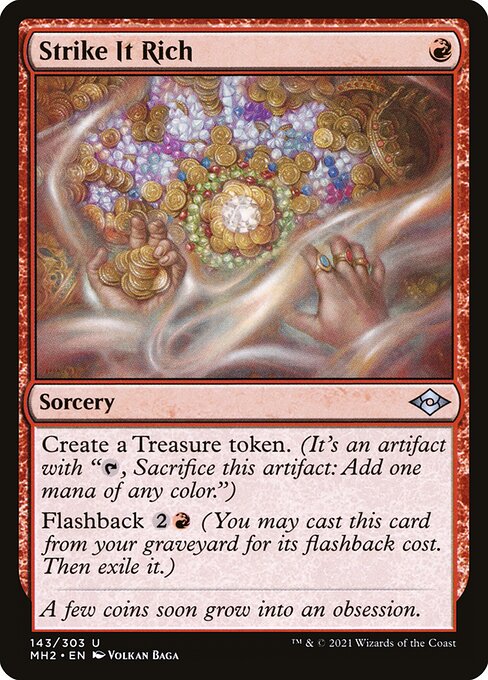 Strike It Rich
Create a Treasure token. (It's an artifact with "{T}, Sacrifice this token: Add one mana of any color.")
Strike It Rich
Create a Treasure token. (It's an artifact with "{T}, Sacrifice this token: Add one mana of any color.")
Flashback {2}{R} (You may cast this card from your graveyard for its flashback cost. Then exile it.)
,
Unholy Heat
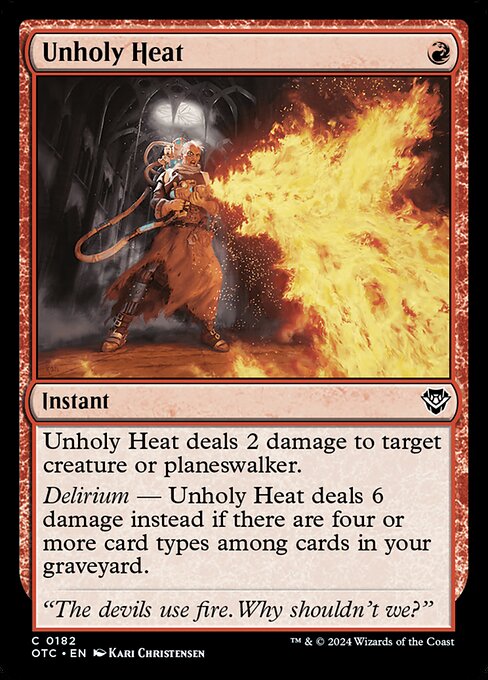 Unholy Heat
 deals 2 damage to target creature or planeswalker.
Unholy Heat
Unholy Heat deals 2 damage to target creature or planeswalker.
Delirium — Unholy Heat deals 6 damage instead if there are four or more card types among cards in your graveyard.
, and
Abundant Harvest
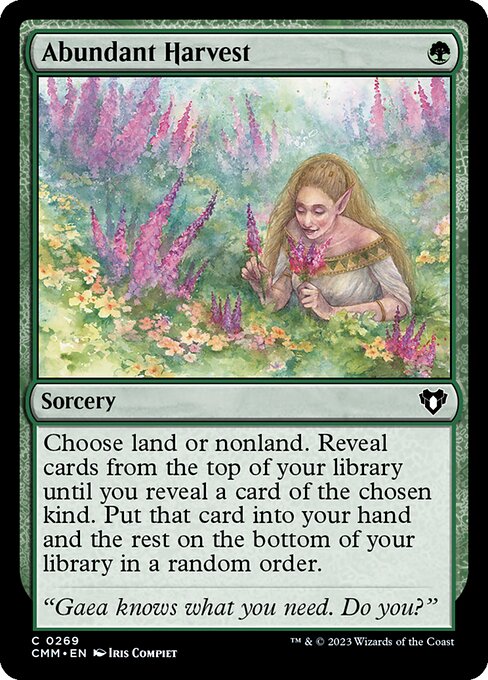 Abundant Harvest
Choose land or nonland. Reveal cards from the top of your library until you reveal a card of the chosen kind. Put that card into your hand and the rest on the bottom of your library in a random order.
as multiple spells you can cast in a turn, and hopefully you can go off in style! You can play this archetype if you find one of the rare pay offs, or find a good amount of Goblin Anarchomancers.
Abundant Harvest
Choose land or nonland. Reveal cards from the top of your library until you reveal a card of the chosen kind. Put that card into your hand and the rest on the bottom of your library in a random order.
as multiple spells you can cast in a turn, and hopefully you can go off in style! You can play this archetype if you find one of the rare pay offs, or find a good amount of Goblin Anarchomancers.
Green-White +1/+1 Counters
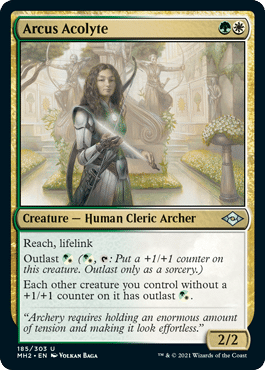
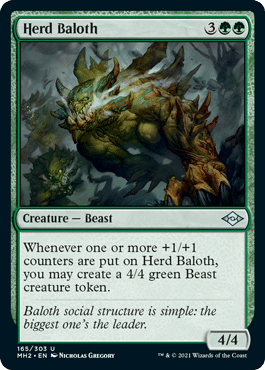
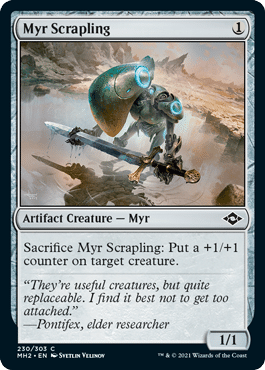
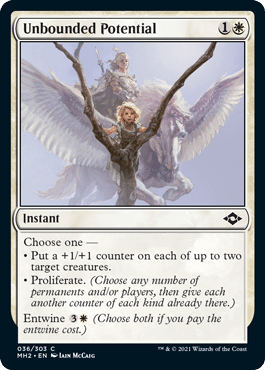
Green White is centered around +1/+1 counters. Despite there being a good number of cards that are enchantress focused, there isn’t enough cards to make the deck function reliably. Instead, we have a bunch of really great +1/+1 synergies. With cards like Arcus Acolyte, Herd Baloth, and Myr Scrapling all can build beefy boards, and support spells such as Unbound Potential just push the archetype over the top. Go for this deck if you find an Arcus Acolyte or Herd Baloth early, and can roll into the support cards.
White-Black Reanimator
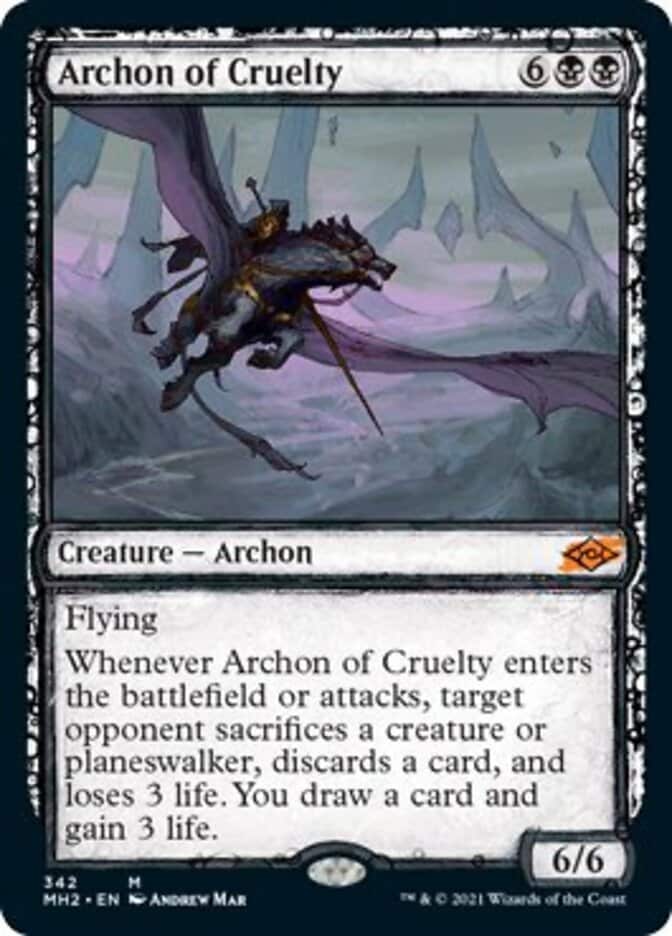
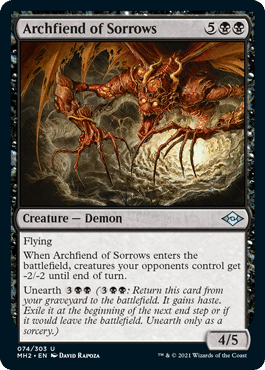
White-Black is the deck of reanimator. You generally want to find a payoff before finding your reanimation spells as you want to be sure that your reanimation effects will be impactful, but in this format, there’s generally enough bigger threats that you’d be happy to cheat into play from the graveyard. Of these, Archon of Cruelty is the go to, but it’s a mythic so it’s not likely to be seen. You also have Archfiend of Sorrows, which can do a number on your opponent’s board, and
Glorious Enforcer
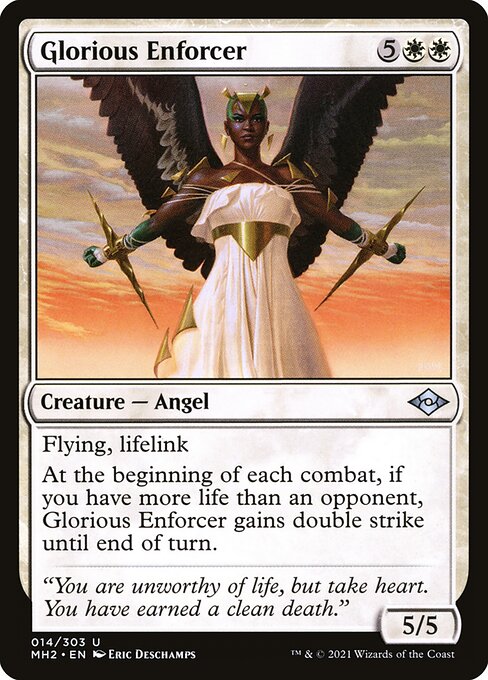 Glorious Enforcer
Flying, lifelink
Glorious Enforcer
Flying, lifelink
At the beginning of each combat, if you have more life than an opponent, this creature gains double strike until end of turn.
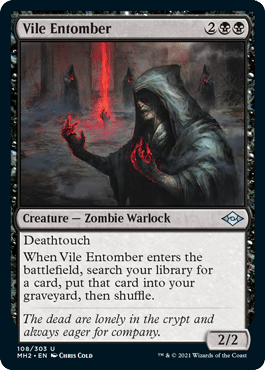
are uncommon threats that can end a game very quickly. Other cards to look for in the draft are going to be Vile Entomber,
Young Necromancer
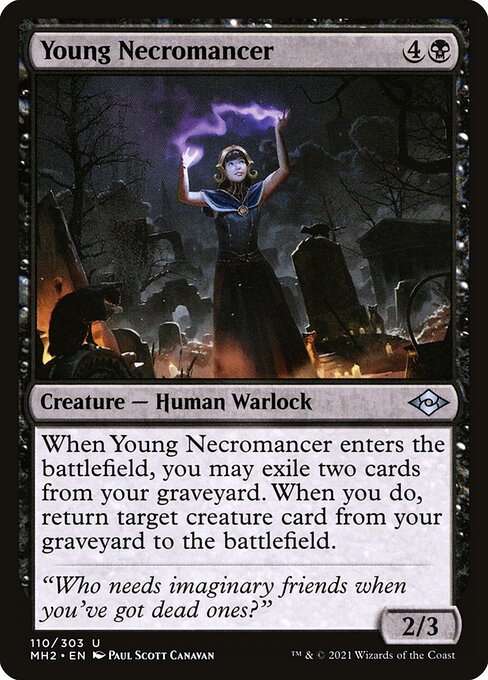 Young Necromancer
When this creature enters, you may exile two cards from your graveyard. When you do, return target creature card from your graveyard to the battlefield.
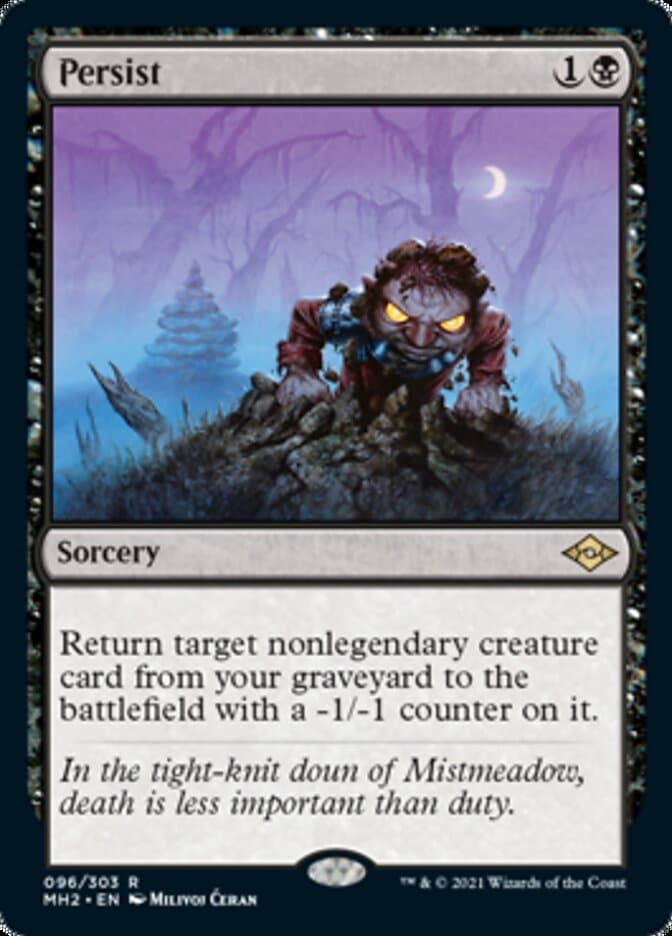
and Persist. If you find it as well,
Priest of Fell Rites
Young Necromancer
When this creature enters, you may exile two cards from your graveyard. When you do, return target creature card from your graveyard to the battlefield.
and Persist. If you find it as well,
Priest of Fell Rites
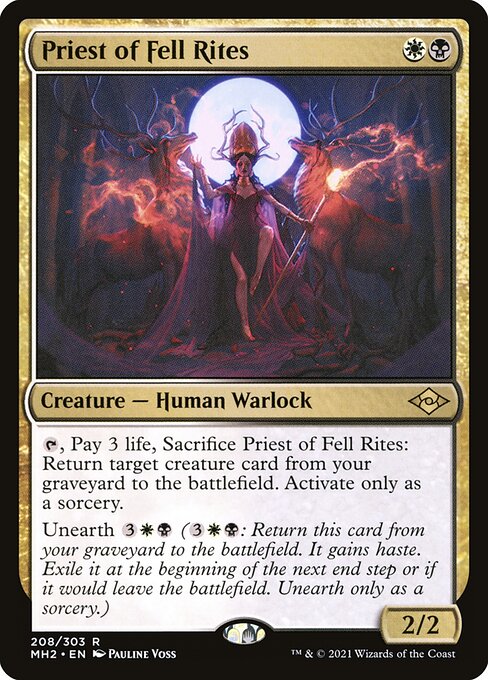 Priest of Fell Rites
{T}, Pay 3 life, Sacrifice this creature: Return target creature card from your graveyard to the battlefield. Activate only as a sorcery.
Priest of Fell Rites
{T}, Pay 3 life, Sacrifice this creature: Return target creature card from your graveyard to the battlefield. Activate only as a sorcery.
Unearth {3}{W}{B} ({3}{W}{B}: Return this card from your graveyard to the battlefield. It gains haste. Exile it at the beginning of the next end step or if it would leave the battlefield. Unearth only as a sorcery.)
is a recurring animation spell. Another key spell for this deck is going to be Cabal Initiate, as it’s another way to ditch your threats to the graveyard to reanimate. Go for this for sure if you find Archon of Cruelty, but if you find some of the uncommon threats and reanimation or entomb-like spells. You can pivot out of this if you’re getting cut off into either Madness, and use Archfiend as discard fodder, and cast it with unearth, or potentially getting into a ramp strategy and splash the 3rd color.
Black-Green Token Sacrifice
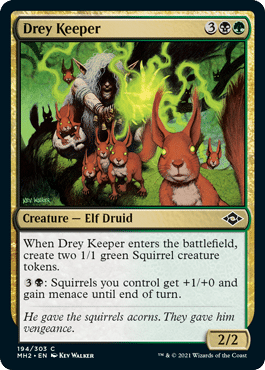
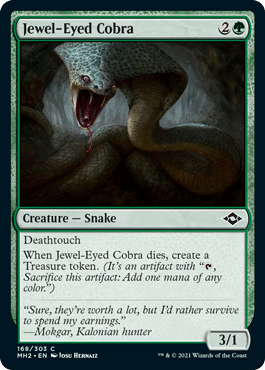
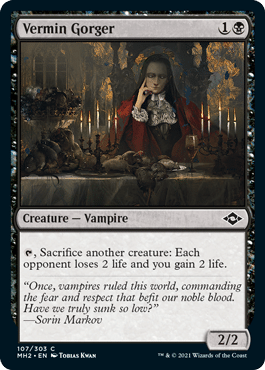
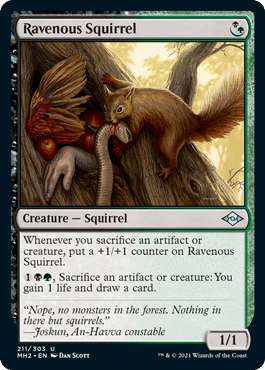
Black and Green is token sacrifice, or more specifically… squirrel sacrifice. We look to find cards that are squirrels, cards that create tokens like Drey Keeper, or Jewel-Eyed Cobra, and pay offs for sacrificing them. These would include Ravenous Squirrel, Vermin Gorger, or
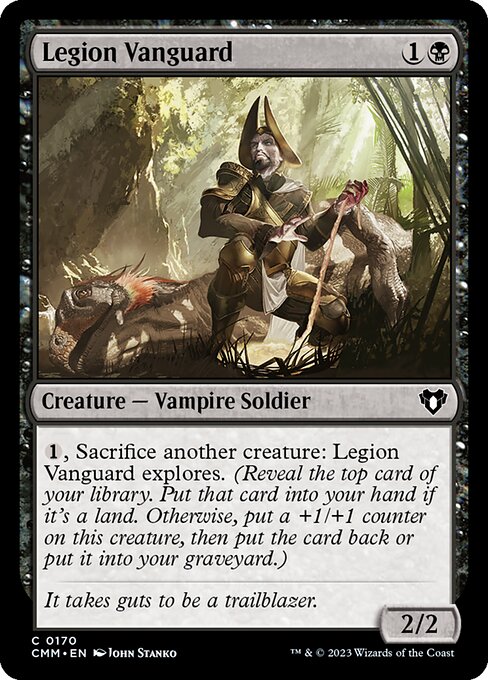
Legion Vanguard
 Legion Vanguard
{1}, Sacrifice another creature: This creature explores. (Reveal the top card of your library. Put that card into your hand if it's a land. Otherwise, put a +1/+1 counter on this creature, then put the card back or put it into your graveyard.)
. You also may want to find
Squirrel Sovereign
Legion Vanguard
{1}, Sacrifice another creature: This creature explores. (Reveal the top card of your library. Put that card into your hand if it's a land. Otherwise, put a +1/+1 counter on this creature, then put the card back or put it into your graveyard.)
. You also may want to find
Squirrel Sovereign
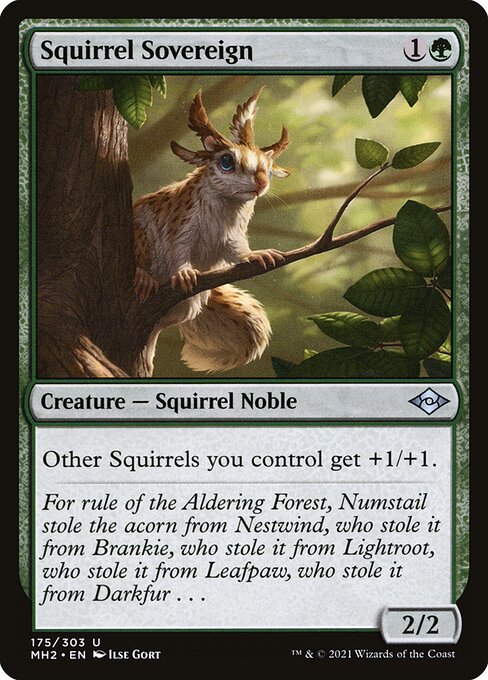 Squirrel Sovereign
Other Squirrels you control get +1/+1.
to go wide with your tokens and squirrels as well. If you find
Chatterfang, Squirrel General
Squirrel Sovereign
Other Squirrels you control get +1/+1.
to go wide with your tokens and squirrels as well. If you find
Chatterfang, Squirrel General
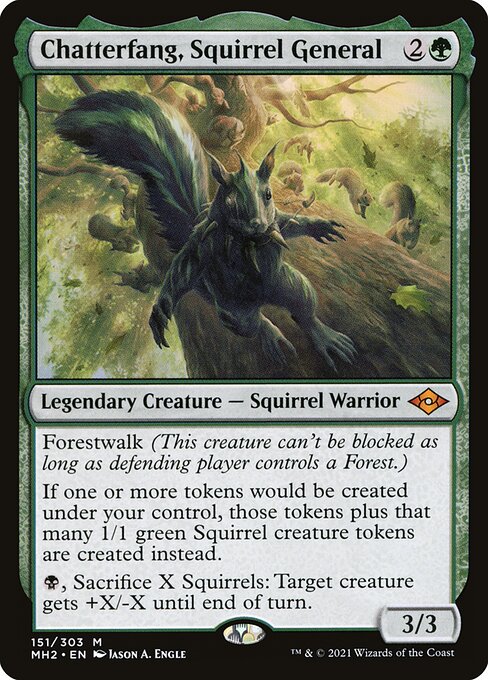 Chatterfang, Squirrel General
Forestwalk (This creature can't be blocked as long as defending player controls a Forest.)
Chatterfang, Squirrel General
Forestwalk (This creature can't be blocked as long as defending player controls a Forest.)
If one or more tokens would be created under your control, those tokens plus that many 1/1 green Squirrel creature tokens are created instead.
{B}, Sacrifice X Squirrels: Target creature gets +X/-X until end of turn.
or any of the black pay offs, go for this strategy. If you only find the squirrel token generation cards, you may consider going to the next strategy.
Green-Blue Tokens
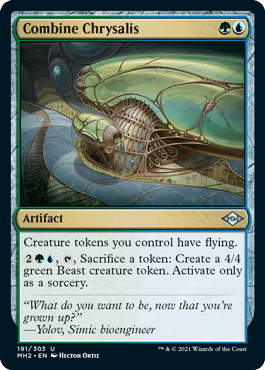
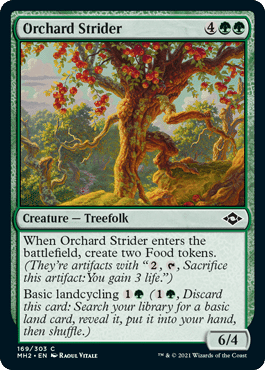
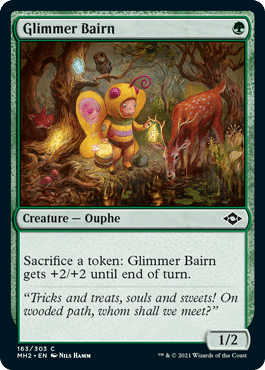
Green Blue is the deck of tokens. With this you’ll be looking for token creation spells, such as Etherium Spinner, Orchard Strider,
Wavesifter
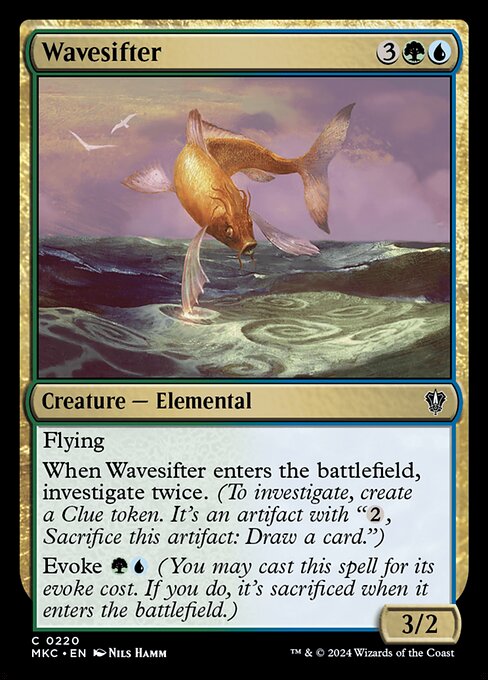 Wavesifter
Flying
Wavesifter
Flying
When this creature enters, investigate twice. (To investigate, create a Clue token. It's an artifact with "{2}, Sacrifice this token: Draw a card.")
Evoke {G}{U} (You may cast this spell for its evoke cost. If you do, it's sacrificed when it enters.)
and any other blue token makers mentioned in the blue white artifacts section. We have a couple different strategies here to end the game, we can try to overwhelm our opponent with creature tokens, with the help of Combine Chrysalis, or we can sacrifice them to Glimmer Bairn to get in 1 big chunk of damage to our opponent. If you find Combine Chrysalis, or Etherium Spinner, you should consider playing Green Blue Tokens.
Blue-Red Delirium
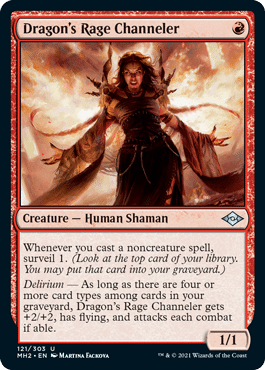
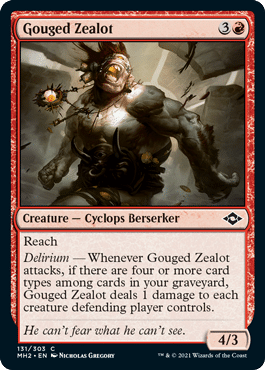
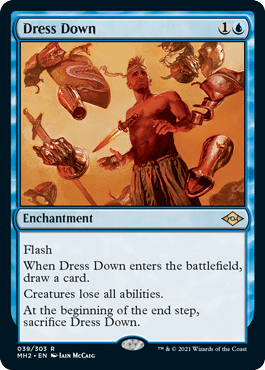
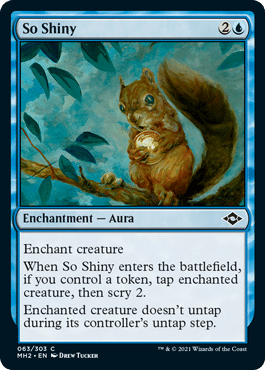
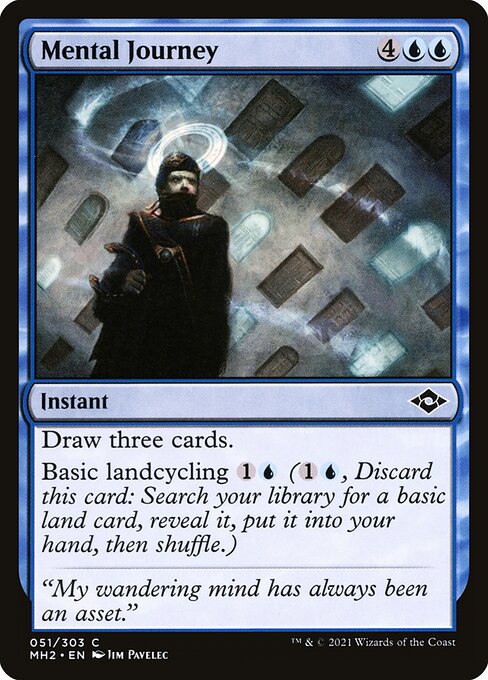
Blue-Red Delirium might be one of the more difficult archetypes to draft. Reason for this is because you need to be able to turn on Delirium, which requires you to have 4 or more card types in your graveyard. So while looking for your payoffs in Dragon’s Rage Channeler, or Gouged Zealot, you also need to be finding cards that can be useful to you, while finding an easy way to get them into the graveyard. Creatures are going to be easy enough, as you just play them and they’ll eventually die. Instants and Sorceries also are easy as you cast them and they’ll go to the graveyard. Good spells to look out for here are going to be Unholy Heat, and Strike it Rich, as well as
Mental Journey
 Mental Journey
Draw three cards.
Mental Journey
Draw three cards.
Basic landcycling {1}{U} ({1}{U}, Discard this card: Search your library for a basic land card, reveal it, put it into your hand, then shuffle.)
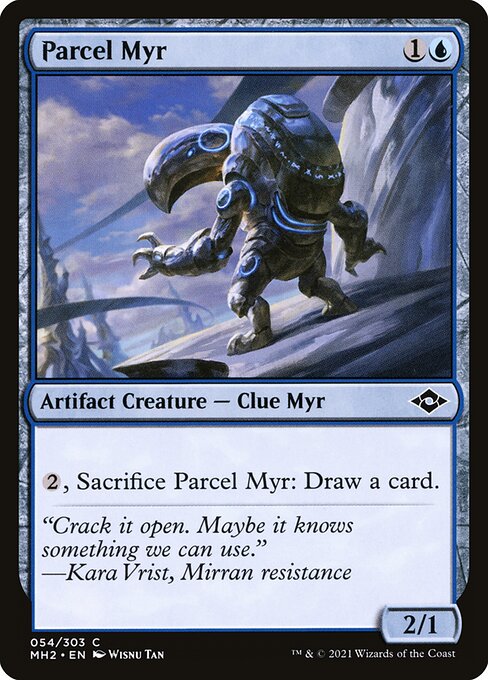
for card draw. An important set of cards to look out for as well are artifact creatures, like
Parcel Myr
 Parcel Myr
{2}, Sacrifice this creature: Draw a card.
, Filigree Attendant, or any of the red arcbound creatures. Additionally you can look for Mount Velus Manticore, as its an enchantment creature, or Auras, as when the creature that they are attached to dies, you can get an enchantment in the graveyard. If you find some of these harder to secure card types and some of the payoffs, you might be able to go delirium.
Parcel Myr
{2}, Sacrifice this creature: Draw a card.
, Filigree Attendant, or any of the red arcbound creatures. Additionally you can look for Mount Velus Manticore, as its an enchantment creature, or Auras, as when the creature that they are attached to dies, you can get an enchantment in the graveyard. If you find some of these harder to secure card types and some of the payoffs, you might be able to go delirium.
Red-White Modular
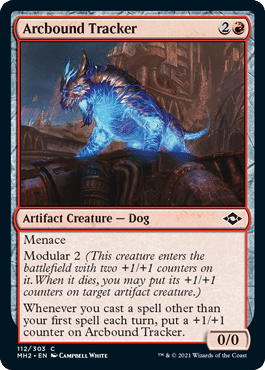

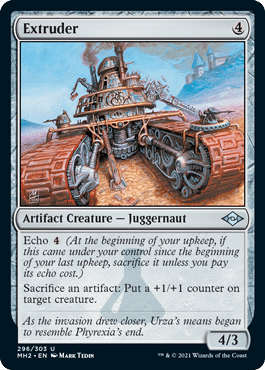

The last 2 color pair is red white modular. This is the archetype of Arcbounds. Any of the arcbound creatures in red and white are going to slot into this deck perfectly as it takes advantage of their Modular ability. Now we can play a normal creature focused game and expect that our modular creatures will die on their own, but we can speed up this process by incorporating specific sacrifice effects such as
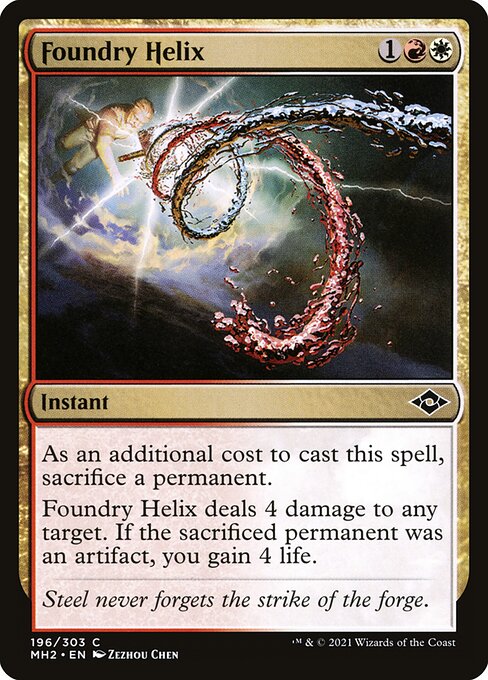
Foundry Helix
 Foundry Helix
As an additional cost to cast this spell, sacrifice a permanent.
Foundry Helix
As an additional cost to cast this spell, sacrifice a permanent.
Foundry Helix deals 4 damage to any target. If the sacrificed permanent was an artifact, you gain 4 life.
and
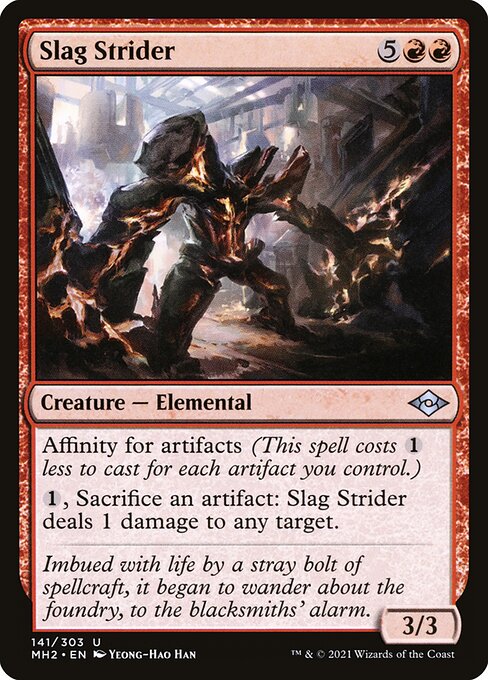
Slag Strider
 Slag Strider
Affinity for artifacts (This spell costs {1} less to cast for each artifact you control.)
Slag Strider
Affinity for artifacts (This spell costs {1} less to cast for each artifact you control.)
{1}, Sacrifice an artifact: This creature deals 1 damage to any target.
or potentially our pseudo-
Arcbound Ravager
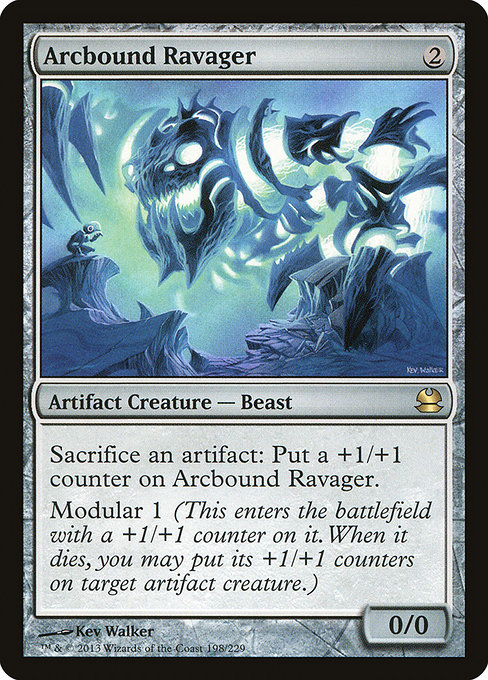 Arcbound Ravager
Sacrifice an artifact: Put a +1/+1 counter on this creature.
Arcbound Ravager
Sacrifice an artifact: Put a +1/+1 counter on this creature.
Modular 1 (This creature enters with a +1/+1 counter on it. When it dies, you may put its +1/+1 counters on target artifact creature.)
in Extruder. We can play it, launch a huge attack, and whatever creature isn’t blocked, use Extruder to sacrifice the blocked creatures to move our counters around to the unblocked one and get in for a ton of damage. A good vessel for those creatures can be cards like
Marble Gargoyle
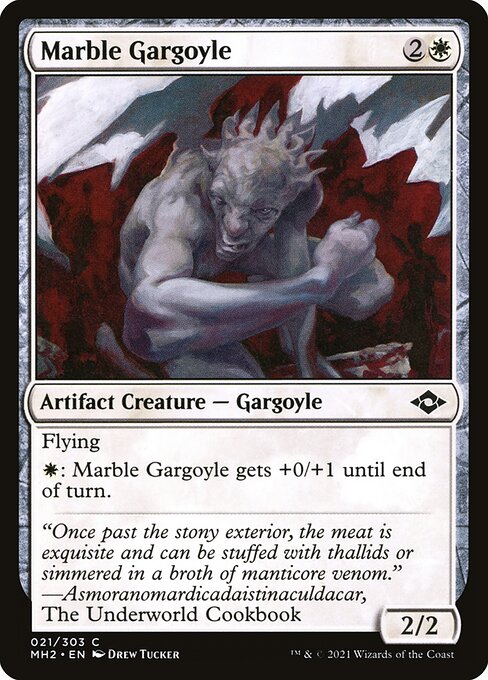 Marble Gargoyle
Flying
Marble Gargoyle
Flying
{W}: This creature gets +0/+1 until end of turn.
, or maybe the token that’s created from Barbed Spike if you draft one. If you prioritize Arcbound creatures heavily and found other artifact creatures, you should be good to go for this deck.
Domain
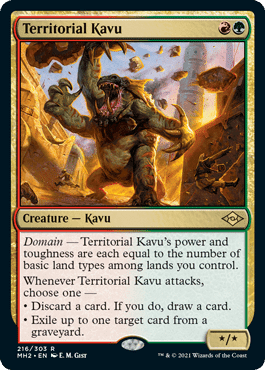
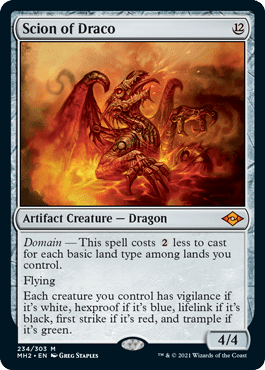
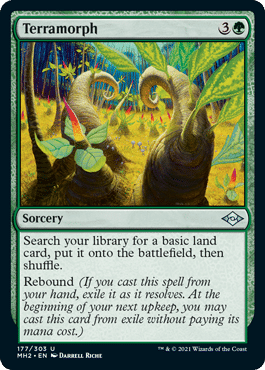
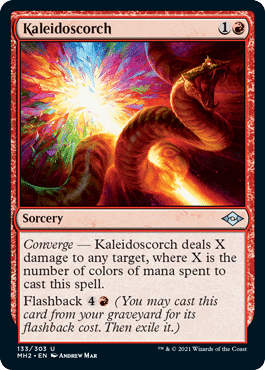
There is one other archetype that I would say could be viable in draft, and that is Domain. There’s a couple of pay offs in this archetype, but they’re very powerful. Domain involves you having multiple land types, which sounds hard to pull off, but we have a lot of great spells that can help smooth out our mana. First off we have a few different ramp spells in green, so we’ll want to be base green for sure. Additionally, there are 5 basic land cycling cards that we can pick up along the way. Our pay offs are primarily Territorial Kavu and Scion of Draco, but we also have a cycle of converge spells that can act as outlets to utilize our different colors of mana. I’d only look to go for this if you happen to find a the payoffs in pack 1 and you see ways to smooth out mana / converge pay offs in pack 1 as well. This is also the only place where
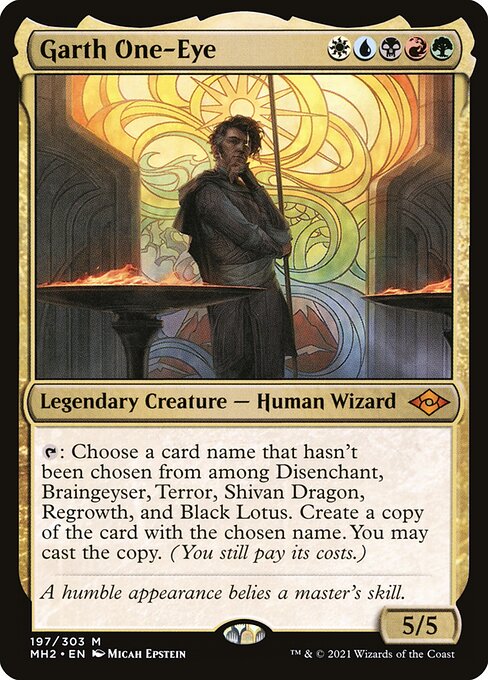
Garth One-Eye
 Garth One-Eye
{T}: Choose a card name that hasn't been chosen from among Disenchant, Braingeyser, Terror, Shivan Dragon, Regrowth, and Black Lotus. Create a copy of the card with the chosen name. You may cast the copy. (You still pay its costs.)
would fit.
Garth One-Eye
{T}: Choose a card name that hasn't been chosen from among Disenchant, Braingeyser, Terror, Shivan Dragon, Regrowth, and Black Lotus. Create a copy of the card with the chosen name. You may cast the copy. (You still pay its costs.)
would fit.
That was a lot to cover, but hopefully you have the tools you need to go forth and build a killer draft deck in this awesome format. What decks are you excited to build and what deck do you think is the strongest? Let us know in the comments!