
Now that spoiler season is officially over, the release of Dominaria United feels closer than ever. This means it’s only a matter of time before players have many new cards and mechanics to enjoy. As Dominaria United celebrates Magic’s near 30-year history, many of these mechanics are a blast from the past. Even the new mechanics are a fresh twist on the mechanics of old.
First introduced in Invasion and last seen in Conflux, Domain is one of Dominaria United’s returning mechanics. After a thirteen-year absence, Domain’s return has certainly been a long time coming. After so long out of the spotlight, a refresher about this classic land matters mechanic is undoubtedly in order.
So without any further ado, here’s everything you need to know about Domain in MTG!
What Is Domain in MTG?
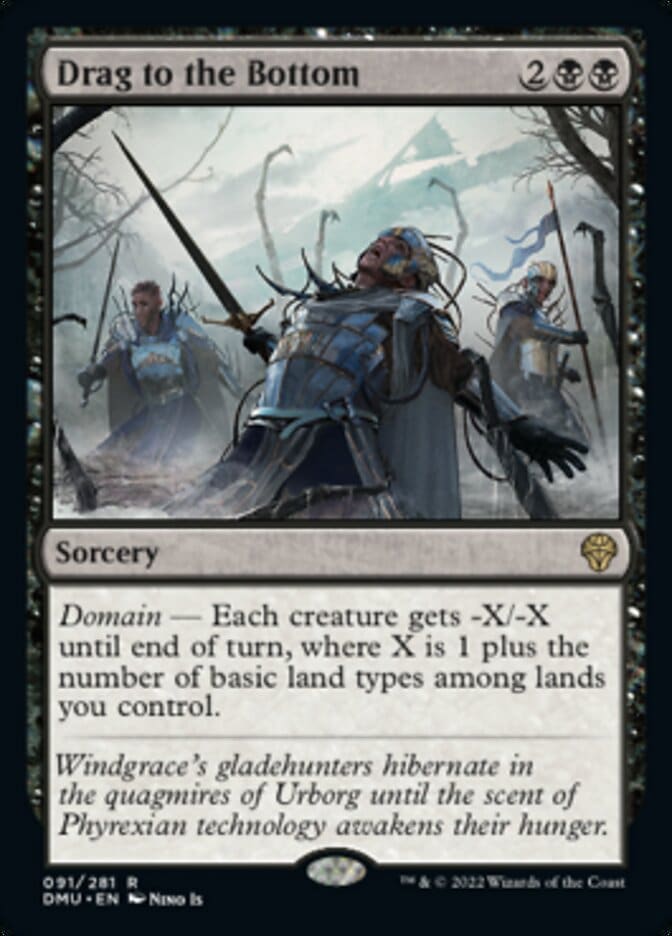
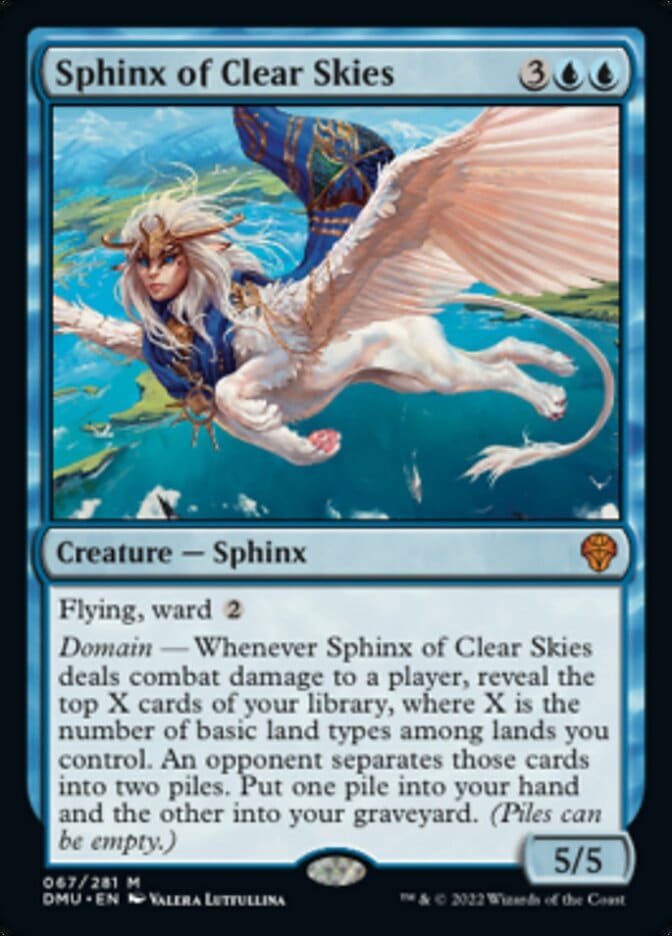
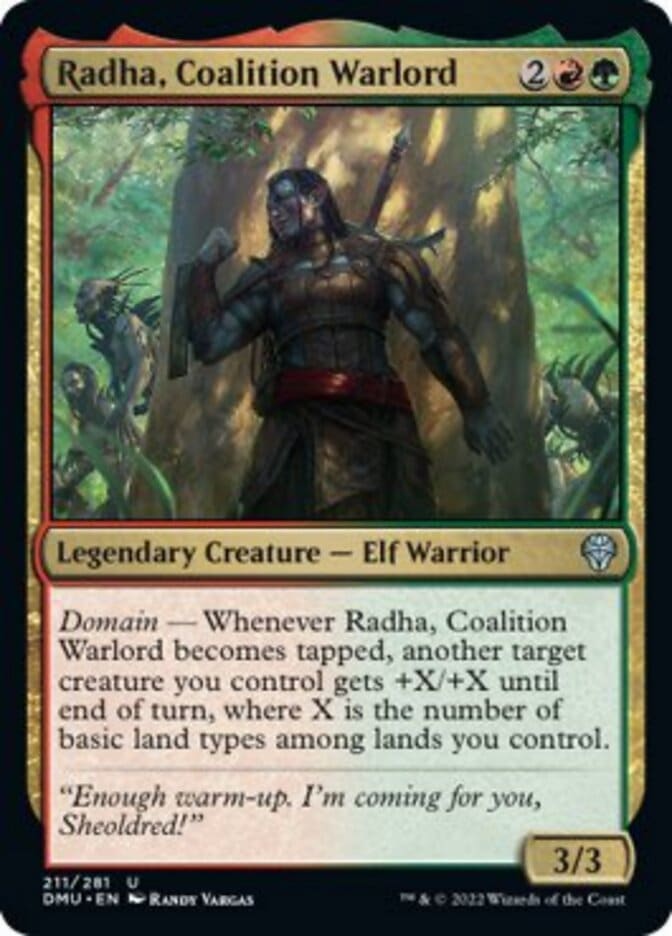
First appearing in the 2000s set Invasion; Domain is a mechanic that counts the number of basic land types in play. This number can be from zero to five since there are five basic land types in Magic: the Gathering. As a refresher, these basic land types are Plains, Island, Swamp, Mountain, and Forest. Typically, the effect of a Domain card is made more powerful by having more basic land types in play.
For the Domain effect, it is important to note that not all MTG lands have basic land types. As their name implies, nonbasic lands typically lack basic land types. These are cards such as
Necroblossom Snarl
 Necroblossom Snarl
As this land enters, you may reveal a Swamp or Forest card from your hand. If you don't, this land enters tapped.
Necroblossom Snarl
As this land enters, you may reveal a Swamp or Forest card from your hand. If you don't, this land enters tapped.
{T}: Add {B} or {G}.
and
Haunted Ridge
 Haunted Ridge
This land enters tapped unless you control two or more other lands.
Haunted Ridge
This land enters tapped unless you control two or more other lands.
{T}: Add {B} or {R}.
. Notably, however, there are nonbasic lands with one or more basic land types.
Urborg, Tomb of Yawgmoth
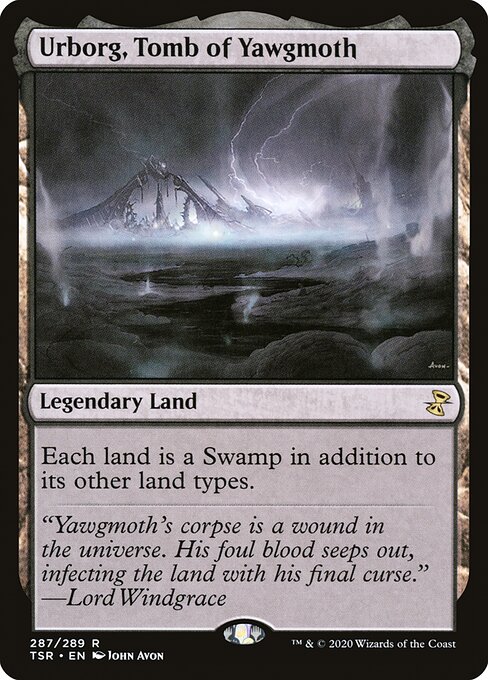 Urborg, Tomb of Yawgmoth
Each land is a Swamp in addition to its other land types.
is a nonbasic land that makes each land a Swamp. The
Indatha Triome
Urborg, Tomb of Yawgmoth
Each land is a Swamp in addition to its other land types.
is a nonbasic land that makes each land a Swamp. The
Indatha Triome
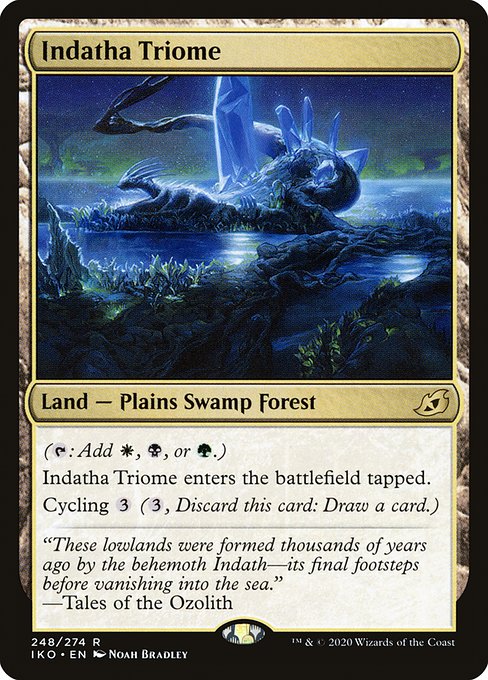 Indatha Triome
({T}: Add {W}, {B}, or {G}.)
Indatha Triome
({T}: Add {W}, {B}, or {G}.)
This land enters tapped.
Cycling {3} ({3}, Discard this card: Draw a card.)
cycle from Ikoria: Lair of Behemoths have three basic land types, making them ideal for Domain decks.
When counting basic land types for Domain MTG, it does not matter how much land you control of each basic type. Having five Islands, three Mountains, and a Forest is the same as having one of each, or one
Raugrin Triome
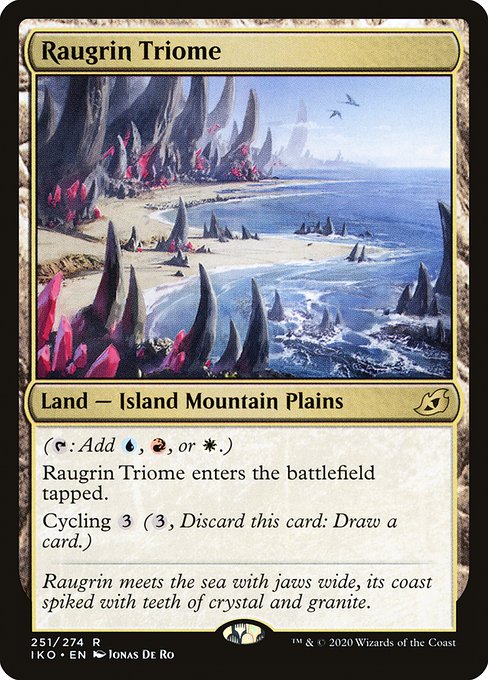 Raugrin Triome
({T}: Add {U}, {R}, or {W}.)
Raugrin Triome
({T}: Add {U}, {R}, or {W}.)
This land enters tapped.
Cycling {3} ({3}, Discard this card: Draw a card.)
.
Following the release of Oath of the Gatewatch in 2016, Magic: the Gathering featured a 6th basic land; Wastes. Unlike other basic lands, however,
Wastes
 Wastes
{T}: Add {C}.
do not count toward Domain. This is because they are a typeless basic land.
Wastes
{T}: Add {C}.
do not count toward Domain. This is because they are a typeless basic land.
How to Use Domain in MTG?


As a reasonably straightforward ability, Domain is obviously more effective when you have more basic land types in play. You might think this mandates every deck to be five-color good stuff, but that is thankfully not the only option. As Mark Rosewater recently explained in their Q&A Blogatog, “you don’t have to play five colors to make domain cards viable in Limited.” Instead, Domain can often be seen as an added benefit to many cards that scale with your land base.
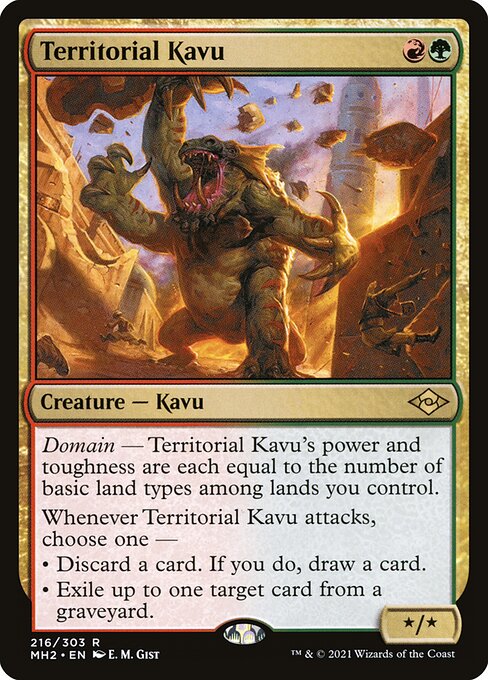
On the other hand, cards such as
Territorial Kavu
 Territorial Kavu
Domain — Territorial Kavu's power and toughness are each equal to the number of basic land types among lands you control.
Territorial Kavu
Domain — Territorial Kavu's power and toughness are each equal to the number of basic land types among lands you control.
Whenever this creature attacks, choose one —
• Discard a card. If you do, draw a card.
• Exile up to one target card from a graveyard.
and
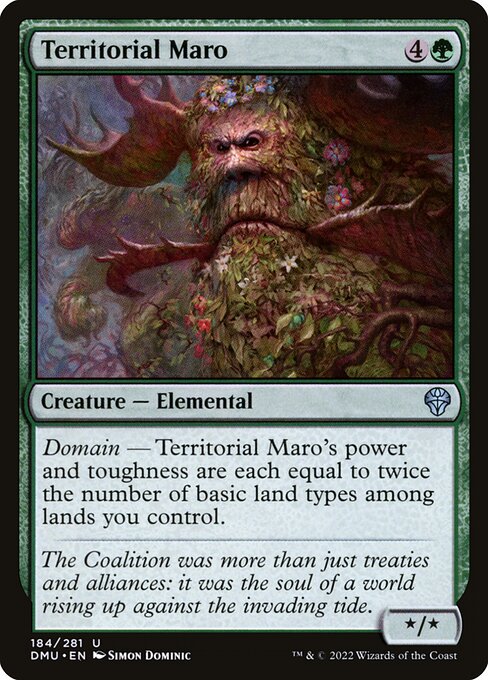
Territorial Maro
 Territorial Maro
Domain — Territorial Maro's power and toughness are each equal to twice the number of basic land types among lands you control.
go all in on Domain. In Limited, these cards rarely live up to their potential; however, in Constructed, they can be devastating. In Historic, Triomes and Ravnica’s Shock Lands makes completing the basic land set a breeze. A cycle of three colors Triomes was also printed in Streets of New Capenna, giving Domain players options in Standard. Dominaria United also introduces a process of 10 common nonbasic lands with two basic land types.
Territorial Maro
Domain — Territorial Maro's power and toughness are each equal to twice the number of basic land types among lands you control.
go all in on Domain. In Limited, these cards rarely live up to their potential; however, in Constructed, they can be devastating. In Historic, Triomes and Ravnica’s Shock Lands makes completing the basic land set a breeze. A cycle of three colors Triomes was also printed in Streets of New Capenna, giving Domain players options in Standard. Dominaria United also introduces a process of 10 common nonbasic lands with two basic land types.
Leyline Binding

Leyline Binding, released in Dominaria United, is one of the best examples of a Domain card done right. Able to remove any nonland permanent an opponent controls upon entry, Leyline Binding has an undeniably powerful ability. The issue is that, for six mana, the mana value does not measure up to the potential of the card, especially when you consider that this card’s impact can be removed by removing it.
This is where Domain comes into play. Leyline Binding may not be worth a six mana investment, but what if you only needed one white mana to cast it? Leyline Binding immediately becomes an incredibly powerful tool that even sees Modern play.
Its not difficult to acquire all five Basic Land types in that format either. Thanks to Fetch Lands and Triomes, its easy to acquire all five Basic Land Types as early as turn two. This means that, while Leyline Binding puts some restriction on deckbuilding efforts, it is a fantastic card if you put in the effort.