
Now that Dominaria United’s Spoiler season is ending, players are gearing up to determine what cards should be at the top of their buy list for their respective desires. A common question on most MTG players’ minds may be: is the new Painbow Commander deck actually worth it? Here, you will find a quick summary of what this Commander deck is trying to do, along with some recommendations to change the deck. Finally, we’ll give a shout-out to the cards that look the most impressive on their own in this deck for those of you interested in buying singles.
Painbow
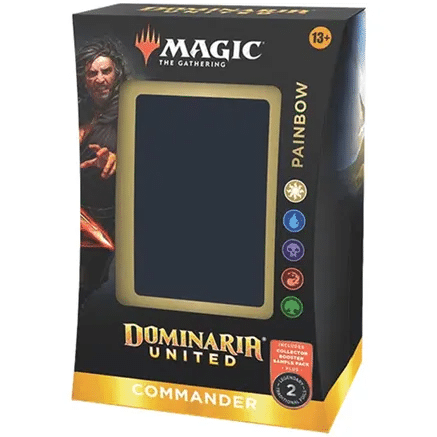
Painbow is a bit of a strange precon. Five-color precons are generally fantastic for players building their collection since these Commander decks generally need a lot of powerful fixing for them to work. For those who do not have access to some of the cheaper tap lands that tap for three colors, this deck is for you, full stop. These cards are very inexpensive, and if these are the cards you need, you can acquire them easily while getting some cards that are a bit stronger.
Captained by
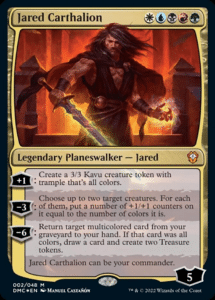
Jared Carthalion
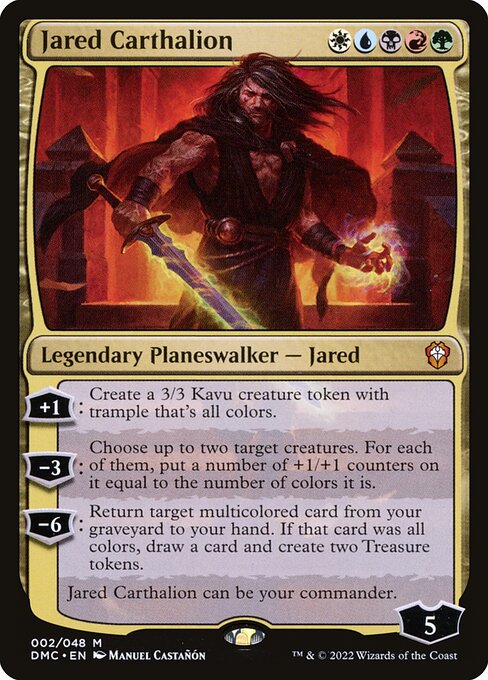 Jared Carthalion
+1: Create a 3/3 Kavu creature token with trample that's all colors.
Jared Carthalion
+1: Create a 3/3 Kavu creature token with trample that's all colors.
−3: Choose up to two target creatures. For each of them, put a number of +1/+1 counters on it equal to the number of colors it is.
−6: Return target multicolored card from your graveyard to your hand. If that card was all colors, draw a card and create two Treasure tokens.
Jared Carthalion can be your commander.
, this five-colored Commander deck cares about your creatures being all five colors. Multiple payoffs help here, with Jared creating tokens that identify as all five colors and offering a massive buff to five colored creatures with his minus ability, allowing them to deal a ton of damage. Now that all this is disclosed, the first item on our agenda for Painbow is to get rid of its terrible Commander.
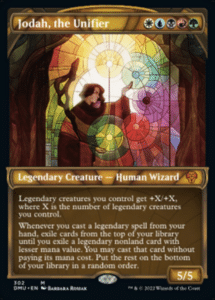
Jodah, the Unifier
Don’t get me wrong, Jared is a fine card, but we do not think this card will do enough for the deck.
Jodah, the Unifier
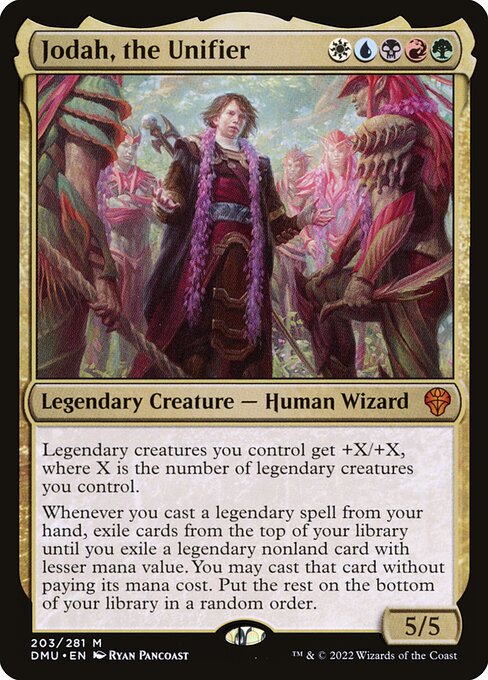 Jodah, the Unifier
Legendary creatures you control get +X/+X, where X is the number of legendary creatures you control.
Jodah, the Unifier
Legendary creatures you control get +X/+X, where X is the number of legendary creatures you control.
Whenever you cast a legendary spell from your hand, exile cards from the top of your library until you exile a legendary nonland card with lesser mana value. You may cast that card without paying its mana cost. Put the rest on the bottom of your library in a random order.
is a new Dominaria United card released in the main set. Jodah cares about Legendary spells, which may require you to switch a few cards around for maximum efficiency, but there are a ton of Legendary spells for Jodah to cascade off of in this deck. Most of the Legendary cards in this deck are huge to make things better. This means that Jodah will pseudo-Cascade off big Legendary permanents and hit more Legendary Permanents. The reason why we say Psuedo-cascade is because this card does not explicitly have Cascade. You can turn this Painbow Jodah deck into an absolute nightmare with a few adjustments.
Read More: MTG Market Foreshadows the End of Draft Booster Boxes
Cascade, but no Errata?
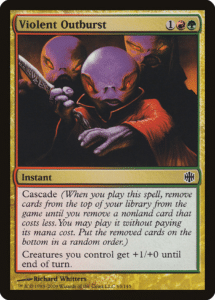
To explain what this title is getting at for non-Modern players, we need to step back a little bit:
Rewind to Kaldheim.
Valki, God of Lies
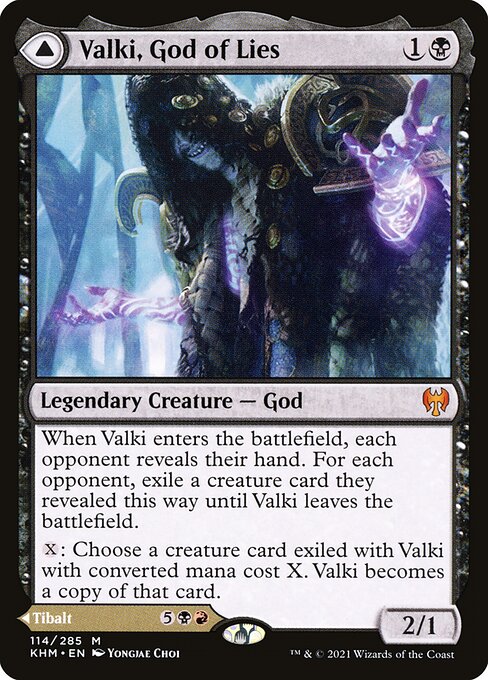 Valki, God of Lies
When Valki enters, each opponent reveals their hand. For each opponent, exile a creature card they revealed this way until Valki leaves the battlefield.
Valki, God of Lies
When Valki enters, each opponent reveals their hand. For each opponent, exile a creature card they revealed this way until Valki leaves the battlefield.
{X}: Choose a creature card exiled with Valki with mana value X. Valki becomes a copy of that card.
is an incredibly expensive card on MTGO. Nearing $100 per card, Valki was utterly dominating the Modern metagame. The strategy was to use three mana Cascade cards, like
Shardless Agent
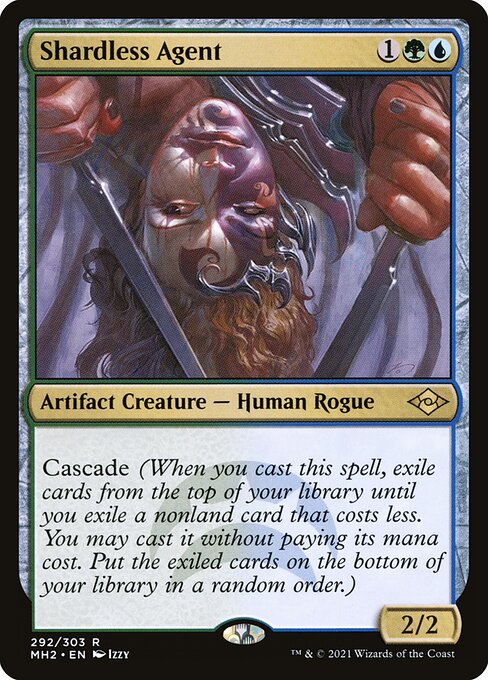 Shardless Agent
Cascade (When you cast this spell, exile cards from the top of your library until you exile a nonland card that costs less. You may cast it without paying its mana cost. Put the exiled cards on the bottom in a random order.)
, to exile Valki. Past that point, because of how Cascade is worded, you could cast the flipside of Valki (Tibalt, Cosmic Imposter) for free. This Planeswalker is an absolute beast. Not only can it accumulate value every turn with its plus ability, but it can also deal with threats and exile all graveyards, and cast everything exiled. Casting this Planeswalker for three mana, sometimes at instant speed, proved too much for the Modern meta. Cascade, as a result, saw an errata that looks like this:
Shardless Agent
Cascade (When you cast this spell, exile cards from the top of your library until you exile a nonland card that costs less. You may cast it without paying its mana cost. Put the exiled cards on the bottom in a random order.)
, to exile Valki. Past that point, because of how Cascade is worded, you could cast the flipside of Valki (Tibalt, Cosmic Imposter) for free. This Planeswalker is an absolute beast. Not only can it accumulate value every turn with its plus ability, but it can also deal with threats and exile all graveyards, and cast everything exiled. Casting this Planeswalker for three mana, sometimes at instant speed, proved too much for the Modern meta. Cascade, as a result, saw an errata that looks like this:
The new rule for cascade is as follows:
702.84a. Cascade is a triggered ability that functions only while the spell with cascade is on the stack. “Cascade” means “When you cast this spell, exile cards from the top of your library until you exile a nonland card whose converted mana cost is less than this spell’s converted mana cost. You may cast that spell without paying its mana cost if its converted mana cost is less than this spell’s converted mana cost. Then put all cards exiled this way that weren’t cast on the bottom of your library in a random order.”
This errata disallows Cascade abilities to cast things with a mana value larger than the original spell. This prevented Tibalt from getting cast off of a three mana cascade trigger since it could only cast the Valki side, which is less mana than the original spell. Why is this important? Jodah reads like the original Cascade effect before it got its errata. This means that Legendary double-sided permanents are incredible in the deck!
Tibalt and Valki
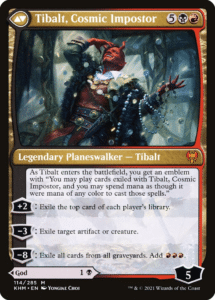
Should you happen to use Jodah’s effect and exile Valki, you should have the ability to cast Tibalt. The same will work for
Esika, God of the Tree
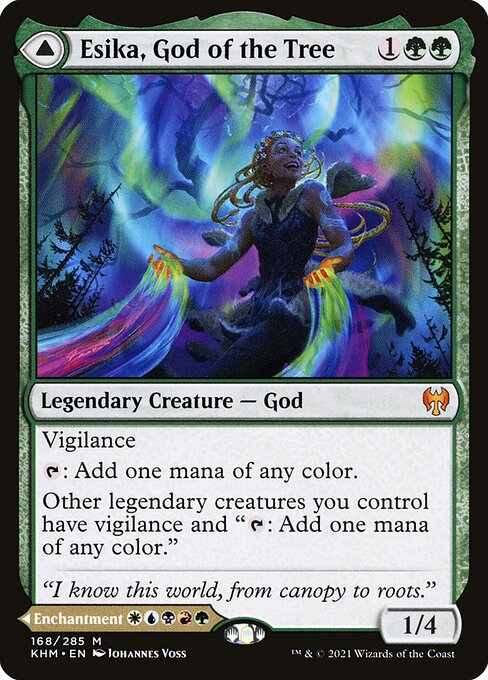 Esika, God of the Tree
Vigilance
Esika, God of the Tree
Vigilance
{T}: Add one mana of any color.
Other legendary creatures you control have vigilance and "{T}: Add one mana of any color."
, and Prismatic Bridge, which seems like a slam dunk in a list like this. Even when you need to cast Valki specifically, you get to exile a creature from each opponent’s hand until Valki dies. This makes Valki much better than a
Thoughtseize
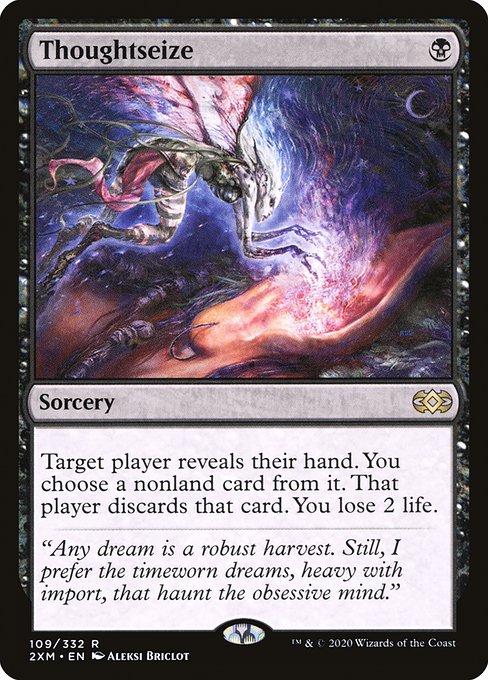 Thoughtseize
Target player reveals their hand. You choose a nonland card from it. That player discards that card. You lose 2 life.
effect in Commander. Exchange cards like these for some of the larger five-colored cards that are not legendary, like
Fusion Elemental
Thoughtseize
Target player reveals their hand. You choose a nonland card from it. That player discards that card. You lose 2 life.
effect in Commander. Exchange cards like these for some of the larger five-colored cards that are not legendary, like
Fusion Elemental
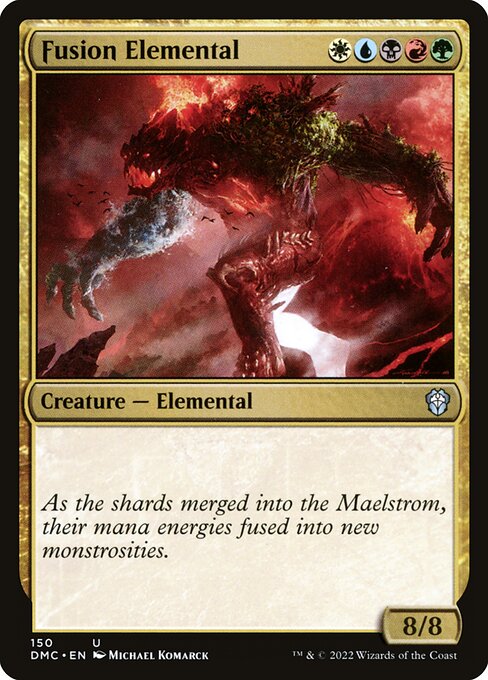 Fusion Elemental
and
Glint-Eye Nephilim
Fusion Elemental
and
Glint-Eye Nephilim
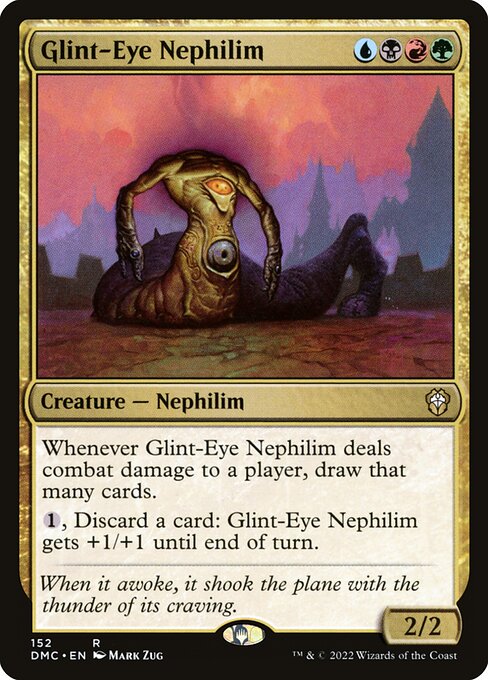 Glint-Eye Nephilim
Whenever this creature deals combat damage to a player, draw that many cards.
Glint-Eye Nephilim
Whenever this creature deals combat damage to a player, draw that many cards.
{1}, Discard a card: This creature gets +1/+1 until end of turn.
, to make these changes work the smoothest. Valki is only worth about $8 for now, but it could go up if this strategy becomes popular!
Read More: MTG Players Disappointed be Leaked Commander Warhammer Decks
Add a Sol Ring!
Painbow is one of the few Commander prebuilt decks in recent history that does not have a
Sol Ring
 Sol Ring
{T}: Add {C}{C}.
in the main deck. This is considered the pinnacle of Commander staples and is dirt cheap. The ability on Sol Ring does not reflect its price point. This card will ramp you turns ahead of your opponents on its own! This means that you usually end up a target, so try to play down how threatening you are. You may want to pick these up quickly, as Painbow players looking to upgrade their decks could cause a slight price increase in Sol Ring.
Sol Ring
{T}: Add {C}{C}.
in the main deck. This is considered the pinnacle of Commander staples and is dirt cheap. The ability on Sol Ring does not reflect its price point. This card will ramp you turns ahead of your opponents on its own! This means that you usually end up a target, so try to play down how threatening you are. You may want to pick these up quickly, as Painbow players looking to upgrade their decks could cause a slight price increase in Sol Ring.
Painbow Core Cards
Now that we’ve gotten the necessary upgrades out of the way, let’s look at what the best cards in Painbow look like. You could also use this as a singles guide for those not interested in buying the entire deck.
Currently,
Tiller Engine
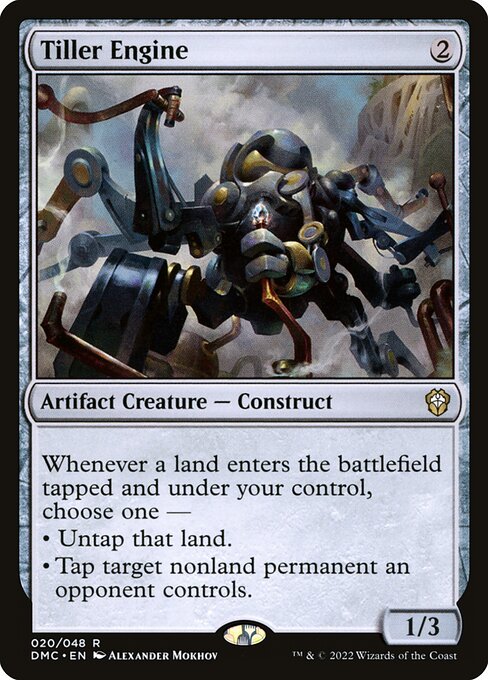 Tiller Engine
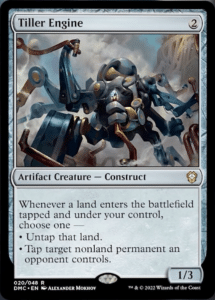
Whenever a land you control enters tapped, choose one —
Tiller Engine
Whenever a land you control enters tapped, choose one —
• Untap that land.
• Tap target nonland permanent an opponent controls.
has the most considerable asking cost of all the cards in Painbow. Presently priced at about $13, this card is capable of untapping your lands as they enter the battlefield. In order to keep the value of Painbow marginal, a lot of tap lands were added to the deck to support the five-color fixing. Tiller Engine will help you to speed these lands up. Players running a Gates Commander deck may find Tiller Engine extremely appealing. Unfortunately for Modern Amulet Titan players, this card will not be legal in that format, which should help to keep its price down.
Coming in at an expected value of $5,
Two-Headed Hellkite
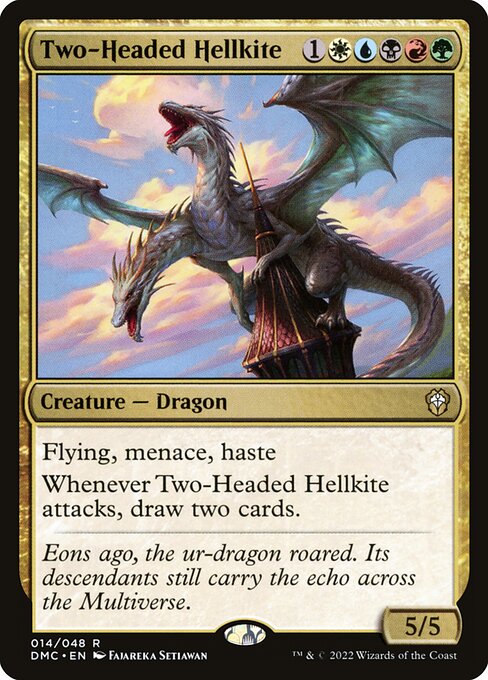 Two-Headed Hellkite
Flying, menace, haste
Two-Headed Hellkite
Flying, menace, haste
Whenever this creature attacks, draw two cards.
has much less text than you may expect for a five-color dragon. Regardless, Ur-Dragon players will definitely want to get their hands on this, as it can deal damage the turn it is cast and will draw you two cards whenever it attacks. Not only will it replace itself if it is not immediately dealt with, but Two-Headed Hellkite will threaten to continue drawing cards and dealing damage until someone deals with it.
Read More: Top 10 Best Dominaria United Cards for Commander
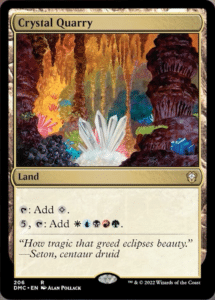
Crystal Quarry
 Crystal Quarry
{T}: Add {C}.
Crystal Quarry
{T}: Add {C}.
{5}, {T}: Add {W}{U}{B}{R}{G}.
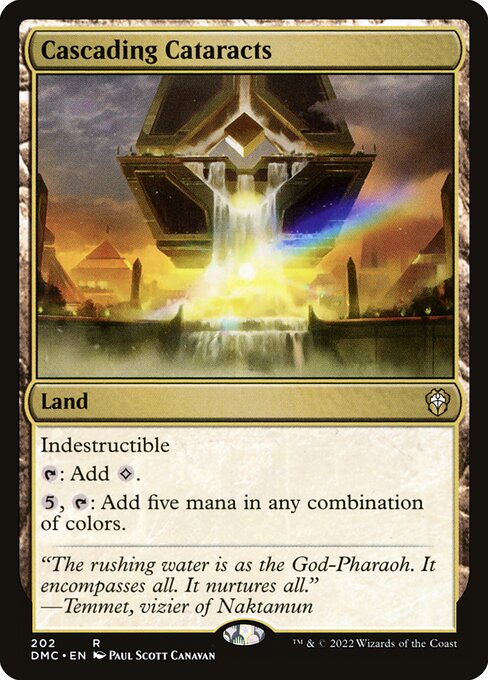
is a strictly worse
Cascading Cataracts
 Cascading Cataracts
Indestructible
Cascading Cataracts
Indestructible
{T}: Add {C}.
{5}, {T}: Add five mana in any combination of colors.
(which is also in this deck) that has an expected value of $4. Not going to sugarcoat this one; Crystal Quarry should not stay at this price. This land is not for you unless you are specifically looking to cast five-colored spells. That being said, this land is an incredible fixing piece in Painbow.
O-Kagachi, Vengeful Kami
 O-Kagachi, Vengeful Kami
Flying, trample
O-Kagachi, Vengeful Kami
Flying, trample
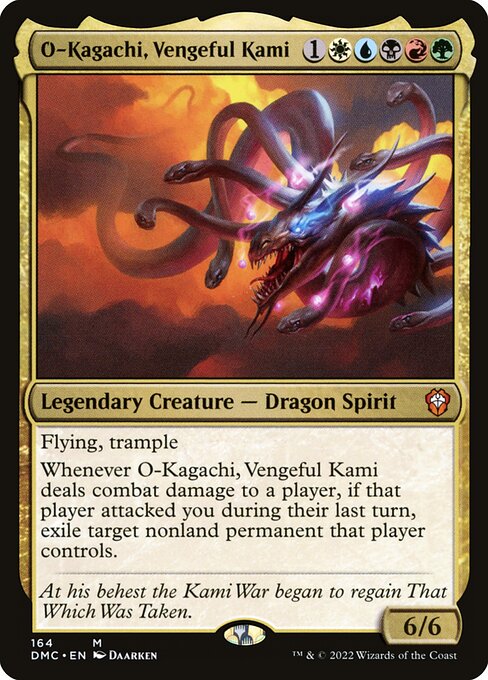
Whenever O-Kagachi deals combat damage to a player, if that player attacked you during their last turn, exile target nonland permanent that player controls.
embodies the spirit of casual Commander players. Should you go after them and blow up their stuff, you better prepare for the retaliation. The reprint O-Kagachi allows these Commander players to turn their vengeful nature into a consistent reality since it can exile a permanent when dealing damage to a player who attacked you in the last rotation of turns. This currently has an expected price of $4.
Jenson Carthalion, Druid Exile
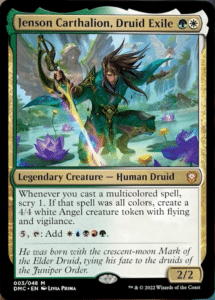
Jenson is the other card in this deck that can function as it’s Commander. Honestly, if you do not want to touch upgrades with Painbow, I would try this card as the deck’s Commander. Jenson will not do very much in the early game, but they can smooth your draws by scrying one for each multicolor spell you cast. When casting a five colored spell, Jenson will create a 4/4 Flying Angel with Vigilance, allowing you to make sure you get the most out of your deck’s theme. This card’s current expected value is $3
Read More: Suspicious MTG Player to Make Thousands with Inside Info?
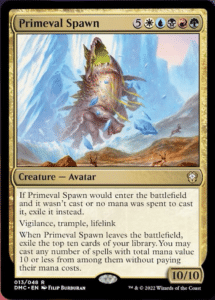
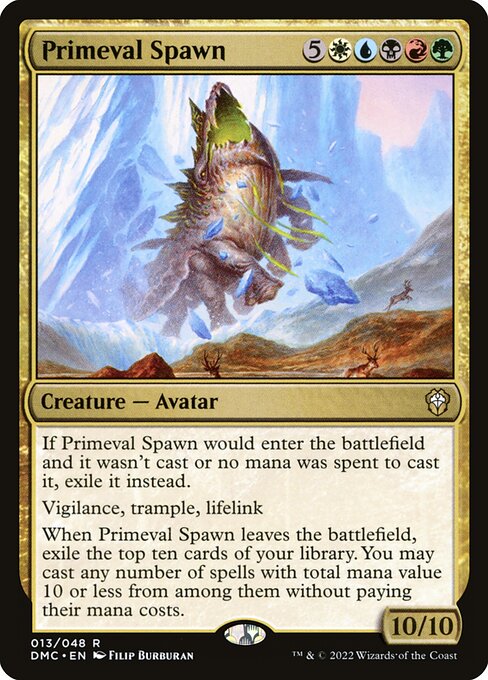
Primeval Spawn is finishing out our Core cards (primarily the new ones). This win condition will singlehandedly win games by barfing out permanents when it dies. Note that you have to hard cast Primeval Spawn, or at least cast it for a discounted cost for it to enter the battlefield.
Primeval Spawn
 Primeval Spawn
If this creature would enter and it wasn't cast or no mana was spent to cast it, exile it instead.
Primeval Spawn
If this creature would enter and it wasn't cast or no mana was spent to cast it, exile it instead.
Vigilance, trample, lifelink
When this creature leaves the battlefield, exile the top ten cards of your library. You may cast any number of spells with total mana value 10 or less from among them without paying their mana costs.
will exile itself before entering otherwise, meaning its ability will not go off. This also means you cannot make token copies of Primeval Spawn since the copies would exile themselves before they enter the battlefield. Regardless, this striking effect should be fun for the decks that can use it. Primeval Spawn currently has an expected value of $4.
Reprints and Closing Notes
Honestly, there aren’t a ton of noteworthy reprints in this one. Besides the Painbow deck being easy access to a five-color mana base on the cheap, there are only a few notable reprints in this product.
Path to Exile
 Path to Exile
Exile target creature. Its controller may search their library for a basic land card, put that card onto the battlefield tapped, then shuffle.
(which may be used on your own creatures as much as your opponent’s in a five-color list),
Coalition Relic
Path to Exile
Exile target creature. Its controller may search their library for a basic land card, put that card onto the battlefield tapped, then shuffle.
(which may be used on your own creatures as much as your opponent’s in a five-color list),
Coalition Relic
 Coalition Relic
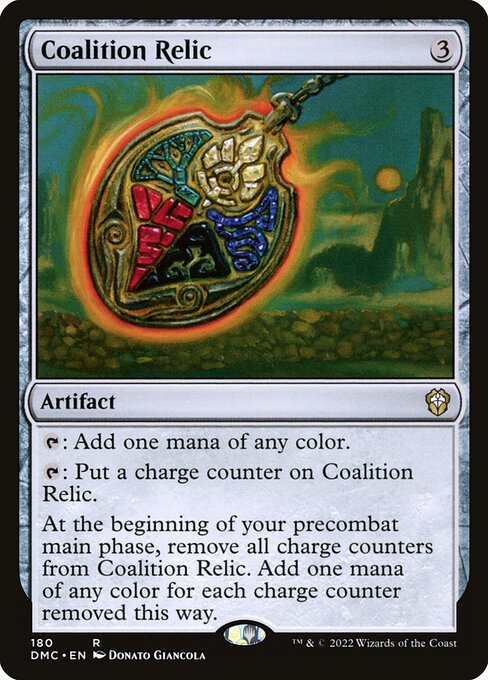
{T}: Add one mana of any color.
Coalition Relic
{T}: Add one mana of any color.
{T}: Put a charge counter on this artifact.
At the beginning of your first main phase, remove all charge counters from this artifact. Add one mana of any color for each charge counter removed this way.
,
Baleful Strix
 Baleful Strix
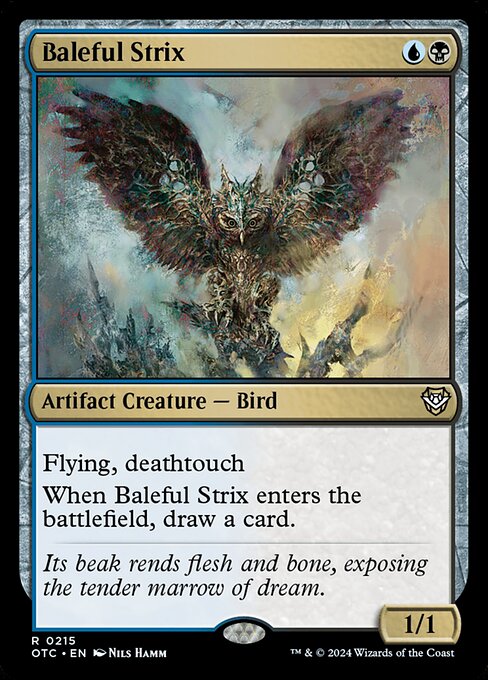
Flying, deathtouch
Baleful Strix
Flying, deathtouch
When this creature enters, draw a card.
and
Bad River
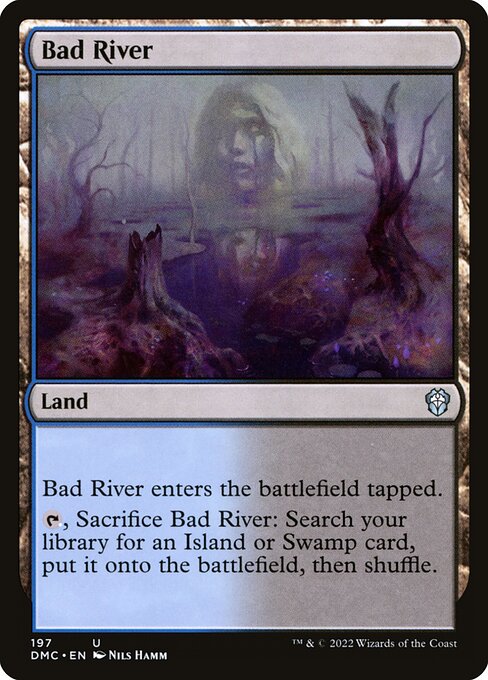 Bad River
This land enters tapped.
Bad River
This land enters tapped.
{T}, Sacrifice this land: Search your library for an Island or Swamp card, put it onto the battlefield, then shuffle.
are some of the more noteworthy reprints in this deck.
Ultimately, it doesn’t look like this Painbow Commander deck will have a lot of secondary market value. If you want to make a quick buck and are a more experienced MTG player, this deck may not be your cup of tea. If you do not have the necessary cards to delve into a five-color Commander build, this is the absolute best way to get into it. Additionally, if the Jodah strategies outlined in this article are of interest to you, this deck is a great way to start that. Ultimately, Painbow is excellent for anyone who wants to begin building five-color Commander decks. If this deck doesn’t tickle your fancy for whatever reason, you can take it apart and build a deck around literally anything!