
Wilds of Eldraine cards have now been out for a little while, and it’s clear that a lot of them are quite powerful.
Questing Druid
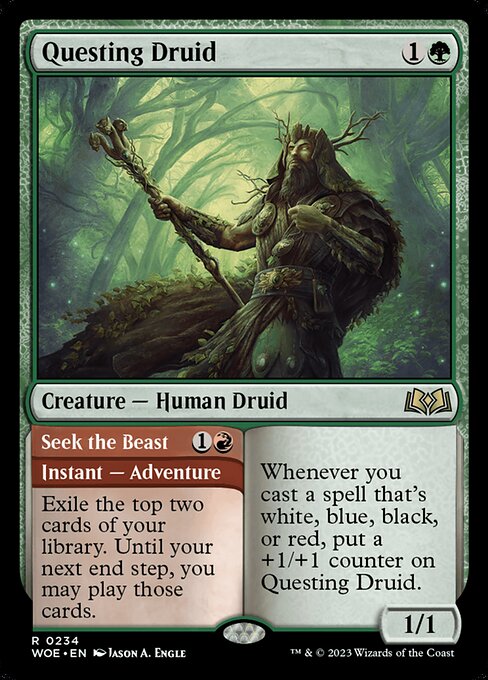 Questing Druid
Whenever you cast a spell that's white, blue, black, or red, put a +1/+1 counter on this creature.
is revolutionizing archetypes across multiple formats, while
Beseech the Mirror
Questing Druid
Whenever you cast a spell that's white, blue, black, or red, put a +1/+1 counter on this creature.
is revolutionizing archetypes across multiple formats, while
Beseech the Mirror
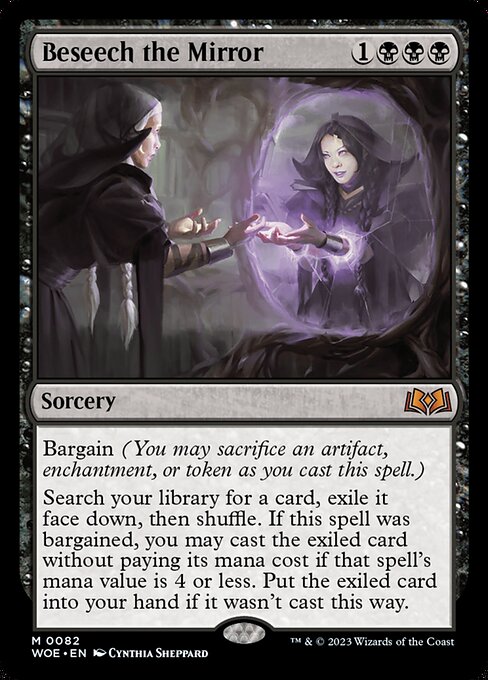 Beseech the Mirror
Bargain (You may sacrifice an artifact, enchantment, or token as you cast this spell.)
Beseech the Mirror
Bargain (You may sacrifice an artifact, enchantment, or token as you cast this spell.)
Search your library for a card, exile it face down, then shuffle. If this spell was bargained, you may cast the exiled card without paying its mana cost if that spell's mana value is 4 or less. Put the exiled card into your hand if it wasn't cast this way.
is opening the door for innovative combo decks to arise in Legacy. While cards like these are certainly at the forefront of discussion about the best cards in the set, we are continuing to see innovation in various formats with cards that have flown under players’ radars.
One particular archetype in Standard had a breakout performance in Saturday’s Magic Online Standard Challenge. The deck takes a theme from a successful Pioneer deck and added a few new cards to help make the deck more consistent and explosive. The Pioneer deck is none other than Boros Convoke, one of the fastest decks around in the whole format.
So, what’s been holding this deck back in Standard? To understand why this archetype is finally getting some recognition in Standard, it’s important to break down the similarities and differences between the Standard and Pioneer versions.
Convoke Core
Overall, the goal of both the Standard and Pioneer versions of Boros Convoke is to create a wide board as fast as possible. This helps enable two things. First, it enables you to attack for a bunch of damage very quickly, especially in conjunction with ways to buff your squad. Second, going wide helps you cast
Knight-Errant of Eos
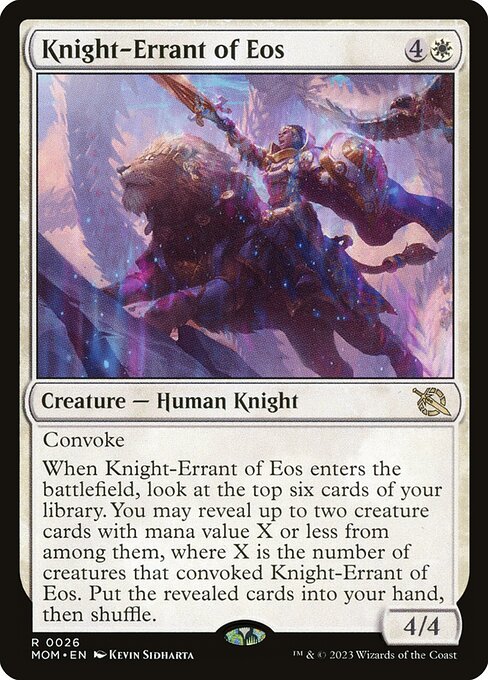 Knight-Errant of Eos
Convoke
Knight-Errant of Eos
Convoke
When this creature enters, look at the top six cards of your library. You may reveal up to two creature cards with mana value X or less from among them, where X is the number of creatures that convoked this creature. Put the revealed cards into your hand, then shuffle.
on the cheap. Knight-Errant of Eos is a very strong Convoke payoff. As a 4/4 body itself, it rumbles well in combat. Additionally, you get to look at the top six cards of your library and put up to two Creatures from among them into your hand, so long as their mana value is less than or equal to the number of Creatures that helped with Convoke.
The absolute best way to help generate a wide board of Creatures on the cheap in both Standard and Pioneer is by casting
Gleeful Demolition
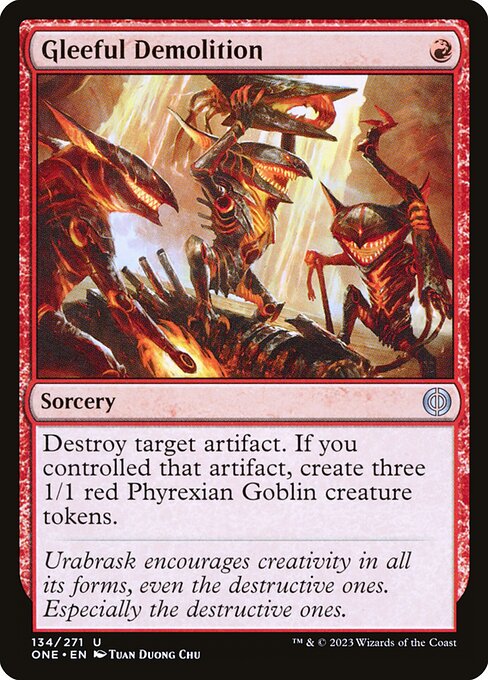 Gleeful Demolition
Destroy target artifact. If you controlled that artifact, create three 1/1 red Phyrexian Goblin creature tokens.
. For one mana, you get three 1/1 Creature tokens, which is a great deal. The key is having an expendable Artifact lying around. Thanks to cards like
Voldaren Epicure
Gleeful Demolition
Destroy target artifact. If you controlled that artifact, create three 1/1 red Phyrexian Goblin creature tokens.
. For one mana, you get three 1/1 Creature tokens, which is a great deal. The key is having an expendable Artifact lying around. Thanks to cards like
Voldaren Epicure
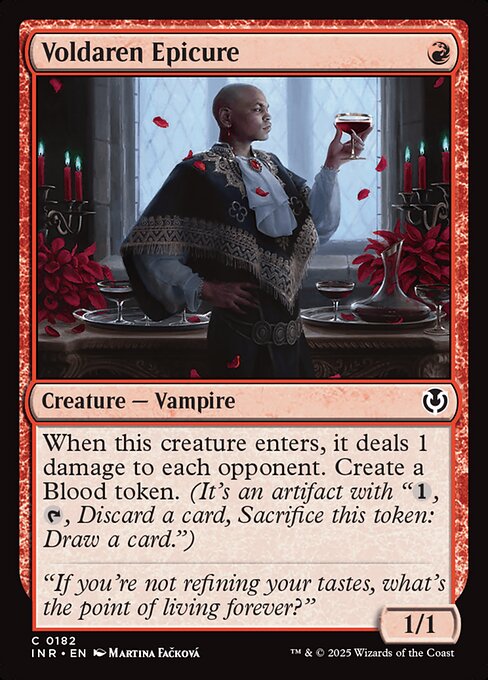 Voldaren Epicure
When this creature enters, it deals 1 damage to each opponent. Create a Blood token. (It's an artifact with "{1}, {T}, Discard a card, Sacrifice this token: Draw a card.")
, creating an Artifact while not deviating from the deck’s main gameplan is not as tough as you might think.
Voldaren Epicure
When this creature enters, it deals 1 damage to each opponent. Create a Blood token. (It's an artifact with "{1}, {T}, Discard a card, Sacrifice this token: Draw a card.")
, creating an Artifact while not deviating from the deck’s main gameplan is not as tough as you might think.
Beyond Gleeful Demolition, cards like
Resolute Reinforcements
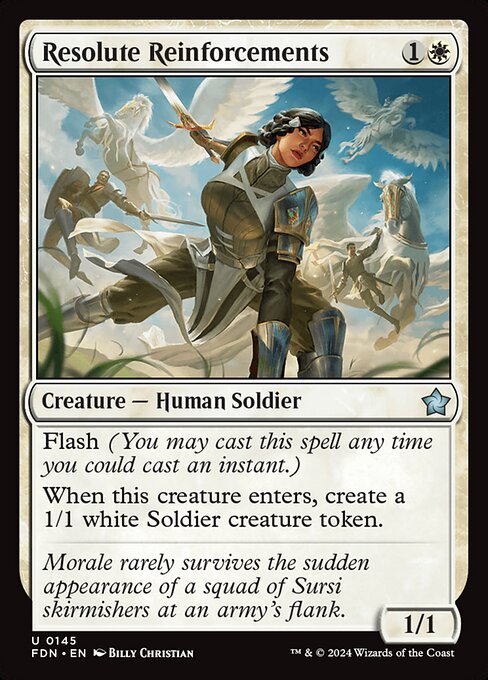 Resolute Reinforcements
Flash (You may cast this spell any time you could cast an instant.)
Resolute Reinforcements
Flash (You may cast this spell any time you could cast an instant.)
When this creature enters, create a 1/1 white Soldier creature token.
that make tokens on the cheap go a long way in helping this style of deck achieve success. The biggest downside of going from the Pioneer version to the Standard version of the archetype is simply lack of redundancy. In addition to Knight-Errant of Eos, Pioneer Boros Convoke gets to play
Venerated Loxodon
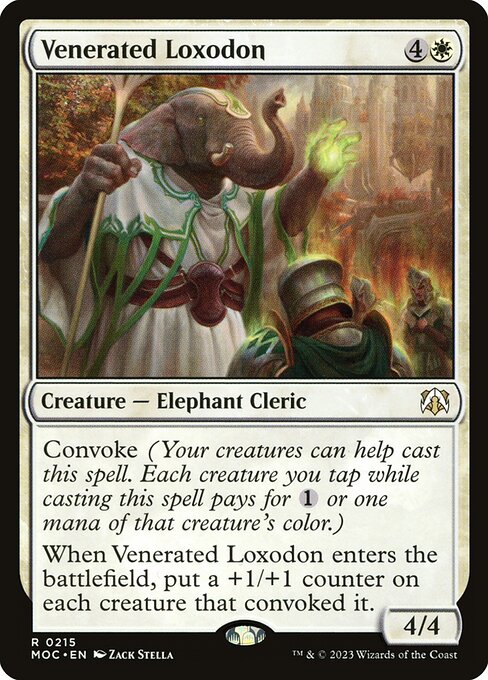 Venerated Loxodon
Convoke (Your creatures can help cast this spell. Each creature you tap while casting this spell pays for {1} or one mana of that creature's color.)
Venerated Loxodon
Convoke (Your creatures can help cast this spell. Each creature you tap while casting this spell pays for {1} or one mana of that creature's color.)
When this creature enters, put a +1/+1 counter on each creature that convoked it.
, which is not Standard legal. Getting to play a total of eight Convoke Creatures instead of four makes the Pioneer version more consistent. Luckily, though, some Wilds of Eldraine cards have come in to help give the Standard deck an extra boost.
Read More: Top 10 Most Expensive MTG Wilds of Eldraine Cards!
Filling in the Gaps
The biggest reason why Boros Convoke wasn’t very successful before the introduction of Wilds of Eldraine is that there were simply too many gaps to fill. Gleeful Demolition wasn’t reliable enough. Without Loxodon, neither was the Convoke gameplan, and without
Reckless Bushwhacker
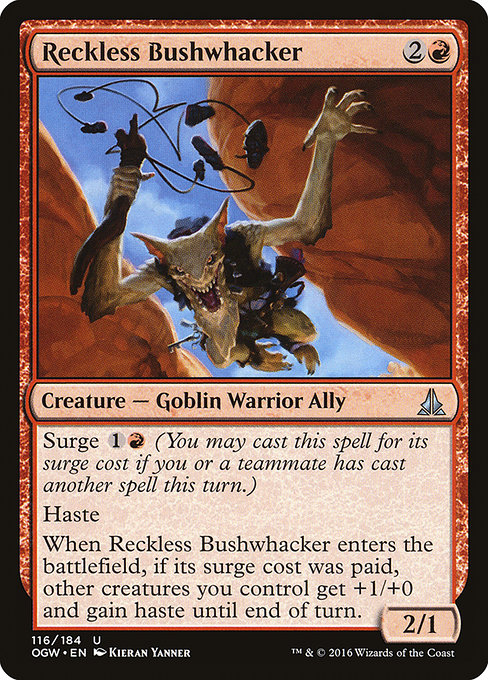 Reckless Bushwhacker
Surge {1}{R} (You may cast this spell for its surge cost if you or a teammate has cast another spell this turn.)
Reckless Bushwhacker
Surge {1}{R} (You may cast this spell for its surge cost if you or a teammate has cast another spell this turn.)
Haste
When this creature enters, if its surge cost was paid, other creatures you control get +1/+0 and gain haste until end of turn.
, the deck lacked overall explosiveness. All of these traits helped make Boros Convoke in Pioneer relatively successful. While Loxodon and Bushwhacker are still out of the equation since they are not Standard legal, there are some reasonable replacements.
Besides Voldaren Epicure, this deck plays two other Creatures that help enable Gleeful Demolition. The first is
Yotian Frontliner
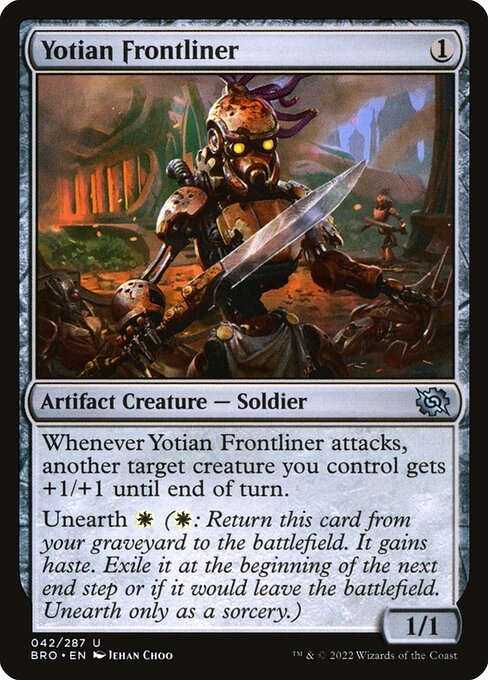 Yotian Frontliner
Whenever this creature attacks, another target creature you control gets +1/+1 until end of turn.
Yotian Frontliner
Whenever this creature attacks, another target creature you control gets +1/+1 until end of turn.
Unearth {W} ({W}: Return this card from your graveyard to the battlefield. It gains haste. Exile it at the beginning of the next end step or if it would leave the battlefield. Unearth only as a sorcery.)
, which, much like
Ornithopter
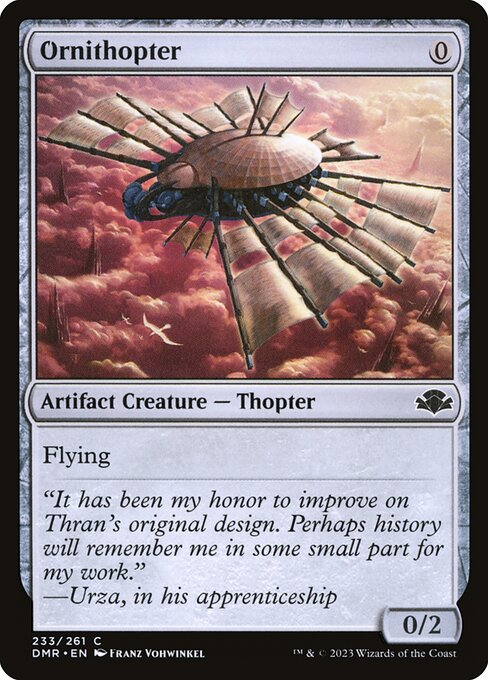 Ornithopter
Flying
in Pioneer, is both an Artifact and a Creature to help with Convoke. It can also pump other Creatures to get more damage in, which is a nice bonus. The second card, though, is a new Wilds of Eldraine addition:
Charming Scoundrel
Ornithopter
Flying
in Pioneer, is both an Artifact and a Creature to help with Convoke. It can also pump other Creatures to get more damage in, which is a nice bonus. The second card, though, is a new Wilds of Eldraine addition:
Charming Scoundrel
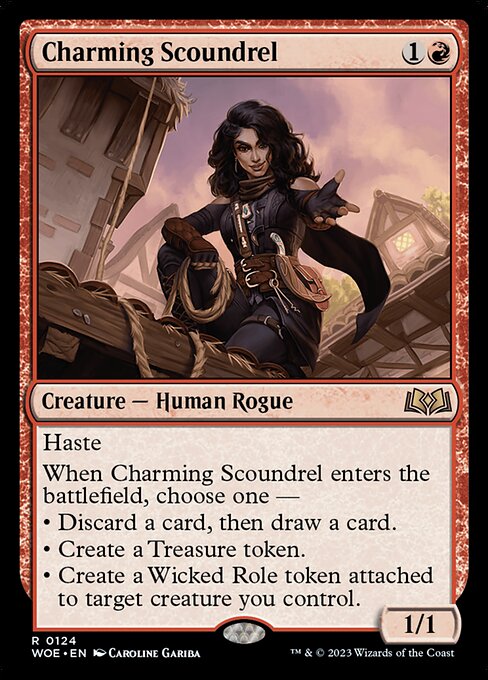 Charming Scoundrel
Haste
Charming Scoundrel
Haste
When this creature enters, choose one —
• Discard a card, then draw a card.
• Create a Treasure token.
• Create a Wicked Role token attached to target creature you control.
. Charming Scoundrel is a nice versatile card that helps in multiple situations. When it enters the battlefield, you can make a Treasure token. This clearly helps with Gleeful Demolition, but it also helps with casting
Virtue of Loyalty
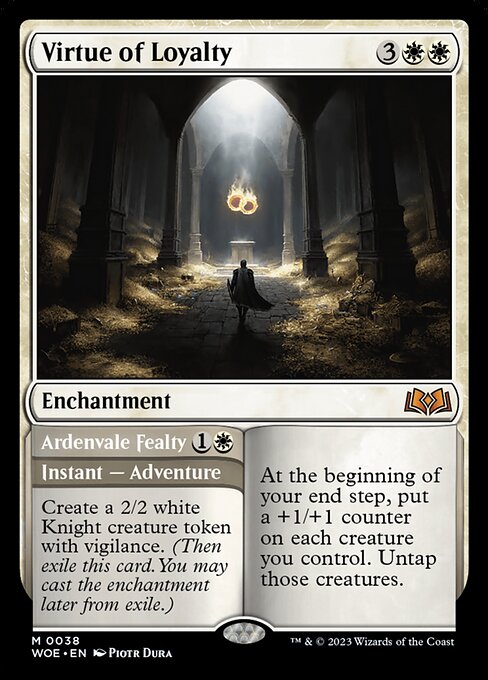 Virtue of Loyalty
At the beginning of your end step, put a +1/+1 counter on each creature you control. Untap those creatures.
, which can provide a continuous buff to your whole team.
Virtue of Loyalty
At the beginning of your end step, put a +1/+1 counter on each creature you control. Untap those creatures.
, which can provide a continuous buff to your whole team.
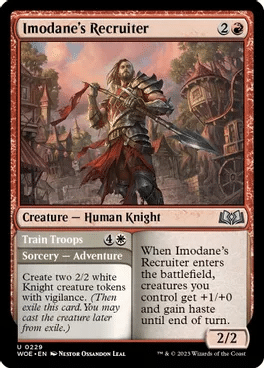
In addition, you can simply choose to create a Wicked Role attached to a Creature you control and start getting damage in. Without Loxodon, this deck is reliant on being somewhat fast. That’s where the next big addition to the deck comes in. Filling in for Reckless Bushwhacker, we have
Imodane’s Recruiter
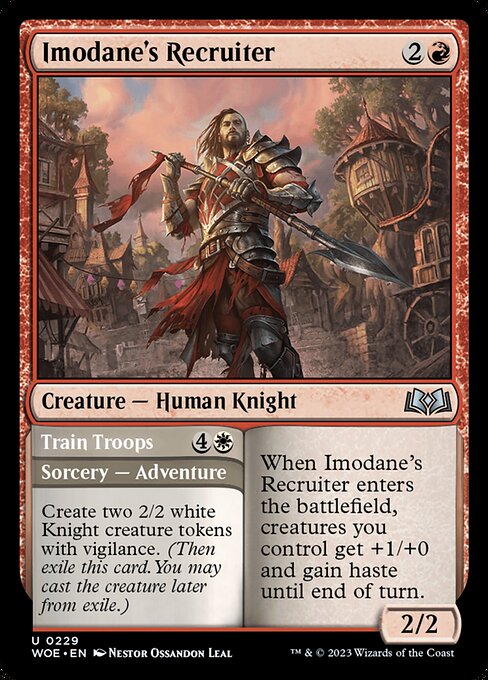 Imodane’s Recruiter
When this creature enters, creatures you control get +1/+0 and gain haste until end of turn.
. Imodane’s Recruiter may not have Surge, but it still helps create a ton of extra damage out of nowhere, something the Standard version was lacking. In conjunction with
Raging Battle Mouse
Imodane’s Recruiter
When this creature enters, creatures you control get +1/+0 and gain haste until end of turn.
. Imodane’s Recruiter may not have Surge, but it still helps create a ton of extra damage out of nowhere, something the Standard version was lacking. In conjunction with
Raging Battle Mouse
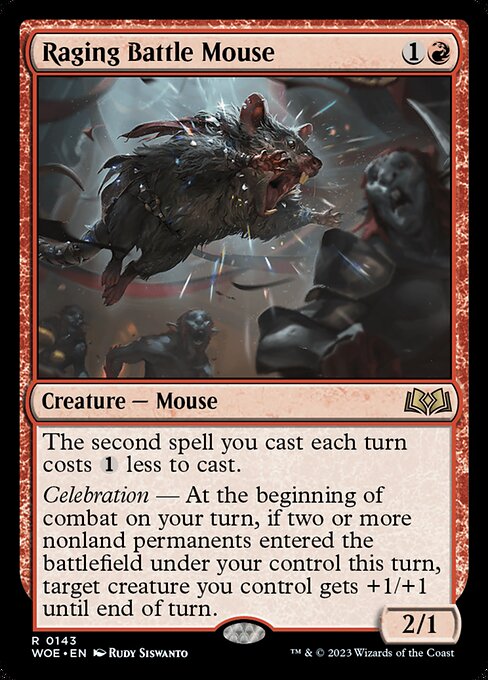 Raging Battle Mouse
The second spell you cast each turn costs {1} less to cast.
Raging Battle Mouse
The second spell you cast each turn costs {1} less to cast.
Celebration — At the beginning of combat on your turn, if two or more nonland permanents entered the battlefield under your control this turn, target creature you control gets +1/+1 until end of turn.
, another new addition that can pump your Creatures and make your second spell each turn cost less mana, it’s easy to cast a Creature, follow it up with the Recruiter, and bash for a ton of damage.
Read More: Traditional MTG Menace is a Major Problem on a Budget!
Strengths and Weaknesses
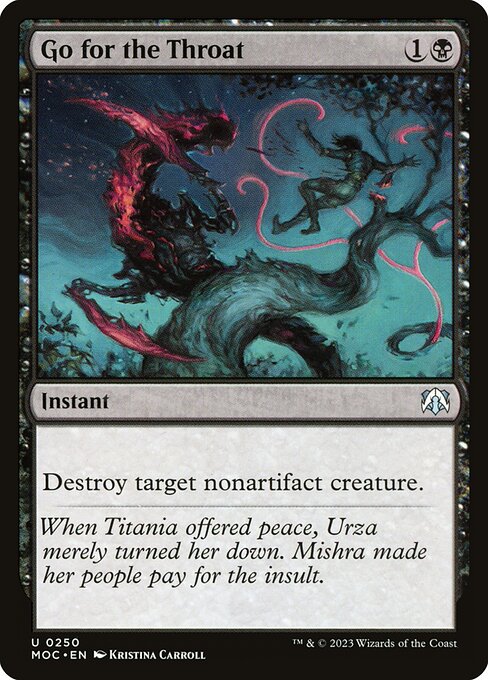
The quick bursts of damage this deck can create is definitely the deck’s biggest strength. Having cards like Gleeful Demolition that create multiple bodies in one card also help a lot against single-target removal like
Go for the Throat
 Go for the Throat
Destroy target nonartifact creature.
. Both Knight-Errant of Eos and Virtue of Loyalty give this deck a solid chance against Midrange decks and in games where the board stalls out. Combine this with the deck’s ability to easily race slower decks like five-color “Cascade” and it’s easy to see why this deck had a strong showing.
Go for the Throat
Destroy target nonartifact creature.
. Both Knight-Errant of Eos and Virtue of Loyalty give this deck a solid chance against Midrange decks and in games where the board stalls out. Combine this with the deck’s ability to easily race slower decks like five-color “Cascade” and it’s easy to see why this deck had a strong showing.
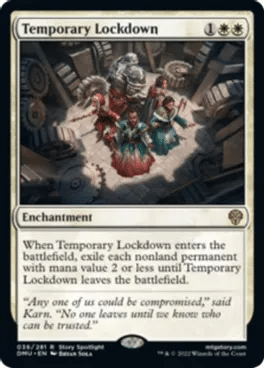
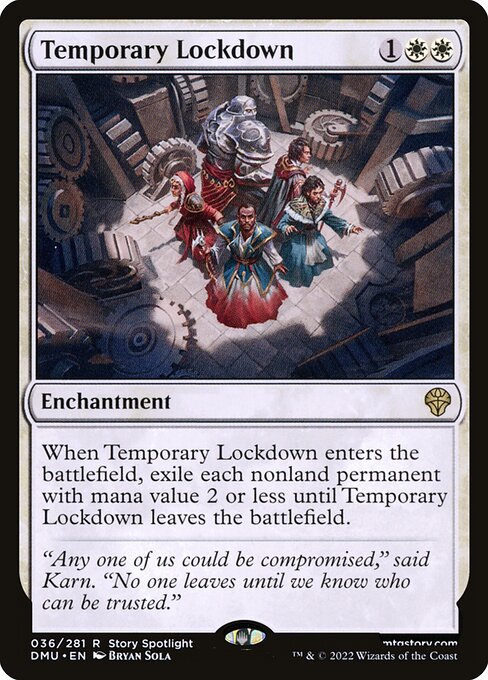
That being said, there are some notable weaknesses this deck has as well. While single-target removal isn’t ideal against this deck, board wipes can be quite strong. Cards like
Temporary Lockdown
 Temporary Lockdown
When this enchantment enters, exile each nonland permanent with mana value 2 or less until this enchantment leaves the battlefield.
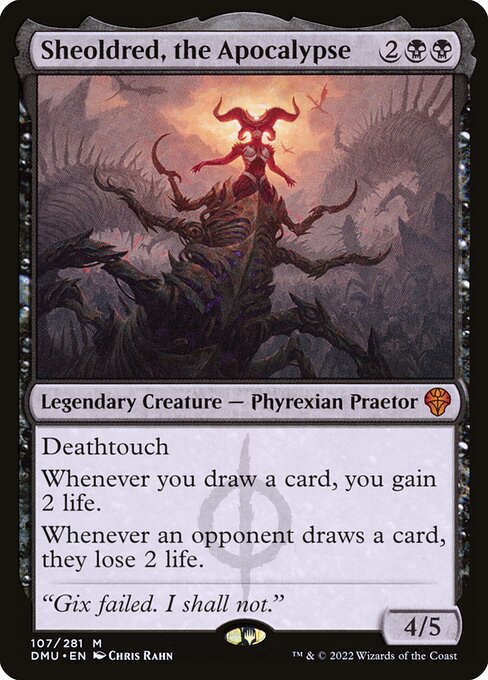
are difficult to race and can clean up a lot of your board at once. This deck is also so Creature-focused that it doesn’t have much room for removal, so cards like
Sheoldred, the Apocalypse
Temporary Lockdown
When this enchantment enters, exile each nonland permanent with mana value 2 or less until this enchantment leaves the battlefield.
are difficult to race and can clean up a lot of your board at once. This deck is also so Creature-focused that it doesn’t have much room for removal, so cards like
Sheoldred, the Apocalypse
 Sheoldred, the Apocalypse
Deathtouch
Sheoldred, the Apocalypse
Deathtouch
Whenever you draw a card, you gain 2 life.
Whenever an opponent draws a card, they lose 2 life.
can be quite effective at halting your attacks.
What’s nice about this deck, though, is that racing Sheoldred by simply going wide and attacking is not out of the question. Imodane’s Recruiter also gives the deck some game against board wipes. Casting Gleeful Demolition and Recruiter on the same turn can certainly come up, and this adds a ton of damage out of nowhere. Being able to punish the slower decks of the format is a big plus, so if you’re sick of losing to
Bramble Familiar
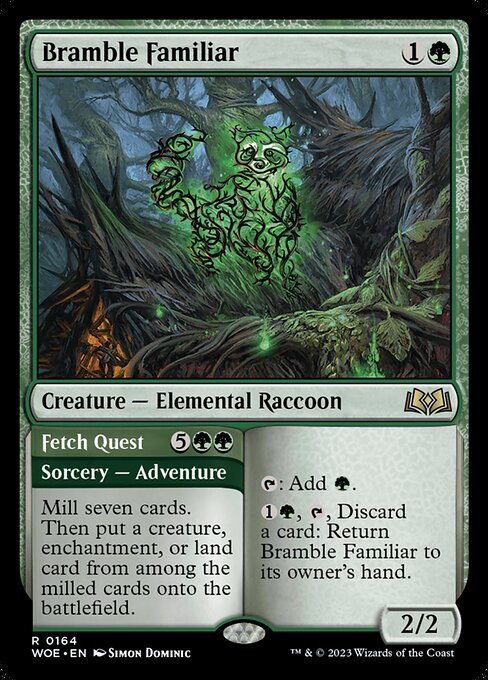 Bramble Familiar
{T}: Add {G}.
Bramble Familiar
{T}: Add {G}.
{1}{G}, {T}, Discard a card: Return this creature to its owner's hand.
decks, consider giving this deck a whirl.
Read More: Wilds of Eldraine Takes Over Multiple Formats with These New Cards!