
Wilds of Eldraine cards have been available for over a week on Magic Online, and we are continuing to see them have a major impact on various formats. Standard has seen an enormous shake-up, as the power of cards like Bramble Familiar have completely changed the metagame that was dominated by
Sheoldred, the Apocalypse
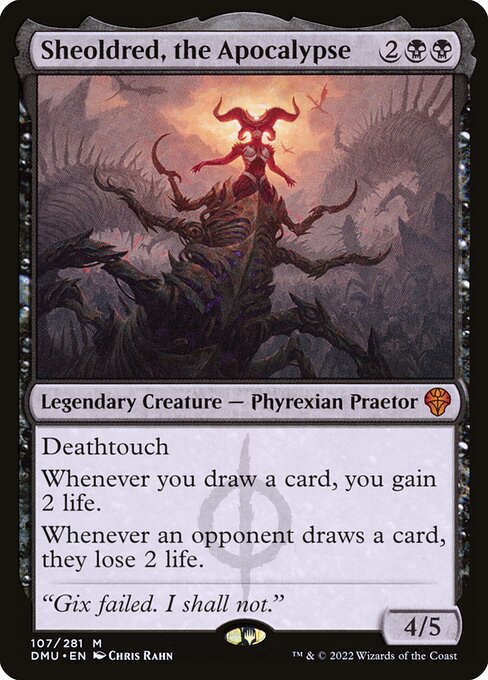 Sheoldred, the Apocalypse
Deathtouch
Sheoldred, the Apocalypse
Deathtouch
Whenever you draw a card, you gain 2 life.
Whenever an opponent draws a card, they lose 2 life.
for so long. Role-players like
Sleight of Hand
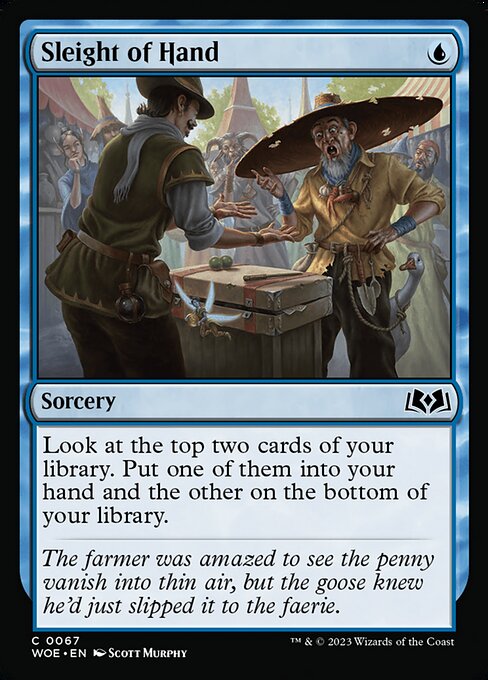 Sleight of Hand
Look at the top two cards of your library. Put one of them into your hand and the other on the bottom of your library.
and
Monstrous Rage
Sleight of Hand
Look at the top two cards of your library. Put one of them into your hand and the other on the bottom of your library.
and
Monstrous Rage
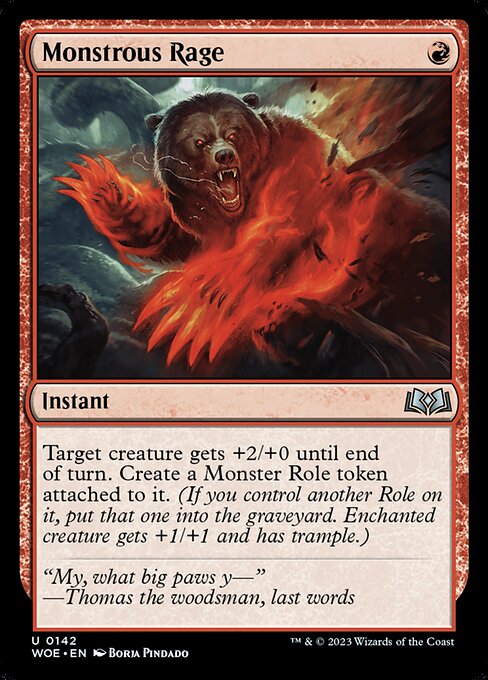 Monstrous Rage
Target creature gets +2/+0 until end of turn. Create a Monster Role token attached to it. (If you control another Role on it, put that one into the graveyard. Enchanted creature gets +1/+1 and has trample.)
have helped strengthen a handful of Pioneer archetypes. Meanwhile,
Agatha’s Soul Cauldron
Monstrous Rage
Target creature gets +2/+0 until end of turn. Create a Monster Role token attached to it. (If you control another Role on it, put that one into the graveyard. Enchanted creature gets +1/+1 and has trample.)
have helped strengthen a handful of Pioneer archetypes. Meanwhile,
Agatha’s Soul Cauldron
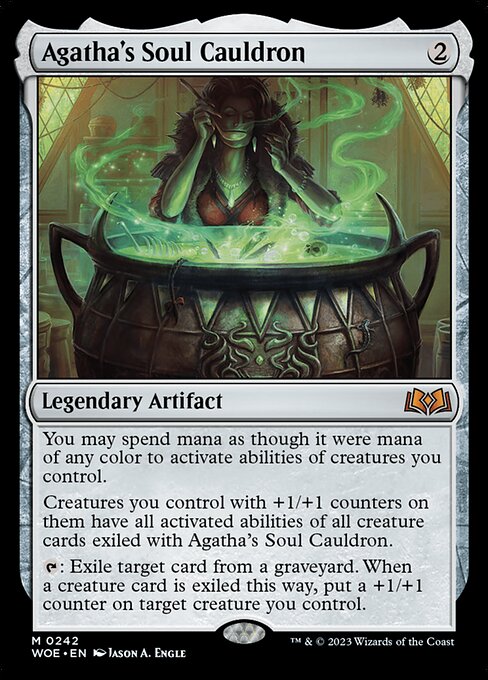 Agatha’s Soul Cauldron
You may spend mana as though it were mana of any color to activate abilities of creatures you control.
Agatha’s Soul Cauldron
You may spend mana as though it were mana of any color to activate abilities of creatures you control.
Creatures you control with +1/+1 counters on them have all activated abilities of all creature cards exiled with Agatha's Soul Cauldron.
{T}: Exile target card from a graveyard. When a creature card is exiled this way, put a +1/+1 counter on target creature you control.
and
Beseech the Mirror
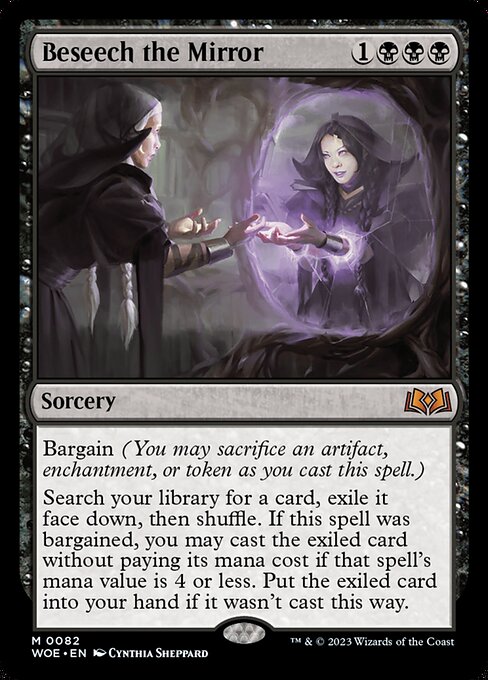 Beseech the Mirror
Bargain (You may sacrifice an artifact, enchantment, or token as you cast this spell.)
Beseech the Mirror
Bargain (You may sacrifice an artifact, enchantment, or token as you cast this spell.)
Search your library for a card, exile it face down, then shuffle. If this spell was bargained, you may cast the exiled card without paying its mana cost if that spell's mana value is 4 or less. Put the exiled card into your hand if it wasn't cast this way.
have elevated combo archetypes in Modern and Legacy, respectively.
It’s no secret that there are a lot of Wilds of Eldraine cards that are strong. However, one card in particular did rise above our expectations. As an Adventure card, neither the Creature nor the Instant are absurdly powerful on their own. When combined, though, the card generates a lot of value, and has a ton of flexibility. This card is none other than Questing Druid, and this card appears to be a house in all four formats mentioned above. Let’s take a closer look and see exactly where this card shines in each format.
Standard Synergy
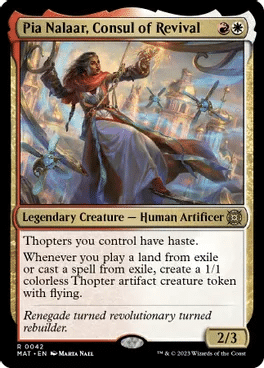
There’s still plenty of room for innovation within the Standard format. After all, Wilds of Eldraine cards haven’t been out for long. Still, Questing Druid is starting to make its presence felt rather quickly. One of the first places this card began to see play is in a unique shell built around Pia Nalaar, Consul of Revival. Questing Druid has a perfect home in this deck. The archetype is almost entirely Boros-based, allowing Questing Druid to grow very large very fast.
The Adventure portion of Questing Druid plays an even bigger role here, though, working in conjunction with
Reckless Impulse
 Reckless Impulse
Exile the top two cards of your library. Until the end of your next turn, you may play those cards.
and Wrenn’s Resolve as a source of card advantage that specifically exiles the top two cards of your library. This makes it easy to make a bunch of Thopters off of Pia Nalaar. The fact that Questing Druid acts as both a threat on its own and a way to generate card advantage that synergizes with the rest of the deck is incredible.
Reckless Impulse
Exile the top two cards of your library. Until the end of your next turn, you may play those cards.
and Wrenn’s Resolve as a source of card advantage that specifically exiles the top two cards of your library. This makes it easy to make a bunch of Thopters off of Pia Nalaar. The fact that Questing Druid acts as both a threat on its own and a way to generate card advantage that synergizes with the rest of the deck is incredible.
Beyond Naya tokens, Questing Druid has also popped up in some Golgari-based midrange decks. Both Questing Druid and Mosswood Dreadknight are capable of helping you play a long, grindy game when necessary. Additionally, because they are both two-drop threats, they can simply be cast on curve against opposing multi-color Bramble Familiar decks that can go way over the top. In this sense, Questing Druid is incredibly flexible, which makes it stronger than it looks.
Read More: Traditional MTG Menace is a Major Problem on a Budget!
Pioneer Versatility
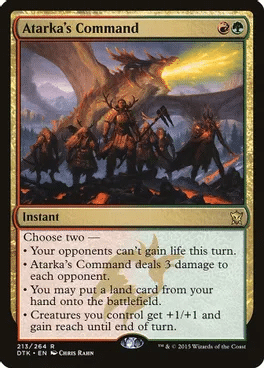
Regarding flexibility, that’s the role Questing Druid plays in Pioneer Gruul aggro decks. This deck that is built around efficient Creatures and Atarka’s Command is well-known for the hyperaggressive starts that can be produced. The problem is that the deck has historically lacked staying power. Outside of burn spells, Gruul aggro didn’t have much of an ability to win in the mid to late game. This is because, in order to play the deck effectively and maximize Atarka’s Command and Reckless Bushwhacker, you had to keep your curve low and full of Creatures.
Questing Druid helps this deck quite a bit on both axes. If you have a fast draw and are simply looking to curve out, playing Questing Druid on turn two is totally fine. Given how many cheap red cards this deck plays, you can often get a couple counters on Questing Druid the turn after and make a solid attack.
Of course, not every game is going to play out this way. If you are playing against a deck with lots of removal, such as Rakdos Midrange, being able to cast the Adventure portion of Questing Druid first can help you play a game of attrition. All Questing Druid’s Adventure asks is for you to play cheap cards to maximize your ability to play both of them on your turn. Gruul aggro certainly checks this box.
Read More: Breakout Wilds of Eldraine Card Sees Surprising Spike, Approaching $40!
Modern Longevity
Another deck that checks this box is Prowess in Modern. Prowess is also a deck that is capable of fast starts. This deck plays 12 one-drops and is looking to establish a board presence early. Each of these Creatures benefits a lot from you casting cheap spells, of which this deck has plenty. Cards like
Mishra’s Bauble
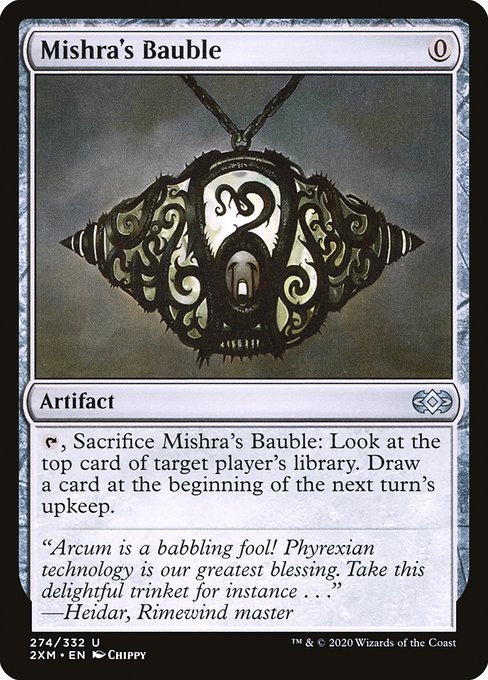 Mishra’s Bauble
{T}, Sacrifice this artifact: Look at the top card of target player's library. Draw a card at the beginning of the next turn's upkeep.
and Mutagenic Growth can even be played for free, which work perfectly with both of the Prowess one-drops as well as
Dragon’s Rage Channeler
Mishra’s Bauble
{T}, Sacrifice this artifact: Look at the top card of target player's library. Draw a card at the beginning of the next turn's upkeep.
and Mutagenic Growth can even be played for free, which work perfectly with both of the Prowess one-drops as well as
Dragon’s Rage Channeler
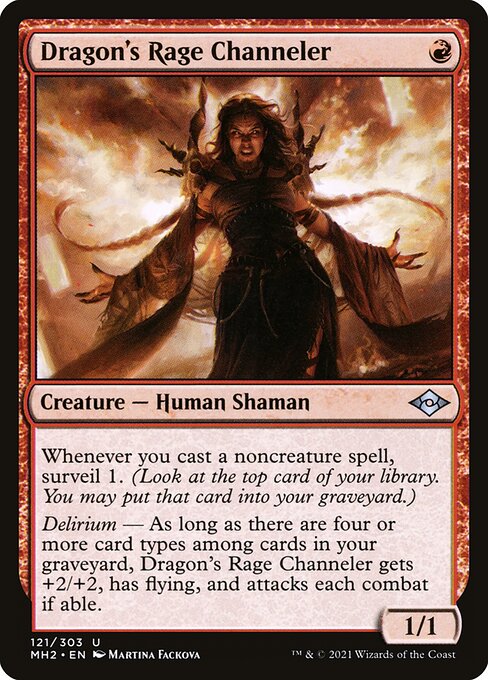 Dragon’s Rage Channeler
Whenever you cast a noncreature spell, surveil 1. (Look at the top card of your library. You may put that card into your graveyard.)
Dragon’s Rage Channeler
Whenever you cast a noncreature spell, surveil 1. (Look at the top card of your library. You may put that card into your graveyard.)
Delirium — As long as there are four or more card types among cards in your graveyard, this creature gets +2/+2, has flying, and attacks each combat if able.
.
Because the cards in this deck are quite efficient, this deck gets access to
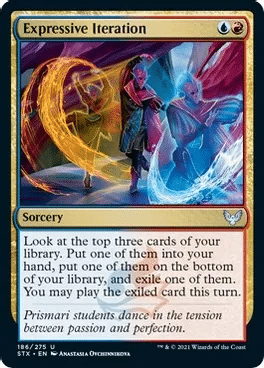
Expressive Iteration
 Expressive Iteration
Look at the top three cards of your library. Put one of them into your hand, put one of them on the bottom of your library, and exile one of them. You may play the exiled card this turn.
, one of the best card advantage spells in Modern. Sometimes this deck will even play
Underworld Breach
Expressive Iteration
Look at the top three cards of your library. Put one of them into your hand, put one of them on the bottom of your library, and exile one of them. You may play the exiled card this turn.
, one of the best card advantage spells in Modern. Sometimes this deck will even play
Underworld Breach
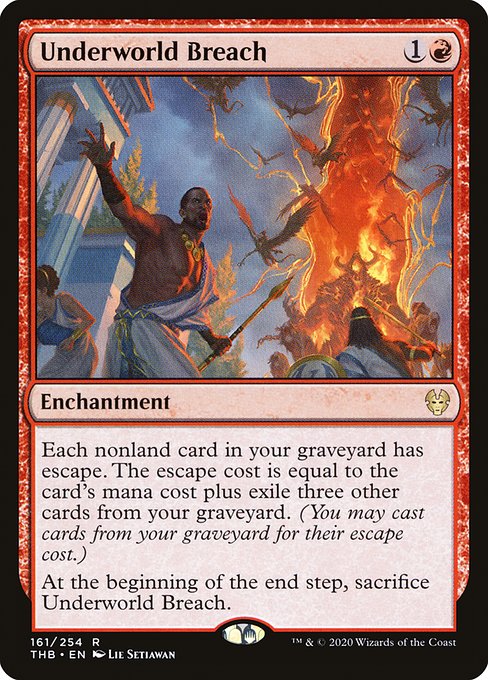 Underworld Breach
Each nonland card in your graveyard has escape. The escape cost is equal to the card's mana cost plus exile three other cards from your graveyard. (You may cast cards from your graveyard for their escape cost.)
Underworld Breach
Each nonland card in your graveyard has escape. The escape cost is equal to the card's mana cost plus exile three other cards from your graveyard. (You may cast cards from your graveyard for their escape cost.)
At the beginning of the end step, sacrifice this enchantment.
to help in games that go long.
This is where Questing Druid comes in. While the Adventure side of Questing Druid is no Expressive Iteration, it does provide the deck with some additional card advantage. From there, you can cast Questing Druid from exile at any point to add another threat to the table, and it grows fast in a deck like this.
Notably, the Adventure only lets you play cards until your next end step. Sometimes it will be best to cast this spell on the opponent’s turn to give you the best opportunity to play both of the exiled cards on your turn. This means you may deal less damage on your turn with your Prowess threats. This is still well worth it in attrition-based matchups, and even lets you hold up mana to cast Counterspells or removal at Instant speed if necessary. Questing Druid is such a powerful card, that it’s even showing up in Legacy too!
Read More: New MTG Tutoring Saga Sees Breakout Performance!
Raw Power in Legacy
Much like how some Prowess players are splashing for Questing Druid in Modern, some Legacy
Delver of Secrets
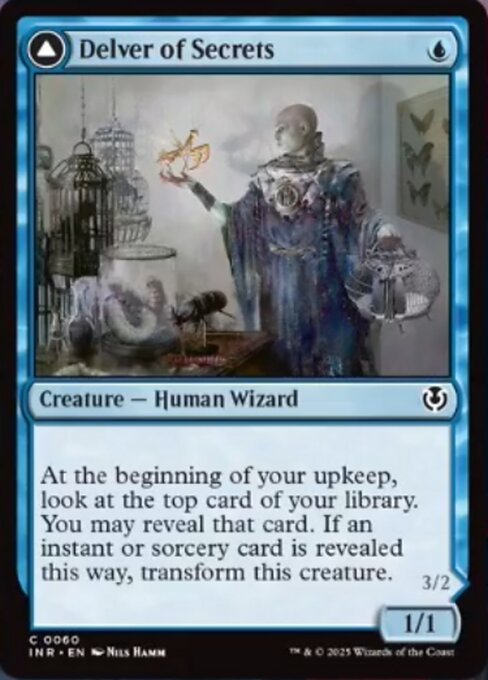 Delver of Secrets
At the beginning of your upkeep, look at the top card of your library. You may reveal that card. If an instant or sorcery card is revealed this way, transform this creature.
players are doing the same thing. Legacy Delver decks are all about efficiency, playing cheap threats and backing them up with
Daze
Delver of Secrets
At the beginning of your upkeep, look at the top card of your library. You may reveal that card. If an instant or sorcery card is revealed this way, transform this creature.
players are doing the same thing. Legacy Delver decks are all about efficiency, playing cheap threats and backing them up with
Daze
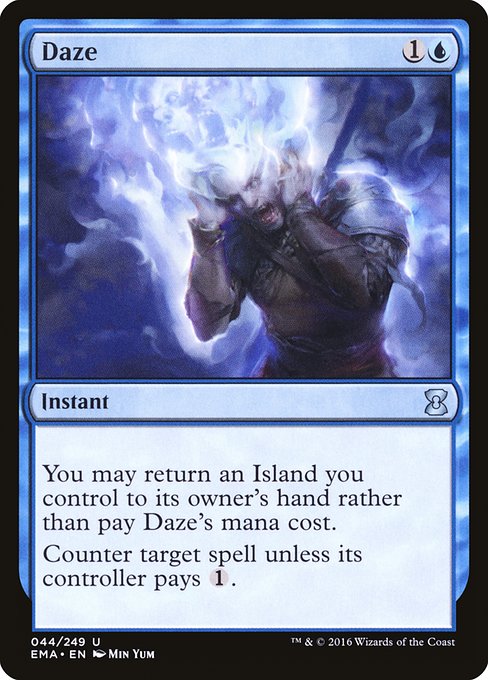 Daze
You may return an Island you control to its owner's hand rather than pay this spell's mana cost.
Daze
You may return an Island you control to its owner's hand rather than pay this spell's mana cost.
Counter target spell unless its controller pays {1}.
and
Wasteland
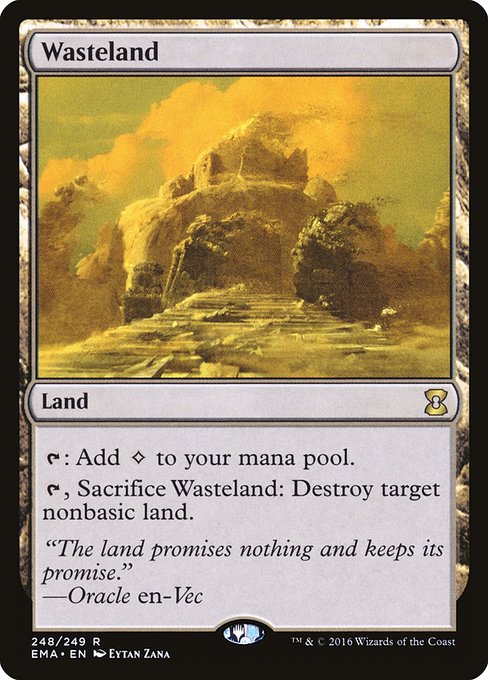 Wasteland
{T}: Add {C}.
Wasteland
{T}: Add {C}.
{T}, Sacrifice this land: Destroy target nonbasic land.
. With Expressive Iteration banned in the format, Questing Druid can help fill in the gap.
While exiling Counterspells like Daze and
Force of Will
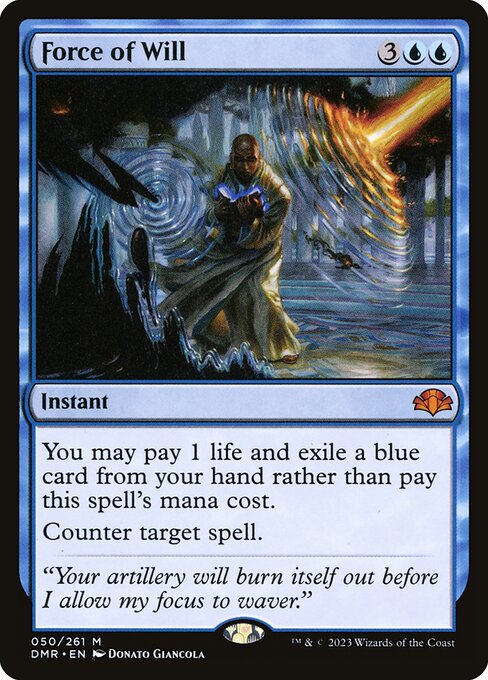 Force of Will
You may pay 1 life and exile a blue card from your hand rather than pay this spell's mana cost.
Force of Will
You may pay 1 life and exile a blue card from your hand rather than pay this spell's mana cost.
Counter target spell.
is not ideal, this deck can actually use
Brainstorm
 Brainstorm
Draw three cards, then put two cards from your hand on top of your library in any order.
to manipulate the top of the deck to maximize Questing Druid’s Adventure. Getting to put cards like Mishra’s Bauble on top of your deck to make Questing Druid’s Adventure as reliable as possible is a nice option to have.
Brainstorm
Draw three cards, then put two cards from your hand on top of your library in any order.
to manipulate the top of the deck to maximize Questing Druid’s Adventure. Getting to put cards like Mishra’s Bauble on top of your deck to make Questing Druid’s Adventure as reliable as possible is a nice option to have.
Questing Druid naturally has built-in card advantage as an Adventure card, allowing you to play both parts of the card and reap the rewards. The fact that both the threat side and the card advantage side are efficient makes Questing Druid extremely strong in decks with lots of other cheap spells. Questing Druid is seeing play from Standard down to Legacy, showing just how impactful it is, and this is only the beginning.
Read More: Wilds of Eldraine Cards Create Tons of Unique Infinite Combos!