
Starting a few days ago on December 12, 2023, players got their first crack at playing the new Timeless MTG format on Arena. Akin to Vintage, this format allows players to use all cards at their disposal that are on MTG Arena. All cards are legal, with a rather small initial Restricted List to start out. Notably, while a handful of cards such as
Orcish Bowmasters
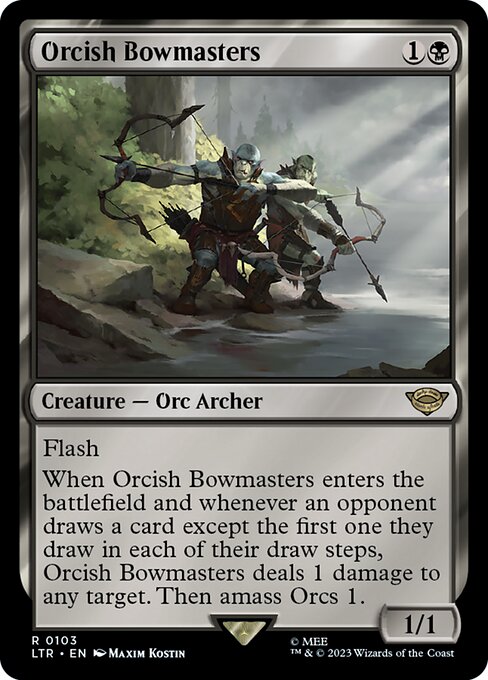 Orcish Bowmasters
Flash
Orcish Bowmasters
Flash
When this creature enters and whenever an opponent draws a card except the first one they draw in each of their draw steps, this creature deals 1 damage to any target. Then amass Orcs 1.
had been previously nerfed on Arena, players will get to play with these cards as originally printed.
Obviously, there are plenty of cards legal in Vintage that are not on MTG Arena. In this sense, very little is comparatively available at players’ disposal. That said, thanks to various bonus sheets such as the Wilds of Eldraine: Enchanting Tales bonus sheet, there are plenty of absurdly powerful cards available to play with.
Shortly before the format was launched, we gave our predictions for cards that had high potential during the opening days of the format. Cards like
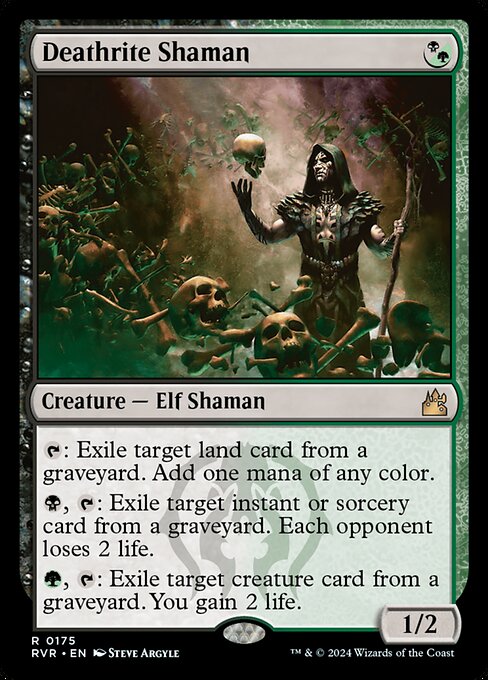
Deathrite Shaman
 Deathrite Shaman
{T}: Exile target land card from a graveyard. Add one mana of any color. (Activate only as an instant.)
Deathrite Shaman
{T}: Exile target land card from a graveyard. Add one mana of any color. (Activate only as an instant.)
{B}, {T}: Exile target instant or sorcery card from a graveyard. Each opponent loses 2 life.
{G}, {T}: Exile target creature card from a graveyard. You gain 2 life.
and
Treasure Cruise
 Treasure Cruise
Delve (Each card you exile from your graveyard while casting this spell pays for {1}.)
Treasure Cruise
Delve (Each card you exile from your graveyard while casting this spell pays for {1}.)
Draw three cards.
immediately came to mind, given their perfect synergy with the Khans of Tarkir Fetchlands that recently arrived on Arena. Over the past few days, we’ve started to get a glimpse of some of the strongest shells available in the format. Today, we are going to take a closer look at some of these archetypes and what makes them powerful right off the bat.
Necropotence Shells
As one of the Enchanting Tales cards,
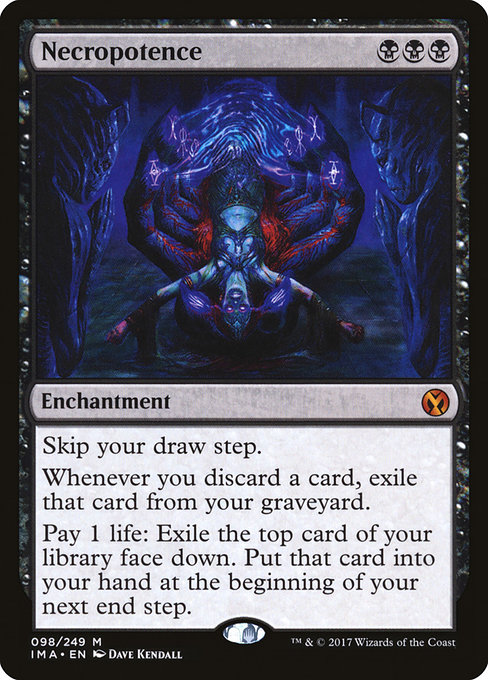
Necropotence
 Necropotence
Skip your draw step.
Necropotence
Skip your draw step.
Whenever you discard a card, exile that card from your graveyard.
Pay 1 life: Exile the top card of your library face down. Put that card into your hand at the beginning of your next end step.
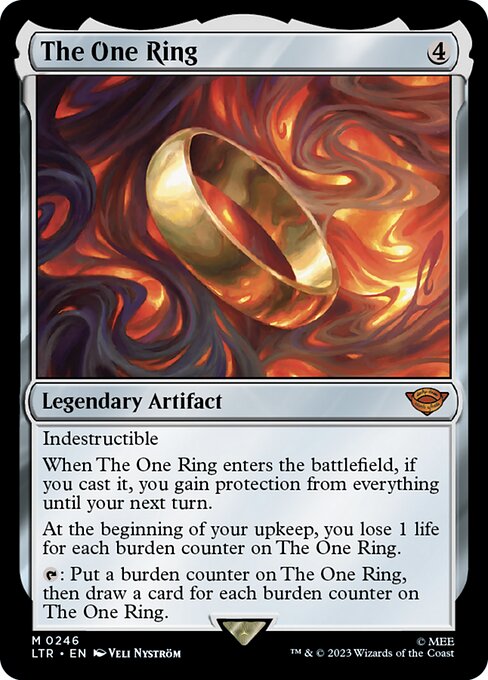
has emerged as one of the best cards to be casting in Timeless. Assuming you are at a reasonably high life total, Necropotence can be used as an extreme source of card advantage. It’s even more efficient than
The One Ring
 The One Ring
Indestructible
The One Ring
Indestructible
When The One Ring enters, if you cast it, you gain protection from everything until your next turn.
At the beginning of your upkeep, you lose 1 life for each burden counter on The One Ring.
{T}: Put a burden counter on The One Ring, then draw a card for each burden counter on The One Ring.
and has the added bonus of letting you draw a ton of cards all at once.
Perhaps the most important aspect of the card, though, is that the cards you obtain aren’t technically drawn. Instead, you exile them from your library and put them into your hand at the beginning of your next end step. This means that Necropotence effectively gets around
Orcish Bowmasters
Orcish Bowmasters
Flash
When this creature enters and whenever an opponent draws a card except the first one they draw in each of their draw steps, this creature deals 1 damage to any target. Then amass Orcs 1.
, another amazing card in the format.
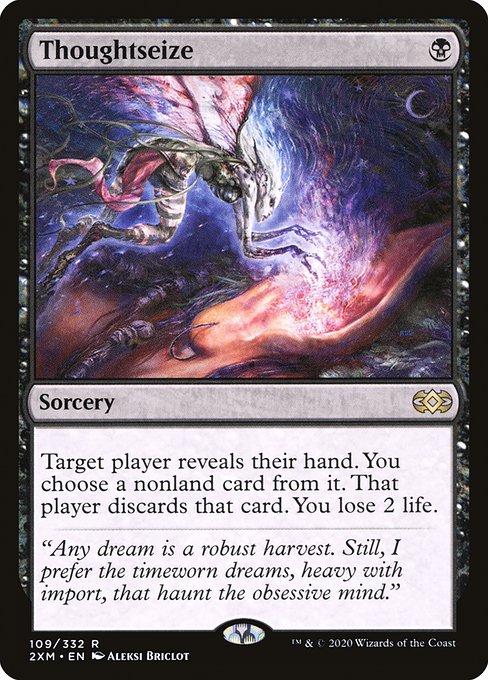
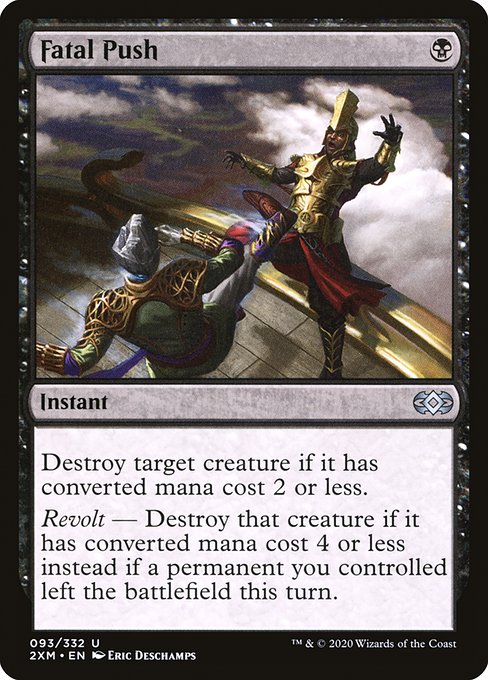
Our first Necropotence shell as shown above utilizes both of these cards. This deck is designed to play like a mono-black midrange deck, utilizing interaction like
Thoughtseize
 Thoughtseize
Target player reveals their hand. You choose a nonland card from it. That player discards that card. You lose 2 life.
and
Fatal Push
Thoughtseize
Target player reveals their hand. You choose a nonland card from it. That player discards that card. You lose 2 life.
and
Fatal Push
 Fatal Push
Destroy target creature if it has mana value 2 or less.
Fatal Push
Destroy target creature if it has mana value 2 or less.
Revolt — Destroy that creature if it has mana value 4 or less instead if a permanent left the battlefield under your control this turn.
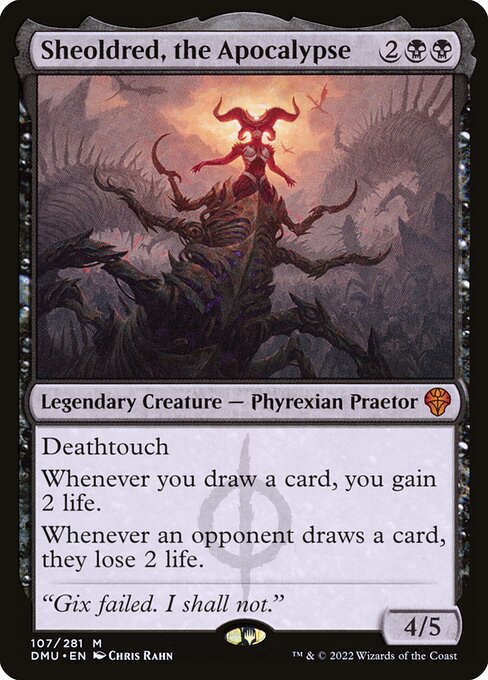
to stay alive. Cards like Orcish Bowmasters,
Sheoldred, the Apocalypse
 Sheoldred, the Apocalypse
Deathtouch
Sheoldred, the Apocalypse
Deathtouch
Whenever you draw a card, you gain 2 life.
Whenever an opponent draws a card, they lose 2 life.
, and even
Professor Onyx
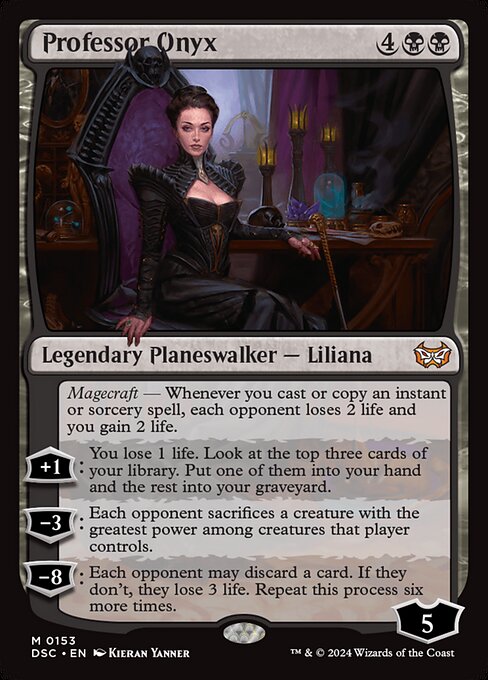 Professor Onyx
Magecraft — Whenever you cast or copy an instant or sorcery spell, each opponent loses 2 life and you gain 2 life.
Professor Onyx
Magecraft — Whenever you cast or copy an instant or sorcery spell, each opponent loses 2 life and you gain 2 life.
+1: You lose 1 life. Look at the top three cards of your library. Put one of them into your hand and the rest into your graveyard.
−3: Each opponent sacrifices a creature with the greatest power among creatures that player controls.
−8: Each opponent may discard a card. If they don't, they lose 3 life. Repeat this process six more times.
act as win conditions. Meanwhile, Necropotence and
Phyrexian Arena
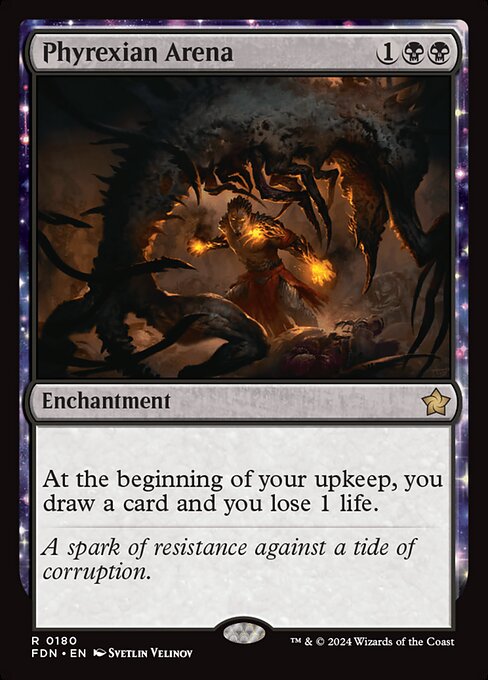 Phyrexian Arena
At the beginning of your upkeep, you draw a card and lose 1 life.
can pull you further ahead on cards.
Phyrexian Arena
At the beginning of your upkeep, you draw a card and lose 1 life.
can pull you further ahead on cards.
As good as Necropotence is on turn three, it’s even better on turn one. Well, thanks to
Dark Ritual
 Dark Ritual
Add {B}{B}{B}.
, this is an easy play to achieve. Dark Ritual is a great inclusion in the mono-black midrange deck, but it’s perhaps even better in the more combo-centric Necropotence shells. Some players have decided to take a more all-in approach, using
Tendrils of Agony
Dark Ritual
Add {B}{B}{B}.
, this is an easy play to achieve. Dark Ritual is a great inclusion in the mono-black midrange deck, but it’s perhaps even better in the more combo-centric Necropotence shells. Some players have decided to take a more all-in approach, using
Tendrils of Agony
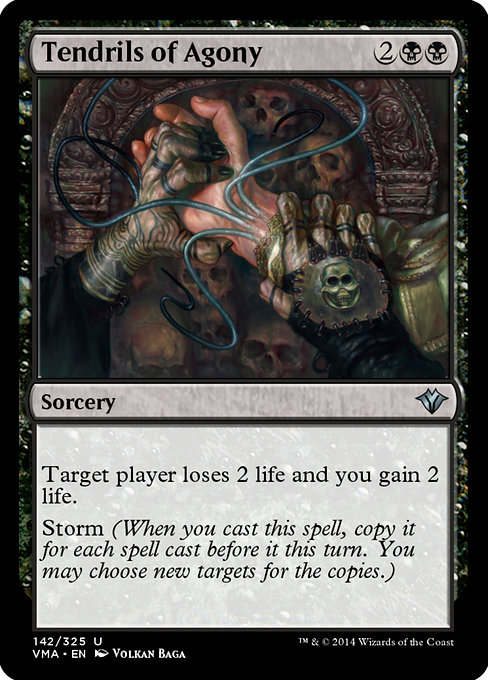 Tendrils of Agony
Target player loses 2 life and you gain 2 life.
Tendrils of Agony
Target player loses 2 life and you gain 2 life.
Storm (When you cast this spell, copy it for each spell cast before it this turn. You may choose new targets for the copies.)
as a win condition.
Beseech the Mirror
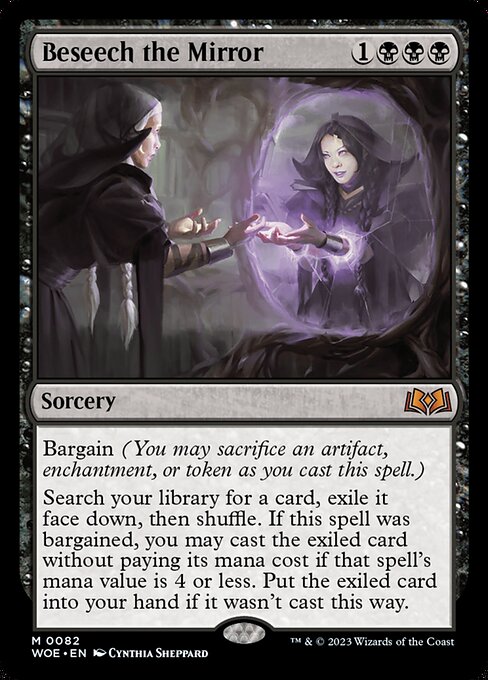 Beseech the Mirror
Bargain (You may sacrifice an artifact, enchantment, or token as you cast this spell.)
Beseech the Mirror
Bargain (You may sacrifice an artifact, enchantment, or token as you cast this spell.)
Search your library for a card, exile it face down, then shuffle. If this spell was bargained, you may cast the exiled card without paying its mana cost if that spell's mana value is 4 or less. Put the exiled card into your hand if it wasn't cast this way.
is a nice tool to help find Necropotence or Tendrils, especially because
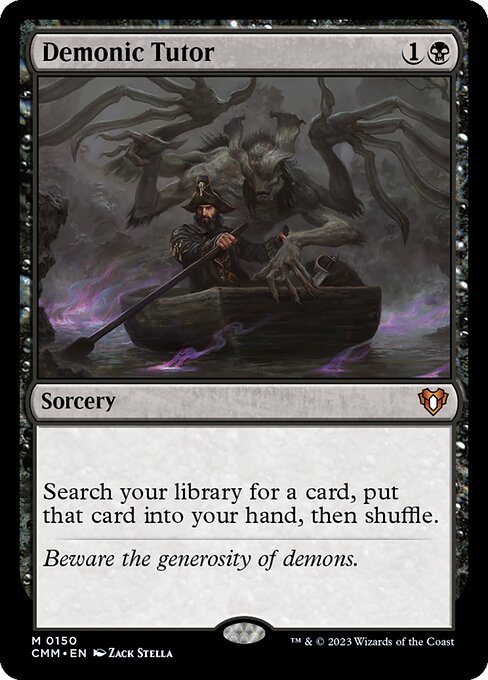
Demonic Tutor
 Demonic Tutor
Search your library for a card, put that card into your hand, then shuffle.
is one of the three Restricted cards. There doesn’t seem to be a complete consensus regarding how to build this deck. Some lists use more zero-mana Creatures to enable
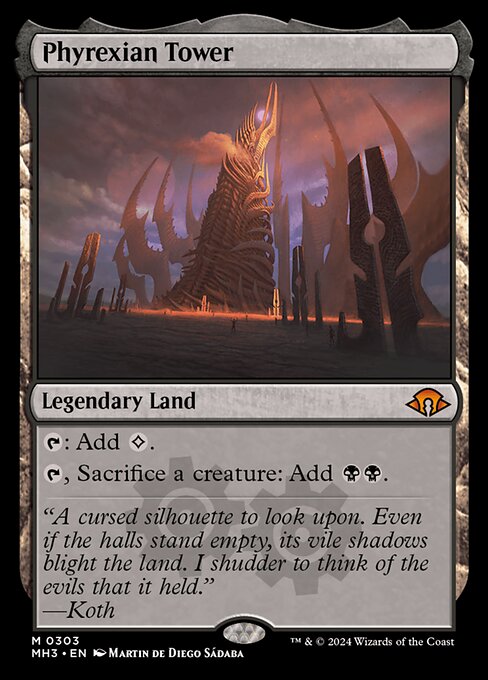
Phyrexian Tower
Demonic Tutor
Search your library for a card, put that card into your hand, then shuffle.
is one of the three Restricted cards. There doesn’t seem to be a complete consensus regarding how to build this deck. Some lists use more zero-mana Creatures to enable
Phyrexian Tower
 Phyrexian Tower
{T}: Add {C}.
Phyrexian Tower
{T}: Add {C}.
{T}, Sacrifice a creature: Add {B}{B}.
. Some players splash green for
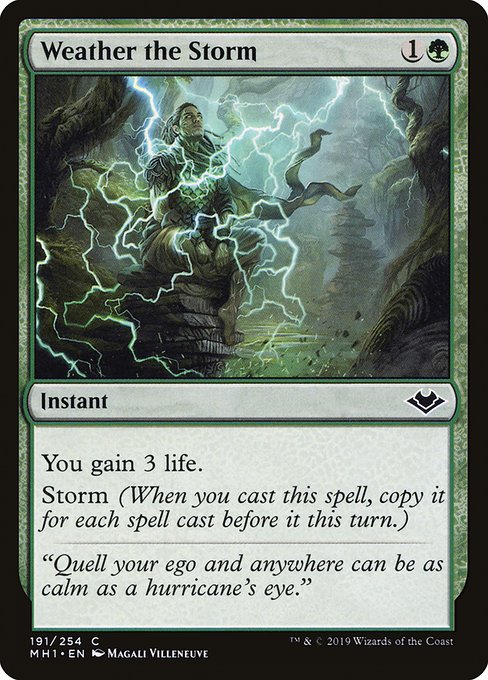
Weather the Storm
 Weather the Storm
You gain 3 life.
Weather the Storm
You gain 3 life.
Storm (When you cast this spell, copy it for each spell cast before it this turn.)
, which synergizes nicely with Necropotence, allowing you to pay a lot of life. There’s a lot of room for innovation, but one thing is for sure: Necropotence is a messed-up card.
Read More: Recent MTG Bans Help Revitalize Two-Card Infinite Combo in Modern!
Deathrite Shaman Shells
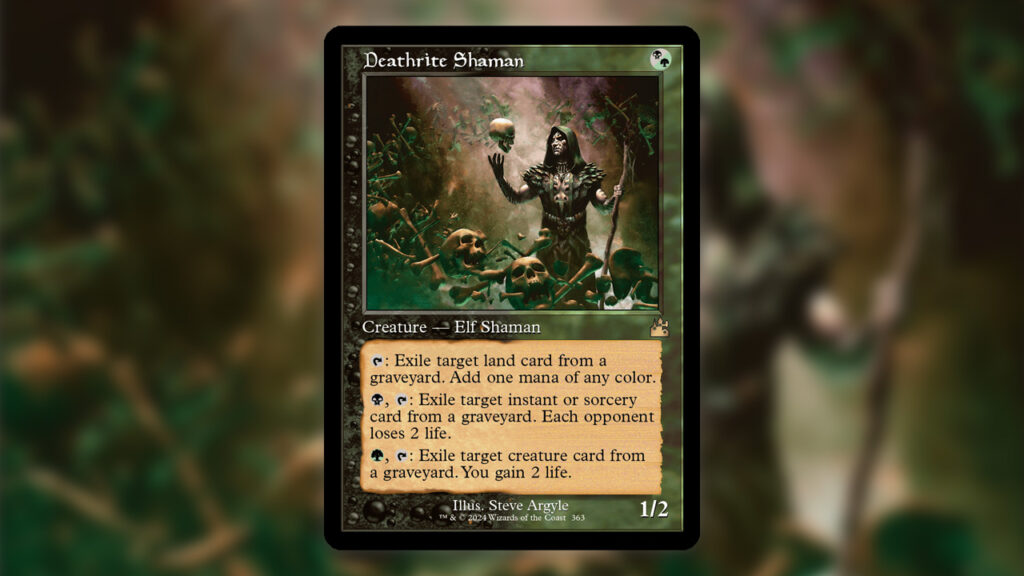
Another card that is exceptionally popular in Timeless thus far is Deathrite Shaman. As we stated, the elite one-drop is significantly better with Fetchlands in the mix, allowing the card to consistently tap for mana.
What makes the card so strong is that, unlike a typical mana dork, Deathrite Shaman has extra utility. It can remove problematic cards from opposing graveyards, such as
Uro, Titan of Nature’s Wrath
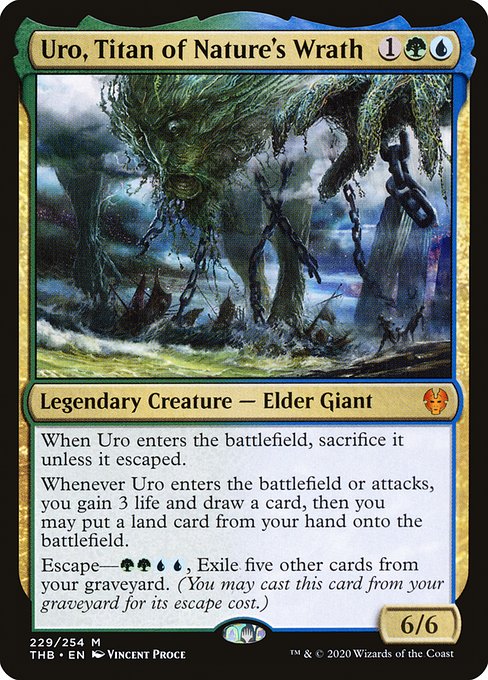 Uro, Titan of Nature’s Wrath
When Uro enters, sacrifice it unless it escaped.
Uro, Titan of Nature’s Wrath
When Uro enters, sacrifice it unless it escaped.
Whenever Uro enters or attacks, you gain 3 life and draw a card, then you may put a land card from your hand onto the battlefield.
Escape—{G}{G}{U}{U}, Exile five other cards from your graveyard. (You may cast this card from your graveyard for its escape cost.)
, drain the opponent of their life over time, and more.
Speaking of Uro, some Deathrite Shaman decks are making use of the elite card-drawing threat. These decks generally function similarly to the four-color
Omnath, Locus of Creation
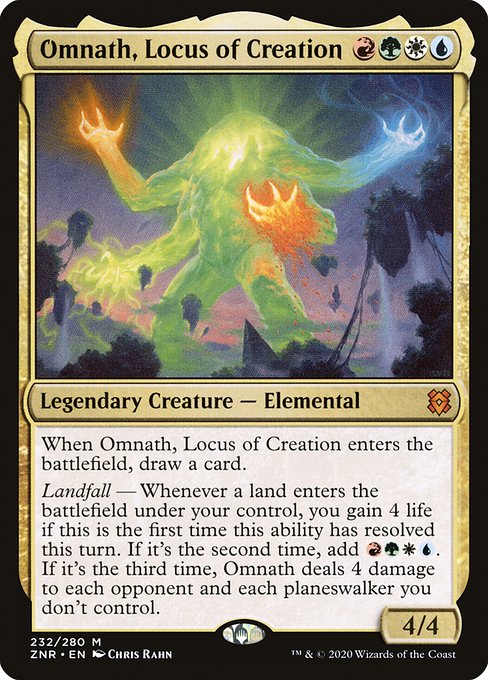 Omnath, Locus of Creation
When Omnath enters, draw a card.
Omnath, Locus of Creation
When Omnath enters, draw a card.
Landfall — Whenever a land you control enters, you gain 4 life if this is the first time this ability has resolved this turn. If it's the second time, add {R}{G}{W}{U}. If it's the third time, Omnath deals 4 damage to each opponent and each planeswalker you don't control.
decks in Modern. Cards like
Leyline Binding
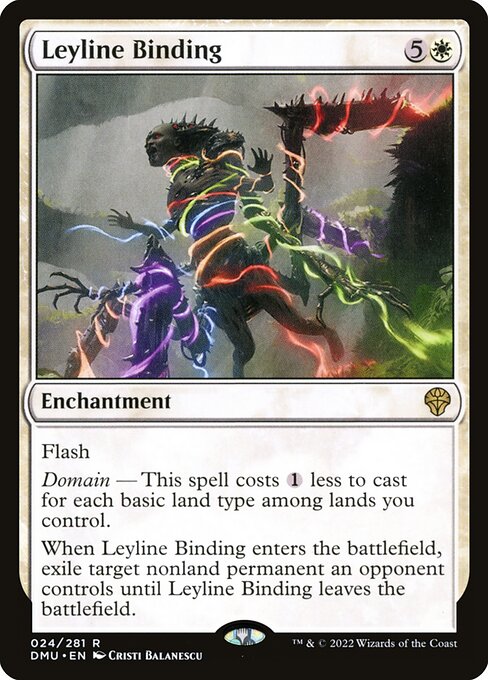 Leyline Binding
Flash
Leyline Binding
Flash
Domain — This spell costs {1} less to cast for each basic land type among lands you control.
When this enchantment enters, exile target nonland permanent an opponent controls until this enchantment leaves the battlefield.
and
Teferi, Time Raveler
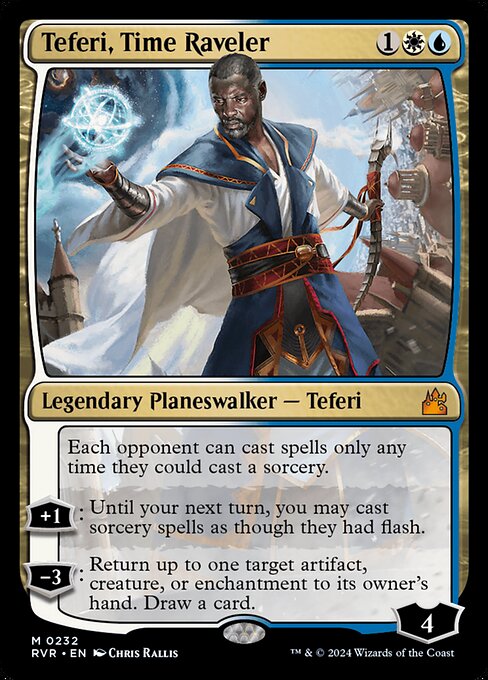 Teferi, Time Raveler
Each opponent can cast spells only any time they could cast a sorcery.
Teferi, Time Raveler
Each opponent can cast spells only any time they could cast a sorcery.
+1: Until your next turn, you may cast sorcery spells as though they had flash.
−3: Return up to one target artifact, creature, or enchantment to its owner's hand. Draw a card.
shine here too.
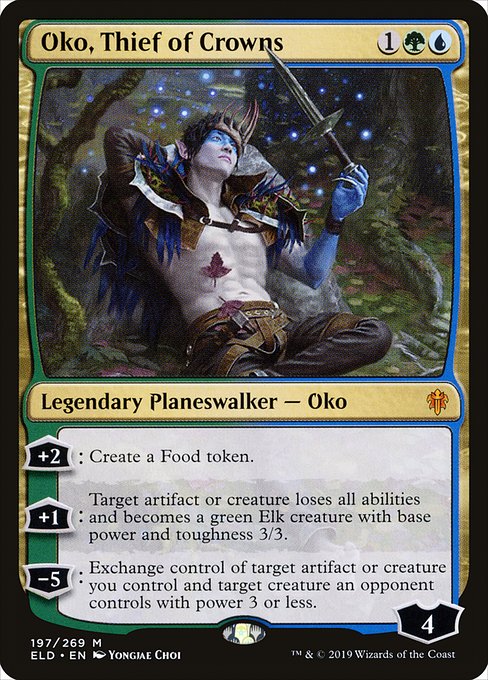
Still, there are some very notable upgrades in this format. We mentioned Uro, a card banned in Modern. Well, this deck makes use of another three-drop with the same mana cost:
Oko, Thief of Crowns
 Oko, Thief of Crowns
+2: Create a Food token. (It's an artifact with "{2}, {T}, Sacrifice this token: You gain 3 life.")
Oko, Thief of Crowns
+2: Create a Food token. (It's an artifact with "{2}, {T}, Sacrifice this token: You gain 3 life.")
+1: Target artifact or creature loses all abilities and becomes a green Elk creature with base power and toughness 3/3.
−5: Exchange control of target artifact or creature you control and target creature an opponent controls with power 3 or less.
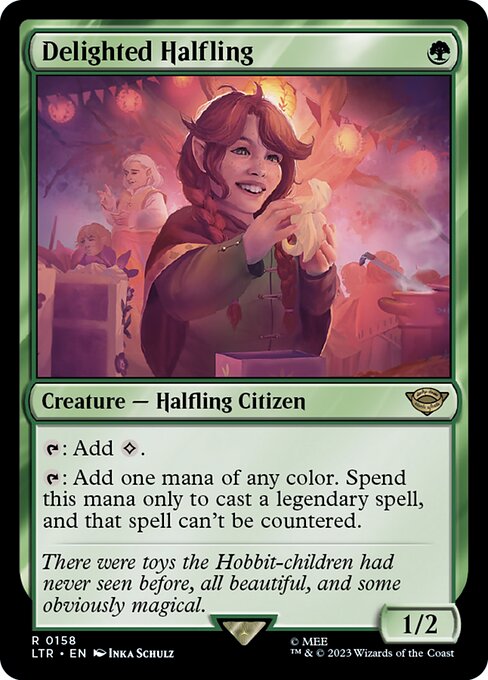
. Playing Oko on turn two off of Deathrite Shaman of
Delighted Halfling
 Delighted Halfling
{T}: Add {C}.
Delighted Halfling
{T}: Add {C}.
{T}: Add one mana of any color. Spend this mana only to cast a legendary spell, and that spell can't be countered.
is a great way to pull ahead. To help with consistency, players even get access to
Brainstorm
 Brainstorm
Draw three cards, then put two cards from your hand on top of your library in any order.
, a pillar of the Legacy format.
Brainstorm
Draw three cards, then put two cards from your hand on top of your library in any order.
, a pillar of the Legacy format.
Of course, there are different avenues you can take to maximize Deathrite Shaman and Brainstorm. Some players have chosen to abandon Omnath and Leyline Binding and focus more on black as one of the primary colors. This allows for elite interaction and Orcish Bowmasters to join the mix. Each shell has its strengths and weaknesses, but both are powerful in their own right.
Read More: MTG Rocks’ 2023 Card of the Year Awards
Izzet Tempo
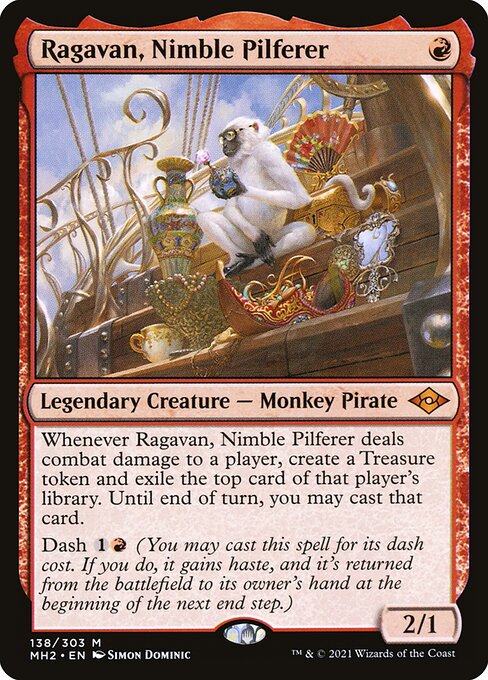
Given that cards like Necropotence are extremely popular, it’s important to have a proactive gameplan. At the same time, it’s nice to be able to counter the Enchantment before it hits the board and can threaten to draw your opponent a ton of cards. This is where the Izzet tempo archetype comes into play. Cards like
Ragavan, Nimble Pilferer
 Ragavan, Nimble Pilferer
Whenever Ragavan deals combat damage to a player, create a Treasure token and exile the top card of that player's library. Until end of turn, you may cast that card.
Ragavan, Nimble Pilferer
Whenever Ragavan deals combat damage to a player, create a Treasure token and exile the top card of that player's library. Until end of turn, you may cast that card.
Dash {1}{R} (You may cast this spell for its dash cost. If you do, it gains haste, and it's returned from the battlefield to its owner's hand at the beginning of the next end step.)
and
Dragon’s Rage Channeler
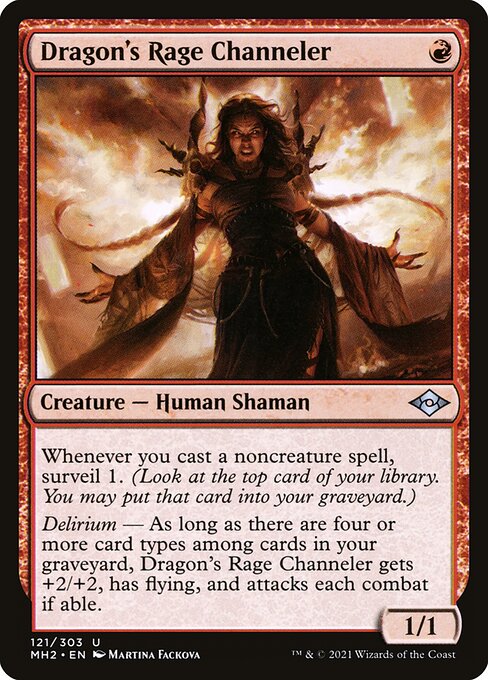 Dragon’s Rage Channeler
Whenever you cast a noncreature spell, surveil 1. (Look at the top card of your library. You may put that card into your graveyard.)
Dragon’s Rage Channeler
Whenever you cast a noncreature spell, surveil 1. (Look at the top card of your library. You may put that card into your graveyard.)
Delirium — As long as there are four or more card types among cards in your graveyard, this creature gets +2/+2, has flying, and attacks each combat if able.
allow you to get a front foot in the game.
From there, cards like
Counterspell
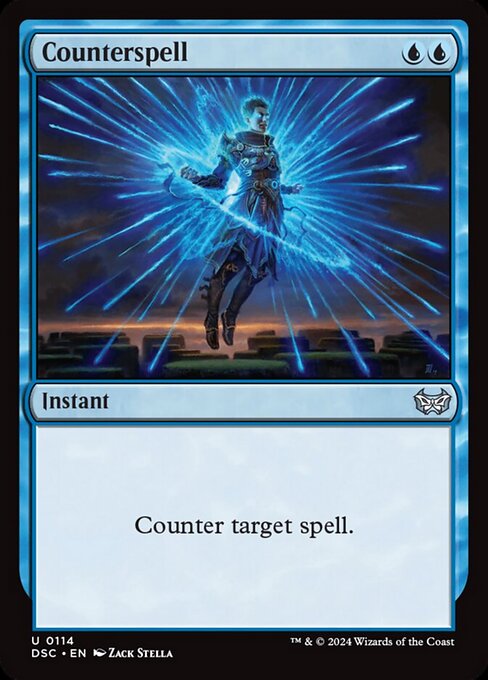 Counterspell
Counter target spell.
and
Memory Lapse
Counterspell
Counter target spell.
and
Memory Lapse
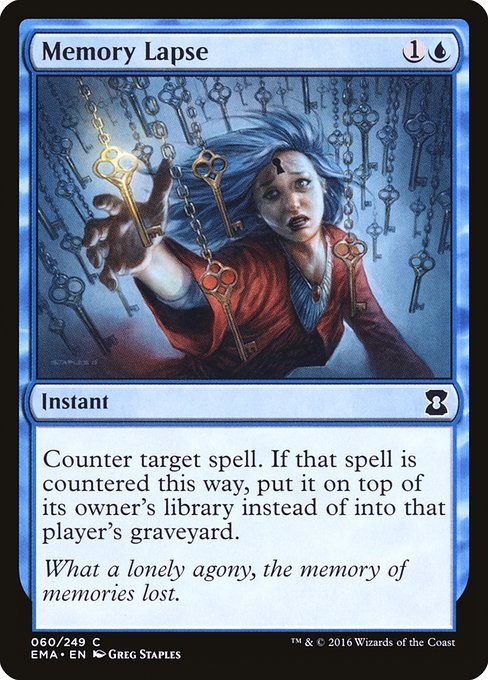 Memory Lapse
Counter target spell. If that spell is countered this way, put it on top of its owner's library instead of into that player's graveyard.
can keep the opponent off-balance while you put the pressure on.
Lightning Bolt
Memory Lapse
Counter target spell. If that spell is countered this way, put it on top of its owner's library instead of into that player's graveyard.
can keep the opponent off-balance while you put the pressure on.
Lightning Bolt
 Lightning Bolt
 deals 3 damage to any target.
and
Unholy Heat
Lightning Bolt
Lightning Bolt deals 3 damage to any target.
and
Unholy Heat
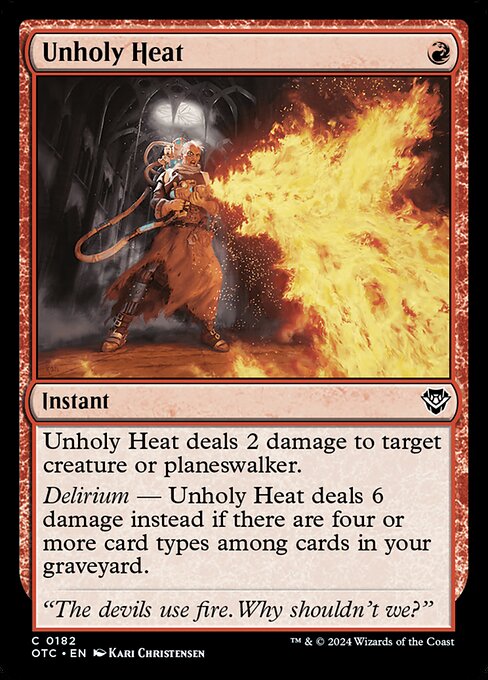 Unholy Heat
 deals 2 damage to target creature or planeswalker.
Unholy Heat
Unholy Heat deals 2 damage to target creature or planeswalker.
Delirium — Unholy Heat deals 6 damage instead if there are four or more card types among cards in your graveyard.
can answer pesky mana dorks, and Brainstorm can help find your Counterspells and removal.
This deck also utilizes
Treasure Cruise
Treasure Cruise
Delve (Each card you exile from your graveyard while casting this spell pays for {1}.)
Draw three cards.
, which was quickly banned in Modern and Legacy given how easy it was to fuel Delve with Fetchlands. Between Cruise, Brainstorm, and Ragavan as a one-toughness threat, this deck is fairly weak to Bowmasters, which likely prevents it from being quite as abundantly played as it otherwise could be.
What’s nice, though, is that the format is still continuing to evolve. It is still quite early, so there is plenty of time for players to adapt. There are also a ton of powerful decks beyond those mentioned here, including multiple
Lurrus of the Dream-Den
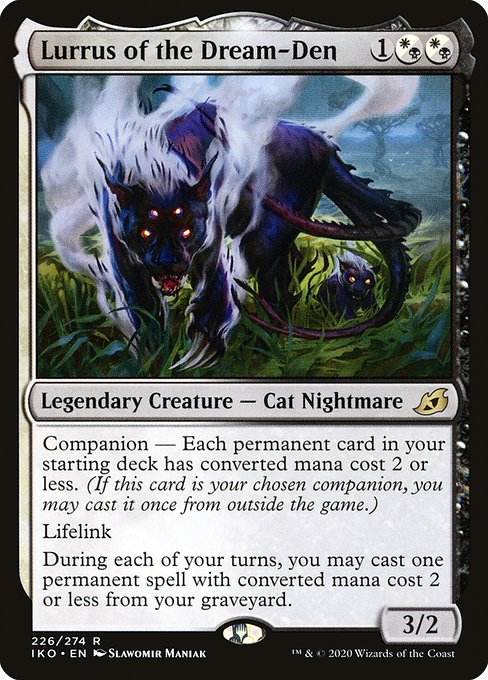 Lurrus of the Dream-Den
Companion — Each permanent card in your starting deck has mana value 2 or less. (If this card is your chosen companion, you may put it into your hand from outside the game for {3} as a sorcery.)
Lurrus of the Dream-Den
Companion — Each permanent card in your starting deck has mana value 2 or less. (If this card is your chosen companion, you may put it into your hand from outside the game for {3} as a sorcery.)
Lifelink
Once during each of your turns, you may cast a permanent spell with mana value 2 or less from your graveyard.
shells. If you enjoy wildly powerful and proactive formats, definitely give Timeless a whirl.
Read More: Recently Banned MTG Card Wins $10,000+ in Eternal Format!