
The Timeless format has been out on MTG Arena for almost a month now, and the metagame has been evolving continuously ever since. Towards the beginning of the format, it appeared as though combo decks might have a dominant edge. It also quickly became apparent that black was one of the best colors available to utilize. With the existence of
Dark Ritual
 Dark Ritual
Add {B}{B}{B}.
, it was difficult to ignore the possibility of playing
Necropotence
Dark Ritual
Add {B}{B}{B}.
, it was difficult to ignore the possibility of playing
Necropotence
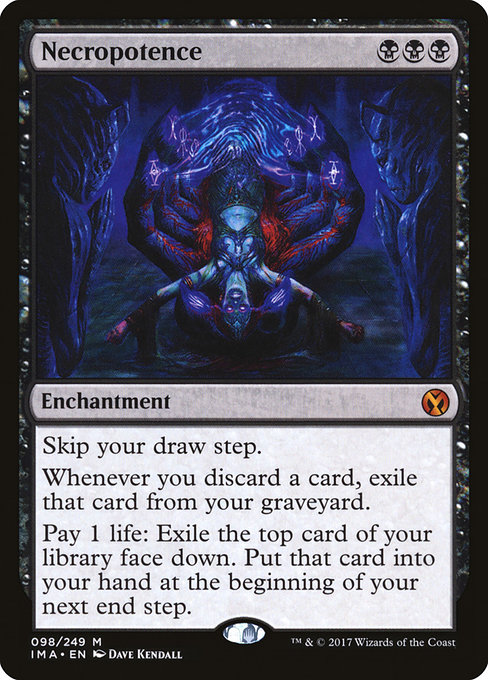 Necropotence
Skip your draw step.
Necropotence
Skip your draw step.
Whenever you discard a card, exile that card from your graveyard.
Pay 1 life: Exile the top card of your library face down. Put that card into your hand at the beginning of your next end step.
as early as turn one.
This past weekend, a cool tournament filled with highly skilled content creators was dominated by black decks, too. Players like previous World Champion Nathan Steuer and Grand Prix aficionado Arne Huschenbeth battled for glory in a 16-player tournament. Out of 16 players, 6 finished the Swiss rounds with records of 3-2 or better, with all 6 players making use of powerful black cards in some capacity.
Interestingly, though, only one of these six decks made use of Necropotence. In fact, the lone undefeated player at the conclusion of the Swiss rounds as well as the players that met in the finals after the top cut were not playing the powerful Enchantment. While this may seem a bit strange, there’s a very logical reason for doing so. Cutting cards like Necropotence allows you to maximize
Lurrus of the Dream-Den
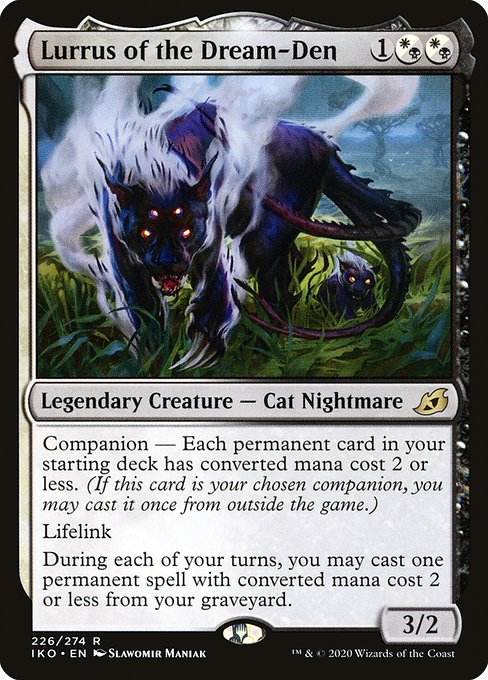 Lurrus of the Dream-Den
Companion — Each permanent card in your starting deck has mana value 2 or less. (If this card is your chosen companion, you may put it into your hand from outside the game for {3} as a sorcery.)
Lurrus of the Dream-Den
Companion — Each permanent card in your starting deck has mana value 2 or less. (If this card is your chosen companion, you may put it into your hand from outside the game for {3} as a sorcery.)
Lifelink
Once during each of your turns, you may cast a permanent spell with mana value 2 or less from your graveyard.
as a Companion.
If anything, this tournament showcased just how powerful the three-mana Companion is, even in a format with plenty of strong card options to play with. Today, we are going to zoom in on two of these strategies that each had breakout performances within the tournament and go over what makes them so strong in a field with lots of elite options.
Rakdos Breach Dominates Swiss Rounds
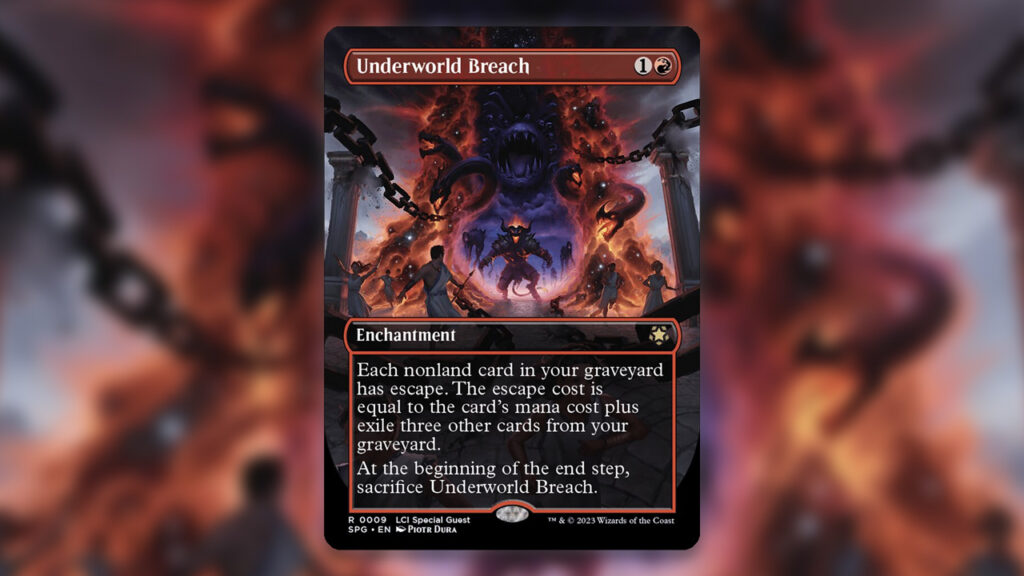
During the tournament, two players made use of
Underworld Breach
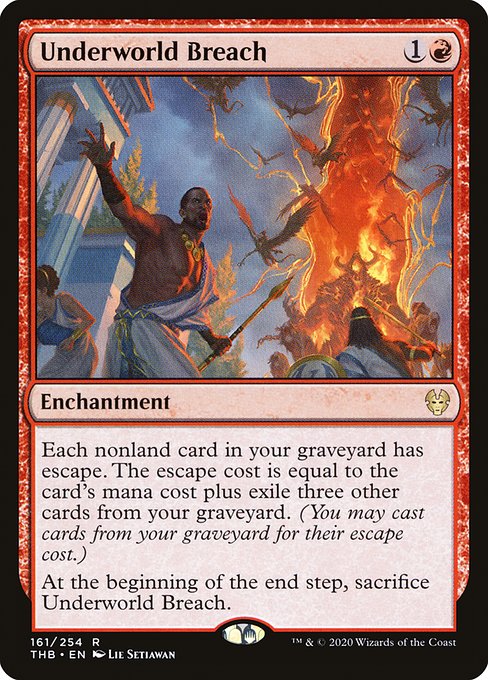 Underworld Breach
Each nonland card in your graveyard has escape. The escape cost is equal to the card's mana cost plus exile three other cards from your graveyard. (You may cast cards from your graveyard for their escape cost.)
Underworld Breach
Each nonland card in your graveyard has escape. The escape cost is equal to the card's mana cost plus exile three other cards from your graveyard. (You may cast cards from your graveyard for their escape cost.)
At the beginning of the end step, sacrifice this enchantment.
as a value engine and combo piece within a Rakdos Lurrus shell. At the conclusion of the Swiss rounds, the players had a combined record of 9-1, with the one loss coming in the mirror match between the two players themselves. In a field with a variety of strategies ranging from
Primeval Titan
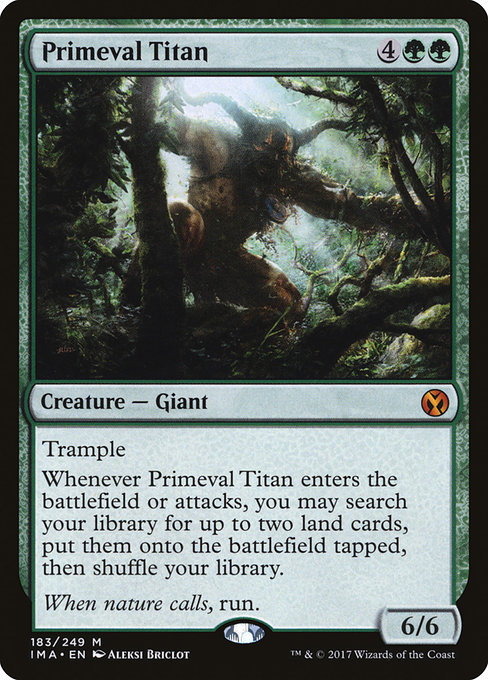 Primeval Titan
Trample
Primeval Titan
Trample
Whenever this creature enters or attacks, you may search your library for up to two land cards, put them onto the battlefield tapped, then shuffle.
shells to
Sneak Attack
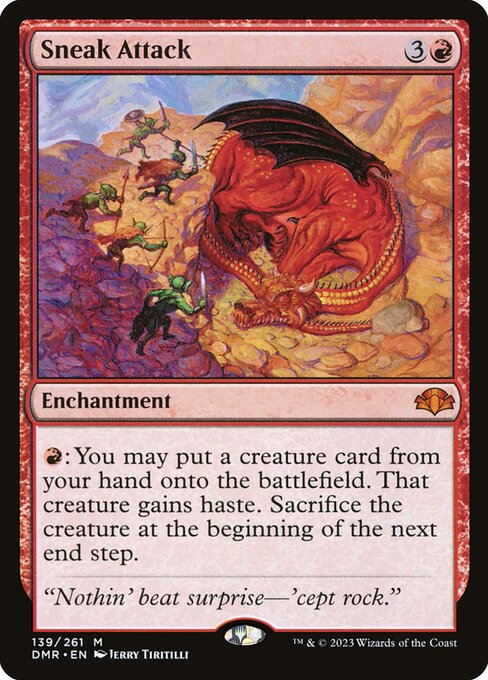 Sneak Attack
{R}: You may put a creature card from your hand onto the battlefield. That creature gains haste. Sacrifice the creature at the beginning of the next end step.
builds and beyond, this dominant performance is certainly not one to ignore.
Sneak Attack
{R}: You may put a creature card from your hand onto the battlefield. That creature gains haste. Sacrifice the creature at the beginning of the next end step.
builds and beyond, this dominant performance is certainly not one to ignore.
At its core, the Rakdos Breach decks are combo oriented. The goal is to use cards like
Stitcher’s Supplier
 Stitcher’s Supplier
When this creature enters or dies, mill three cards. (Put the top three cards of your library into your graveyard.)
alongside Fetchlands and cheap pieces of interaction to help fill your graveyard. In conjunction with Stitcher’s Supplier, you can use
Diabolic Intent
Stitcher’s Supplier
When this creature enters or dies, mill three cards. (Put the top three cards of your library into your graveyard.)
alongside Fetchlands and cheap pieces of interaction to help fill your graveyard. In conjunction with Stitcher’s Supplier, you can use
Diabolic Intent
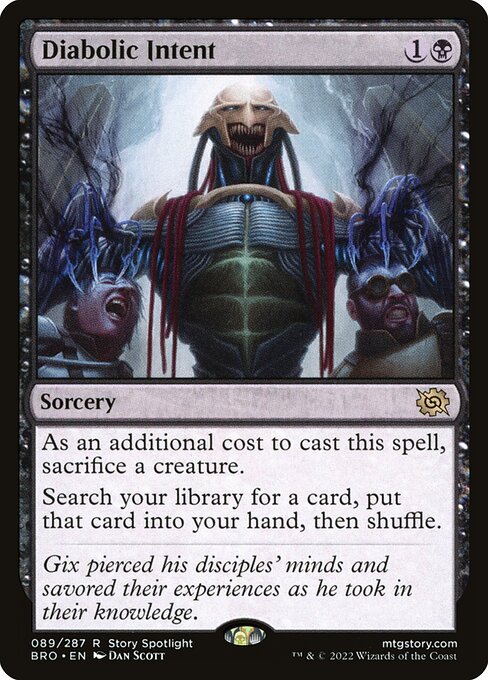 Diabolic Intent
As an additional cost to cast this spell, sacrifice a creature.
Diabolic Intent
As an additional cost to cast this spell, sacrifice a creature.
Search your library for a card, put that card into your hand, then shuffle.
to find Breach and further fuel your graveyard. From there, Underworld Breach becomes a reliable way to cast lots of spells in a turn. To ensure that you have the requisite mana to continue casting spells, Dark Ritual plays a vital role in keeping your engine churning.
With access to Ritual, Supplier, and Diabolic Intent, it’s relatively trivial to build up your Storm count. After casting enough spells, you can find your one copy of
Tendrils of Agony
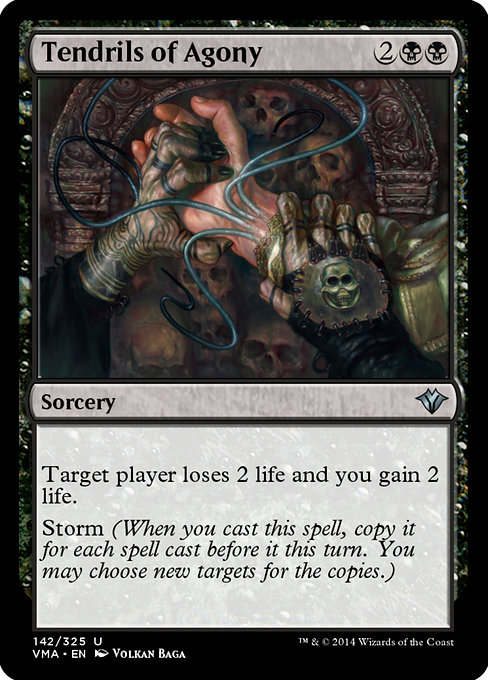 Tendrils of Agony
Target player loses 2 life and you gain 2 life.
Tendrils of Agony
Target player loses 2 life and you gain 2 life.
Storm (When you cast this spell, copy it for each spell cast before it this turn. You may choose new targets for the copies.)
and win the game that way.
While this may sound like a heavy setup cost, what makes this archetype so strong is its ability to generate value over the course of the game. The combination of Lurrus and
Mishra’s Bauble
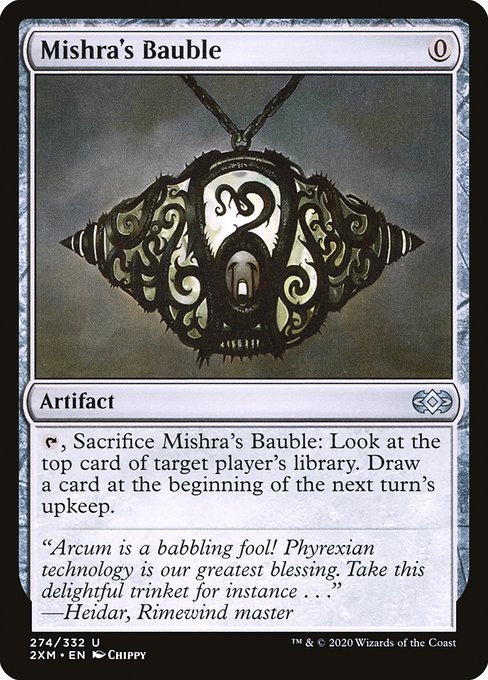 Mishra’s Bauble
{T}, Sacrifice this artifact: Look at the top card of target player's library. Draw a card at the beginning of the next turn's upkeep.
keeps the card advantage flowing. Additionally, Lurrus can help re-cast Breach later in the game against decks with counter magic. Lurrus is simply an unbelievable weapon to have at your disposal, and this cannot be overstated.
Mishra’s Bauble
{T}, Sacrifice this artifact: Look at the top card of target player's library. Draw a card at the beginning of the next turn's upkeep.
keeps the card advantage flowing. Additionally, Lurrus can help re-cast Breach later in the game against decks with counter magic. Lurrus is simply an unbelievable weapon to have at your disposal, and this cannot be overstated.
Read More: Underrated Ixalan Goblin Emerges as Multi-Format All-Star!
Dimir Control’s Breakout Performance
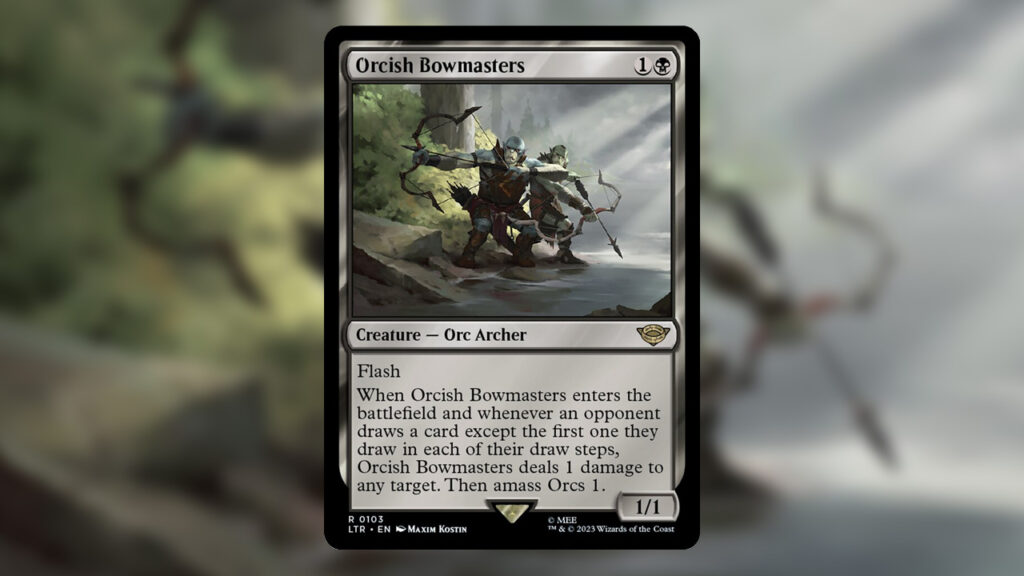
Despite Rakdos Breach’s excellent showing in the Swiss rounds, the finals of the event featured none other than a Dimir control mirror match. Dimir control in its current form plays very few win conditions. In fact, the winning decklist from the event, as shown above, plays a playset of
Orcish Bowmasters
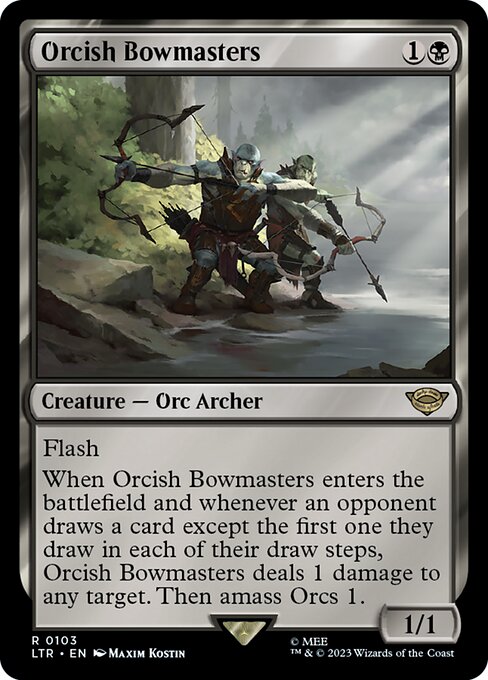 Orcish Bowmasters
Flash
Orcish Bowmasters
Flash
When this creature enters and whenever an opponent draws a card except the first one they draw in each of their draw steps, this creature deals 1 damage to any target. Then amass Orcs 1.
as the only Creature and win condition in the maindeck.
With a solid group of card draw and card selection, counter magic, and removal, this deck plans to play a very long game.
Counterspell
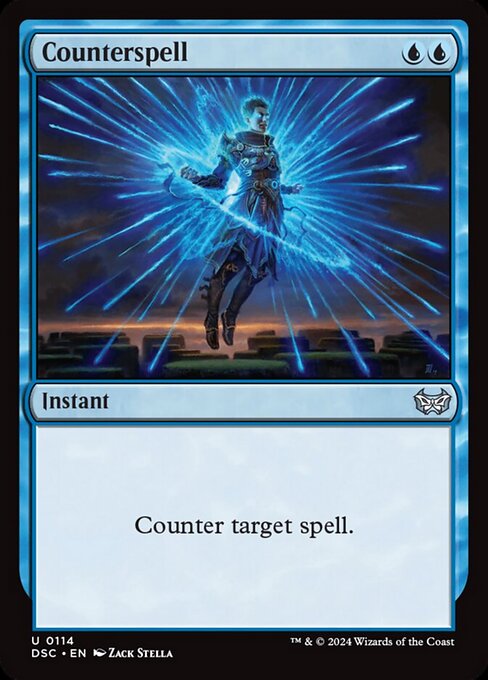 Counterspell
Counter target spell.
and
Drown in the Loch
Counterspell
Counter target spell.
and
Drown in the Loch
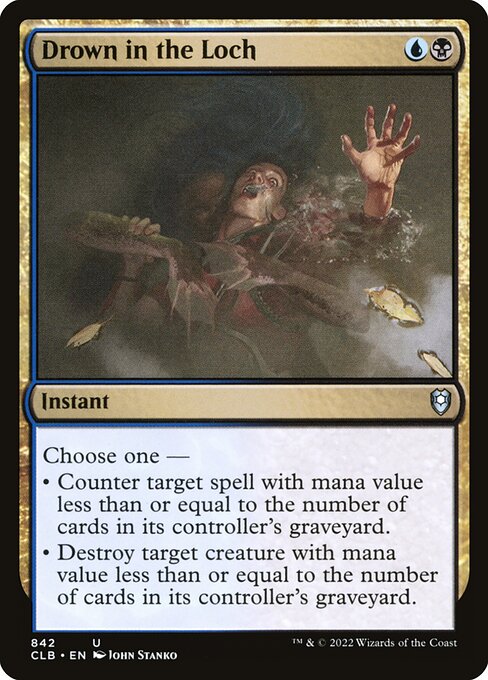 Drown in the Loch
Choose one —
Drown in the Loch
Choose one —
• Counter target spell with mana value less than or equal to the number of cards in its controller's graveyard.
• Destroy target creature with mana value less than or equal to the number of cards in its controller's graveyard.
help make sure no problematic cards from the opponent, such as Necropotence, ever hit the table.
Brainstorm
 Brainstorm
Draw three cards, then put two cards from your hand on top of your library in any order.
and
Sauron’s Ransom
Brainstorm
Draw three cards, then put two cards from your hand on top of your library in any order.
and
Sauron’s Ransom
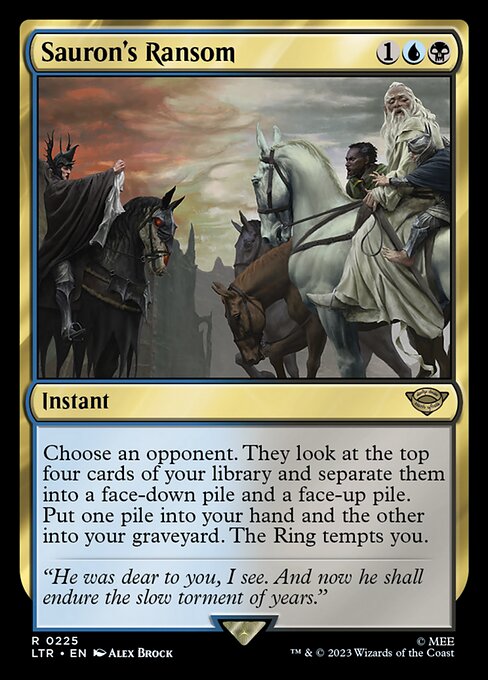 Sauron’s Ransom
Choose an opponent. They look at the top four cards of your library and separate them into a face-down pile and a face-up pile. Put one pile into your hand and the other into your graveyard. The Ring tempts you.
allow you to sculpt your hand over the course of the game and continue to hit your Land drops. Small Creatures that could get under your counter magic, such as
Deathrite Shaman
Sauron’s Ransom
Choose an opponent. They look at the top four cards of your library and separate them into a face-down pile and a face-up pile. Put one pile into your hand and the other into your graveyard. The Ring tempts you.
allow you to sculpt your hand over the course of the game and continue to hit your Land drops. Small Creatures that could get under your counter magic, such as
Deathrite Shaman
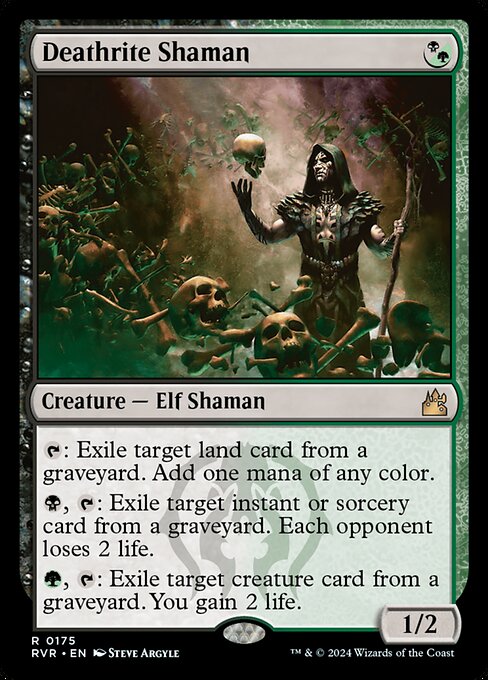 Deathrite Shaman
{T}: Exile target land card from a graveyard. Add one mana of any color. (Activate only as an instant.)
Deathrite Shaman
{T}: Exile target land card from a graveyard. Add one mana of any color. (Activate only as an instant.)
{B}, {T}: Exile target instant or sorcery card from a graveyard. Each opponent loses 2 life.
{G}, {T}: Exile target creature card from a graveyard. You gain 2 life.
, are easily answered by
Fatal Push
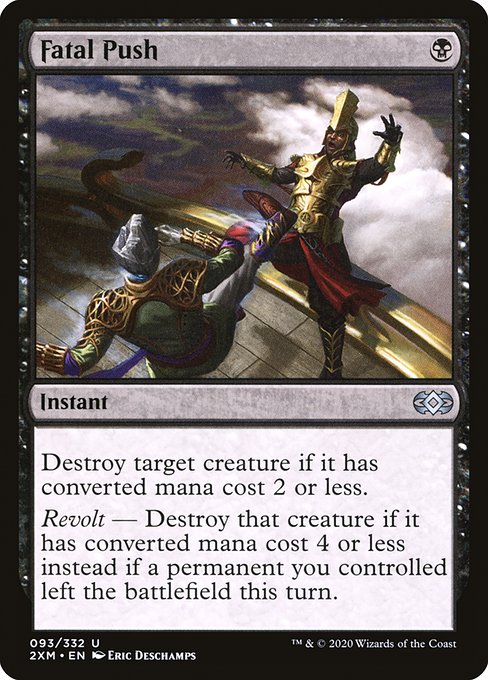 Fatal Push
Destroy target creature if it has mana value 2 or less.
Fatal Push
Destroy target creature if it has mana value 2 or less.
Revolt — Destroy that creature if it has mana value 4 or less instead if a permanent left the battlefield under your control this turn.
.
Dig Through Time
 Dig Through Time
Delve (Each card you exile from your graveyard while casting this spell pays for {1}.)
Dig Through Time
Delve (Each card you exile from your graveyard while casting this spell pays for {1}.)
Look at the top seven cards of your library. Put two of them into your hand and the rest on the bottom of your library in any order.
helps pull you even further ahead and is rather easily enabled by Fetchlands and cheap interaction.
With the playset of Orcish Bowmasters added in, your opponent will have a tough time making use of their sources of card advantage without letting your Bowmasters run rampant. In order to effectively close the game, this deck even plays a single copy of Commit//Memory. Commit can help answer any non-Land permanent that slips through the crack, albeit in an efficient manner.
However, at some point, you can cast Memory from your graveyard, forcing each player to draw seven fresh cards, which can be deadly if you have Orcish Bowmasters in play. Add in Lurrus to rebuy your Bowmasters repeatedly and you’ve got a gameplan.
Read More: MTG Karlov Manor Could Make These EDH Gems Seriously Powerful!
How Lurrus Excels in Dimir Control
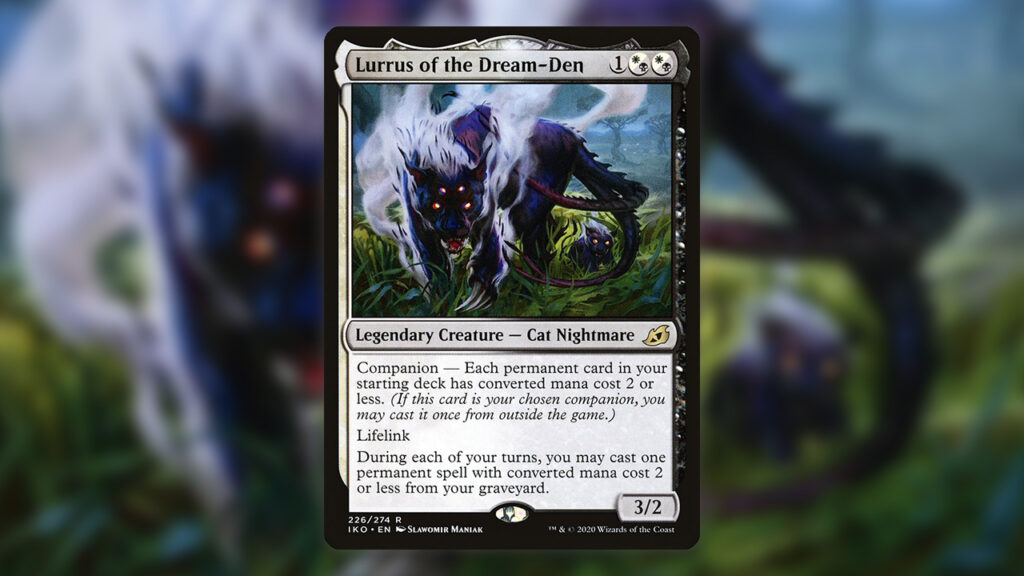
As strong as Lurrus is in the Rakdos Breach decks, it’s arguably even stronger in Dimir control. Obviously, being able to buy back Bowmasters out of Dimir is strong, but so is getting to replay Breach and Bauble out of Rakdos. Instead, what makes Lurrus such a devastating card in the Dimir Control decks is the ability to protect it in an effective manner.
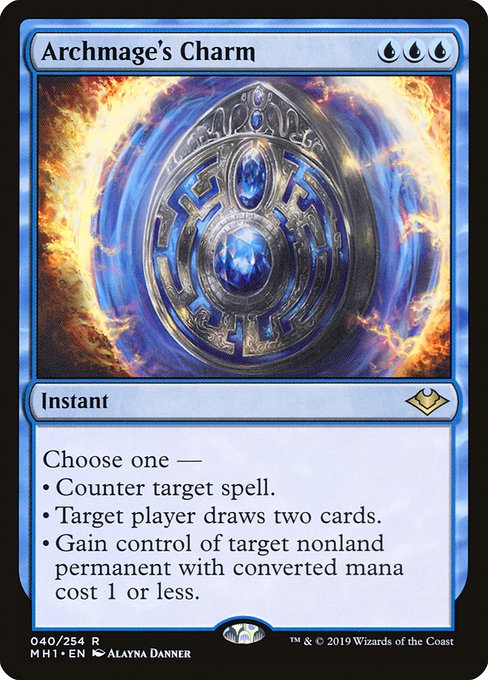
Between Counterspell, Drown in the Loch,
Archmage’s Charm
 Archmage’s Charm
Choose one —
Archmage’s Charm
Choose one —
• Counter target spell.
• Target player draws two cards.
• Gain control of target nonland permanent with mana value 1 or less.
, and
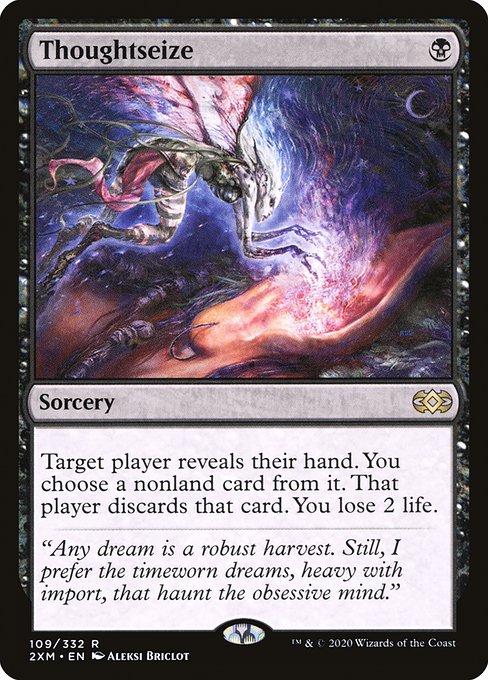
Thoughtseize
 Thoughtseize
Target player reveals their hand. You choose a nonland card from it. That player discards that card. You lose 2 life.
and
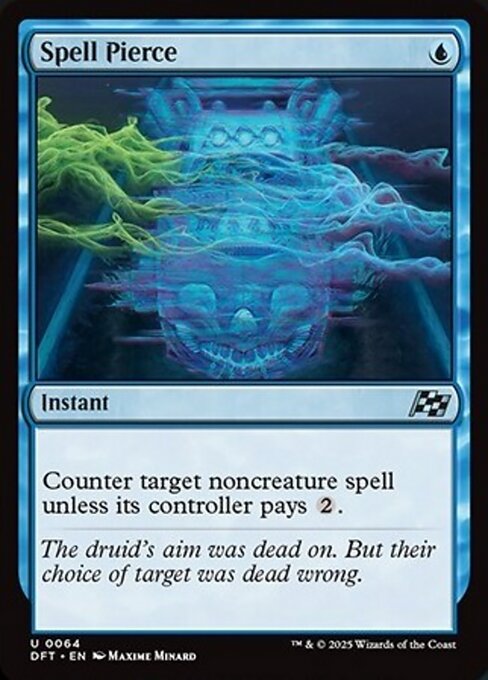
Spell Pierce
Thoughtseize
Target player reveals their hand. You choose a nonland card from it. That player discards that card. You lose 2 life.
and
Spell Pierce
 Spell Pierce
Counter target noncreature spell unless its controller pays {2}.
out of the sideboard, it can be quite difficult for the opponent to ever get Lurrus off the table. As the game goes long, Lurrus effectively provides a huge level of inevitability as a threat that is immune to opposing copies of Thoughtseize for as long as it stays in your sideboard.
Spell Pierce
Counter target noncreature spell unless its controller pays {2}.
out of the sideboard, it can be quite difficult for the opponent to ever get Lurrus off the table. As the game goes long, Lurrus effectively provides a huge level of inevitability as a threat that is immune to opposing copies of Thoughtseize for as long as it stays in your sideboard.
It’s important to be patient with this archetype to help maximize your chances of untapping with Lurrus, as the payoff is certainly there. This is where the edge lies in Dimir control’s favor when playing against Rakdos Breach. Being able to counter Lurrus and Breach from the opponent while your opponent can’t counter your copy of Lurrus is a huge boon. That being said, the matchup is far from a slam dunk, as both Rakdos Breach players managed to beat Dimir control during the Swiss rounds. Both decks are strong and attack on different angles.
Read More: Best MTG Arena Timeless Decks
How to Fight Against These Decks
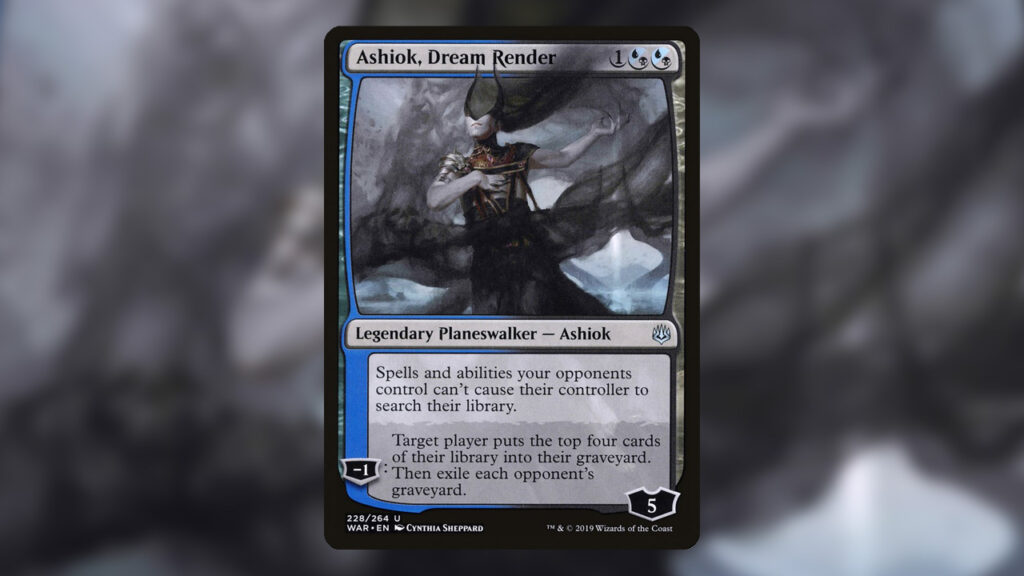
While both of these Lurrus archetypes are very powerful, they are not unbeatable. The best course of action to take against these decks is almost certainly to interact with the opponent’s graveyard in some way. For non-Lurrus decks, cards like
Ashiok, Dream Render
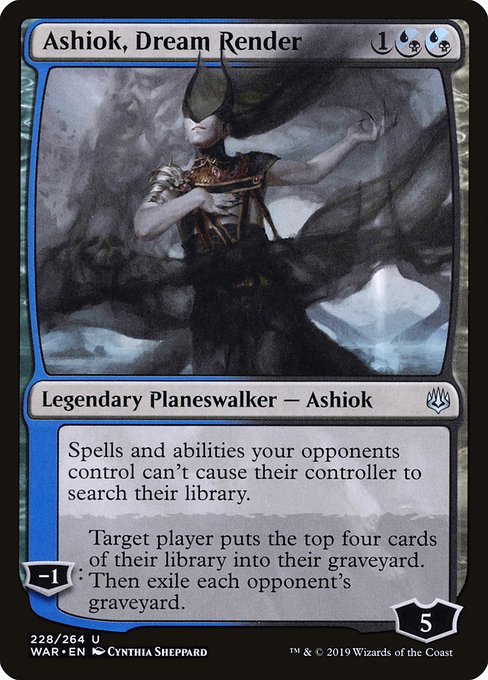 Ashiok, Dream Render
Spells and abilities your opponents control can't cause their controller to search their library.
Ashiok, Dream Render
Spells and abilities your opponents control can't cause their controller to search their library.
−1: Target player mills four cards. Then exile each opponent's graveyard.
can keep Breach, Lurrus, or Dig Through Time in check, all while shutting off tutors when necessary.
Even this, though, is relatively weak to counter magic or discard spells unless you can cast it early with Dark Ritual. If Lurrus strategies continue to grow in popularity, consider running
Leyline of the Void
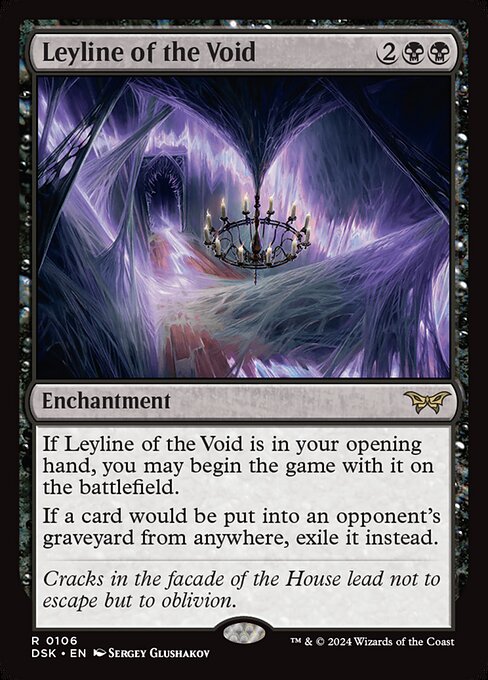 Leyline of the Void
If this card is in your opening hand, you may begin the game with it on the battlefield.
Leyline of the Void
If this card is in your opening hand, you may begin the game with it on the battlefield.
If a card would be put into an opponent's graveyard from anywhere, exile it instead.
. Rakdos Breach decks effectively can’t remove it, and if it’s in your opening hand, it gets around counter magic quite nicely.
For Lurrus decks, running extra copies of low-cost Artifacts like
Soul-Guide Lantern
 Soul-Guide Lantern
When this artifact enters, exile target card from a graveyard.
Soul-Guide Lantern
When this artifact enters, exile target card from a graveyard.
{T}, Sacrifice this artifact: Exile each opponent's graveyard.
{1}, {T}, Sacrifice this artifact: Draw a card.
or
Tormod’s Crypt
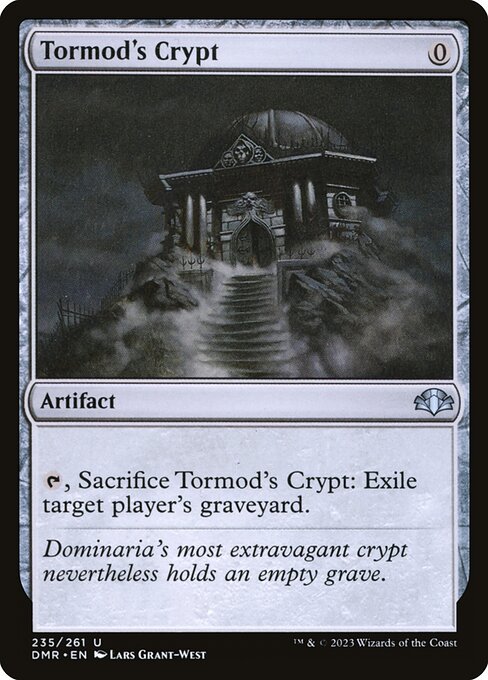 Tormod’s Crypt
{T}, Sacrifice this artifact: Exile target player's graveyard.
is a reasonable idea, considering you can replay them thanks to Lurrus. Lurrus truly is one of the best cards ever printed, and this tournament did a great job reminding the world of that.
Tormod’s Crypt
{T}, Sacrifice this artifact: Exile target player's graveyard.
is a reasonable idea, considering you can replay them thanks to Lurrus. Lurrus truly is one of the best cards ever printed, and this tournament did a great job reminding the world of that.
Read More: Standard MTG Cards Continue to See 234% Price Increases!