
Pioneer may have its fair share of haters, but it continues to flourish with a wide range of viable decks and consistent room for innovation. This weekend’s slew of tournaments was no exception. Plenty of well-established archetypes put up good results, but not without being joined by a cornucopia of unique decks and card choices that help keep players on their toes. This article focuses on the latter and showcases just how much new cards and deck choices shape the constant evolution of the MTG Pioneer format.
Read More: Wizards of the Coast Bans Three MTG Cards to Save Standard
Five-Color Elementals
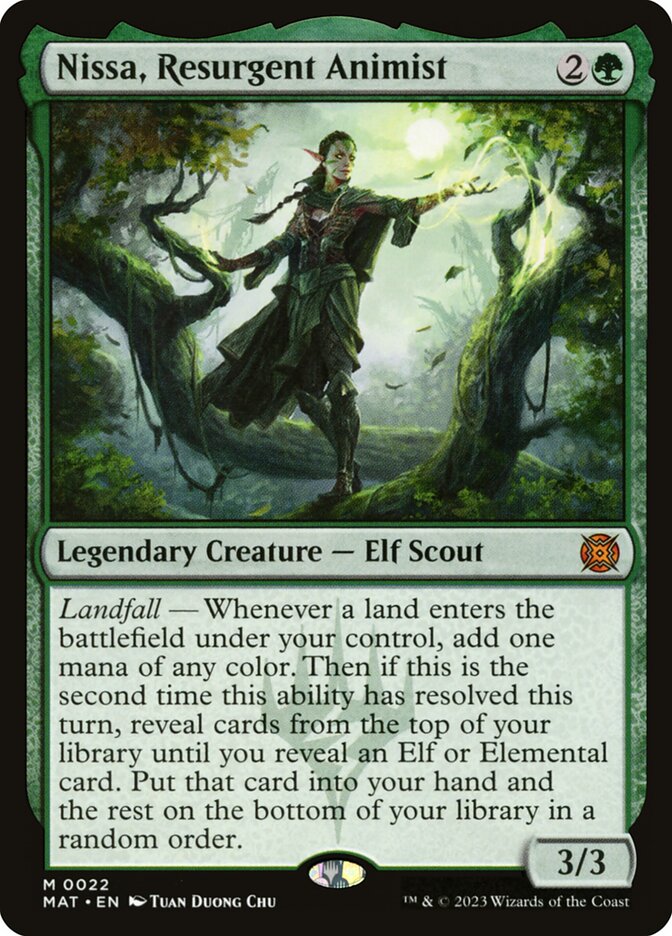
At the forefront of these unique deck choices is five-color Elementals, which got third place in Sunday’s Magic Online Pioneer Challenge. Five-color decks featuring
Fable of the Mirror-Breaker
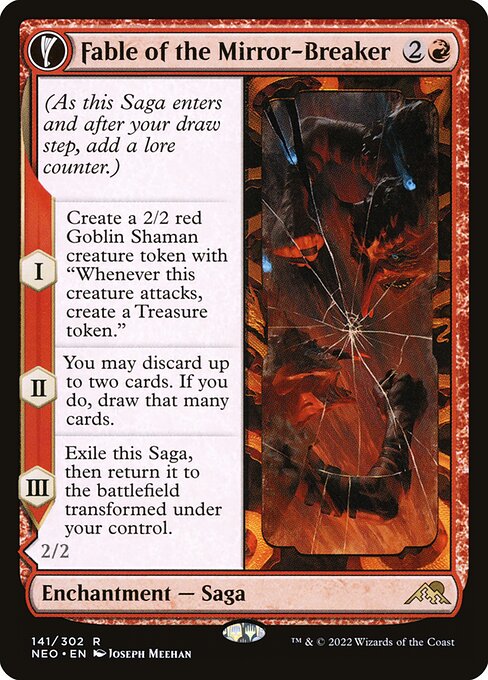 Fable of the Mirror-Breaker
(As this Saga enters and after your draw step, add a lore counter.)
Fable of the Mirror-Breaker
(As this Saga enters and after your draw step, add a lore counter.)
I — Create a 2/2 red Goblin Shaman creature token with "Whenever this token attacks, create a Treasure token."
II — You may discard up to two cards. If you do, draw that many cards.
III — Exile this Saga, then return it to the battlefield transformed under your control.
and
Leyline Binding
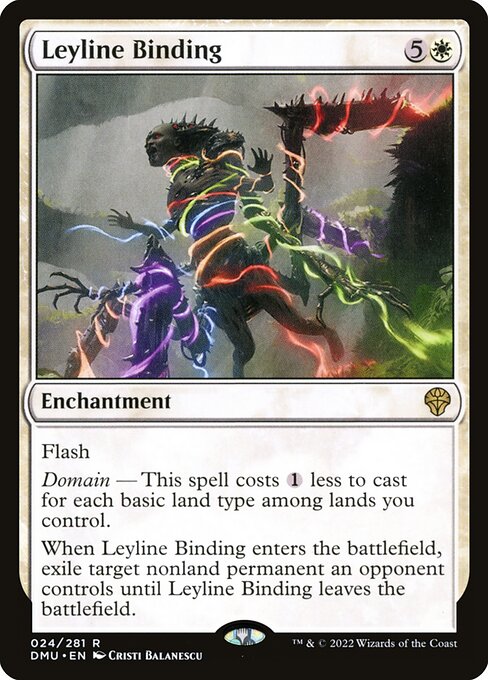 Leyline Binding
Flash
Leyline Binding
Flash
Domain — This spell costs {1} less to cast for each basic land type among lands you control.
When this enchantment enters, exile target nonland permanent an opponent controls until this enchantment leaves the battlefield.
can be built in quite a variety of ways in Pioneer. From Enchantment-heavy variants featuring
Enigmatic Incarnation
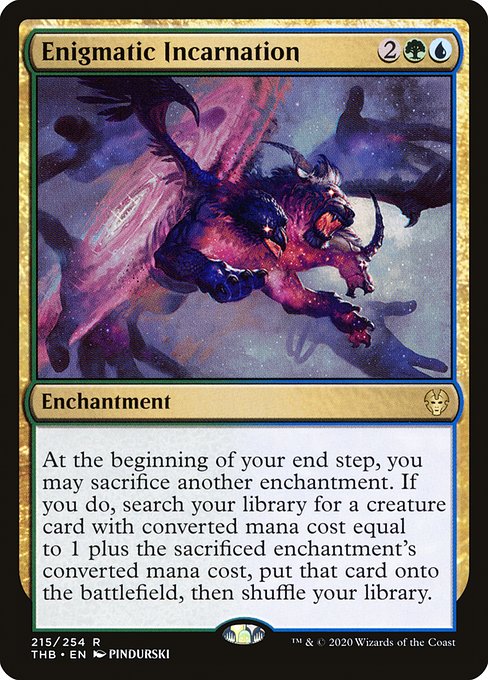 Enigmatic Incarnation
At the beginning of your end step, you may sacrifice another enchantment. If you do, search your library for a creature card with mana value equal to 1 plus the sacrificed enchantment's mana value, put that card onto the battlefield, then shuffle.
to more Midrange-style build featuring
Bring to Light
Enigmatic Incarnation
At the beginning of your end step, you may sacrifice another enchantment. If you do, search your library for a creature card with mana value equal to 1 plus the sacrificed enchantment's mana value, put that card onto the battlefield, then shuffle.
to more Midrange-style build featuring
Bring to Light
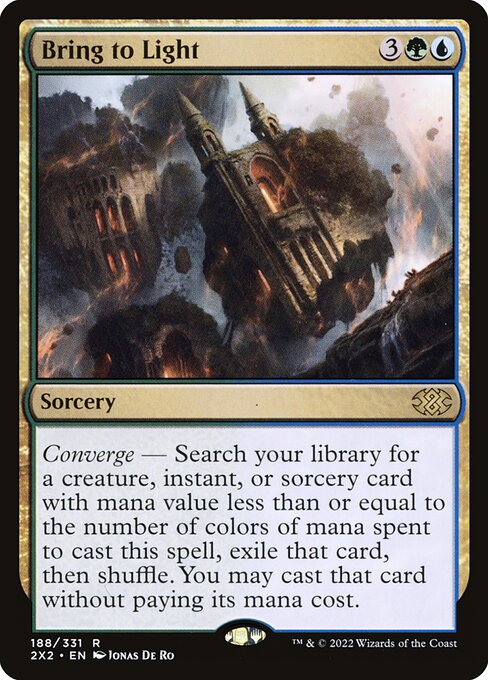 Bring to Light
Converge — Search your library for a creature, instant, or sorcery card with mana value less than or equal to the number of colors of mana spent to cast this spell, exile that card, then shuffle. You may cast that card without paying its mana cost.
, five-color decks have had a lot of success in MTG Pioneer. Elementals is no exception.
Bring to Light
Converge — Search your library for a creature, instant, or sorcery card with mana value less than or equal to the number of colors of mana spent to cast this spell, exile that card, then shuffle. You may cast that card without paying its mana cost.
, five-color decks have had a lot of success in MTG Pioneer. Elementals is no exception.
Elementals is a deck that makes great use of both of Nissa, Resurgent Animist’s abilities. Playing your first land helps you ramp into cards like
Escape to the Wilds
 Escape to the Wilds
Exile the top five cards of your library. You may play cards exiled this way until the end of your next turn.
Escape to the Wilds
Exile the top five cards of your library. You may play cards exiled this way until the end of your next turn.
You may play an additional land this turn.
, and playing your second land provides card advantage in the form of one of your many powerful elementals featured in the deck. What really makes this deck tick is the combination of Nissa and
Risen Reef
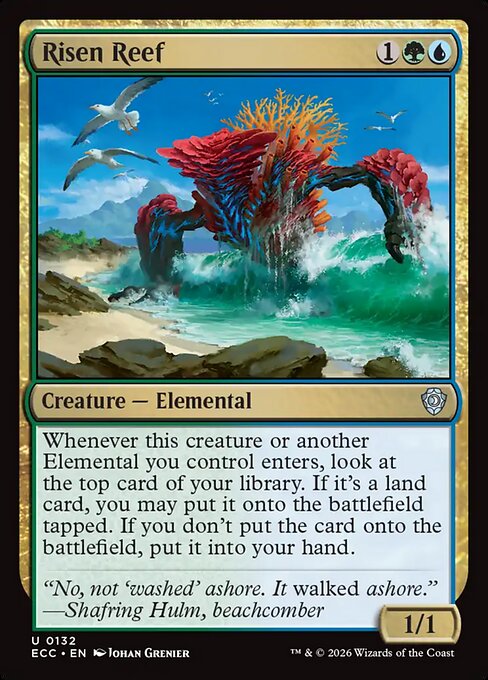 Risen Reef
Whenever this creature or another Elemental you control enters, look at the top card of your library. If it's a land card, you may put it onto the battlefield tapped. If you don't put the card onto the battlefield, put it into your hand.
. Nissa provides a constant flow of Elementals to your hand, each of which triggers Risen Reef for additional card advantage and ramp when entering the battlefield. The deck’s manabase contains both
Fabled Passage
Risen Reef
Whenever this creature or another Elemental you control enters, look at the top card of your library. If it's a land card, you may put it onto the battlefield tapped. If you don't put the card onto the battlefield, put it into your hand.
. Nissa provides a constant flow of Elementals to your hand, each of which triggers Risen Reef for additional card advantage and ramp when entering the battlefield. The deck’s manabase contains both
Fabled Passage
 Fabled Passage
{T}, Sacrifice this land: Search your library for a basic land card, put it onto the battlefield tapped, then shuffle. Then if you control four or more lands, untap that land.
and
Broker’s Hideout
Fabled Passage
{T}, Sacrifice this land: Search your library for a basic land card, put it onto the battlefield tapped, then shuffle. Then if you control four or more lands, untap that land.
and
Broker’s Hideout
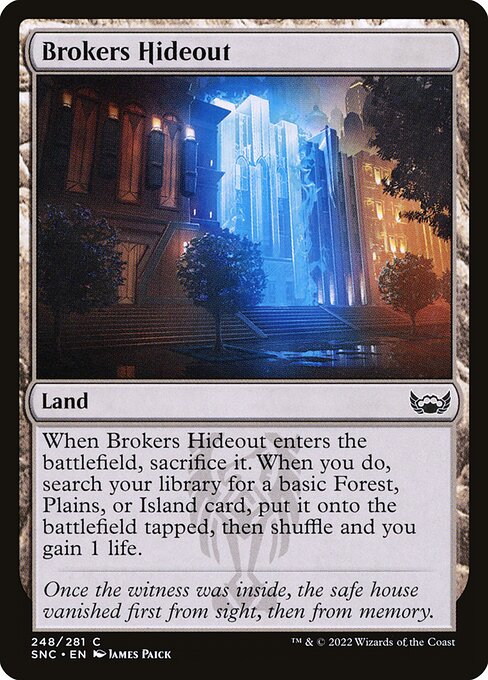 Broker’s Hideout
When this land enters, sacrifice it. When you do, search your library for a basic Forest, Plains, or Island card, put it onto the battlefield tapped, then shuffle and you gain 1 life.
, so having a second land enter the battlefield in one turn even in this format where Fetchlands aren’t legal is easy.
Broker’s Hideout
When this land enters, sacrifice it. When you do, search your library for a basic Forest, Plains, or Island card, put it onto the battlefield tapped, then shuffle and you gain 1 life.
, so having a second land enter the battlefield in one turn even in this format where Fetchlands aren’t legal is easy.
Having a second land enter the battlefield in one turn is also vital in maximizing the power of
Omnath, Locus of Creation
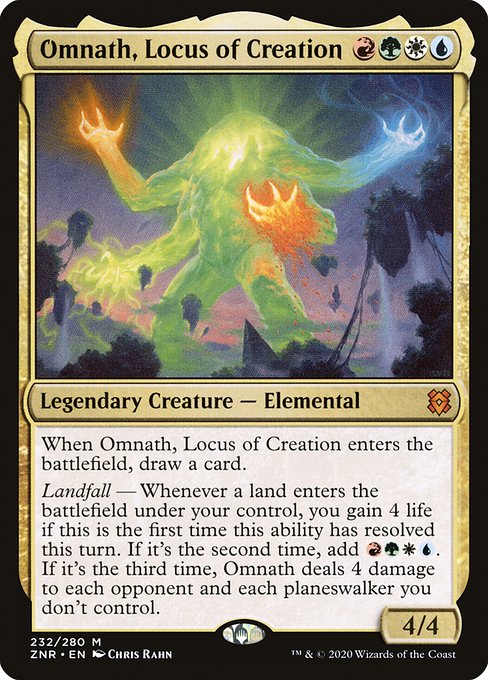 Omnath, Locus of Creation
When Omnath enters, draw a card.
Omnath, Locus of Creation
When Omnath enters, draw a card.
Landfall — Whenever a land you control enters, you gain 4 life if this is the first time this ability has resolved this turn. If it's the second time, add {R}{G}{W}{U}. If it's the third time, Omnath deals 4 damage to each opponent and each planeswalker you don't control.
. Omnath provides both an excellent way of stabilizing versus aggressive decks through a consistent flow of life gain and a large amount of mana to enable you to add more pressure to the board. Combine this with the flow of card advantage given by Nissa and Risen Reef, and the game quite quickly spirals out of control, especially when
Elesh Norn, Mother of Machines
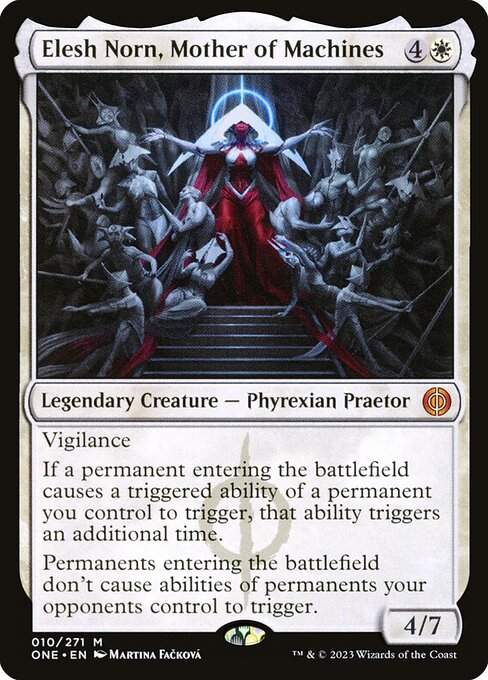 Elesh Norn, Mother of Machines
Vigilance
Elesh Norn, Mother of Machines
Vigilance
If a permanent entering causes a triggered ability of a permanent you control to trigger, that ability triggers an additional time.
Permanents entering don't cause abilities of permanents your opponents control to trigger.
gets added to the mix. This deck is extremely cohesive, and after playing with or against it, it becomes apparent just how powerful the deck is when it gets rolling.
Read More: Top 11 Best MTG Pioneer Decks! (May 2023)
Rona Combo
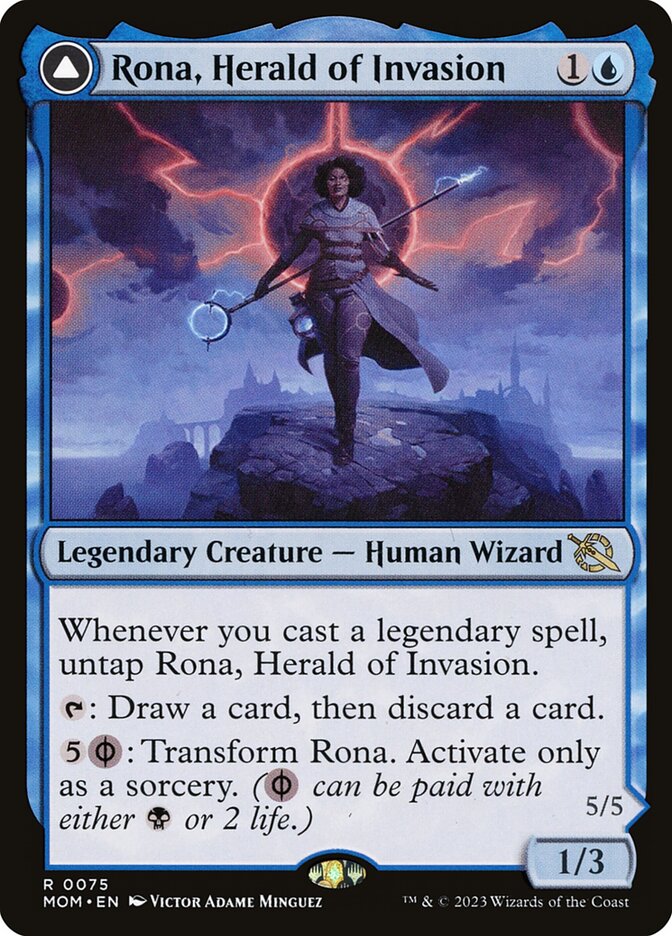
Another interesting MTG Pioneer deck, Rona combo, was featured in both of this weekend’s Magic Online Pioneer Challenges in two completely different forms. The combo involves combining the cards Rona,
Mox Amber
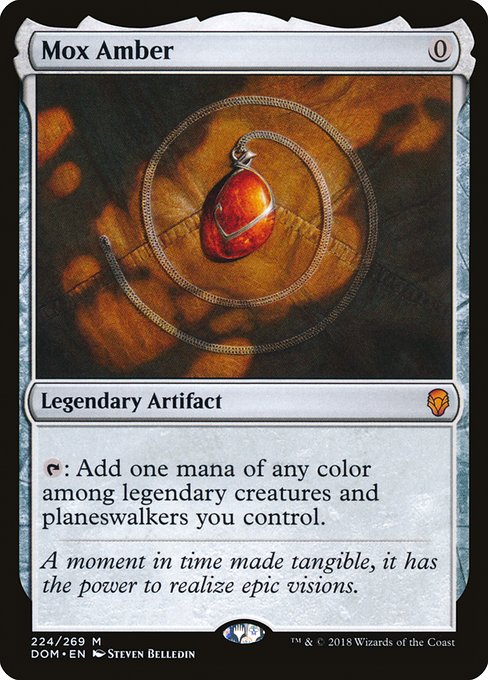 Mox Amber
{T}: Add one mana of any color among legendary creatures and planeswalkers you control.
, and
Retraction Helix
Mox Amber
{T}: Add one mana of any color among legendary creatures and planeswalkers you control.
, and
Retraction Helix
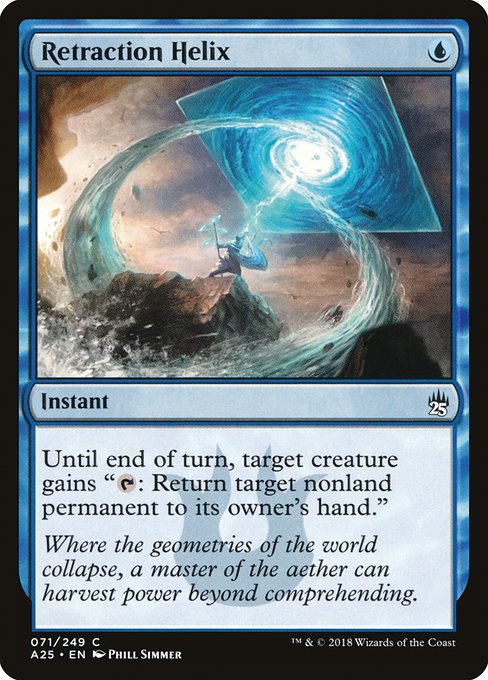 Retraction Helix
Until end of turn, target creature gains "{T}: Return target nonland permanent to its owner's hand."
to generate infinite mana. This is accomplished by casting Helix targeting Rona, then casting Mox Amber, and having Rona’s triggered ability cause it to untap. From there, you can float mana with Mox Amber, tap Rona using its activated ability granted from Helix to return Mox Amber to Hand, and continue casting and returning Mox Amber repeatedly, netting one mana each time. Rona is quite effective on its own in this deck, too, as it continuously Loots through your deck, letting you search for the necessary combo pieces. Both variants of Rona combo featured these same three cards, but the rest of each deck, including the win conditions, were different.
Retraction Helix
Until end of turn, target creature gains "{T}: Return target nonland permanent to its owner's hand."
to generate infinite mana. This is accomplished by casting Helix targeting Rona, then casting Mox Amber, and having Rona’s triggered ability cause it to untap. From there, you can float mana with Mox Amber, tap Rona using its activated ability granted from Helix to return Mox Amber to Hand, and continue casting and returning Mox Amber repeatedly, netting one mana each time. Rona is quite effective on its own in this deck, too, as it continuously Loots through your deck, letting you search for the necessary combo pieces. Both variants of Rona combo featured these same three cards, but the rest of each deck, including the win conditions, were different.
Sultai
The first variant, getting second place on Saturday, is a Sultai shell which wins by casting
Granted
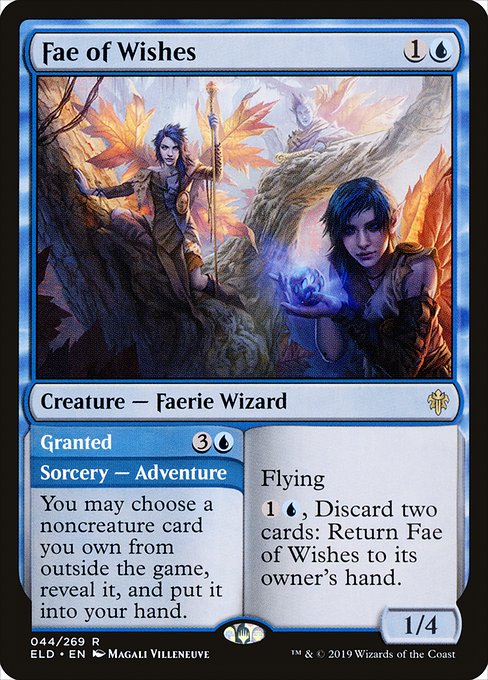 Granted
Flying
Granted
Flying
{1}{U}, Discard two cards: Return this creature to its owner's hand.
, selecting and casting
Aetherflux Reservoir
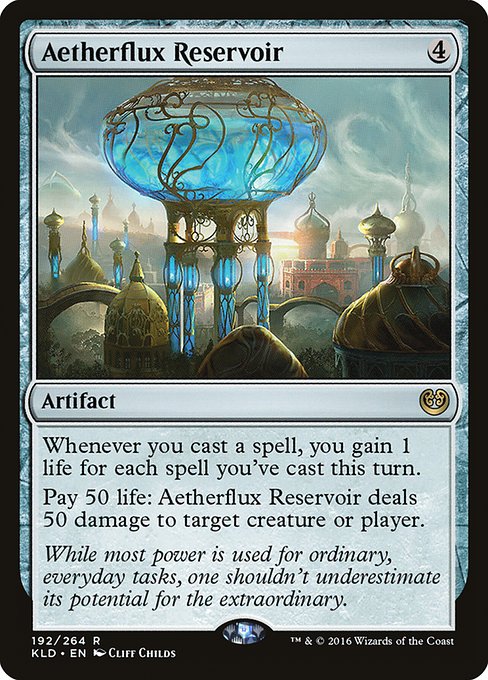 Aetherflux Reservoir
Whenever you cast a spell, you gain 1 life for each spell you've cast this turn.
Aetherflux Reservoir
Whenever you cast a spell, you gain 1 life for each spell you've cast this turn.
Pay 50 life: This artifact deals 50 damage to any target.
from the sideboard, and continuing from there to cast Mox Amber repeatedly until you can dome the opponent for 50. Granted is a nice win condition to have since it is still an effective card on its own and can get different sideboard options when the combo is not secured.
One glaring weakness with the combo is that a summoning sick Rona does not help you execute the combo. This deck gets to utilize
Tyvar, Jubilant Brawler
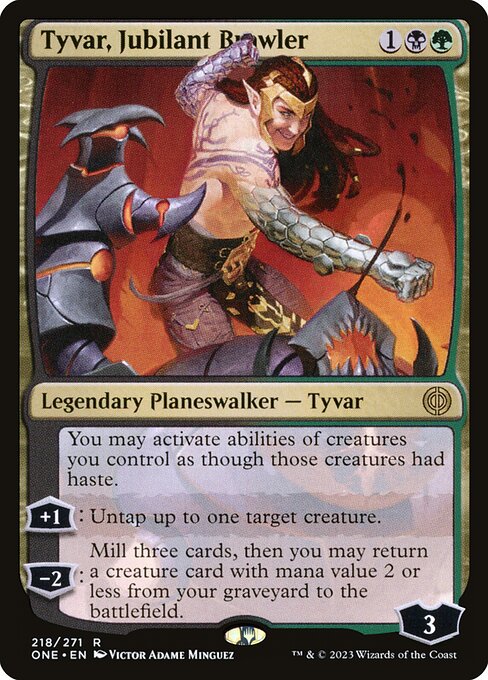 Tyvar, Jubilant Brawler
You may activate abilities of creatures you control as though those creatures had haste.
Tyvar, Jubilant Brawler
You may activate abilities of creatures you control as though those creatures had haste.
+1: Untap up to one target creature.
−2: Mill three cards, then you may return a creature card with mana value 2 or less from your graveyard to the battlefield.
to get around this by letting you activate Rona as though it has haste. It can even get Rona back from the graveyard, meaning your opponent has to live in constant fear even if you don’t have a Rona on board during their turn. Being Sultai also gives access to
Thoughtseize
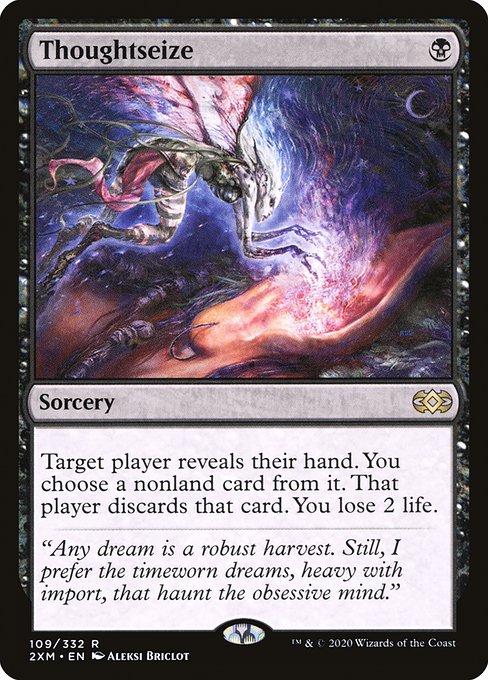 Thoughtseize
Target player reveals their hand. You choose a nonland card from it. That player discards that card. You lose 2 life.
and
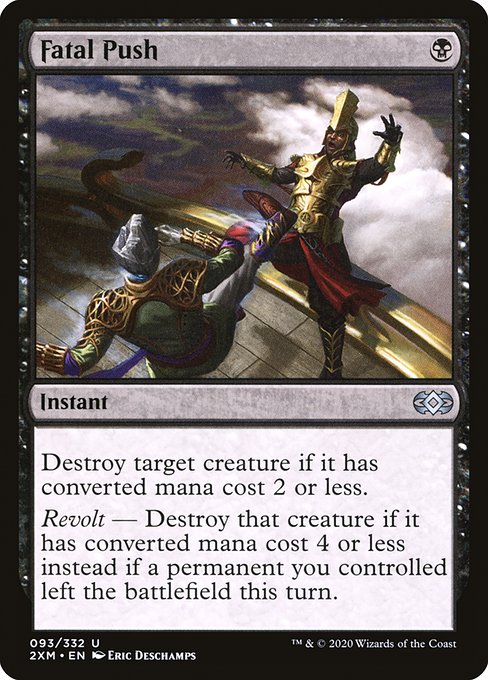
Fatal Push
Thoughtseize
Target player reveals their hand. You choose a nonland card from it. That player discards that card. You lose 2 life.
and
Fatal Push
 Fatal Push
Destroy target creature if it has mana value 2 or less.
Fatal Push
Destroy target creature if it has mana value 2 or less.
Revolt — Destroy that creature if it has mana value 4 or less instead if a permanent left the battlefield under your control this turn.
, two of the best pieces of interaction available in the format.
Jeskai
The second variant, getting 12th place on Sunday, is a Jeskai shell that wins by casting
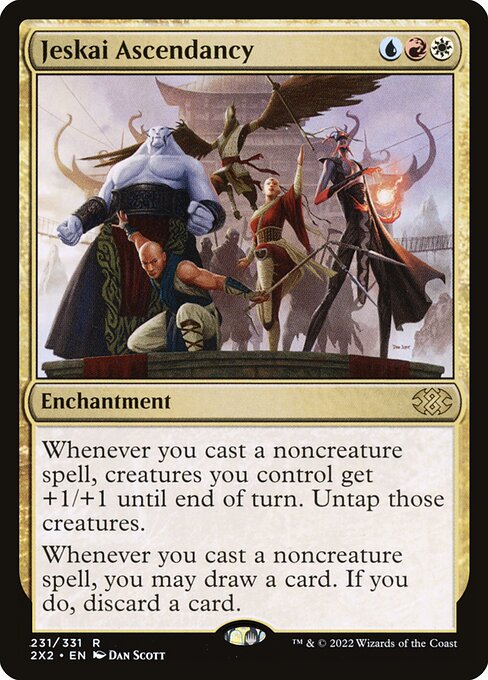
Jeskai Ascendancy
 Jeskai Ascendancy
Whenever you cast a noncreature spell, creatures you control get +1/+1 until end of turn. Untap those creatures.
Jeskai Ascendancy
Whenever you cast a noncreature spell, creatures you control get +1/+1 until end of turn. Untap those creatures.
Whenever you cast a noncreature spell, you may draw a card. If you do, discard a card.
, which, when paired with the ability to cast Mox Amber repeatedly, can draw your deck and give your creatures immense power, letting them simply attack the opponent for the win. This deck gives up some interaction and recursion but gains additional value and redundancy. Ascendancy is excellent on its own at digging for the combo and Looting away dead cards, but it also helps fuel
Treasure Cruise
 Treasure Cruise
Delve (Each card you exile from your graveyard while casting this spell pays for {1}.)
Treasure Cruise
Delve (Each card you exile from your graveyard while casting this spell pays for {1}.)
Draw three cards.
, an unbelievable card draw spell.
This deck also gets to play
Emry, Lurker of the Loch
 Emry, Lurker of the Loch
Affinity for artifacts (This spell costs {1} less to cast for each artifact you control.)
Emry, Lurker of the Loch
Affinity for artifacts (This spell costs {1} less to cast for each artifact you control.)
When Emry enters, mill four cards.
{T}: Choose target artifact card in your graveyard. You may cast that card this turn. (You still pay its costs. Timing rules still apply.)
, which is a combo piece, too when paired with Ascendancy and two copies of Mox Amber. By casting Mox Amber with Emry’s ability, you can untap Emry with Ascendancy and float mana with Mox Amber. Using the Legend rule to your advantage, you cast another Mox Amber, untap Emry again, put the tapped Mox Amber into the graveyard, target that Mox Amber with Emry, and repeat. Both variants have their strengths and weaknesses and are both cool options to explore moving forward.
Read More: MTG Players Found a New Way to Break Yargle!
Other Unique Card Choices
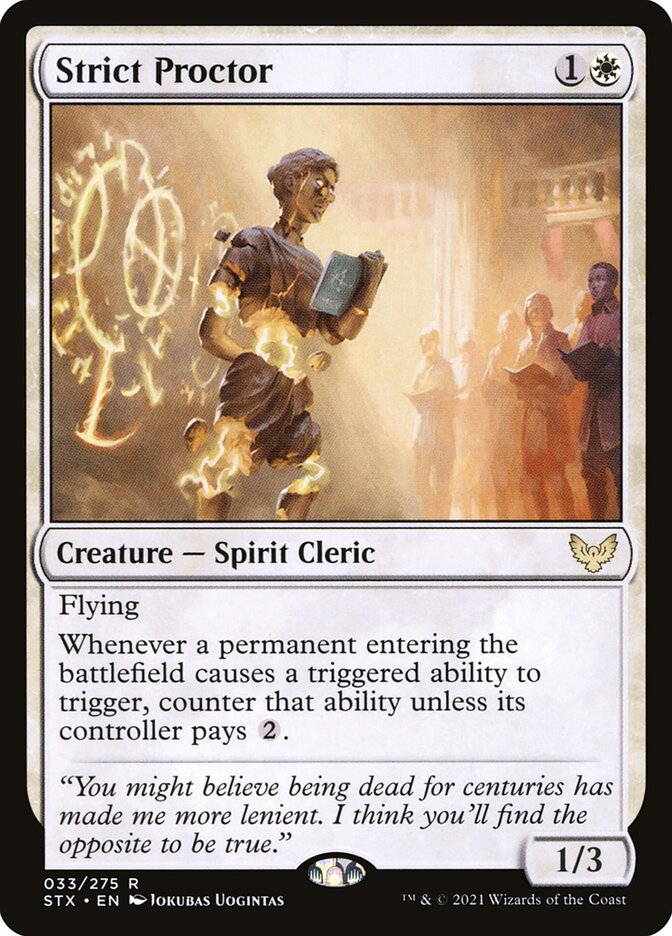
In addition to cool deck choices arising this weekend, multiple established archetypes added new or under-utilized cards to attack the metagame. For example, two different top tier archetypes, Lotus Field and UW Control, made top Eight of the Challenge using maindeck Strict Proctor. In addition to being quite good with Lotus Field, Strict Proctor also taxes enters-the-battlefield effects from opponents. With the rise in Boros Convoke that can generate absurd amounts of power quickly thanks to
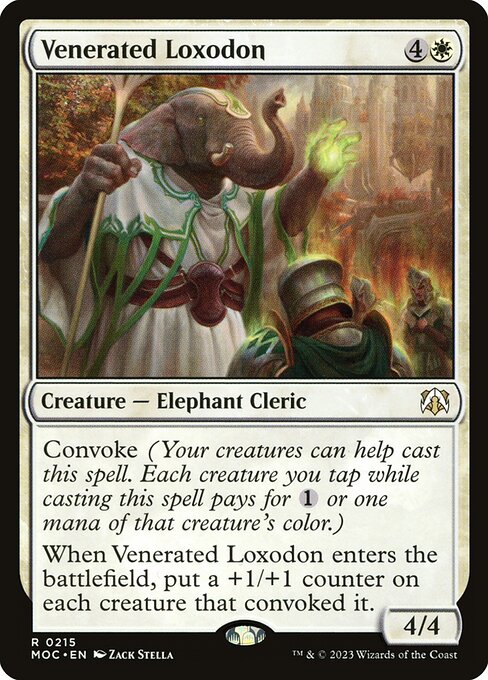
Venerated Loxodon
 Venerated Loxodon
Convoke (Your creatures can help cast this spell. Each creature you tap while casting this spell pays for {1} or one mana of that creature's color.)
Venerated Loxodon
Convoke (Your creatures can help cast this spell. Each creature you tap while casting this spell pays for {1} or one mana of that creature's color.)
When this creature enters, put a +1/+1 counter on each creature that convoked it.
and
Reckless Bushwhacker
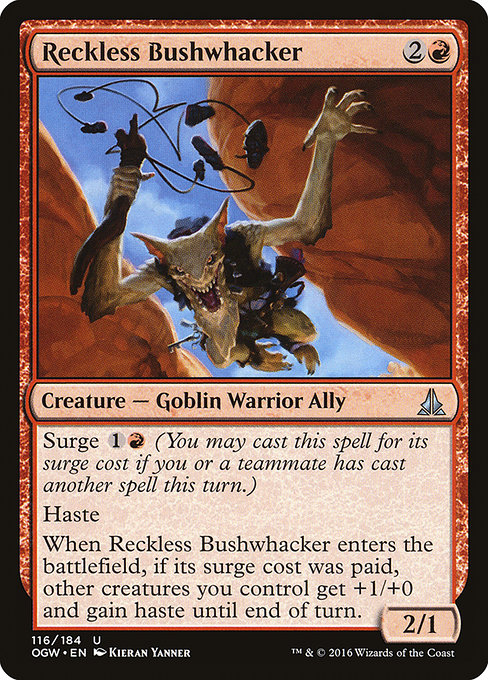 Reckless Bushwhacker
Surge {1}{R} (You may cast this spell for its surge cost if you or a teammate has cast another spell this turn.)
Reckless Bushwhacker
Surge {1}{R} (You may cast this spell for its surge cost if you or a teammate has cast another spell this turn.)
Haste
When this creature enters, if its surge cost was paid, other creatures you control get +1/+0 and gain haste until end of turn.
, it makes perfect sense to play Proctor as a meta-call to try to delay the opponent’s game-plan while simultaneously helping your own.
Regal Leosaur
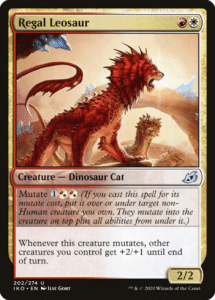
Speaking of Boros Convoke, people are still finding new ways to try to improve the archetype. One major change was showcased in top four of Sunday’s Magic Online MTG Pioneer Challenge. Rather than play Reckless Bushwhacker, the Convoke pilot decided to play Regal Leosaur, which has significantly high upside. First, while not granting haste, it does further boost the power of your creatures when using its Mutate ability. If you can Mutate one Leosaur onto another, however, your whole team gets a whopping plus-four plus-two, an insane swing that can win games otherwise unwinnable.
Voldaren Thrillseeker
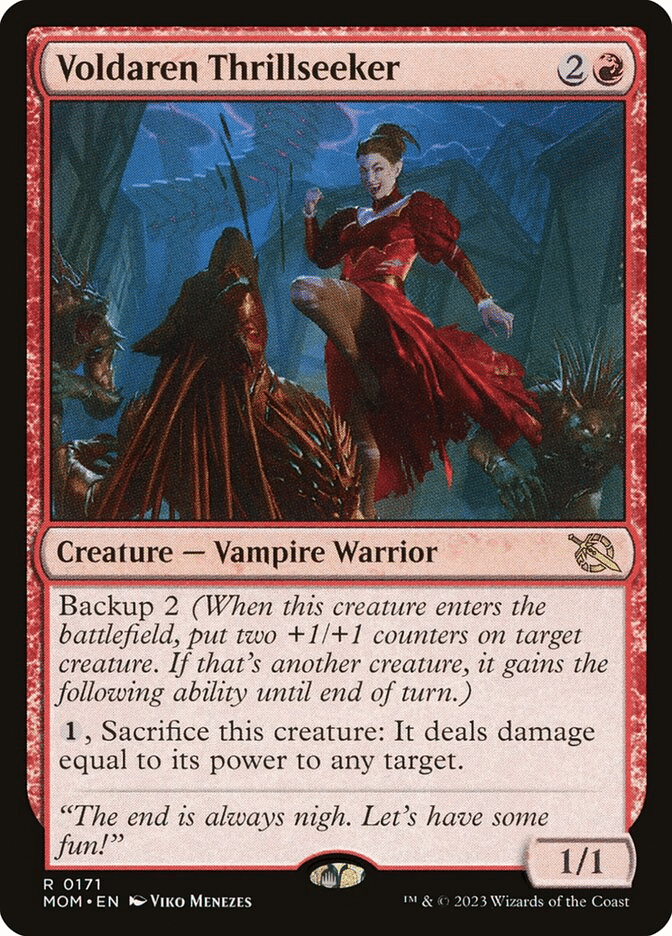
In-person tournaments also featured some cool card choices this weekend. Most notably, the Grand Open Qualifier at Valencia featured a Gruul Midrange deck at third place out of 387 players that was playing four copies of Voldaren Thrillseeker. While a reasonable card on its own, it provides a great source of damage and a sacrifice outlet for an opponent’s Creature when paired with
The Akroan War
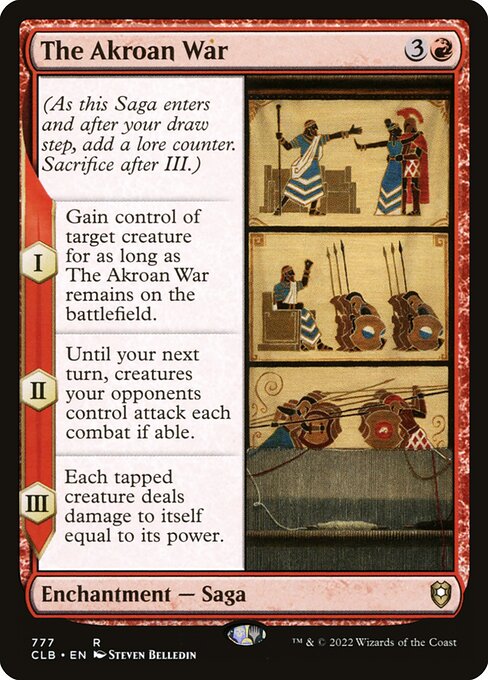 The Akroan War
(As this Saga enters and after your draw step, add a lore counter. Sacrifice after III.)
The Akroan War
(As this Saga enters and after your draw step, add a lore counter. Sacrifice after III.)
I — Gain control of target creature for as long as this Saga remains on the battlefield.
II — Until your next turn, creatures your opponents control attack each combat if able.
III — Each tapped creature deals damage to itself equal to its power.
. Gruul Midrange is another example of an archetype that has been around for a long time, yet the constant influx of new cards helps keep the format constantly evolving. Pioneer features elite levels of innovation on a week-by-week basis, and I am always excited to see these changes take place.