
It’s only been a few days since
Violent Outburst
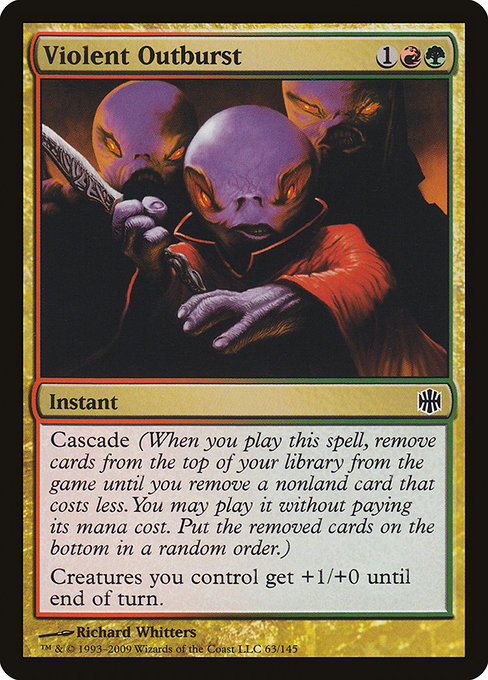 Violent Outburst
Cascade (When you cast this spell, exile cards from the top of your library until you exile a nonland card that costs less. You may cast it without paying its mana cost. Put the exiled cards on the bottom in a random order.)
Violent Outburst
Cascade (When you cast this spell, exile cards from the top of your library until you exile a nonland card that costs less. You may cast it without paying its mana cost. Put the exiled cards on the bottom in a random order.)
Creatures you control get +1/+0 until end of turn.
was banned in Modern, and players are already frantically searching for ways to replace the powerful Instant in Cascade shells. Unsurprisingly,
Ardent Plea
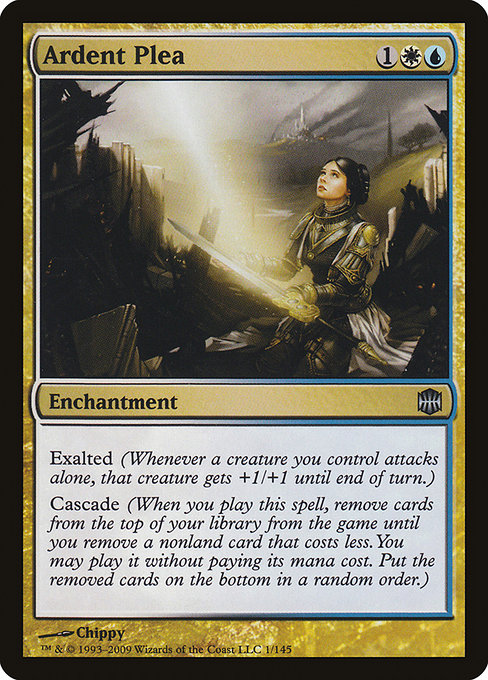 Ardent Plea
Exalted (Whenever a creature you control attacks alone, that creature gets +1/+1 until end of turn.)
Ardent Plea
Exalted (Whenever a creature you control attacks alone, that creature gets +1/+1 until end of turn.)
Cascade (When you cast this spell, exile cards from the top of your library until you exile a nonland card that costs less. You may cast it without paying its mana cost. Put the exiled cards on the bottom in a random order.)
is the first card lots of players have turned to. In
Crashing Footfalls
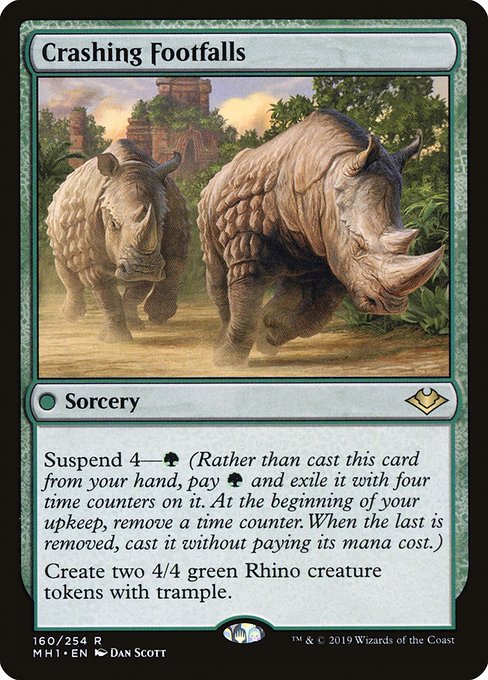 Crashing Footfalls
Suspend 4—{G} (Rather than cast this card from your hand, pay {G} and exile it with four time counters on it. At the beginning of your upkeep, remove a time counter. When the last is removed, you may cast it without paying its mana cost.)
Crashing Footfalls
Suspend 4—{G} (Rather than cast this card from your hand, pay {G} and exile it with four time counters on it. At the beginning of your upkeep, remove a time counter. When the last is removed, you may cast it without paying its mana cost.)
Create two 4/4 green Rhino creature tokens with trample.
decks, it’s a relatively easy card to slot in place of Violent Outburst, even without many other changes.
Having to Cascade at Sorcery speed is a big deal for a
Force of Negation
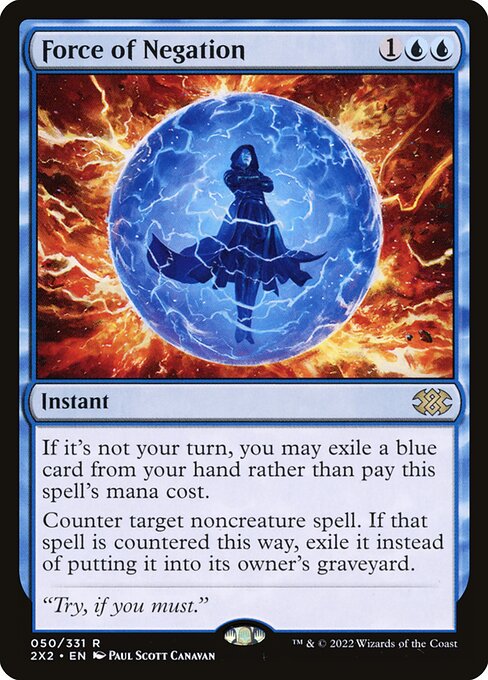 Force of Negation
If it's not your turn, you may exile a blue card from your hand rather than pay this spell's mana cost.
Force of Negation
If it's not your turn, you may exile a blue card from your hand rather than pay this spell's mana cost.
Counter target noncreature spell. If that spell is countered this way, exile it instead of putting it into its owner's graveyard.
deck. However, it does pitch to Force and
Subtlety
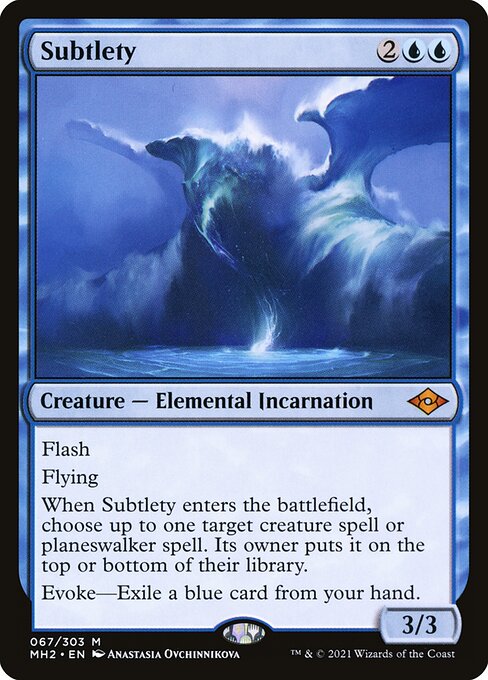 Subtlety
Flash
Subtlety
Flash
Flying
When this creature enters, choose up to one target creature spell or planeswalker spell. Its owner puts it on their choice of the top or bottom of their library.
Evoke—Exile a blue card from your hand.
, which is a nice bonus. Also, adjusting the manabase is relatively trivial given that many decklists were already playing white for
Leyline Binding
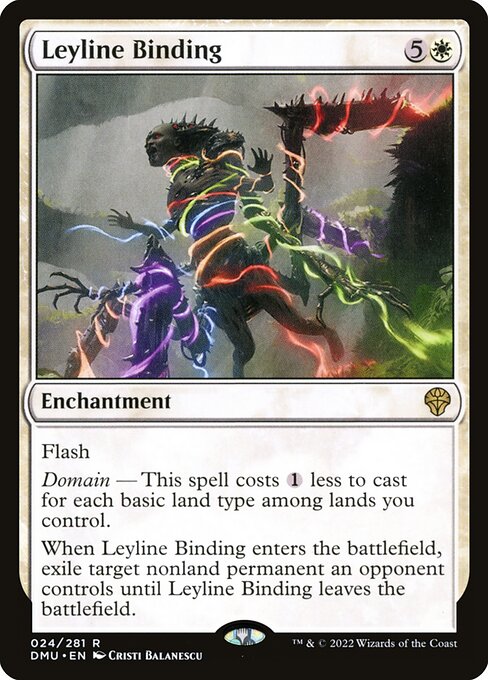 Leyline Binding
Flash
Leyline Binding
Flash
Domain — This spell costs {1} less to cast for each basic land type among lands you control.
When this enchantment enters, exile target nonland permanent an opponent controls until this enchantment leaves the battlefield.
and
Scion of Draco
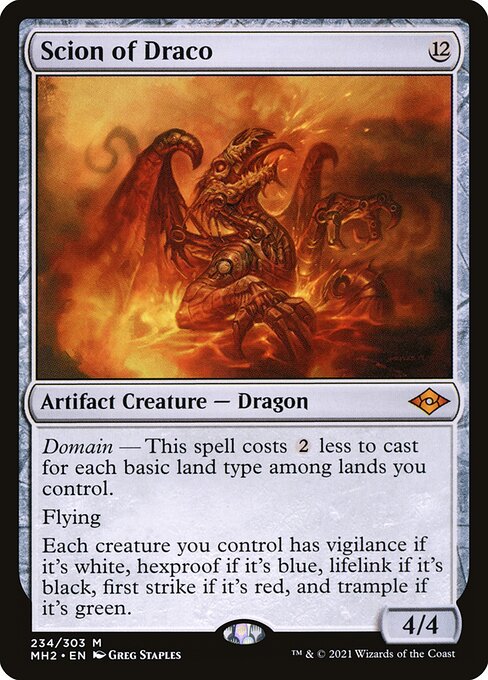 Scion of Draco
Domain — This spell costs {2} less to cast for each basic land type among lands you control.
Scion of Draco
Domain — This spell costs {2} less to cast for each basic land type among lands you control.
Flying
Each creature you control has vigilance if it's white, hexproof if it's blue, lifelink if it's black, first strike if it's red, and trample if it's green.
. Even
Living End
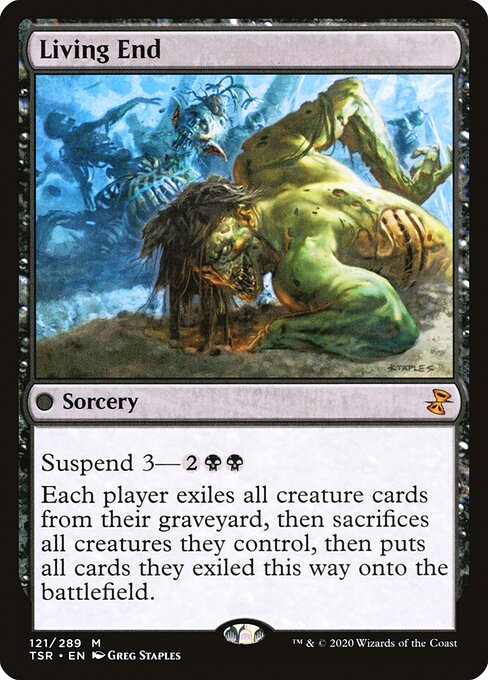 Living End
Suspend 3—{2}{B}{B}
Living End
Suspend 3—{2}{B}{B}
Each player exiles all creature cards from their graveyard, then sacrifices all creatures they control, then puts all cards they exiled this way onto the battlefield.
decks which were typically base-Temur have been able to incorporate Ardent Plea to some success.
Interestingly, though, not everyone is choosing to go that route. With Violent Outburst gone, there’s a bit more room for experimentation, and leave it to the masterful innovator Aspiringspike to take matters into his own hands! Rather than adding another three-mana Cascade effect to the basic Living End shell, he’s going deeper and building around a two-mana Cascade Creature. That’s right,
Bloodbraid Marauder
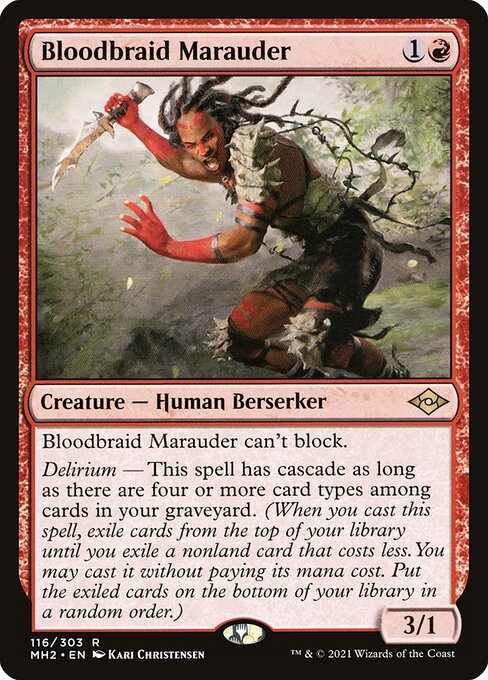 Bloodbraid Marauder
This creature can't block.
Bloodbraid Marauder
This creature can't block.
Delirium — This spell has cascade as long as there are four or more card types among cards in your graveyard. (When you cast this spell, exile cards from the top of your library until you exile a nonland card that costs less. You may cast it without paying its mana cost. Put the exiled cards on the bottom in a random order.)
is in the house. It certainly has its deckbuilding restrictions to make work, but there are some rewards for accommodating the two-drop. Let’s start by taking a look at some nice synergies to help enable Delirium.
Enabling Bloodbraid Marauder
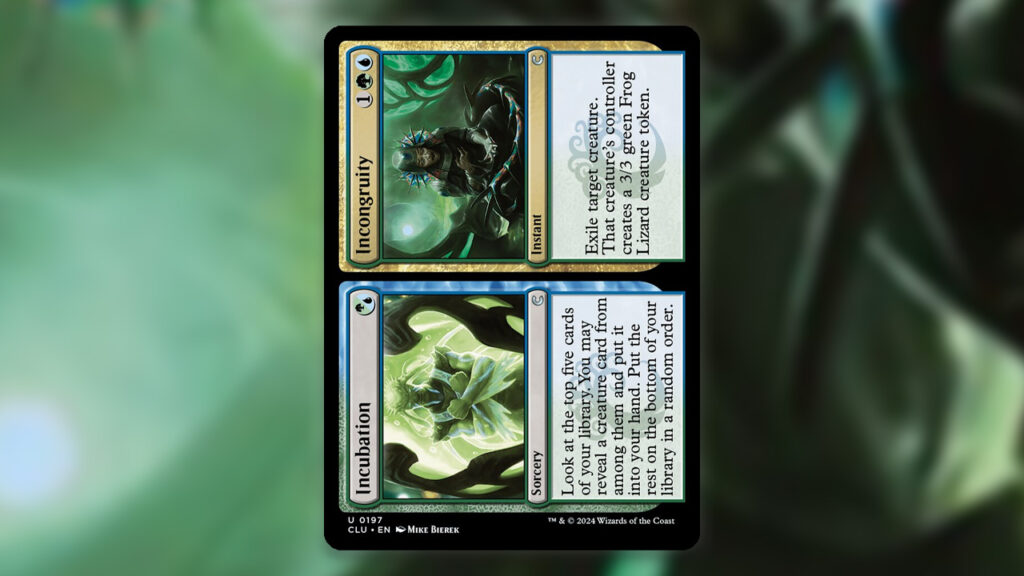
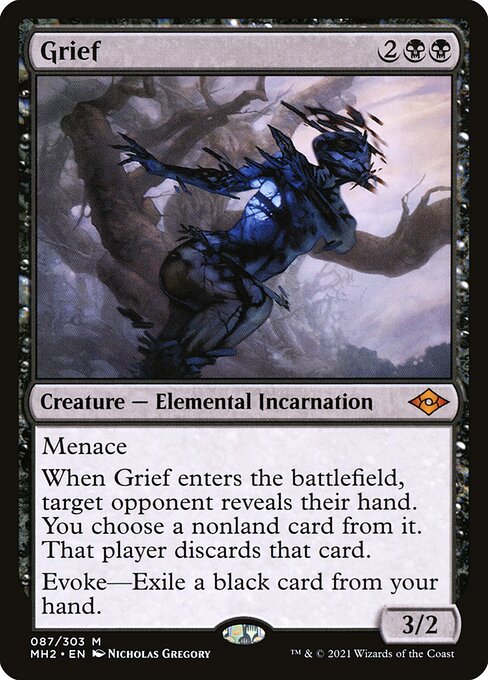
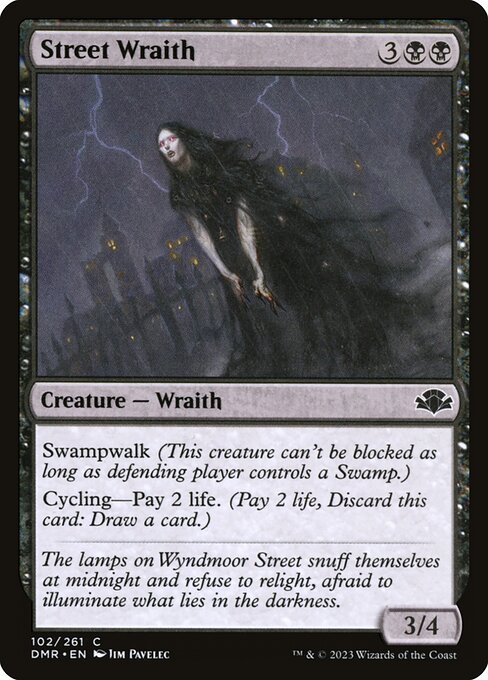
When it comes to making sure you have Delerium when you cast Bloodbraid Marauder, the easiest card types to get into the graveyard with this shell are definitely Creature and Land. Fetchlands make it trivial to get a Land into your graveyard at minimal cost. Meanwhile, cards like
Grief
 Grief
Menace
Grief
Menace
When this creature enters, target opponent reveals their hand. You choose a nonland card from it. That player discards that card.
Evoke—Exile a black card from your hand.
and
Street Wraith
 Street Wraith
Swampwalk (This creature can't be blocked as long as defending player controls a Swamp.)
Street Wraith
Swampwalk (This creature can't be blocked as long as defending player controls a Swamp.)
Cycling—Pay 2 life. (Pay 2 life, Discard this card: Draw a card.)
provide cheap and easy ways to get a Creature into your graveyard.
On the flip side, getting an Instant and a Sorcery into your graveyard isn’t always the easiest. Luckily, one card in particular fixes this problem easily. Incubation//Incongruity is a split card with two different card types. This means that when you cast Incubation for one mana, not only are you digging for Bloodbraid Marauder, but you are also putting an Instant and a Sorcery in your graveyard on turn one.
Throw in Grief or Street Wraith and a Fetchland, and it’s possible to cast a Delirious Bloodbraid Marauder on turn two! Of course, in some spots it might be worth getting more Creatures into your graveyard before Cascading into Living End. Still, it’s a nice option to have at your disposal.
Read More: MTG Villain from 1996 Reappears in Thunder Junction!
Opening the Door for Two-Mana Plays
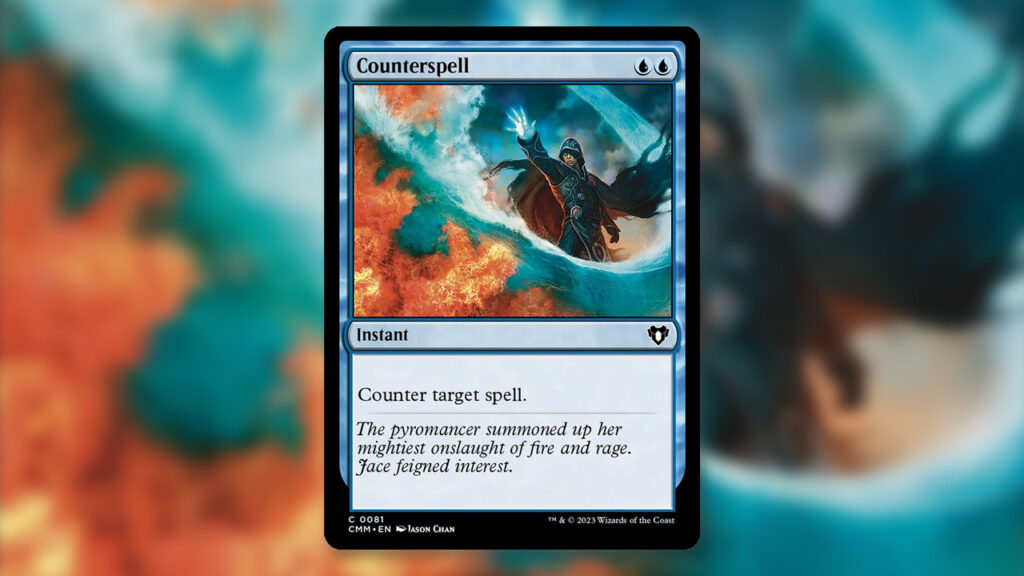
Besides being able to set up a turn-two Living End, by reducing the cost of your Cascade card to two-mana, you also get access to a slew of two-mana cards. First of all, the additions of Counterspell and
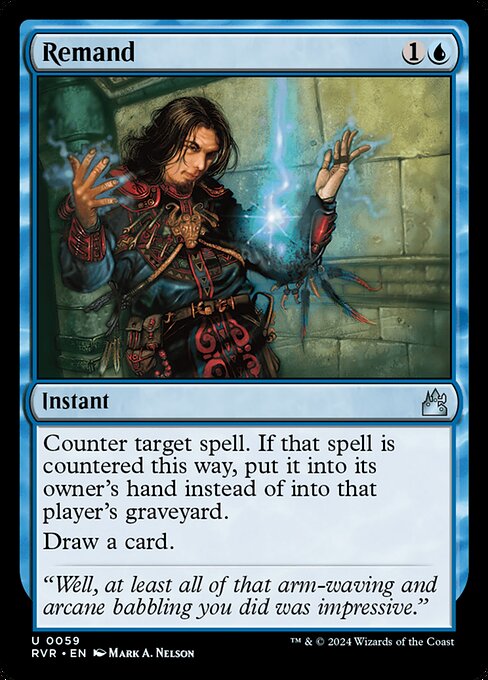
Remand
 Remand
Counter target spell. If that spell is countered this way, put it into its owner's hand instead of into that player's graveyard.
Remand
Counter target spell. If that spell is countered this way, put it into its owner's hand instead of into that player's graveyard.
Draw a card.
are huge. They effectively protect you against opposing combo decks while simultaneously helping you resolve your own combo piece. Now that Violent Outburst is out of the picture, Force of Negation isn’t quite as reliable at pushing your own Sorcery-speed combo through.
Beyond counter magic, this deck also gets access to
Persist
 Persist
Return target nonlegendary creature card from your graveyard to the battlefield with a -1/-1 counter on it.
as a nice alternate avenue to victory. Cycling Troll of Kazhad-Dum on turn one and casting Persist on turn two can singlehandedly win games in certain matchups. Being able to bring back Grief to further disrupt the opponent can also be strong in the right circumstance.
Persist
Return target nonlegendary creature card from your graveyard to the battlefield with a -1/-1 counter on it.
as a nice alternate avenue to victory. Cycling Troll of Kazhad-Dum on turn one and casting Persist on turn two can singlehandedly win games in certain matchups. Being able to bring back Grief to further disrupt the opponent can also be strong in the right circumstance.
Lastly,
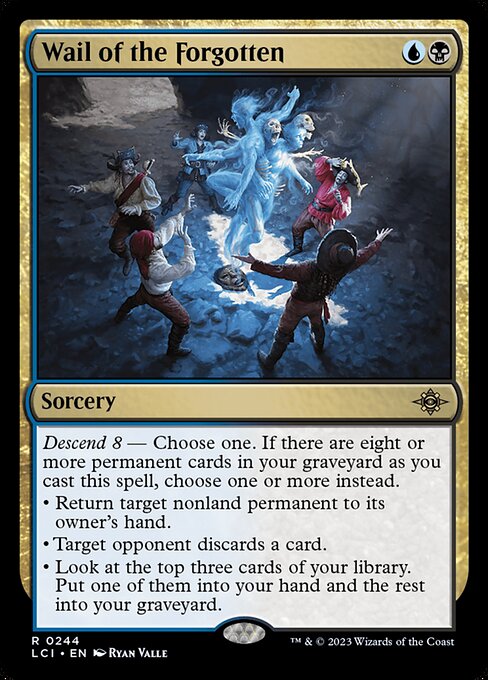
Wail of the Forgotten
 Wail of the Forgotten
Descend 8 — Choose one. If there are eight or more permanent cards in your graveyard as you cast this spell, choose one or more instead.
Wail of the Forgotten
Descend 8 — Choose one. If there are eight or more permanent cards in your graveyard as you cast this spell, choose one or more instead.
• Return target nonland permanent to its owner's hand.
• Target opponent discards a card.
• Look at the top three cards of your library. Put one of them into your hand and the rest into your graveyard.
is a decent role-player in this deck. In the early game, you can use it to get closer to Delerium. Later in the game, though, it’s not out of the question to find a window to cast this for all three modes.
Read More: Top Five Most Broken MTG Modern Decks of All Time
Intriguing Additions in Legacy
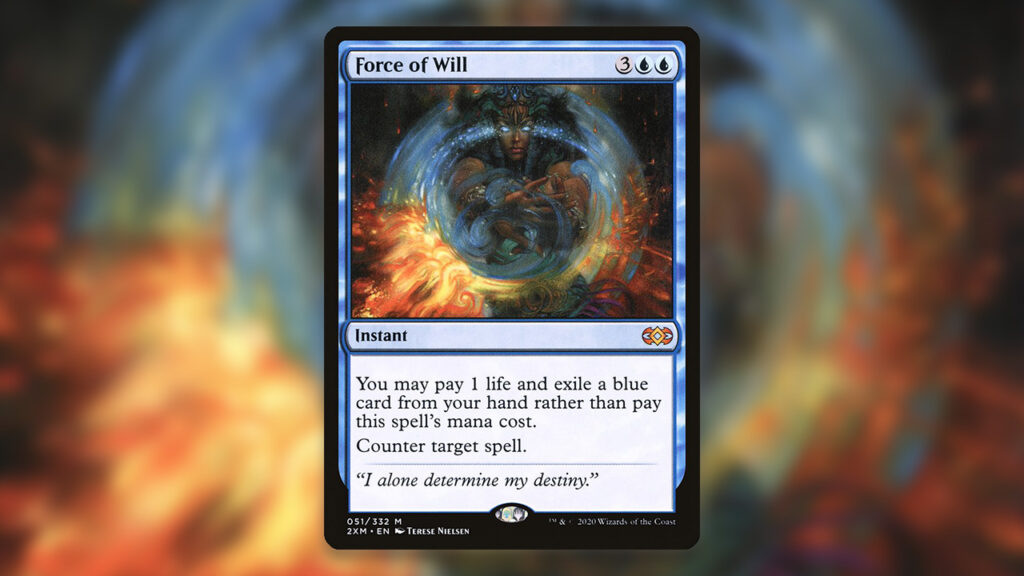
Besides the Modern Living End core, some players are trying out Bloodbraid Marauder in Legacy Crashing Footfalls decks. Obviously, these Cascade strategies benefit a lot from the inclusion of Force of Will. However, what really sets the Bloodbraid Marauder variants apart is, once again, the extra two-drop options available to you.
Getting to run powerful threats like
Tarmogoyf
 Tarmogoyf
's power is equal to the number of card types among cards in all graveyards and its toughness is equal to that number plus 1.
and
Orcish Bowmasters
Tarmogoyf
Tarmogoyf's power is equal to the number of card types among cards in all graveyards and its toughness is equal to that number plus 1.
and
Orcish Bowmasters
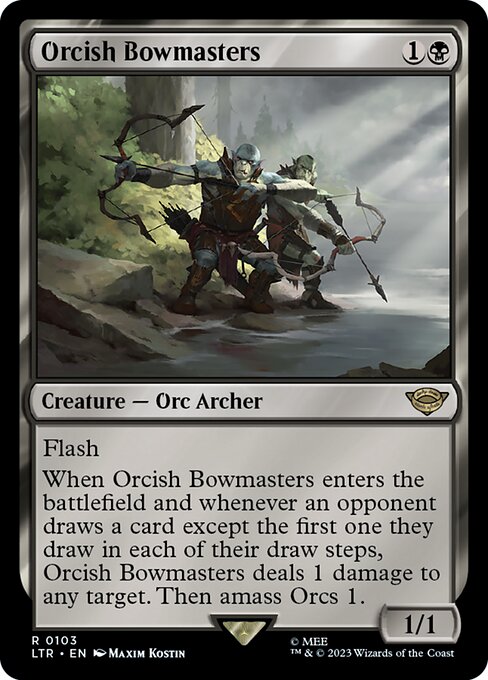 Orcish Bowmasters
Flash
Orcish Bowmasters
Flash
When this creature enters and whenever an opponent draws a card except the first one they draw in each of their draw steps, this creature deals 1 damage to any target. Then amass Orcs 1.
makes you much less reliant on Crashing Footfalls to win. As such, you are much less vulnerable to problematic hate cards like
Chalice of the Void
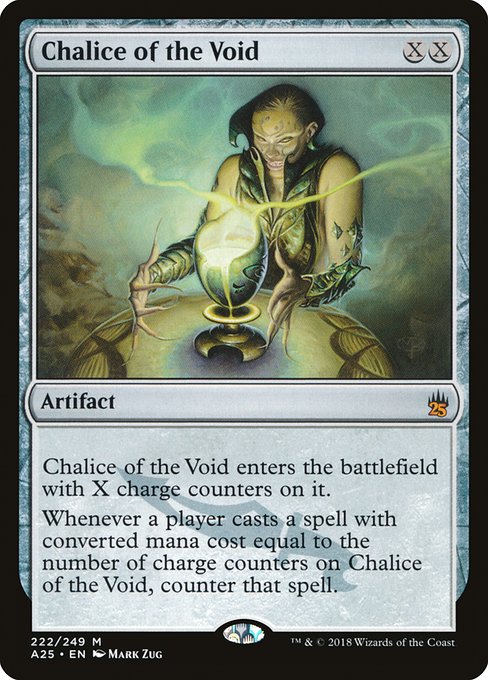 Chalice of the Void
This artifact enters with X charge counters on it.
Chalice of the Void
This artifact enters with X charge counters on it.
Whenever a player casts a spell with mana value equal to the number of charge counters on this artifact, counter that spell.
.
Further, you get access to
Once Upon a Time
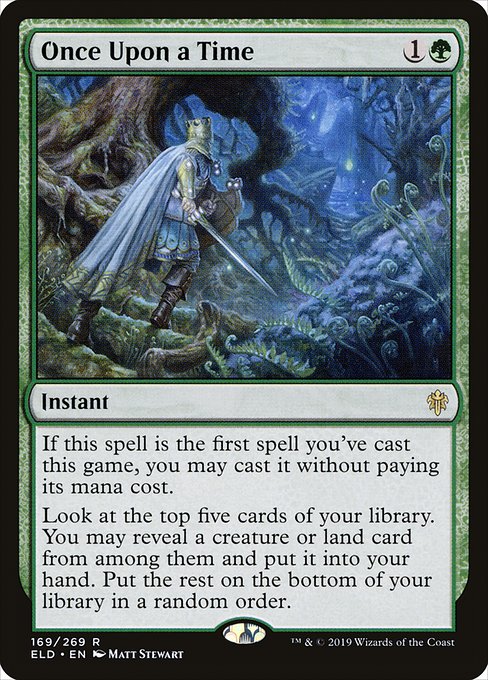 Once Upon a Time
If this spell is the first spell you've cast this game, you may cast it without paying its mana cost.
Once Upon a Time
If this spell is the first spell you've cast this game, you may cast it without paying its mana cost.
Look at the top five cards of your library. You may reveal a creature or land card from among them and put it into your hand. Put the rest on the bottom of your library in a random order.
and
Daze
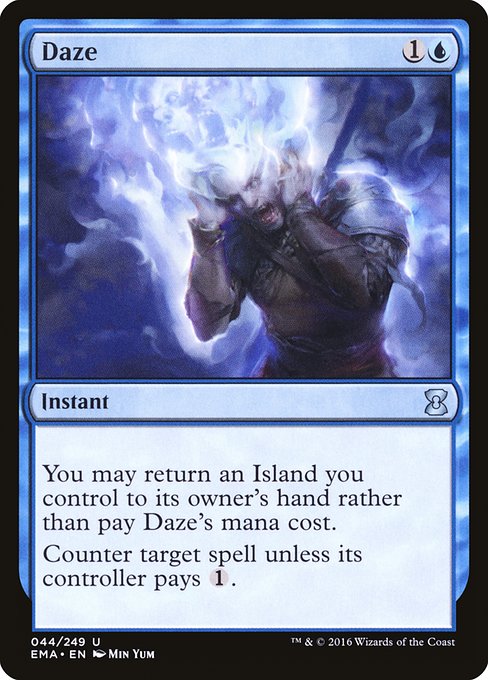 Daze
You may return an Island you control to its owner's hand rather than pay this spell's mana cost.
Daze
You may return an Island you control to its owner's hand rather than pay this spell's mana cost.
Counter target spell unless its controller pays {1}.
as Instants that you can often cast for free. Once Upon a Time adds a great deal of consistency, Daze is an excellent disruptive element, and both cards make it much easier to obtain Delerium.
Read More: MTG Players Are Split on How to Save Competitive Formats
Tradeoffs
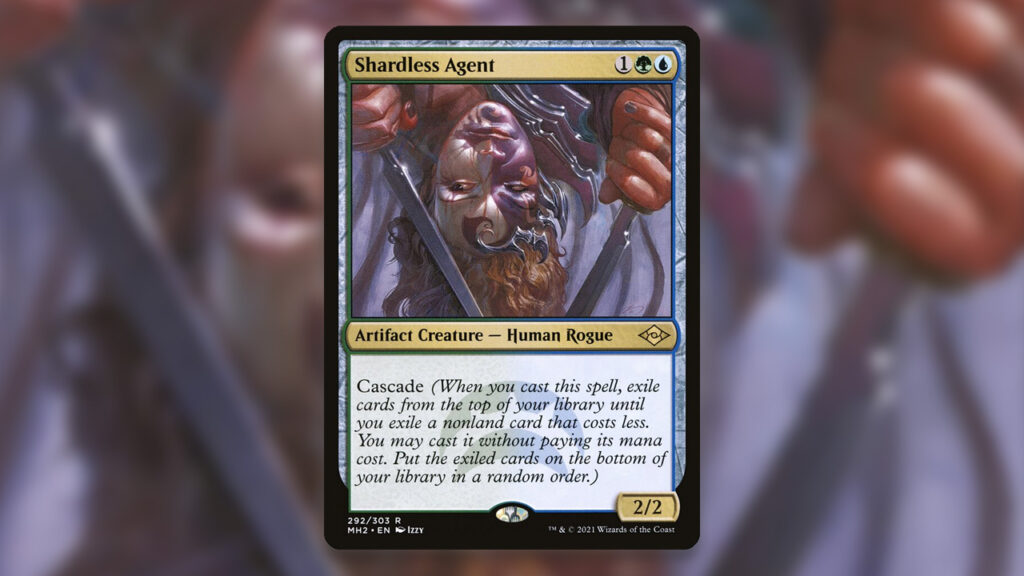
The Bloodbraid Marauder and
Shardless Agent
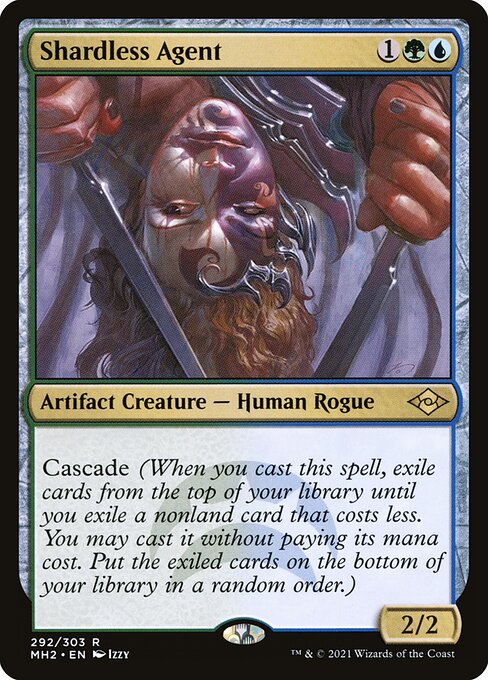 Shardless Agent
Cascade (When you cast this spell, exile cards from the top of your library until you exile a nonland card that costs less. You may cast it without paying its mana cost. Put the exiled cards on the bottom in a random order.)
Cascade shells have a decent number of similarities, and each come with their positives and negatives. In the case of Bloodbraid Marauder, we already talked about the benefits of having access to potent two-drops. Having access to a two-mana Cascade card and the Persist+Troll package gives this version more explosive potential. Additionally, the presence of Counterspell (or Daze in Legacy) can make it easier to make sure your game-breaking spell resolves.
Shardless Agent
Cascade (When you cast this spell, exile cards from the top of your library until you exile a nonland card that costs less. You may cast it without paying its mana cost. Put the exiled cards on the bottom in a random order.)
Cascade shells have a decent number of similarities, and each come with their positives and negatives. In the case of Bloodbraid Marauder, we already talked about the benefits of having access to potent two-drops. Having access to a two-mana Cascade card and the Persist+Troll package gives this version more explosive potential. Additionally, the presence of Counterspell (or Daze in Legacy) can make it easier to make sure your game-breaking spell resolves.
The biggest downside by far, though, is that the Bloodbraid Marauder decks are much worse against graveyard hate. Obviously, traditional Living End decks in Modern are naturally a bit soft to graveyard hate, such as
Leyline of the Void
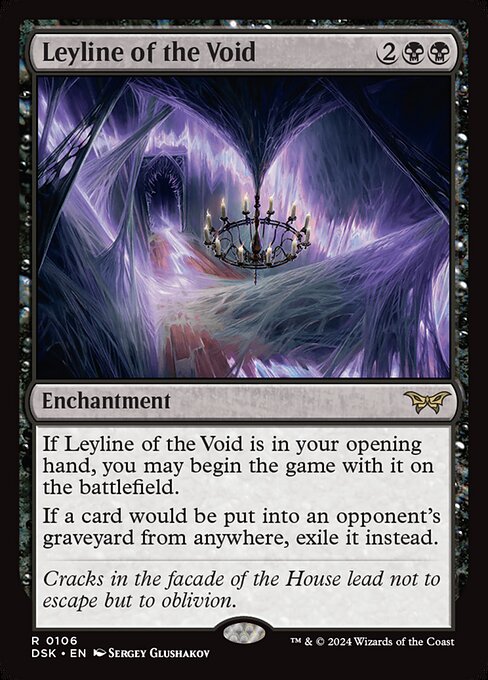 Leyline of the Void
If this card is in your opening hand, you may begin the game with it on the battlefield.
Leyline of the Void
If this card is in your opening hand, you may begin the game with it on the battlefield.
If a card would be put into an opponent's graveyard from anywhere, exile it instead.
. Cards like
Force of Vigor
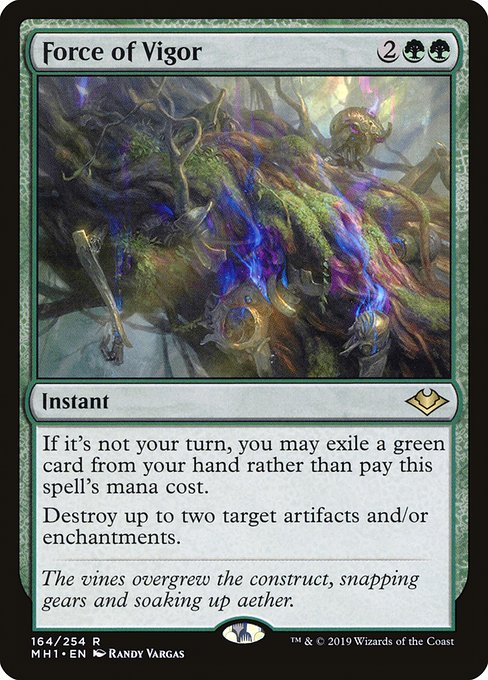 Force of Vigor
If it's not your turn, you may exile a green card from your hand rather than pay this spell's mana cost.
Force of Vigor
If it's not your turn, you may exile a green card from your hand rather than pay this spell's mana cost.
Destroy up to two target artifacts and/or enchantments.
and
Foundation Breaker
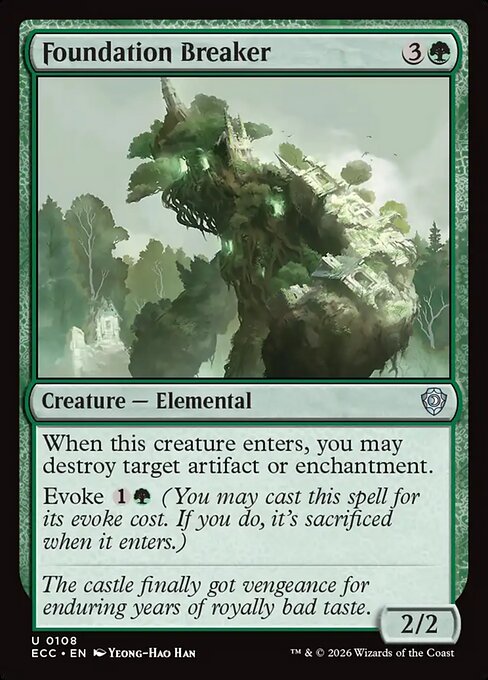 Foundation Breaker
When this creature enters, you may destroy target artifact or enchantment.
Foundation Breaker
When this creature enters, you may destroy target artifact or enchantment.
Evoke {1}{G} (You may cast this spell for its evoke cost. If you do, it's sacrificed when it enters.)
help at answering hate, but you still need to refuel your graveyard.
The difference is that traditional Living End decks only needed to cycle a few more Creatures after removing the opposing hate piece. The Bloodbraid Marauder variants need to fully assemble Delerium, which can take significantly more time once the hate piece is finally removed. Not to mention, Legacy Crashing Footfalls decks normally don’t care about graveyard hate. With Bloodbraid Marauder as the primary Cascade card, you open yourself up to more forms of hate.
With this in mind, Bloodbraid Marauder Cascade decks feel like a reasonable metagame call at best. If you care more about speed and don’t expect tons of graveyard hate, these shells can be decent to pivot to. Regardless, it’s cool to see players testing these innovative strategies, and it’s worth monitoring to see if they truly catch on.
Read More: Wizards Concerned About MTG Stickers in Competitive Format