
Many MTG players are starting to realize that The Brothers’ War looks like an incredibly powerful set of cards. There’s almost no question that this will warp Standard and Pioneer significantly by introducing the Prototype mechanic and the nightmare that is Diabolic Intent. However, players may not have considered that Brothers’ War has a strong chance of significantly impacting every MTG format. Even the likes of Modern may see a major shakeup due to an innocuous Uncommon that addresses the current metagame in a disastrously beautiful way. It’s time to do a deep dive into just how good Haywire Mite is for the Modern format while touching on its potential in every MTG format.
Haywire Mite
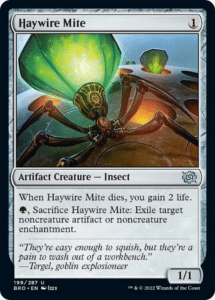
This innocent-looking bug is a lot better than it first appears. Costing only one mana, Haywire Mite can sacrifice itself for a Green to exile a noncreature artifact or enchantment. As a massive bonus, Haywire Mite also gains you two life when it dies. This may seem irrelevant, but it makes the card a lot more palatable to main deck in faster formats, and those formats are where this may see the most play.
Brothers’ War has a Lot of Artifacts
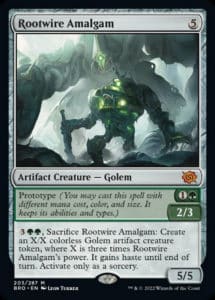
Firstly, Haywire Mite will likely be an all-star in Standard and Limited. There are many artifact cards in Brothers’ War, making the Mite seem like a solid removal option in Limited. Enchantments are already at an all-time high in the Standard format in the forms of
Fable of the Mirror-Breaker
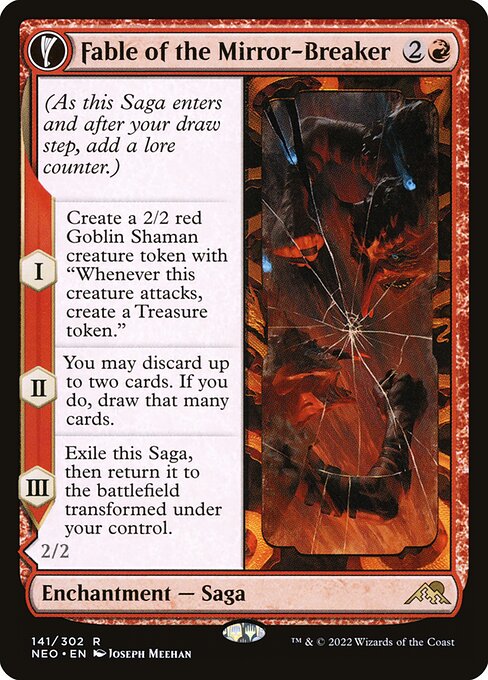 Fable of the Mirror-Breaker
(As this Saga enters and after your draw step, add a lore counter.)
Fable of the Mirror-Breaker
(As this Saga enters and after your draw step, add a lore counter.)
I — Create a 2/2 red Goblin Shaman creature token with "Whenever this token attacks, create a Treasure token."
II — You may discard up to two cards. If you do, draw that many cards.
III — Exile this Saga, then return it to the battlefield transformed under your control.
and
Wedding Announcement
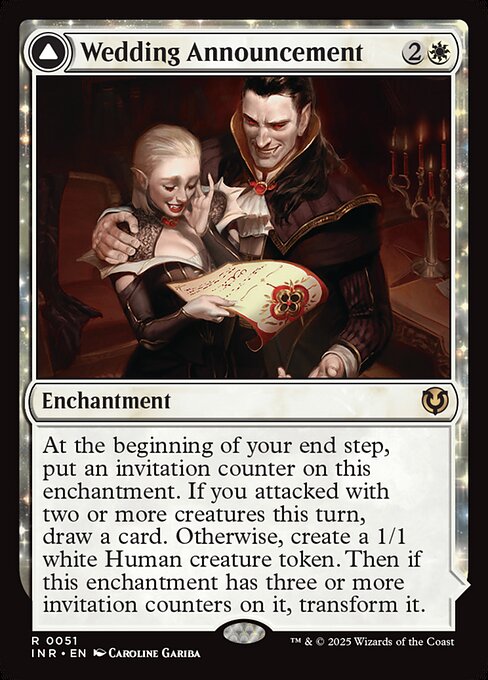 Wedding Announcement
At the beginning of your end step, put an invitation counter on this enchantment. If you attacked with two or more creatures this turn, draw a card. Otherwise, create a 1/1 white Human creature token. Then if this enchantment has three or more invitation counters on it, transform it.
, so this card is likely to see sideboard play there as well.
Wedding Announcement
At the beginning of your end step, put an invitation counter on this enchantment. If you attacked with two or more creatures this turn, draw a card. Otherwise, create a 1/1 white Human creature token. Then if this enchantment has three or more invitation counters on it, transform it.
, so this card is likely to see sideboard play there as well.
While Pioneer is a bit of a question mark, there is definitely a place for this Mite in that format. Mono Green is a Karn wishboard deck, but generally, if they get to the point of wishing stuff up with Karn, you’ve already lost. This also hits
Fable of the Mirror-Breaker
Fable of the Mirror-Breaker
(As this Saga enters and after your draw step, add a lore counter.)
I — Create a 2/2 red Goblin Shaman creature token with "Whenever this token attacks, create a Treasure token."
II — You may discard up to two cards. If you do, draw that many cards.
III — Exile this Saga, then return it to the battlefield transformed under your control.
,
Fires of Invention
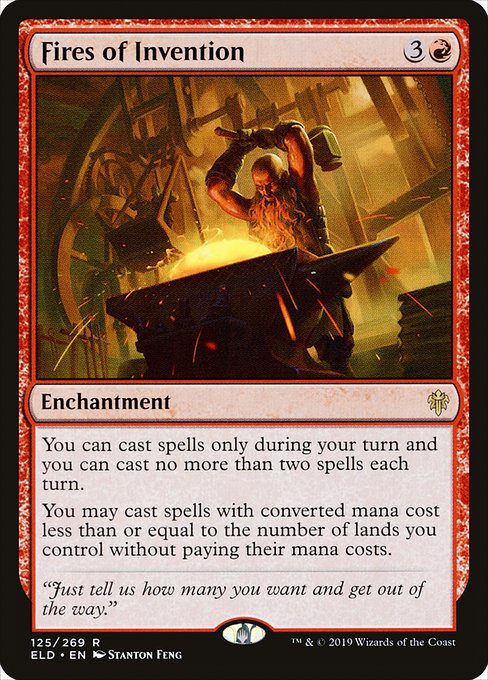 Fires of Invention
You can cast spells only during your turn and you can cast no more than two spells each turn.
Fires of Invention
You can cast spells only during your turn and you can cast no more than two spells each turn.
You may cast spells with mana value less than or equal to the number of lands you control without paying their mana costs.
, and basically everything in
Enigmatic Incarnation
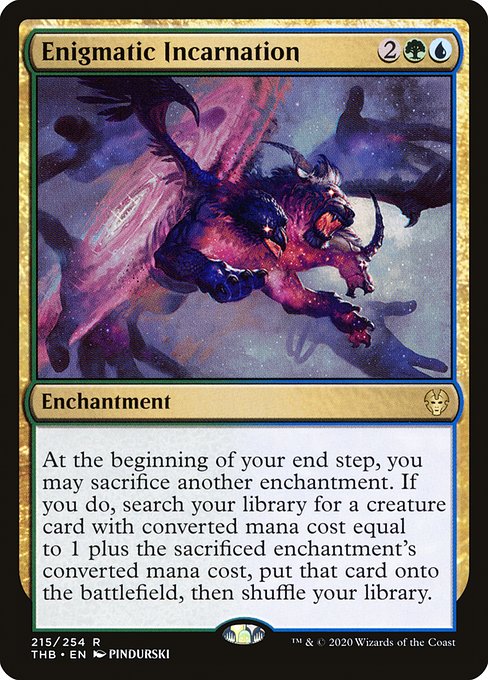 Enigmatic Incarnation
At the beginning of your end step, you may sacrifice another enchantment. If you do, search your library for a creature card with mana value equal to 1 plus the sacrificed enchantment's mana value, put that card onto the battlefield, then shuffle.
decks. If Brothers’ War also manages to impact this format, the Mite might be better than initial outlooks suggest.
Enigmatic Incarnation
At the beginning of your end step, you may sacrifice another enchantment. If you do, search your library for a creature card with mana value equal to 1 plus the sacrificed enchantment's mana value, put that card onto the battlefield, then shuffle.
decks. If Brothers’ War also manages to impact this format, the Mite might be better than initial outlooks suggest.
Read More: What Is Prototype in MTG?
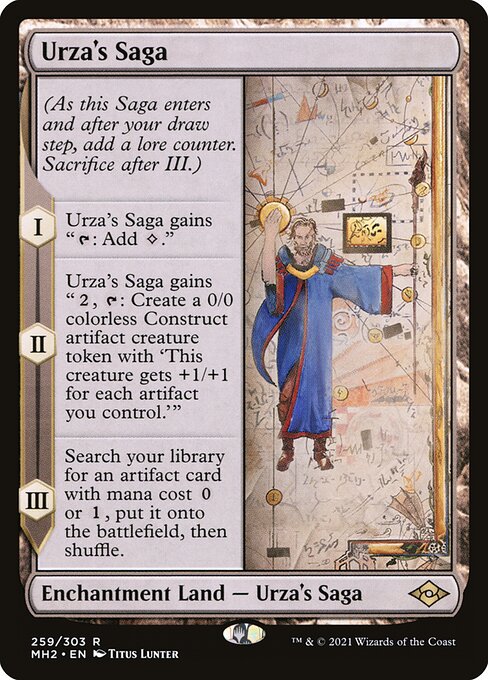
Haywire Mite and Urza’s Saga
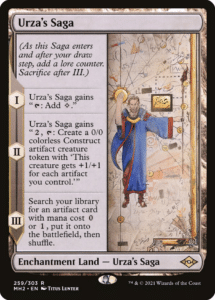
Anyone who’s been playing Modern knows that Urza’s Saga is one of the most format-defining cards that exist. This seemingly innocent land can easily win games on its own. Not only does it allow you to play out early threats, but Urza’s Saga can also create multiple Constructs that commonly threaten to end the game on their own in a few turns if left alone. Finally, the last mode on Saga allows you to search for a silver bullet to ruin your opponent’s plans. This card is so powerful that sideboard tech is commonly used to target this card, like
Alpine Moon
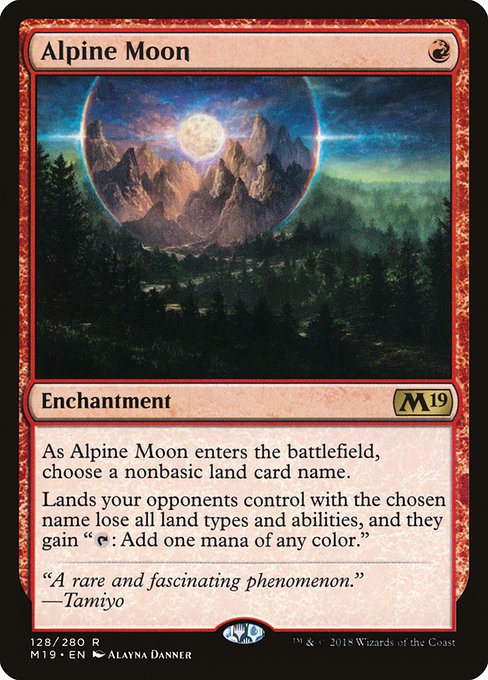 Alpine Moon
As this enchantment enters, choose a nonbasic land card name.
Alpine Moon
As this enchantment enters, choose a nonbasic land card name.
Lands your opponents control with the chosen name lose all land types and abilities, and they gain "{T}: Add one mana of any color."
,
Force of Vigor
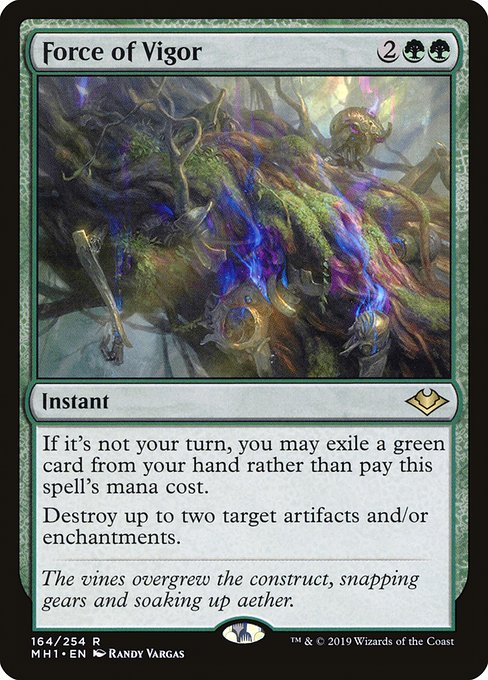 Force of Vigor
If it's not your turn, you may exile a green card from your hand rather than pay this spell's mana cost.
Force of Vigor
If it's not your turn, you may exile a green card from your hand rather than pay this spell's mana cost.
Destroy up to two target artifacts and/or enchantments.
,
Blood Moon
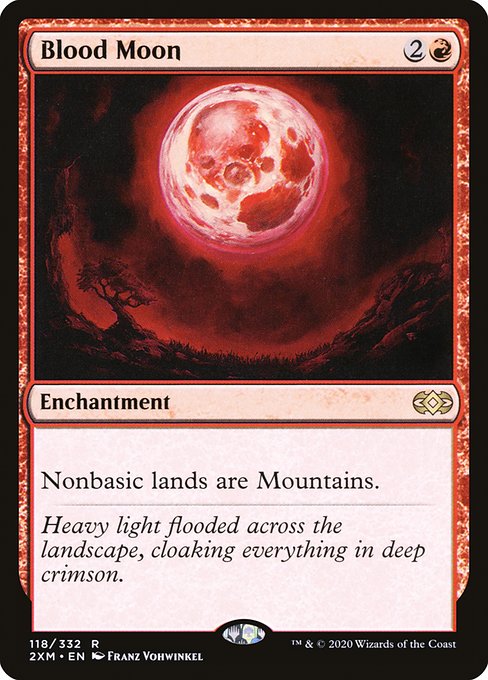 Blood Moon
Nonbasic lands are Mountains.
,
Spreading Seas
Blood Moon
Nonbasic lands are Mountains.
,
Spreading Seas
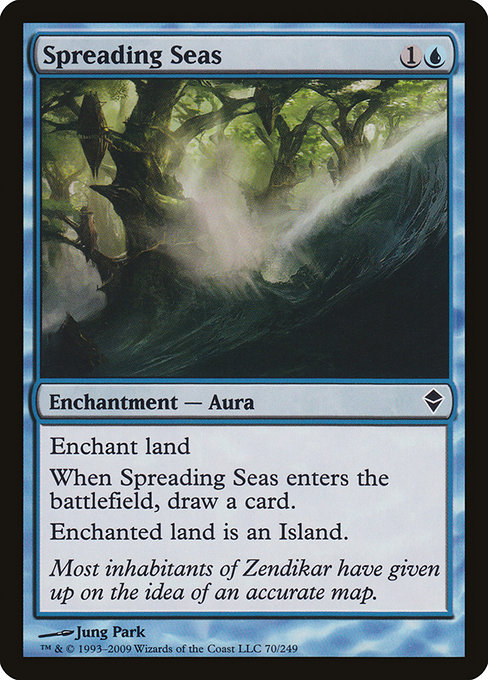 Spreading Seas
Enchant land
Spreading Seas
Enchant land
When this Aura enters, draw a card.
Enchanted land is an Island.
,
Wear/Tear
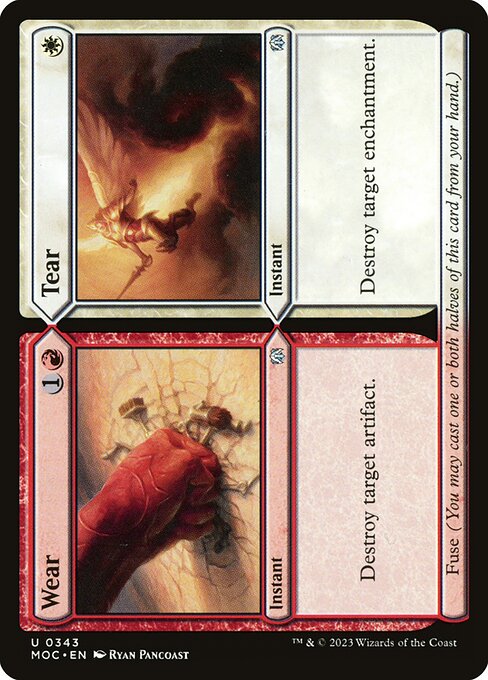 Wear/Tear
Destroy target artifact.
Wear/Tear
Destroy target artifact.
Fuse (You may cast one or both halves of this card from your hand.)
, and more.
Up to this point, Urza’s Saga has not been able to tutor a card that can remove an opponent’s Saga. Haywire Mite can completely warp the format into a race to win the Saga war. Whoever resolves their search first gets to exile the opponent’s Saga before it does too much damage. While this stops the incoming Constructs and the search effect, it also just blows a land up, which is devastating in its own right.
While Urza’s Saga is undeniably the most significant target that Haywire Mite has, there are a lot of major cards that it hits within the Modern metagame that can tip the scales heavily in your favor. Here is a list of examples:
-
Urza’s Saga
 Urza’s Saga
(As this Saga enters and after your draw step, add a lore counter. Sacrifice after III.)
Urza’s Saga
(As this Saga enters and after your draw step, add a lore counter. Sacrifice after III.)
I — This Saga gains "{T}: Add {C}."
II — This Saga gains "{2}, {T}: Create a 0/0 colorless Construct artifact creature token with 'This token gets +1/+1 for each artifact you control.'"
III — Search your library for an artifact card with mana cost {0} or {1}, put it onto the battlefield, then shuffle. -
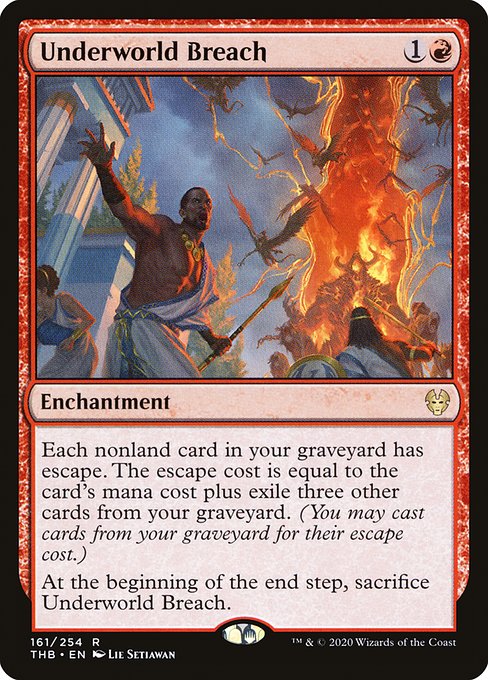
Underworld Breach
Underworld Breach
Each nonland card in your graveyard has escape. The escape cost is equal to the card's mana cost plus exile three other cards from your graveyard. (You may cast cards from your graveyard for their escape cost.)
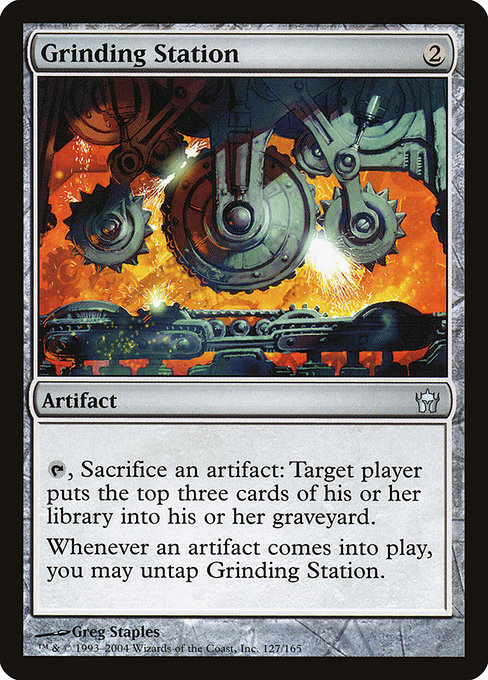
At the beginning of the end step, sacrifice this enchantment. / Grinding Station
Grinding Station
{T}, Sacrifice an artifact: Target player mills three cards.
Whenever an artifact enters, you may untap this artifact. (this exiles, so exiling a Station can be surprisingly effective postboard if they cut down on Stations. That said, Underworld Breach is, and usually will be, the target you need to watch out for) -
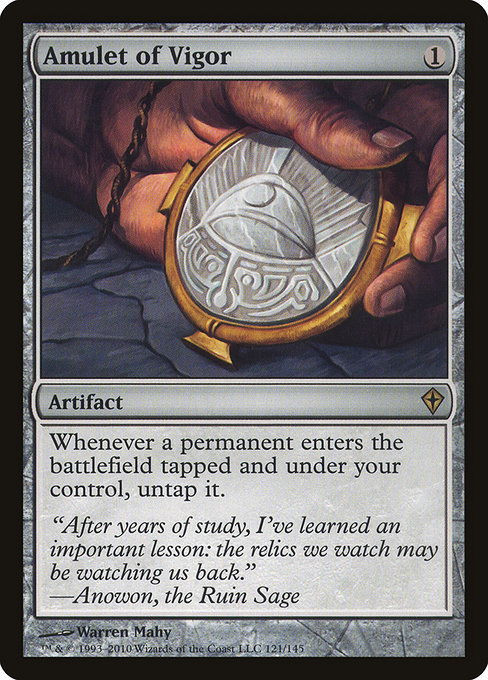
Amulet of Vigor
Amulet of Vigor
Whenever a permanent you control enters tapped, untap it.
-
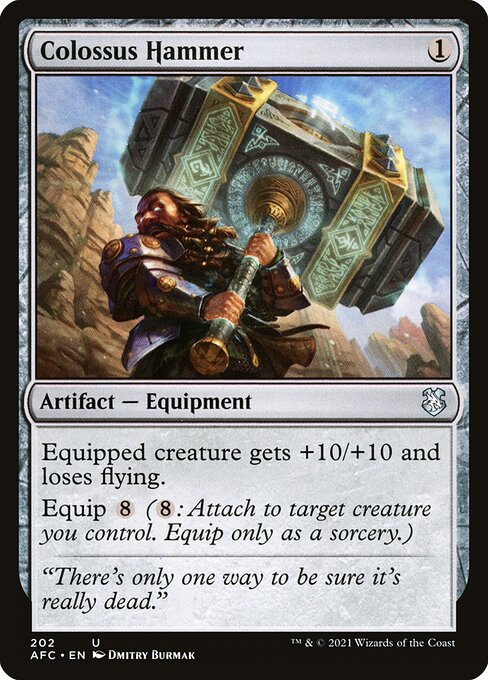
Colossus Hammer
Colossus Hammer
Equipped creature gets +10/+10 and loses flying.
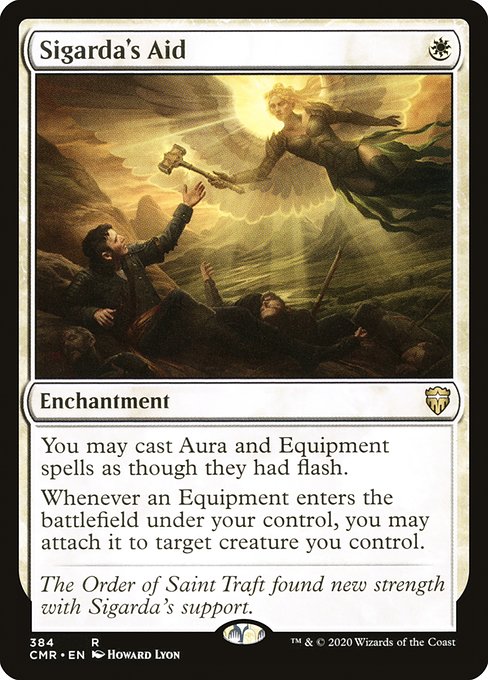
Equip {8} ({8}: Attach to target creature you control. Equip only as a sorcery.) / Sigarda’s Aid
Sigarda’s Aid
You may cast Aura and Equipment spells as though they had flash.
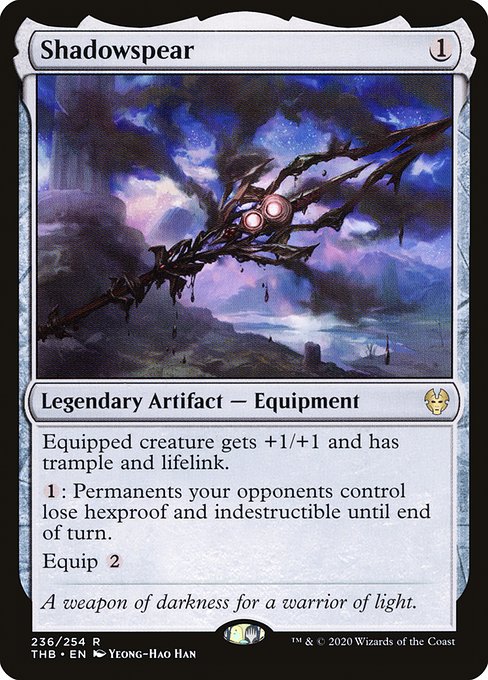
Whenever an Equipment you control enters, you may attach it to target creature you control. / Shadowspear
Shadowspear
Equipped creature gets +1/+1 and has trample and lifelink.
{1}: Permanents your opponents control lose hexproof and indestructible until end of turn.
Equip {2} -
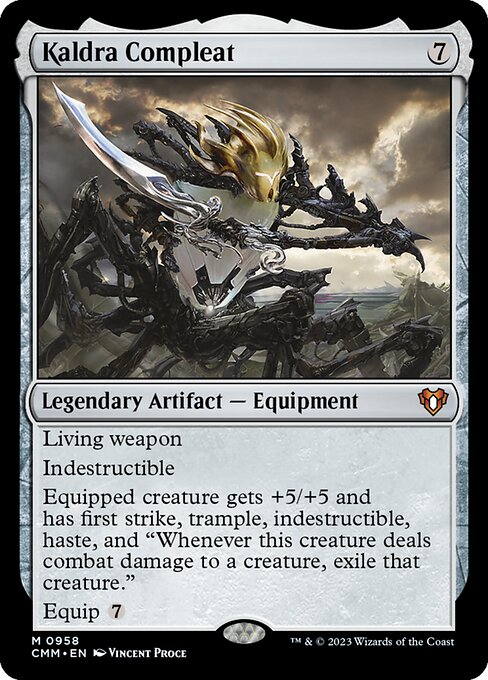
Kaldra Compleat
Kaldra Compleat
Living weapon
Indestructible
Equipped creature gets +5/+5 and has first strike, trample, indestructible, haste, and "Whenever this creature deals combat damage to a creature, exile that creature."
Equip {7} (this exiles, getting around the Indestructible clause) -
Fable of the Mirror-Breaker
Fable of the Mirror-Breaker
(As this Saga enters and after your draw step, add a lore counter.)
I — Create a 2/2 red Goblin Shaman creature token with "Whenever this token attacks, create a Treasure token."
II — You may discard up to two cards. If you do, draw that many cards.
III — Exile this Saga, then return it to the battlefield transformed under your control. (pre-flip) - Treasure token targets to an
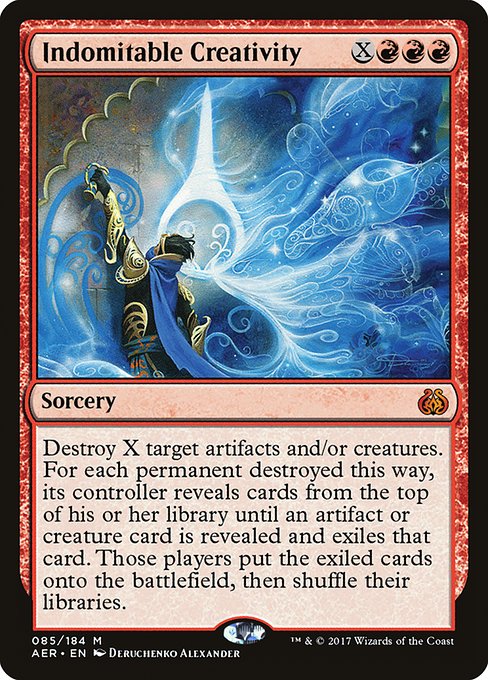
Indomitable Creativity
Indomitable Creativity
Destroy X target artifacts and/or creatures. For each permanent destroyed this way, its controller reveals cards from the top of their library until an artifact or creature card is revealed and exiles that card. Those players put the exiled cards onto the battlefield, then shuffle.
-
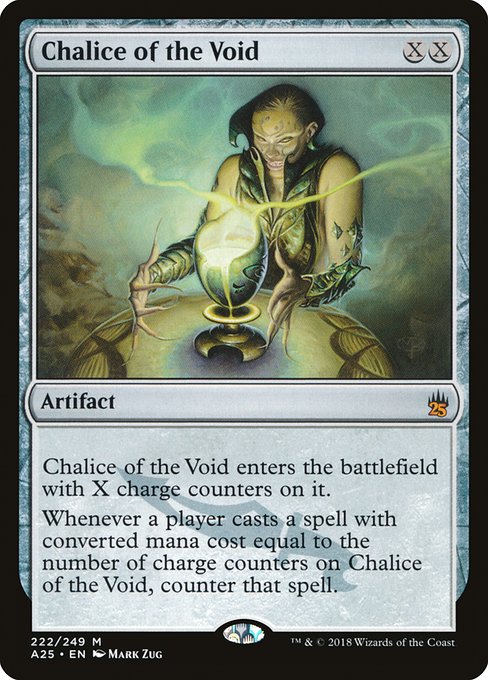
Chalice of the Void
Chalice of the Void
This artifact enters with X charge counters on it.
Whenever a player casts a spell with mana value equal to the number of charge counters on this artifact, counter that spell. -
Blood Moon
Blood Moon
Nonbasic lands are Mountains.
(if you can pay the green)
-
Alpine Moon
Alpine Moon
As this enchantment enters, choose a nonbasic land card name.
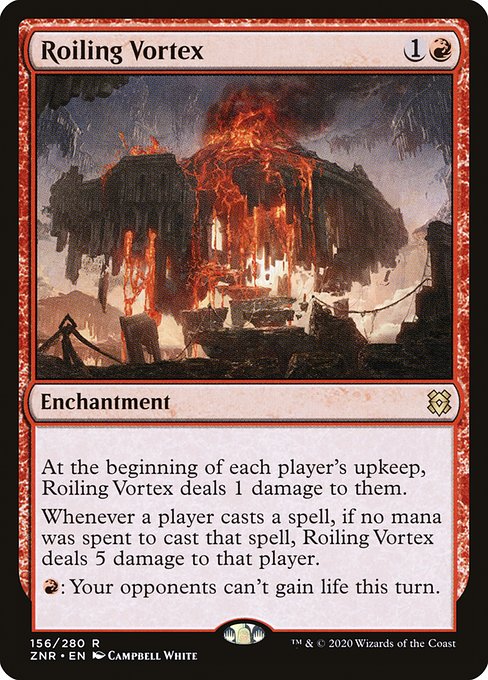
Lands your opponents control with the chosen name lose all land types and abilities, and they gain "{T}: Add one mana of any color." / Roiling Vortex
Roiling Vortex
At the beginning of each player's upkeep, this enchantment deals 1 damage to them.
Whenever a player casts a spell, if no mana was spent to cast that spell, this enchantment deals 5 damage to that player.
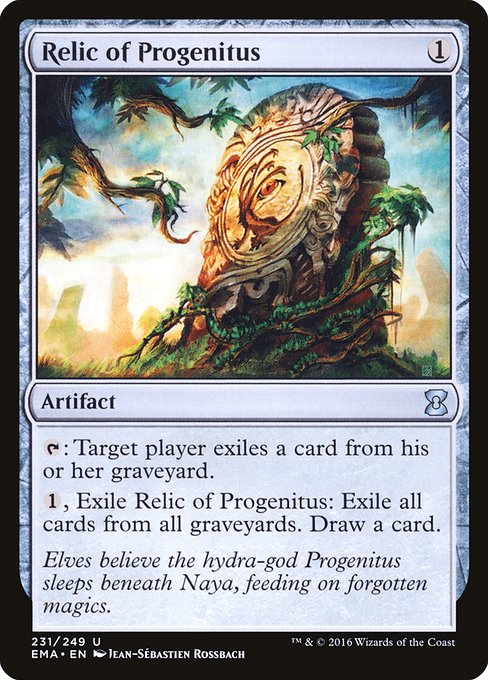
{R}: Your opponents can't gain life this turn. / Relic of Progenitus
Relic of Progenitus
{T}: Target player exiles a card from their graveyard.
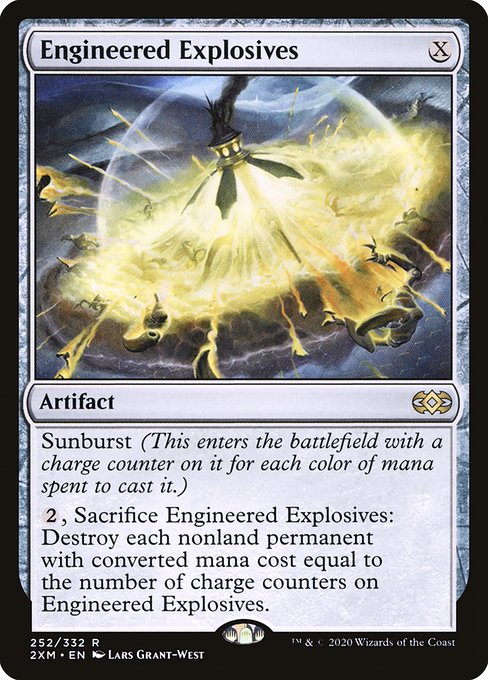
{1}, Exile this artifact: Exile all graveyards. Draw a card. / Engineered Explosives
Engineered Explosives
Sunburst (This artifact enters with a charge counter on it for each color of mana spent to cast it.)
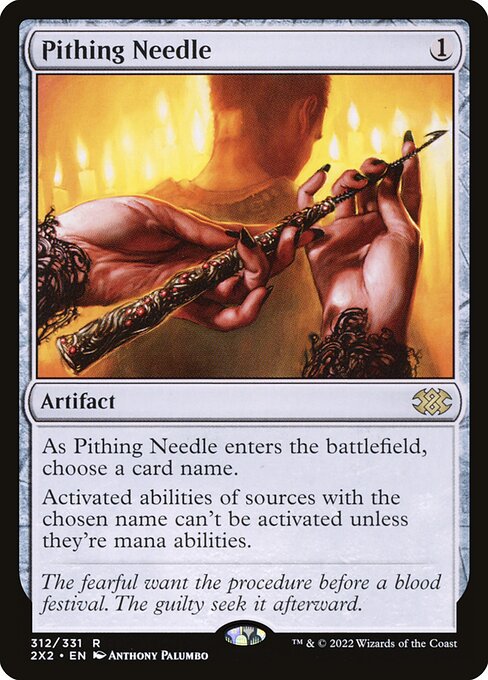
{2}, Sacrifice this artifact: Destroy each nonland permanent with mana value equal to the number of charge counters on this artifact. / Pithing Needle
Pithing Needle
As this artifact enters, choose a card name.
Activated abilities of sources with the chosen name can't be activated unless they're mana abilities. /other common sideboard tech -
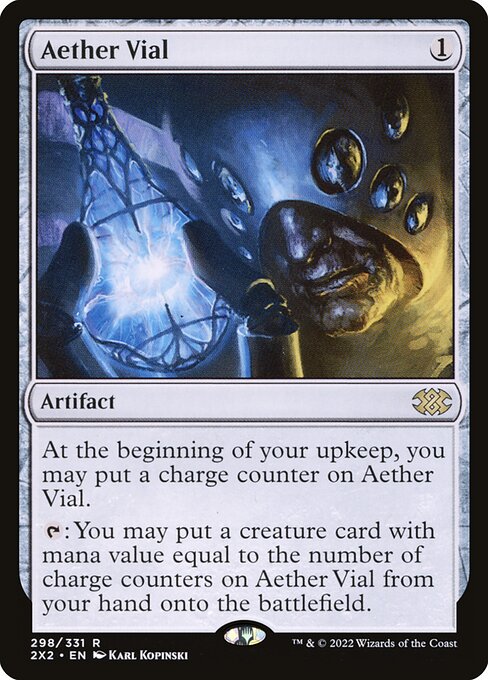
Aether Vial
Aether Vial
At the beginning of your upkeep, you may put a charge counter on this artifact.
{T}: You may put a creature card with mana value equal to the number of charge counters on this artifact from your hand onto the battlefield. - The Indestructible Artifact Land Cycle
-
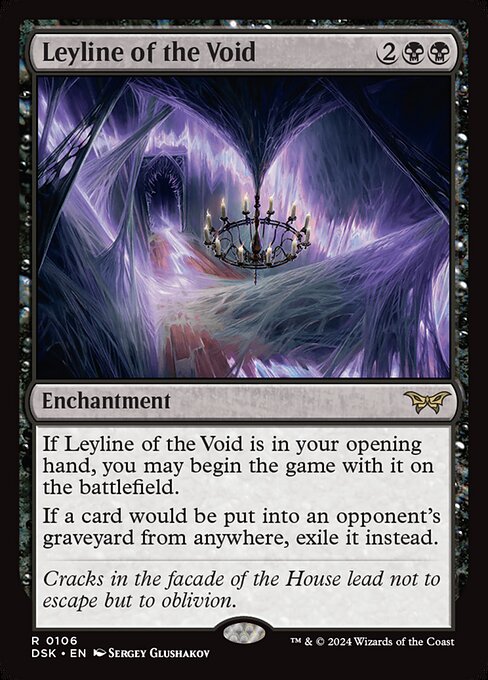
Leyline of the Void
Leyline of the Void
If this card is in your opening hand, you may begin the game with it on the battlefield.
If a card would be put into an opponent's graveyard from anywhere, exile it instead. /other Leylines
The Downsides
Ironically, the most significant downside for Haywire Mite in the current Modern metagame is that it needs green to use. Currently, there aren’t a lot of green Saga decks seeing a ton of play. There are some decks that this slots beautifully into, however. We’ll take some time to highlight those here:
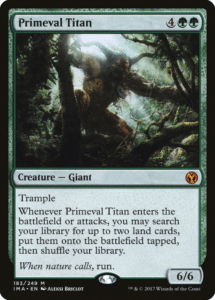
While Amulet Titan is a prominent home for this card, it’s questionable how much the deck will actually search for it. Unless there’s a piece of hate stopping Amulet Titan from winning the game outright, the deck is much more likely to go for an Amulet of Vigor. Blood Moon destroying Urza’s Saga before it goes to search for the Mite makes things a bit more awkward. This card will definitely see some play in Titan, but I’m not sure if it’s going to reinvent the archetype in any way.
Read More: Long-Lost $1000 Fan-Made MTG Card Reappears on the Market!
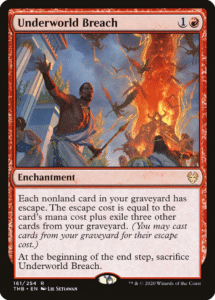
The best colors for Underworld Breach are undeniably Jeskai. While I pale compared to the best Breach pilots out there, I managed to qualify for Regionals coming later this month with it.
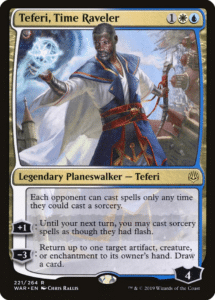
Teferi, Time Raveler is integral in many of the common matchups you’ll find in the Modern metagame. Between the Counterspell war found when playing against Murktide and the Cascade decks found in
Living End
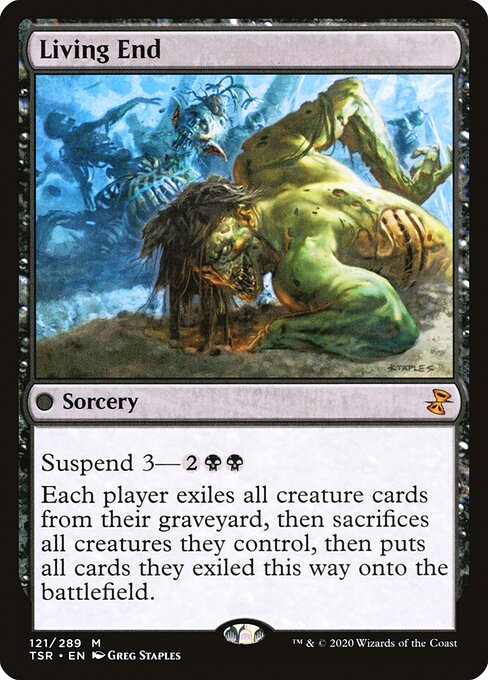 Living End
Suspend 3—{2}{B}{B}
Living End
Suspend 3—{2}{B}{B}
Each player exiles all creature cards from their graveyard, then sacrifices all creatures they control, then puts all cards they exiled this way onto the battlefield.
and Crashing Footfalls, this card fixes a ton of holes the deck would have without it.
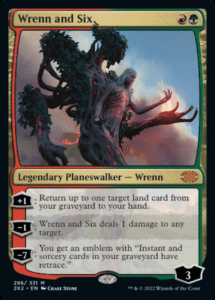
That said, Modern MTG streamer Aspiring Spike did create an RG Breach list that features Wrenn and Six. This deck’s game plan varies slightly from the Jeskai version, but Haywire Mite probably finds a maindeckable home in this archetype. Any deck with Wrenn and Six and Urza’s Saga is probably very interested in this card.
An interesting question that emerges with Mite being a potential mirror tech is if a four-colored Underworld Breach list could be in our future? I already occasionally find Urza’s Saga annoying in a three-colored deck, so if this deck exists, it will likely need to be built by someone with a lot of experience. Emry, Lurker of the Loch, can recur this hate piece if someone finds a way to make this, so there is an insane amount of potential on the table.
Read More: Devastating Hacking Wave is Draining MTG Accounts Worldwide
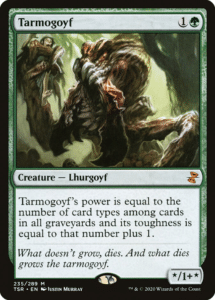
This brings us to Zoomer Jund, or Jund Saga, which is probably the most natural home for Haywire Mite. This deck has not had the best results, but Mite does give it the strict upgrade it direly needs. Scam and other non-artifact decks could keep this from being a maindeckable card, however.
Haywire Mite in Commander
As many MTG players have pointed out already, Haywire Mite is almost a strict upgrade to the Commander favorite Caustic Caterpillar. Haywire Mite notably cannot kill artifact creatures, but Urza’s Saga does see a good amount of Commander play. Mana rocks are also incredibly popular in this format, alongside annoying enchantments like Rhystic Study and Smothering Tithe. There should be some solid targets for Haywire Mite to hit on a board of four people.
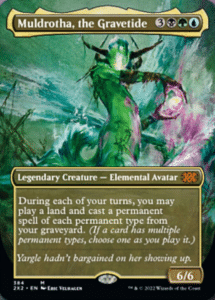
Things get slightly more ridiculous when you put Haywire Mite in a deck that can recur it. Muldrotha, for example, can replay this card every turn as either an artifact or a creature. That means you could loop this effect twice in a turn if there are some particularly nasty things it takes care of.
Read More: MTG Fans Afraid of Potential Disaster Caused by These Spoilers
Formats Where Mite Misses the Mark
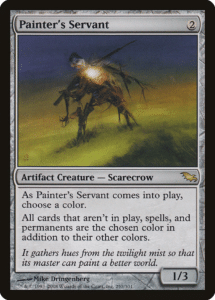
The two common archetypes in Legacy that likes to play Urza’s Saga is Painter and 8-Cast. Named after the core card Painter’s Servant, Painter is generally a mono-red combo deck aimed at milling your opponent out with Painter’s Servant and Grindstone. Since the deck is Mono Red, Haywire Mite is a bit of a miss. 8-Cast, a primarily blue artifact deck, also plays Urza’s Saga. That said, artifact and enchantment destruction is not as relevant in Legacy.
Additionally, the best deck in Legacy doesn’t really play any artifacts. Izzet Delver is the deck to watch out for in this format, and having a dead card against the best deck in the format is not where you want to be.
Ultimately, Haywire Mite stands to make an impact in Modern, Standard, Limited, and Commander. Pioneer is a bit of a question mark, and Legacy and Vintage are probably too much for the little guy. The Brothers’ War looks to be an incredibly powerful set as it is, so there’s likely to be more than just this card that impacts MTG, like the card pictured above that has the community worried will break Pioneer into pieces. That said, this Mite will likely be on the frontlines.