
Violent Outburst got banned in Modern recently. Anyone who was following Modern at the time could have seen this coming from a mile away. Thanks to a
Fury
 Fury
Double strike
Fury
Double strike
When this creature enters, it deals 4 damage divided as you choose among any number of target creatures and/or planeswalkers.
Evoke—Exile a red card from your hand.
ban that, honestly, feels like it might have backfired overall,
Crashing Footfalls
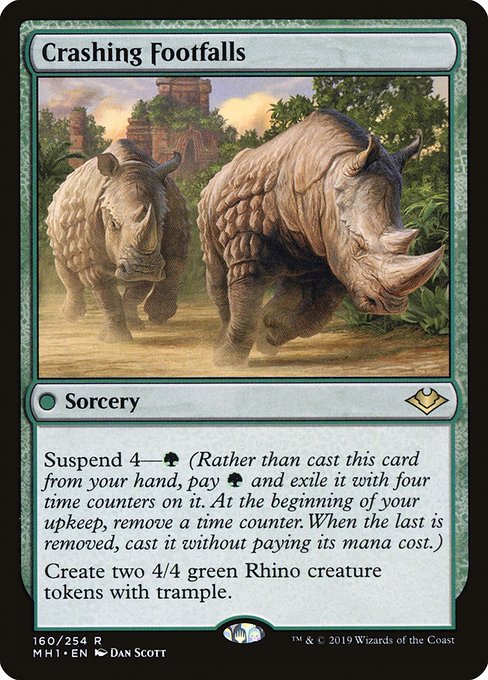 Crashing Footfalls
Suspend 4—{G} (Rather than cast this card from your hand, pay {G} and exile it with four time counters on it. At the beginning of your upkeep, remove a time counter. When the last is removed, you may cast it without paying its mana cost.)
Crashing Footfalls
Suspend 4—{G} (Rather than cast this card from your hand, pay {G} and exile it with four time counters on it. At the beginning of your upkeep, remove a time counter. When the last is removed, you may cast it without paying its mana cost.)
Create two 4/4 green Rhino creature tokens with trample.
decks got really out of hand.
Leyline of the Guildpact
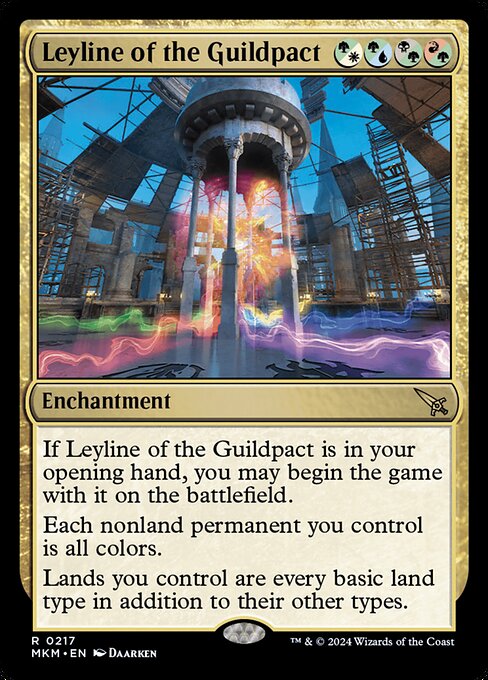 Leyline of the Guildpact
If this card is in your opening hand, you may begin the game with it on the battlefield.
Leyline of the Guildpact
If this card is in your opening hand, you may begin the game with it on the battlefield.
Each nonland permanent you control is all colors.
Lands you control are every basic land type in addition to their other types.
also hit the scene during this time, putting Crashing Footfalls strategies that incorporated the combo between the Leyline and
Scion of Draco
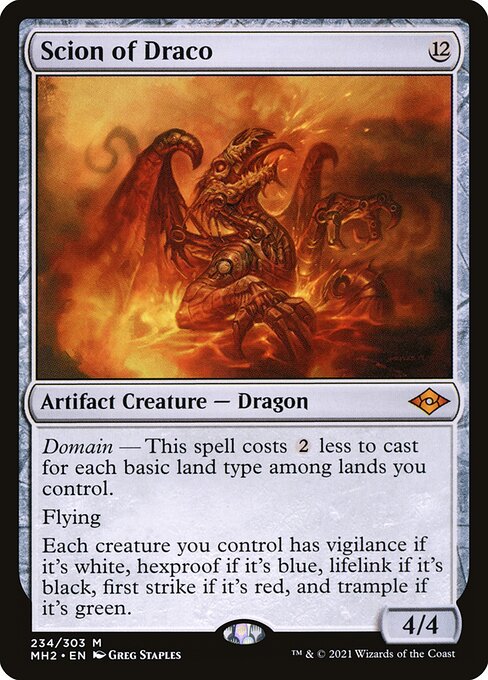 Scion of Draco
Domain — This spell costs {2} less to cast for each basic land type among lands you control.
Scion of Draco
Domain — This spell costs {2} less to cast for each basic land type among lands you control.
Flying
Each creature you control has vigilance if it's white, hexproof if it's blue, lifelink if it's black, first strike if it's red, and trample if it's green.
so much further ahead than almost every other deck.
If you wanted to eat Crashing Footfalls decks for breakfast, your best option was yet another deck that relied on the power of Violent Outburst:
Living End
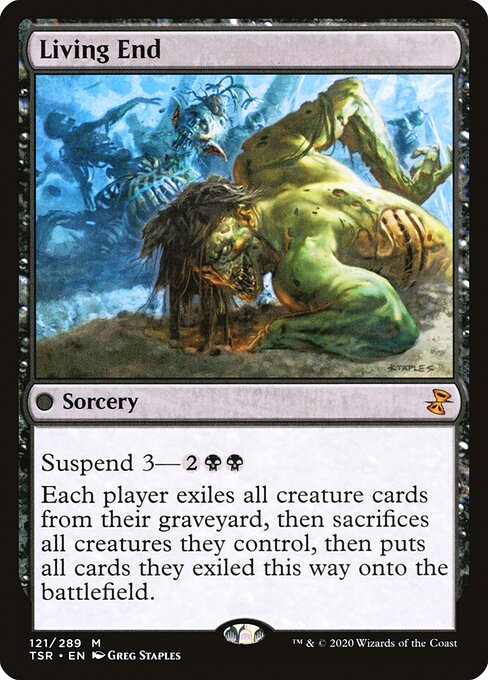 Living End
Suspend 3—{2}{B}{B}
Living End
Suspend 3—{2}{B}{B}
Each player exiles all creature cards from their graveyard, then sacrifices all creatures they control, then puts all cards they exiled this way onto the battlefield.
. While Crashing Footfalls is much more resilient to targeted hate, Living End’s Cascade spell completely deletes any board presence that the Crashing Footfalls deck established, while generally presenting a clock that will end you in one or two turns.
That said, Living End relies on Violent Outburst much more than Crashing Footfalls does. At least, that was the consensus when Violent Outburst was banned. Crashing Footfalls gets a lot weaker, but maybe plays on. Living End, on the other hand, was a strategy that many expected to become obsolete.
Every popular archetype is going to have a few individuals who absolutely fall in love with it. These players push the envelope with new tech, and are generally responsible for a lot of innovations in any metagame. Living End also has these individuals behind it, and players did not give up on the archetype. They innovated and persisted.
Is Living End the powerhouse that it used to be? Actually, kind of, but not for the reasons you may think. While the deck is indeed weaker than it used to be, players aren’t prepared for it anymore. As a result, the deck has seen a resurgence in both Magic Online and in paper play. Here’s what changed, and why it still works.
An Ardent Plea
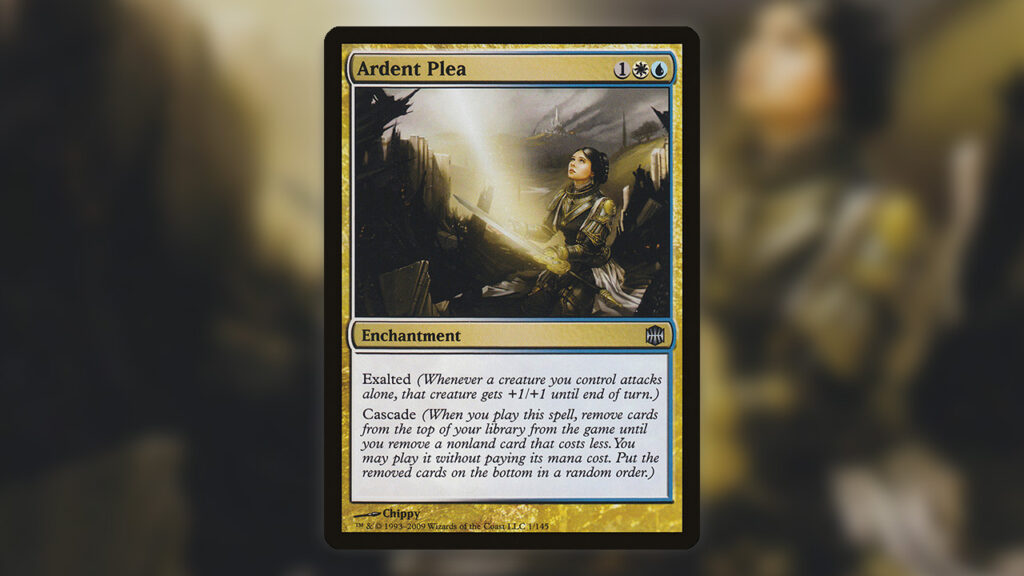
Recently, I managed to take
Living End
Living End
Suspend 3—{2}{B}{B}
Each player exiles all creature cards from their graveyard, then sacrifices all creatures they control, then puts all cards they exiled this way onto the battlefield.
and top four a local regional with it. Despite this result, I wouldn’t recommend you copy my personal 75, as it was a slap-dashed creation built on the way to the event. Instead, the above list from a Modern Challenge is a significantly more reasonable starting point, with some considerations.
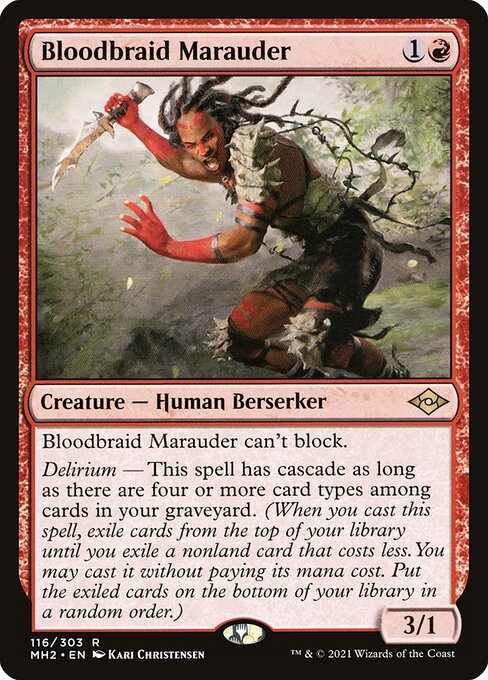
The established path forward for Living End archetypes is to splash white for Ardent Plea. While there is a build of the deck going around that wants to use
Bloodbraid Marauder
 Bloodbraid Marauder
This creature can't block.
Bloodbraid Marauder
This creature can't block.
Delirium — This spell has cascade as long as there are four or more card types among cards in your graveyard. (When you cast this spell, exile cards from the top of your library until you exile a nonland card that costs less. You may cast it without paying its mana cost. Put the exiled cards on the bottom in a random order.)
, setting up Delirium can be problematic.
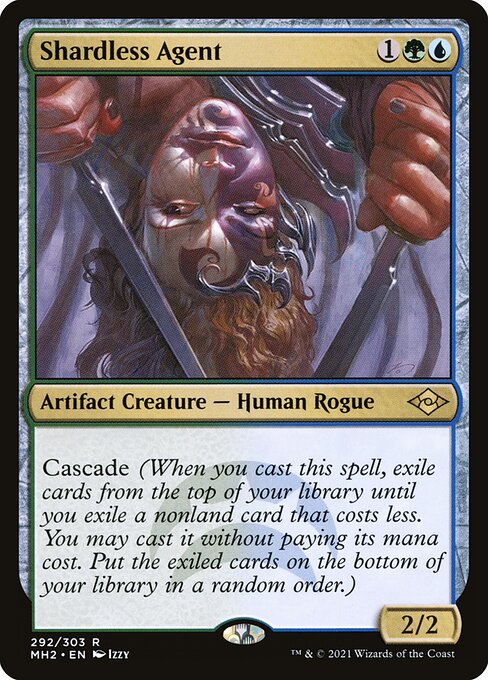
Shardless Agent
 Shardless Agent
Cascade (When you cast this spell, exile cards from the top of your library until you exile a nonland card that costs less. You may cast it without paying its mana cost. Put the exiled cards on the bottom in a random order.)
, the original Cascade spell that remains unbanned, will also become much less consistent if you do not have Delirium established.
Shardless Agent
Cascade (When you cast this spell, exile cards from the top of your library until you exile a nonland card that costs less. You may cast it without paying its mana cost. Put the exiled cards on the bottom in a random order.)
, the original Cascade spell that remains unbanned, will also become much less consistent if you do not have Delirium established.
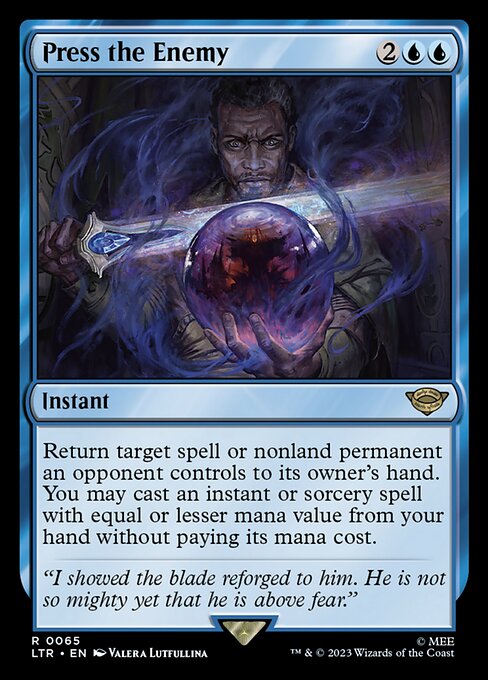
Press the Enemy
 Press the Enemy
Return target spell or nonland permanent an opponent controls to its owner's hand. You may cast an instant or sorcery spell with equal or lesser mana value from your hand without paying its mana cost.
was another option that Living End players experimented with. While I personally believe that the card has potential in the sideboard, you do need Living End in your hand for this to work, making it an inconsistent option. On the plus side, however, you can cast Living End at instant speed with this card, which makes it an enticing option for slower matchups.
Press the Enemy
Return target spell or nonland permanent an opponent controls to its owner's hand. You may cast an instant or sorcery spell with equal or lesser mana value from your hand without paying its mana cost.
was another option that Living End players experimented with. While I personally believe that the card has potential in the sideboard, you do need Living End in your hand for this to work, making it an inconsistent option. On the plus side, however, you can cast Living End at instant speed with this card, which makes it an enticing option for slower matchups.
Ardent Plea, while still a weaker option than Violent Outburst, does replace the card a lot better than the other options. You still have eight Cascade options that, as long as Living End is in your library, will be cast consistently.
Other Innovations
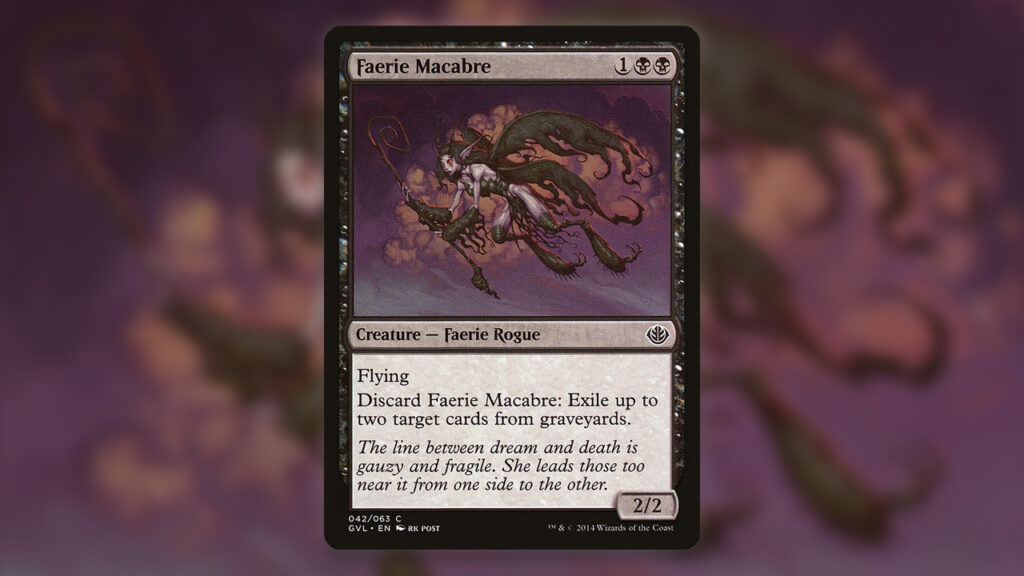
Faerie Macabre is the new fairy showing up in a ton of Living End decks. This card is all over the place in Legacy and Pauper, but does not show up too much in Modern. Why now?
There are a few matchups in the current Modern metagame that do require you to have a plan for them.
Goryo’s Vengeance
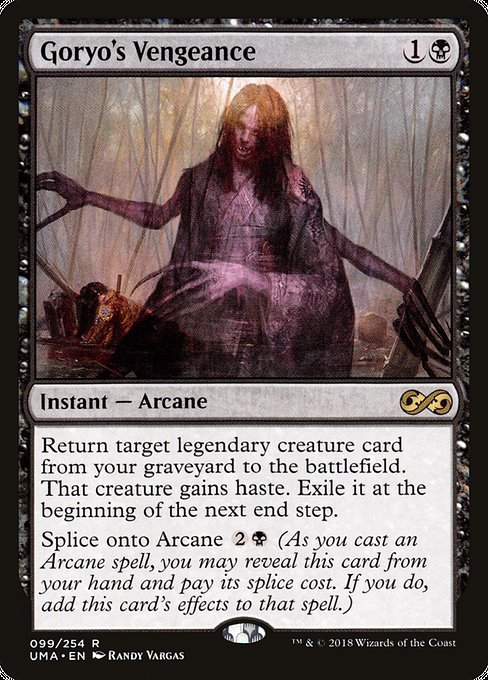 Goryo’s Vengeance
Return target legendary creature card from your graveyard to the battlefield. That creature gains haste. Exile it at the beginning of the next end step.
Goryo’s Vengeance
Return target legendary creature card from your graveyard to the battlefield. That creature gains haste. Exile it at the beginning of the next end step.
Splice onto Arcane {2}{B} (As you cast an Arcane spell, you may reveal this card from your hand and pay its splice cost. If you do, add this card's effects to that spell.)
, in particular, can be incredibly problematic if you do not have something to address your opponent’s graveyard. Since all of your Living Ends are generally cast at Sorcery speed now, you basically allow your Goryo’s Vengeance opponent to do their thing for free and untap with an
Atraxa, Grand Unifier
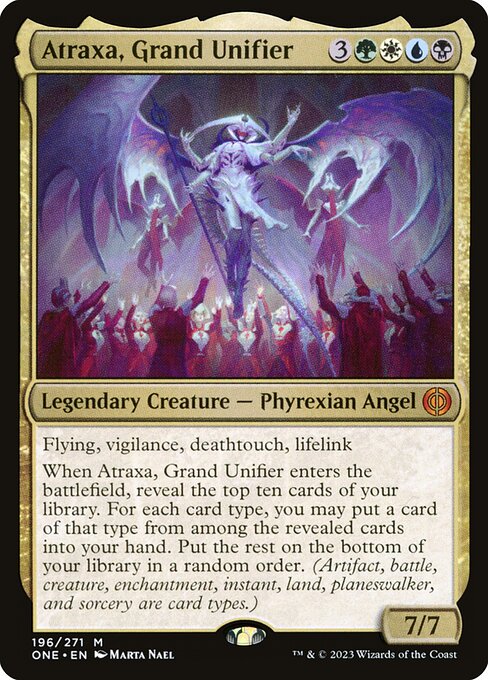 Atraxa, Grand Unifier
Flying, vigilance, deathtouch, lifelink
Atraxa, Grand Unifier
Flying, vigilance, deathtouch, lifelink
When Atraxa enters, reveal the top ten cards of your library. For each card type, you may put a card of that type from among the revealed cards into your hand. Put the rest on the bottom of your library in a random order. (Artifact, battle, creature, enchantment, instant, land, planeswalker, and sorcery are card types.)
or a
Griselbrand
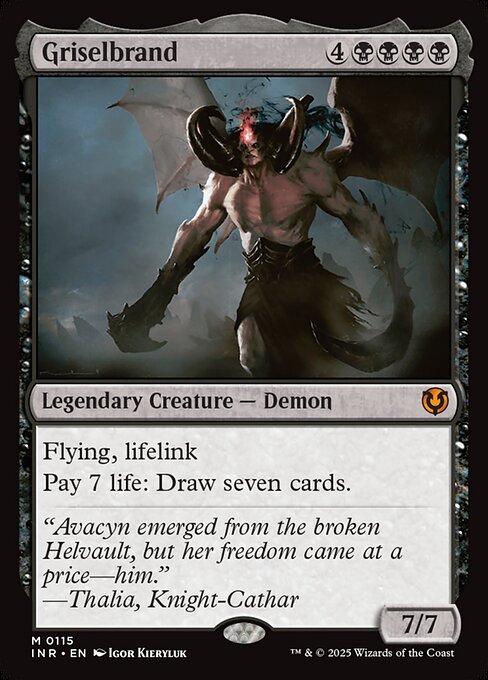 Griselbrand
Flying, lifelink
Griselbrand
Flying, lifelink
Pay 7 life: Draw seven cards.
.
Faerie Macabre does a good job of patching things up. Remove the few bombs in the Goryo player’s graveyard and clear the way for your Living End to resolve. This also stops their Plan A of reviving their creatures themselves.
Personally, I am so fond of this card that I am running four of them in a two/two split between the main deck and sideboard. Macabre can stop Goryo’s, Creativity, and Titan players from discarding their big threats into their graveyard. It can also make Grief Scam strategies awkward when playing against Rakdos Scam. Removing Dauthi Voidwalkers from opposing graveyards is also incredibly important.
If you need mass graveyard hate for a matchup, Leyline of the Void performs better. That said, outside of maybe Yawgmoth combo and the mirror, just exiling a few cards is generally good enough. Faerie Macabre is also always active, unlike the Leyline which generally needs to be in your opening hand. Endurance is another option that many of the better Living End players also continue to use in sideboards.
Read More: Versatile Thunder Junction Enchantment is an Awesome Combo Finisher!
A New Big Player
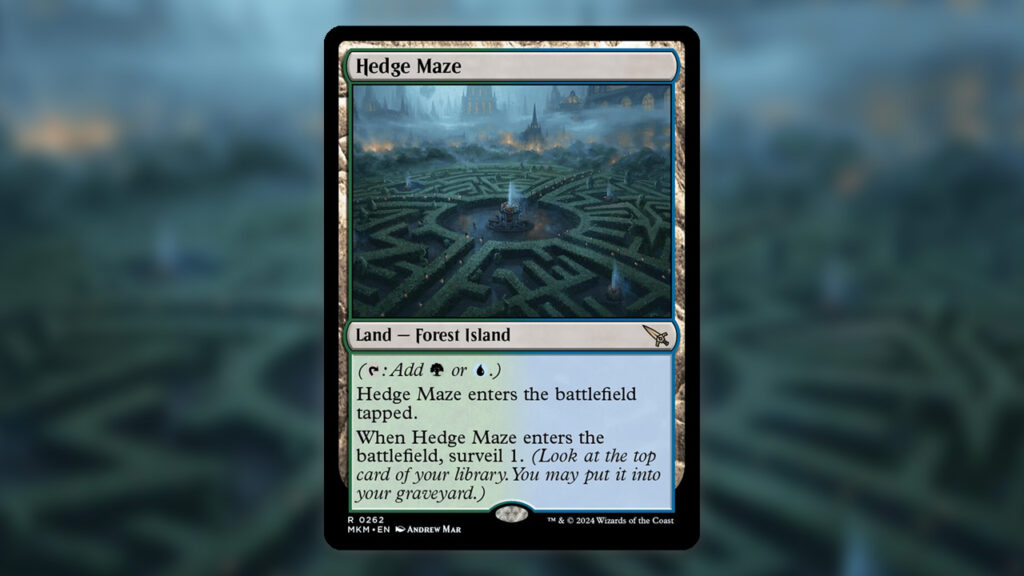
If you want to play Living End in the current state of Modern, we need to talk about Surveil lands. These are incredibly powerful tools for you to utilize, as they can dump extra fodder into your graveyard. Sadly, these lands are also very good when used against you.
There will be games where a last-second Surveil land puts an
Archon of Cruelty
 Archon of Cruelty
Flying
Archon of Cruelty
Flying
Whenever this creature enters or attacks, target opponent sacrifices a creature or planeswalker of their choice, discards a card, and loses 3 life. You draw a card and gain 3 life.
, Atraxa, Grand Unifier, or Dauthi Voidwalker into an opponent’s graveyard, and you will likely lose those games. Fortunately, this doesn’t seem to happen too often in practice, at least not in response to the Living End itself. Still, this should be something that you’re conscious of going forward if you’re going to play Living End.
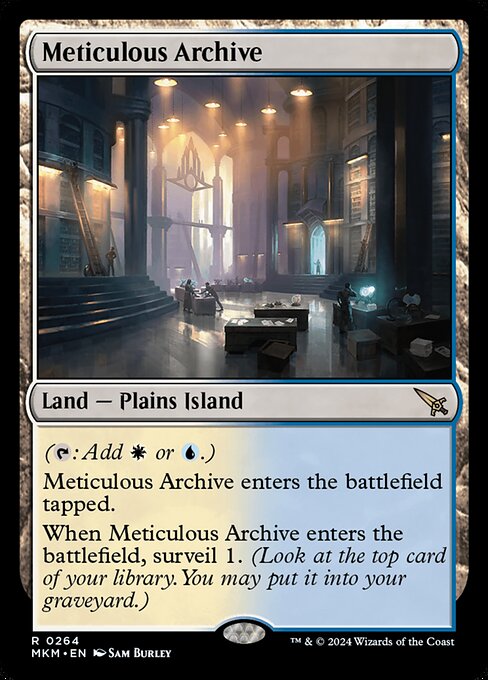
As far as utilizing Surveil Lands goes, I decided to use two in my list, which is pretty standard in Living End’s current configurations. I went for a 1/1 split of Hedge Maze and
Meticulous Archive
 Meticulous Archive
({T}: Add {W} or {U}.)
Meticulous Archive
({T}: Add {W} or {U}.)
This land enters tapped.
When this land enters, surveil 1. (Look at the top card of your library. You may put it into your graveyard.)
, which I would heavily recommend over using two Hedge Mazes. Being able to find White for Plea while Surveilling can net a lot of value.
Four Color Living End?
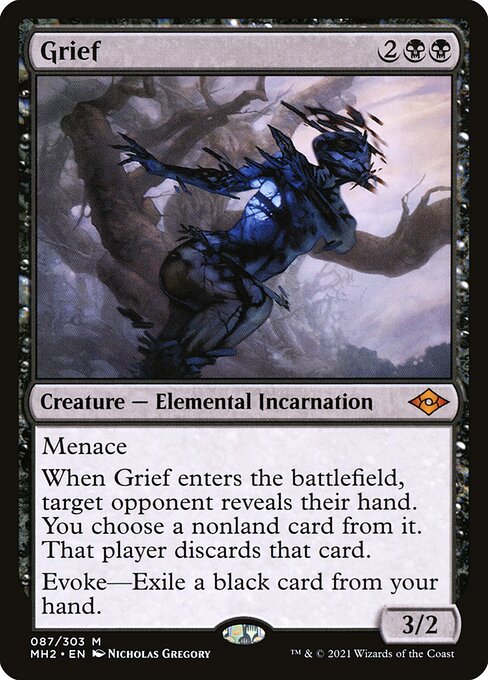
While most successful Living End lists are currently Bant (splashing black for Evoking
Grief
 Grief
Menace
Grief
Menace
When this creature enters, target opponent reveals their hand. You choose a nonland card from it. That player discards that card.
Evoke—Exile a black card from your hand.
), there are some people playing both Ardent Plea and some castable black cards in their main deck. A common complaint from many players who tried the Bant variant of this deck (me included) is that a lack of black mana can put you in an awkward spot. You will never be able to hard cast any of your black cards, which can result in some dead draws if you’re forced to play un-optimally to get yourself out of lethal situations.
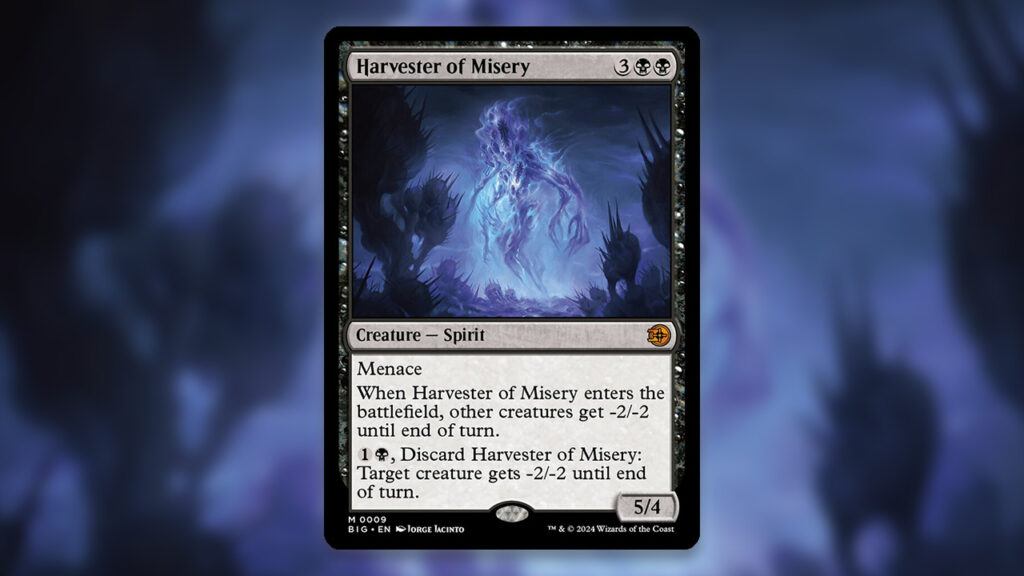
The black variant of Living End utilizing Troll of Kazad-Dum among other cards is largely unexplored, but some people are beginning to try it. The big reason for this change is the new Big Score card Harvester of Misery. Able to pitch itself to kill a creature, Harvester of Misery can deal with early
Ragavan, Nimble Pilferer
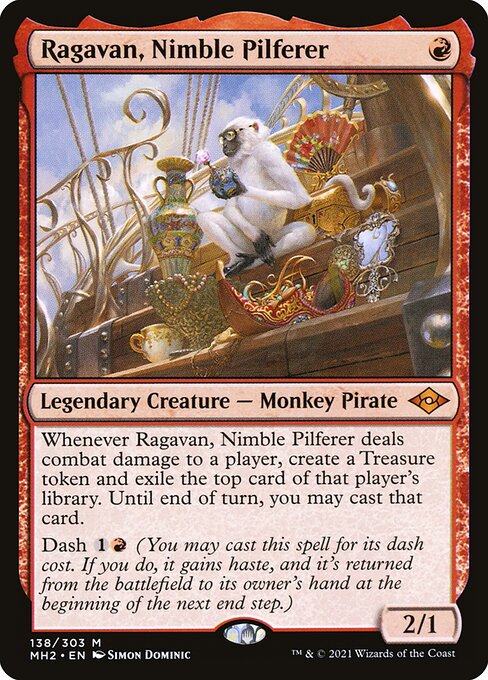 Ragavan, Nimble Pilferer
Whenever Ragavan deals combat damage to a player, create a Treasure token and exile the top card of that player's library. Until end of turn, you may cast that card.
Ragavan, Nimble Pilferer
Whenever Ragavan deals combat damage to a player, create a Treasure token and exile the top card of that player's library. Until end of turn, you may cast that card.
Dash {1}{R} (You may cast this spell for its dash cost. If you do, it gains haste, and it's returned from the battlefield to its owner's hand at the beginning of the next end step.)
s out of Zoo, Murktide, and Scam, which can occasionally become an issue. Killing
Slickshot Show-Off
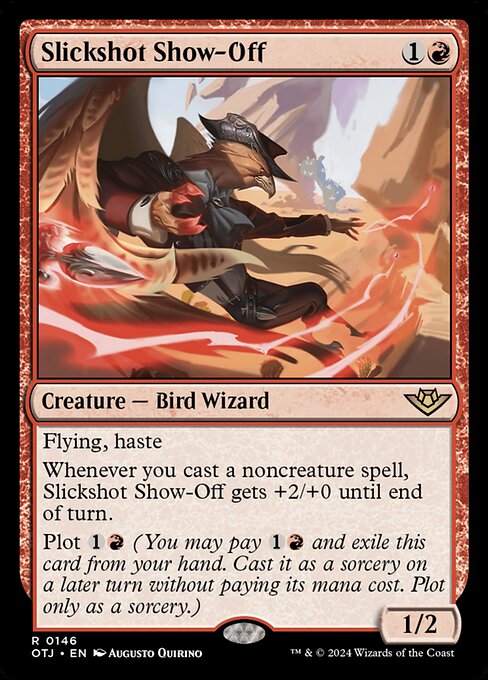 Slickshot Show-Off
Flying, haste
Slickshot Show-Off
Flying, haste
Whenever you cast a noncreature spell, this creature gets +2/+0 until end of turn.
Plot {1}{R} (You may pay {1}{R} and exile this card from your hand. Cast it as a sorcery on a later turn without paying its mana cost. Plot only as a sorcery.)
out of Prowess can also buy you a lot of time. That said, Zoo and Prowess, in my experience, are strong matchups for you.
The biggest thing that Harvester of Misery deals with, however, is Dauthi Voidwalker. Not only does this creature remove Voidwalkers that are in play, but its ETB effect can also kill Voidwalkers that enter from the grave when Living End resolves. This is enough to swing the Rakdos Scam matchup on its head.
Read More: Incredibly Popular Cowboy Bebop MTG Crossover Comes to North America!
Weaknesses

Graveyard hate still, and always will, exist in the Modern format. Tron decks still run their
Relic of Progenitus
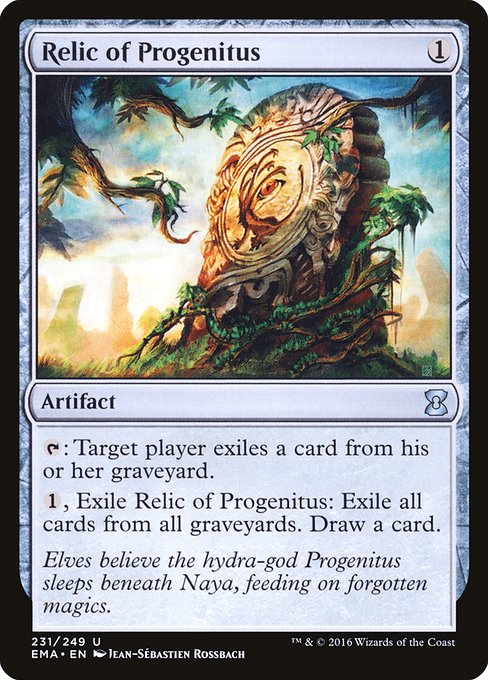 Relic of Progenitus
{T}: Target player exiles a card from their graveyard.
Relic of Progenitus
{T}: Target player exiles a card from their graveyard.
{1}, Exile this artifact: Exile all graveyards. Draw a card.
, and other random pieces of graveyard hate to combat Goryo’s Vengeance is not unusual to see coming out of decks. Cascade hate, on the other hand, is mostly gone.
Chalice of the Void
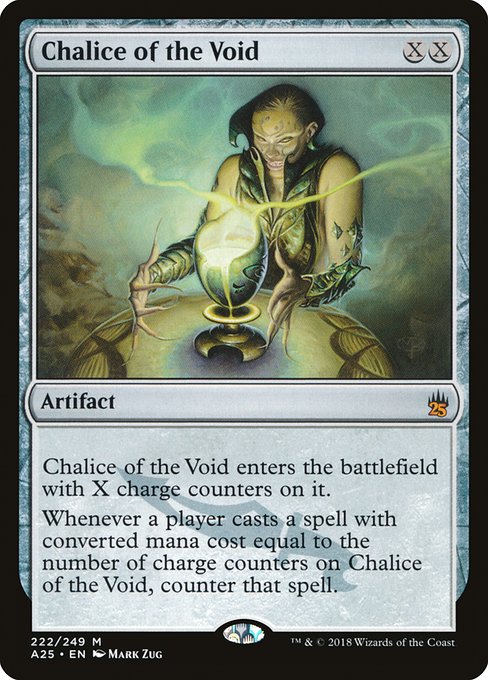 Chalice of the Void
This artifact enters with X charge counters on it.
Chalice of the Void
This artifact enters with X charge counters on it.
Whenever a player casts a spell with mana value equal to the number of charge counters on this artifact, counter that spell.
is not a common card to see in sideboards anymore.
The biggest change to Living End in a detrimental way is that the deck has a much more difficult time playing around countermagic now. Violent Outburst is gone, so
Force of Negation
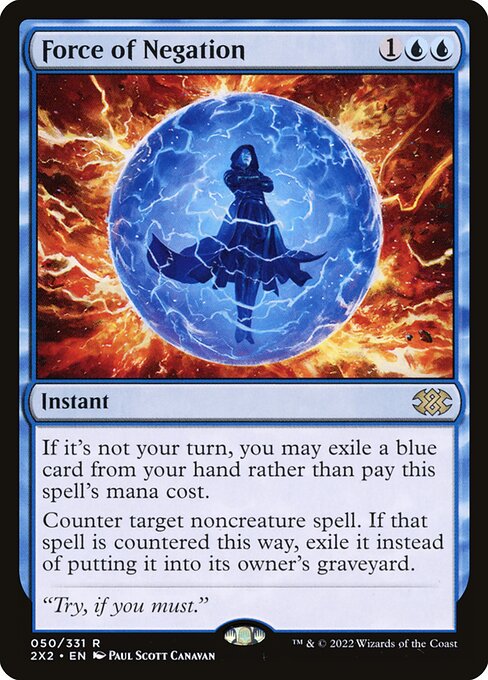 Force of Negation
If it's not your turn, you may exile a blue card from your hand rather than pay this spell's mana cost.
Force of Negation
If it's not your turn, you may exile a blue card from your hand rather than pay this spell's mana cost.
Counter target noncreature spell. If that spell is countered this way, exile it instead of putting it into its owner's graveyard.
can no longer be used as a way to protect your Living End. All of your attempts are now being made at Sorcery speed, and while Force of Negation and
Subtlety
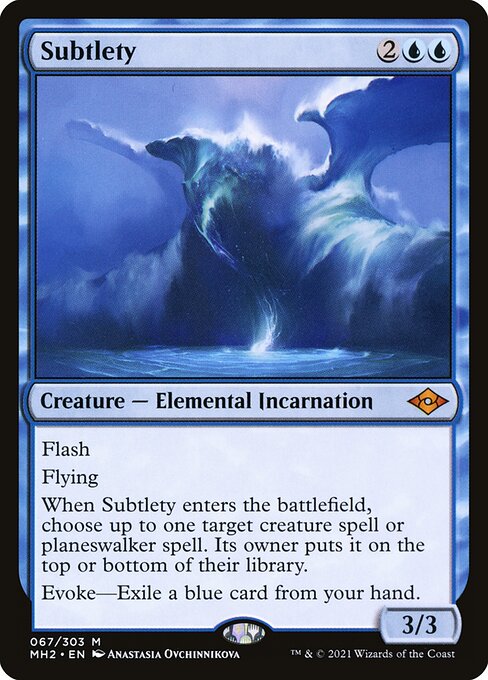 Subtlety
Flash
Subtlety
Flash
Flying
When this creature enters, choose up to one target creature spell or planeswalker spell. Its owner puts it on their choice of the top or bottom of their library.
Evoke—Exile a blue card from your hand.
can keep up with opposing tempo plays that may result from you being tapped out, it doesn’t exactly stack the playing field for you the way that it used to.
Living End still has tools to combat countermagic, but they’re much worse than they used to be.
Mystical Dispute
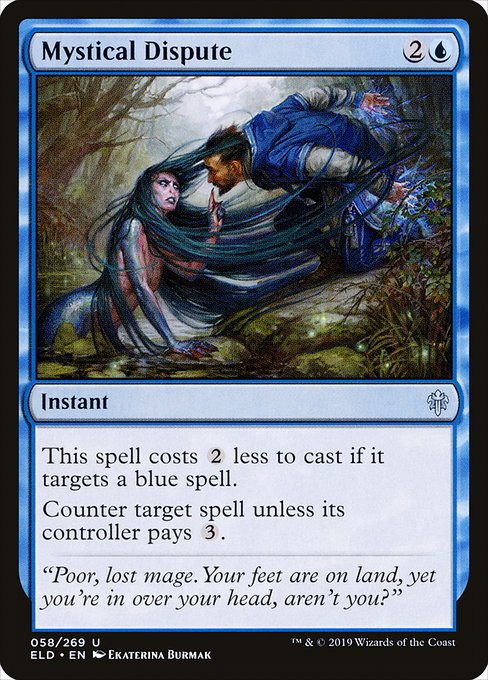 Mystical Dispute
This spell costs {2} less to cast if it targets a blue spell.
Mystical Dispute
This spell costs {2} less to cast if it targets a blue spell.
Counter target spell unless its controller pays {3}.
can stop any non-
Flusterstorm
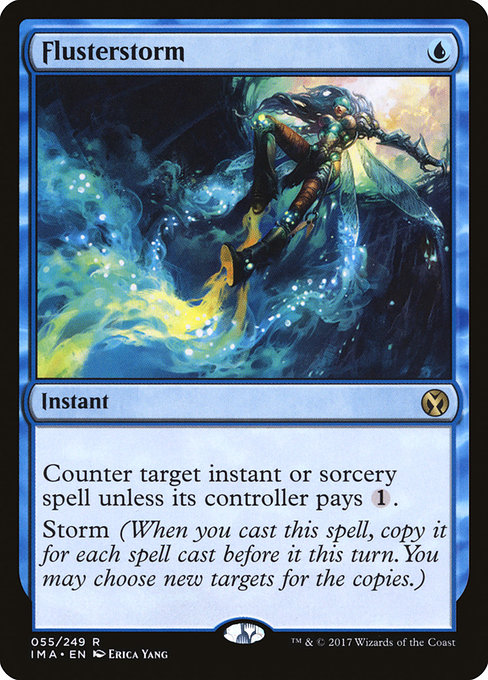 Flusterstorm
Counter target instant or sorcery spell unless its controller pays {1}.
Flusterstorm
Counter target instant or sorcery spell unless its controller pays {1}.
Storm (When you cast this spell, copy it for each spell cast before it this turn. You may choose new targets for the copies.)
spells trying to stop you from going off.
Teferi, Time Raveler
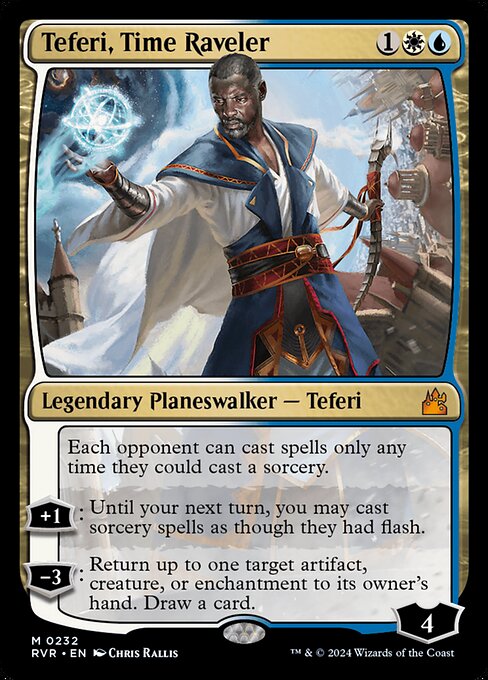 Teferi, Time Raveler
Each opponent can cast spells only any time they could cast a sorcery.
Teferi, Time Raveler
Each opponent can cast spells only any time they could cast a sorcery.
+1: Until your next turn, you may cast sorcery spells as though they had flash.
−3: Return up to one target artifact, creature, or enchantment to its owner's hand. Draw a card.
is a sorcery speed threat you can employ that opponents are forced to answer in some way. Grief is still your best asset here, allowing you to clear the way without issues.
So… Were the Bans Needed?
Absolutely. Cascade decks would have completely taken over the metagame without Violent Outburst being addressed. Living End preys on Crashing Footfalls, and Crashing Footfalls basically preys on everything else. In fact, the ban to Violent Outburst may have been even better than players expected.
The criticism with the Outburst ban was that it completely killed the Living End archetype. With current results, that is obviously not the case. This deck is consistently topping various online and paper tournaments, showing that it can still compete with the best decks in the room.
Is Living End still a problem? I would argue that, while the deck continues to be strong, players who are prepared for it can beat it easily. Currently, I would rate Living End as a top deck, with the caveat that it gets a lot of its power from being ignored.
Ultimately, Living End feels very well-equipped to deal with the current Modern metagame, but if players begin to turn their heads toward this archetype, it may need to disappear for some time. The archetype is undeniably worse than it was pre-Outburst ban, but the lack of attention being placed on it does allow for a lot of opportunities.
Read More: Best MTG Board Wipes for Commander