
Each time that a new premier MTG set comes out, there are often a handful of new mechanics introduced to the game. Abilities such as Craft and Descend from The Lost Caverns of Ixalan, for instance, add intriguing new elements to Limited and Constructed environments alike. In some cases, though, certain mechanics or cards end up being significantly more powerful than initially thought.
We’ve seen groups of cards such as the original Companions from Ikoria completely warp multiple Constructed formats around them. In Modern, using Cascade cards such as
Shardless Agent
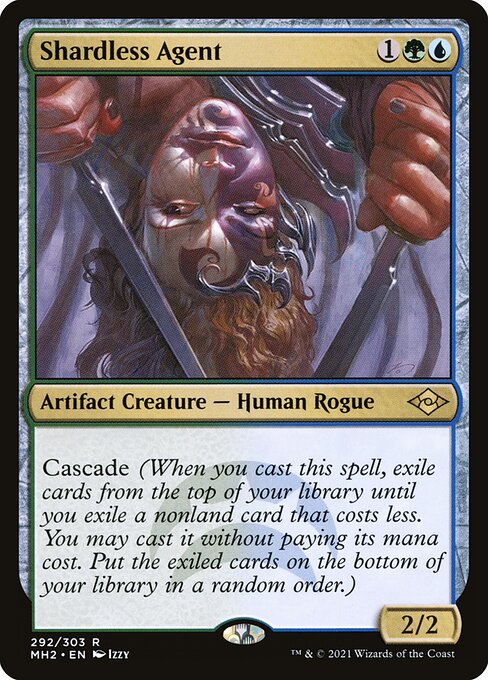 Shardless Agent
Cascade (When you cast this spell, exile cards from the top of your library until you exile a nonland card that costs less. You may cast it without paying its mana cost. Put the exiled cards on the bottom in a random order.)
to reliably cast Suspend cards like
Living End
Shardless Agent
Cascade (When you cast this spell, exile cards from the top of your library until you exile a nonland card that costs less. You may cast it without paying its mana cost. Put the exiled cards on the bottom in a random order.)
to reliably cast Suspend cards like
Living End
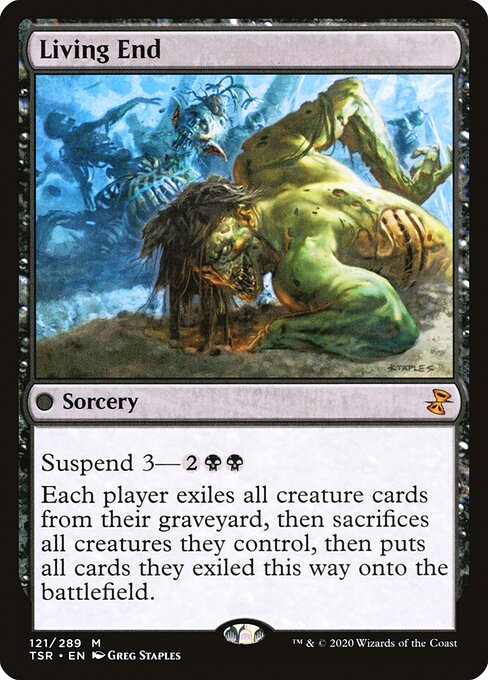 Living End
Suspend 3—{2}{B}{B}
Living End
Suspend 3—{2}{B}{B}
Each player exiles all creature cards from their graveyard, then sacrifices all creatures they control, then puts all cards they exiled this way onto the battlefield.
or
Crashing Footfalls
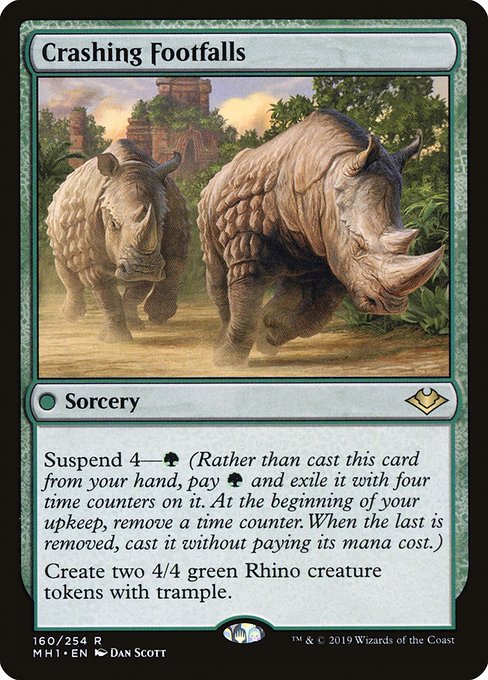 Crashing Footfalls
Suspend 4—{G} (Rather than cast this card from your hand, pay {G} and exile it with four time counters on it. At the beginning of your upkeep, remove a time counter. When the last is removed, you may cast it without paying its mana cost.)
Crashing Footfalls
Suspend 4—{G} (Rather than cast this card from your hand, pay {G} and exile it with four time counters on it. At the beginning of your upkeep, remove a time counter. When the last is removed, you may cast it without paying its mana cost.)
Create two 4/4 green Rhino creature tokens with trample.
is still a dominant strategy. Well, The Lost Caverns of Ixalan has brought a similar mechanic to Pioneer and Historic on MTG Arena, and players are already beginning to heavily exploit it.
Almost immediately after cards from The Lost Caverns of Ixalan became available on Magic Online, Pioneer players began tinkering with a
Quintorius Kand
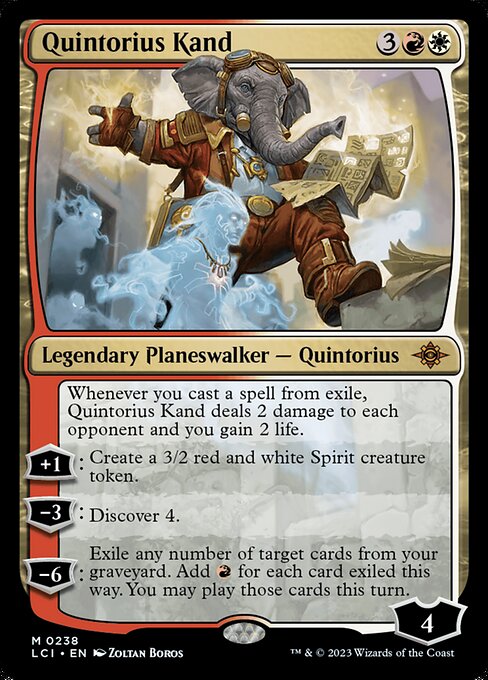 Quintorius Kand
Whenever you cast a spell from exile, Quintorius Kand deals 2 damage to each opponent and you gain 2 life.
Quintorius Kand
Whenever you cast a spell from exile, Quintorius Kand deals 2 damage to each opponent and you gain 2 life.
+1: Create a 3/2 red and white Spirit creature token.
−3: Discover 4.
−6: Exile any number of target cards from your graveyard. Add {R} for each card exiled this way. You may play those cards this turn.
shell with the goal of abusing Quintorius’s static and -3 abilities. The idea was to use Quintorius to Discover 4, hitting various ways to copy Quintorius. Each time one of these cards, like
Spark Double
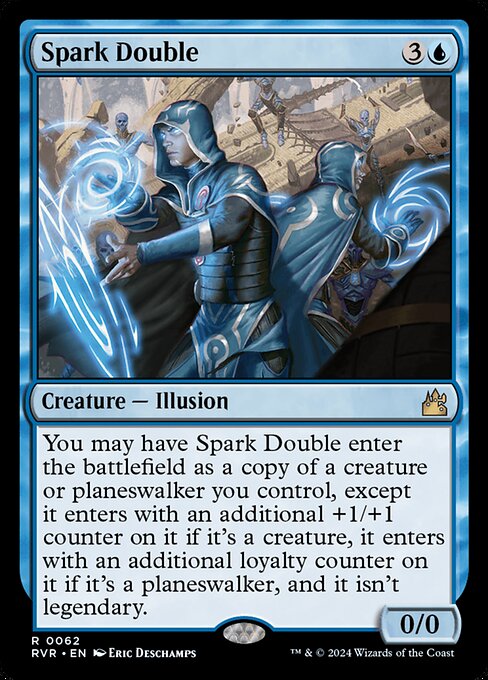 Spark Double
You may have this creature enter as a copy of a creature or planeswalker you control, except it enters with an additional +1/+1 counter on it if it's a creature, it enters with an additional loyalty counter on it if it's a planeswalker, and it isn't legendary.
, was cast from exile, the opponent would lose life. Then, you could use the copies to Discover 4 again, and drain the opponent of all their life by repeating this process. It appears players have already adapted this strategy even further, making it faster and more consistent.
Spark Double
You may have this creature enter as a copy of a creature or planeswalker you control, except it enters with an additional +1/+1 counter on it if it's a creature, it enters with an additional loyalty counter on it if it's a planeswalker, and it isn't legendary.
, was cast from exile, the opponent would lose life. Then, you could use the copies to Discover 4 again, and drain the opponent of all their life by repeating this process. It appears players have already adapted this strategy even further, making it faster and more consistent.
Moving Off of Quintorius
While Quintorius combo had some major upside as a strategy, it suffered from the fact that it was relatively easy to break up. Once you activated Quintorius’s -3 ability, your opponent could simply respond with any burn spell to finish it off. Then, your
Clone
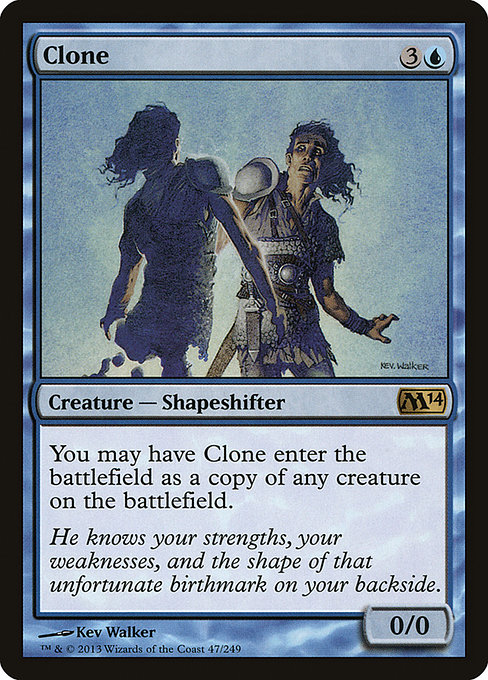 Clone
You may have this creature enter as a copy of any creature on the battlefield.
variants wouldn’t be able to copy Quintorius. Additionally, your opponents could simply counter Quintorius or use
Thoughtseize
Clone
You may have this creature enter as a copy of any creature on the battlefield.
variants wouldn’t be able to copy Quintorius. Additionally, your opponents could simply counter Quintorius or use
Thoughtseize
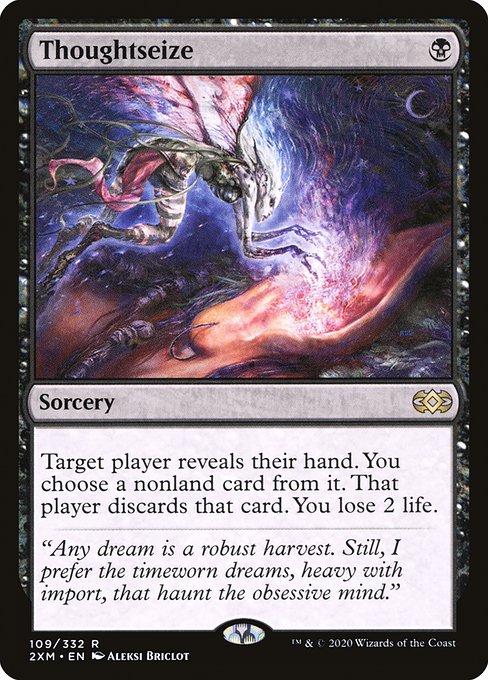 Thoughtseize
Target player reveals their hand. You choose a nonland card from it. That player discards that card. You lose 2 life.
to strip it from your hand.
Thoughtseize
Target player reveals their hand. You choose a nonland card from it. That player discards that card. You lose 2 life.
to strip it from your hand.
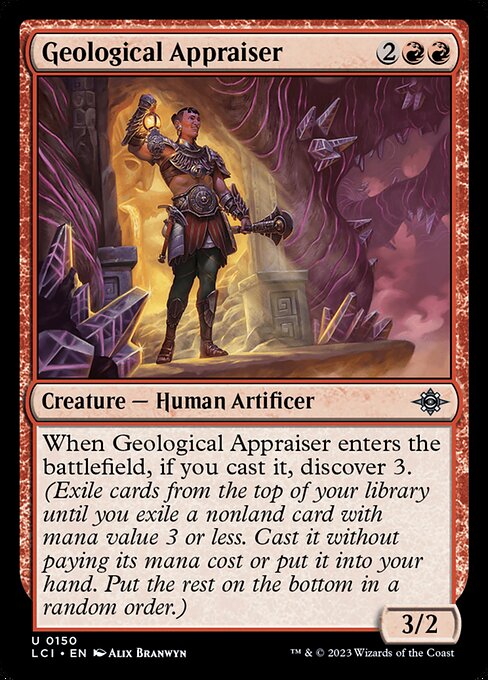
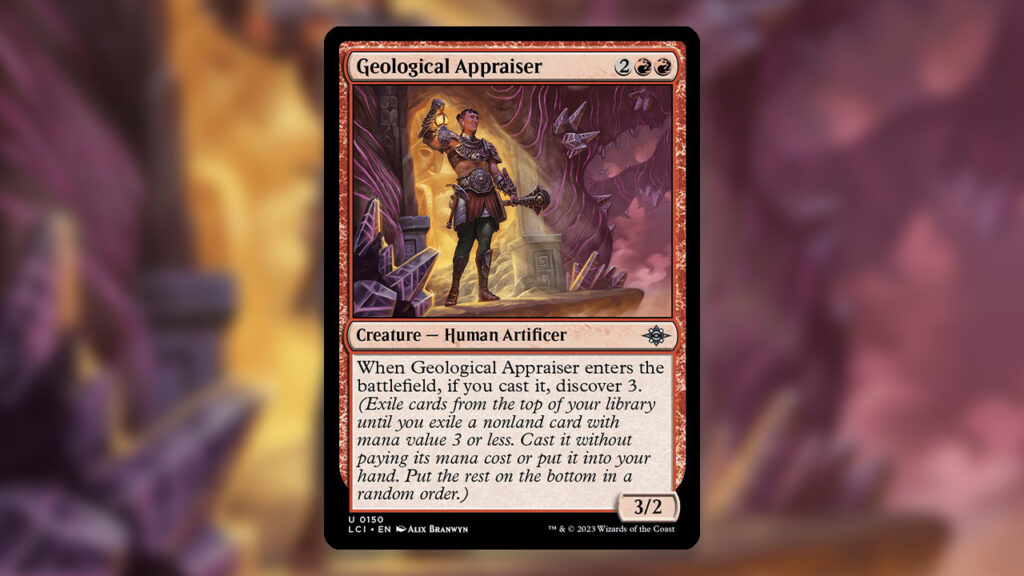
The new variant of Discover combo has some of the same problems, but it has one major difference: you can win the game a full turn faster. Rather than relying on a five-mana card to start the chain, this new version actually focuses on resolving
Geological Appraiser
 Geological Appraiser
When this creature enters, if you cast it, discover 3. (Exile cards from the top of your library until you exile a nonland card with mana value 3 or less. Cast it without paying its mana cost or put it into your hand. Put the rest on the bottom in a random order.)
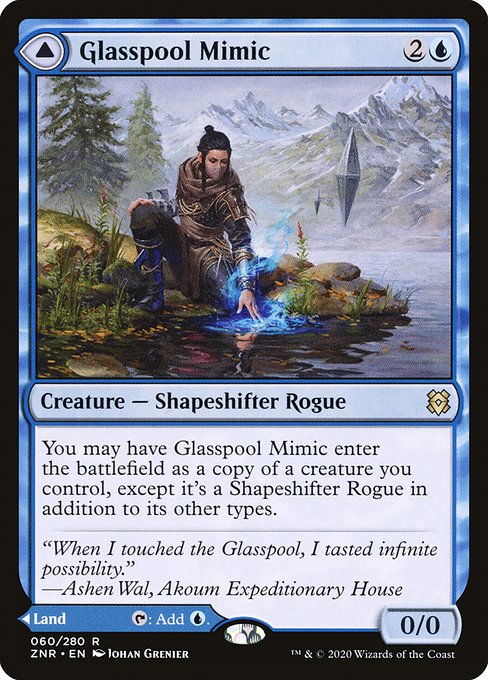
, a four-mana Creature with Discover 3. From there, you will hit one of two cards: either
Glasspool Mimic
Geological Appraiser
When this creature enters, if you cast it, discover 3. (Exile cards from the top of your library until you exile a nonland card with mana value 3 or less. Cast it without paying its mana cost or put it into your hand. Put the rest on the bottom in a random order.)
, a four-mana Creature with Discover 3. From there, you will hit one of two cards: either
Glasspool Mimic
 Glasspool Mimic
You may have this creature enter as a copy of a creature you control, except it's a Shapeshifter Rogue in addition to its other types.
or
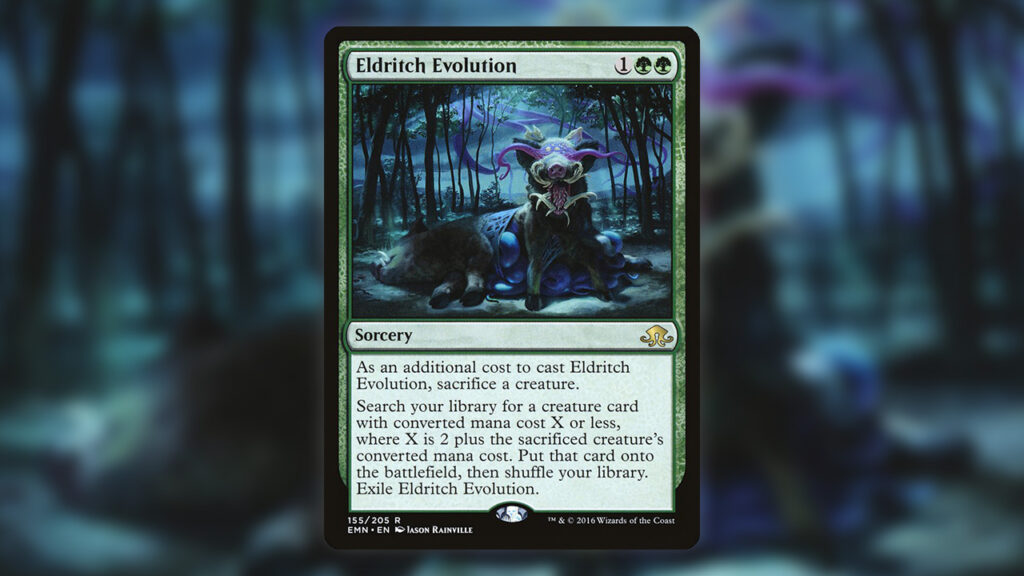
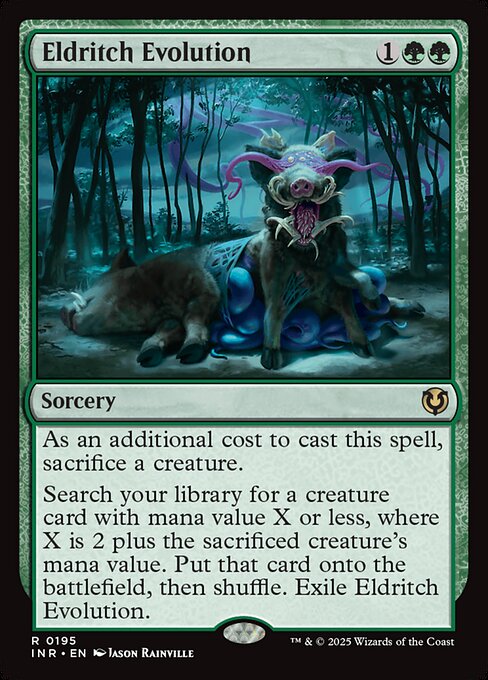
Eldritch Evolution
Glasspool Mimic
You may have this creature enter as a copy of a creature you control, except it's a Shapeshifter Rogue in addition to its other types.
or
Eldritch Evolution
 Eldritch Evolution
As an additional cost to cast this spell, sacrifice a creature.
Eldritch Evolution
As an additional cost to cast this spell, sacrifice a creature.
Search your library for a creature card with mana value X or less, where X is 2 plus the sacrificed creature's mana value. Put that card onto the battlefield, then shuffle. Exile Eldritch Evolution.
. If you hit Glasspool Mimic, simply copy Appraiser and Discover again.
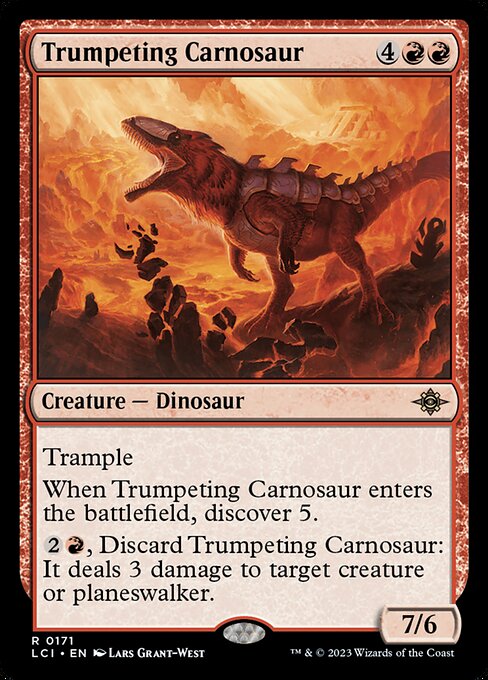
If you hit Evolution, you can sacrifice Appraiser and find
Trumpeting Carnosaur
 Trumpeting Carnosaur
Trample
Trumpeting Carnosaur
Trample
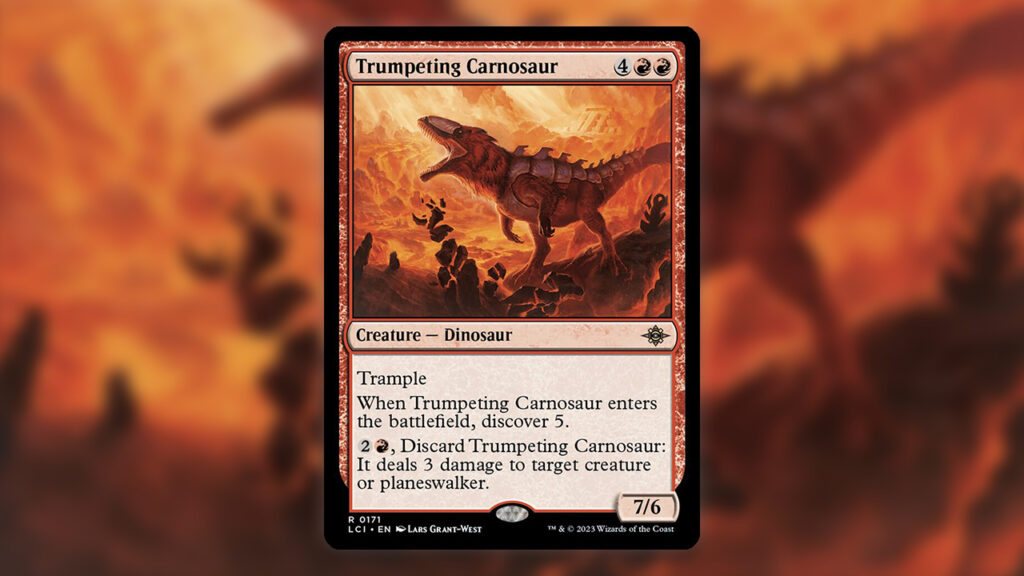
When this creature enters, discover 5.
{2}{R}, Discard this card: It deals 3 damage to target creature or planeswalker.
. Trumpeting Carnosaur has Discover 5, meaning you are now open to hitting Appraiser in addition to Glasspool Mimic or Eldritch Evolution. If you hit Evolution, you can either grab
Ghalta, Stampede Tyrant
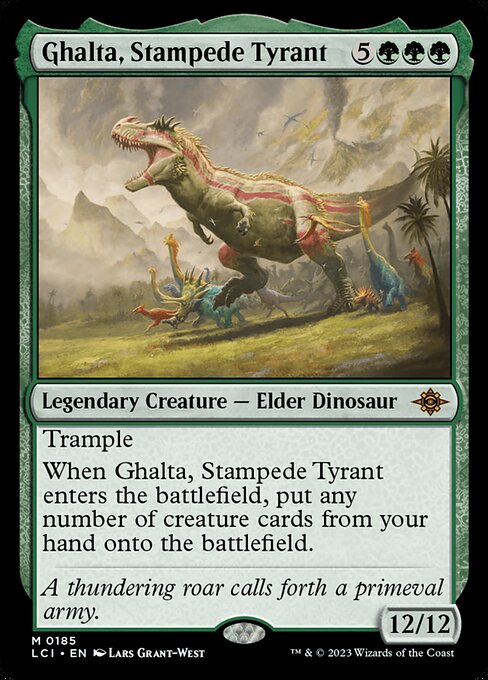 Ghalta, Stampede Tyrant
Trample
Ghalta, Stampede Tyrant
Trample
When Ghalta enters, put any number of creature cards from your hand onto the battlefield.
if you have more Creatures in hand or simply search for another copy of Trumpeting Carnosaur.
Assuming you don’t hit all of your copies of Eldritch Evolution back-to-back, which is unlikely, you will end up having a decently large board of Creatures. If this is the case, once you cast your last copy of Eldritch Evolution, you can grab
Doomskar Titan
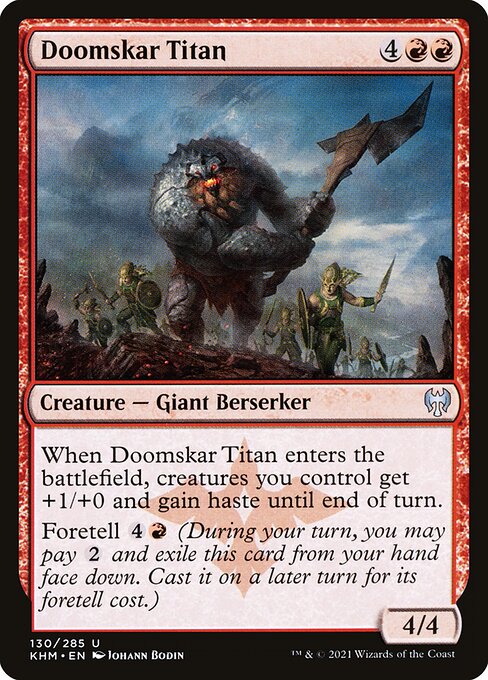 Doomskar Titan
When this creature enters, creatures you control get +1/+0 and gain haste until end of turn.
Doomskar Titan
When this creature enters, creatures you control get +1/+0 and gain haste until end of turn.
Foretell {4}{R} (During your turn, you may pay {2} and exile this card from your hand face down. Cast it on a later turn for its foretell cost.)
, give your team Haste, and attack for the win.
Read More: These Lost Caverns of Ixalan Reprints are Dirt Cheap!
Speed Kills
Speeding up the kill condition is a big game changer for a few reasons. First of all, it helps you race opposing combo decks. With decks such as
Amalia Benavides Aguirre
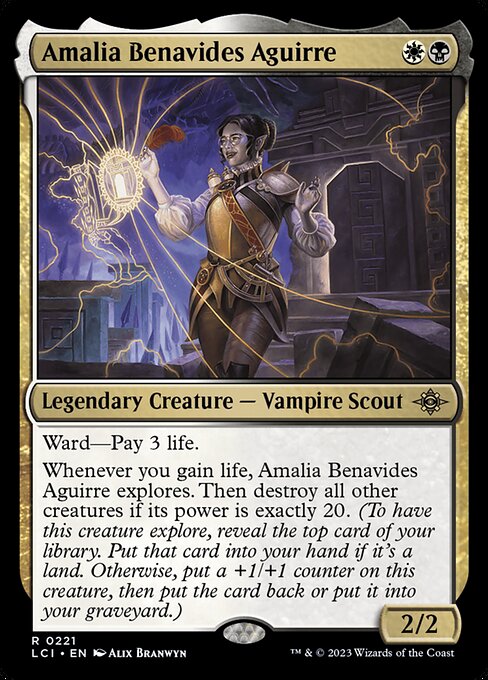 Amalia Benavides Aguirre
Ward—Pay 3 life.
Amalia Benavides Aguirre
Ward—Pay 3 life.
Whenever you gain life, Amalia Benavides Aguirre explores. Then destroy all other creatures if its power is exactly 20. (To have this creature explore, reveal the top card of your library. Put that card into your hand if it's a land. Otherwise, put a +1/+1 counter on this creature, then put the card back or put it into your graveyard.)
Explore combo also emerging, this is a huge deal.
Second, this makes your two-mana Treasure makers much better. Both the Quintorius and Geological Appraiser versions of this strategy relied on cards like
Magma Opus
 Magma Opus
 deals 4 damage divided as you choose among any number of targets. Tap two target permanents. Create a 4/4 blue and red Elemental creature token. Draw two cards.
Magma Opus
Magma Opus deals 4 damage divided as you choose among any number of targets. Tap two target permanents. Create a 4/4 blue and red Elemental creature token. Draw two cards.
{U/R}{U/R}, Discard this card: Create a Treasure token.
and
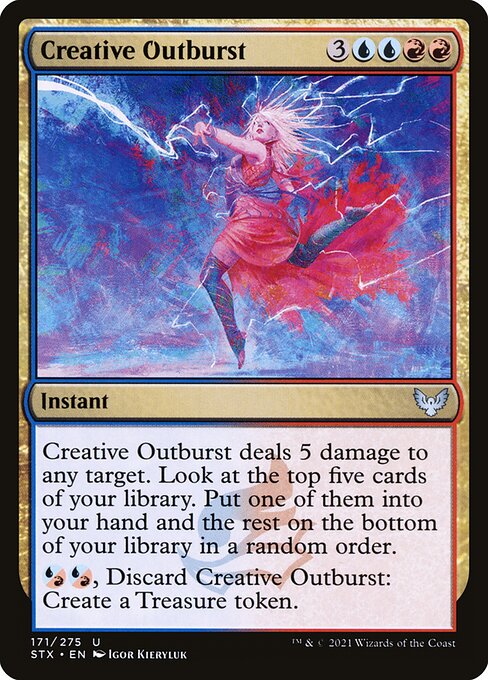
Creative Outburst
 Creative Outburst
 deals 5 damage to any target. Look at the top five cards of your library. Put one of them into your hand and the rest on the bottom of your library in a random order.
Creative Outburst
Creative Outburst deals 5 damage to any target. Look at the top five cards of your library. Put one of them into your hand and the rest on the bottom of your library in a random order.
{U/R}{U/R}, Discard this card: Create a Treasure token.
that, despite having high mana costs as to not mess with the Discover gameplan, helped accelerate you towards your combo pieces.
The issue is that Treasures only have a one-time use. If you went for a Quintorius kill and your opponent was able to break up the combo, that mana would not be available for future turns. This isn’t necessarily a big problem, but because all of the cards in the deck cost so much mana, this put extra pressure on you to keep hitting Land drops. By reducing the cost of your kill condition by one mana, not only can you kill a full turn sooner, but you aren’t as reliant on hitting your fourth Land drop on curve.
Furthermore, if you expect interaction, you can more easily save your Treasure tokens for bigger spells. For example, you can spend the first couple turns making some Treasure tokens. Then, cast Appraiser by simply tapping four Lands. If that plan goes awry, you now have Treasures stashed up to help cast Carnosaur on the next turn and try again.
Read More: Early Ixalan Limited Data Reveals Concerning Number of Overpowered Bombs
Extra Additions in Historic
As strong as this strategy is in Pioneer, it’s even more reliable in Historic. This is because of the inclusion of one key card that is on Arena but not legal in Pioneer. This card is none other than
Pantlaza, Sun-Favored
 Pantlaza, Sun-Favored
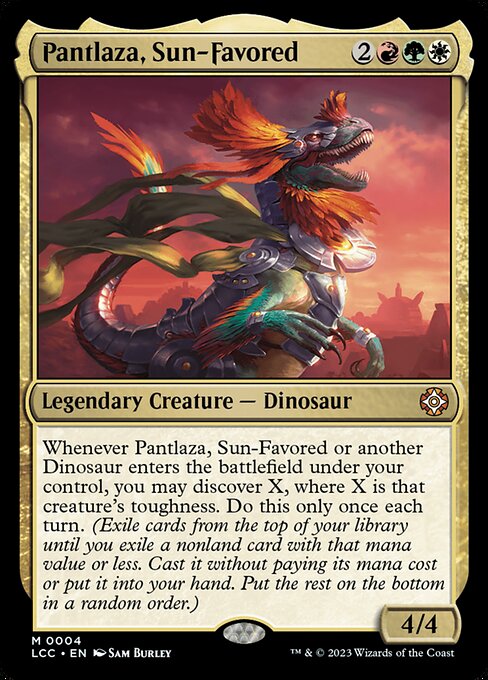
Whenever Pantlaza or another Dinosaur you control enters, you may discover X, where X is that creature's toughness. Do this only once each turn. (Exile cards from the top of your library until you exile a nonland card with that mana value or less. Cast it without paying its mana cost or put it into your hand. Put the rest on the bottom in a random order.)
. Pantlaza is a five-mana Creature that lets you Discover 4 when it enters the battlefield. The same strategies associated with Appraiser and Carnosaur apply here.
Pantlaza, Sun-Favored
Whenever Pantlaza or another Dinosaur you control enters, you may discover X, where X is that creature's toughness. Do this only once each turn. (Exile cards from the top of your library until you exile a nonland card with that mana value or less. Cast it without paying its mana cost or put it into your hand. Put the rest on the bottom in a random order.)
. Pantlaza is a five-mana Creature that lets you Discover 4 when it enters the battlefield. The same strategies associated with Appraiser and Carnosaur apply here.
The addition of Pantlaza helps in a few ways. Right off the bat, it makes your gameplan much more reliable. The Pioneer version only has Appraiser and Carnosaur as combo pieces. By adding another piece, you make it much more likely that you will have a combo card in hand, helping to prevent additional mulligans.
On top of that, if your first crack at the combo doesn’t work (let’s say your Appraiser gets killed or countered), it’s much more likely you will be able to follow up with another must-answer threat. Finally, the addition of a five-drop into the mix makes it much less likely that Trumpeting Carnosaur will repeatedly hit Eldritch Evolution and you will fizzle.
Read More: Infamous MTG Storm Deck Makes Surprise Comeback!
A Problematic Mechanic?
What’s interesting about this whole strategy is that the only reason it’s possible in the first place is because the Discover ability from Appraiser, Carnosaur, and Pantlaza is an enters-the-battlefield trigger. This mechanic was meant to be a fixed version of Cascade. Normally, if you cast a card like
Boarding Party
 Boarding Party
Haste
Boarding Party
Haste
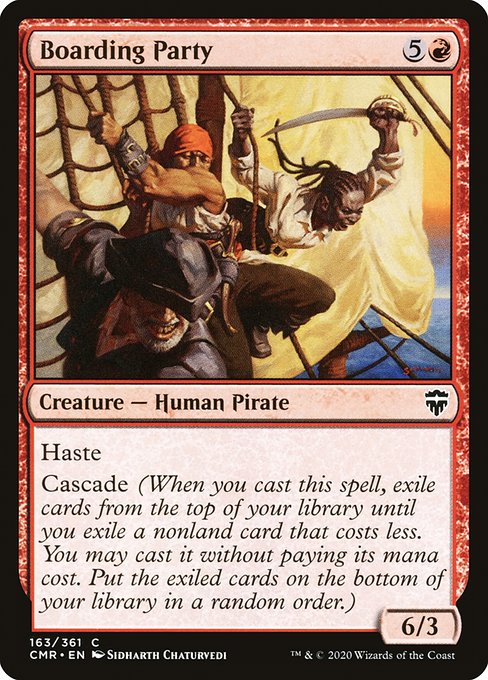
Cascade (When you cast this spell, exile cards from the top of your library until you exile a nonland card that costs less. You may cast it without paying its mana cost. Put the exiled cards on the bottom in a random order.)
with Cascade, even if your opponent counters the original spell, you still get the Cascade trigger. This is because Cascade specifically triggers upon casting Boarding Party, rather than it entering the battlefield. This is part of what makes Mississippi River decks in Legacy so scary.
In theory, having Discover not be a cast trigger would make it less problematic. The issue is that this opens the door for cards like Spark Double and Eldritch Evolution to play big roles. See, if Appraiser had Cascade instead of Discover 3, when you revealed Eldritch Evolution, Appraiser would still be on the stack. With Discover 3, though, Appraiser is already in play, allowing you to execute the Evolution combo like usual.
It’s unclear if any Discover cards will end up being deemed banworthy, but it is definitely something to look out for. The Historic player mentioned in the tweet above managed a rather impressive, yet worrying 14-0 record in the Historic Qualifier Weekend event this weekend, qualifying them for the Pro Tour. Either way, it’s clear this archetype is the real deal, and these are only the first iterations of the deck. Will players be able to adapt accordingly to the Discover menace? Only time will tell.
Read More: New Hyper-Aggressive Ixalan Card is the Perfect Budget Commander!