
In a bit of a surprising move, the Modern metagame has seen some noticeable shifts since Wizards of the Coast made their decision to not ban or unban anything. The most important change in the metagame is the rise in
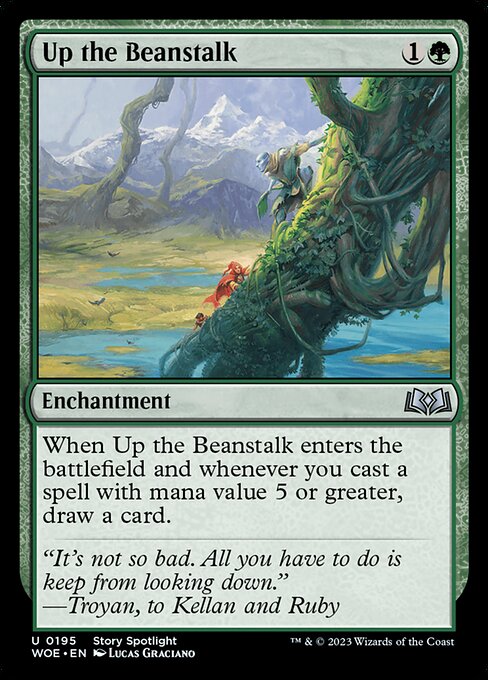
Up the Beanstalk
 Up the Beanstalk
When this enchantment enters and whenever you cast a spell with mana value 5 or greater, draw a card.
decks. Rather than Cascading into
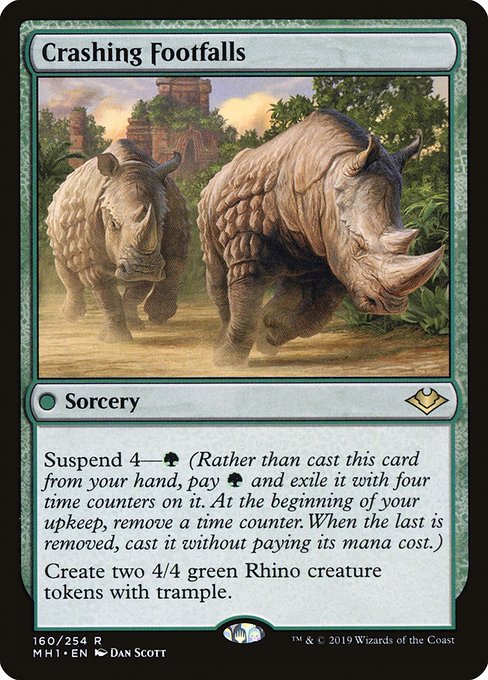
Crashing Footfalls
Up the Beanstalk
When this enchantment enters and whenever you cast a spell with mana value 5 or greater, draw a card.
decks. Rather than Cascading into
Crashing Footfalls
 Crashing Footfalls
Suspend 4—{G} (Rather than cast this card from your hand, pay {G} and exile it with four time counters on it. At the beginning of your upkeep, remove a time counter. When the last is removed, you may cast it without paying its mana cost.)
Crashing Footfalls
Suspend 4—{G} (Rather than cast this card from your hand, pay {G} and exile it with four time counters on it. At the beginning of your upkeep, remove a time counter. When the last is removed, you may cast it without paying its mana cost.)
Create two 4/4 green Rhino creature tokens with trample.
or
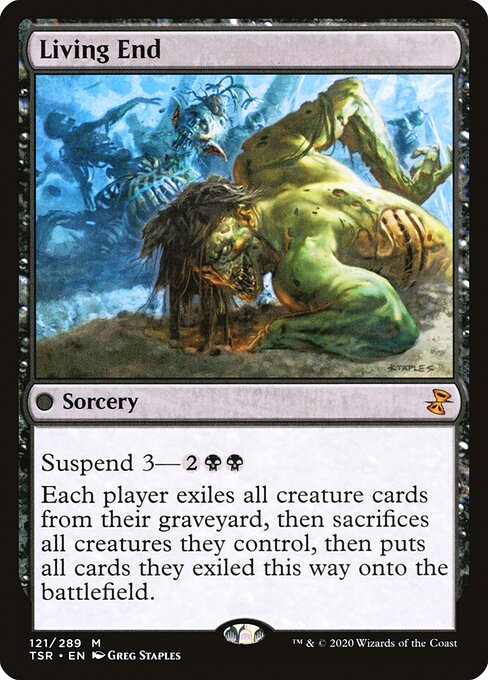
Living End
 Living End
Suspend 3—{2}{B}{B}
Living End
Suspend 3—{2}{B}{B}
Each player exiles all creature cards from their graveyard, then sacrifices all creatures they control, then puts all cards they exiled this way onto the battlefield.
, many players are using
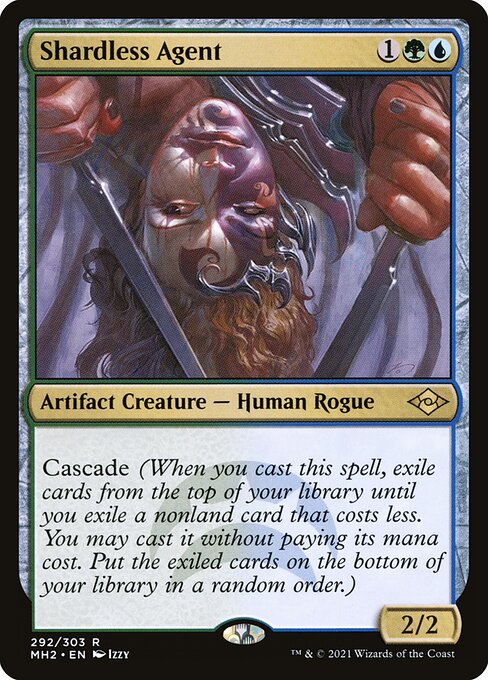
Shardless Agent
 Shardless Agent
Cascade (When you cast this spell, exile cards from the top of your library until you exile a nonland card that costs less. You may cast it without paying its mana cost. Put the exiled cards on the bottom in a random order.)
to Cascade into Up the Beanstalk. In conjunction with the free Evoke Elementals from Modern Horizons Two, such as
Solitude
Shardless Agent
Cascade (When you cast this spell, exile cards from the top of your library until you exile a nonland card that costs less. You may cast it without paying its mana cost. Put the exiled cards on the bottom in a random order.)
to Cascade into Up the Beanstalk. In conjunction with the free Evoke Elementals from Modern Horizons Two, such as
Solitude
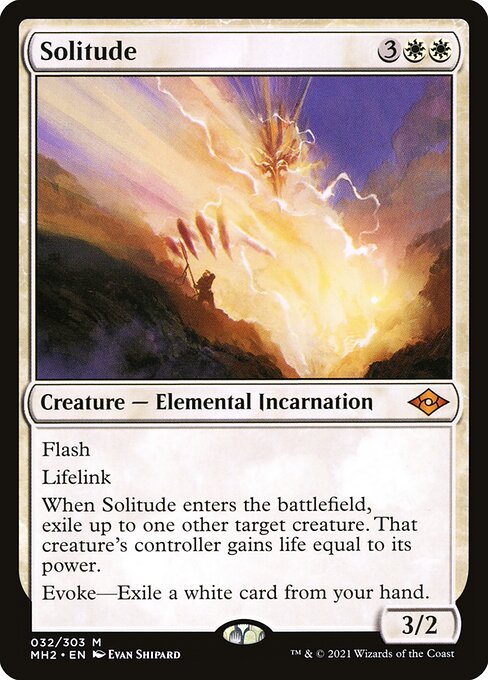 Solitude
Flash
Solitude
Flash
Lifelink
When this creature enters, exile up to one other target creature. That creature's controller gains life equal to its power.
Evoke—Exile a white card from your hand.
, it’s easy to draw a ton of extra cards.
This ability to reliably gain card advantage for cheap has even allowed these multi-color
Leyline Binding
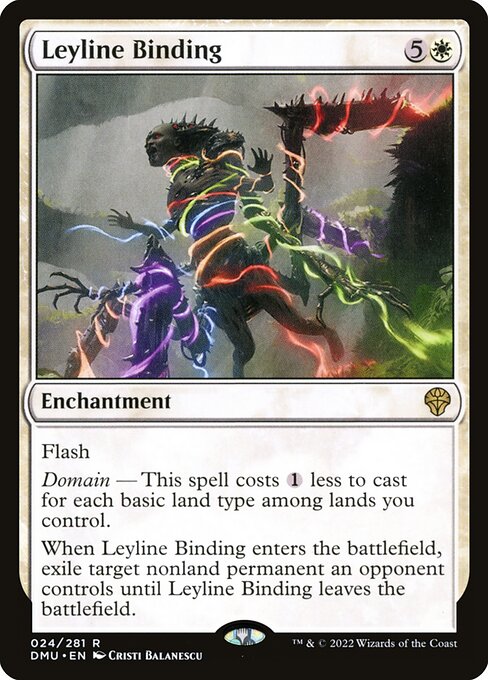 Leyline Binding
Flash
Leyline Binding
Flash
Domain — This spell costs {1} less to cast for each basic land type among lands you control.
When this enchantment enters, exile target nonland permanent an opponent controls until this enchantment leaves the battlefield.
decks to pivot away from
The One Ring
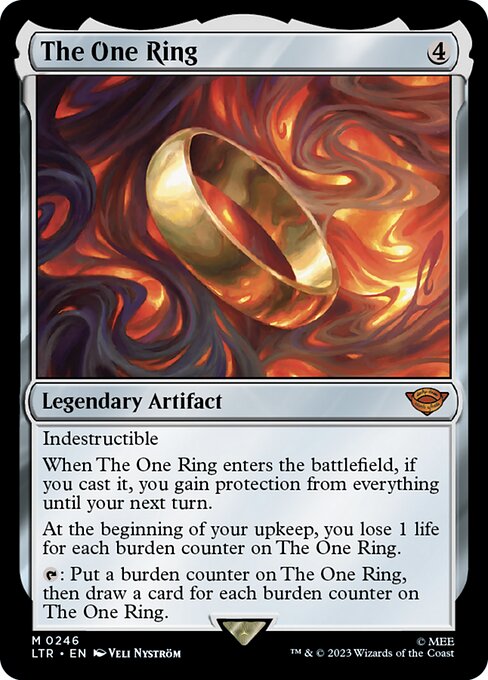 The One Ring
Indestructible
The One Ring
Indestructible
When The One Ring enters, if you cast it, you gain protection from everything until your next turn.
At the beginning of your upkeep, you lose 1 life for each burden counter on The One Ring.
{T}: Put a burden counter on The One Ring, then draw a card for each burden counter on The One Ring.
. If that doesn’t showcase the power of Up the Beanstalk, I don’t know what does.
Interestingly, though, not every deck utilizing Up the Beanstalk is going as far as utilizing Cascade spells. In fact, there are a multitude of different strategies designed to abuse this card. One of these archetypes is fairly new, and it looks like a mashup of a bunch of different archetypes in one. This deck has elements of multi-color Up the Beanstalk decks, five-color zoo decks, and most notably, Calibrated Blast combo decks. Not only does this deck look super cool, but it even made top eight of a massive event with 15 rounds of Swiss! The deck is quite intriguing and is capable of winning in multiple ways. Does it have what it takes to continue to compete at the highest level?
Five-Color Value Package
At first glance, this might look like a typical five-color deck. After all, some of the best cards and biggest reasons to play the full five colors are seen here. Leyline Binding is certainly the most notable. Despite costing six mana, the card can be reliably cast for only one mana, even as early as turn two. This is thanks to the range of “Triomes” available in Magic. With an abundance of Fetchlands, it’s easy to search for the requisite Land that both produces three colors and has three basic Land types. From there, another Triome or Shockland should enable Leyline Binding to be cast in short order.
Leyline Binding, much like the Evoke Elementals, triggers Up the Beanstalk, regardless of how much mana was spent to cast it. What’s interesting, though, is that this deck runs very few of the Evoke Elementals. There are three copies of Fury[/toolips] in the decklist, but Solitude is simply not a reliable card to Evoke in this deck. Unlike traditional five-color strategies, this deck is missing [tooltips]Omnath, Locus of Creation as well. This is where the deck starts to deviate. Sure, there are copies of
Wrenn and Six
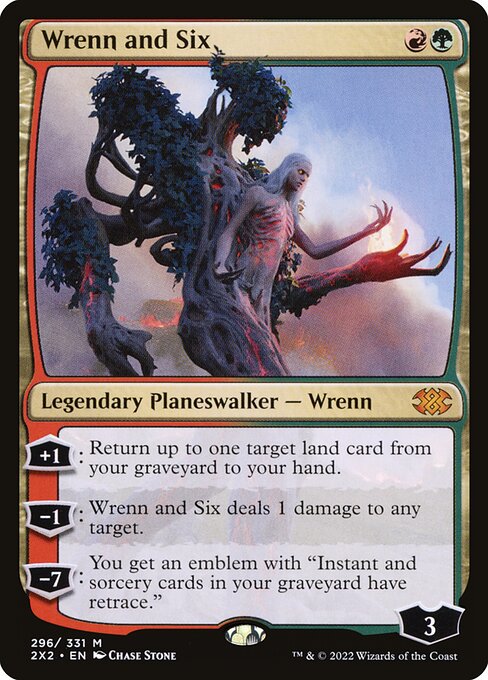 Wrenn and Six
+1: Return up to one target land card from your graveyard to your hand.
Wrenn and Six
+1: Return up to one target land card from your graveyard to your hand.
−1: Wrenn and Six deals 1 damage to any target.
−7: You get an emblem with "Instant and sorcery cards in your graveyard have retrace." (You may cast instant and sorcery cards from your graveyard by discarding a land card in addition to paying their other costs.)
to keep the Lands flowing, but it’s clear by the lack of Omnath that the end game of this deck is very different than you might expect.
Read More: New MTG Fallout Food Staple Has Tons of Infinite Combo Potential!
The Zoo Package
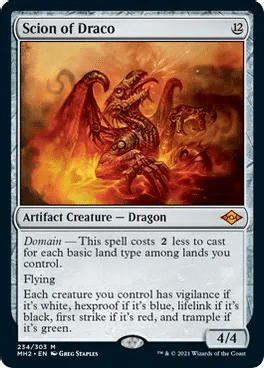
Much like the five-color Zoo decks that can have quite aggressive starts, this deck plays both Scion of Draco and
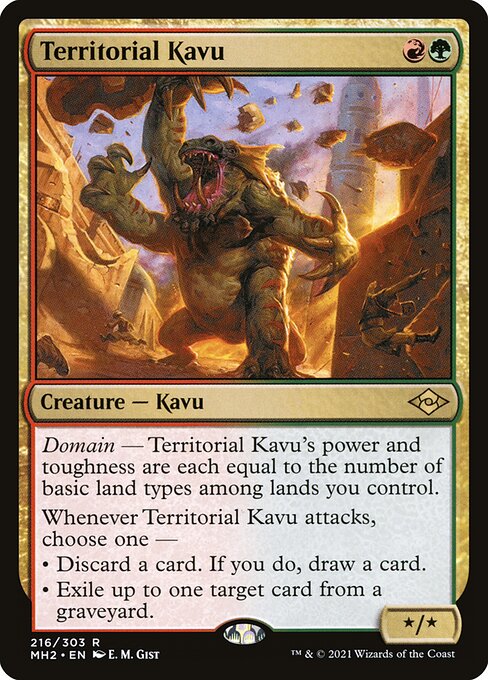
Territorial Kavu
 Territorial Kavu
Domain — Territorial Kavu's power and toughness are each equal to the number of basic land types among lands you control.
Territorial Kavu
Domain — Territorial Kavu's power and toughness are each equal to the number of basic land types among lands you control.
Whenever this creature attacks, choose one —
• Discard a card. If you do, draw a card.
• Exile up to one target card from a graveyard.
as heavy hitters. This allows the deck to play a grindy game with Up the Beanstalk while still having enough pressure to potentially close the game quickly against opposing combo decks. Scion specifically triggers Up the Beanstalk as well, helping to fill both roles nicely.
This deck also makes use of
Lightning Bolt
 Lightning Bolt
 deals 3 damage to any target.
as one of its efficient removal spells of choice. The ability to deal three damage to the opponent with Lightning Bolt is actually very relevant in a lot of games. This is especially true when factoring in the combo aspect of this deck.
Lightning Bolt
Lightning Bolt deals 3 damage to any target.
as one of its efficient removal spells of choice. The ability to deal three damage to the opponent with Lightning Bolt is actually very relevant in a lot of games. This is especially true when factoring in the combo aspect of this deck.
Read More: Underrated MTG Battle Card Shines in Unique Pioneer Archetype!
Calibrated Blast Package
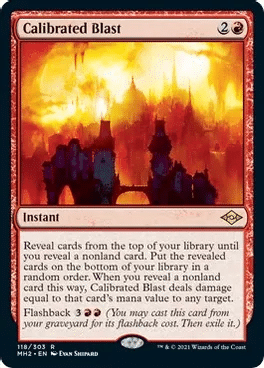
That’s right, this deck is also capable of acting like a combo deck, utilizing Calibrated Blast as a finisher. It may seem strange to play Calibrated Blast in this style of deck. After all, couldn’t you just reveal something like Lightning Bolt off the top of your deck and deal a very minimal amount of damage? That’s where things get interesting. Because of the sheer number of Fetchlands this deck can play, it’s quite easy to search for primarily black Triomes and Shocklands.
This allows the deck to enable Witch’s Cottage, letting you put Creatures from your graveyard on top of your library. By using Territorial Kavu and
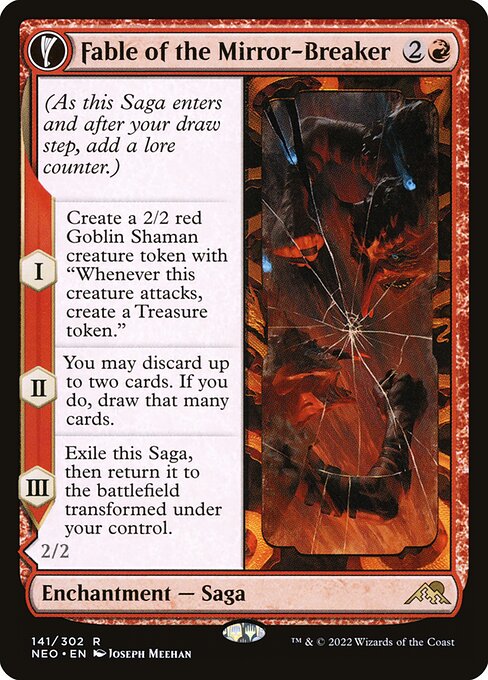
Fable of the Mirror-Breaker
 Fable of the Mirror-Breaker
(As this Saga enters and after your draw step, add a lore counter.)
Fable of the Mirror-Breaker
(As this Saga enters and after your draw step, add a lore counter.)
I — Create a 2/2 red Goblin Shaman creature token with "Whenever this token attacks, create a Treasure token."
II — You may discard up to two cards. If you do, draw that many cards.
III — Exile this Saga, then return it to the battlefield transformed under your control.
as discard outlets for massive threats like Scion of Draco and Shadow of Mortality, you can actually set up your own Calibrated Blasts. Simply put one of these cards on top of your library, and Calibrated Blast will deal a ton of damage to the opponent guaranteed.
Read More: Forgotten MTG Card Creates Bizarrely Powerful Combos!
Strengths and Weaknesses
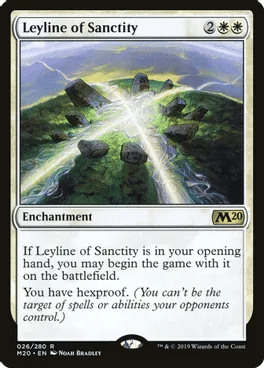
The idea behind this deck’s design is to mitigate some of the weaknesses of typical Calibrated Blast decks. Calibrated Blast decks normally rely on a huge density of super high mana value, largely uncastable cards to enable Calibrated Blast. In this sense, the deck was much more of an all-in combo deck that would be very weak to specific hate cards, such as Leyline of Sanctity. This deck is still capable of dealing 15 damage simply by casting Calibrated Blast, but has a much more robust plan B.
Territorial Kavu, Scion of Draco, and Fable of the Mirror-Breaker can end the game on their own. Even if you can’t set it up with Cottage, it can still be reasonable to cast Calibrated Blast with the opponent at a low life total, since even revealing Fury or Leyline Binding can be good enough. Additionally, Calibrated Blast has Flashback, providing extra opportunities to deal extra damage.
Of course, what this deck gains in versatility it lacks in consistency. The gameplan of this deck is much less streamlined. In some cases, you’d prefer to be playing more efficient threats and
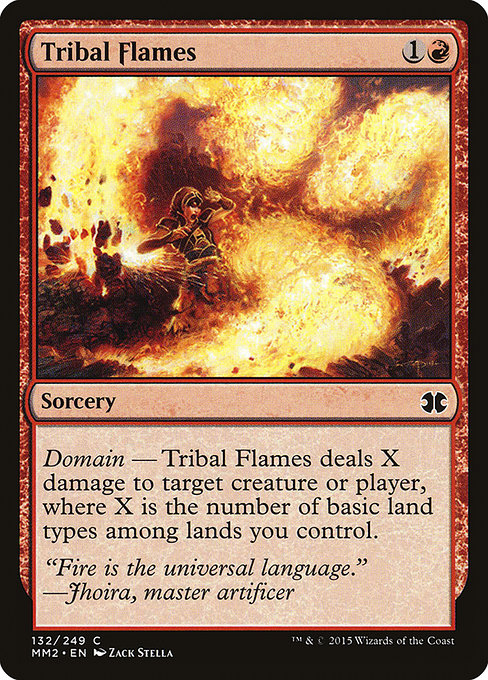
Tribal Flames
 Tribal Flames
Domain — Tribal Flames deals X damage to any target, where X is the number of basic land types among lands you control.
rather than Up the Beanstalk when you need to be aggressive. Without Fable or Kavu, setting up Blast can be difficult. It’s possible to cast Shadow of Mortality in some matchups where your life total gets diminished in chunks, such as against burn decks, but other times the card will just be stuck in your hand.
Tribal Flames
Domain — Tribal Flames deals X damage to any target, where X is the number of basic land types among lands you control.
rather than Up the Beanstalk when you need to be aggressive. Without Fable or Kavu, setting up Blast can be difficult. It’s possible to cast Shadow of Mortality in some matchups where your life total gets diminished in chunks, such as against burn decks, but other times the card will just be stuck in your hand.
Regardless, having the ability to deal 15 damage to your opponent out of nowhere with Calibrated Blast can help a lot with closing out games, especially against decks Cascading into Up the Beanstalk. The duality of this deck gives it a solid chance in a wide variety of matchups, and you may be able to surprise a lot of unsuspecting people with a well-timed Blast to the face.
Read More: Players Disappointed with Speed of The Lost Cavern of Ixalan Story Release