
The deck archetype known as “Superfriends” has been around for as long as there have been enough Planeswalkers to make it a reality. Planeswalker Party has a decent amount of Planeswalkers with a highly synergistic commander in
Commodore Guff
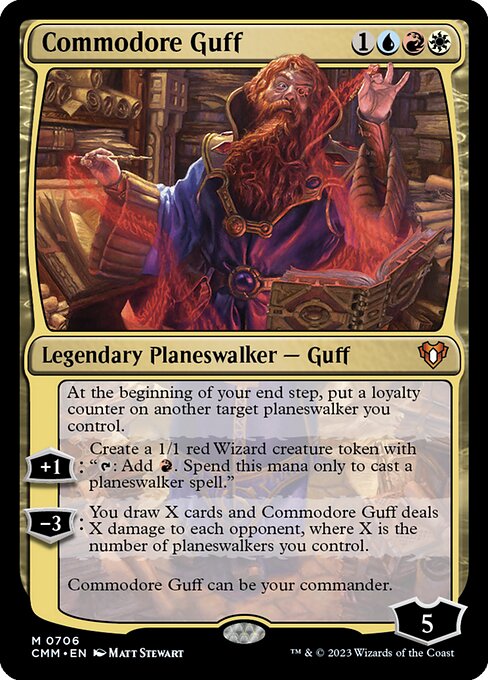 Commodore Guff
At the beginning of your end step, put a loyalty counter on another target planeswalker you control.
Commodore Guff
At the beginning of your end step, put a loyalty counter on another target planeswalker you control.
+1: Create a 1/1 red Wizard creature token with "{T}: Add {R}. Spend this mana only to cast a planeswalker spell."
−3: You draw X cards and Commodore Guff deals X damage to each opponent, where X is the number of planeswalkers you control.
Commodore Guff can be your commander.
but does it play well? Are there smart includes? Finally is it worth it on a financial, fun or future angle? Let’s take a look!
A Solid Three Color Commander
The Commodore does it all. It creates tokens that act as blockers and mana ramp, you add a loyalty counter to any other Planeswalker and finally it’s both card draw and, technically, a win condition. This is a good commander all told as it’s extremely reliable.
Turn one land, turn two rock. Turn three Guff and make a blocker. From there you get to play a Planeswalker, accelerate it to an ultimate in just a couple of turns, and do your best to defend against the oncoming hatred of the board. This is where Planeswalker Party has a bit of a rough time, and it’s not the deck’s fault.
If you look through your options, every walker with an ultimate ability will be able to use it in three turns or less thanks to Guff and other support in the deck. In each case, once the other players at the table have seen the deck in action, they know that it’s imperative to kill your Planeswalkers.
Furthermore, since Guff can generate a single blocker every turn while also increasing loyalty, just a little bit of pressure isn’t enough. That’s right, if the entire table isn’t working against the Planeswalker Party deck it’s so consistent that you can get incredibly ahead every single game. Because of this, any Superfriends deck is sort of training your opponents that you are the threat at the deck selection screen and they need to gang up on you to keep your Planeswalkers from using an early ultimate ability and heavily tilting the game in your favor.
The deck does make some smart choices in this regard to have excellent defenses against the inevitable archenemy moment. The only problem is if you are the archenemy the moment you sit down and reveal your commander.
Two Good
Minus the extremely questionable inclusions of
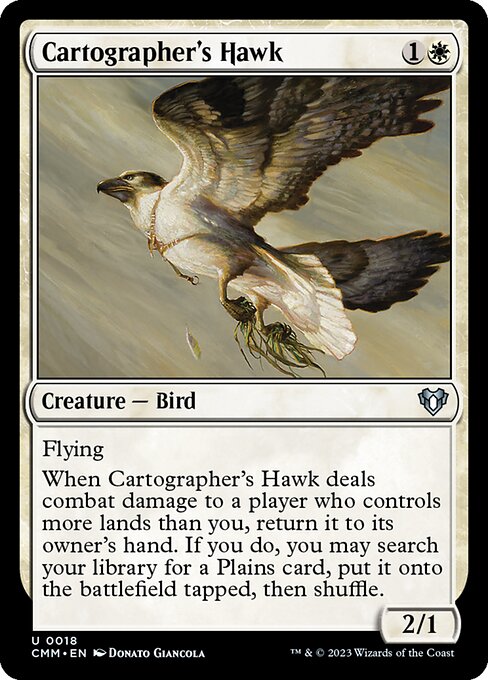
Cartographer’s Hawk
 Cartographer’s Hawk
Flying
Cartographer’s Hawk
Flying
When this creature deals combat damage to a player who controls more lands than you, return it to its owner's hand. If you do, you may search your library for a Plains card, put it onto the battlefield tapped, then shuffle.
and
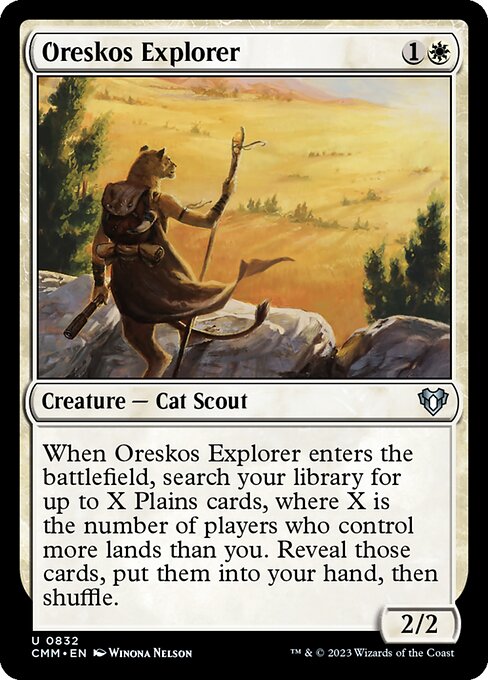
Oreskos Explorer
 Oreskos Explorer
When this creature enters, search your library for up to X Plains cards, where X is the number of players who control more lands than you. Reveal those cards, put them into your hand, then shuffle.
, the other 11 two drops all make a ton of sense. Practically every two cost mana rock shows up to all but guarantee a turn three Guff which is critical to the deck’s success. With all these rocks, the mana base does not need to be particularly robust. Sure it would be nice if there were better lands included but it’s less important in a pre-con environment.
Oreskos Explorer
When this creature enters, search your library for up to X Plains cards, where X is the number of players who control more lands than you. Reveal those cards, put them into your hand, then shuffle.
, the other 11 two drops all make a ton of sense. Practically every two cost mana rock shows up to all but guarantee a turn three Guff which is critical to the deck’s success. With all these rocks, the mana base does not need to be particularly robust. Sure it would be nice if there were better lands included but it’s less important in a pre-con environment.
The pairing of
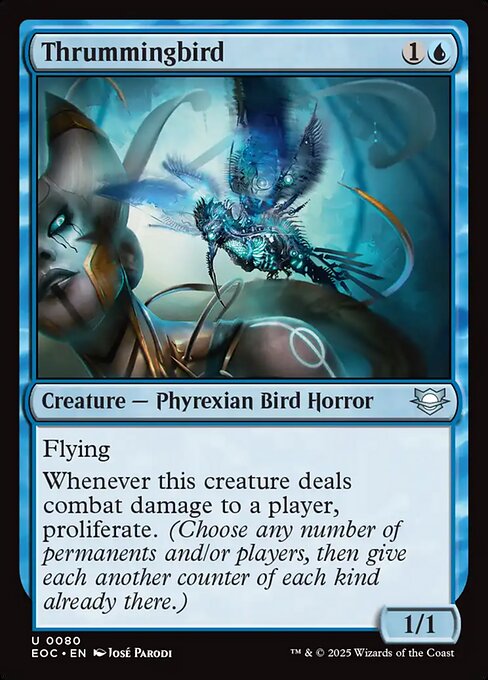
Thrumming Bird
 Thrumming Bird
Flying
Thrumming Bird
Flying
Whenever this creature deals combat damage to a player, proliferate. (Choose any number of permanents and/or players, then give each another counter of each kind already there.)
and
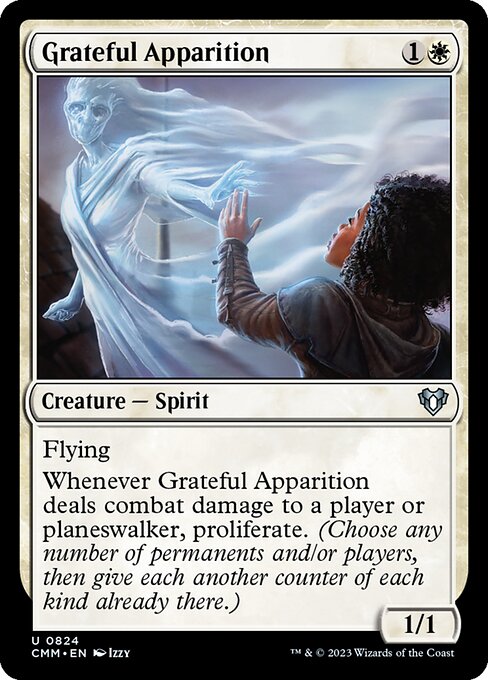
Grateful Apparition
 Grateful Apparition
Flying
Grateful Apparition
Flying
Whenever this creature deals combat damage to a player or planeswalker, proliferate. (Choose any number of permanents and/or players, then give each another counter of each kind already there.)
give you some explosive potential openers, or alternatively additional blockers early when you need them most. They further help the deck’s potential alternate commander
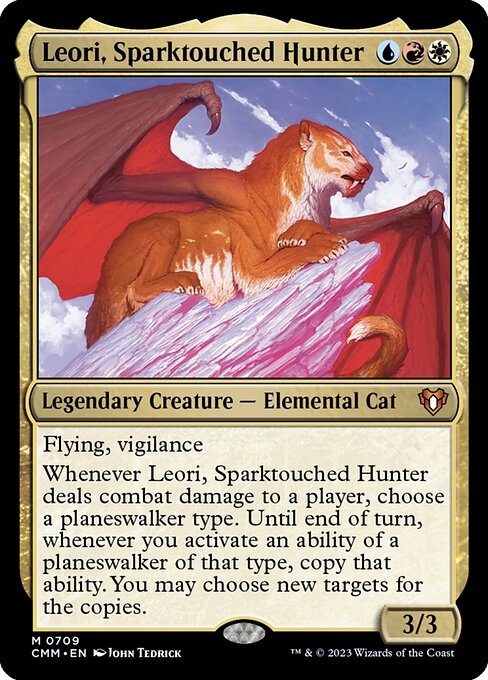
Leori, Sparktouched Hunter
 Leori, Sparktouched Hunter
Flying, vigilance
Leori, Sparktouched Hunter
Flying, vigilance
Whenever Leori deals combat damage to a player, choose a planeswalker type. Until end of turn, whenever you activate an ability of a planeswalker of that type, copy that ability. You may choose new targets for the copies.
if you’re trying to make a creature+Planeswalker hybrid deck and there are several nods to that idea in even the land base with
Mobilized District
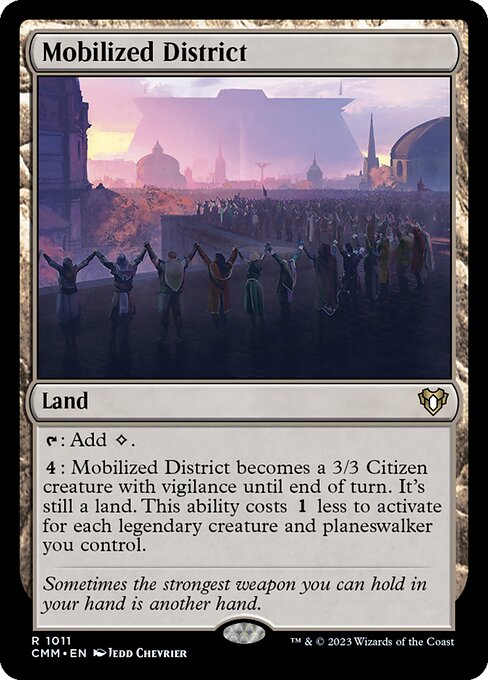 Mobilized District
{T}: Add {C}.
Mobilized District
{T}: Add {C}.
{4}: This land becomes a 3/3 Citizen creature with vigilance until end of turn. It's still a land. This ability costs {1} less to activate for each legendary creature and planeswalker you control.
. Of course
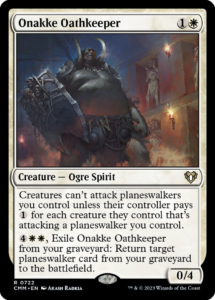
Onakke Oathkeeper
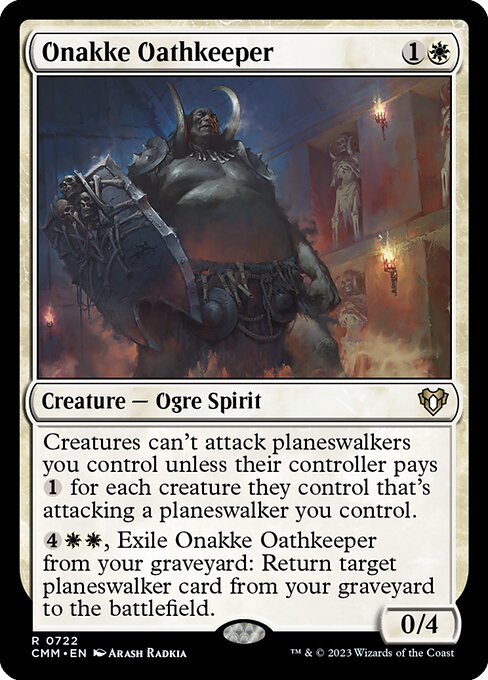 Onakke Oathkeeper
Creatures can't attack planeswalkers you control unless their controller pays {1} for each creature they control that's attacking a planeswalker you control.
Onakke Oathkeeper
Creatures can't attack planeswalkers you control unless their controller pays {1} for each creature they control that's attacking a planeswalker you control.
{4}{W}{W}, Exile this card from your graveyard: Return target planeswalker card from your graveyard to the battlefield.
is a home run of a two drop which protects your walkers early game while giving you recursion later.
Read More: Upcoming MTG Ban Announcement is a Massive Opportunity
All for One
While it does not have a lot of one drops, Planeswalker Party does have some of the best available, particularly the removal package of
Path to Exile
 Path to Exile
Exile target creature. Its controller may search their library for a basic land card, put that card onto the battlefield tapped, then shuffle.
and
Swords to Plowshares
Path to Exile
Exile target creature. Its controller may search their library for a basic land card, put that card onto the battlefield tapped, then shuffle.
and
Swords to Plowshares
 Swords to Plowshares
Exile target creature. Its controller gains life equal to its power.
which deal with pretty much anything for only one mana.
Swords to Plowshares
Exile target creature. Its controller gains life equal to its power.
which deal with pretty much anything for only one mana.
On top of that cheap removal suite, you also have
Blasphemous Act
 Blasphemous Act
This spell costs {1} less to cast for each creature on the battlefield.
Blasphemous Act
This spell costs {1} less to cast for each creature on the battlefield.
Blasphemous Act deals 13 damage to each creature.
which commonly costs only one mana to remove creatures while leaving your Planeswalkers alive.
Urza’s Ruinous Blast
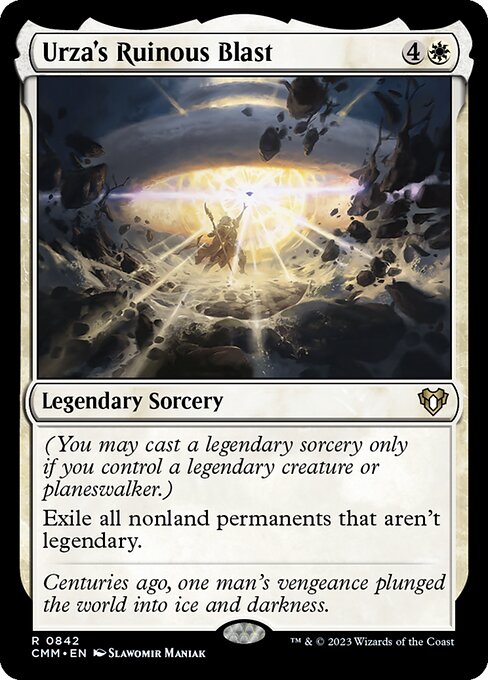 Urza’s Ruinous Blast
(You may cast a legendary sorcery only if you control a legendary creature or planeswalker.)
Urza’s Ruinous Blast
(You may cast a legendary sorcery only if you control a legendary creature or planeswalker.)
Exile all nonland permanents that aren't legendary.
deals with many things while also not touching your walkers. With multiple one sided wipes and the best single target removal around you can generally keep accruing value safely.
The Obvious Includes
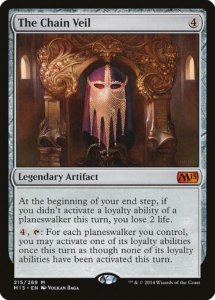
There were a lot of complaints about how many of these new precons missed “obvious includes” but there’s no question in my mind that Planeswalker Party nailed it with cards like
The Chain Veil
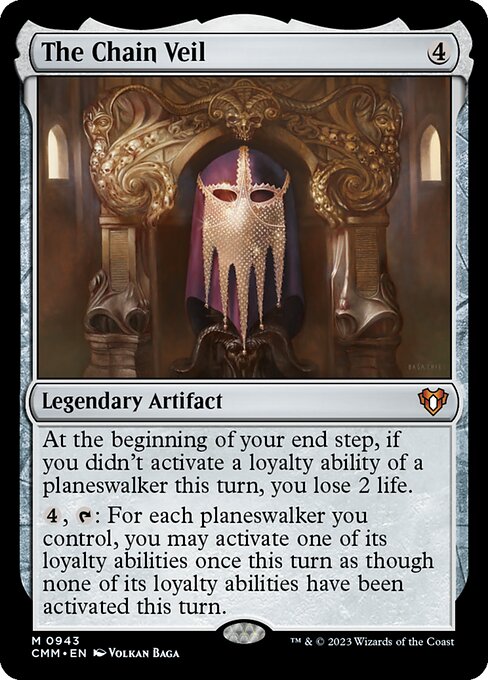 The Chain Veil
At the beginning of your end step, if you didn't activate a loyalty ability of a planeswalker this turn, you lose 2 life.
The Chain Veil
At the beginning of your end step, if you didn't activate a loyalty ability of a planeswalker this turn, you lose 2 life.
{4}, {T}: For each planeswalker you control, you may activate one of its loyalty abilities once this turn as though none of its loyalty abilities have been activated this turn.
,
Spark Double
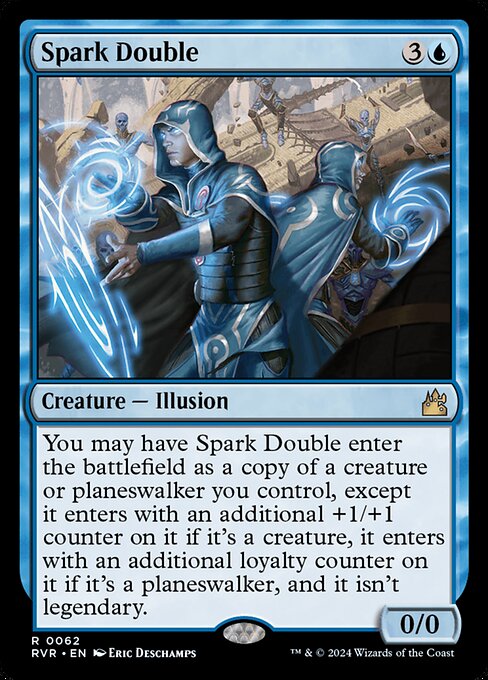 Spark Double
You may have this creature enter as a copy of a creature or planeswalker you control, except it enters with an additional +1/+1 counter on it if it's a creature, it enters with an additional loyalty counter on it if it's a planeswalker, and it isn't legendary.
,
Interplanar Beacon
Spark Double
You may have this creature enter as a copy of a creature or planeswalker you control, except it enters with an additional +1/+1 counter on it if it's a creature, it enters with an additional loyalty counter on it if it's a planeswalker, and it isn't legendary.
,
Interplanar Beacon
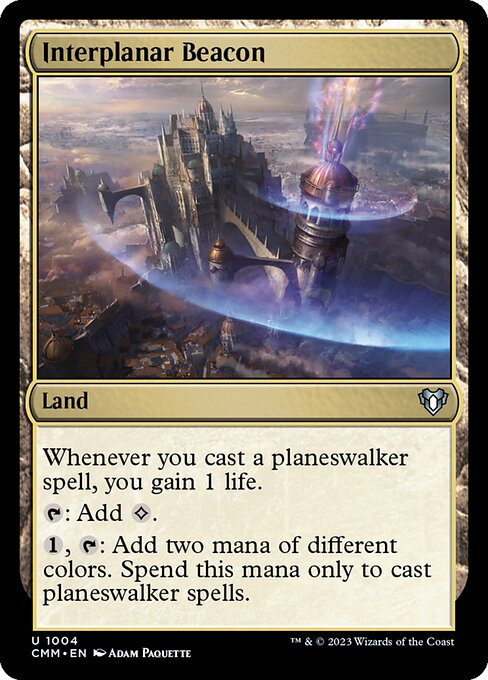 Interplanar Beacon
Whenever you cast a planeswalker spell, you gain 1 life.
Interplanar Beacon
Whenever you cast a planeswalker spell, you gain 1 life.
{T}: Add {C}.
{1}, {T}: Add two mana of different colors. Spend this mana only to cast planeswalker spells.
and
Karn’s Bastion
 Karn’s Bastion
{T}: Add {C}.
Karn’s Bastion
{T}: Add {C}.
{4}, {T}: Proliferate. (Choose any number of permanents and/or players, then give each another counter of each kind already there.)
.
Sure, there are tons of cards that work well with a deck like this.
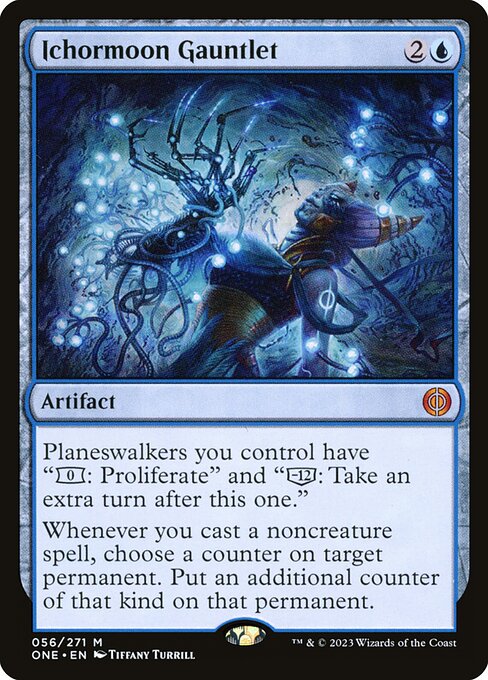
Ichormoon Gauntlet
 Ichormoon Gauntlet
Planeswalkers you control have "[0]: Proliferate" and "[−12]: Take an extra turn after this one."
Ichormoon Gauntlet
Planeswalkers you control have "[0]: Proliferate" and "[−12]: Take an extra turn after this one."
Whenever you cast a noncreature spell, choose a counter on target permanent. Put an additional counter of that kind on that permanent.
is probably the most commonly cited example. It would be completely wrong to say it’s not a great card for pretty much every deck utilizing lots of Planeswalkers and there are other proliferate cards included in the deck right out of the box. However, does that mean a player is now obligated to play every proliferate card? Is that the only sub-theme allowed? What if taking extra turns is relatively hated and or banned in your local meta?
Let me direct you to
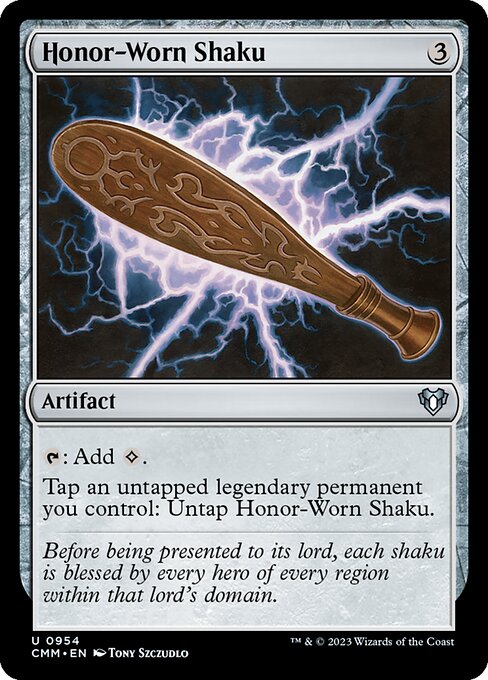
Honor Worn Shaku
 Honor Worn Shaku
{T}: Add {C}.
Honor Worn Shaku
{T}: Add {C}.
Tap an untapped legendary permanent you control: Untap this artifact.
and
Urza’s Ruinous Blast
Urza’s Ruinous Blast
(You may cast a legendary sorcery only if you control a legendary creature or planeswalker.)
Exile all nonland permanents that aren't legendary.
. These are both “legendary matters” effects and
The Chain Veil
The Chain Veil
At the beginning of your end step, if you didn't activate a loyalty ability of a planeswalker this turn, you lose 2 life.
{4}, {T}: For each planeswalker you control, you may activate one of its loyalty abilities once this turn as though none of its loyalty abilities have been activated this turn.
actually survives the Blast and can be tapped for mana through the Shaku if needed. Does the Gauntlet do that? Nope.
Yes,
Ichormoon Gauntlet
Ichormoon Gauntlet
Planeswalkers you control have "[0]: Proliferate" and "[−12]: Take an extra turn after this one."
Whenever you cast a noncreature spell, choose a counter on target permanent. Put an additional counter of that kind on that permanent.
is better almost every single time. But is it always the best card, in every scenario? No.
Read More: The $2 Million One Ring MTG Card Has Been Sold
Upgrades? Sure!
For just about a dollar,
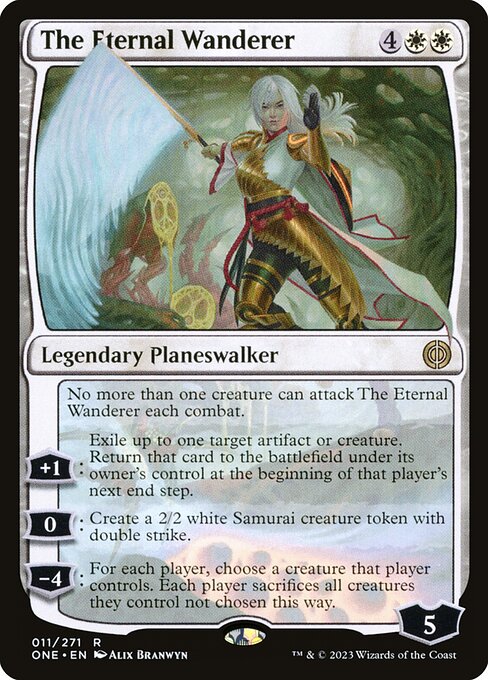
The Eternal Wanderer
 The Eternal Wanderer
No more than one creature can attack The Eternal Wanderer each combat.
The Eternal Wanderer
No more than one creature can attack The Eternal Wanderer each combat.
+1: Exile up to one target artifact or creature. Return that card to the battlefield under its owner's control at the beginning of that player's next end step.
0: Create a 2/2 white Samurai creature token with double strike.
−4: For each player, choose a creature that player controls. Each player sacrifices all creatures they control not chosen this way.
is one of the best Planeswalkers you can add. It kills practically everything so long as there are two or more creatures per player. Additionally, since you can almost always generate at least one blocker per turn you should not be threatened by what is left over. Furthermore, Wanderer works with table politics and allows you to effectively pick who keeps what.
Too many suggestions often are about making a deck directly more powerful but ignore the fact that that makes every Commander table a linear arms race. Instead, a card like Wanderer lets you make deals rather than be the archenemy every game. This can, ironically, actually end up winning you more games in the long run.
Ignite the Beacon
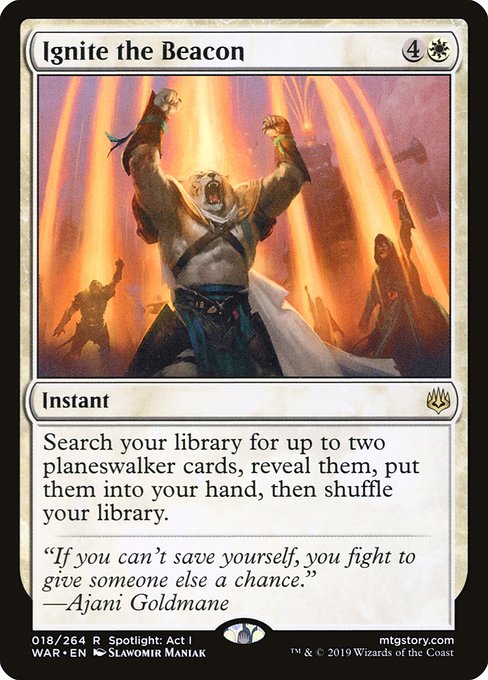 Ignite the Beacon
Search your library for up to two planeswalker cards, reveal them, put them into your hand, then shuffle.
is another very good include and it costs just pennies. Most groups don’t mind a single tutor, especially at five mana. It’s up to you on if the only reason this is included is to search for Planeswalker combos to end the game, or simply to get answers and value.
Ignite the Beacon
Search your library for up to two planeswalker cards, reveal them, put them into your hand, then shuffle.
is another very good include and it costs just pennies. Most groups don’t mind a single tutor, especially at five mana. It’s up to you on if the only reason this is included is to search for Planeswalker combos to end the game, or simply to get answers and value.
After saying not to play
Ichormoon Gauntlet
Ichormoon Gauntlet
Planeswalkers you control have "[0]: Proliferate" and "[−12]: Take an extra turn after this one."
Whenever you cast a noncreature spell, choose a counter on target permanent. Put an additional counter of that kind on that permanent.
(note, I never said not to play it!) you could consider something like
Staff of Compleation
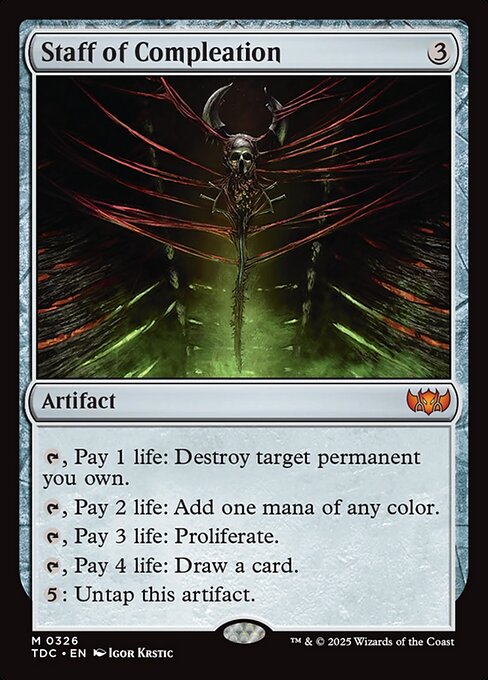 Staff of Compleation
{T}, Pay 1 life: Destroy target permanent you own.
Staff of Compleation
{T}, Pay 1 life: Destroy target permanent you own.
{T}, Pay 2 life: Add one mana of any color.
{T}, Pay 3 life: Proliferate.
{T}, Pay 4 life: Draw a card.
{5}: Untap this artifact.
because it does a little bit of everything…and also proliferates without the threat of taking infinite turns. It also prevents others from stealing your stuff, gives you extra card draw and mana fixing without taking up much build space, and gives you a mana sink for late game scenarios. Furthermore, it’s half the price of the Gauntlet, not that either card is particularly pricey but it’s always good to have many options at every budget.
Speaking of taking infinite turns, a card like
Savor the Moment
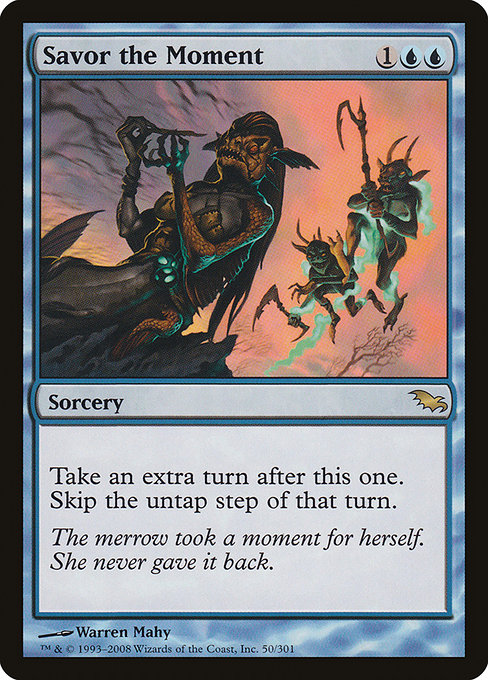 Savor the Moment
Take an extra turn after this one. Skip the untap step of that turn.
is always a strong include in a Planeswalker based deck but, again, runs afoul of lots of tables that frown upon extra turns. The same can be said for so many different versions of Teferi that can make the deck go from good to too good in the eyes of a particular venue, so tread carefully.
Savor the Moment
Take an extra turn after this one. Skip the untap step of that turn.
is always a strong include in a Planeswalker based deck but, again, runs afoul of lots of tables that frown upon extra turns. The same can be said for so many different versions of Teferi that can make the deck go from good to too good in the eyes of a particular venue, so tread carefully.
Read More: MTG Eldrazi Unbound Upgrades, Tips, and Gameplay Review
The Ultimate Question, Is it Worth it?
With a couple of pricey reprints and new cards, Planeswalker Party is worth $60 and pricing is falling to around that level now. No, this would not be worth the $80-$100 price tag that it originally looked to command and that is where a lot of the controversy was justified.
That being said, if I were a player that wanted a Superfriends deck right out of the box, this would not be a poor choice at all. If you keep the deck at the pre-constructed level interacting with other pre-cons, everything is fine. Someone building purely for power or a player that already has an extensive collection of cards, Planeswalkers in particular, is probably better off picking up Guff as a single and tilting the deck in a slightly different direction.
Read More: MTG’s Most Controversial EDH Deck is Better Than You Think