
Wizards of the Coast recently announced a major change to the Standard format. Rather than sets lasting two years until rotation, sets would instead last a full three years! Unsurprisingly, this led to a large deal of concern within the Magic community. This is mainly based around the health of the format and having to endure a metagame dominated by specific cards and decks that many find oppressive. Well, Wizards of the Coast clearly recognizes this skepticism about Standard’s health moving forward. They revealed that there will be an MTG ban announcement specifically centered around Standard on May 29. For those who have had an unpleasant experience playing against Fable of the Mirror-Breaker, you may just be in luck!
Standard’s Biggest Offender
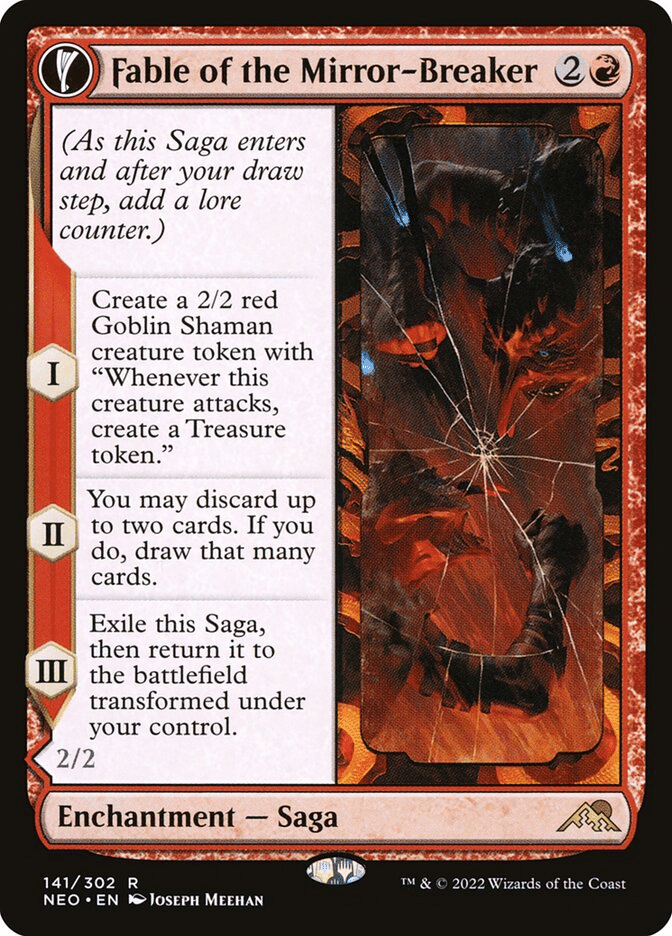
Fable has become one of the most ubiquitous cards for Standard in recent years. Compare it to a card like
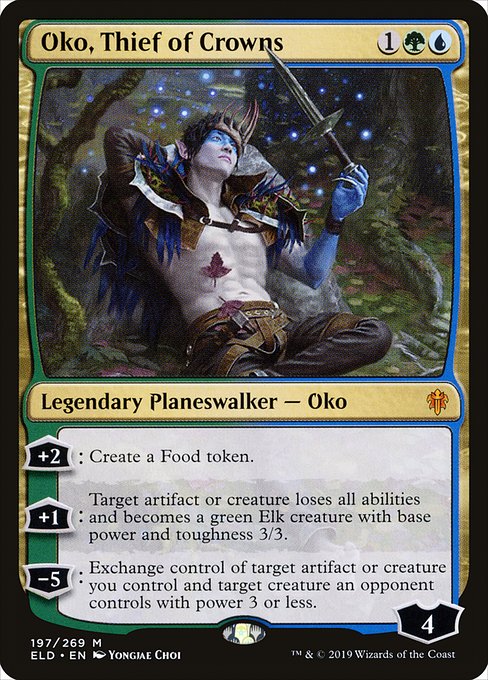
Oko, Thief of Crowns
 Oko, Thief of Crowns
+2: Create a Food token. (It's an artifact with "{2}, {T}, Sacrifice this token: You gain 3 life.")
Oko, Thief of Crowns
+2: Create a Food token. (It's an artifact with "{2}, {T}, Sacrifice this token: You gain 3 life.")
+1: Target artifact or creature loses all abilities and becomes a green Elk creature with base power and toughness 3/3.
−5: Exchange control of target artifact or creature you control and target creature an opponent controls with power 3 or less.
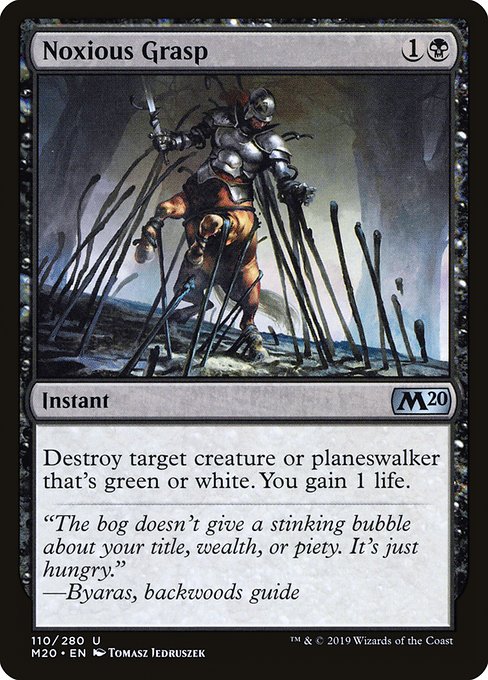
, which was banned following its whopping 69% showing in Mythic Championship IV decklists. Surely Fable isn’t THAT overwhelming, right? People were going as far then as to play specific hate cards like
Noxious Grasp
 Noxious Grasp
Destroy target creature or planeswalker that's green or white. You gain 1 life.
in the main deck targeting Oko, rather than just the sideboard! Is Fable really that homogenous? Well, the Pro Tour March of the Machine metagame breakdown supports it. Rakdos Midrange, Rakdos Reanimator, Grixis Midrange, and Grixis Reanimator, while different decks, are all centered around Fable, and together make up over half of the Pro tour metagame! This has led to Fable’s fair share of criticism and disapproval from the competitive community.
Noxious Grasp
Destroy target creature or planeswalker that's green or white. You gain 1 life.
in the main deck targeting Oko, rather than just the sideboard! Is Fable really that homogenous? Well, the Pro Tour March of the Machine metagame breakdown supports it. Rakdos Midrange, Rakdos Reanimator, Grixis Midrange, and Grixis Reanimator, while different decks, are all centered around Fable, and together make up over half of the Pro tour metagame! This has led to Fable’s fair share of criticism and disapproval from the competitive community.
Play vs Draw
The significance of being on the play vs on the draw cannot be overstated. Perhaps no Magic card in recent memory showcases this more than Fable. You sit down, ready to play your next match, lose the die roll, and before you know it, you face down a threat that ramps your opponent when they attack, leaving behind a saga that will quickly sculpt their hand and transform into a creature reminiscent of Kiki-Jiki, the original mirror breaker. Meanwhile, you only have two lands in play!
Even playing your own copy of Fable next turn lets your opponent get first crack at making treasures, improving the quality of their hand. Additionally, clean answers to Fable are few and far between. Once the enchantment resolves, using one-for-one removal on both the Goblin Shaman token and the flipped Fable is not a good exchange of resources, and answering both the enchantment and token in an efficient manner without using multiple cards is difficult. The combination of Fable’s efficiency, having a narrow range of answers, increasing the win rate disparity of the play/draw dynamic, and having an outrageous metagame share makes this MTG ban a slam dunk!
Read More: MTG Players Sorely Want More Preconstructed Decks
Problems Beyond Fable
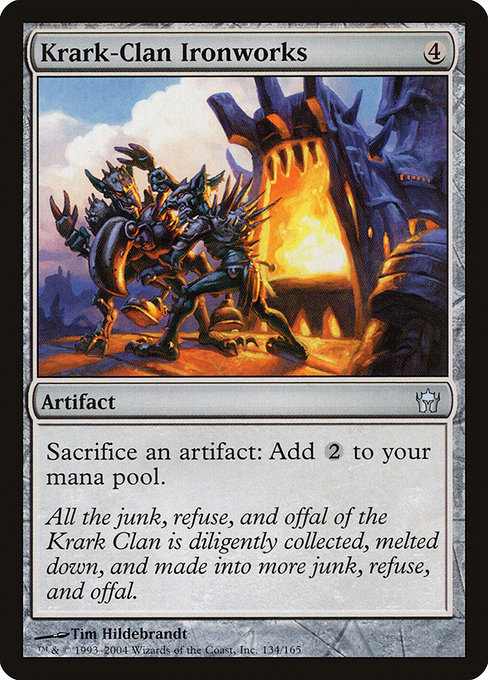
MTG bans can occur for a variety of reasons beyond simply having too much of a metagame presence or being too format-warping. Think of a card like
Krark-Clan Ironworks
 Krark-Clan Ironworks
Sacrifice an artifact: Add {C}{C}.
in the context of Modern. While KCI, the deck built around this namesake card, arguably did not have too overwhelming of a presence in the format, its unintuitive playstyle and long, drawn-out turns featuring little to no interaction was alarming. Sometimes, the play patterns surrounding a card matter a lot in the decision to ban it from a format. For example, The Meathook Massacre was banned in part for the repetitive gameplay it produced. While fun is certainly subjective, when a big chunk of the Magic Community objects to these play patterns, it may be time to take action, and three specific cards come to mind.
Krark-Clan Ironworks
Sacrifice an artifact: Add {C}{C}.
in the context of Modern. While KCI, the deck built around this namesake card, arguably did not have too overwhelming of a presence in the format, its unintuitive playstyle and long, drawn-out turns featuring little to no interaction was alarming. Sometimes, the play patterns surrounding a card matter a lot in the decision to ban it from a format. For example, The Meathook Massacre was banned in part for the repetitive gameplay it produced. While fun is certainly subjective, when a big chunk of the Magic Community objects to these play patterns, it may be time to take action, and three specific cards come to mind.
Sheoldred, the Apocolypse
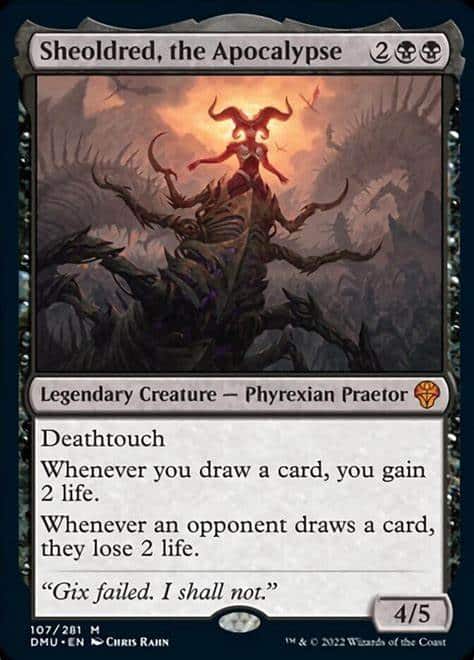
Sheoldred is a frustratingly good card. It is very easy to lose to this card and nothing else when it goes unanswered. My initial reaction to the card was that I thought this was a good thing. There have been many four and five mana cards printed over the years that are extremely powerful when they survive, but without haste or an enters the battlefield effect, they don’t make a huge impact, or are specifically good to fight certain matchups.
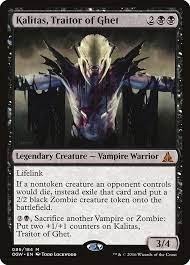
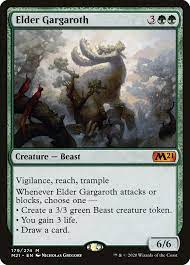
Both Kalitas and Elder Gargaroth have seen significant play before. They provide high risk and high reward gameplay. They are high mana cost plays that don’t normally generate immediate value. When they do survive, these cards can be extremely impactful against creature decks. Sheoldred is different because its triggered abilities pose a massive threat to almost every possible deck.
Even though it does not have an enters the battlefield effect, its triggered ability, likely at minimum, drains the opponent for two before they can answer it. It makes it very difficult for your opponent to dig for removal spells by drawing cards. The range of answers for a five-toughness creature in Standard is also limited as it is, and every deck is hurt by Sheoldred because every deck draws cards. Therefore, there is a much lower risk to casting Sheoldred while still maintaining its high reward. This means that most top-end midrange cards printed during this Standard rotation will most likely not find a home in any black deck, as competing with Sheoldred is a daunting task.
Reckoner Bankbuster
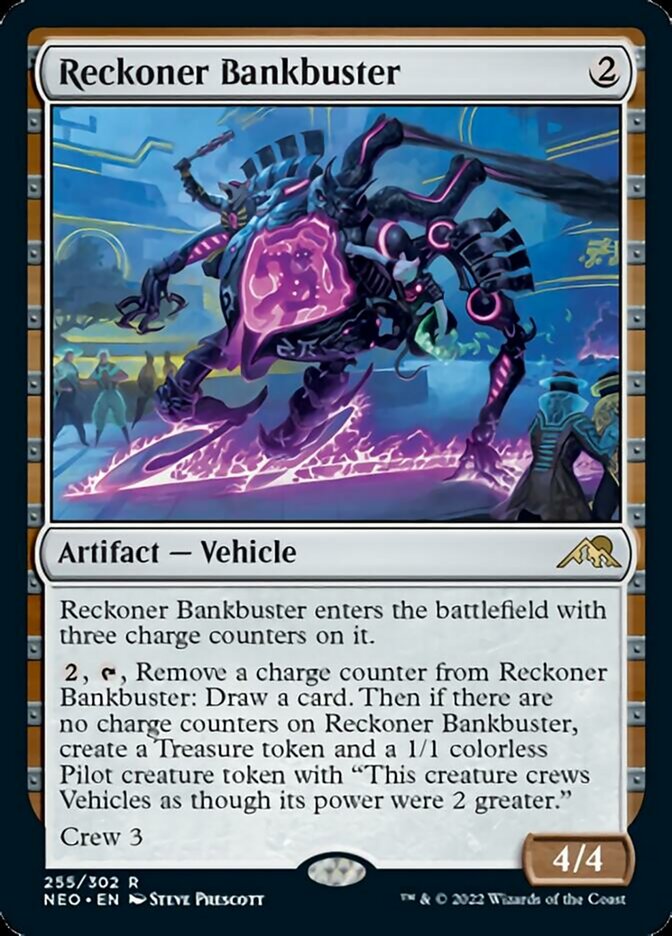
Reckoner Bankbuster being a colorless artifact makes it not restricted by a deck’s color requirements. Because of this, the card is even more homogenous than Fable, despite being a less powerful card overall. The card is also flexible, as it can be utilized as both a card draw engine and a beefy attacker and blocker. After drawing three cards, it also gives an added bonus of creating a treasure and a Pilot Token that can crew the Bankbuster itself. Similar to Fable, Bankbuster is also significantly better on the play. It lets you utilize the card draw ability without falling too far behind on board. Simultaneously, it threatens to put your opponent under immense pressure as a two-mana four-power creature in combination with cards like Graveyard Trespasser. Additionally, Bankbuster being an artifact means it is difficult for some decks to remove it on their own terms.
Read More: The MTG Ban List Schedule is Being Completely Reworked!
Atraxa, Grand Unifier
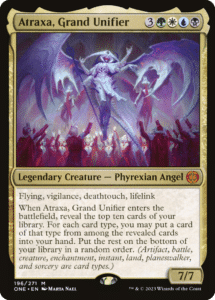
Atraxa is a classic high mana cost card that if you manage to put onto the battlefield, you will reap the rewards. Not only is the card a huge Flying and Lifelinking monster, but it also draws a lot of cards. The card is so powerful that it even challenges all-star
Griselbrand
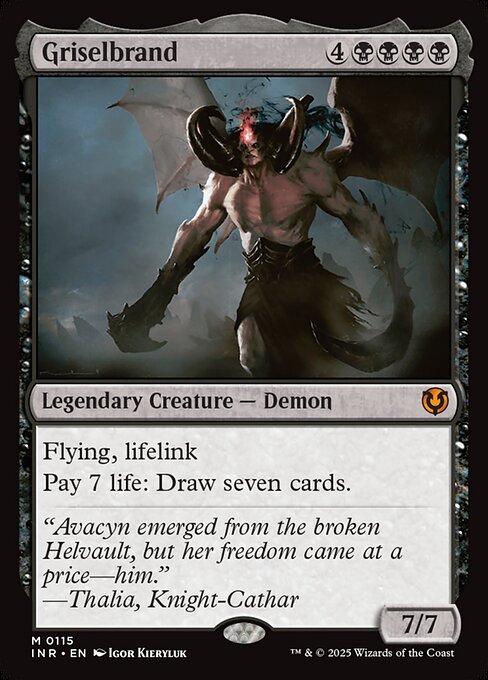 Griselbrand
Flying, lifelink
Griselbrand
Flying, lifelink
Pay 7 life: Draw seven cards.
for slots in Reanimator decks in Legacy! The issue is that getting this creature onto the battlefield may be too easy to come by in current Standard.
The mana is good enough with the three-color Cycling lands from Streets of New Capenna that ramping into Atraxa is easier than it may seem. The most recent Standard Challenge on Magic Online event featured a top 4 comprised entirely of Atraxa ramp decks! That doesn’t even include the versions of Rakdos that utilize Cruelty of Gix to cheat Atraxa into play! Having such a game-ending card be this easy to put into play can also encourage less interactive and reactive gameplay over time.
My MTG Ban Predictions:
While I made my case for the three biggest offenders in Standard that, in my opinion, may get banned, I truly believe the announcement will only include the banning of Fable of the Mirror-Breaker. Sheoldred is a controversial card to ban, even given its poor play patterns, because cards like
Go for the Throat
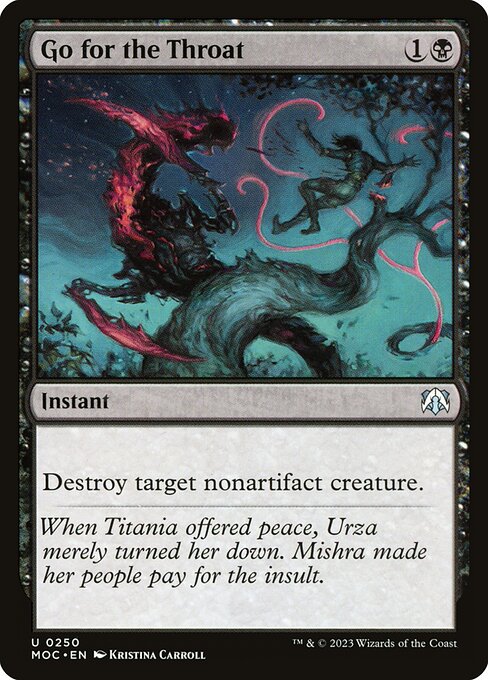 Go for the Throat
Destroy target nonartifact creature.
that are clean answers to it do exist. Reckoner Bankbuster may be flexible, but it takes a lot of mana investment to get good value out of. Atraxa decks, while powerful, can be on the slower side as well. Assuming Fable gets the axe, that may open the door for aggressive decks to keep Atraxa and Bankbuster in check. Decks like Mono Red Aggro and even Mono Blue Tempo may finally see a resurgence. Additionally, both cards are expensive chase Mythic Rares which definitely makes me less optimistic about their ban potential.
Go for the Throat
Destroy target nonartifact creature.
that are clean answers to it do exist. Reckoner Bankbuster may be flexible, but it takes a lot of mana investment to get good value out of. Atraxa decks, while powerful, can be on the slower side as well. Assuming Fable gets the axe, that may open the door for aggressive decks to keep Atraxa and Bankbuster in check. Decks like Mono Red Aggro and even Mono Blue Tempo may finally see a resurgence. Additionally, both cards are expensive chase Mythic Rares which definitely makes me less optimistic about their ban potential.
Despite this, I certainly remain optimistic about Standard moving forward. Even if the ban includes just Fable, some of the poor gameplay and play/draw significance should dissipate. At a minimum, this should shake up the format and create more deckbuilding exploration. I am excited to see where things go from here!
Read More: MTG Standard Changes Couldn’t Have Come at a Worse Time