
Kamigawa: Neon Dynasty was released just over a year ago on February 18th 2022. It was exceedingly popular, earning the title “homerun set of the year” from Magic’s lead designer. The set’s popularity was due, in part, to the long-awaited return to the Shinto-inspired plane of Kamigawa, now with a new cyberpunk coat of paint. The positive reception to the set can also be attributed to the excellent selection of cards it contains, many of which remain valuable today.
A few quick ground rules before we get into the list. The prices we list here are derived from TCGplayer’s Price Guide, we are using the market price of the card, for the date of 26/02/2023. As with our prior top 10 lists like this, we will only be using the base version of cards and won’t be counting alternative artwork treatments (this prevents 40% of the list just being variants of
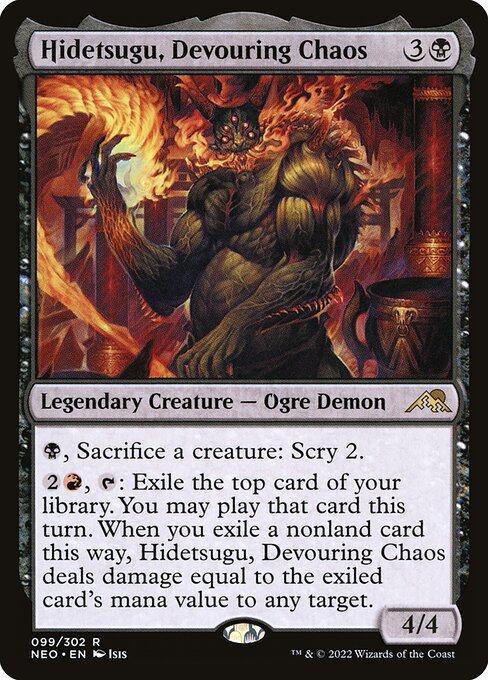
Hidetsugu, Devouring Chaos
 Hidetsugu, Devouring Chaos
{B}, Sacrifice a creature: Scry 2.
Hidetsugu, Devouring Chaos
{B}, Sacrifice a creature: Scry 2.
{2}{R}, {T}: Exile the top card of your library. You may play that card this turn. When you exile a nonland card this way, Hidetsugu deals damage equal to the exiled card's mana value to any target.
). With all of that said, let’s get started…
10. Eiganjo, Seat of the Empire $6.11
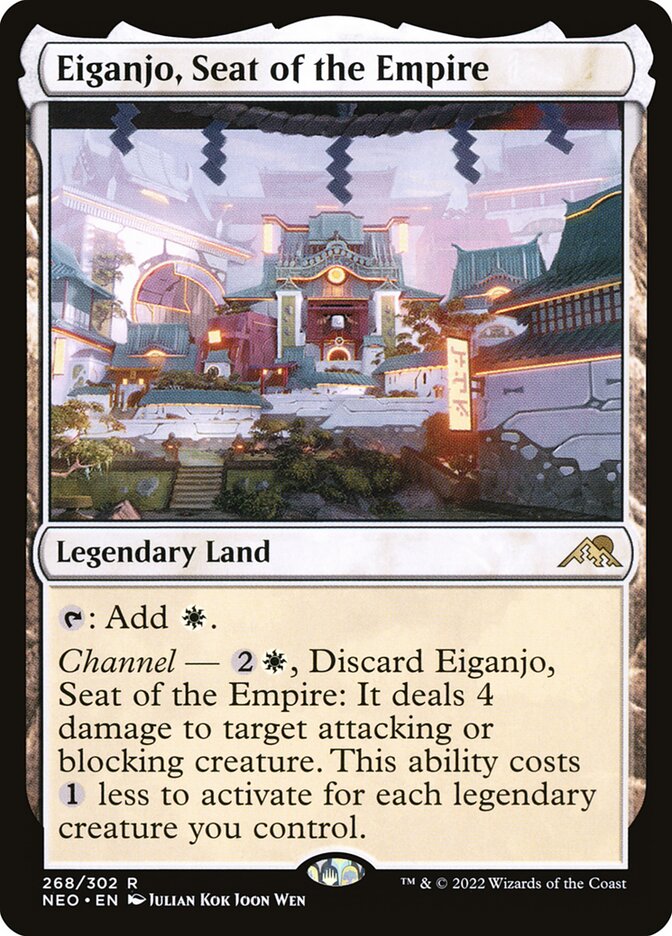
The cycle of Legendary Channel lands are one of the main reasons to crack Neon Dynasty booster packs. Just about every deck, regardless of format, can benefit from running at least one copy of whichever of these lands are in their colors. The cards from this cycle come dangerously close to being strictly better than basic lands. These five cards are held back only by the fact that they are legendary, meaning that you can only have one of each in play, and they do not possess the “basic land” tag, meaning they can’t be fetched by cards like
Rampant Growth
 Rampant Growth
Search your library for a basic land card, put that card onto the battlefield tapped, then shuffle.
. They also lack a land type, like Forest or Swamp, preventing them from being retrieved by fetch lands.
Rampant Growth
Search your library for a basic land card, put that card onto the battlefield tapped, then shuffle.
. They also lack a land type, like Forest or Swamp, preventing them from being retrieved by fetch lands.
At $3.19 Sokenzan, Crucible of Defiance, the Red card from this cycle, isn’t quite eligible to make this list, leaving
Eiganjo, Seat of the Empire
 Eiganjo, Seat of the Empire
{T}: Add {W}.
Eiganjo, Seat of the Empire
{T}: Add {W}.
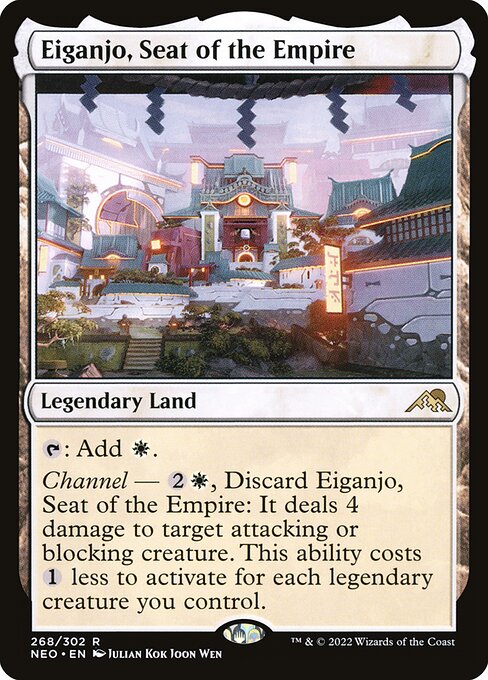
Channel — {2}{W}, Discard this card: It deals 4 damage to target attacking or blocking creature. This ability costs {1} less to activate for each legendary creature you control.
in the number 10 spot. Like the other cards from this cycle, Eiganjo, Seat of the Empire offers a, slightly overcosted, version of a common effect in its color. In Eiganjo’s case, it’s a 3 mana,
Gideon’s Reproach
 Gideon’s Reproach
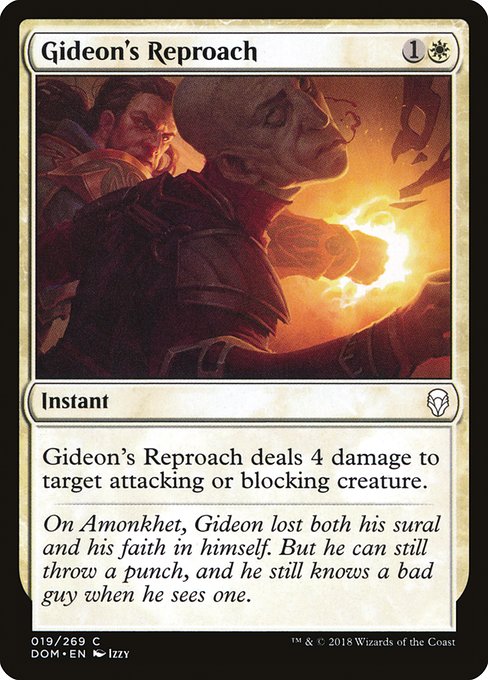
Gideon's Reproach deals 4 damage to target attacking or blocking creature.
, which gets discounted by one for every Legendary Creature you control. While, at first, this effect may seem underwhelming, the fact that this effect uses a land slot is hugely important. There is no real cost to including this card in your deck, as you will only be replacing a Plains. This fact is the secret to the channel land’s success.
Gideon’s Reproach
Gideon's Reproach deals 4 damage to target attacking or blocking creature.
, which gets discounted by one for every Legendary Creature you control. While, at first, this effect may seem underwhelming, the fact that this effect uses a land slot is hugely important. There is no real cost to including this card in your deck, as you will only be replacing a Plains. This fact is the secret to the channel land’s success.
9. Takenuma, Abandoned Mire $6.14
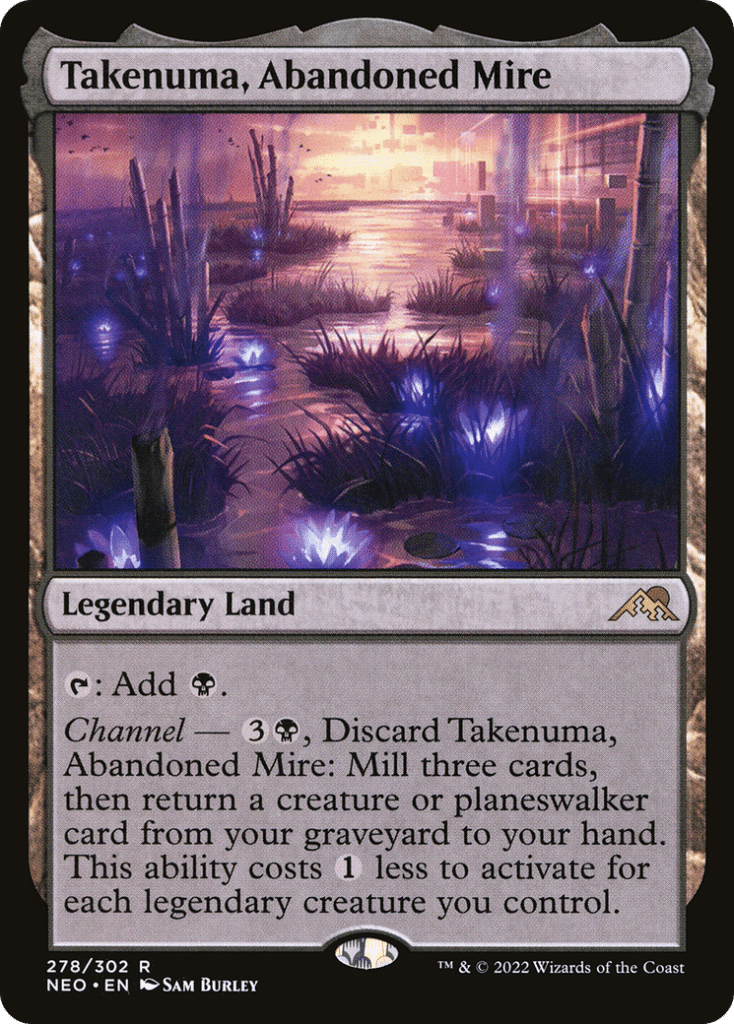
The second channel land on our list.
Takenuma, Abandoned Mire
 Takenuma, Abandoned Mire
{T}: Add {B}.
Takenuma, Abandoned Mire
{T}: Add {B}.
Channel — {3}{B}, Discard this card: Mill three cards, then return a creature or planeswalker card from your graveyard to your hand. This ability costs {1} less to activate for each legendary creature you control.
costs a whole 3 cents more than
Eiganjo, Seat of the Empire
Eiganjo, Seat of the Empire
{T}: Add {W}.
Channel — {2}{W}, Discard this card: It deals 4 damage to target attacking or blocking creature. This ability costs {1} less to activate for each legendary creature you control.
. This card mills its controller three cards and then allows them to return a Creature or Planeswalker from their graveyard to their hand. Just like Eiganjo, there is no reason not to run this card if you’re playing a Black deck. Many Black decks feature graveyard synergies, and even if your deck does not, a Swamp with some reanimation potential is almost always an upgrade worth making.
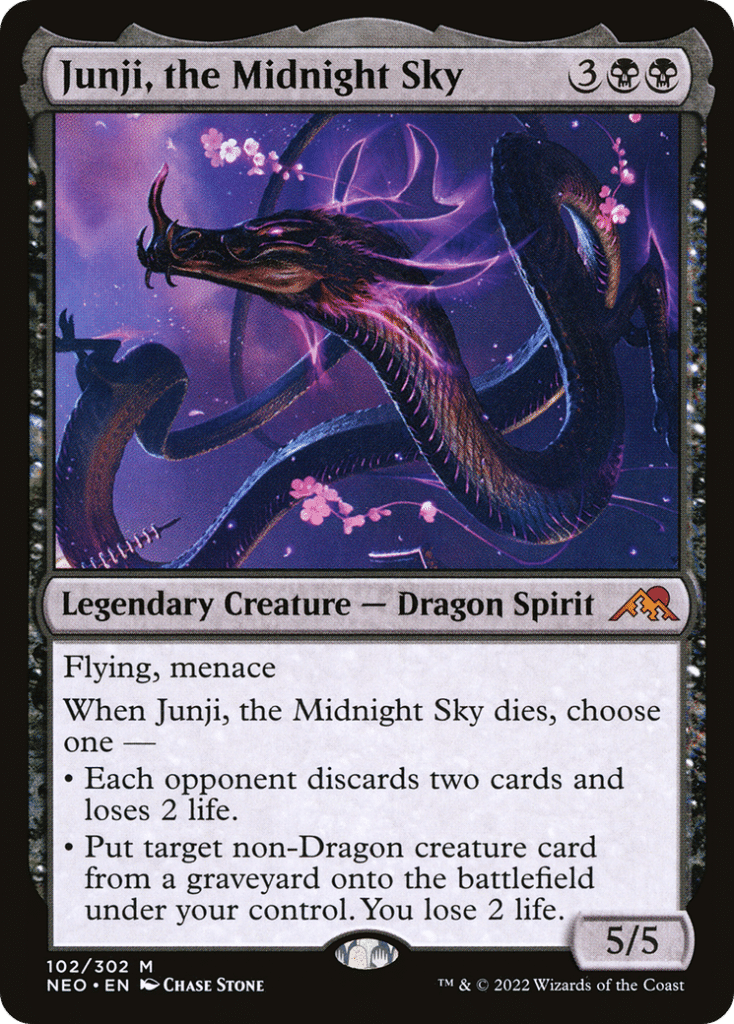
8. Junji, the Midnight Sky $6.17
Junji, the Midnight Sky
 Junji, the Midnight Sky
Flying, menace
Junji, the Midnight Sky
Flying, menace
When Junji dies, choose one —
• Each opponent discards two cards and loses 2 life.
• Put target non-Dragon creature card from a graveyard onto the battlefield under your control. You lose 2 life.
is a Spirt Dragon with Flying and Menace and a choice of two powerful death triggers. When Junji dies it either forces each opponent to lose two life and discard two cards or resurrects a non-dragon creature from your graveyard at the cost of two life.
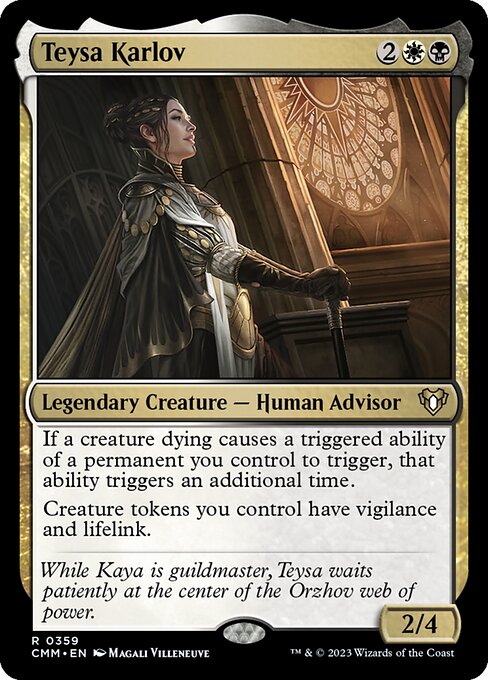
The card is a fun inclusion in Commander decks, especially alongside cards like
Teysa Karlov
 Teysa Karlov
If a creature dying causes a triggered ability of a permanent you control to trigger, that ability triggers an additional time.
Teysa Karlov
If a creature dying causes a triggered ability of a permanent you control to trigger, that ability triggers an additional time.
Creature tokens you control have vigilance and lifelink.
or
Drivnod, Carnage Dominus
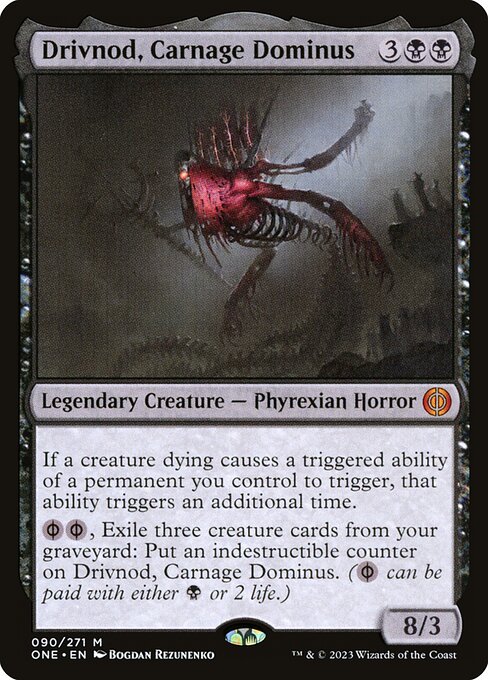 Drivnod, Carnage Dominus
If a creature dying causes a triggered ability of a permanent you control to trigger, that ability triggers an additional time.
Drivnod, Carnage Dominus
If a creature dying causes a triggered ability of a permanent you control to trigger, that ability triggers an additional time.
{B/P}{B/P}, Exile three creature cards from your graveyard: Put an indestructible counter on Drivnod. ({B/P} can be paid with either {B} or 2 life.)
which can give you twice as much value from its death triggers.
Junji, the Midnight Sky
Junji, the Midnight Sky
Flying, menace
When Junji dies, choose one —
• Each opponent discards two cards and loses 2 life.
• Put target non-Dragon creature card from a graveyard onto the battlefield under your control. You lose 2 life.
doesn’t really see a huge amount of play in formats other than Commander, so Standard rotation in September is unlikely to alter its price too much.
7. Kodama of the West Tree $9.43

Kodama of the West Tree
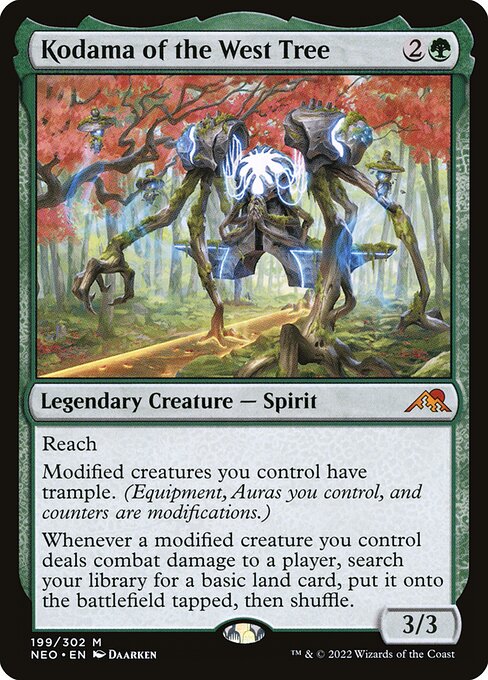 Kodama of the West Tree
Reach
Kodama of the West Tree
Reach
Modified creatures you control have trample. (Equipment, Auras you control, and counters are modifications.)
Whenever a modified creature you control deals combat damage to a player, search your library for a basic land card, put it onto the battlefield tapped, then shuffle.
has a neat ramp effect that can slide into many different deck archetypes. The Kodama gives all modified creatures (that’s all creatures with counters, auras, or equipment on them) Trample. When any modified deal combat damage to an opponent, Kodama of the West Tree ramps out a basic land.
Kodama of the West Tree
Kodama of the West Tree
Reach
Modified creatures you control have trample. (Equipment, Auras you control, and counters are modifications.)
Whenever a modified creature you control deals combat damage to a player, search your library for a basic land card, put it onto the battlefield tapped, then shuffle.
is primarily seen in Commander. The card saw occasional fringe play in Standard when Zendikar Rising was still a part of the format.
Luminarch Aspirant
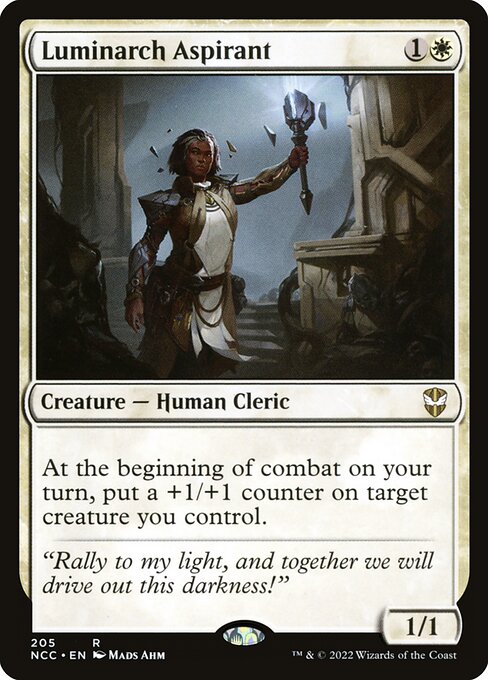 Luminarch Aspirant
At the beginning of combat on your turn, put a +1/+1 counter on target creature you control.
provided a quick and reliable way to modify creatures with +1/+1 counters, enabling the Kodama’s effect. Without Luminarch Aspirant in the format, the Kodama doesn’t really show up anymore and so its price is unlikely to be too severely impacted by rotation.
Luminarch Aspirant
At the beginning of combat on your turn, put a +1/+1 counter on target creature you control.
provided a quick and reliable way to modify creatures with +1/+1 counters, enabling the Kodama’s effect. Without Luminarch Aspirant in the format, the Kodama doesn’t really show up anymore and so its price is unlikely to be too severely impacted by rotation.
6. Farewell $10.38

Farewell
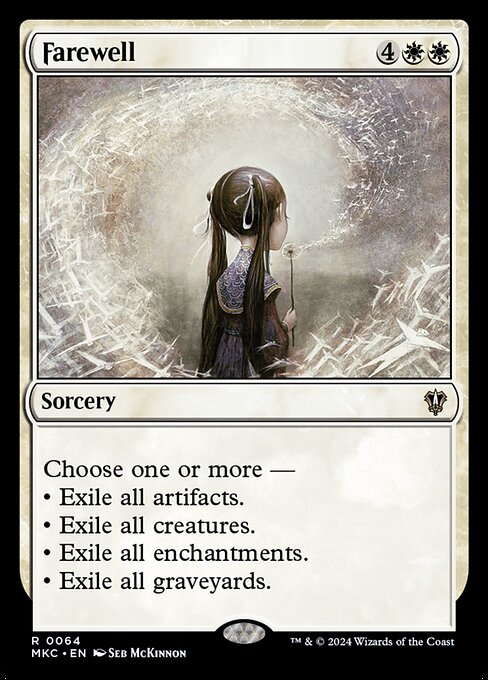 Farewell
Choose one or more —
Farewell
Choose one or more —
• Exile all artifacts.
• Exile all creatures.
• Exile all enchantments.
• Exile all graveyards.
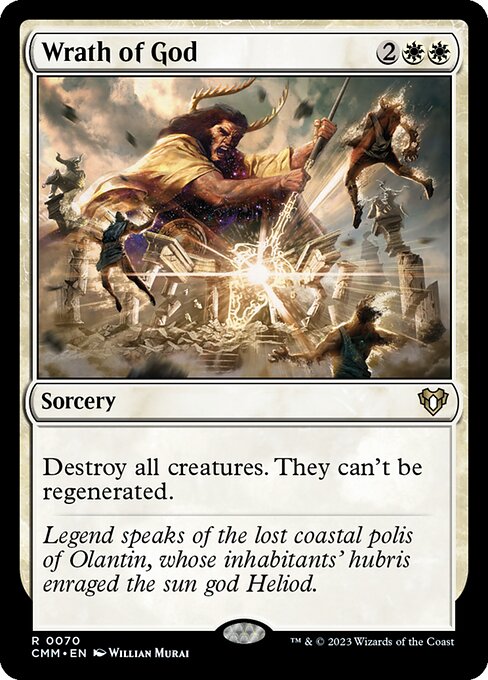
is a board wipe, and honestly a very good one. It stands out even in White, which has the largest range of board wipes to choose from. Despite the fact that Farewell costs two more mana than
Wrath of God
 Wrath of God
Destroy all creatures. They can't be regenerated.
it offers significantly more versatility. Farewell can not only wipe out all of the creatures in play, but it can also go for Artifacts and Enchants, as well as clearing everyone’s graveyard. The fact that this card can do all of the above, or only the modes which are useful in a given context, makes it incredibly potent. Farewell also exiles all of the cards it hit, rather than merely destroying them.
Wrath of God
Destroy all creatures. They can't be regenerated.
it offers significantly more versatility. Farewell can not only wipe out all of the creatures in play, but it can also go for Artifacts and Enchants, as well as clearing everyone’s graveyard. The fact that this card can do all of the above, or only the modes which are useful in a given context, makes it incredibly potent. Farewell also exiles all of the cards it hit, rather than merely destroying them.
Farewell
Farewell
Choose one or more —
• Exile all artifacts.
• Exile all creatures.
• Exile all enchantments.
• Exile all graveyards.
sees play in Standard, as well as Pioneer and the MTG Arena exclusive Historic format. Because this card will no longer be eligible for Standard play in September, its value may take just a bit of a dip, but its presence in other formats ensures there will still be demand for this card.
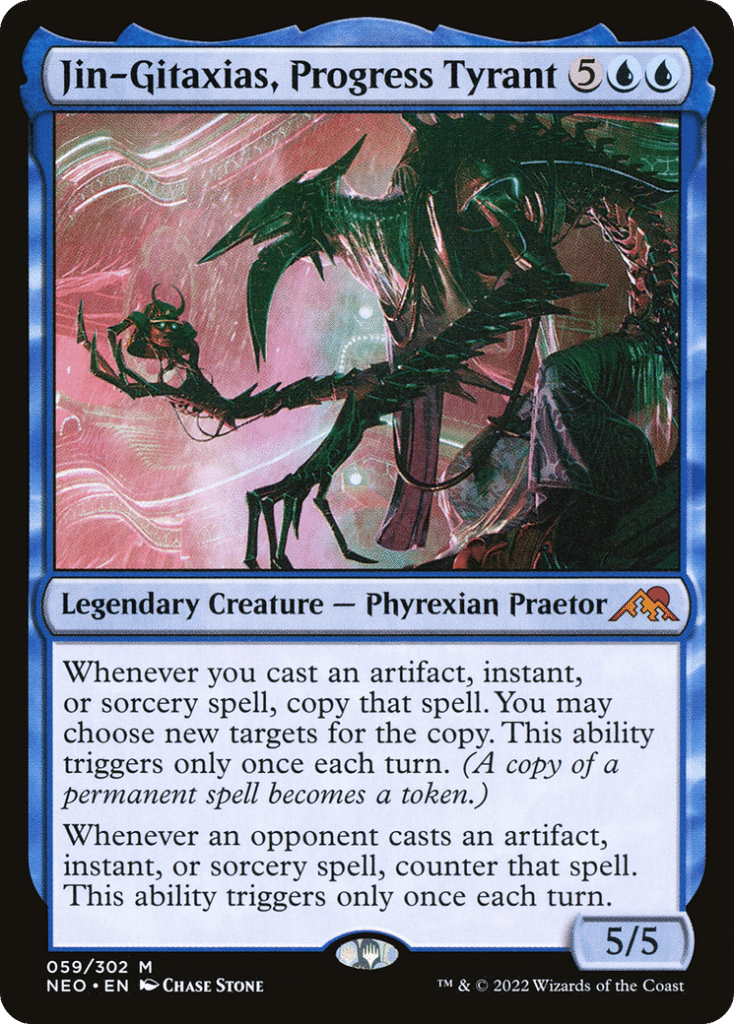
5. Jin-Gitaxias, Progress Tyrant $10.83
Jin-Gitaxias, Progress Tyrant
 Jin-Gitaxias, Progress Tyrant
Whenever you cast an artifact, instant, or sorcery spell, copy that spell. You may choose new targets for the copy. This ability triggers only once each turn. (A copy of a permanent spell becomes a token.)
Jin-Gitaxias, Progress Tyrant
Whenever you cast an artifact, instant, or sorcery spell, copy that spell. You may choose new targets for the copy. This ability triggers only once each turn. (A copy of a permanent spell becomes a token.)
Whenever an opponent casts an artifact, instant, or sorcery spell, counter that spell. This ability triggers only once each turn.
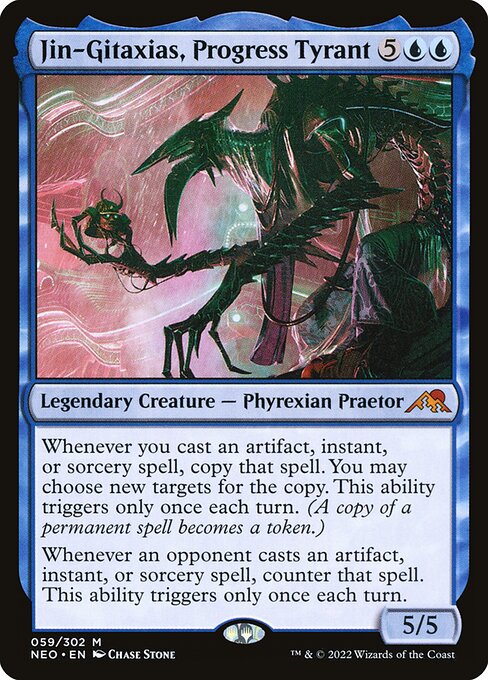
is a formidable Phyrexian Praetor and an exceedingly frustrating Control card to come up against. Jin-Gitaxias copies the first Instant, Sorcery, or Artifact spell which its controller casts on any turn, and automatically counters the first Instant, Sorcery, or Artifact any opponents cast each turn. This card is very difficult to destroy because in order to hit it with a removal spell likd
Swords to Plowshares
 Swords to Plowshares
Exile target creature. Its controller gains life equal to its power.
or a
Doom Blade
Swords to Plowshares
Exile target creature. Its controller gains life equal to its power.
or a
Doom Blade
 Doom Blade
Destroy target nonblack creature.
first another Instant, Sorcery or Artifact must be wasted in order to disarm its counter effect.
Doom Blade
Destroy target nonblack creature.
first another Instant, Sorcery or Artifact must be wasted in order to disarm its counter effect.
4. Otawara, Soaring City $14.63
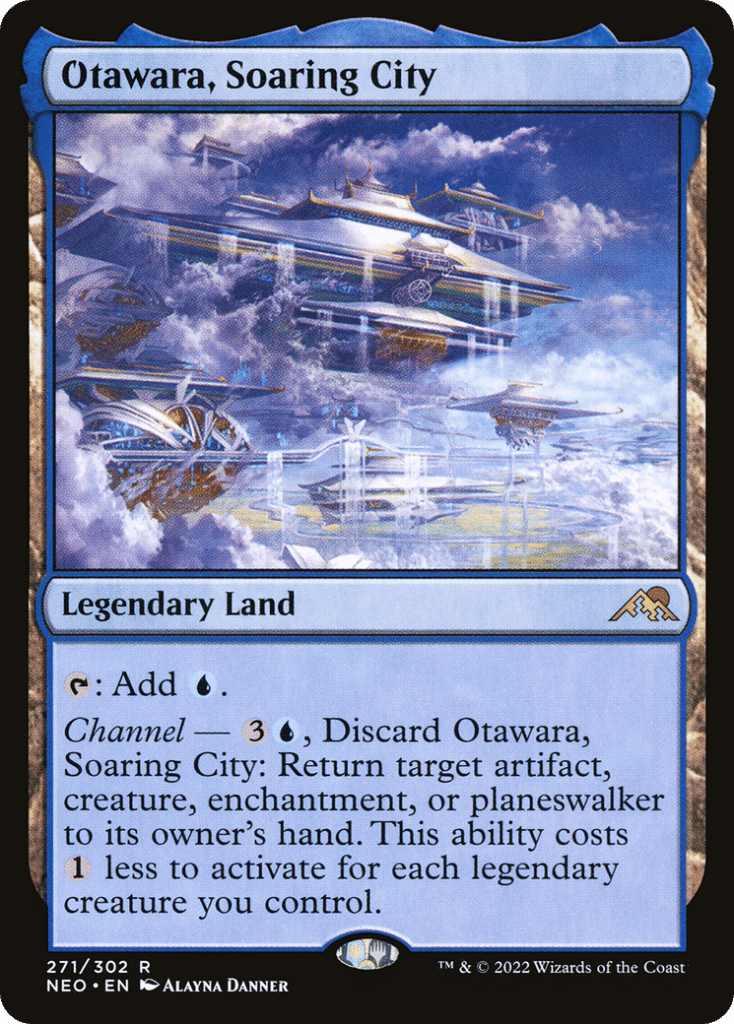
The third card from the Legendary Channel lands cycle on this list.
Otawara, Soaring City
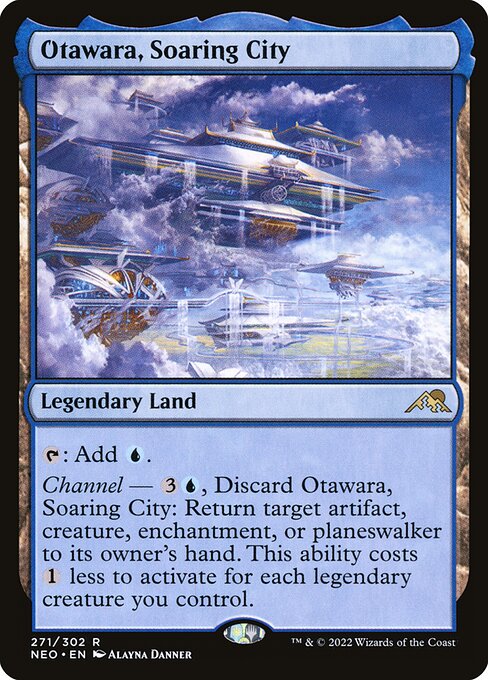 Otawara, Soaring City
{T}: Add {U}.
Otawara, Soaring City
{T}: Add {U}.
Channel — {3}{U}, Discard this card: Return target artifact, creature, enchantment, or planeswalker to its owner's hand. This ability costs {1} less to activate for each legendary creature you control.
can bounce a wide variety of different permanent types. In addition to all the reasons listed above, cards from this cycle are particularly good because they can’t be countered. Using the Channel effect does not qualify as “casting a spell”. Even though this card is more pricey than something like
Unsummon
 Unsummon
Return target creature to its owner's hand.
it’s still overall a much more useful card.
Unsummon
Return target creature to its owner's hand.
it’s still overall a much more useful card.
3. Fable of the Mirror Breaker $22.43
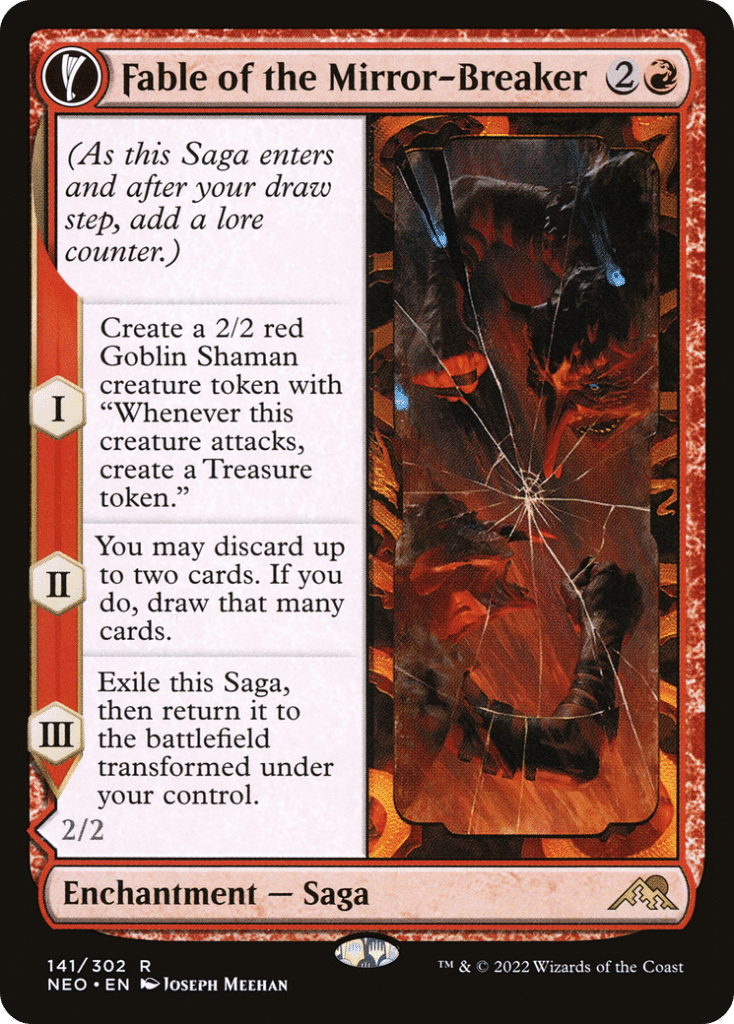
Fable of the Mirror Breaker
 Fable of the Mirror Breaker
(As this Saga enters and after your draw step, add a lore counter.)
Fable of the Mirror Breaker
(As this Saga enters and after your draw step, add a lore counter.)
I — Create a 2/2 red Goblin Shaman creature token with "Whenever this token attacks, create a Treasure token."
II — You may discard up to two cards. If you do, draw that many cards.
III — Exile this Saga, then return it to the battlefield transformed under your control.
is something of a rising star. Initially dismissed as a bulk rare, worth only around 50 cents, the incredible strength of this card was discovered in late March of 2022 and its price has been steadily rising ever since. Fable of the Mirror Breaker is now worth more than $20 and, given its presence in the deck that one the most recent Pro tour, it probably won’t be slowing down any time soon.
This card provides a lot of value for only three mana, first generating a 2/2 Goblin token, which then has the power to create treasure tokens, then enabling you to discard up to two cards to draw the same amount and then transforming into a 2/2 Goblin with a similar ability to the iconic
Kiki-Jiki, Mirror Breaker
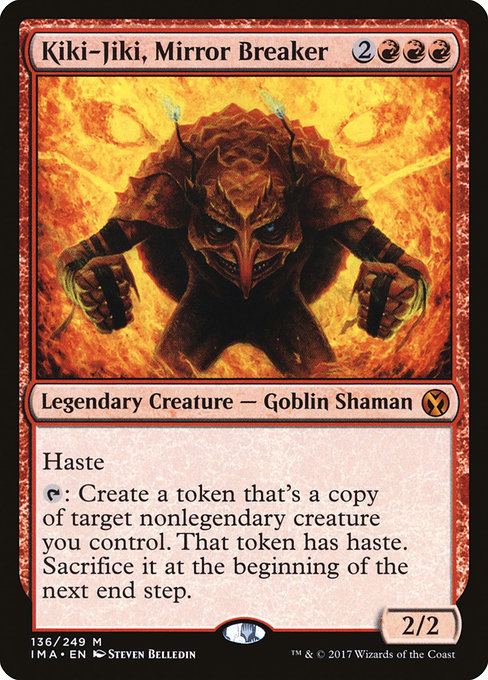 Kiki-Jiki, Mirror Breaker
Haste
Kiki-Jiki, Mirror Breaker
Haste
{T}: Create a token that's a copy of target nonlegendary creature you control, except it has haste. Sacrifice it at the beginning of the next end step.
. Fable of the Mirror Breaker is a multi-format all-star and, if current trends continue, its value is only likely to rise in the future.
2. The Wandering Emperor $22.80
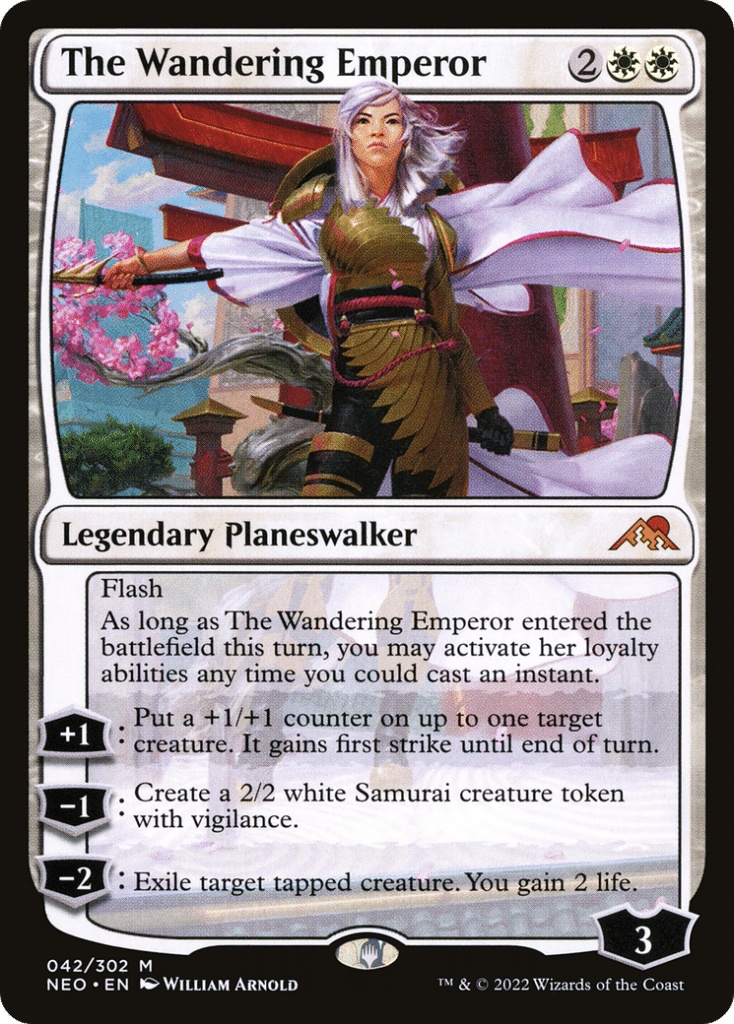
The Wandering Emperor
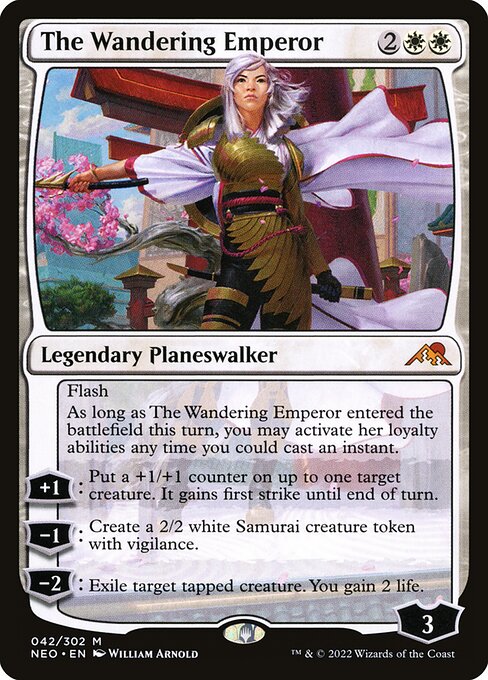 The Wandering Emperor
Flash
The Wandering Emperor
Flash
As long as The Wandering Emperor entered this turn, you may activate her loyalty abilities any time you could cast an instant.
+1: Put a +1/+1 counter on up to one target creature. It gains first strike until end of turn.
−1: Create a 2/2 white Samurai creature token with vigilance.
−2: Exile target tapped creature. You gain 2 life.
is a powerful combination of a Planeswalker and a combat trick. Uniquely among Planeswalkers, The Wandering Emperor has Flash and can be brought into play during an opponent’s combat step to cause massive disruption. The Emperor can put a +1/+1 counter on a creature and give it First Strike, enabling it to survive a fight it may otherwise have lost. The emperor can generate a 2/2 Vigilant Samurai token to surprise an opponent with a blocker that they hadn’t anticipated. The Emperor can even just outright exile an attacking creature completely. If you’ve got a Wandering Emperor in your deck, no opponent will ever feel secure attacking you again whilst you’ve got mana open.
The Wandering Emperor sees play in Standard, Pioneer, and even, at times in Modern. The card most recently showed up in several Blue/White control decks at Pro Tour: Phyrexia.
1. Boseiju, Who Endures $35.75
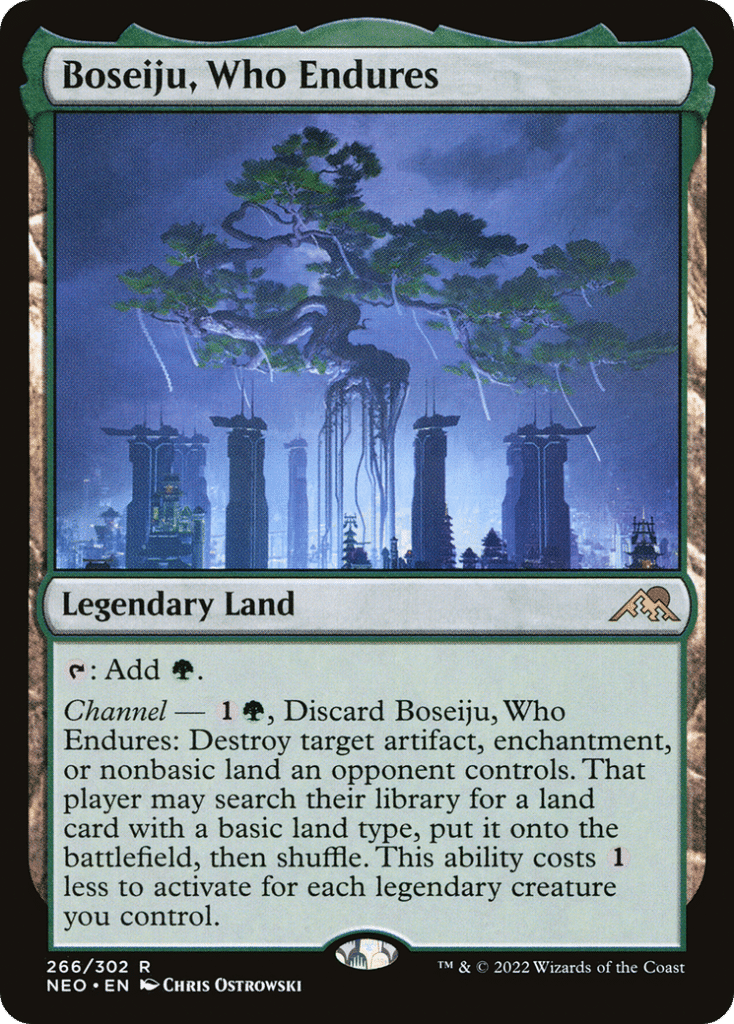
Finally, bookending our list, is another Legendary Channel land
Boseiju, Who Endures
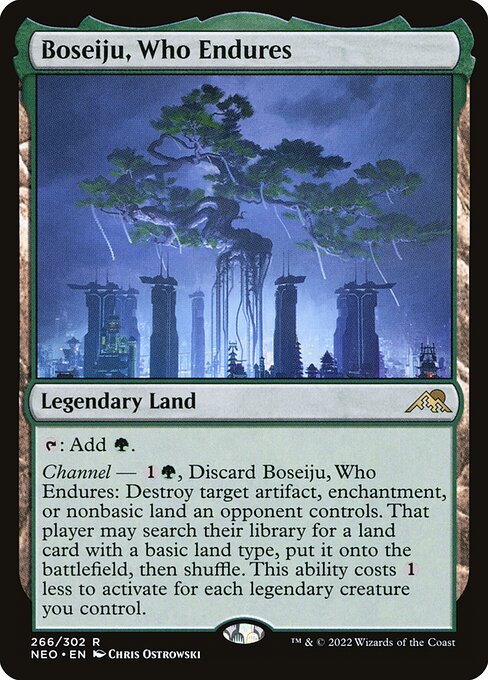 Boseiju, Who Endures
{T}: Add {G}.
Boseiju, Who Endures
{T}: Add {G}.
Channel — {1}{G}, Discard this card: Destroy target artifact, enchantment, or nonbasic land an opponent controls. That player may search their library for a land card with a basic land type, put it onto the battlefield, then shuffle. This ability costs {1} less to activate for each legendary creature you control.
. This card is great for all of the reasons discussed above about why these channel lands are powerful. A useful effect, which uses a land slot, rather than a slot that could otherwise house an impactful card. a significantly better Naturalise which can target non-basic lands, as well as Enchantments and Artifacts, even if it does allow opponents to fetch a basic land from their deck. What makes this card the most valuable in the cycle is that it allows you to free up sideboard slots. Usually, sideboards need to reserve some space for Artifact, and Enchantment removal effects, but Boseiju allows such effects to be run in the main deck.
If you were ever wondering why Kamigawa: Neon Dynasty packs sell out very quickly, one of the reasons is the fact that the most valuable cycle in the set is available at Rare, rather than Mythic. Like the other cards from its cycle, Boseiju sees play in every format in which it is legal.
Read more: Top 5 Most Expensive MTG Uncommon Cards