
At this point, players have had a decent amount of time to learn how to maximize Murders at Karlov Manor cards. From
Leyline of the Guildpact
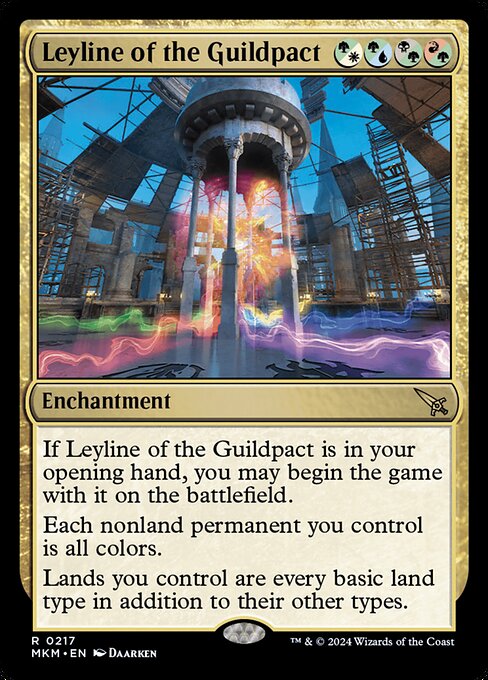 Leyline of the Guildpact
If this card is in your opening hand, you may begin the game with it on the battlefield.
Leyline of the Guildpact
If this card is in your opening hand, you may begin the game with it on the battlefield.
Each nonland permanent you control is all colors.
Lands you control are every basic land type in addition to their other types.
in Modern to
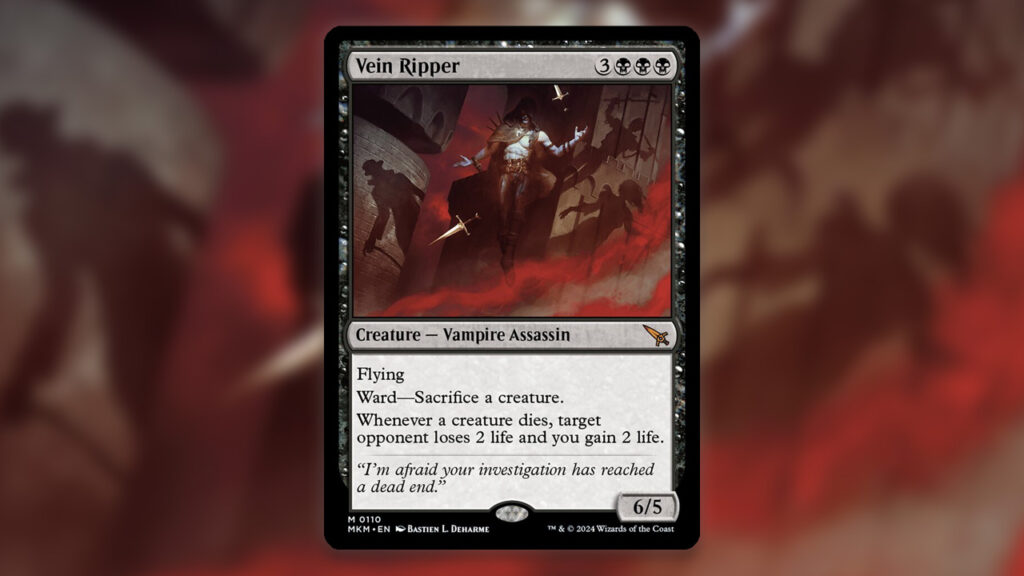
Vein Ripper
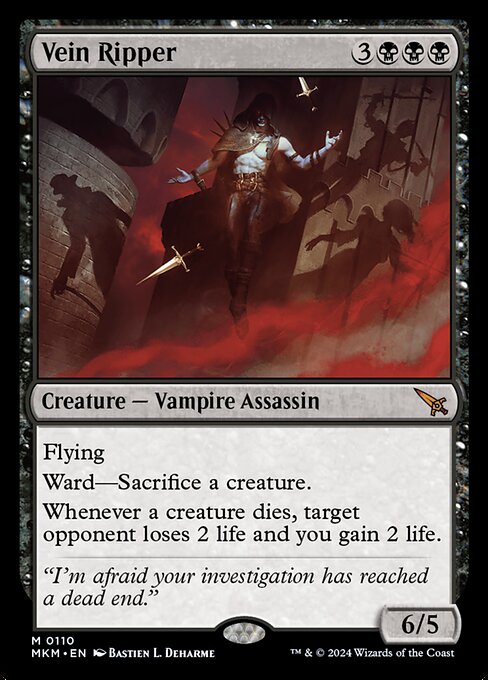 Vein Ripper
Flying
Vein Ripper
Flying
Ward—Sacrifice a creature.
Whenever a creature dies, target opponent loses 2 life and you gain 2 life.
in Pioneer, this set has been extremely impactful at the top level. Interestingly, though, players are still finding new ways to utilize undervalued Karlov Manor cards.
In a recent Pioneer Last Chance event on Magic Online, an intriguing Rakdos
Transmogrify
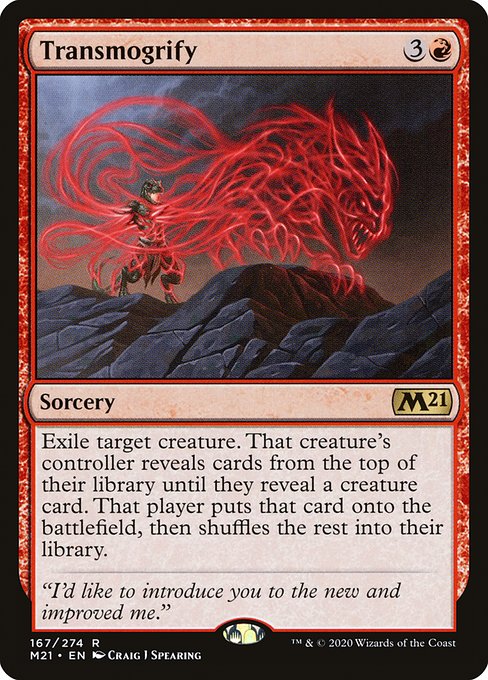 Transmogrify
Exile target creature. That creature's controller reveals cards from the top of their library until they reveal a creature card. That player puts that card onto the battlefield, then shuffles the rest into their library.
list managed to go undefeated. While this archetype isn’t necessarily new, it’s been a while since it has made any noise in the format. However, the printing of a Karlov Manor Case helped solve some of the issues the deck has had in the past.
Transmogrify
Exile target creature. That creature's controller reveals cards from the top of their library until they reveal a creature card. That player puts that card onto the battlefield, then shuffles the rest into their library.
list managed to go undefeated. While this archetype isn’t necessarily new, it’s been a while since it has made any noise in the format. However, the printing of a Karlov Manor Case helped solve some of the issues the deck has had in the past.
Maximizing Transmogrify
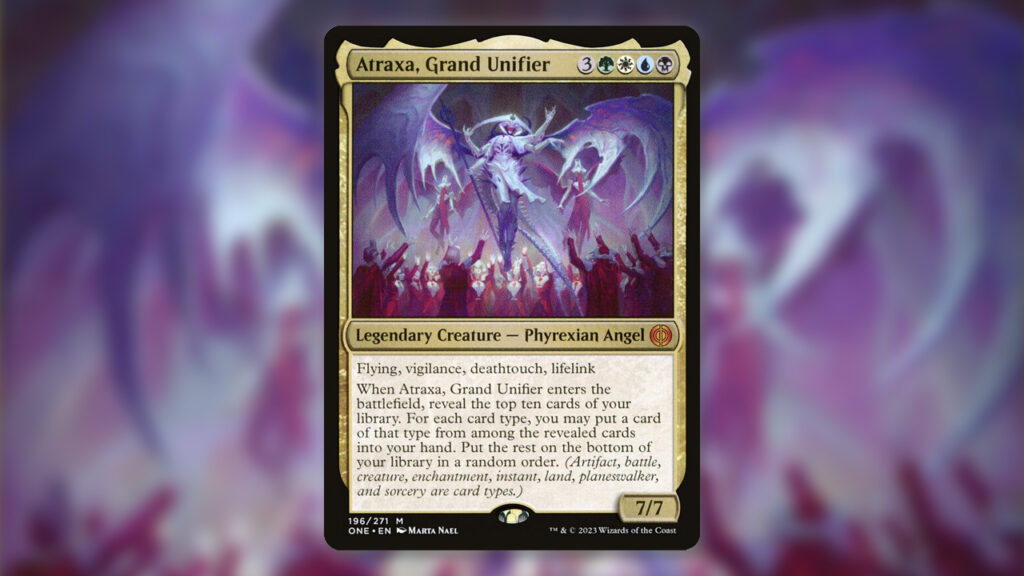
The goal of this deck is to find a window to cast Transmogrify targeting one of your Creatures. Notably, every card that is capable of providing a Creature for Transmogrify to target is not actually a Creature itself. Instead, this deck utilizes Enchantments, Artifacts, and Lands that produce Creature tokens. The only Creature in the deck is Atraxa, Grand Unifier. This way, when you resolve Transmogrify, you are guaranteed to get an Atraxa into play from your library.
In this sense, the deck operates closely to
Indomitable Creativity
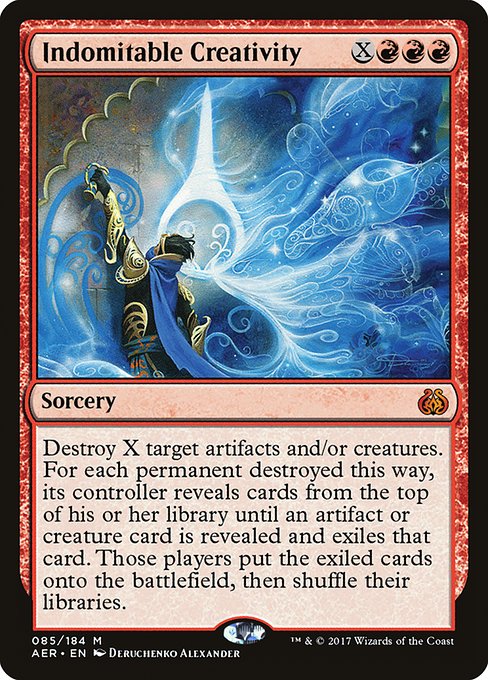 Indomitable Creativity
Destroy X target artifacts and/or creatures. For each permanent destroyed this way, its controller reveals cards from the top of their library until an artifact or creature card is revealed and exiles that card. Those players put the exiled cards onto the battlefield, then shuffle.
decks in Pioneer, making use of midrange and control elements with a combo finish. Some of the cards, like
Fable of the Mirror-Breaker
Indomitable Creativity
Destroy X target artifacts and/or creatures. For each permanent destroyed this way, its controller reveals cards from the top of their library until an artifact or creature card is revealed and exiles that card. Those players put the exiled cards onto the battlefield, then shuffle.
decks in Pioneer, making use of midrange and control elements with a combo finish. Some of the cards, like
Fable of the Mirror-Breaker
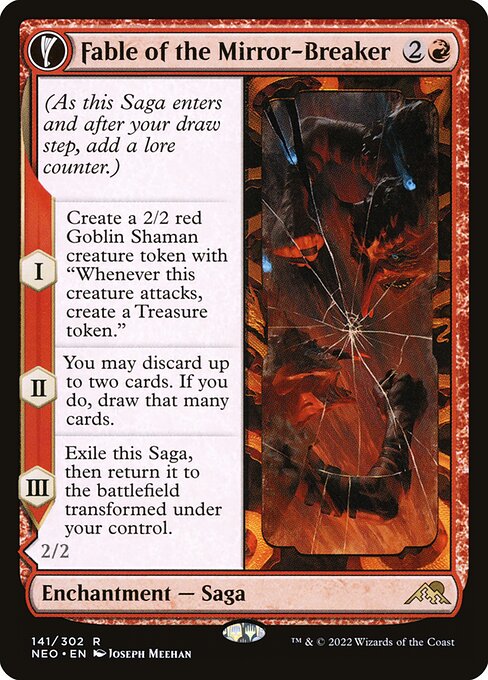 Fable of the Mirror-Breaker
(As this Saga enters and after your draw step, add a lore counter.)
Fable of the Mirror-Breaker
(As this Saga enters and after your draw step, add a lore counter.)
I — Create a 2/2 red Goblin Shaman creature token with "Whenever this token attacks, create a Treasure token."
II — You may discard up to two cards. If you do, draw that many cards.
III — Exile this Saga, then return it to the battlefield transformed under your control.
, unsurprisingly overlap. Transmogrify decks do have some perks, however, that separate themselves from Creativity shells.
First and foremost, Transmogrify only interacts with Creatures and can only put Creatures from your library into play. This means that you have free reign to run all the Artifacts you want. Getting to sideboard in
Damping Sphere
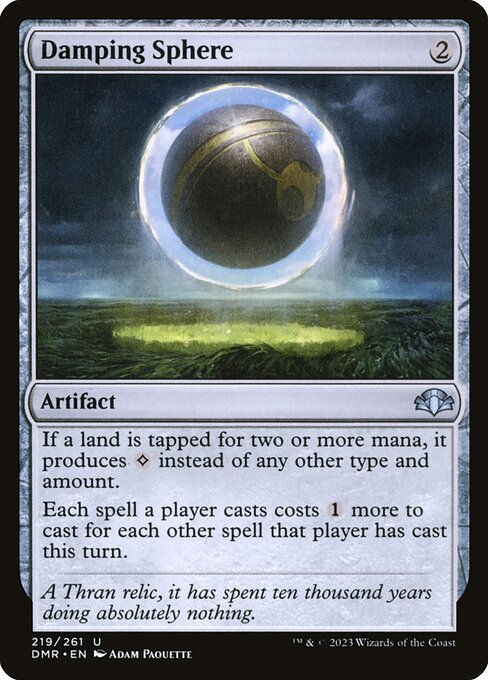 Damping Sphere
If a land is tapped for two or more mana, it produces {C} instead of any other type and amount.
Damping Sphere
If a land is tapped for two or more mana, it produces {C} instead of any other type and amount.
Each spell a player casts costs {1} more to cast for each other spell that player has cast this turn.
, for instance, can be hugely important against
Lotus Field
 Lotus Field
Hexproof
Lotus Field
Hexproof
This land enters tapped.
When this land enters, sacrifice two lands.
{T}: Add three mana of any one color.
combo.
The downside, of course, is that if you cast Transmogrify and your opponent has Instant-speed Creature removal at the ready, you can get blown out. Whether you are making tokens off of Fable,
Mirrex
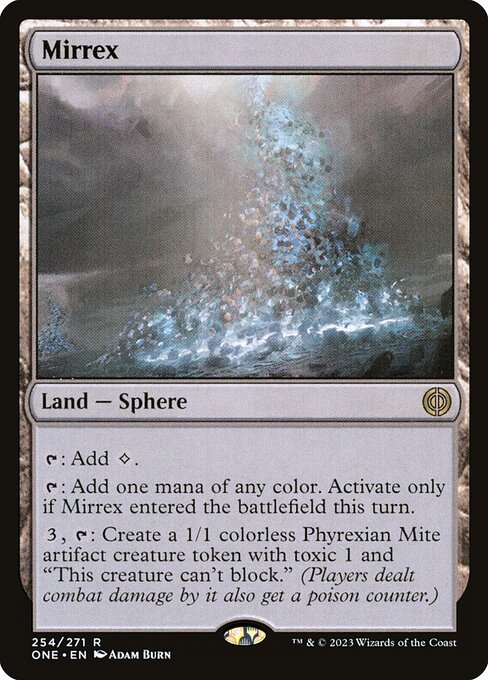 Mirrex
{T}: Add {C}.
Mirrex
{T}: Add {C}.
{T}: Add one mana of any color. Activate only if this land entered this turn.
{3}, {T}: Create a 1/1 colorless Phyrexian Mite artifact creature token with toxic 1 and "This token can't block." (Players dealt combat damage by it also get a poison counter.)
,
Barbed Batterfist
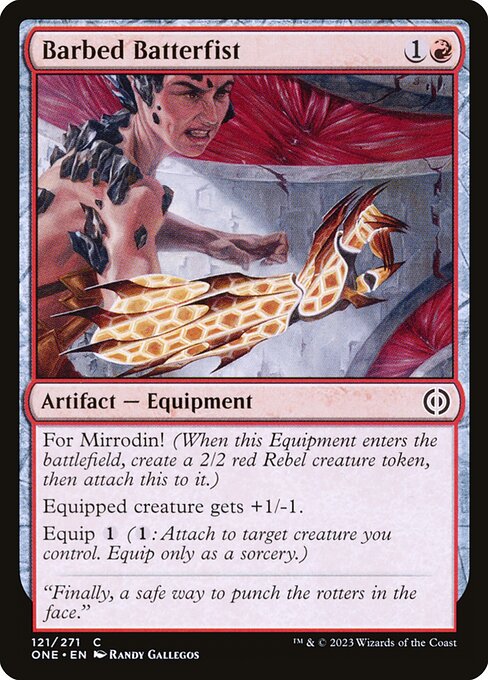 Barbed Batterfist
For Mirrodin! (When this Equipment enters, create a 2/2 red Rebel creature token, then attach this to it.)
Barbed Batterfist
For Mirrodin! (When this Equipment enters, create a 2/2 red Rebel creature token, then attach this to it.)
Equipped creature gets +1/-1.
Equip {1} ({1}: Attach to target creature you control. Equip only as a sorcery.)
, or any other source, it’s imperative that you clear the path for Transmogrify. Fortunately, this is where your black midrange elements come into play.
Read More: New MTG Arena Clues Reveals Secret In-Game Event!
Rakdos Midrange Overlap
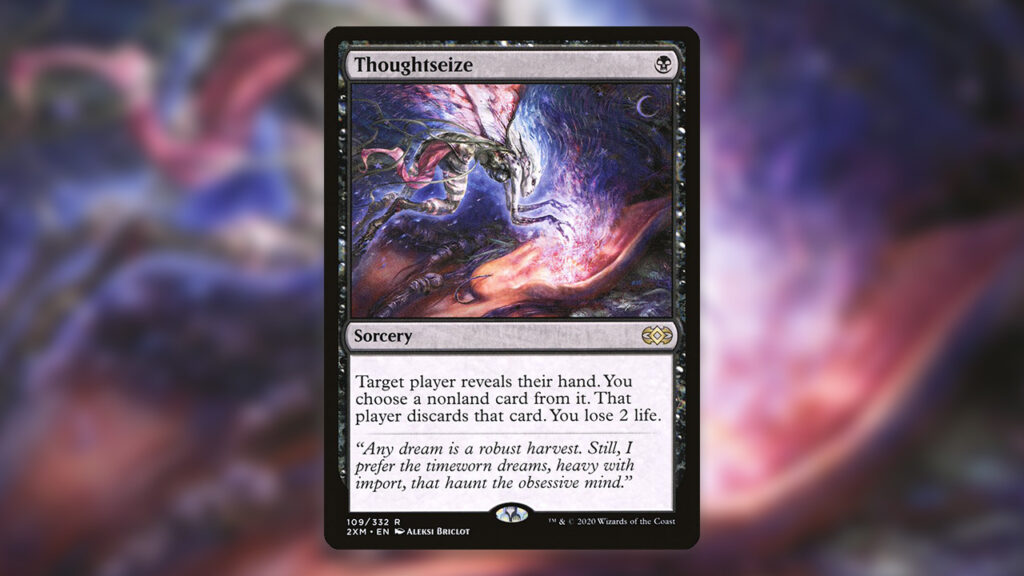
The main reason this deck utilizes black as a secondary color rather than going a Jeskai route like most Creativity lists is because of the wide range of efficient disruptive elements available in black. From
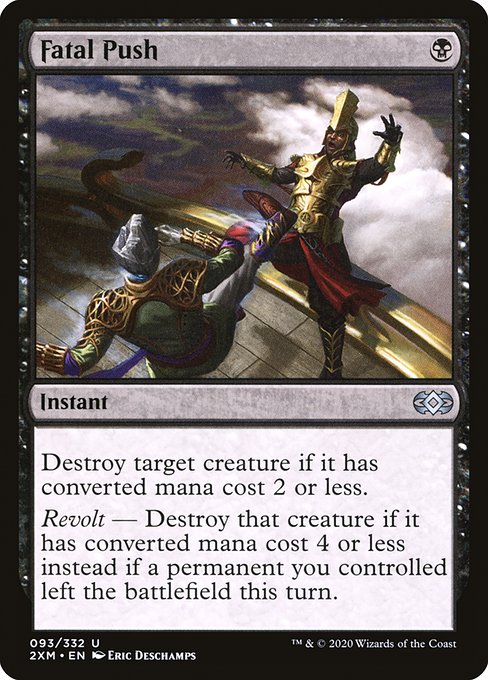
Fatal Push
 Fatal Push
Destroy target creature if it has mana value 2 or less.
Fatal Push
Destroy target creature if it has mana value 2 or less.
Revolt — Destroy that creature if it has mana value 4 or less instead if a permanent left the battlefield under your control this turn.
to
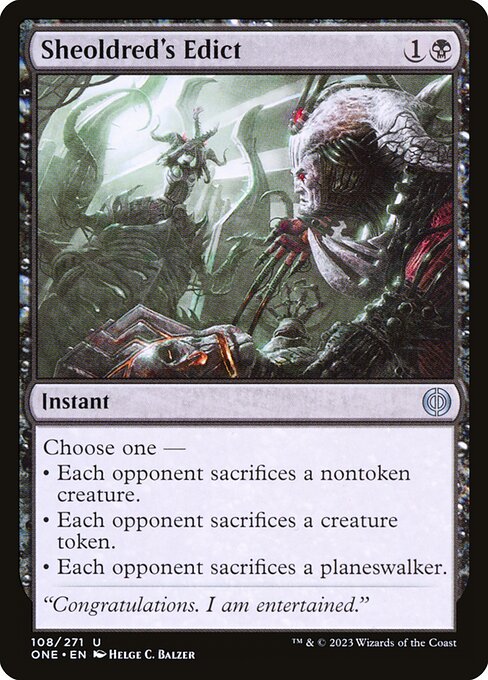
Sheoldred’s Edict
 Sheoldred’s Edict
Choose one —
Sheoldred’s Edict
Choose one —
• Each opponent sacrifices a nontoken creature of their choice.
• Each opponent sacrifices a creature token of their choice.
• Each opponent sacrifices a planeswalker of their choice.
, the removal spells you have access to are top notch. You even have
Path of Peril
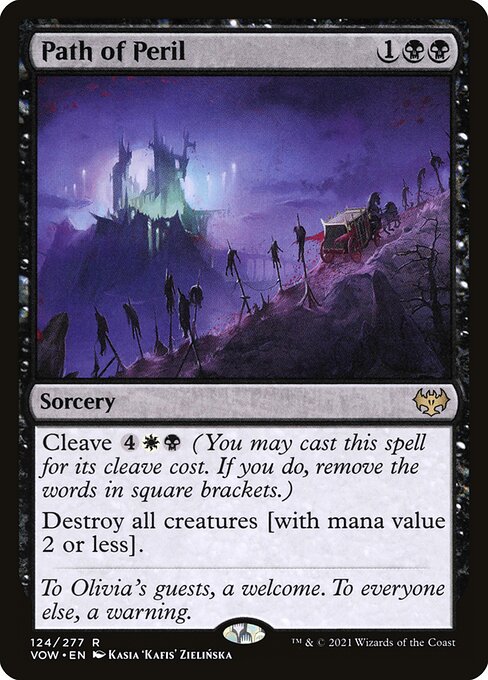 Path of Peril
Cleave {4}{W}{B} (You may cast this spell for its cleave cost. If you do, remove the words in square brackets.)
Path of Peril
Cleave {4}{W}{B} (You may cast this spell for its cleave cost. If you do, remove the words in square brackets.)
Destroy all creatures [with mana value 2 or less].
available in the sideboard to help against go-wide decks, such as Abzan Amalia.
However, there are two black cards in particular that shine in this archetype more than any others. First and foremost,
Thoughtseize
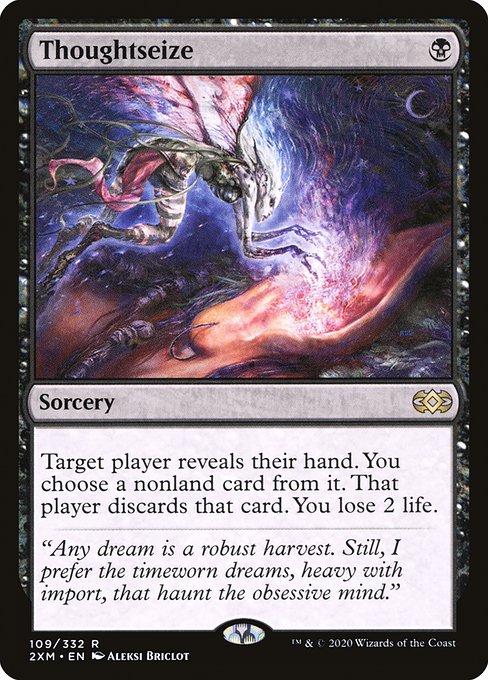 Thoughtseize
Target player reveals their hand. You choose a nonland card from it. That player discards that card. You lose 2 life.
is a premier piece of interaction. Obviously, getting to pick your opponent’s hand apart on the cheap is incredibly strong against a wide variety of strategies in Pioneer. As a combo deck, though, it also helps make sure the coast is clear to resolve Transmogrify.
Thoughtseize
Target player reveals their hand. You choose a nonland card from it. That player discards that card. You lose 2 life.
is a premier piece of interaction. Obviously, getting to pick your opponent’s hand apart on the cheap is incredibly strong against a wide variety of strategies in Pioneer. As a combo deck, though, it also helps make sure the coast is clear to resolve Transmogrify.
It’s often worth finding a window to resolve Thoughtseize before attempting to cast Transmogrify, especially if your opponent consistently leaves open mana on your turn. In matchups where this is a concern, boarding in
Duress
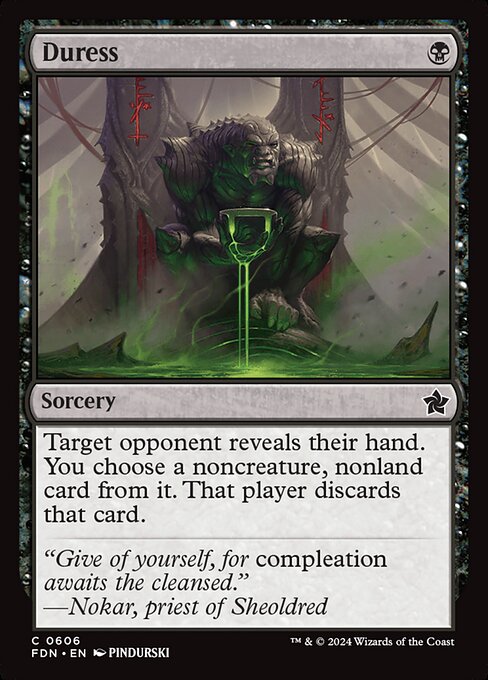 Duress
Target opponent reveals their hand. You choose a noncreature, nonland card from it. That player discards that card.
for games two and three can help add some redundancy. Now that we’ve covered the role of discard spells, it’s time to get to the big Karlov Manor upgrade that this deck received.
Duress
Target opponent reveals their hand. You choose a noncreature, nonland card from it. That player discards that card.
for games two and three can help add some redundancy. Now that we’ve covered the role of discard spells, it’s time to get to the big Karlov Manor upgrade that this deck received.
Read More: Busted Two-Card Combo Completely Takes Over Post-Ban Modern!
Case of the Stashed Skeleton
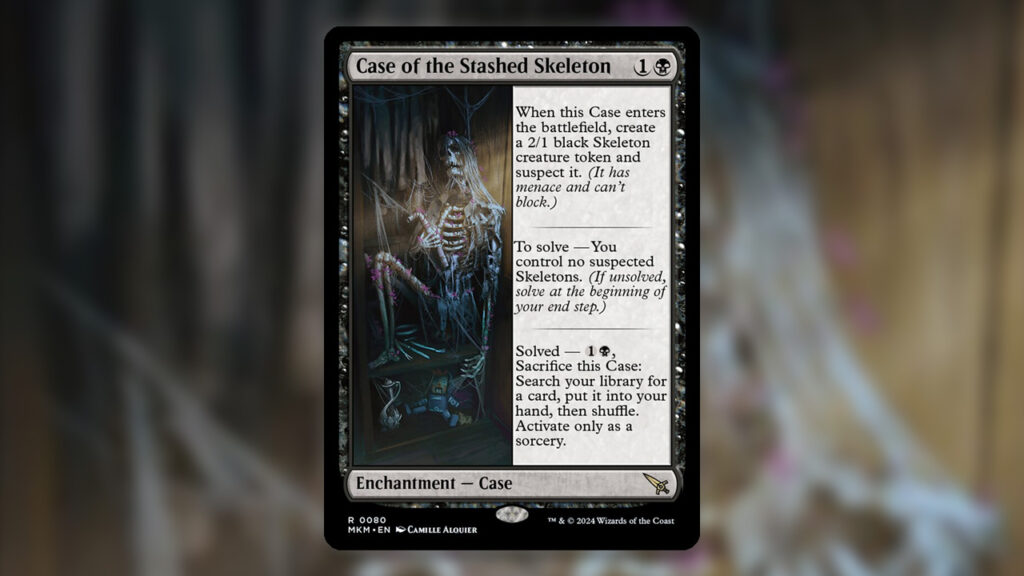
The Case in question is none other than Case of the Stashed Skeleton. Case of the Stashed Skeleton helps in every aspect of this deck, and the importance of its role cannot be overstated. Right off the bat, you get a Creature token for Transmogrify. This alone makes it a reasonable inclusion. Where things get interesting, though, is when you Solve the case.
See, the opponent will often feel pressured to remove your Skeleton token for fear of you converting it into an Atraxa. Once they do that, though, the Case can let you tutor up any card from your deck. This could be a token-maker like Fable, a removal spell, a discard spell to clear the way for Transmogrify, or whatever else your heart desires.
Part of the reason Case of the Stashed Skeleton hasn’t seen much Pioneer play yet, despite being a powerful card, is that it needs a specific home. Because the Skeleton can’t block, many decks can simply ignore the token for a long time. The fact that Transmogrify is so threatening changes this whole dynamic. For example, if your Rakdos Transmogrify opponent follows up Case with Thoughtseize and you only have one removal spell, you get put into a situation where you may feel obligated to cast it on the Skeleton token.
The problem is, now you have exhausted your removal and opened up the door for the opponent to tutor for a combo piece. As a result, the Case often puts you in a “damned if you, damned if you don’t” scenario. Even if you’re forced to cast Transmogrify blindly on your Skeleton and it gets removed, you can now tutor up another copy of Transmogrify on your next turn. Sometimes it’ll be correct to Fatal Push your own token to tutor up something special, so make sure to use all options at your disposal.
Read More: Thunder Junction Teaser Reveals Terrifying MTG Abilities For Commander
An Interesting Comparison
This deck is certainly the new hotness but given the fact that it functions as a midrange deck with a potential combo finish, it’s hard not to compare it to Rakdos Vampires. Both decks make use of Fable, one-mana interaction, and a neat combo. The difference is that Rakdos Vampires has an easier time setting up its combo.
Unlike Transmogrify, it’s not difficult to set up a window where
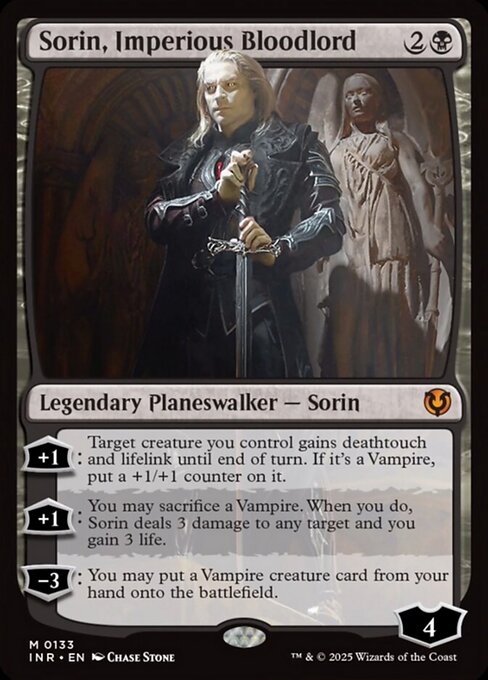
Sorin, Imperious Bloodlord
 Sorin, Imperious Bloodlord
+1: Target creature you control gains deathtouch and lifelink until end of turn. If it's a Vampire, put a +1/+1 counter on it.
Sorin, Imperious Bloodlord
+1: Target creature you control gains deathtouch and lifelink until end of turn. If it's a Vampire, put a +1/+1 counter on it.
+1: You may sacrifice a Vampire. When you do, Sorin deals 3 damage to any target and you gain 3 life.
−3: You may put a Vampire creature card from your hand onto the battlefield.
will flourish. Even if you don’t have Vein Ripper in hand, getting to repeatedly pump
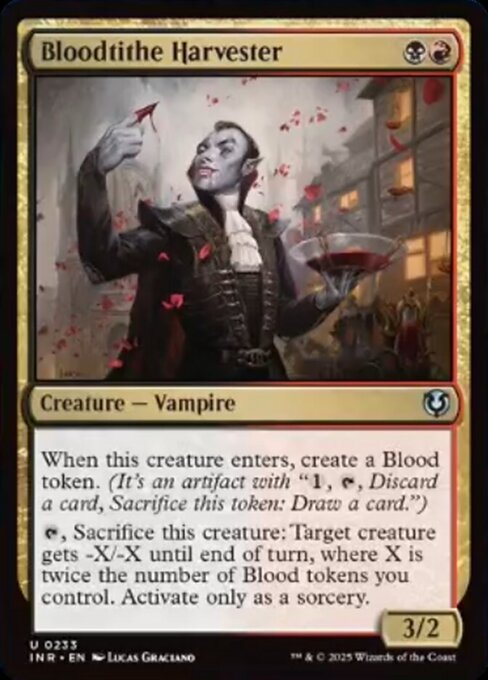
Bloodtithe Harvester
 Bloodtithe Harvester
When this creature enters, create a Blood token. (It's an artifact with "{1}, {T}, Discard a card, Sacrifice this token: Draw a card.")
Bloodtithe Harvester
When this creature enters, create a Blood token. (It's an artifact with "{1}, {T}, Discard a card, Sacrifice this token: Draw a card.")
{T}, Sacrifice this creature: Target creature gets -X/-X until end of turn, where X is twice the number of Blood tokens you control. Activate only as a sorcery.
or fling
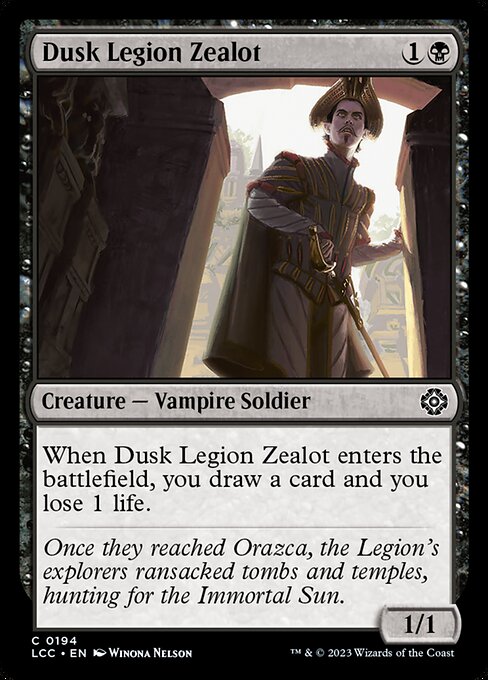
Dusk Legion Zealot
 Dusk Legion Zealot
When this creature enters, you draw a card and you lose 1 life.
is strong. Not to mention, casting Vein Ripper is quite realistic, while casting Atraxa isn’t. So, what’s the benefit to playing Rakdos Transmogrify?
Dusk Legion Zealot
When this creature enters, you draw a card and you lose 1 life.
is strong. Not to mention, casting Vein Ripper is quite realistic, while casting Atraxa isn’t. So, what’s the benefit to playing Rakdos Transmogrify?
First, Rakdos Vampires needs access to both Sorin and Vein Ripper to execute its “combo.” On the flip side, this deck only needs Transmogrify and any Creature token will suffice. Second, Atraxa is a bit stronger of a game-ending bomb given the massive amount of card advantage it provides. Between Edict, discard spells, and even
Heartless Act
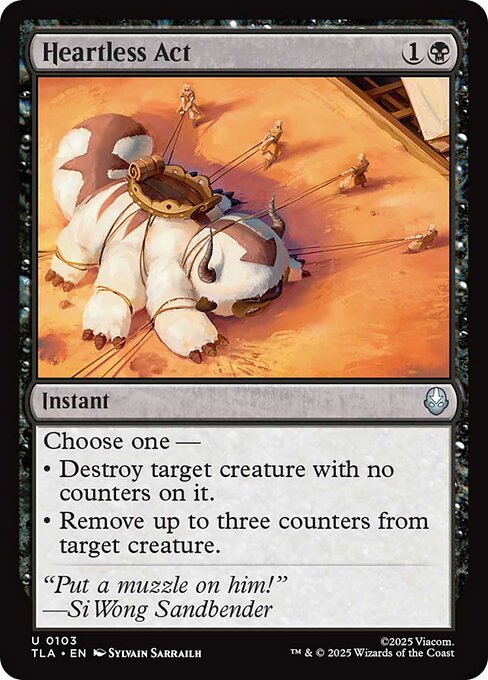 Heartless Act
Choose one —
Heartless Act
Choose one —
• Destroy target creature with no counters on it.
• Remove up to three counters from target creature.
or
Molten Collapse
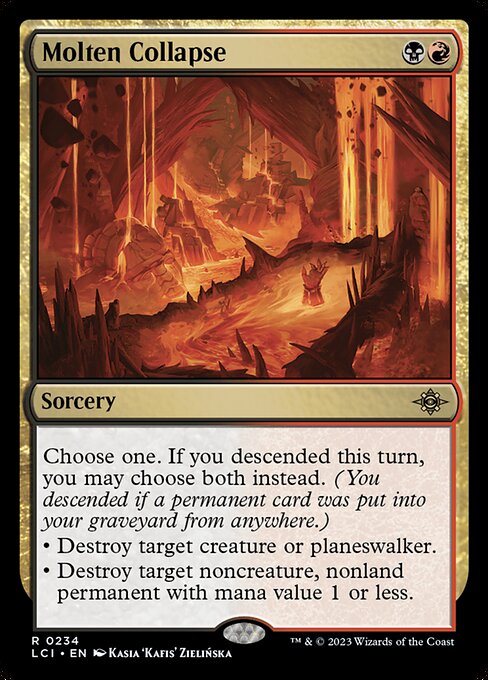 Molten Collapse
Choose one. If you descended this turn, you may choose both instead. (You descended if a permanent card was put into your graveyard from anywhere.)
Molten Collapse
Choose one. If you descended this turn, you may choose both instead. (You descended if a permanent card was put into your graveyard from anywhere.)
• Destroy target creature or planeswalker.
• Destroy target noncreature, nonland permanent with mana value 1 or less.
if you have a Creature token in play, you have a decent number of ways to break up your Vampires opponent’s combo.
Whereas if you get Atraxa into play, even if your opponent answers it, you’ve pulled far ahead in the card advantage battle. As a result, you’re favored against Rakdos Vampires head-to-head. This deck also plays more removal, so Creature-based matchups such as Abzan Amalia or Boros Heroic are stronger. Clearly, Rakdos Vampires is still an elite choice in the current metagame, and this deck will likely play second fiddle at best in the near future. Still, don’t sleep on this strategy, as it has a lot going for it.
Read More: MTG Players Pleased with Major Regional Championship Changes