
What is Pioneer in Magic: The Gathering? It’s a fair question given that most MTG formats have been around for a fair while now. It’s strange to see, but we actually got this brand-new official one not all that long ago. In fact, given that it was announced back in October 2019, it’s only just a year and a half old as of the time of writing this up.
Well, to help you find your feet in this exciting new format, and to figure out what it even is, we thought we’d explain everything you need to know about Pioneer, including which sets are legal, and which cards are already banned.
Read More: Get ready for MTG NFTs
What is Pioneer in Magic: The Gathering?
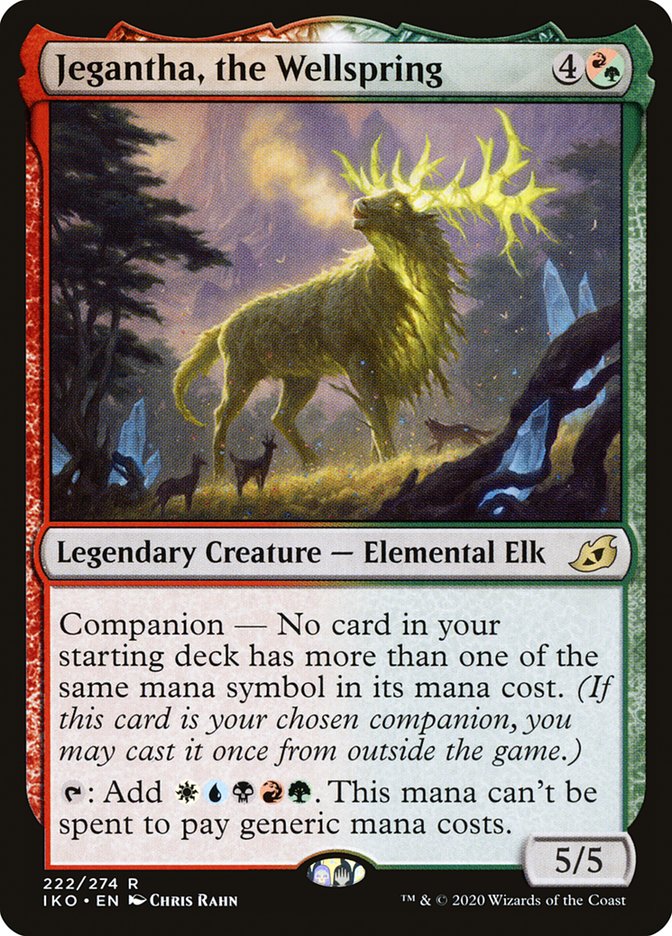
Pioneer is a new constructed format that doesn’t rotate, meaning it’s basically a new eternal format. In terms of deck construction and sideboard rules, it’s all the same as in the other major constructed formats. That means no more than four of any individual card aside from Basic Lands, and at least sixty cards in your deck.
The format was clearly designed as a stepping stone between Modern and Standard, because Modern is becoming increasingly pricey and not every Standard player is going to be able to move into it just because their favorite Standard deck has rotated out.
In terms of which sets are allowed, it’s every Standard release from Return to Ravnica onwards, which means there are a fair few sets to choose from if you fancy brewing something up, but also that there are plenty of well-established decks already as well.
Read More: The 10 best aggro commanders
What cards are banned in Pioneer?
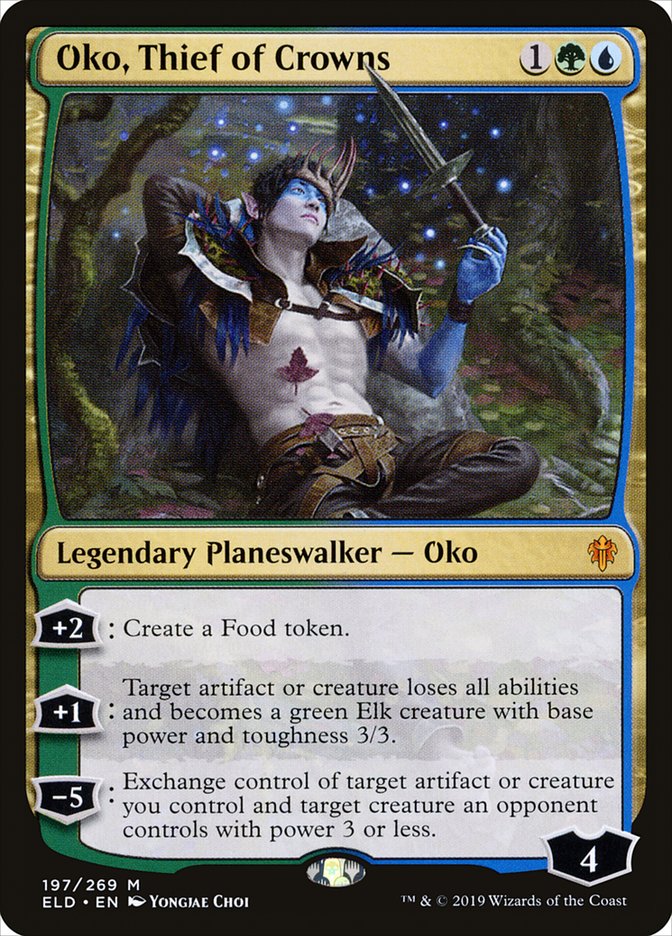
To keep things easy, we’re going to be keeping an up to date list of everything that’s banned in the format, so that you can build a deck safe in the knowledge that only the latest cards will be banned.
- Balustrade Spy
- Bloodstained Mire
- Expressive Iteration
- Felidar Guardian
- Field of the Dead
-
Flooded Strand
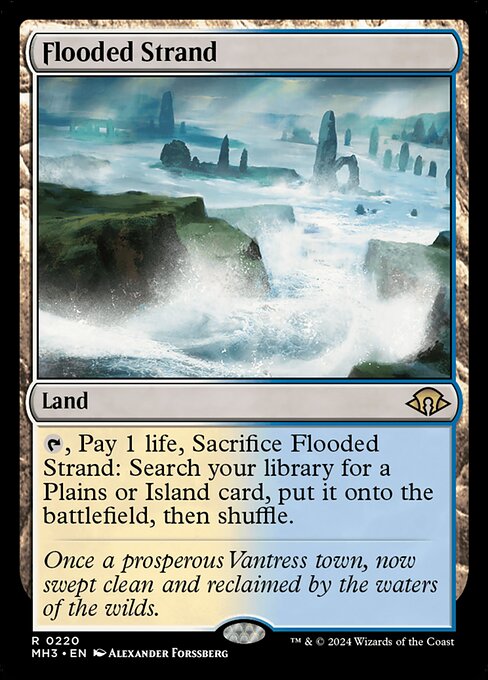 Flooded Strand
{T}, Pay 1 life, Sacrifice this land: Search your library for a Plains or Island card, put it onto the battlefield, then shuffle.
Flooded Strand
{T}, Pay 1 life, Sacrifice this land: Search your library for a Plains or Island card, put it onto the battlefield, then shuffle.
- Inverter of Truth
- Kethis, the Hidden Hand
- Leyline of Abundance
- Lurrus of the Dream-Den
- Nexus of Fate
-
Oko, Thief of Crowns
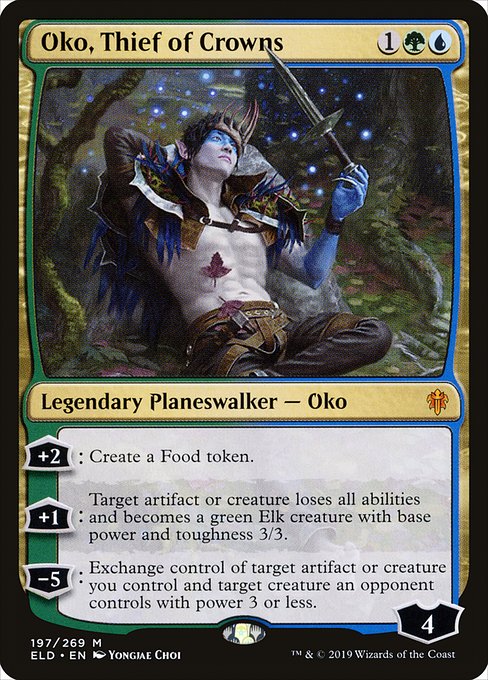 Oko, Thief of Crowns
+2: Create a Food token. (It's an artifact with "{2}, {T}, Sacrifice this token: You gain 3 life.")
Oko, Thief of Crowns
+2: Create a Food token. (It's an artifact with "{2}, {T}, Sacrifice this token: You gain 3 life.")
+1: Target artifact or creature loses all abilities and becomes a green Elk creature with base power and toughness 3/3.
−5: Exchange control of target artifact or creature you control and target creature an opponent controls with power 3 or less. - Once Upon a Time
- Polluted Delta
- Smuggler’s Copter
-
Teferi, Time Raveler
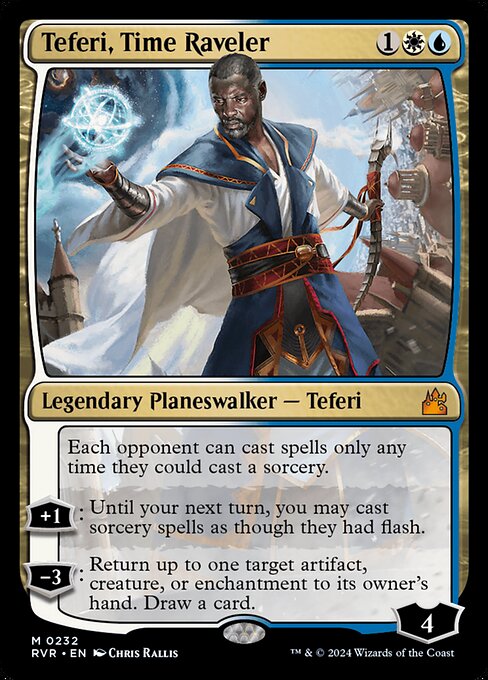 Teferi, Time Raveler
Each opponent can cast spells only any time they could cast a sorcery.
Teferi, Time Raveler
Each opponent can cast spells only any time they could cast a sorcery.
+1: Until your next turn, you may cast sorcery spells as though they had flash.
−3: Return up to one target artifact, creature, or enchantment to its owner's hand. Draw a card. - Undercity Informer
- Underworld Breach
-
Uro, Titan of Nature’s Wrath
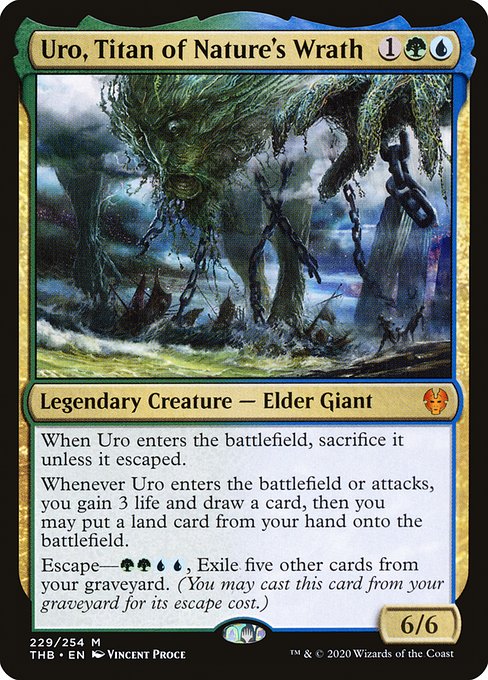 Uro, Titan of Nature’s Wrath
When Uro enters, sacrifice it unless it escaped.
Uro, Titan of Nature’s Wrath
When Uro enters, sacrifice it unless it escaped.
Whenever Uro enters or attacks, you gain 3 life and draw a card, then you may put a land card from your hand onto the battlefield.
Escape—{G}{G}{U}{U}, Exile five other cards from your graveyard. (You may cast this card from your graveyard for its escape cost.) - Veil of Summer
- Walking Ballista
-
Wilderness Reclamation
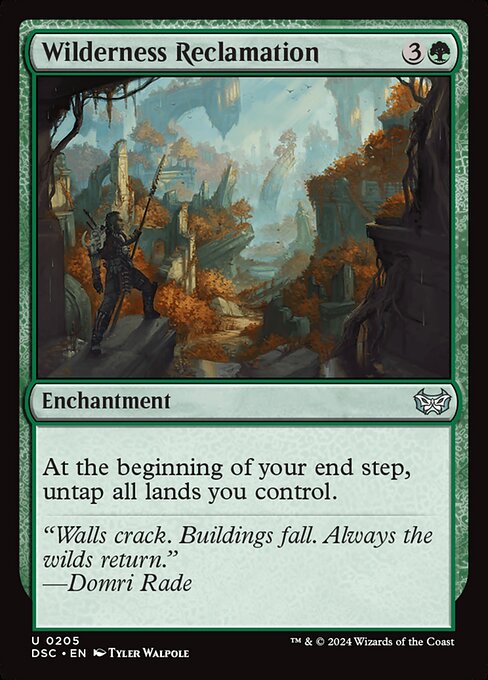 Wilderness Reclamation
At the beginning of your end step, untap all lands you control.
Wilderness Reclamation
At the beginning of your end step, untap all lands you control.
- Windswept Heath
- Winota, Joiner of Forces
- Wooded Foothills
Some of these cards might seem a little odd to you, b8ut each of them has contributed in some way to decks that people don’t like, or they’re simply fetch lands. We’d always recommend against getting the latest absurd deck just in case something gets banned, but if it doesn’t cost you too much then you can always try the deck in Modern instead.
Read More: The best Mono-Blue commanders