
Despite the release of The Lost Caverns of Ixalan back in November, Standard hasn’t seen too much innovation since then. Decks like five-color ramp and Esper midrange that thrived during Wilds of Eldraine Standard continue to perform well today. Sure, both these decks improved with new inclusions from The Lost Caverns of Ixalan, such as
Cavern of Souls
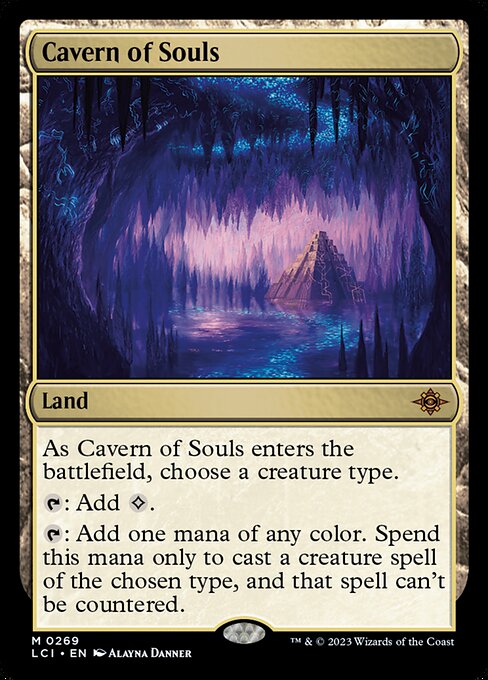 Cavern of Souls
As this land enters, choose a creature type.
Cavern of Souls
As this land enters, choose a creature type.
{T}: Add {C}.
{T}: Add one mana of any color. Spend this mana only to cast a creature spell of the chosen type, and that spell can't be countered.
and
Deep-Cavern Bat
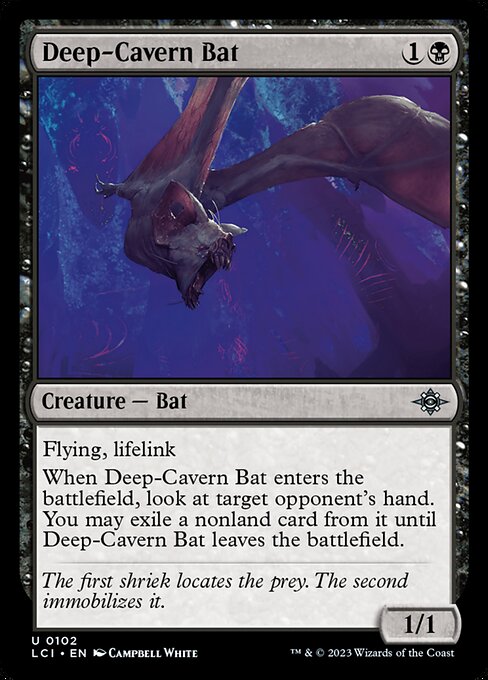 Deep-Cavern Bat
Flying, lifelink
Deep-Cavern Bat
Flying, lifelink
When this creature enters, look at target opponent's hand. You may exile a nonland card from it until this creature leaves the battlefield.
, respectively. However, we haven’t seen many new breakout strategies over the course of the past month and a half.
Well, that is until now. Just this past weekend, one player made the finals of Saturday’s Magic Online Standard Challenge with an extremely unique deck making use of a bunch of cards that have seen little to no Standard play up to this point. This deck is none other than Esper Mentor, built largely around the power of Monastery Mentor. It’s interesting to see an archetype like this fly under the radar and have immediate success almost out of nowhere, but this deck’s got some powerful stuff going on.
Creatures and Recursion
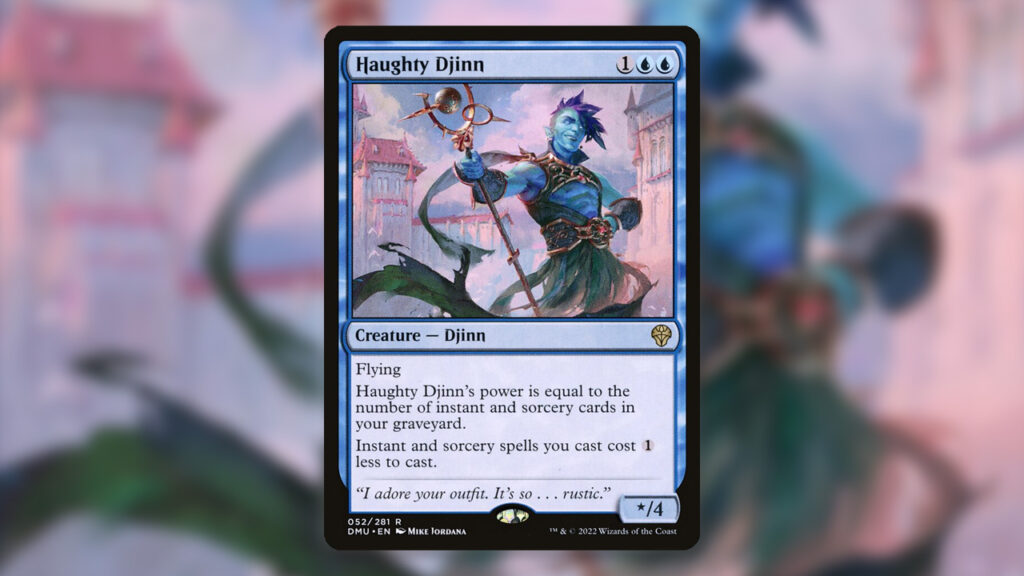
As is expected in a deck built around Monastery Mentor, this strategy is chock full of cheap Instants and Sorceries to help trigger the powerful three-drop. All of these Instants and Sorceries also make Haughty Djinn a solid inclusion that can end the game in short order. The goal of the deck is to get these three-drops onto the battlefield quickly, and in the case of Mentor, start getting triggers immediately.
Obviously, in most cases, this is easier said than done. Mentor’s biggest weakness as a card is that it dies rather easily to removal, so simply casting it on three mana and hoping to untap with it isn’t a great proposition. What makes this deck so enticing and makes Mentor an elite threat in this deck, though, is the presence of Helping Hand and Recommission. If you mill over or discard Mentor or Djinn, you can bring either card back to play for cheap.
Thanks to cards like Picklock Prankster that mill cards and dig for these recursive elements, it’s quite common to bring back Mentor to play for only one mana. Then, you can cast some cheap cantrips or interaction to get tokens right off the bat.
Helping Hand also pairs quite nicely with Halo Forager, providing you with the opportunity to cast Helping Hand from your graveyard. A cool play pattern with this deck is to use Helping Hand to bring back Halo Forager from your graveyard to play, then recast the Helping Hand to bring back another three-drop to build out a bigger battlefield.
Read More: Four New Two-Card MTG Death Combos With Cards from 2023!
Enabling Mentor and Djinn
As we mentioned, Picklock Prankster is an important part of the equation for this deck, as it helps dig for Helping Hand as well as Creatures to return to play. As expected, this isn’t the only card to help in this regard, though. Both Chart a Course and Otherworldly Gaze provide additional help getting Creatures into your graveyard to bring back to play.
Consider and
Sleight of Hand
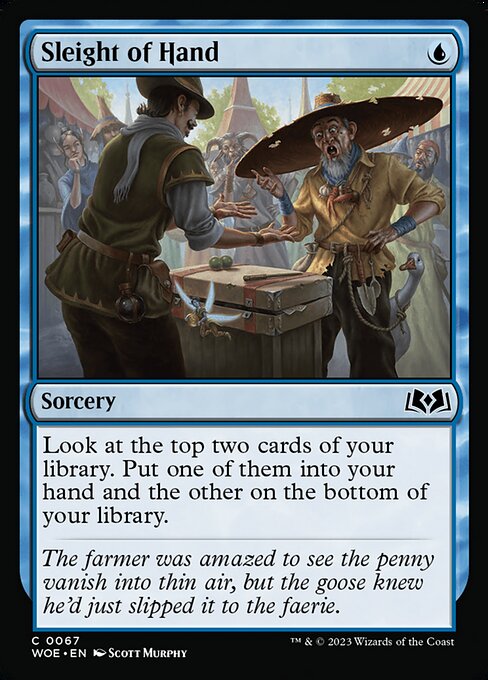 Sleight of Hand
Look at the top two cards of your library. Put one of them into your hand and the other on the bottom of your library.
let you churn through your library rather quickly, while simultaneously making sure that you have a consistent flow of Instants and Sorceries to cast to fuel Mentor and Djinn. To round things out, there are a couple copies of
Cut Down
Sleight of Hand
Look at the top two cards of your library. Put one of them into your hand and the other on the bottom of your library.
let you churn through your library rather quickly, while simultaneously making sure that you have a consistent flow of Instants and Sorceries to cast to fuel Mentor and Djinn. To round things out, there are a couple copies of
Cut Down
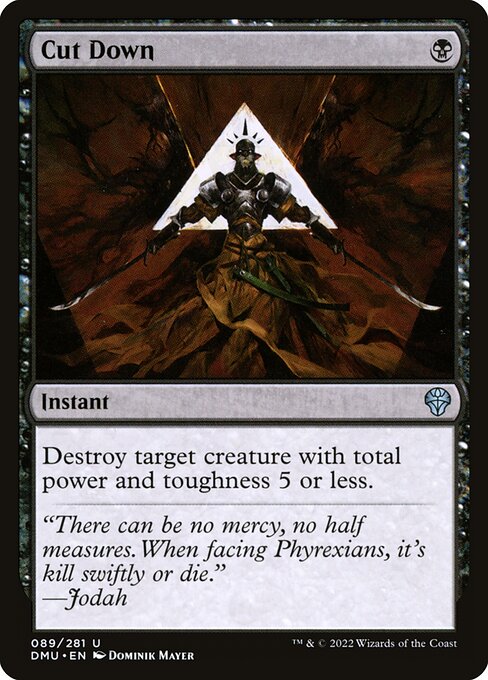 Cut Down
Destroy target creature with total power and toughness 5 or less.
and Duress in the main deck to disrupt the opponent.
Cut Down
Destroy target creature with total power and toughness 5 or less.
and Duress in the main deck to disrupt the opponent.
Read More: Nostalgic MTG Arena Inclusion Was an Unexpected Flop!
Extra Interaction out of the Sideboard
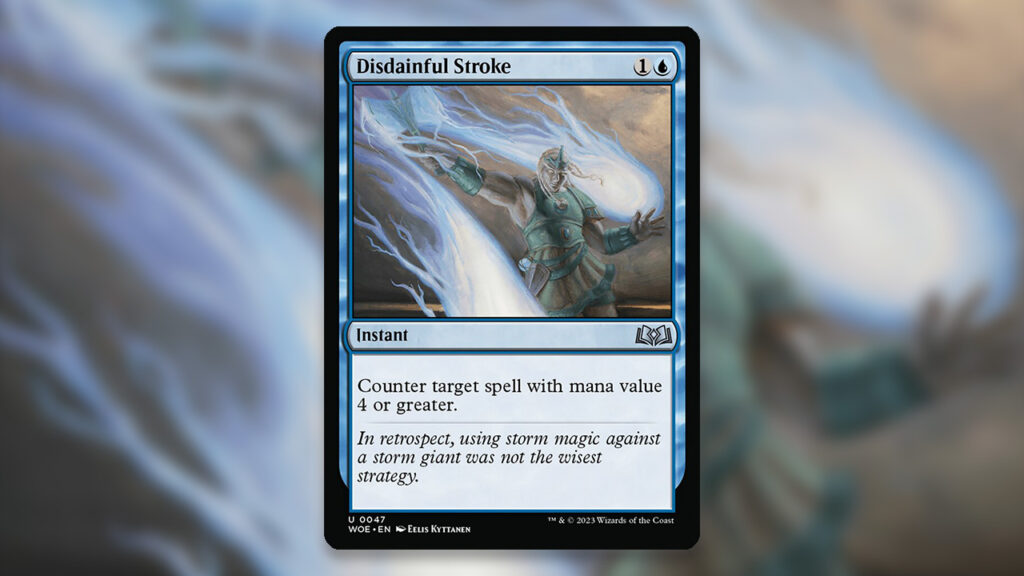
As an archetype that naturally lets you see a ton of cards over the course of the game, Esper Mentor makes great use of a range of interactive elements to keep your opponent off-balance. To help fight against decks with lots of Creatures, like Azorius Soldiers or Mono-Red Aggro, this deck plays cards like
Cut Down
Cut Down
Destroy target creature with total power and toughness 5 or less.
and
Bitter Triumph
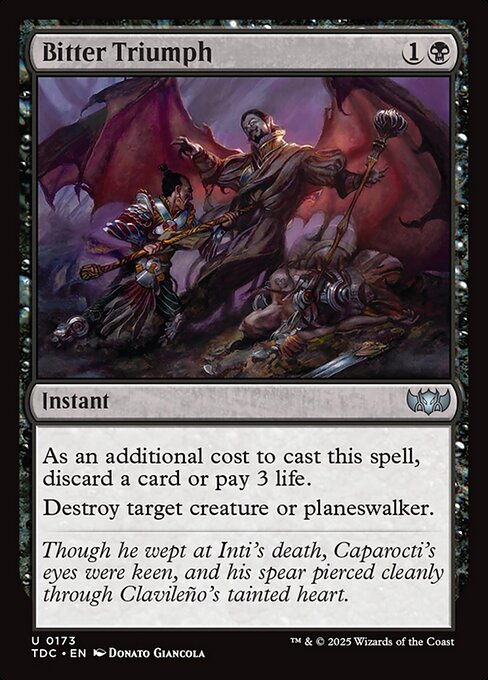 Bitter Triumph
As an additional cost to cast this spell, discard a card or pay 3 life.
Bitter Triumph
As an additional cost to cast this spell, discard a card or pay 3 life.
Destroy target creature or planeswalker.
in the main deck.
Out of the sideboard, high-impact cards like
Temporary Lockdown
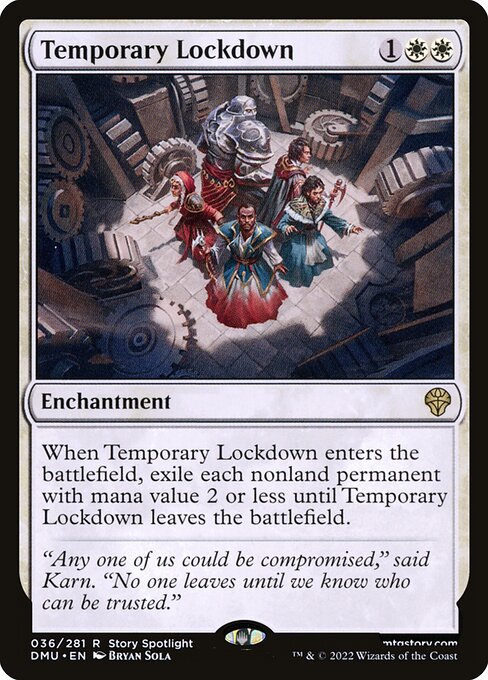 Temporary Lockdown
When this enchantment enters, exile each nonland permanent with mana value 2 or less until this enchantment leaves the battlefield.
or
Path of Peril
Temporary Lockdown
When this enchantment enters, exile each nonland permanent with mana value 2 or less until this enchantment leaves the battlefield.
or
Path of Peril
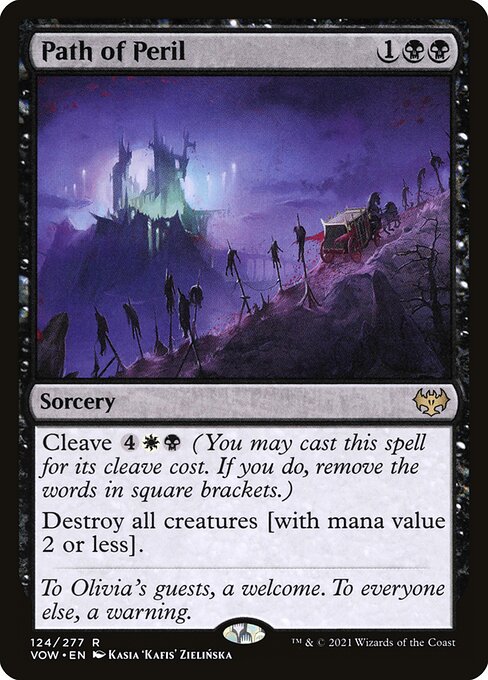 Path of Peril
Cleave {4}{W}{B} (You may cast this spell for its cleave cost. If you do, remove the words in square brackets.)
Path of Peril
Cleave {4}{W}{B} (You may cast this spell for its cleave cost. If you do, remove the words in square brackets.)
Destroy all creatures [with mana value 2 or less].
can help you catch up when you fall behind. This deck also makes great use of Duress to help against control decks and five-color ramp. Not only can Duress take away problematic ramp cards like
Invasion of Zendikar
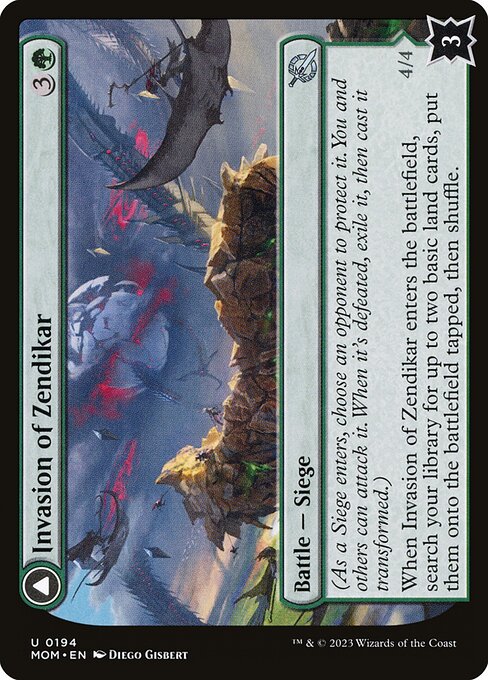 Invasion of Zendikar
(As a Siege enters, choose an opponent to protect it. You and others can attack it. When it's defeated, exile it, then cast it transformed.)
Invasion of Zendikar
(As a Siege enters, choose an opponent to protect it. You and others can attack it. When it's defeated, exile it, then cast it transformed.)
When this Siege enters, search your library for up to two basic land cards, put them onto the battlefield tapped, then shuffle.
, but it can help clear the way for Mentor to potentially stick around unscathed.
Meanwhile, Disdainful Stroke out of the sideboard can make sure board wipes like
Sunfall
 Sunfall
Exile all creatures. Incubate X, where X is the number of creatures exiled this way. (Create an Incubator token with X +1/+1 counters on it and "{2}: Transform this token." It transforms into a 0/0 Phyrexian artifact creature.)
or game-ending bombs like Etali, Primal Conqueror out of Rakdos don’t ruin your day. Between Picklock Prankster and the various cantrips this deck utilizes, finding your elite sideboard cards is relatively trivial.
Sunfall
Exile all creatures. Incubate X, where X is the number of creatures exiled this way. (Create an Incubator token with X +1/+1 counters on it and "{2}: Transform this token." It transforms into a 0/0 Phyrexian artifact creature.)
or game-ending bombs like Etali, Primal Conqueror out of Rakdos don’t ruin your day. Between Picklock Prankster and the various cantrips this deck utilizes, finding your elite sideboard cards is relatively trivial.
Read More: Top Five MTG Most Harmful Limited Bombs of 2023
Strengths and Weaknesses
In addition to finding your potent sideboard cards, your cantrips help keep this deck rather consistent. Despite not playing many win conditions, it’s often very easy to find them. Furthermore, part of what makes this deck quite strong is that both Mentor and Djinn are capable of ending the game in short order if not answered almost immediately. Haughty Djinn is an enormous, evasive threat and Mentor can create a wide board in a heartbeat.
This allows you to turn the corner very quickly. For games two and three, you can take on a more controlling role against aggressive decks with the intention of landing Mentor or Djinn once the initial wave of attackers is dealt with. By contrast, against five-color ramp, you can play as a tempo deck, using a mix of efficient disruption to clear the way for Djinn or Mentor and quickly shut the door on your opponent.
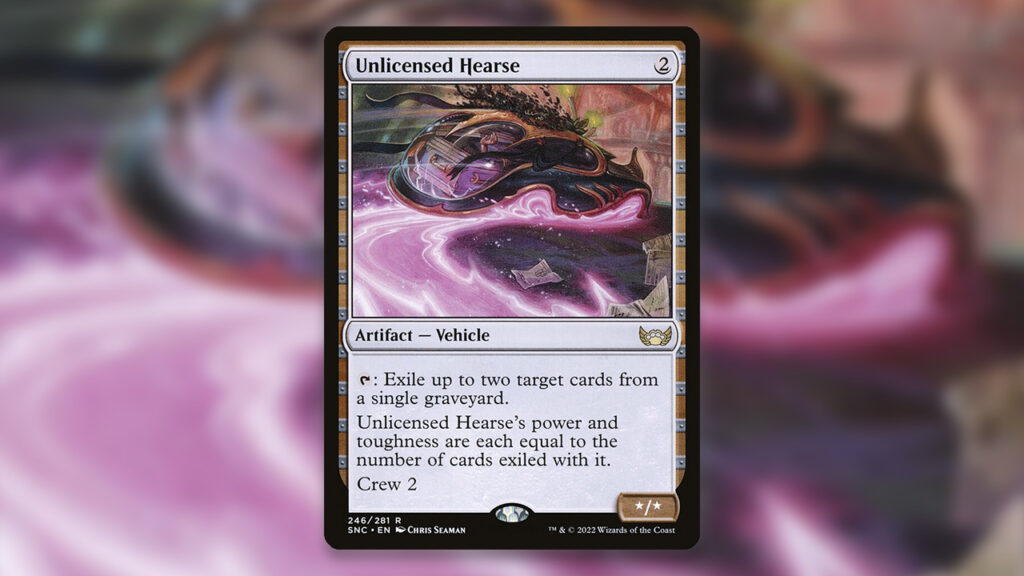
Perhaps the biggest weakness this deck may have now that it is more of a known commodity is the presence of graveyard hate. Up to this point, cards like Unlicensed Hearse were pretty much non-existent as graveyard-focused decks weren’t a big part of the metagame. Not only does Hearse completely blank Helping Hand, but it also makes Haughty Djinn much less threatening.
If Hearse becomes more popular, adding a card like Loran of the Third Path as an answer seems very reasonable, especially given its ability to synergize with Helping Hand and answer
Wedding Announcement
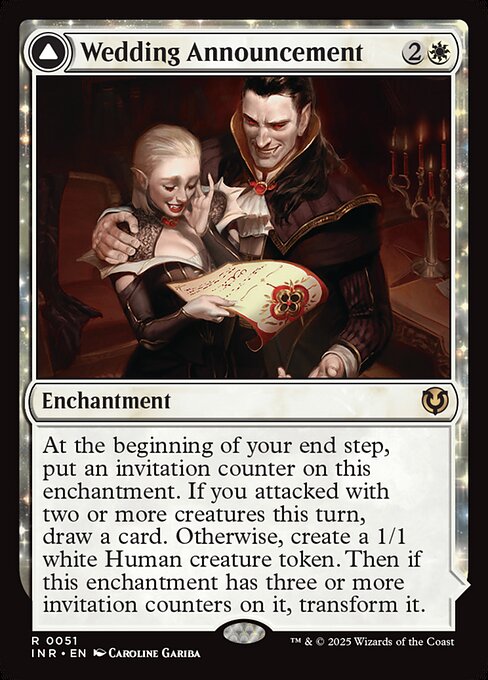 Wedding Announcement
At the beginning of your end step, put an invitation counter on this enchantment. If you attacked with two or more creatures this turn, draw a card. Otherwise, create a 1/1 white Human creature token. Then if this enchantment has three or more invitation counters on it, transform it.
in other matchups. This deck is very new to the metagame so there’s plenty of room to adapt, but if you’re planning on jamming Standard matches in the coming weeks, this deck should definitely be on your radar.
Wedding Announcement
At the beginning of your end step, put an invitation counter on this enchantment. If you attacked with two or more creatures this turn, draw a card. Otherwise, create a 1/1 white Human creature token. Then if this enchantment has three or more invitation counters on it, transform it.
in other matchups. This deck is very new to the metagame so there’s plenty of room to adapt, but if you’re planning on jamming Standard matches in the coming weeks, this deck should definitely be on your radar.
Read More: Rakdos Artifacts Archetype Crushes Meta Decks in 260+ Player Event!