
Largely since the release of Lord of the Rings: Tales of Middle-earth, Modern has seen a select few decks dominate the format over that span. Unsurprisingly, at the top of that list, is Rakdos Scam. For as long as the combination of
Grief
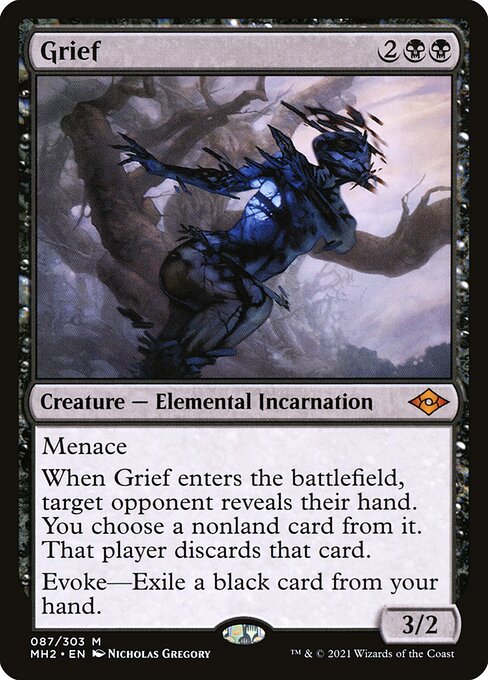 Grief
Menace
Grief
Menace
When this creature enters, target opponent reveals their hand. You choose a nonland card from it. That player discards that card.
Evoke—Exile a black card from your hand.
and
Fury
 Fury
Double strike
Fury
Double strike
When this creature enters, it deals 4 damage divided as you choose among any number of target creatures and/or planeswalkers.
Evoke—Exile a red card from your hand.
alongside effects like
Not Dead After All
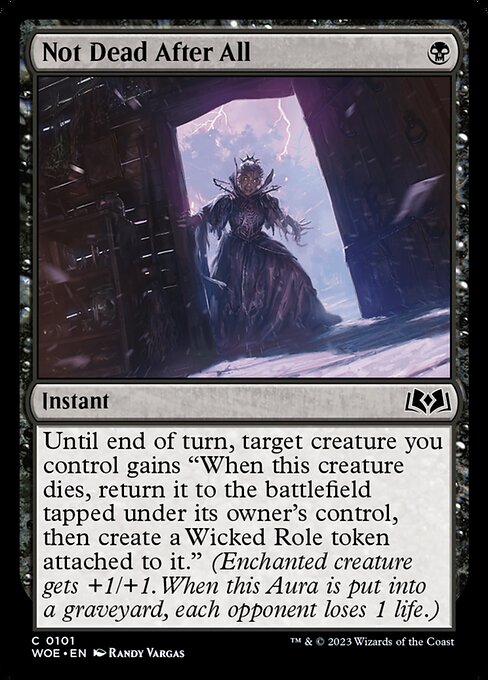 Not Dead After All
Until end of turn, target creature you control gains "When this creature dies, return it to the battlefield tapped under its owner's control, then create a Wicked Role token attached to it." (Enchanted creature gets +1/+1. When this token is put into a graveyard, each opponent loses 1 life.)
continue to be around, this deck will almost certainly be an excellent choice.
Not Dead After All
Until end of turn, target creature you control gains "When this creature dies, return it to the battlefield tapped under its owner's control, then create a Wicked Role token attached to it." (Enchanted creature gets +1/+1. When this token is put into a graveyard, each opponent loses 1 life.)
continue to be around, this deck will almost certainly be an excellent choice.
Shortly after the release of Lord of the Rings, Cascade decks built around
Up the Beanstalk
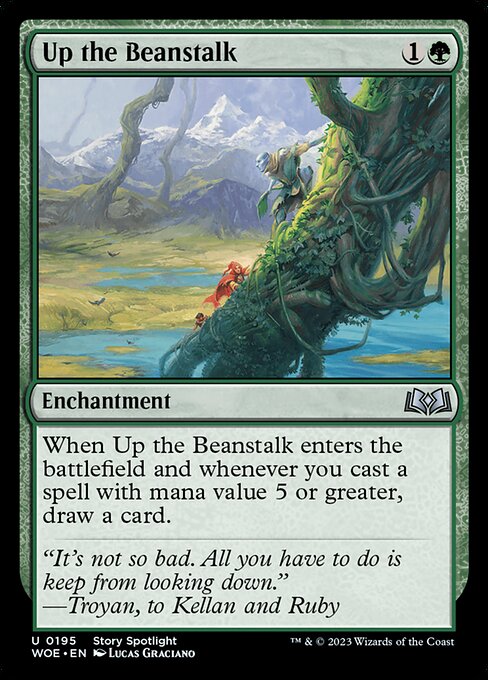 Up the Beanstalk
When this enchantment enters and whenever you cast a spell with mana value 5 or greater, draw a card.
began emerging thanks to the release of Wilds of Eldraine. For the past month or so, these two decks have seemed like the best performing decks in the format. Of course, there were still plenty of other decks players chose to play instead. Even if they weren’t quite as dominant, decks like Amulet Titan,
Yawgmoth, Thran Physician
Up the Beanstalk
When this enchantment enters and whenever you cast a spell with mana value 5 or greater, draw a card.
began emerging thanks to the release of Wilds of Eldraine. For the past month or so, these two decks have seemed like the best performing decks in the format. Of course, there were still plenty of other decks players chose to play instead. Even if they weren’t quite as dominant, decks like Amulet Titan,
Yawgmoth, Thran Physician
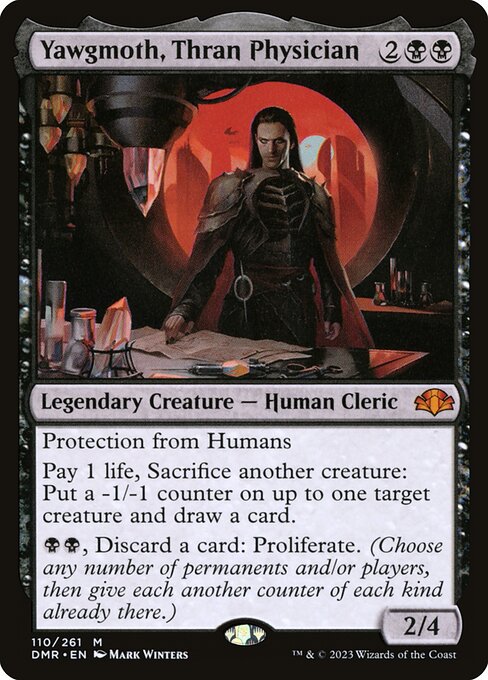 Yawgmoth, Thran Physician
Protection from Humans
Yawgmoth, Thran Physician
Protection from Humans
Pay 1 life, Sacrifice another creature: Put a -1/-1 counter on up to one target creature and draw a card.
{B}{B}, Discard a card: Proliferate. (Choose any number of permanents and/or players, then give each another counter of each kind already there.)
combo, mono-green Tron, and
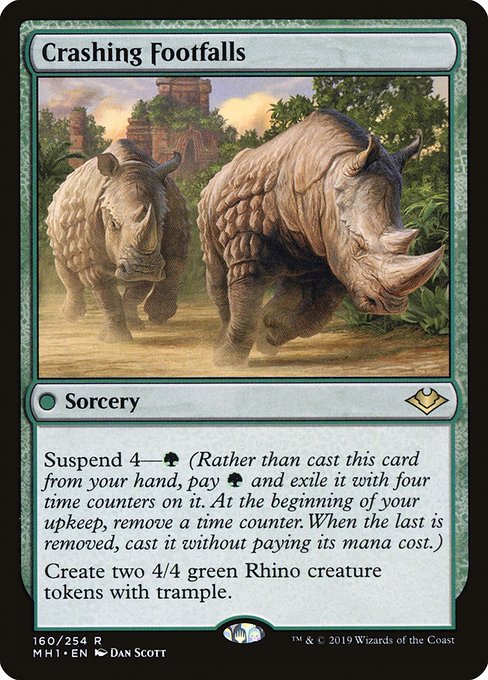
Crashing Footfalls
 Crashing Footfalls
Suspend 4—{G} (Rather than cast this card from your hand, pay {G} and exile it with four time counters on it. At the beginning of your upkeep, remove a time counter. When the last is removed, you may cast it without paying its mana cost.)
Crashing Footfalls
Suspend 4—{G} (Rather than cast this card from your hand, pay {G} and exile it with four time counters on it. At the beginning of your upkeep, remove a time counter. When the last is removed, you may cast it without paying its mana cost.)
Create two 4/4 green Rhino creature tokens with trample.
Cascade still played a significant role in the metagame.
Speaking of Crashing Footfalls, though, since the release of The Lost Caverns of Ixalan, the archetype appears to be making a bit of a resurgence. Part of the reason for this is because of the introduction of a very powerful Merfolk Wizard into the mix. Tishana’s Tidebinder has spiked from roughly $4 to $16 over the last five days, largely due to its impact in Modern. Primarily, it’s helping Crashing Footfalls players shore up some weaknesses that the deck traditionally faces.
Why Tishana’s Tidebinder Shines in Crashing Footfalls
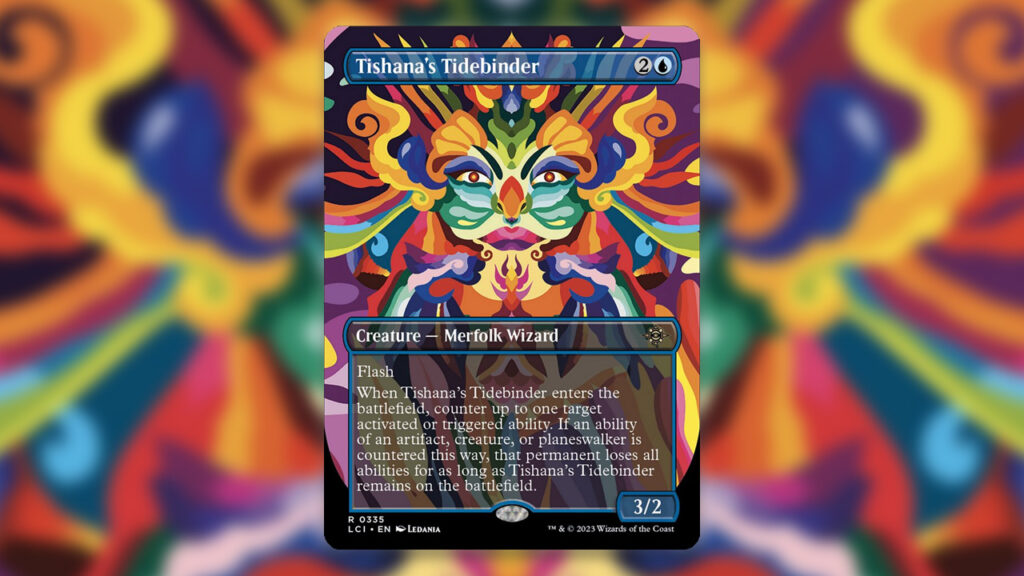
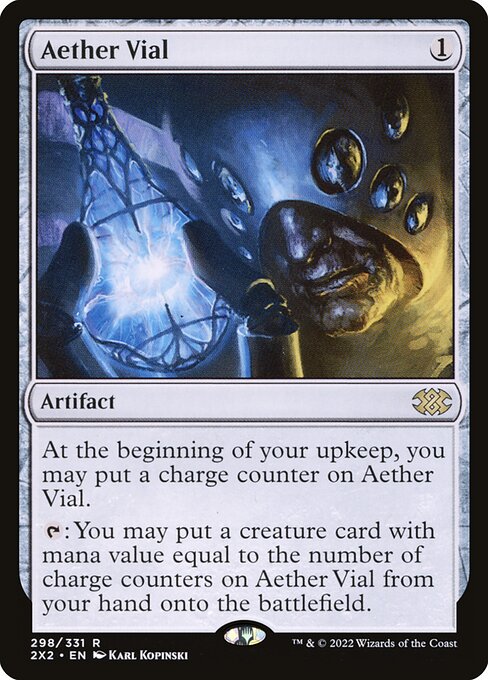
What’s rather interesting about this addition is that, back when Tidebinder was initially spoiled, the card saw a lot of hype. However, many players, including myself, primarily focused on the card’s potential to give rise to Modern Merfolk or Izzet Wizard control. For Izzet Wizards, Tidebinder was another powerful Wizard threat with Flash that could help maximize the power of Flame of Anor. In Merfolk, Tidebinder works exceptionally well with
Aether Vial
 Aether Vial
At the beginning of your upkeep, you may put a charge counter on this artifact.
Aether Vial
At the beginning of your upkeep, you may put a charge counter on this artifact.
{T}: You may put a creature card with mana value equal to the number of charge counters on this artifact from your hand onto the battlefield.
, which can let you put Tidebinder into play for free at some point.
At least for the time being, though, the shell that Tidebinder is making the biggest impact in is Crashing Footfalls. Part of the reason, for sure, is that Crashing Footfalls was already a better performing deck than Merfolk or Wizards, regardless of whether Tidebinder was a natural fit for Crashing Footfalls decks or not. The reality is, though, that Tidebinder plays exceptionally well specifically in the Crashing Footfalls deck.
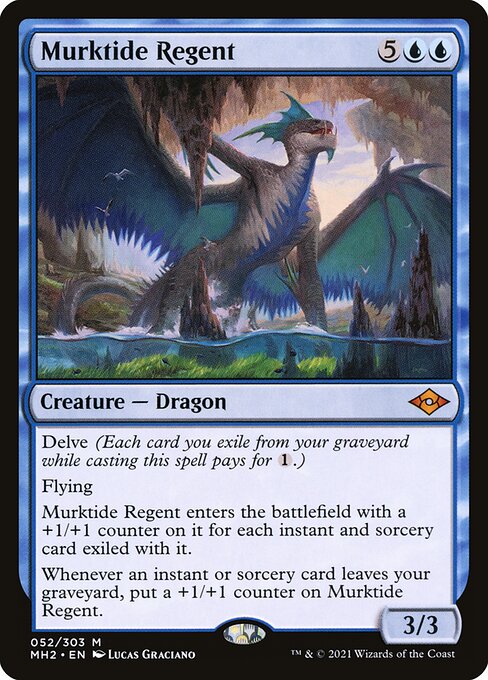
As we will see later, there are a ton of good cards to blank with Tidebinder’s abilities. However, this doesn’t mean that Tidebinder is necessarily going to shine in just any blue deck. Izzet
Murktide Regent
 Murktide Regent
Delve (Each card you exile from your graveyard while casting this spell pays for {1}.)
Murktide Regent
Delve (Each card you exile from your graveyard while casting this spell pays for {1}.)
Flying
This creature enters with a +1/+1 counter on it for each instant and sorcery card exiled with it.
Whenever an instant or sorcery card leaves your graveyard, put a +1/+1 counter on this creature.
decks are rarely playing the card anyway. What makes Tidebinder good in Rhinos is that it naturally matches the deck’s play patterns super well.
First, the deck is restricted to playing interaction with mana value three or greater to not mess with Cascading into Crashing Footfalls. Second, this deck plays a ton at Instant speed on turn three with Violent Outburst. Because of the threat of Violent Outburst, many opponents will feel pressured to play cards to the board, giving you the option to either cast Tidebinder if it’s disruptive or Violent Outburst to add extra pressure to the board.
Finally, the fact that Tidebinder is a blue card to pitch to
Force of Negation
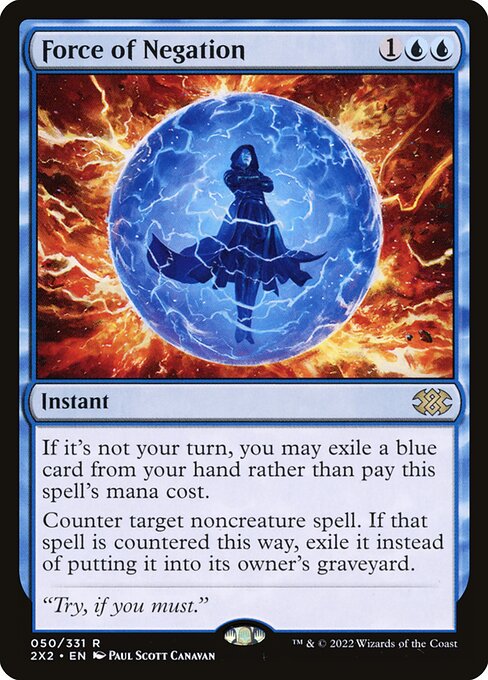 Force of Negation
If it's not your turn, you may exile a blue card from your hand rather than pay this spell's mana cost.
Force of Negation
If it's not your turn, you may exile a blue card from your hand rather than pay this spell's mana cost.
Counter target noncreature spell. If that spell is countered this way, exile it instead of putting it into its owner's graveyard.
or
Subtlety
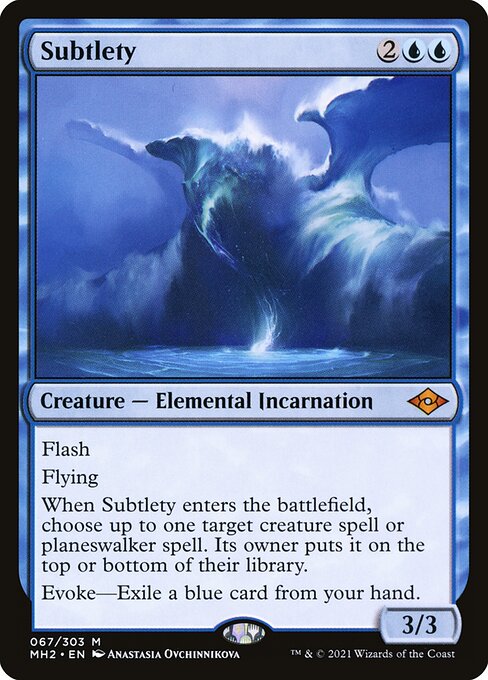 Subtlety
Flash
Subtlety
Flash
Flying
When this creature enters, choose up to one target creature spell or planeswalker spell. Its owner puts it on their choice of the top or bottom of their library.
Evoke—Exile a blue card from your hand.
out of the Crashing Footfalls deck is a big bonus. In matchups where Tidebinder isn’t super impactful, it still has this added utility, allowing you to essentially free roll Tidebinder in your maindeck.
Read More: Elite Mana Dork Helps Dinosaur Deck Dominate Major Standard Event!
Countering Activated or Triggered Abilities
The reality is, though, that Tidebinder is excellent against a lot of the top strategies out there. First, it is extremely strong against Cascade variants, including the mirror. Tidebinder can counter any activated or triggered ability that isn’t a mana ability. So, if your opponent casts
Shardless Agent
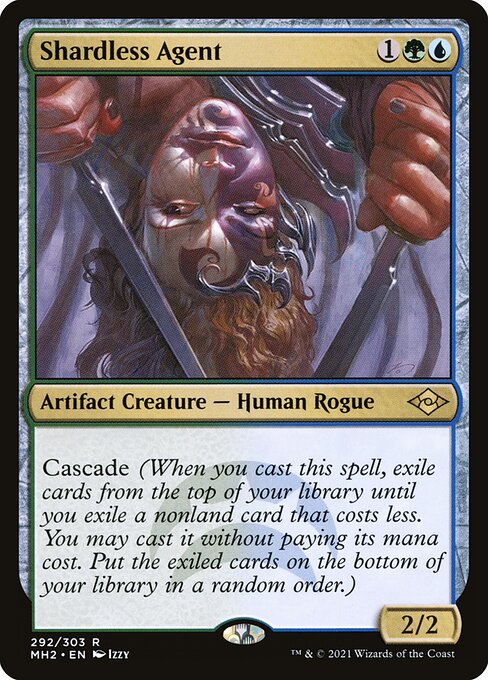 Shardless Agent
Cascade (When you cast this spell, exile cards from the top of your library until you exile a nonland card that costs less. You may cast it without paying its mana cost. Put the exiled cards on the bottom in a random order.)
, you can respond with Tidebinder and completely shut off their ability to Cascade into something powerful.
Shardless Agent
Cascade (When you cast this spell, exile cards from the top of your library until you exile a nonland card that costs less. You may cast it without paying its mana cost. Put the exiled cards on the bottom in a random order.)
, you can respond with Tidebinder and completely shut off their ability to Cascade into something powerful.
Against Colossus Hammer decks, if your opponent goes to cast Colossus Hammer with Sigarda’s Aid in play, you can completely blow them out by countering the triggered ability from Sigarda’s Aid that allows Colossus Hammer to become attached to a Creature for free. Additionally, because chapters associated with Sagas are also triggered abilities, you can respond and essentially shut off one of the chapters of
Urza’s Saga
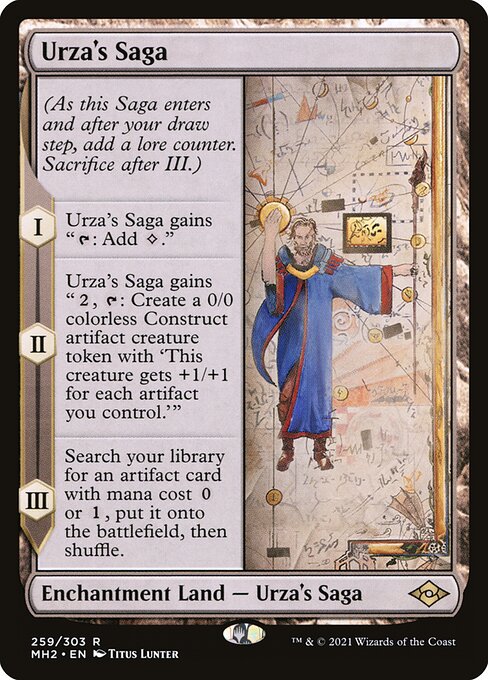 Urza’s Saga
(As this Saga enters and after your draw step, add a lore counter. Sacrifice after III.)
Urza’s Saga
(As this Saga enters and after your draw step, add a lore counter. Sacrifice after III.)
I — This Saga gains "{T}: Add {C}."
II — This Saga gains "{2}, {T}: Create a 0/0 colorless Construct artifact creature token with 'This token gets +1/+1 for each artifact you control.'"
III — Search your library for an artifact card with mana cost {0} or {1}, put it onto the battlefield, then shuffle.
.
Notably, if you respond to Urza’s Saga’s second chapter ability that enables the Saga to make Constructs, Urza’s Saga will not be able to make Constructs the next turn either. Of course, you can also respond to the third chapter and prevent your opponent from searching for something problematic.
When playing against Tidebinder, you need to be careful about sequencing your Fetchlands. Because they require an activation to search for Lands from your deck, countering this ability with Tidebinder can do a solid Stone Rain impression. In some instances, too, Tidebinder can be used to make you own cards better.
For example, let’s say you Evoke Fury as the Crashing Footfalls player. You now can stack your Evoke trigger and trigger to deal four damage to opposing Creatures in a way to let the four damage ability resolve first. From there, you can respond to Fury’s Evoke trigger with Tidebinder, countering the trigger and leaving you with a free 3/3 in play. It won’t have Double Strike while Tidebinder is in play, but this is still a nice option to have.
Read More: Format-Destroying Dinosaur Causes Multiple Cards to Skyrocket in Price!
Removing Abilities Long-Term
Obviously, all of the options described earlier make Tidebinder very strong in a handful of situations. What really sets it over the top, though, is that it can remove abilities from permanents long-term. As long as you counter the ability of an Artifact, Creature, or Planeswalker, that permanent loses all abilities for as long as Tidebinder remains on the battlefield. This helps shore up the Amulet Titan matchup dramatically.
Against Amulet of Vigor, once your opponent plays a Land that enters the battlefield tapped, you can counter Amulet’s ability that would untap that Land. From then on, that copy of Amulet of Vigor has no abilities, rendering the card relatively useless. Against
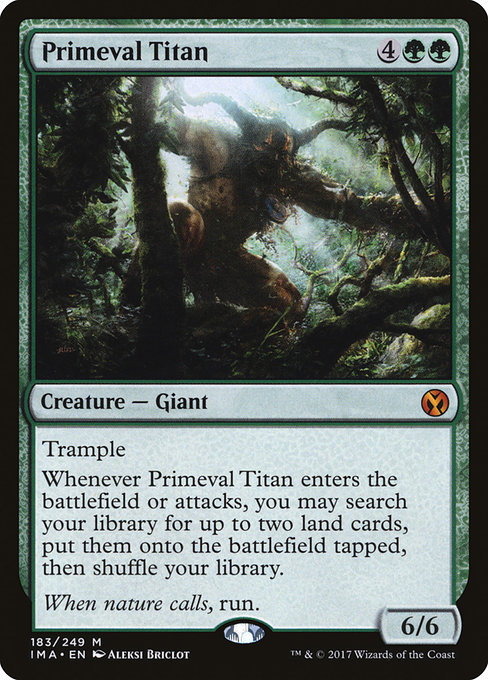
Primeval Titan
 Primeval Titan
Trample
Primeval Titan
Trample
Whenever this creature enters or attacks, you may search your library for up to two land cards, put them onto the battlefield tapped, then shuffle.
, you can counter its enters-the-battlefield effect. For as long as Tidebinder is in play, your opponent’s scary Primeval Titan is now just a vanilla 6/6, which isn’t too threatening.
If the opponent plays
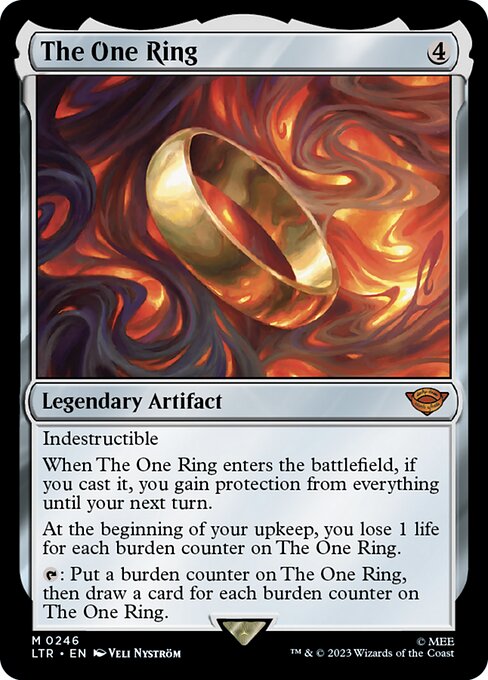
The One Ring
 The One Ring
Indestructible
The One Ring
Indestructible
When The One Ring enters, if you cast it, you gain protection from everything until your next turn.
At the beginning of your upkeep, you lose 1 life for each burden counter on The One Ring.
{T}: Put a burden counter on The One Ring, then draw a card for each burden counter on The One Ring.
, you can counter the “Protection from everything” ability, thereby shutting off your opponent’s chances to draw extra cards with it. This comes up a lot against mono-green Tron, which is another matchup that Tidebinder helps with immensely. Any Planeswalker that the Tron player plays will be rather ineffective in the face of Tidebinder. For instance, if the opponent casts
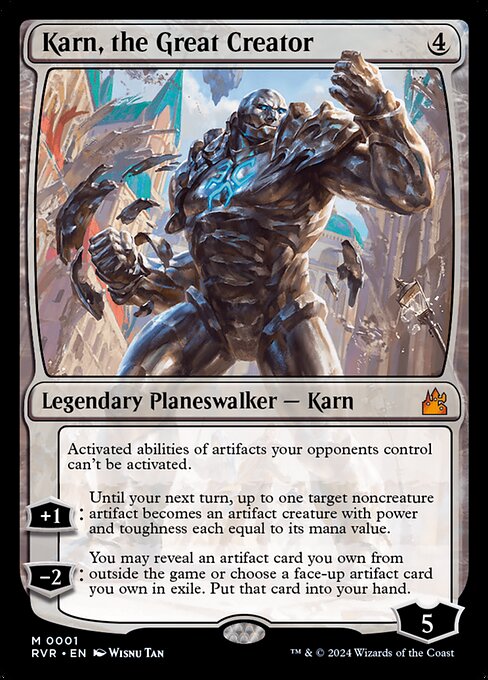
Karn, the Great Creator
 Karn, the Great Creator
Activated abilities of artifacts your opponents control can't be activated.
Karn, the Great Creator
Activated abilities of artifacts your opponents control can't be activated.
+1: Until your next turn, up to one target noncreature artifact becomes an artifact creature with power and toughness each equal to its mana value.
−2: You may reveal an artifact card you own from outside the game or choose a face-up artifact card you own in exile. Put that card into your hand.
and uses its -2 ability, you can prevent your opponent from grabbing a payoff from their sideboard. With Tidebinder in play, your opponent can’t activate loyalty abilities of Karn on future turns.
Read More: How to Beat MTG’s New Broken Discover Combo!
Helping Your Core Gameplan
Tidebinder even stops a handful of cards that would otherwise get rid of your Rhinos in play from Crashing Footfalls to slow you down immensely. Cards like Oblivion Stone and Engineered Explosives could normally deal with your board of Rhino tokens. However, if your opponent goes to sacrifice either of those cards while you have three mana available, you can cast Tidebinder and keep your board around.
Earlier, we mentioned the fact that, because Tidebinder is a Wizard, it works nicely with Flame of Anor. Well, Flame of Anor was already a nice piece of interaction that helped this deck beat the likes of Chalice of the Void or
Drannith Magistrate
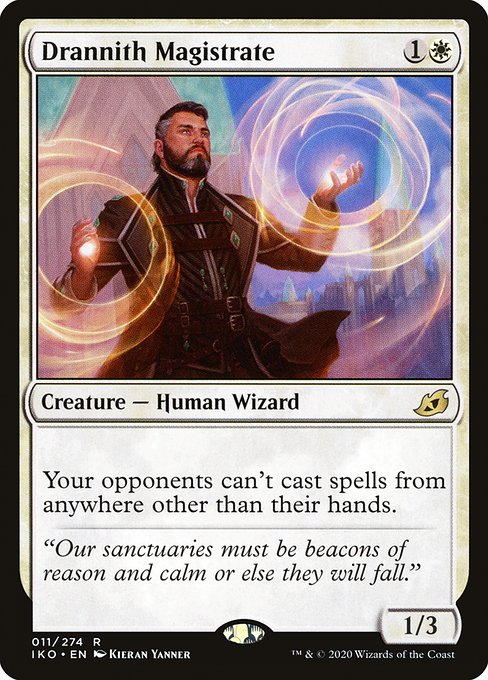 Drannith Magistrate
Your opponents can't cast spells from anywhere other than their hands.
. With Tidebinder in the mix, the card gets even better, letting you choose a second mode, such as drawing two cards, at little cost.
Drannith Magistrate
Your opponents can't cast spells from anywhere other than their hands.
. With Tidebinder in the mix, the card gets even better, letting you choose a second mode, such as drawing two cards, at little cost.
The fact that all this utility comes stapled to a three-power Creature with Flash is extremely powerful. It’s no wonder the card has spiked so significantly in price. It’s amazing how much this small addition to the deck helps improve a wide variety of matchups for the Crashing Footfalls deck.
Read More: These Lost Caverns of Ixalan Reprints are Dirt Cheap!