
This past weekend, another round of Regional Championships concluded. Players from the United States, South America, and Southeast Asia put their Standard prowess to the test. While Esper midrange is still an excellent archetype to play, these Regional Championships proved a bit more diverse than Pro Tour Outlaws of Thunder Junction. Other strong choices, such as Boros Convoke and Temur ramp, were highly represented as well.
On top of that, we saw some intriguing archetypes perform quite well over the weekend. For instance, in the U.S., Gruul aggro bested a field of over 1200 players, showcasing the deck’s capabilities on the big stage.
Looking beyond just the main event, a really unique Dimir Poison strategy made top eight of the 400-player $10k. This deck is quite different than typical Bant Toxic shells and is extremely budget friendly. Its elite performance really caught our attention, and it’s certainly worth going into more detail about what the deck is trying to accomplish.
An Interesting Take on Poison
In general, the most common Poison decks in Standard are built around attacking with lots of Creatures in combat. Bant shells work to go wide with Toxic Phyrexians thanks to the power of
Skrelv’s Hive
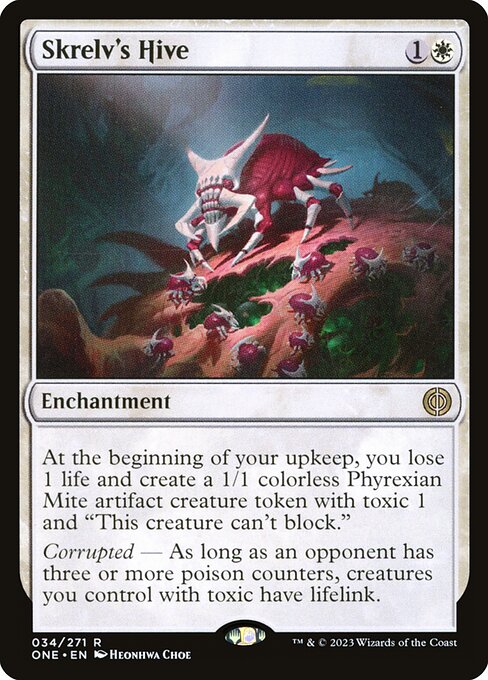 Skrelv’s Hive
At the beginning of your upkeep, you lose 1 life and create a 1/1 colorless Phyrexian Mite artifact creature token with toxic 1 and "This token can't block."
Skrelv’s Hive
At the beginning of your upkeep, you lose 1 life and create a 1/1 colorless Phyrexian Mite artifact creature token with toxic 1 and "This token can't block."
Corrupted — As long as an opponent has three or more poison counters, creatures you control with toxic have lifelink.
, then use cards like
March of Swirling Mist
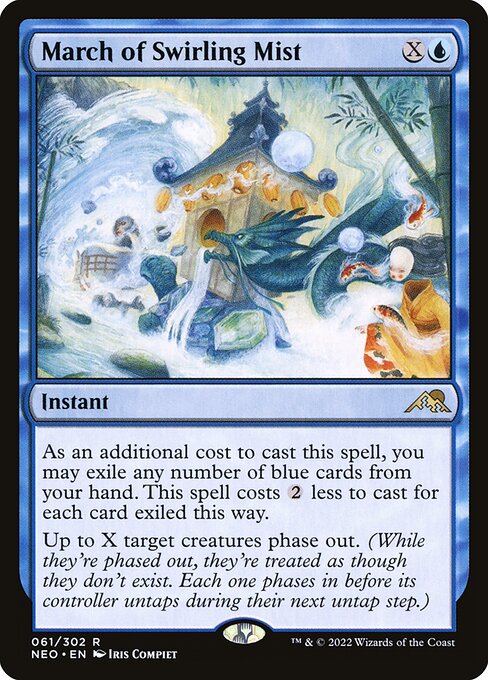 March of Swirling Mist
As an additional cost to cast this spell, you may exile any number of blue cards from your hand. This spell costs {2} less to cast for each card exiled this way.
March of Swirling Mist
As an additional cost to cast this spell, you may exile any number of blue cards from your hand. This spell costs {2} less to cast for each card exiled this way.
Up to X target creatures phase out. (While they're phased out, they're treated as though they don't exist. Each one phases in before its controller untaps during their next untap step.)
to protect their big battlefield.
This Dimir deck is very different. There are very few Creatures present at all.
Bilious Skulldweller
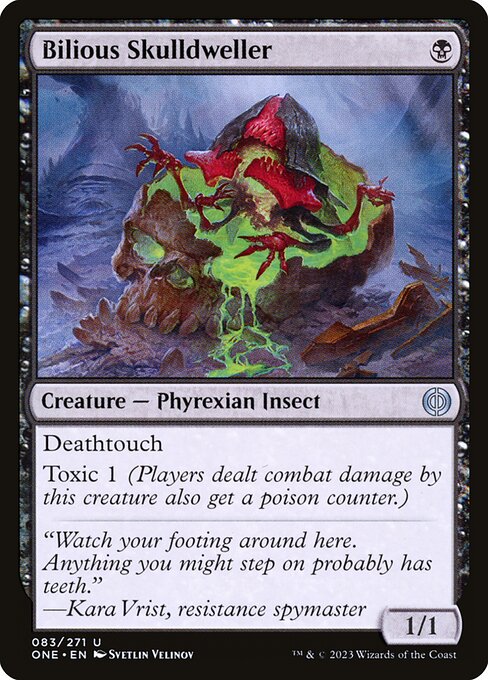 Bilious Skulldweller
Deathtouch
Bilious Skulldweller
Deathtouch
Toxic 1 (Players dealt combat damage by this creature also get a poison counter.)
has the potential to get a few hits in, but the deck is not reliant on using Creatures to cross the finish line. As such, this deck is barely vulnerable to opposing removal spells. This begs the question: how does this deck win the game?
Well, the goal is still to give the opponent 10 Poison counters, but this is mostly done by casting spells over the course of a long game. This really is a control deck at heart. Cards like
Prologue to Phyresis
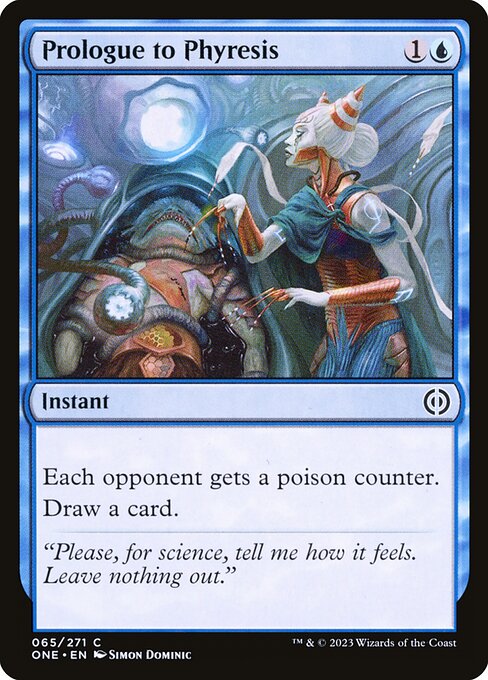 Prologue to Phyresis
Each opponent gets a poison counter.
Prologue to Phyresis
Each opponent gets a poison counter.
Draw a card.
and
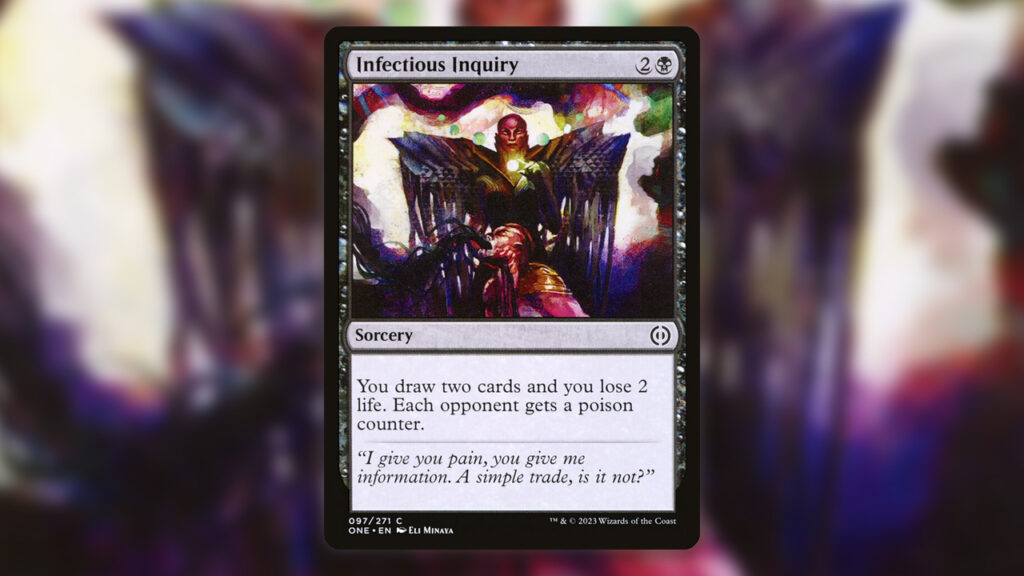
Infectious Inquiry
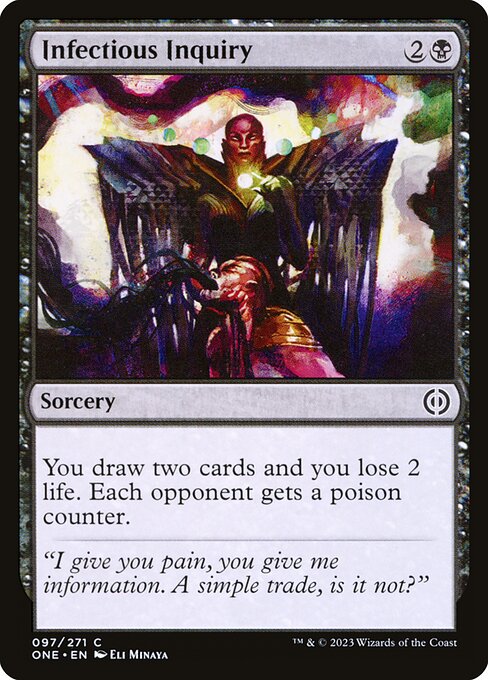 Infectious Inquiry
You draw two cards and you lose 2 life. Each opponent gets a poison counter.
, while a little slow, get the Poison train rolling and ensure you don’t run out of gas.
Infectious Inquiry
You draw two cards and you lose 2 life. Each opponent gets a poison counter.
, while a little slow, get the Poison train rolling and ensure you don’t run out of gas.
From there, removal spells like
Vraska’s Fall
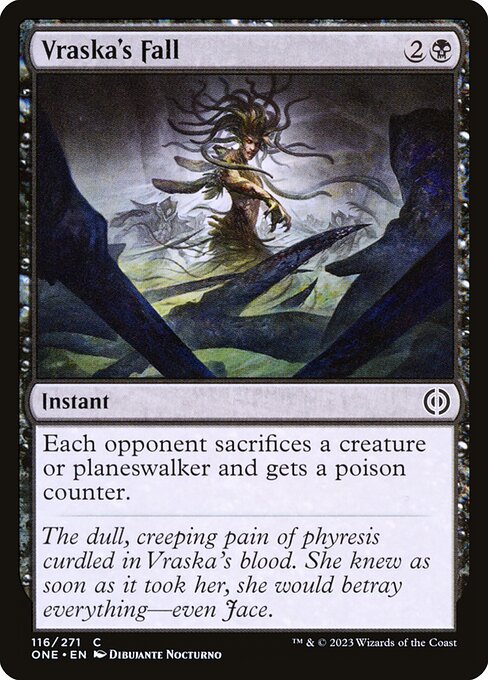 Vraska’s Fall
Each opponent sacrifices a creature or planeswalker of their choice and gets a poison counter.
provide you with interaction that simultaneously Poisons the opponent. Once you give the opponent even one Poison counter, a whole new section of the deck becomes unlocked.
Vraska’s Fall
Each opponent sacrifices a creature or planeswalker of their choice and gets a poison counter.
provide you with interaction that simultaneously Poisons the opponent. Once you give the opponent even one Poison counter, a whole new section of the deck becomes unlocked.
Read More: Mega-Popular Secret Lair Gets Iconic Extra Bonus Card!
Proliferation Station
Beyond giving the opponent Poison counters in traditional ways, this deck features a multitude of Proliferate cards that quickly become threatening. Disruptive elements like
Drown in Ichor
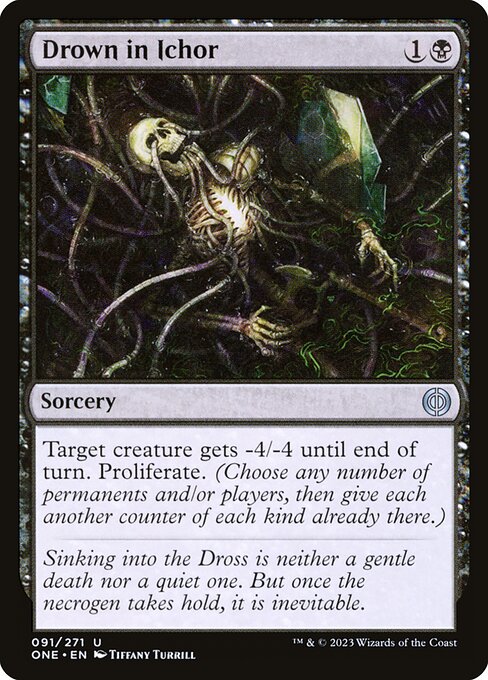 Drown in Ichor
Target creature gets -4/-4 until end of turn. Proliferate. (Choose any number of permanents and/or players, then give each another counter of each kind already there.)
and
Reject Imperfection
Drown in Ichor
Target creature gets -4/-4 until end of turn. Proliferate. (Choose any number of permanents and/or players, then give each another counter of each kind already there.)
and
Reject Imperfection
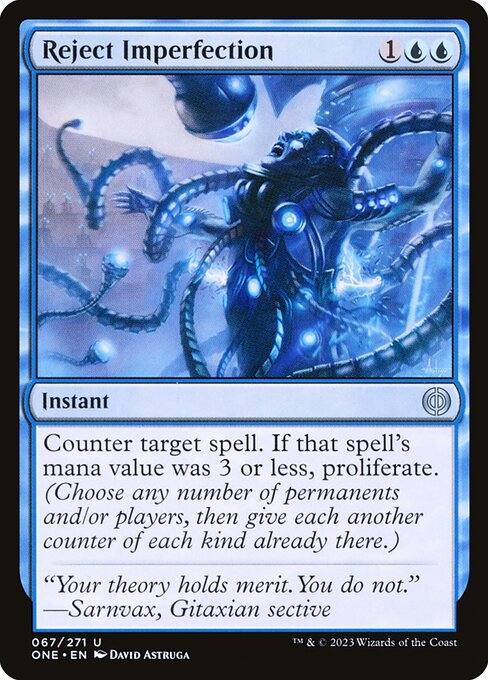 Reject Imperfection
Counter target spell. If that spell's mana value was 3 or less, proliferate. (Choose any number of permanents and/or players, then give each another counter of each kind already there.)
slow the opponent down while increasing the number of Poison counters they have in the process.
Reject Imperfection
Counter target spell. If that spell's mana value was 3 or less, proliferate. (Choose any number of permanents and/or players, then give each another counter of each kind already there.)
slow the opponent down while increasing the number of Poison counters they have in the process.
Experimental Augury
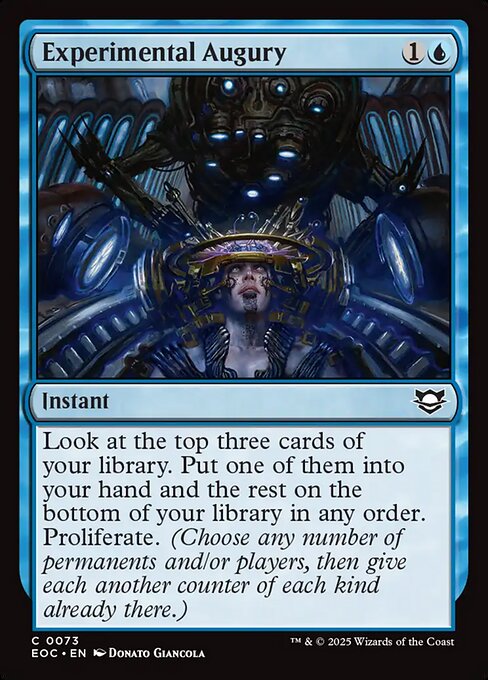 Experimental Augury
Look at the top three cards of your library. Put one of them into your hand and the rest on the bottom of your library in any order. Proliferate. (Choose any number of permanents and/or players, then give each another counter of each kind already there.)
provides some basic card selection and Proliferates all the same. If you’re able to keep pressure off of you, one of the best cards to dig for is
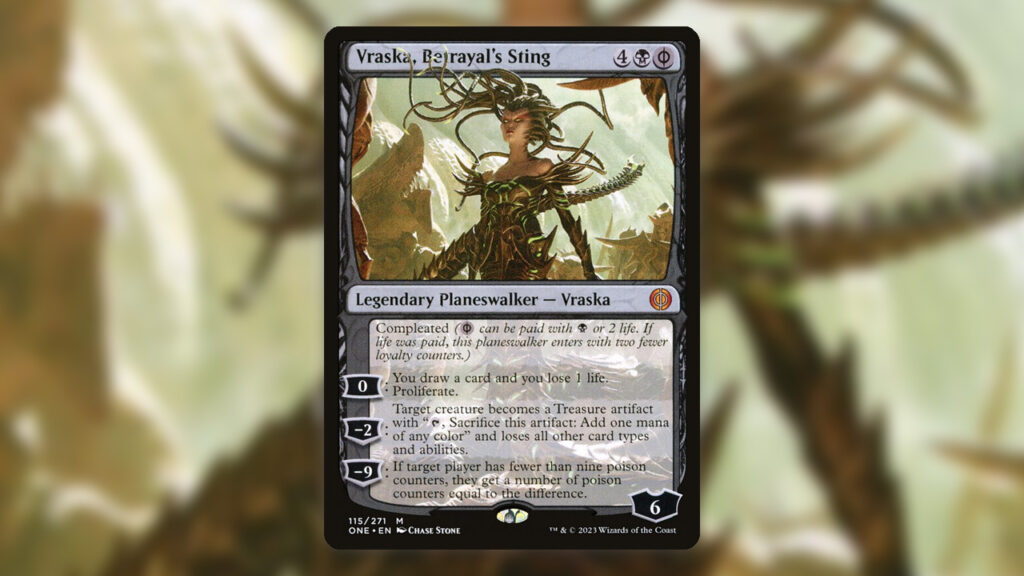
Vraska, Betrayal’s Sting
Experimental Augury
Look at the top three cards of your library. Put one of them into your hand and the rest on the bottom of your library in any order. Proliferate. (Choose any number of permanents and/or players, then give each another counter of each kind already there.)
provides some basic card selection and Proliferates all the same. If you’re able to keep pressure off of you, one of the best cards to dig for is
Vraska, Betrayal’s Sting
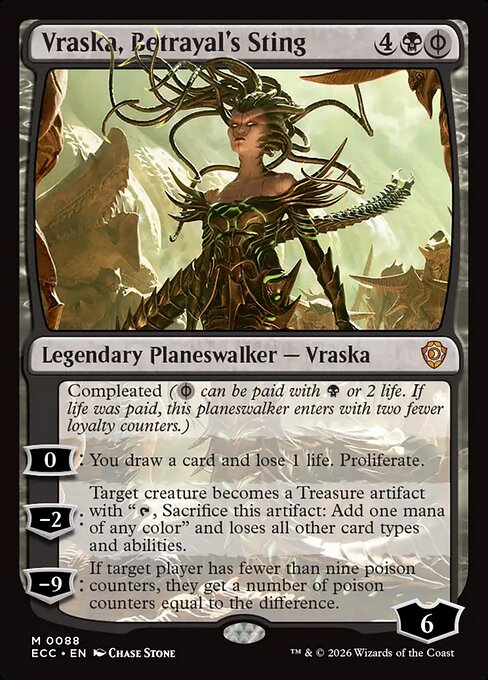 Vraska, Betrayal’s Sting
Compleated ({B/P} can be paid with {B} or 2 life. If life was paid, this planeswalker enters with two fewer loyalty counters.)
Vraska, Betrayal’s Sting
Compleated ({B/P} can be paid with {B} or 2 life. If life was paid, this planeswalker enters with two fewer loyalty counters.)
0: You draw a card and lose 1 life. Proliferate.
−2: Target creature becomes a Treasure artifact with "{T}, Sacrifice this artifact: Add one mana of any color" and loses all other card types and abilities.
−9: If target player has fewer than nine poison counters, they get a number of poison counters equal to the difference.
. Obviously, Vraska’s 0 ability can take over the game in unchecked. On top of that, though, your Proliferate cards can quickly add extra Loyalty counters to Vraska itself. As such, reaching the ultimate ability is easier than you might think.
Notably, Vraska isn’t the only Proliferate payoff in the deck.
Venser, Corpse Puppet
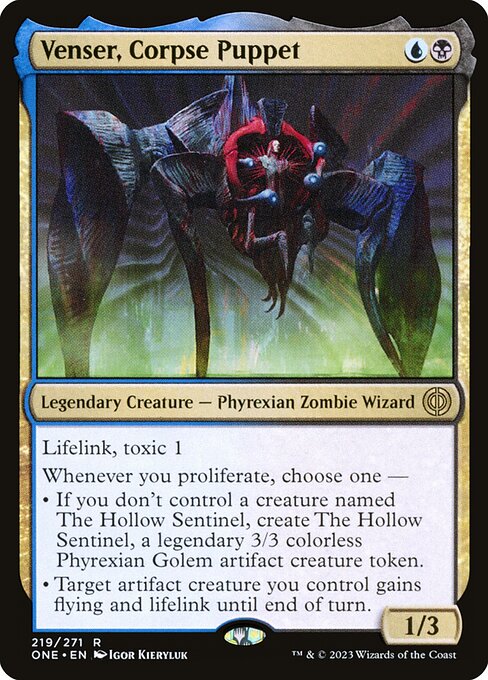 Venser, Corpse Puppet
Lifelink, toxic 1
Venser, Corpse Puppet
Lifelink, toxic 1
Whenever you proliferate, choose one —
• If you don't control a creature named The Hollow Sentinel, create The Hollow Sentinel, a legendary 3/3 colorless Phyrexian Golem artifact creature token.
• Target artifact creature you control gains flying and lifelink until end of turn.
generates value when you Proliferate. Meanwhile,
Voidwing Hybrid
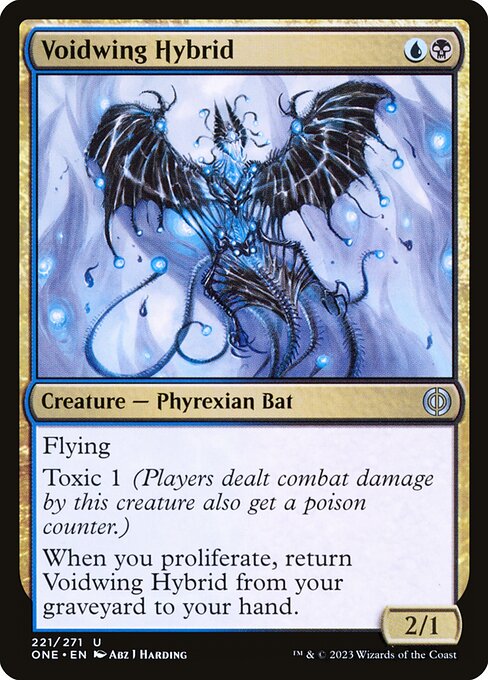 Voidwing Hybrid
Flying
Voidwing Hybrid
Flying
Toxic 1 (Players dealt combat damage by this creature also get a poison counter.)
When you proliferate, return this card from your graveyard to your hand.
acts as a pesky evasive attacker that is difficult to deal with long-term.
Read More: Wizards Promises Major MTG Arena Matchmaking Improvements
Exceptional Control Elements
While it may seem a bit strange for a control deck to use Poison counters as its primary win condition, there are some nice payoffs for sticking with this strategy. First and foremost, the two-mana interaction options this deck has access to are top-notch.
Bring the Ending
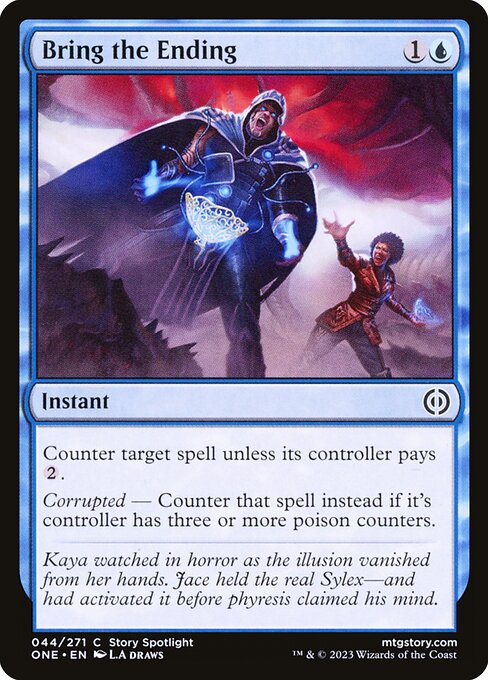 Bring the Ending
Counter target spell unless its controller pays {2}.
Bring the Ending
Counter target spell unless its controller pays {2}.
Corrupted — Counter that spell instead if its controller has three or more poison counters.
does a solid
Quench
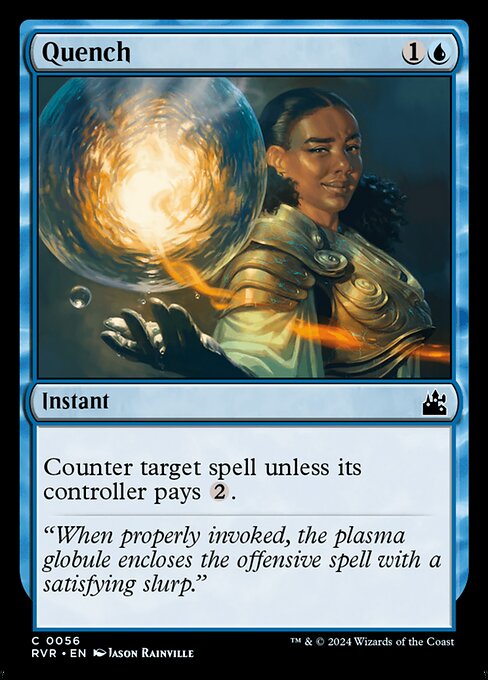 Quench
Counter target spell unless its controller pays {2}.
impression early in the game, but later becomes an efficient
Counterspell
Quench
Counter target spell unless its controller pays {2}.
impression early in the game, but later becomes an efficient
Counterspell
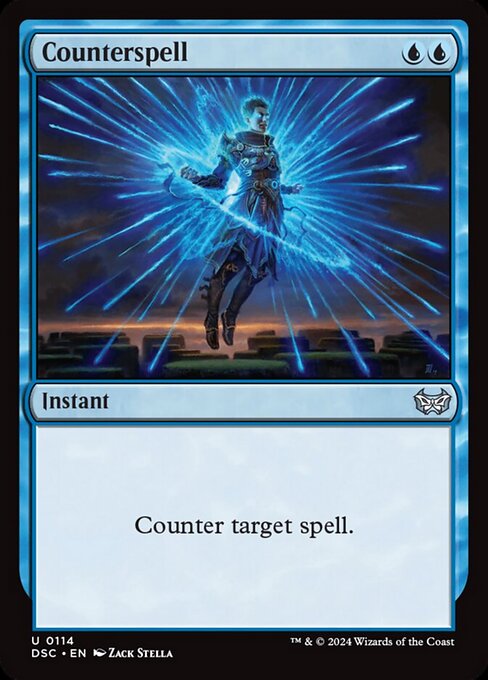 Counterspell
Counter target spell.
for anything the opponent plays. Similarly,
Anoint with Affliction
Counterspell
Counter target spell.
for anything the opponent plays. Similarly,
Anoint with Affliction
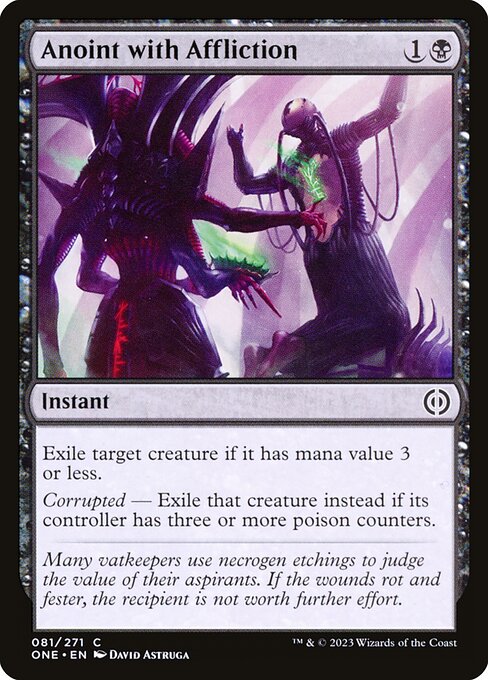 Anoint with Affliction
Exile target creature if it has mana value 3 or less.
Anoint with Affliction
Exile target creature if it has mana value 3 or less.
Corrupted — Exile that creature instead if its controller has three or more poison counters.
goes from an answer to small Creatures to a full-on
Terminate
 Terminate
Destroy target creature. It can't be regenerated.
in this deck. Being able to answer anything the opponent plays for cheap over the course of the game is a huge boon.
Terminate
Destroy target creature. It can't be regenerated.
in this deck. Being able to answer anything the opponent plays for cheap over the course of the game is a huge boon.
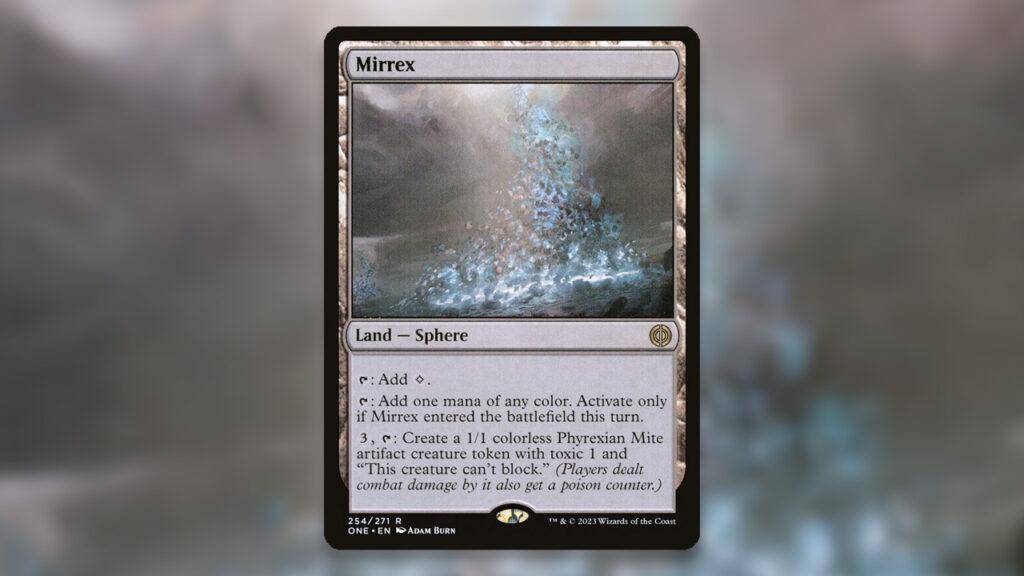
Finally, this deck gets to fully maximize
Mirrex
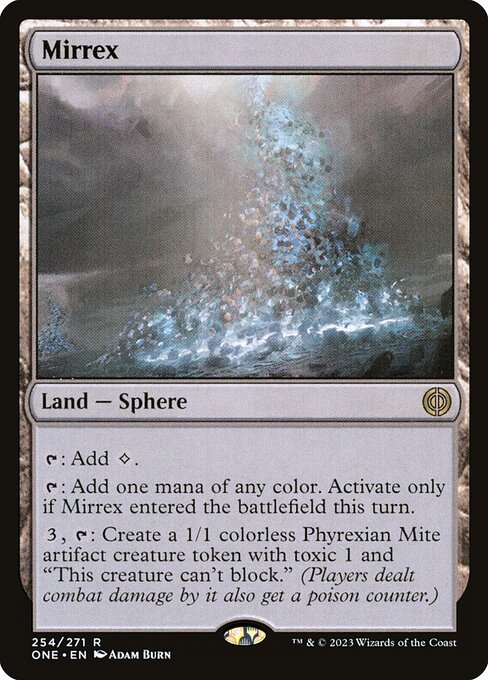 Mirrex
{T}: Add {C}.
Mirrex
{T}: Add {C}.
{T}: Add one mana of any color. Activate only if this land entered this turn.
{3}, {T}: Create a 1/1 colorless Phyrexian Mite artifact creature token with toxic 1 and "This token can't block." (Players dealt combat damage by it also get a poison counter.)
as a late-game closer. As a control deck that primarily casts things at Instant speed, you have the luxury to react to what the opponent does. If they don’t cast anything super important, you can make a token on their end step and start attacking. Eventually, your hoard of tokens will help you emerge victorious.
Read More: New Regional Championship Promos Boast Godzilla-Themed Board Wipe!
Strengths and Weaknesses
Given how this deck is constructed, it’s strengths and weaknesses are quite different from traditional Bant Toxic shells. Bant relies heavily on going wide with small Creatures, so cheap, burly blockers including
Raffine, Scheming Seer
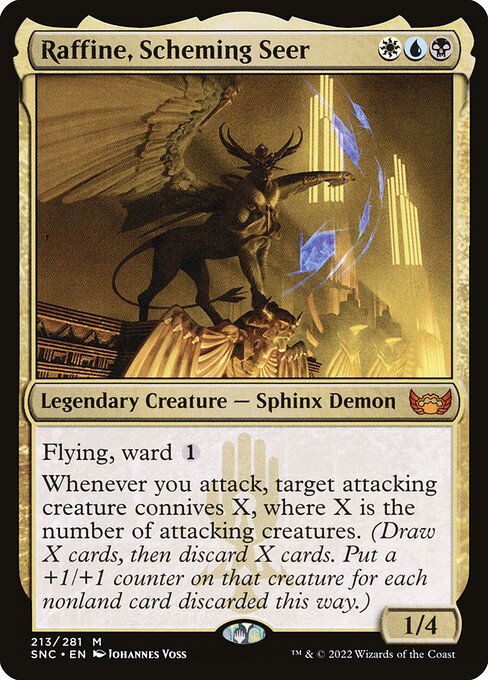 Raffine, Scheming Seer
Flying, ward {1}
Raffine, Scheming Seer
Flying, ward {1}
Whenever you attack, target attacking creature connives X, where X is the number of attacking creatures. (Draw X cards, then discard X cards. Put a +1/+1 counter on that creature for each nonland card discarded this way.)
can be a bit annoying. Mass removal like
Temporary Lockdown
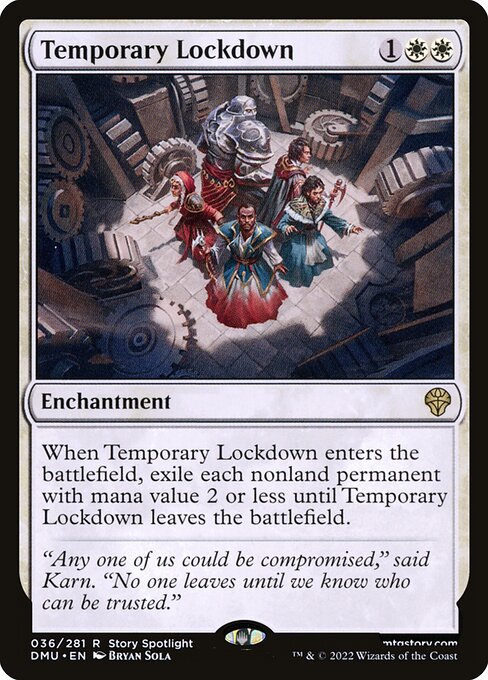 Temporary Lockdown
When this enchantment enters, exile each nonland permanent with mana value 2 or less until this enchantment leaves the battlefield.
is rather problematic, and a strong mono-red aggro start backed up by
End the Festivities
Temporary Lockdown
When this enchantment enters, exile each nonland permanent with mana value 2 or less until this enchantment leaves the battlefield.
is rather problematic, and a strong mono-red aggro start backed up by
End the Festivities
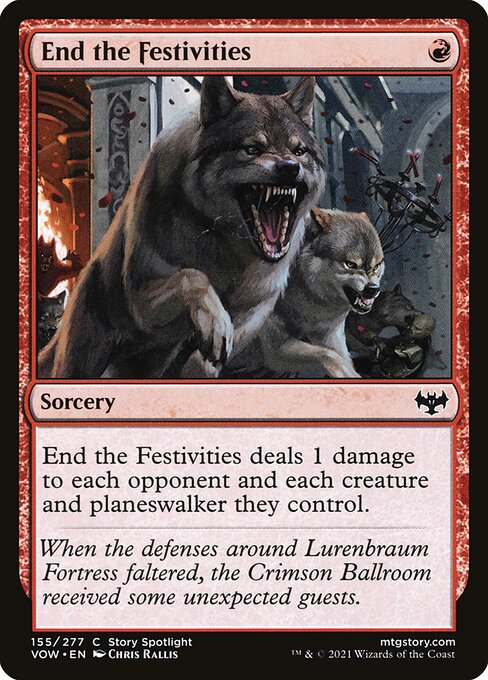 End the Festivities
 deals 1 damage to each opponent and each creature and planeswalker they control.
is nearly unbeatable.
End the Festivities
End the Festivities deals 1 damage to each opponent and each creature and planeswalker they control.
is nearly unbeatable.
Dimir, on the other hand, thrives against decks with lots of removal. This deck gets a lot of its mileage outside of combat. Further, this deck plays tons of answers to Raffine and other strong midrange Creatures. As long as you’re given enough time to make use of your Infectious Inquiries and Experimental Auguries, you’re in good shape.
Where this deck can struggle a bit is against decks that flood the board early with Creatures. Even though this deck plays ample two-mana removal, it’s easy to fall behind against fast mono-red starts.
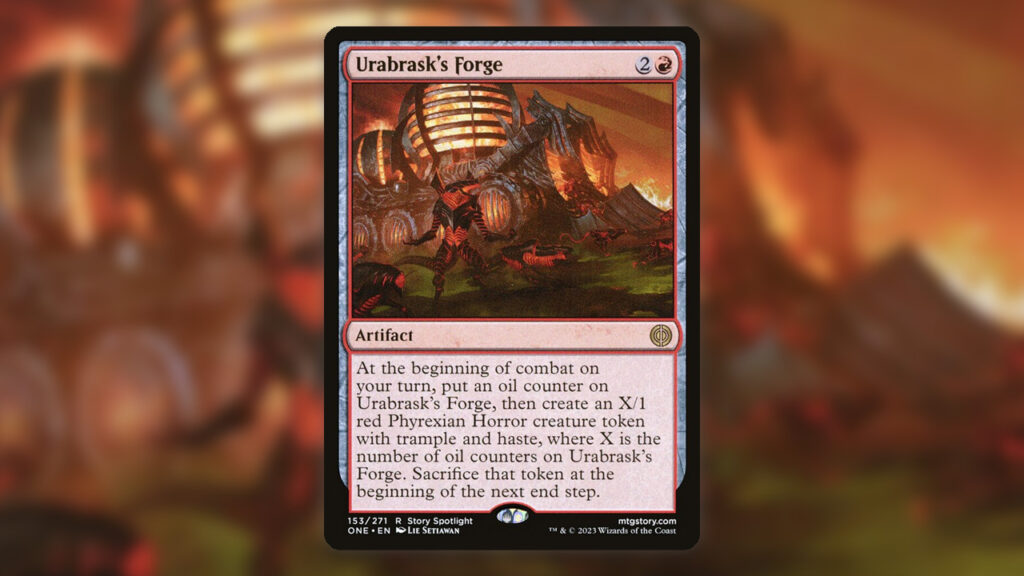
Urabrask’s Forge
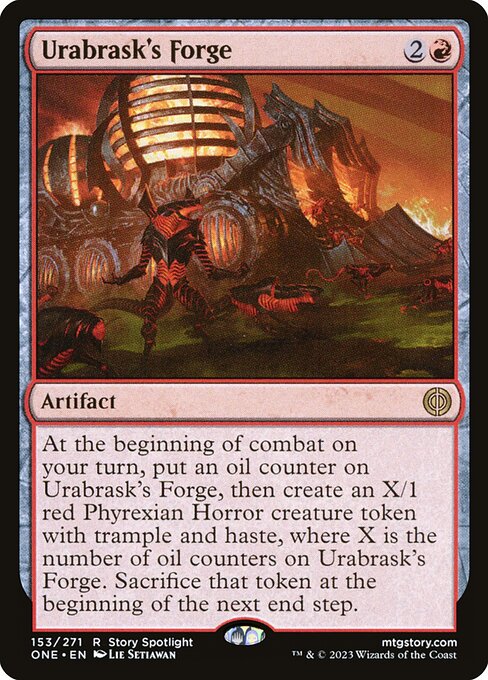 Urabrask’s Forge
At the beginning of combat on your turn, put an oil counter on this artifact, then create an X/1 red Phyrexian Horror creature token with trample and haste, where X is the number of oil counters on this artifact. Sacrifice that token at the beginning of the next end step.
in particular can spell doom if it sticks. Additionally, this decklist doesn’t make use of sweepers, so cards like
Gleeful Demolition
Urabrask’s Forge
At the beginning of combat on your turn, put an oil counter on this artifact, then create an X/1 red Phyrexian Horror creature token with trample and haste, where X is the number of oil counters on this artifact. Sacrifice that token at the beginning of the next end step.
in particular can spell doom if it sticks. Additionally, this decklist doesn’t make use of sweepers, so cards like
Gleeful Demolition
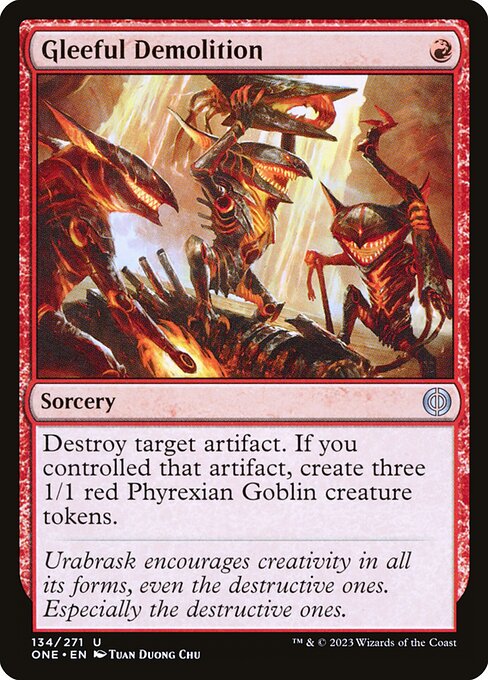 Gleeful Demolition
Destroy target artifact. If you controlled that artifact, create three 1/1 red Phyrexian Goblin creature tokens.
out of Boros Convoke or Skrelv’s Hive out of Bant Toxic can be tough to deal with.
Gleeful Demolition
Destroy target artifact. If you controlled that artifact, create three 1/1 red Phyrexian Goblin creature tokens.
out of Boros Convoke or Skrelv’s Hive out of Bant Toxic can be tough to deal with.
Considering how popular Azorius control, Esper/Golgari midrange, and various ramp strategies are in Standard right now, this Dimir deck seems pretty well positioned. It attacks on a very different axis that many players simply aren’t prepared to handle. Plus, this deck is almost entirely made up of commons and uncommons from Phyrexia: All Will be One, which will not rotate out this year. So, if you’re looking for something innovative to craft on MTG Arena or cheap to build in paper, look no further.
Read More: Wizards Debuts New Digital Rewards for In-Person Play