
Since the release of The Lost Caverns of Ixalan, Pioneer has seen immense metagame shifts. This set brought tons of powerful cards to the forefront of the format. From
Amalia Benavides Aguirre
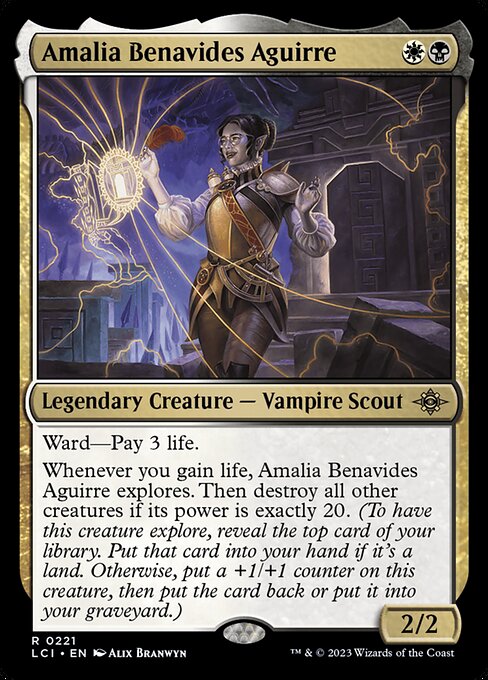 Amalia Benavides Aguirre
Ward—Pay 3 life.
Amalia Benavides Aguirre
Ward—Pay 3 life.
Whenever you gain life, Amalia Benavides Aguirre explores. Then destroy all other creatures if its power is exactly 20. (To have this creature explore, reveal the top card of your library. Put that card into your hand if it's a land. Otherwise, put a +1/+1 counter on this creature, then put the card back or put it into your graveyard.)
introducing an elite new combo deck to the format to
Geological Appraiser
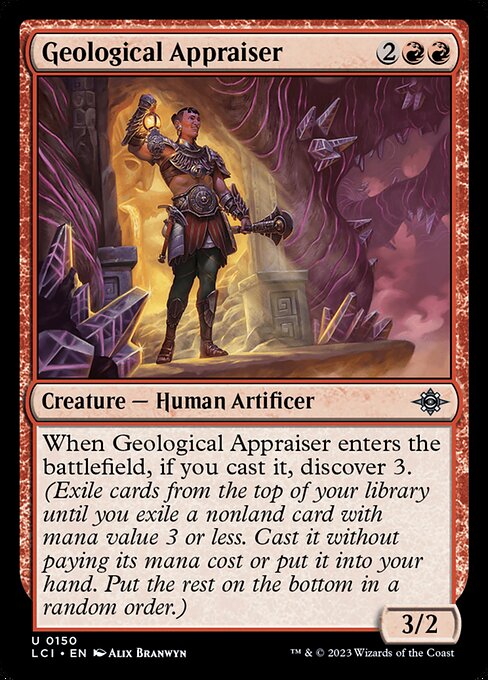 Geological Appraiser
When this creature enters, if you cast it, discover 3. (Exile cards from the top of your library until you exile a nonland card with mana value 3 or less. Cast it without paying its mana cost or put it into your hand. Put the rest on the bottom in a random order.)
and
Quintorius Kand
Geological Appraiser
When this creature enters, if you cast it, discover 3. (Exile cards from the top of your library until you exile a nonland card with mana value 3 or less. Cast it without paying its mana cost or put it into your hand. Put the rest on the bottom in a random order.)
and
Quintorius Kand
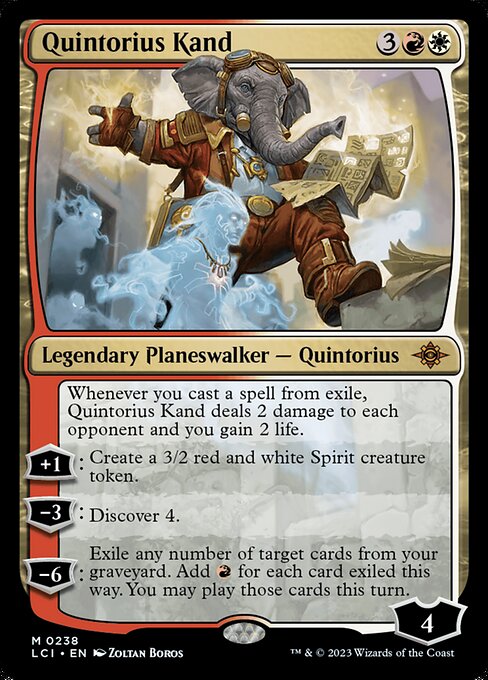 Quintorius Kand
Whenever you cast a spell from exile, Quintorius Kand deals 2 damage to each opponent and you gain 2 life.
Quintorius Kand
Whenever you cast a spell from exile, Quintorius Kand deals 2 damage to each opponent and you gain 2 life.
+1: Create a 3/2 red and white Spirit creature token.
−3: Discover 4.
−6: Exile any number of target cards from your graveyard. Add {R} for each card exiled this way. You may play those cards this turn.
bringing about Discover combo variants, The Lost Caverns of Ixalan made a huge impact.
Interestingly, though, players are still continuing to innovate with additional combo decks inspired by cards from The Lost Caverns of Ixalan. This past week, one player went 7-2 in a Magic Online Pioneer Super Qualifier event with a Gruul Scapeshift deck built around The World Tree. The World Tree allows you to grab any number of God cards from your deck to put into play but requires an immense cost of 10 mana to invest, specifically two mana of each color.
While this may sound like a daunting task, a handful of new cards have made winning the game by activating the Land much more realistic. Let’s start by taking a closer look at how this deck can win the game by activating The World Tree in the first place.
The World Tree Combo
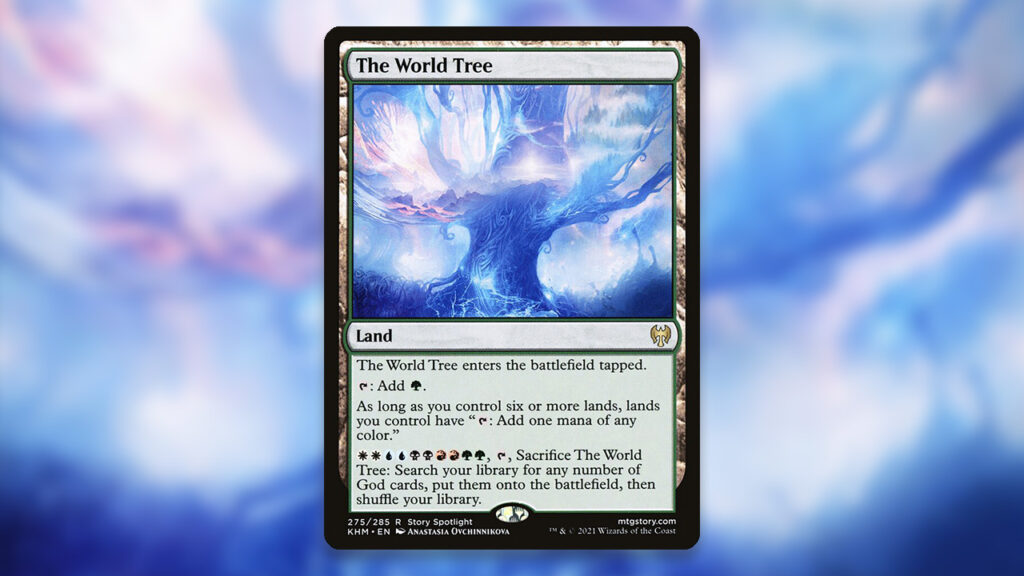
Once you get the requisite mana to activate The World Tree, winning the game is rather trivial. This is thanks to the presence of multiple copies of Purphoros, God of the Forge. Because all of the Gods from your library enter the battlefield at the same time, each copy of Purphoros will see each other God that enters the battlefield, including other copies of Purphoros. In this sense, even though only one copy of each legend will stick around, they all help with Purphoros’s ability to deal damage to the opponent.
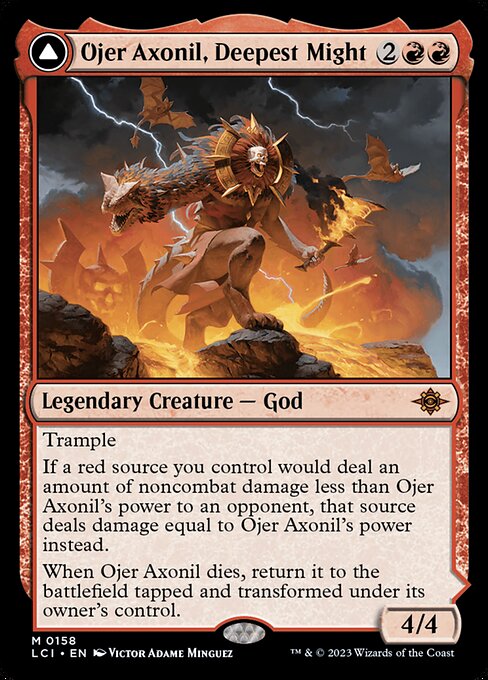
This deck in particular plays two copies of Purphoros, three copies of
Ojer Axonil, Deepest Might
 Ojer Axonil, Deepest Might
Trample
Ojer Axonil, Deepest Might
Trample
If a red source you control would deal an amount of noncombat damage less than Ojer Axonil's power to an opponent, that source deals damage equal to Ojer Axonil's power instead.
When Ojer Axonil dies, return it to the battlefield tapped and transformed under its owner's control.
, and one copy of Klothys, God of Destiny. Assuming you grab all six Gods from your library, each copy of Purphoros will see five other Gods enter the battlefield, for a total of 10 triggers. Each trigger will ultimately deal the opponent four damage, thanks to Ojer, for a total of 40 damage.
Where things get a bit tougher is if you naturally draw a copy of Purphoros. From there, activating the World Tree would let you grab the remaining Purphoros, three copies of Ojer Axonil, and one copy of Klothys to deal only 16 damage. However, Purphoros is totally castable in this deck, and Klothys can help win the game on your upkeep anyway. If you unfortunately draw both copies of Purphoros, though, winning the game becomes immensely more difficult.
It might be worth playing an extra God or two to help hedge against these scenarios, though you don’t want too many cards that don’t help further your gameplan of setting up The World Tree in the first place. The reality is, before The Lost Caverns of Ixalan, actually setting up an activation of The World Tree was quite time consuming and not reliable. Fortunately, all of that has changed.
Read More: MTG’s Next Set Could Make These Staples Dirt Cheap!
Setting Up the World Tree
As you can see, winning with The World Tree is relatively trivial. The key is getting enough mana in play to utilize its activated ability. Fortunately, a couple new Ixalan additions help a bunch in this regard. The first addition is
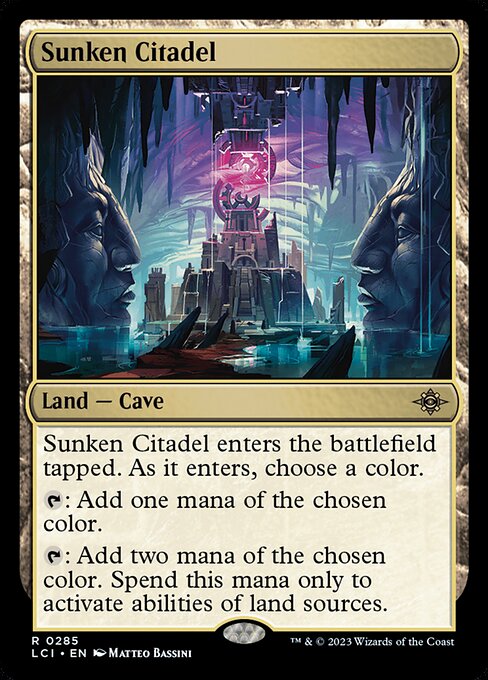
Sunken Citadel
 Sunken Citadel
This land enters tapped. As it enters, choose a color.
Sunken Citadel
This land enters tapped. As it enters, choose a color.
{T}: Add one mana of the chosen color.
{T}: Add two mana of the chosen color. Spend this mana only to activate abilities of land sources.
. Sunken Citadel is a unique Land that has the ability to produce multiple mana at once, but only to activate abilities of Land you control. If you are able to get four copies of Sunken Citadel into play, you now have eight of the ten mana required to activate The World Tree.
While getting all four copies into play may sound inconsistent, the presence of
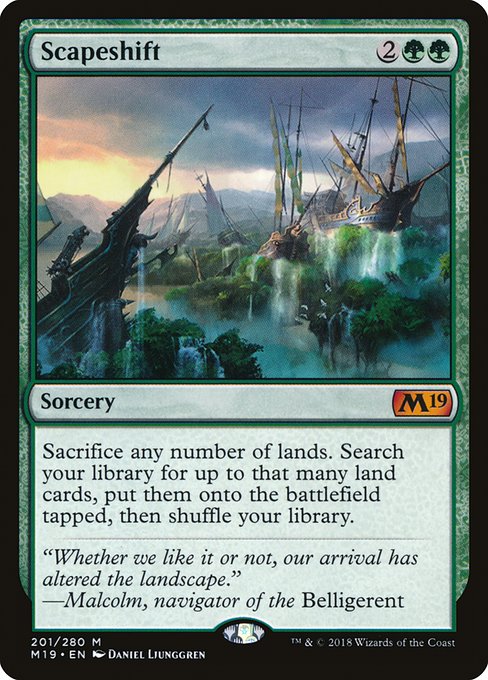
Scapeshift
 Scapeshift
Sacrifice any number of lands. Search your library for up to that many land cards, put them onto the battlefield tapped, then shuffle.
makes this easy to come to fruition. If you cast Scapeshift with seven Lands in play, you can grab four copies of Sunken Citadel, The World Tree, and two other Lands. Now, you are all set up to activate The World Tree on your next turn.
Scapeshift
Sacrifice any number of lands. Search your library for up to that many land cards, put them onto the battlefield tapped, then shuffle.
makes this easy to come to fruition. If you cast Scapeshift with seven Lands in play, you can grab four copies of Sunken Citadel, The World Tree, and two other Lands. Now, you are all set up to activate The World Tree on your next turn.
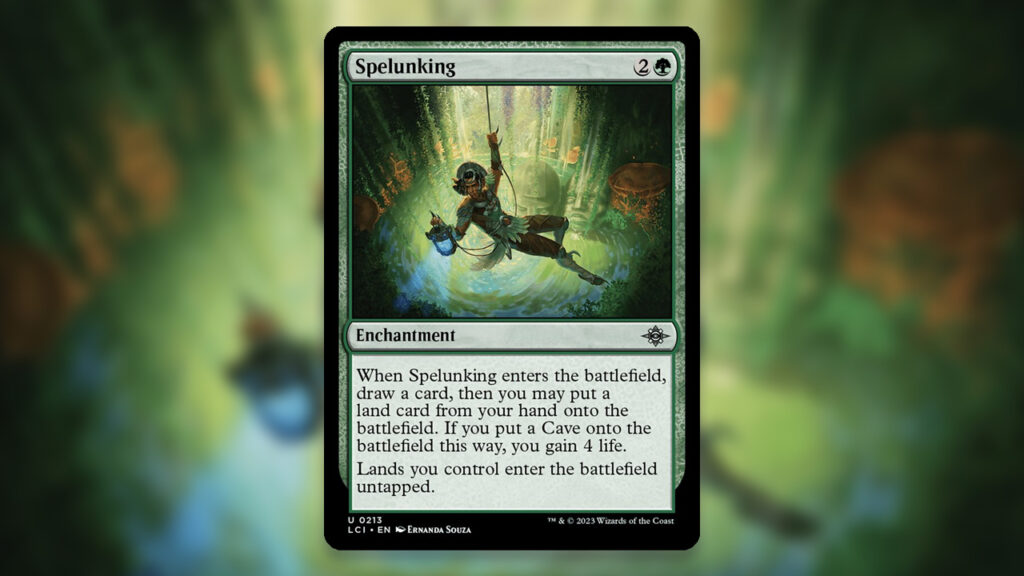
Things get even more interesting if you have a copy of Spelunking in play, though. Spelunking not only ramps you to help maximize Scapeshift ahead of schedule, but it makes all of your Lands enter the battlefield untapped. This means that, in the same scenario above, you don’t have to wait until your next upkeep, but rather you can win the game immediately! The presence of Sunken Citadel and Spelunking help make this deck much faster and more consistent, which is extremely important.
In the absolute best scenario, it’s possible to activate The World Tree as early as turn three. That scenario, however, is incredibly unlikely, with an incredibly tight sequence of events being required to pull it off.
Read More: MTG Head Designer Hints at Possible Pioneer Horizons Set!
Ramp Elements and Wish
Almost the entirety of the rest of the deck is filled with Lands or ways to ramp you. Arboreal Grazer leads to your most explosive draws, while also helping to stabilize the board for a little while against aggressive decks. Glimpse the Core provides a nice Rampant Growth effect to help enable Scapeshift ahead of schedule. This can also grab Sunken Citadels that a Scapeshift moved to the graveyard.
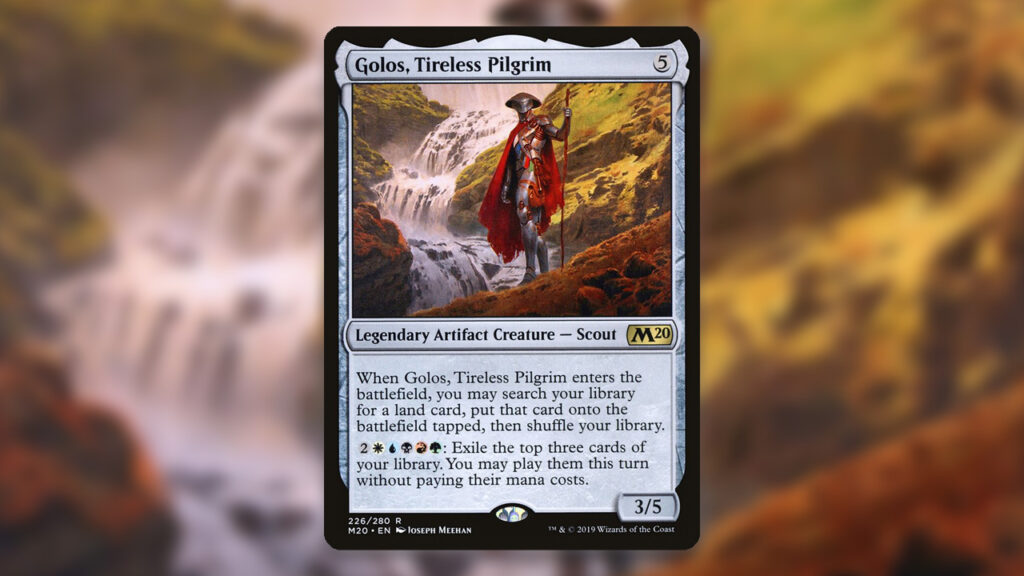
Solemn Simulacrum is simply a solid ramp card, and Golos, Tireless Pilgrim can find The World Tree, Cascading Cataracts or other utility Lands, such as Pit of Offerings against Izzet Phoenix. Obviously, the deck relies on Scapeshift to set up the combo, but in slower matchups, you may be able to simply continuing ramping and win via The World Tree at your leisure.
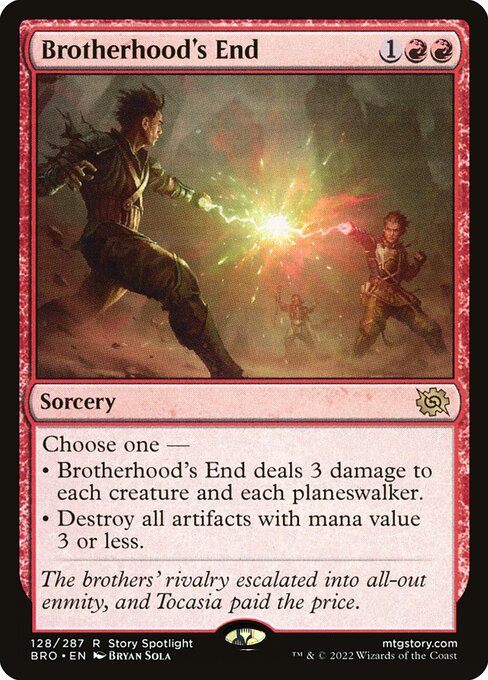
Against aggressive decks, though, you will likely need to set up Scapeshift as quickly as possible. Luckily, this deck gets to play virtually seven copies of Scapeshift, by playing three copies maindeck along with four copies of Wish. Wish allows you to grab the last copy of Scapeshift from the sideboard and set up that way, adding some extra redundancy to the deck. Additionally, Wish can grab pieces of interaction such as
Brotherhood’s End
 Brotherhood’s End
Choose one —
Brotherhood’s End
Choose one —
• Brotherhood's End deals 3 damage to each creature and each planeswalker.
• Destroy all artifacts with mana value 3 or less.
against Boros Convoke or even Quakebringer against Abzan Amalia combo.
Read More: New MTG Mentor Deck Surprisingly Dominates Event!
Strengths and Weaknesses
This deck attacks on a very strange angle that a lot of strategies in the format aren’t prepared for. Slower decks like Rakdos midrange that lack counter magic can have a tough time beating this Land-focused combo. Assuming you can resolve Scapeshift, this deck can win the game surprisingly quickly, which helps against faster starts from the opponent. Thanks to the presence of Wish, there is a plethora of cards to grab for a variety of different matchups. While this deck is somewhat new, it has game against a lot of the top decks in the format.
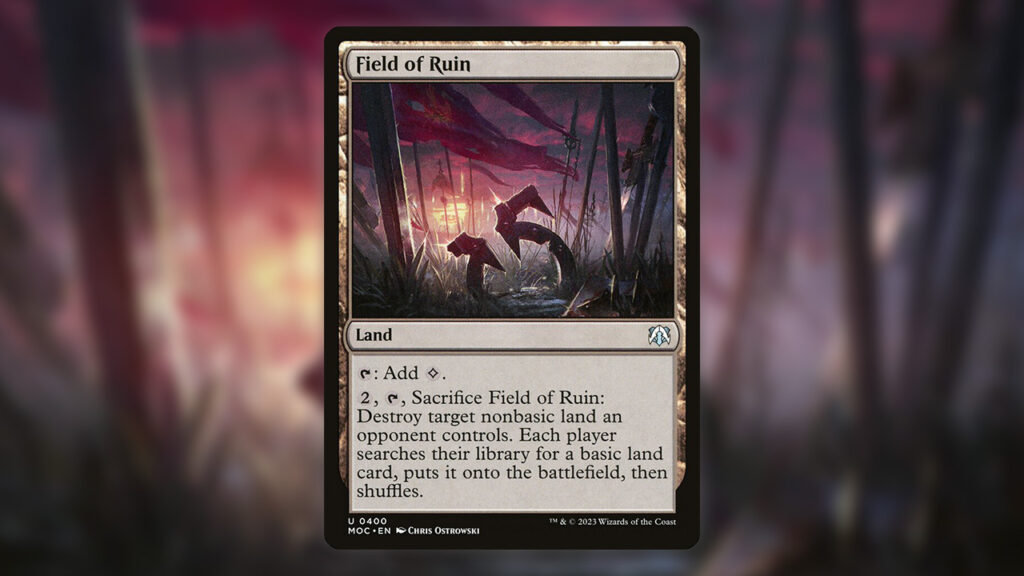
Where this deck can run into problems is against decks with counter magic. Azorius control, for instance, plays a nice mix of Counterspells, interaction for Creatures like Golos, and Land destruction in the form of
Field of Ruin
 Field of Ruin
{T}: Add {C}.
Field of Ruin
{T}: Add {C}.
{2}, {T}, Sacrifice this land: Destroy target nonbasic land an opponent controls. Each player searches their library for a basic land card, puts it onto the battlefield, then shuffles.
to avoid losing to The World Tree in the long game. With how many Lands and ramp cards are in this deck, there aren’t a ton of must-counter cards, so saving Counterspells for the most impactful spells is a strong strategy.
Overall, this archetype seems like a reasonable metagame call in a field dominated by decks like Rakdos midrange that have trouble interacting beyond Thoughtseize. It certainly has its issues, but there’s no denying its successful performance in the recent Pioneer Super Qualifier. If you’re looking for a unique off-the-wall combo strategy to play, this could be right up your alley.
Read More: Four New Two-Card MTG Death Combos With Cards from 2023!